1. Search Result
Search Result
Results for "

78

" in MedChemExpress (MCE) Product Catalog:

618

Inhibitors & Agonists

2

Screening Libraries

5

Fluorescent Dyes

11

Biochemical Assay Reagents

24

Peptides

7

Inhibitory Antibodies

94

Natural
Products

25

Recombinant Proteins

43

Isotope-Labeled Compounds

31

Antibodies

11

Click Chemistry

29

Oligonucleotides

Cat. No. Product Name Target Research Areas Chemical Structure
  • HY-W013372
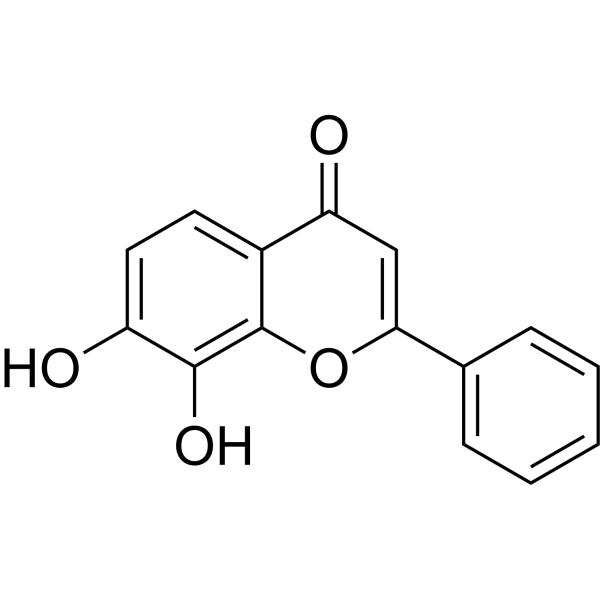
    7,8-Dihydroxyflavone
    15+ Cited Publications

    Trk Receptor Apoptosis Neurological Disease
    7,8-Dihydroxyflavone is a potent and selective TrkB agonist that mimics the physiological actions of Brain-derived neurotrophic factor (BDNF). Displays therapeutic efficacy toward various neurological diseases .
    7,8-Dihydroxyflavone
  • HY-13701
    Nelarabine
    3 Publications Verification

    506U78; GW 506U78; Nelzarabine

    Nucleoside Antimetabolite/Analog Apoptosis Cancer
    Nelarabine (506U78) is a nucleoside analogue and can be used for the research of T cell acute lymphoblastic leukemia (T-ALL) .
    Nelarabine
  • HY-N0281
    Daphnetin
    5+ Cited Publications

    7,8-Dihydroxycoumarin

    EGFR PKA PKC Autophagy Apoptosis AMPK Akt mTOR Reactive Oxygen Species (ROS) Caspase Bcl-2 Family PARP Parasite Cardiovascular Disease Inflammation/Immunology Cancer
    Daphnetin (7,8-dihydroxycoumarin), one coumarin derivative can be found in plants of the Genus Daphne, is a potent, oral active protein kinase inhibitor, with IC50s of 7.67 μM, 9.33 μM and 25.01 μM for EGFR, PKA and PKC in vitro, respectively. Daphnetin triggers ROS-induced cell apoptosis and induces cytoprotective autophagy by modulating the AMPK/Akt/mTOR pathway. Daphnetin has anti-inflammation activitity and inhibits TNF-α, IL-1β, ROS, and MDA production. Daphnetin has schizontocidal activity against malaria parasites. Daphnetin can be used for rheumatoid arthritis , cancer and anti-malarian research .
    Daphnetin
  • HY-122816
    HLY78
    10+ Cited Publications

    Wnt β-catenin Apoptosis Cardiovascular Disease Neurological Disease Cancer
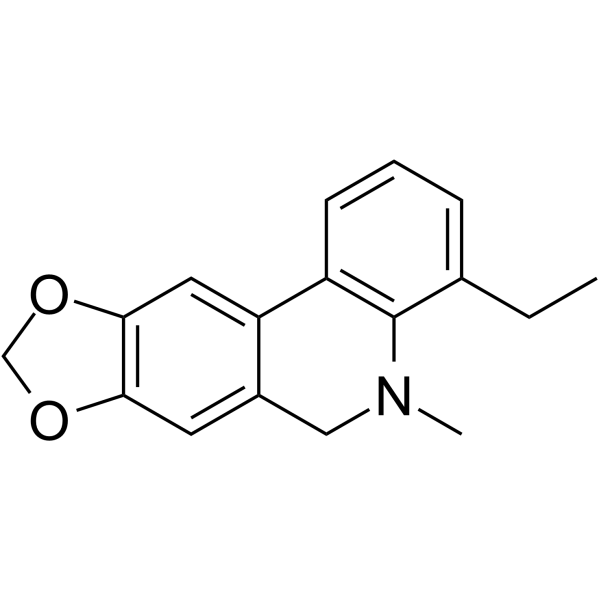
    HLY78, a Lycorine (HY-N0288) derivative, is a potent activator of the Wnt/β-catenin signaling pathway. HLY78 targets the DIX domain of Axin and promotes the Axin-LRP6 (lipoprotein receptor-related protein 6) association, thus promoting LRP6 phosphorylation and Wnt signal transduction. HLY78 can be used for subarachnoid hemorrhage (SAH) research .
    HLY78
  • HY-B1810
    Tulobuterol
    2 Publications Verification

    C-78 free base

    Adrenergic Receptor Inflammation/Immunology Endocrinology
    Tulobuterol (C-78 free base) is a long-acting β2-adrenoceptor agonist, which reduces the frequency of exacerbations of chronic obstructive pulmonary disease and bronchial asthma. Tulobuterol is also a sympathomimetic agent used as a transdermal patch, and increases normal diaphragm muscle strength .
    Tulobuterol
  • HY-138364
    YUM70
    3 Publications Verification

    HSP Apoptosis Cancer
    YUM70 is a potent and selective inhibitor of glucose-regulated protein 78 (GRP78), with an IC50 of 1.5 μM for inhibiting GRP78 ATPase activity of the full-length protein. YUM70 induces endoplasmic reticulum (ER) stress-mediated apoptosis in pancreatic cancer. YUM70 also has in vivo efficacy in a pancreatic cancer xenograft model .
    YUM70
  • HY-101525
    MBP146-78
    3 Publications Verification

    Parasite Infection
    MBP146-78 is a potent and selective inhibitor of cGMP dependent protein kinases.
    MBP146-78
  • HY-105088

    MSI 78 free base

    Bacterial Infection
    Pexiganan (MSI 78) is an orally active antimicrobial peptide with broad-spectrum bactericidal. Pexiganan disrupts bacterial cell membranes, induces peptidoglycan damage and cell lysis. Pexiganan TFA can be used for the research of bacterial infection .
    Pexiganan
  • HY-136341

    Apoptosis NO Synthase Endogenous Metabolite Neurological Disease Inflammation/Immunology
    7,8-Dihydroneopterin, an inflammation marker, induces cellular apoptosis in astrocytes and neurons via enhancement of nitric oxide synthase (iNOS) expression. 7,8-Dihydroneopterin can be used in the research of neurodegenerative diseases .
    7,8-Dihydroneopterin
  • HY-W008646
    7,8-Dihydro-L-biopterin
    1 Publications Verification

    SOD Apoptosis NO Synthase Cardiovascular Disease Neurological Disease
    7,8-Dihydro-L-biopterin is a NOS uncoupling inducer with blood-brain barrier permeability, and it is a reduced non-conjugated pteridine. 7,8-Dihydro-L-biopterin is the main metabolite of 4-amino-tetrahydro-L-biopterin, and it undergoes photooxidation to form biopterin. 7,8-Dihydro-L-biopterin promotes the conversion of nitric oxide synthase to a superoxide-producing form, thereby increasing oxidative stress levels in the renal outer medulla and inducing apoptosis. 7,8-Dihydro-L-biopterin is sensitive to the inhibitory effect of SOD, and it can be applied to research related to salt-sensitive hypertension, moderate to severe traumatic brain injury, and neurodegenerative diseases .
    7,8-Dihydro-L-biopterin
  • HY-N0920

    7,8-Dihydrokawain; 7,8-Dihydrokavain; Marindinin

    COX Cytochrome P450 Neurological Disease Inflammation/Immunology
    Dihydrokavain (7,8-Dihydrokawain) is a natural kavalactone compound. Dihydrokavain inhibits COX-1, COX-2, CYP2C9 (IC50 = 130.95 μM), CYP2C19 (IC50 = 10.05 μM) and CYP3A4 (IC50 = 78.59 μM). Dihydrokavain reduces TNFα secretion. Dihydrokavain shows analgesic and anxiolytic effects .
    Dihydrokavain
  • HY-10366
    BI-78D3
    1 Publications Verification

    JNK Metabolic Disease Cancer
    BI-78D3 functions as a substrate competitive inhibitor of JNK, inhibit the JNK kinase activity (IC50=280 nM).
    BI-78D3
  • HY-152153

    HSP Cancer
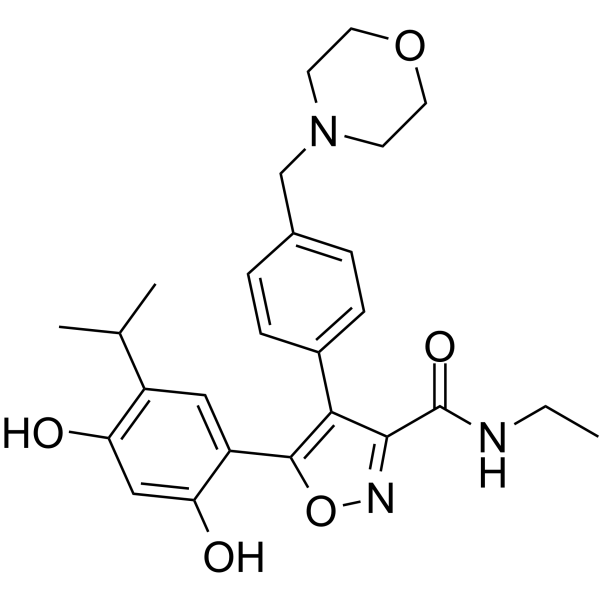
    GRP78-IN-3 (Compound 8) is a selective Grp78 (HSPA5) inhibitor with an IC50 of 0.59 μM. GRP78-IN-3 is 7-fold selective for HspA5 compared to HspA9 (IC50 of 4.3 μM) and >20-fold selective for HspA5 compared to HspA2 (IC50 of 13.9 μM) .
    GRP78-IN-3
  • HY-W011733
    Tulobuterol hydrochloride
    2 Publications Verification

    C-78

    Adrenergic Receptor Influenza Virus Antibiotic Infection Inflammation/Immunology Endocrinology
    Tulobuterol hydrochloride (C-78) is a long-acting β2-adrenoceptor agonist, which reduces the frequency of exacerbations of chronic obstructive pulmonary disease and bronchial asthma. Tulobuterol hydrochloride is also a sympathomimetic agent used as a transdermal patch, increases normal diaphragm muscle strength . Tulobuterol hydrochloride inhibit rhinovirus replication and modulate airway inflammation .
    Tulobuterol hydrochloride
  • HY-159500

    OTL-0078; OTL78

    PSMA Cancer
    Zopocianine (OTL-0078; OTL78) is a near-infrared optical probe targeting PSMA. Zopocianine binds to PSMA on the surface of PSMA-expressing cells, enters cells via receptor-mediated endocytosis, and accumulates in acidic endosomes. Zopocianine selectively accumulates in PSMA-positive cancer tissues and enables the detection of small tumors, primary prostate tumors, and locoregional metastases. Zopocianine helps achieve negative tumor surgical margins during fluorescence-guided surgery. Zopocianine is applicable to research related to prostate cancer .
    Zopocianine
  • HY-139017

    Toll-like Receptor (TLR) Neurological Disease Inflammation/Immunology Cancer
    TLR7/8 agonist 4 (compound 41) is a potent TLR7/8 agonist. TLR7/8 agonist 4 has anti-cancer activity .
    TLR7/8 agonist 4
  • HY-129409

    7,8,4'-Trihydroxyisoflavone

    Phosphatase Others
    7,8-Dihydroxy-3-(4-hydroxyphenyl)-4H-chromen-4-one (7,8,4'-Trihydroxyisoflavone) is a product that can be isolated from .
    7,8-Dihydroxy-3-(4-hydroxyphenyl)-4H-chromen-4-one
  • HY-W058849

    AMPK mTOR Apoptosis Cancer
    MT 63-78 is a specific and potent direct AMPK activator with an EC50 of 25 μM. MT 63–78 also induces cell mitotic arrest and apoptosis. MT 63-78 blocks prostate cancer growth by inhibiting the lipogenesis and mTORC1 pathways. MT 63-78 has antitumor effects .
    MT 63-78
  • HY-14374
    GPP78
    1 Publications Verification

    CAY10618

    NAMPT Autophagy Inflammation/Immunology Cancer
    GPP78 (CAY10618) is a potent Nampt inhibitor with an IC50 of 3.0 nM for nicotinamide adenine dinucleotide (NAD) depletion. GPP78 is cytotoxic to neuroblastoma cell line SH-SY5Y cells with an IC50 of 3.8 nM by inducing autophagy. GPP78 has anti-cancer and anti-inflammatory effects .
    GPP78
  • HY-79058

    5H-Cyclohepta[b]pyridine-7,8-dihydro-5,9(6H)-dione

    Drug Intermediate Others
    7,8-Dihydro-5H-cyclohepta[b]pyridine-5,9(6H)-dione (5H-Cyclohepta[b]pyridine-7,8-dihydro-5,9(6H)-dione) is a drug intermediate for synthesis of various active compounds.
    7,8-Dihydro-5H-cyclohepta[b]pyridine-5,9(6H)-dione
  • HY-P4984

    Biochemical Assay Reagents Inflammation/Immunology Cancer
    Toxic Shock Syndrome Toxin-1 (TSST-1) (58-78) is a T cell proliferation activator. Toxic Shock Syndrome Toxin-1 (TSST-1) (58-78) promotes the in vitro proliferation of human peripheral blood mononuclear cells (PBMC) in a dose-dependent manner. Toxic Shock Syndrome Toxin-1 (TSST-1) (58-78) can be used in research on inflammatory and immunity, as well as cancer .
    Toxic Shock Syndrome Toxin-1 (TSST-1) (58-78)
  • HY-W008646R

    Reference Standards SOD Apoptosis NO Synthase Others
    NADH (disodium salt) (Standard) is the analytical standard of NADH (disodium salt). This product is intended for research and analytical applications. 7,8-Dihydro-L-biopterin is a NOS uncoupling inducer with blood-brain barrier permeability, and it is a reduced non-conjugated pteridine. 7,8-Dihydro-L-biopterin is the main metabolite of 4-amino-tetrahydro-L-biopterin, and it undergoes photooxidation to form biopterin. 7,8-Dihydro-L-biopterin promotes the conversion of nitric oxide synthase to a superoxide-producing form, thereby increasing oxidative stress levels in the renal outer medulla and inducing apoptosis. 7,8-Dihydro-L-biopterin is sensitive to the inhibitory effect of SOD, and it can be applied to research related to salt-sensitive hypertension, moderate to severe traumatic brain injury, and neurodegenerative diseases .
    7,8-Dihydro-L-biopterin (Standard)
  • HY-175036

    PROTACs Histone Demethylase Apoptosis Caspase PARP Cancer
    YTHu78 is a KDM5B PROTAC-type degrader. YTHu78 induces KDM5B degradation via the ubiquitin-proteasome system and triggers apoptosis in MV-4-11 and MM.1S cell lines. YTHu78 exhibits significant antiproliferative activity against a variety of hematological cancer cell lines and can be used to study hematological cancers. (Pink: KDM5B ligand: (HY-116761); Blue: Thalidomide ligand: (HY-14658), Black + Pink: KDM5B ligand + linker: (HY-175145)) .
    YTHu78
  • HY-16698

    PKD Cancer
    kb-NB77-78 is an analogue of CID797718, but shows no PKD inhibitory activity .
    kb-NB77-78
  • HY-N10047

    NF-κB PPAR Cardiovascular Disease
    7,8-Didehydrocimigenol is an active triterpenoid that can be isolated from Cimicifugae rhizoma. 7,8-Didehydrocimigenol inhibits TNF-α-induced VCAM-1 expression, inhibits NF-kB activity and phosphorylation of ERK1/2 and Akt, increases PPAR-γ expression. 7,8-Didehydrocimigenol can be used for the research of cardiovascular disorders such as atherosclerosis .
    7,8-Didehydrocimigenol
  • HY-W017764

    Drug Derivative Cardiovascular Disease
    7,8-Dihydro-2,5(1H,6H)-quinolinedione (compound SF32) is a positive inotropic agent .
    7,8-Dihydro-2,5(1H,6H)-quinolinedione
  • HY-P2642

    CXCR Inflammation/Immunology
    Peptide 78, a chemotactic cytokine, a 78 amino acid protein member of the IL-8 or C-X-C chemokine supergene family. ENA-78 plays an important role in the elicitation of predominantly neutrophils (PMNs) into the joints of rheumatoid arthritis (RA) .
    Peptide 78
  • HY-146420

    HSP Cardiovascular Disease Cancer
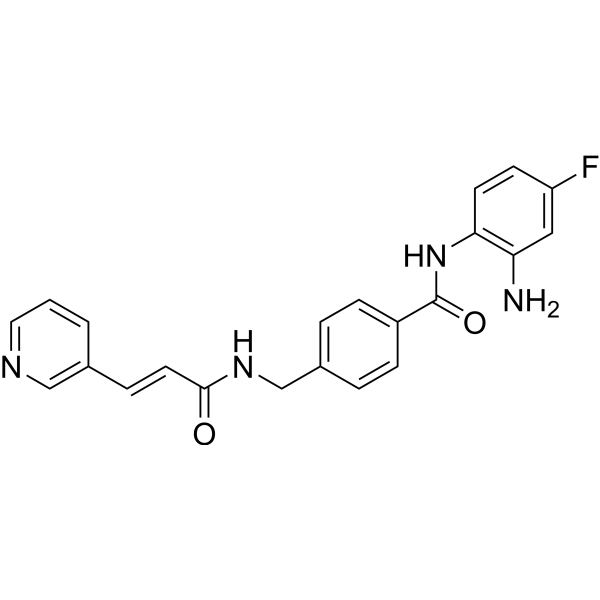
    GRP78-IN-2 (Compound FL5) is a GRP78 (Glucose Regulated Protein 78 kDa) inhibitor. GRP78-IN-2 preferentially targeting cell surface GRP78 and shows potent antiangiogenic and anticancer activities without affecting other normal cells .
    GRP78-IN-2
  • HY-145857

    HSP Apoptosis Cancer
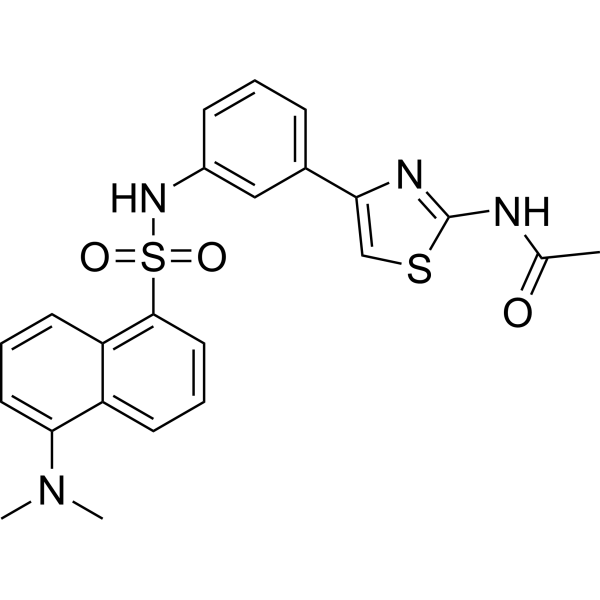
    GRP78-IN-1 exhibits several interactions with GRP78 residues with binding energy of -8.07 kcal/mol. GRP78-IN-1 shows the potent cytotoxic, anti-proliferative in cancer cells. GRP78-IN-1 exhibits promising apoptosis in breast cancer cells and stalls wound healing properties .
    GRP78-IN-1
  • HY-172788

    Pyroptosis NF-κB Inflammation/Immunology
    NLRP3-IN-78 (compound 21) is a NLRP3 inhibitor with the inhibition rate of 46.72% in GSDMD-induced pyroptosis at 5 μM. NLRP3-IN-78 binds to the NLRP3 protein and inhibits GSDMD-NT oligomerization. NLRP3-IN-78 also inhibits GSDMD cleavage, and upstream NF-κB signaling, demonstrating its anti-inflammatory activity .
    NLRP3-IN-78
  • HY-P5043

    α-synuclein Neurological Disease
    α-Synuclein (67-78) (human) is the 67-78 fragment of α-Synuclein. α-Synuclein (67-78) (human) promotes network activity drive and blocks KCl-induced syt1L-ab uptake .
    α-Synuclein (67-78) (human)
  • HY-100118

    Phosphodiesterase (PDE) Inflammation/Immunology
    BW-A 78U is a PDE4 inhibitor with an IC50 of 3 μM.
    BW-A 78U
  • HY-105088A

    MSI 78

    Bacterial Infection
    Pexiganan (MSI 78) acetate is an orally active antimicrobial peptide with broad-spectrum bactericidal. Pexiganan TFA disrupts bacterial cell membranes, induces peptidoglycan damage and cell lysis. Pexiganan acetate can be used for the research of bacterial infection .
    Pexiganan acetate
  • HY-147236

    Toll-like Receptor (TLR) Inflammation/Immunology
    TLR7/8 agonist 7 (compound 10) is a TLR7/8 agonist. TLR7/8 agonist 7 activates a variety of immune cells and it can be used to synthesize immune stimulating antibody conjugate (ISAC) molecules. TLR7/8 agonist 7 can be used for the research of immunity .
    TLR7/8 agonist 7
  • HY-N4280
    7,8-Dimethoxycoumarin
    1 Publications Verification

    Na+/K+ ATPase Glutathione Peroxidase NF-κB p38 MAPK Interleukin Related Neurological Disease Metabolic Disease Inflammation/Immunology
    7,8-Dimethoxycoumarin is a coumarin compound derived from Artemisia caruifolia with oral activity. 7,8-Dimethoxycoumarin inhibits mitochondrial permeability transition pore and H +/K +-ATPase, and exhibits antioxidant, anti-inflammatory, renoprotective, neuroprotective and gastroprotective effects. 7,8-Dimethoxycoumarin reduces lipid peroxidation (TBARS), increases GSH levels, inhibits myeloperoxidase (MPO) activity, and regulates the expression of inflammatory factors by inhibiting the NF‑κB and MAPK pathways. 7,8-Dimethoxycoumarin ameliorates gastric mucosal injury, alleviates renal tissue lesions and relieves neuropathic pain. 7,8-Dimethoxycoumarin can be used in studies related to acute renal failure, trigeminal neuralgia and gastritis .
    7,8-Dimethoxycoumarin
  • HY-W013372R

    Reference Standards Trk Receptor Apoptosis Neurological Disease
    7,8-Dihydroxyflavone is a potent and selective TrkB agonist that mimics the physiological actions of Brain-derived neurotrophic factor (BDNF). Displays therapeutic efficacy toward various neurological diseases .
    7,8-Dihydroxyflavone (Standard)
  • HY-N0281R

    7,8-Dihydroxycoumarin (Standard)

    Reference Standards EGFR PKA PKC Autophagy Apoptosis AMPK Akt mTOR Reactive Oxygen Species (ROS) Caspase Bcl-2 Family PARP Parasite Inflammation/Immunology Cancer
    Daphnetin (Standard) is the analytical standard of Daphnetin. This product is intended for research and analytical applications. Daphnetin (7,8-dihydroxycoumarin), one coumarin derivative can be found in plants of the Genus Daphne, is a potent, oral active protein kinase inhibitor, with IC50s of 7.67 μM, 9.33 μM and 25.01 μM for EGFR, PKA and PKC in vitro, respectively. Daphnetin triggers ROS-induced cell apoptosis and induces cytoprotective autophagy by modulating the AMPK/Akt/mTOR pathway. Daphnetin has anti-inflammation activitity and inhibits TNF-α, IL-1 , ROS, and MDA production. Daphnetin has schizontocidal activity against malaria parasites. Daphnetin can be used for rheumatoid arthritis , cancer and anti-malarian research .
    Daphnetin (Standard)
  • HY-151119

    Cytochrome P450 Cancer
    Anticancer agent 78 is a potent anticancer agent. Anticancer agent 78 shows cytotoxicity. Anticancer agent 78 exhibits anti-aromatase activity with an IC50 value of 0.9 µM. Anticancer agent 78 has the potential for the research of breast cancer .
    Anticancer agent 78
  • HY-P5686

    Bacterial Infection
    Maximin 78 is an antimicrobial peptide. Maximin 78 has antibacterial activity against C. albicans, S. aureus, B. subtilis (MIC: 37.5, 4.7, 37.5 μg/mL). Maximin 78 has hemolytic activities against human and rabbit red cells .
    Maximin 78
  • HY-162907

    HDAC Cancer
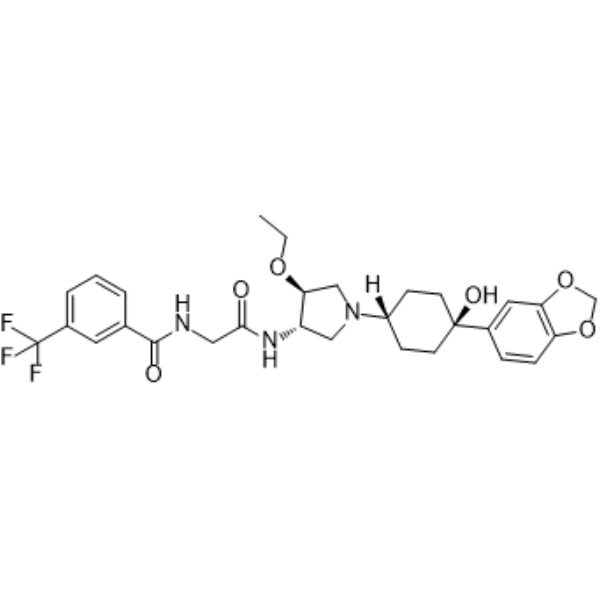
    HDAC-IN-78 (compound 66a) is a HDAC inhibitor. HDAC-IN-78 can be used in cancer research .
    HDAC-IN-78
  • HY-149774

    SARS-CoV Infection
    GC-78-HCl is an orally and nonpeptidic SARS-CoV-2 M pro inhibitor, with an IC50 of 0.19 μM for enzyme. GC-78-HCl has excellent antiviral activity and favorable pharmacokinetic properties .
    GC-78-HCl
  • HY-179046

    VEGFR Cancer
    VEGFR-2-IN-78 (Compound 6b) is a potent VEGFR-2 inhibitor with an IC50 of 0.21 μM. VEGFR-2-IN-78 exhibits selective cytotoxicity against A-498 and MDA-MB-231 cells. VEGFR-2-IN-78 has antioxidant activity. VEGFR-2-IN-78 can be used in anti-angiogenesis research .
    VEGFR-2-IN-78
  • HY-151428

    Ferroptosis Apoptosis Bcl-2 Family COX Cancer
    Antitumor agent-78 is an antitumor agent, inhibits cancer cells growth and migration. Antitumor agent-78 triggers ferroptosis by inhibiting GPx-4 and elevating COX2. Antitumor agent-78 also activates intrinsic apoptotic pathway (Bax-Bcl-2-caspase-3) and hinders Epithelial-mesenchymal transition (EMT) process of cancer cells .
    Antitumor agent-78
  • HY-179525

    c-Myc Microtubule/Tubulin Apoptosis Cancer
    DL78 is an effective anti-mitotic agent. DL78 induces mitotic arrest, mitotic catastrophe and apoptosis in cancer cells by disrupting the interaction between Myc and α-tubulin. DL78 exhibits broad anti-cancer activity, especially against cancer cells with chromosomal instability and excessive expression of MYC. DL78 significantly reduces tumor burden in the OV81.2 xenograft model. DL78 can be used for the study of ovarian cancer .
    DL78
  • HY-162425

    PGE synthase COX Inflammation/Immunology Cancer
    Anti-inflammatory agent 78 (compound L-37) is a potent anti-inflammatory agent. Anti-inflammatory agent 78 has significant potency on PGE2, PGE1, COX-2 and COX-1 inhibition. Anti-inflammatory agent 78 can inhibits NO release in LPS-stimulated RAW 264.7 cell line .
    Anti-inflammatory agent 78
  • HY-D0329

    Fluorescent Dye
    Direct Blue 78 is a good dyeing agent for cotton fabrics.
    Direct Blue 78
  • HY-145876

    Bacterial Infection Inflammation/Immunology
    Antibacterial agent 78 (compound 30) is an antibacterial agent .
    Antibacterial agent 78
  • HY-149889

    Apoptosis EGFR Cancer
    EGFR-IN-78 (compound A5),a 2-aminopyrimidine derivative,is a reversible inhibitor of EGFR C797S-TK,and also an inducer of apoptosis. EGFR-IN-78 shows anti-proliferative activity,inhibits EGFR phosphorylation and arrests cell cycle at G2/M phase .
    EGFR-IN-78
  • HY-159984

    HIV Infection
    HIV-1 inhibitor-78 (compound 15f) is a potent and broad-spectrum non-nucleoside reverse transcriptase inhibitor, with an EC50 of 3 nM for wild-type HIV-1. HIV-1 inhibitor-78 can be used for the research of HIV infection .
    HIV-1 inhibitor-78
  • HY-162177

    SARS-CoV Infection
    SARS-CoV-2-IN-78 (compound 3) is an inhibitor for nsp14 of SARS-Cov-2. SARS-CoV-2-IN-78 reveals antiviral activity as N7 methyltrabsferase .
    SARS-CoV-2-IN-78

Inquiry Online

Your information is safe with us. * Required Fields.

Salutation


Country or Region *

Applicant Name *


Organization Name *

Department *


Email Address *


Product Name *

Cat. No.


Requested quantity *

Phone Number *


Remarks

Inquiry Online

Inquiry Information

Product Name:
Cat. No.:
Quantity:
MCE Japan Authorized Agent:

