
Search Result
Results for "
D-glucuronic acid
" in MedChemExpress (MCE) Product Catalog:
10
Biochemical Assay Reagents
3
Isotope-Labeled Compounds
| Cat. No. |
Product Name |
Target |
Research Areas |
Chemical Structure |
-
- HY-N6612
-
-
-
- HY-153179
-
|
|
Drug-Linker Conjugates for ADC
Topoisomerase
|
Cancer
|
|
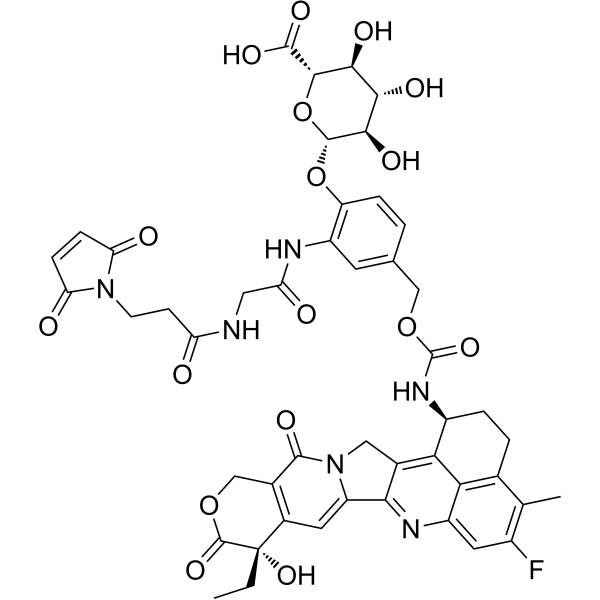
Mal-Gly-PAB-Exatecan-D-glucuronic acid can be used for Antibody-Drug Conjugates (ADCs) synthesis. Mal-Gly-PAB-Exatecan-D-glucuronic acid can be used for research of tumor research and diagnosis .
|
-
-
- HY-W008125
-
|
Acetobromo-alpha-D-glucuronic acid methyl ester, 98%
|
Biochemical Assay Reagents
Drug Intermediate
|
Others
|
|
Acetobromo-α-D-glucuronic acid methyl ester, 98% is a glucuronosyl donor. Acetobromo-α-D-glucuronic acid methyl ester, 98% is applicable to the synthesis of other compounds .
|
-
-
- HY-N6612R
-
|
|
Reference Standards
Endogenous Metabolite
Toll-like Receptor (TLR)
|
Metabolic Disease
Inflammation/Immunology
Cancer
|
|
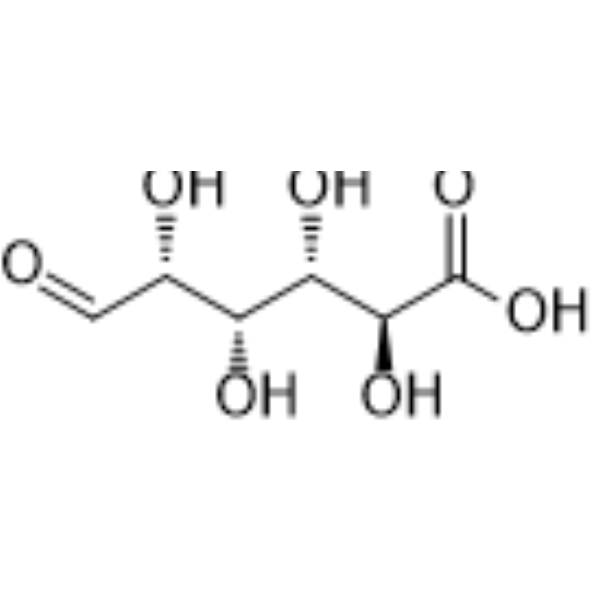
D-Glucuronic acid (Standard) is the analytical standard of D-Glucuronic acid. This product is intended for research and analytical applications. D-Glucuronic acid is a major component of many anti-inflammatory proteoglycans, which can promote embryonic development and inhibit cell aggregation. After being metabolized into ethyl glucuronide (HY-113093), D-Glucuronic acid activates Toll-like receptor 4 (TLR4), causing pain. D-Glucuronic acid and its derivative glucurono-lactone can serve as liver detoxifiers for human health prevention, and its derivatives also possess anti-tumor activity .
|
-
-
- HY-41982
-
|
D-Glucurono-6,3-lactone; D-Glucurono-γ-lactone; D-Glucuronolactone; Dicurone; Glucoxy; Glucurolactone; Glucurone
|
Environmental Pollutants
Endogenous Metabolite
Drug Derivative
|
Cardiovascular Disease
Metabolic Disease
|
|
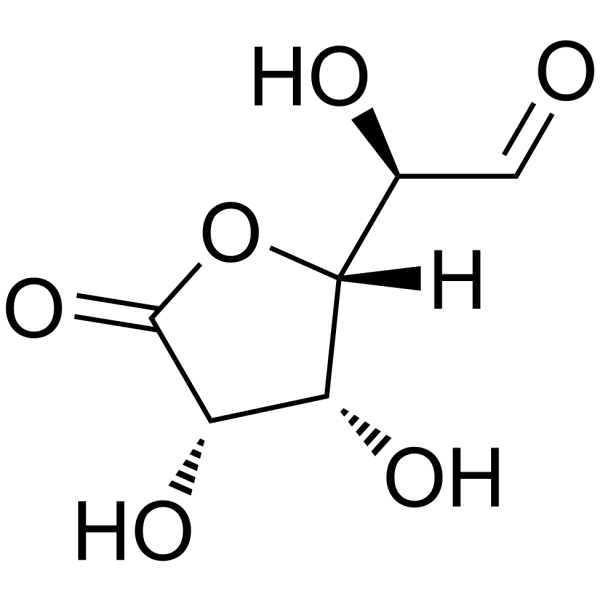
D-Glucuronic acid lactone (D-Glucurono-6,3-lactone; D-Glucurono-γ-lactone; D-Glucuronolactone; Dicurone; Glucoxy; Glucurolactone; Glucurone) is an endogenous metabolite and a glucuronic acid derivative. D-Glucuronic acid lactone serves as a starting reagent for the synthesis of 2,3,4-tris (tert-butyldimethylsilyl) glucuronic acid trichloroethyl ester, which is used to prepare 1-O-acyl glucuronic acids for the anti-inflammatory agent mL-3000 (HY-B1452), synthesize optically active glucuronic acids, and produce long-chain alkyl glucuronides. D-Glucuronic acid lactone shows potential for use in studies of reversible cerebral vasoconstriction syndrome (RCVS) .
|
-
-
- HY-177434
-
|
Precem-TcT; M 9140
|
Antibody-Drug Conjugates (ADCs)
Transmembrane Glycoprotein
Topoisomerase
|
Cancer
|
|
Precemtabart tocentecan (Precem-TcT; M 9140) is an anti-CEACAM5 (carcinoembryonic antigen-related cell adhesion molecule 5) antibody-drug conjugate (ADC). Precemtabart tocentecan consists of a tumor-specific anti-CEACAM5 monoclonal antibody Precemtabart (HY-P990940), a highly hydrophilic and stable cleavable β-glucuronide linker, and a topoisomerase 1 inhibitor payload Exatecan (HY-13631), and the drug-linker conjugate for ADC is Mal-Gly-PAB-Exatecan-D-glucuronic acid (HY-153179). Precemtabart tocentecan inhibits the growth of CEACAM5-positive cancer cells. Precemtabart tocentecan exhibits significant antitumor activity in CEACAM5-expressing xenograft models. Precemtabart tocentecan can be used for the study of CEACAM5-expressing advanced solid tumors, especially mCRC .
|
-
-
- HY-128749
-
|
Potassium D-glucarate
|
Endogenous Metabolite
Apoptosis
|
Metabolic Disease
Inflammation/Immunology
Cancer
|
|
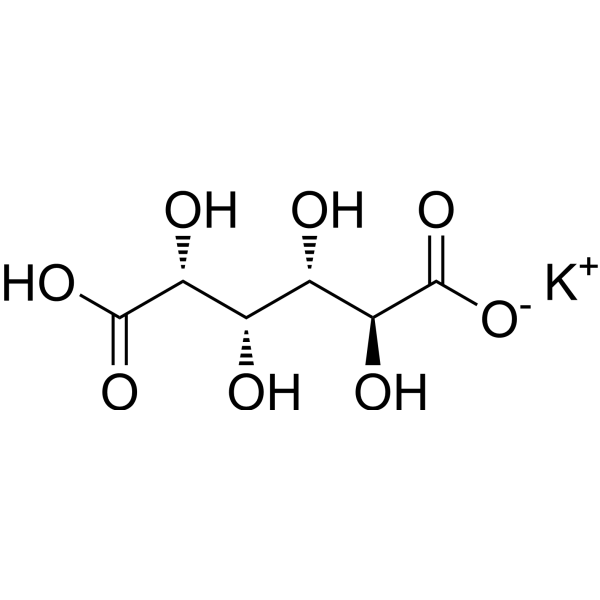
D-Glucaric acid potassium (Potassium D-glucarate) is an orally active end product of the D-glucuronic acid pathway in mammals. D-Glucaric acid potassium is present in a variety of fruits and vegetables. D-Glucaric acid potassium has cholesterol-lowering and anti-tumor activities. D-Glucaric acid potassium can inhibit tumor cell proliferation and inflammation, and induce apoptosis .
|
-
-
- HY-125954
-
|
UDP-α-D-glucuronic acid
|
Endogenous Metabolite
|
Metabolic Disease
|
|
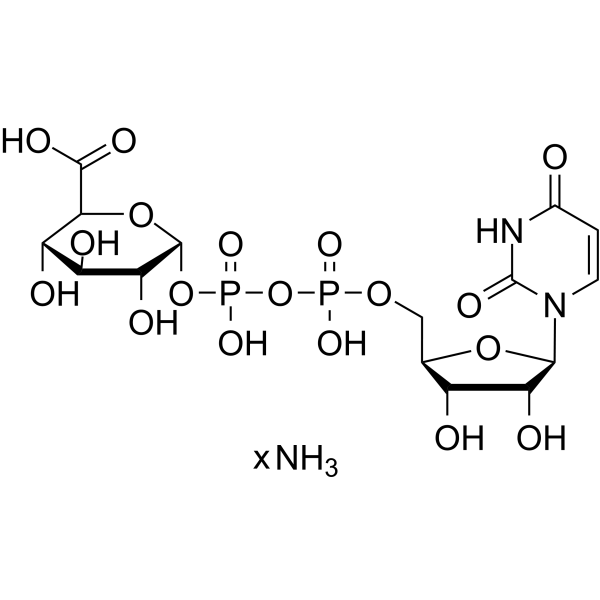
Uridine diphosphate glucuronic acid (UDP-α-D-glucuronic acid) is a glucuronic acid donor. Uridine diphosphate glucuronic acid transfers its glucuronic acid moiety to acceptor molecules, thereby forming "ether" glucuronides, while being converted into uridine 5'-pyrophosphate. Uridine diphosphate glucuronic acid serves as a substrate for Arabidopsis UDP-GlcA 4-epimerase 1, and undergoes reversible 4-epimerization to generate UDP-α-D-galacturonic acid .
|
-
-
- HY-160885A
-
|
|
ADC Payload
|
Cancer
|
|
NH2-Gly-PAB-Exatecan-D-glucuronic acid formic (Compound 8) is the formic salt form of H2N-Gly-PAB-Exatecan-D-glucuronic acid. H2N-Gly-PAB-Exatecan-D-glucuronic acid formic is an intermediate, which reacts with NHS group to form drug-linker conjugate for ADC, Mal-Gly-PAB-Exatecan-D-glucuronic acid (HY-153179) .
|
-
-
- HY-125954A
-
|
UDP-α-D-glucuronic acid ammonium
|
Endogenous Metabolite
|
Metabolic Disease
|
|
Uridine diphosphate glucuronic acid ammonium (UDP-α-D-glucuronic acid ammonium) is a glucuronic acid donor. Uridine diphosphate glucuronic acid ammonium transfers its glucuronic acid moiety to acceptor molecules, thereby forming "ether" glucuronides, while being converted into uridine 5'-pyrophosphate. Uridine diphosphate glucuronic acid ammonium serves as a substrate for Arabidopsis UDP-GlcA 4-epimerase 1, and undergoes reversible 4-epimerization to generate UDP-α-D-galacturonic acid .
|
-
-
- HY-N6612A
-
|
|
Endogenous Metabolite
Toll-like Receptor (TLR)
|
Neurological Disease
Metabolic Disease
Inflammation/Immunology
Cancer
|
|
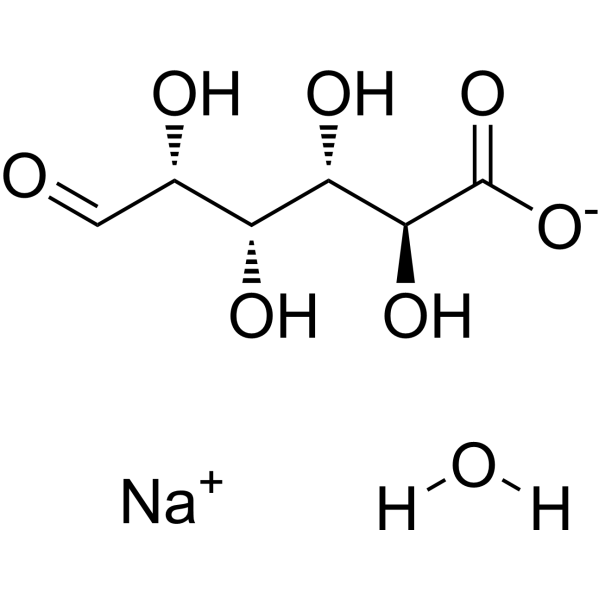
D-Glucuronic acid sodium salt monohydrate is a major component of many anti-inflammatory proteoglycans, which can promote embryonic development and inhibit cell aggregation. After being metabolized into ethyl glucuronide (HY-113093), D-Glucuronic acid sodium salt monohydrate activates Toll-like receptor 4 (TLR4), causing pain. D-Glucuronic acid sodium salt monohydrate and its derivative glucurono-lactone can serve as liver detoxifiers, and its derivatives also possess anti-tumor activity .
|
-
-
- HY-N6612S
-
-
-
- HY-N9412
-
|
|
Others
|
Others
|
|
4-O-Methyl-D-glucuronic acid is a kind of hemicellulose that can be isolated from the holocellulose of the Ganpi bast fibers .
|
-
-
- HY-128749A
-
|
Calcium D-glucarate tetrahydrate
|
Endogenous Metabolite
Apoptosis
|
Neurological Disease
Metabolic Disease
Inflammation/Immunology
Cancer
|
|
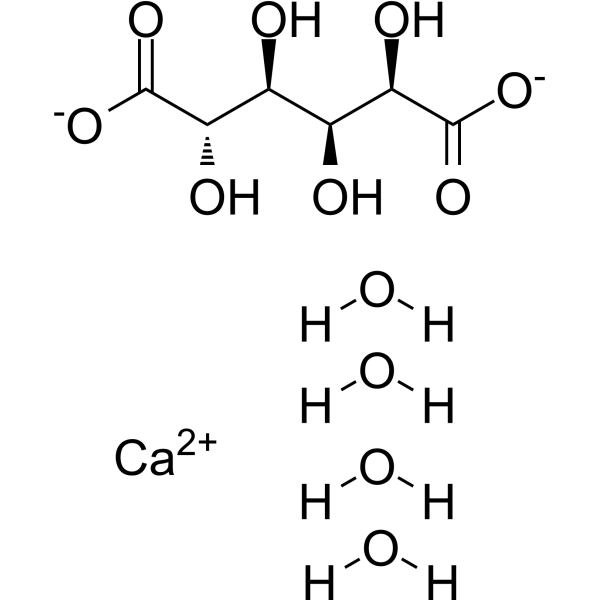
D-Glucaric acid tetrahydrate (Calcium D-glucarate tetrahydrate) is an orally active end product of the mammalian D-glucuronidation pathway. D-Glucaric acid tetrahydrate is found in a variety of fruits and vegetables. D-Glucaric acid tetrahydrate induces cell Apoptosis. D-Glucaric acid tetrahydrate reduces the expression of hippocampal myelin-related genes (Mbp, Plp1). D-Glucaric acid tetrahydrate has cholesterol-lowering and anti-tumor activities. D-Glucaric acid tetrahydrate can be used in the research of neurological diseases .
|
-
-
- HY-W145597
-
-
-
- HY-137134
-
-
-
- HY-125954S
-
|
UDP-α-D-glucuronic acid-13C,15N2
|
Isotope-Labeled Compounds
Endogenous Metabolite
|
Metabolic Disease
|
|
Uridine diphosphate glucuronic acid- 13C, 15N2 (UDP-α-D-glucuronic acid- 13C, 15N2) is the 13C- and 15N-labeled Uridine diphosphate glucuronic acid (HY-125954). Uridine diphosphate glucuronic acid ammonium (UDP-α-D-glucuronic acid ammonium) is a glucuronic acid donor. Uridine diphosphate glucuronic acid ammonium transfers its glucuronic acid moiety to acceptor molecules, thereby forming "ether" glucuronides, while being converted into uridine 5'-pyrophosphate. Uridine diphosphate glucuronic acid ammonium serves as a substrate for Arabidopsis UDP-GlcA 4-epimerase 1, and undergoes reversible 4-epimerization to generate UDP-α-D-galacturonic acid .
|
-
-
- HY-41982R
-
|
D-Glucurono-6,3-lactone (Standard); D-Glucurono-γ-lactone (Standard); D-Glucuronolactone (Standard); Dicurone (Standard); Glucoxy (Standard); Glucurolactone (Standard); Glucurone (Standard)
|
Reference Standards
Endogenous Metabolite
|
Metabolic Disease
|
|
D-Glucuronic acid lactone (Standard) is the analytical standard of D-Glucuronic acid lactone. This product is intended for research and analytical applications. D-Glucuronic acid lactone is an endogenous metabolite.
|
-
-
- HY-E70035
-
|
|
Endogenous Metabolite
|
Metabolic Disease
|
|
Glucuronokinase (AtGlcAK) is a member of the GHMP-kinase. Glucuronokinase (AtGlcAK) shows unique substrate specificity for D-glucuronic acid with a Km value of 0.7 mM. Glucuronokinase (AtGlcAK) catalyzes D-glucuronic acid and ATP to produce D-glucuronic acid-1-phosphate and ADP .
|
-
-
- HY-160885
-
|
|
ADC Payload
|
Others
|
|
NH2-Gly-PAB-Exatecan-D-glucuronic acid (Compound 8) is an intermediate, which reacts with NHS group to form drug-linker conjugate for ADC, Mal-Gly-PAB-Exatecan-D-glucuronic acid (HY-153179) .
|
-
-
- HY-W699702
-
|
|
Biochemical Assay Reagents
|
Others
|
|
D-Glucuronic acid,methyl ester,2,3,4-tribenzoate is a class of biochemical reagents used in glycobiology research. Glycobiology studies the structure, synthesis, biology, and evolution of sugars. It involves carbohydrate chemistry, enzymology of glycan formation and degradation, protein-glycan recognition, and the role of glycans in biological systems. This field is closely related to basic research, biomedicine, and biotechnology .
|
-
-
- HY-W008125S
-
|
Methyl acetobromo-α-D-glucuronate-13C6 methyl ester
|
Isotope-Labeled Compounds
Biochemical Assay Reagents
Drug Intermediate
|
Cardiovascular Disease
|
|
Acetobromo-a-D-glucuronic acid- 13C6 methyl ester (Methyl acetobromo-α-D-glucuronate- 13C6 methyl ester) is 13C labeled Acetobromo-α-D-glucuronic acid methyl ester, 98% (HY-W008125). Acetobromo-α-D-glucuronic acid methyl ester, 98% is an intermediate. Acetobromo-α-D-glucuronic acid methyl ester, 98% can be used to synthesize HMR1098-S-Glucuronide Methyl Ester. HMR1098 is a novel KATP blocker that is metabolized to S-glucuronide in rat and dog bile. Acetobromo-α-D-glucuronic acid methyl ester, 98% can be used in the research of sudden cardiac death .
|
-
-
- HY-W048546
-
|
Methyl-(2,3,4-tri-O-acetyl-a-D-glucopyranosyl)uronate
|
Biochemical Assay Reagents
|
|
|
2,3,4-Tri-O-acetyl-α-D-glucuronic acid methyl ester is a Biochemical Assay Reagent, and can be used for chemical synthesis .
|
-
-
- HY-W403047
-
|
|
Biochemical Assay Reagents
|
Others
|
|
Methyl 2,3,4-Tri-O-benzyl-α-D-glucuronic Acid, Benzyl Ester is a class of biochemical reagents used in glycobiology research. Glycobiology studies the structure, synthesis, biology, and evolution of sugars. It involves carbohydrate chemistry, enzymology of glycan formation and degradation, protein-glycan recognition, and the role of glycans in biological systems. This field is closely related to basic research, biomedicine, and biotechnology .
|
-
-
- HY-W794390
-
|
|
Biochemical Assay Reagents
|
Others
|
|
2,3,4-Tri-O-benzoyl-α-D-glucuronic acid methyl ester,trichloroacetimidate is a class of biochemical reagents used in glycobiology research. Glycobiology studies the structure, synthesis, biology, and evolution of sugars. It involves carbohydrate chemistry, enzymology of glycan formation and degradation, protein-glycan recognition, and the role of glycans in biological systems. This field is closely related to basic research, biomedicine, and biotechnology .
|
-
-
- HY-W412723
-
|
β-D-Glucopyranuronic acid tetraacetate
|
Biochemical Assay Reagents
|
|
|
1,2,3, 4-tetra-o-acetyl-β-d-glucuronic acid (β-D-Glucopyranuronic acid tetraacetate) is a class of biochemical reagents used in the study of glycobiology. Glycobiology studies the structure, synthesis, biology, and evolution of sugars. It deals with carbohydrate chemistry, glycan formation and degradation enzymology, protein-glycan recognition, and the role of glycans in biological systems. The field is closely related to basic research, biomedicine and biotechnology .
|
-
-
- HY-128749AR
-
|
Calcium D-glucarate tetrahydrate (Standard)
|
Endogenous Metabolite
Reference Standards
Apoptosis
|
Neurological Disease
Metabolic Disease
Inflammation/Immunology
Cancer
|
|
D-Glucaric acid tetrahydrate (Standard) (Calcium D-glucarate tetrahydrate (Standard)) is the analytical standard of D-Glucaric acid tetrahydrate (HY-128749A). This product is intended for research and analytical applications. D-Glucaric acid tetrahydrate (Calcium D-glucarate tetrahydrate) is an orally active end product of the mammalian D-glucuronidation pathway. D-Glucaric acid tetrahydrate is found in a variety of fruits and vegetables. D-Glucaric acid tetrahydrate induces cell Apoptosis. D-Glucaric acid tetrahydrate reduces the expression of hippocampal myelin-related genes (Mbp, Plp1). D-Glucaric acid tetrahydrate has cholesterol-lowering and anti-tumor activities. D-Glucaric acid tetrahydrate can be used in the research of neurological diseases .
|
-
-
- HY-D1578
-
|
|
Fluorescent Dye
β-glucuronidase
|
Others
|
|
C12FDGlcU is a lipophilic analog of fluorescein di-β-D-glucuronic acid. C12FDGlcU can be useful for the detection of β-glucuronidase (GUS) gene expression. C12FDGlcU can enter the cells and then be cleaved by β-glucuronidase, generating the yellow-colored, green-fluorescent fluorescein (Abs/Em of the reaction product: 495/518 nm) .
|
-
-
- HY-W357152
-
-
-
- HY-E70101B
-
|
|
Endogenous Metabolite
|
Metabolic Disease
|
|
α-Glucuronidase, Cellvibrio japonicus (EC 3.2.1.139), is a glycosidase that hydrolyzes O- and S-glycosides. Its two substrates are α-D-glucuronide and water, and its two products are an alcohol and D-glucuronic acid.
|
-
-
- HY-E70101A
-
|
|
Endogenous Metabolite
|
Metabolic Disease
|
|
α-Glucuronidase, Opitutus terrae PB90-1 (EC 3.2.1.139), is a glycosidase that hydrolyzes O- and S-glycosides. Its two substrates are α-D-glucuronide and water, and its two products are an alcohol and D-glucuronic acid.
|
-
-
- HY-W039890
-
|
|
Biochemical Assay Reagents
|
Others
|
|
1-(2,2,2-Trifluoro-N-phenylacetimidate)-2,3,4-tri-?O-acetyl-D-glucuronic acid methyl ester is a class of biochemical reagents used in glycobiology research. Glycobiology studies the structure, synthesis, biology, and evolution of sugars. It involves carbohydrate chemistry, enzymology of glycan formation and degradation, protein-glycan recognition, and the role of glycans in biological systems. This field is closely related to basic research, biomedicine, and biotechnology .
|
-
-
- HY-N17987
-
|
|
Others
|
Others
|
|
Hemsloside G1 is a saponin that found in the rhizome of Hemsleya graciliflora .
|
-
-
- HY-N19793
-
|
|
Drug Derivative
|
Cardiovascular Disease
Metabolic Disease
|
|
Derrisaponin B is an oleanane-type triterpenoid saponin and sweetener found in the stems of Derris eriocarpa How, with sweetness intensity approximately 2 times that of Sucrose (HY-B1779) at 1% concentration. Derrisaponin B exhibits sweet taste activity. Derrisaponin B can be used for research on hypertension, hyperglycemia, and obesity .
|
-
-
- HY-N19794
-
|
|
Drug Derivative
|
Cardiovascular Disease
Metabolic Disease
|
|
Derrisaponin A is an oleanane-type triterpenoid saponin and sweetener found in the stems of Derris eriocarpa, with sweetness intensity approximately 80 times that of Sucrose (HY-B1779) at 1% concentration. Derrisaponin A shows no acute toxic activity. Derrisaponin A can be used for research on hypertension, hyperglycemia, and obesity .
|
-
| Cat. No. |
Product Name |
Type |
-
- HY-177434
-
|
Precem-TcT; M 9140
|
Fluorescent Dyes
|
|
Precemtabart tocentecan (Precem-TcT; M 9140) is an anti-CEACAM5 (carcinoembryonic antigen-related cell adhesion molecule 5) antibody-drug conjugate (ADC). Precemtabart tocentecan consists of a tumor-specific anti-CEACAM5 monoclonal antibody Precemtabart (HY-P990940), a highly hydrophilic and stable cleavable β-glucuronide linker, and a topoisomerase 1 inhibitor payload Exatecan (HY-13631), and the drug-linker conjugate for ADC is Mal-Gly-PAB-Exatecan-D-glucuronic acid (HY-153179). Precemtabart tocentecan inhibits the growth of CEACAM5-positive cancer cells. Precemtabart tocentecan exhibits significant antitumor activity in CEACAM5-expressing xenograft models. Precemtabart tocentecan can be used for the study of CEACAM5-expressing advanced solid tumors, especially mCRC .
|
-
- HY-D1578
-
|
|
Fluorescent Dyes
|
|
C12FDGlcU is a lipophilic analog of fluorescein di-β-D-glucuronic acid. C12FDGlcU can be useful for the detection of β-glucuronidase (GUS) gene expression. C12FDGlcU can enter the cells and then be cleaved by β-glucuronidase, generating the yellow-colored, green-fluorescent fluorescein (Abs/Em of the reaction product: 495/518 nm) .
|
| Cat. No. |
Product Name |
Type |
-
- HY-W008125
-
|
Acetobromo-alpha-D-glucuronic acid methyl ester, 98%
|
Biochemical Assay Reagents
|
|
Acetobromo-α-D-glucuronic acid methyl ester, 98% is a glucuronosyl donor. Acetobromo-α-D-glucuronic acid methyl ester, 98% is applicable to the synthesis of other compounds .
|
-
- HY-125954A
-
|
UDP-α-D-glucuronic acid ammonium
|
Biochemical Assay Reagents
|
|
Uridine diphosphate glucuronic acid ammonium (UDP-α-D-glucuronic acid ammonium) is a glucuronic acid donor. Uridine diphosphate glucuronic acid ammonium transfers its glucuronic acid moiety to acceptor molecules, thereby forming "ether" glucuronides, while being converted into uridine 5'-pyrophosphate. Uridine diphosphate glucuronic acid ammonium serves as a substrate for Arabidopsis UDP-GlcA 4-epimerase 1, and undergoes reversible 4-epimerization to generate UDP-α-D-galacturonic acid .
|
-
- HY-137134
-
-
- HY-W699702
-
|
|
Biochemical Assay Reagents
|
|
D-Glucuronic acid,methyl ester,2,3,4-tribenzoate is a class of biochemical reagents used in glycobiology research. Glycobiology studies the structure, synthesis, biology, and evolution of sugars. It involves carbohydrate chemistry, enzymology of glycan formation and degradation, protein-glycan recognition, and the role of glycans in biological systems. This field is closely related to basic research, biomedicine, and biotechnology .
|
-
- HY-W048546
-
|
Methyl-(2,3,4-tri-O-acetyl-a-D-glucopyranosyl)uronate
|
Biochemical Assay Reagents
|
|
2,3,4-Tri-O-acetyl-α-D-glucuronic acid methyl ester is a Biochemical Assay Reagent, and can be used for chemical synthesis .
|
-
- HY-W403047
-
|
|
Biochemical Assay Reagents
|
|
Methyl 2,3,4-Tri-O-benzyl-α-D-glucuronic Acid, Benzyl Ester is a class of biochemical reagents used in glycobiology research. Glycobiology studies the structure, synthesis, biology, and evolution of sugars. It involves carbohydrate chemistry, enzymology of glycan formation and degradation, protein-glycan recognition, and the role of glycans in biological systems. This field is closely related to basic research, biomedicine, and biotechnology .
|
-
- HY-W794390
-
|
|
Biochemical Assay Reagents
|
|
2,3,4-Tri-O-benzoyl-α-D-glucuronic acid methyl ester,trichloroacetimidate is a class of biochemical reagents used in glycobiology research. Glycobiology studies the structure, synthesis, biology, and evolution of sugars. It involves carbohydrate chemistry, enzymology of glycan formation and degradation, protein-glycan recognition, and the role of glycans in biological systems. This field is closely related to basic research, biomedicine, and biotechnology .
|
-
- HY-W412723
-
|
β-D-Glucopyranuronic acid tetraacetate
|
Biochemical Assay Reagents
|
|
1,2,3, 4-tetra-o-acetyl-β-d-glucuronic acid (β-D-Glucopyranuronic acid tetraacetate) is a class of biochemical reagents used in the study of glycobiology. Glycobiology studies the structure, synthesis, biology, and evolution of sugars. It deals with carbohydrate chemistry, glycan formation and degradation enzymology, protein-glycan recognition, and the role of glycans in biological systems. The field is closely related to basic research, biomedicine and biotechnology .
|
-
- HY-W357152
-
-
- HY-W039890
-
|
|
Biochemical Assay Reagents
|
|
1-(2,2,2-Trifluoro-N-phenylacetimidate)-2,3,4-tri-?O-acetyl-D-glucuronic acid methyl ester is a class of biochemical reagents used in glycobiology research. Glycobiology studies the structure, synthesis, biology, and evolution of sugars. It involves carbohydrate chemistry, enzymology of glycan formation and degradation, protein-glycan recognition, and the role of glycans in biological systems. This field is closely related to basic research, biomedicine, and biotechnology .
|
| Cat. No. |
Product Name |
Category |
Target |
Chemical Structure |
| Cat. No. |
Product Name |
Chemical Structure |
-
- HY-N6612S
-
|
|
|
D-Glucuronic acid sodium monohydrate- 13C6 is the 13C-labeled D-Glucuronic acid sodium salt monohydrate (HY-N6612A). D-Glucuronic acid sodium salt monohydrate is an endogenous metabolite.
|
-
-
- HY-125954S
-
|
|
|
Uridine diphosphate glucuronic acid- 13C, 15N2 (UDP-α-D-glucuronic acid- 13C, 15N2) is the 13C- and 15N-labeled Uridine diphosphate glucuronic acid (HY-125954). Uridine diphosphate glucuronic acid ammonium (UDP-α-D-glucuronic acid ammonium) is a glucuronic acid donor. Uridine diphosphate glucuronic acid ammonium transfers its glucuronic acid moiety to acceptor molecules, thereby forming "ether" glucuronides, while being converted into uridine 5'-pyrophosphate. Uridine diphosphate glucuronic acid ammonium serves as a substrate for Arabidopsis UDP-GlcA 4-epimerase 1, and undergoes reversible 4-epimerization to generate UDP-α-D-galacturonic acid .
|
-
-
- HY-W008125S
-
|
|
|
Acetobromo-a-D-glucuronic acid- 13C6 methyl ester (Methyl acetobromo-α-D-glucuronate- 13C6 methyl ester) is 13C labeled Acetobromo-α-D-glucuronic acid methyl ester, 98% (HY-W008125). Acetobromo-α-D-glucuronic acid methyl ester, 98% is an intermediate. Acetobromo-α-D-glucuronic acid methyl ester, 98% can be used to synthesize HMR1098-S-Glucuronide Methyl Ester. HMR1098 is a novel KATP blocker that is metabolized to S-glucuronide in rat and dog bile. Acetobromo-α-D-glucuronic acid methyl ester, 98% can be used in the research of sudden cardiac death .
|
-
Your information is safe with us. * Required Fields.
Inquiry Information
- Product Name:
- Cat. No.:
- Quantity:
- MCE Japan Authorized Agent:

