1. Search Result
Search Result
Results for "

E1

" in MedChemExpress (MCE) Product Catalog:

284

Inhibitors & Agonists

2

Screening Libraries

2

Fluorescent Dye

1

Biochemical Assay Reagents

8

Peptides

9

Inhibitory Antibodies

52

Natural
Products

50

Recombinant Proteins

34

Isotope-Labeled Compounds

80

Antibodies

1

Click Chemistry

18

Oligonucleotides

Targets Recommended:
Cat. No. Product Name Target Research Areas Chemical Structure
  • HY-B0131
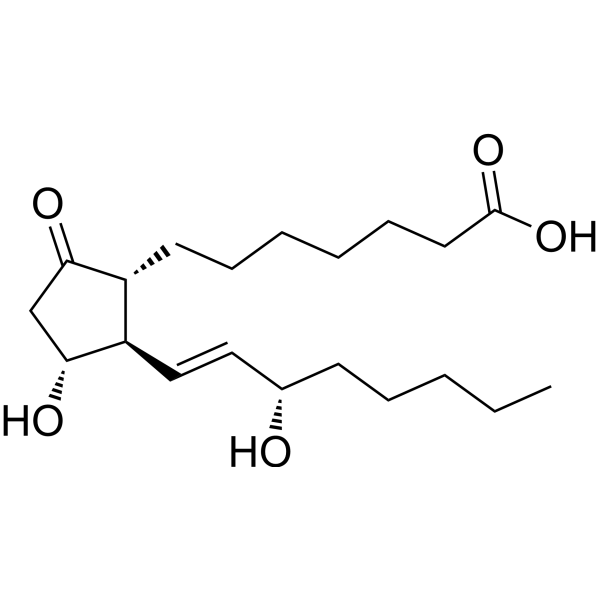
    Prostaglandin E1
    Maximum Cited Publications
    21 Publications Verification

    Alprostadil; PGE1

    Prostaglandin Receptor Endogenous Metabolite Cardiovascular Disease Endocrinology Cancer
    Prostaglandin E1 (Alprostadil) is a prostanoid receptor ligand, with Kis of 1.1 nM, 2.1 nM, 10 nM, 33 nM and 36 nM for mouse EP3, EP4, EP2, IP and EP1, respectively. Prostaglandin E1 induces vasodilation and inhibits platelet aggregation. Prostaglandin E1 can be used as a vasodilator for the research of peripheral vascular diseases [1] .
    Prostaglandin E1
  • HY-B0234
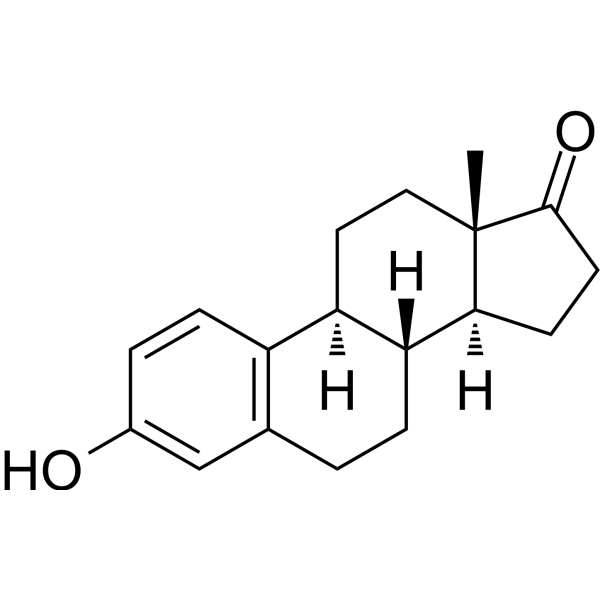
    Estrone
    5+ Cited Publications

    E1; Oestrone

    Estrogen Receptor/ERR Endogenous Metabolite Endocrinology Cancer
    Estrone (E1) is a natural estrogenic hormone. Estrone is the main representative of the endogenous estrogens and is produced by several tissues, especially adipose tissue. Estrone is the result of the process of aromatization of androstenedione that occurs in fat cells [1] .
    Estrone
  • HY-114041
    Resolvin E1
    2 Publications Verification

    RvE1

    Endogenous Metabolite Inflammation/Immunology
    Resolvin E1 (RvE1), a potent endogenous pro-resolving mediator of inflammation, is derived from omega-3 fatty acid eicosapentaenoic acid (EPA). Resolvin E1 is endogenously biosynthesized from EPA in the presence of Aspirin during the spontaneous resolution phase of acute inflammation, where specific cell-cell interactions occur. Resolvin E1 possesses unique counterregulatory actions that inhibit polymorphonuclear leukocyte (PMN) transendothelial migration. Resolvin E1 also acts as a potent inhibitor of leukocyte infiltration, dendritic cell migration, and IL-12 production [1] .
    Resolvin E1
  • HY-137894A
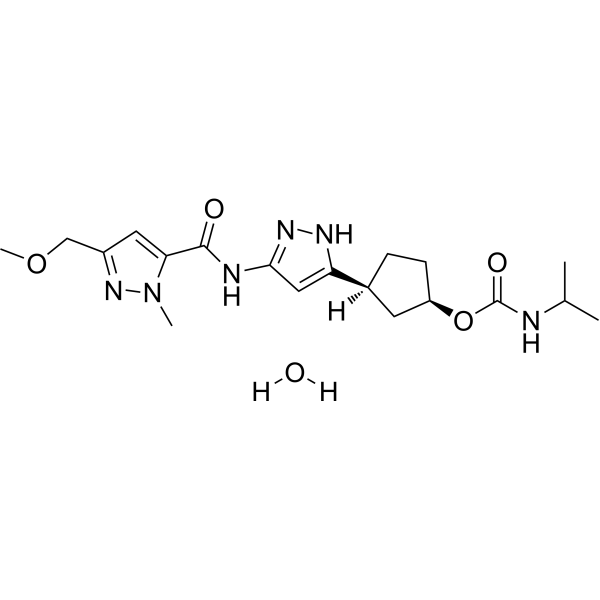
    Tagtociclib hydrate
    4 Publications Verification

    PF-07104091 hydrate

    CDK GSK-3 Cancer
    PF-07104091 hydrate is a potent and selective CDK2/cyclin E1 and GSK3β inhibitor, with Kis of 1.16 and 537.81 nM, respectively. PF-07104091 hydrate has anti-tumor activity for cyclin E1-amplified cancers. (patent WO2020157652A2).
    Tagtociclib hydrate
  • HY-13296
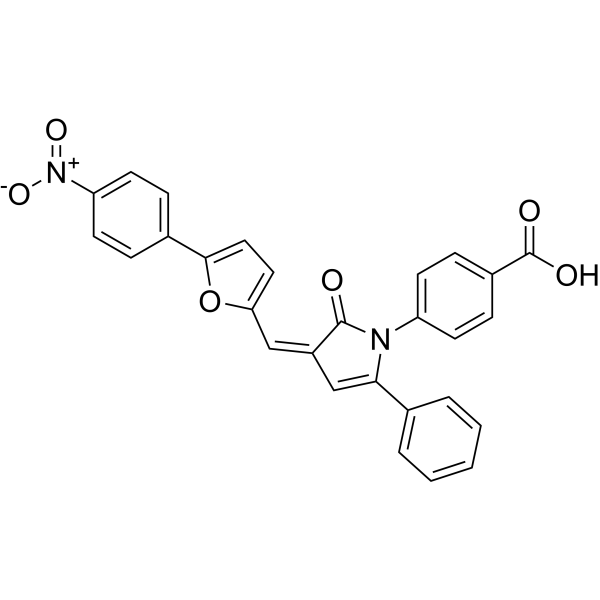
    PYR-41
    20+ Cited Publications

    E1/E2/E3 Enzyme Apoptosis Cancer
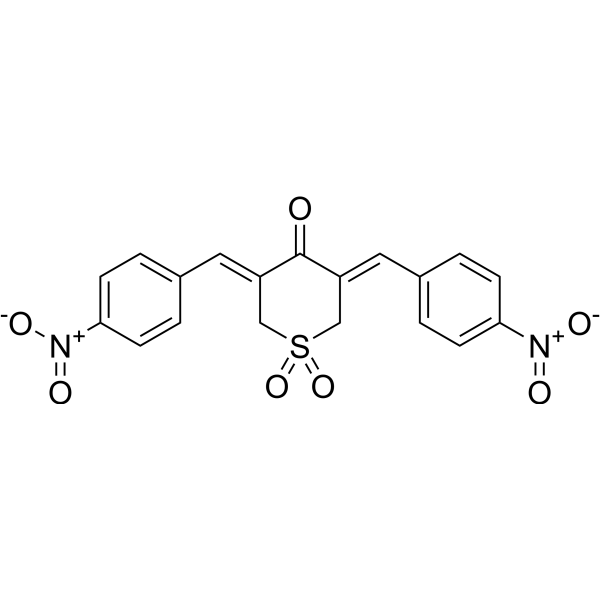
    PYR-41 is a selective and cell permeable inhibitor of ubiquitin-activating enzyme E1 with an IC50 of < 10 μM, with little activity at E2 and E3.
    PYR-41
  • HY-17573
    Carbetocin
    2 Publications Verification

    Oxytocin Receptor Neurological Disease Endocrinology
    Carbetocin, an oxytocin (OT) analogue, is an oxytocin receptor agonist with a Ki of 7.1 nM. Carbetocin has high affinity to chimeric N-terminus (E1) of the oxytocin receptor (Ki=1.17 μM). Carbetocin has the potential for postpartum hemorrhage research. Carbetocin can crosse the blood-brain barrier and produces antidepressant-like activity via activation of oxytocin receptors in the CNS [1] .
    Carbetocin
  • HY-B0234R
    Estrone (Standard)
    5+ Cited Publications

    E1(Standard); Oestrone (Standard)

    Reference Standards Estrogen Receptor/ERR Endogenous Metabolite Endocrinology Cancer
    Estrone (Standard) is the analytical standard of Estrone. This product is intended for research and analytical applications. Estrone (E1) is a natural estrogenic hormone. Estrone is the main representative of the endogenous estrogens and is produced by several tissues, especially adipose tissue. Estrone is the result of the process of aromatization of androstenedione that occurs in fat cells [1] .
    Estrone (Standard)
  • HY-110273
    N106
    1 Publications Verification

    Calcium Channel E1/E2/E3 Enzyme Cardiovascular Disease
    N106 is a first-in-class sarcoplasmic reticulum calcium ATPase (SERCA2a) SUMOylation activator. N106 directly activates the SUMO-activating enzyme, E1 ligase. N106 can be used for heart failure research [1].
    N106
  • HY-114304
    COH000
    2 Publications Verification

    E1/E2/E3 Enzyme Cancer
    COH000 is an allosteric, covalent and irreversible inhibitor of ubiquitin-like 1-activating enzyme (SUMO-activating enzyme) (E1), with an IC50 of 0.2 μM for SUMOylation in vitro [1].
    COH000
  • HY-118189
    Misoprostol acid
    1 Publications Verification

    Prostaglandin Receptor Inflammation/Immunology
    Misoprostol acid is an active metabolite of Misoprostol. Misoprostol is a synthetic analogue of prostaglandin E1 (PGE1), extensively absorbed, and undergoes rapid de-esterification to Misoprostol acid in the gastrointestinal tract after oral administration. Misoprostol can be used for non-steroidal anti-inflammatory drug-induced (NSAID) gastric ulcers [1]. Misoprostol is an oral agent used to induce labor .
    Misoprostol acid
  • HY-B0234S2

    E1-d4; Oestrone-d4

    Estrogen Receptor/ERR Endogenous Metabolite Endocrinology Cancer
    Estrone-d4 is the deuterium labeled Estrone. Estrone (E1) is a natural estrogenic hormone. Estrone is the main representative of the endogenous estrogens and is produced by several tissues, especially adipose tissue. Estrone is the result of the process of aromatization of androstenedione that occurs in fat cells [1] .
    Estrone-d4
  • HY-17573A
    Carbetocin acetate
    2 Publications Verification

    Oxytocin Receptor Neurological Disease Endocrinology
    Carbetocin acetate, an oxytocin (OT) analogue, is an oxytocin receptor agonist with a Ki of 7.1 nM. Carbetocin acetate has high affinity to chimeric N-terminus (E1) of the oxytocin receptor (Ki=1.17 μM). Carbetocin acetate has the potential for postpartum hemorrhage research. Carbetocin acetate can crosse the blood-brain barrier and produces antidepressant-like activity via activation of oxytocin receptors in the CNS [1] .
    Carbetocin acetate
  • HY-147652

    DNA Stain Others
    G-quadruplex DNA fluorescence probe 1 (Compound E1) is a selective G-quadruplex DNA targeting fluorescent probe. G-quadruplex DNA fluorescence probe 1 can pass through membrane and enter living cells with low cytotoxicity [1].
    G-quadruplex DNA fluorescence probe 1
  • HY-N11709

    Apoptosis VEGFR ATM/ATR PTEN Akt mTOR HIF/HIF Prolyl-Hydroxylase NF-κB Notch Cholinesterase (ChE) Amyloid-β γ-secretase Ferroptosis Fungal Infection Neurological Disease Metabolic Disease Cancer
    Theasaponin E1 is an orally effective tea saponin. Theasaponin E1 inhibits the proliferation of cancer cells by activating apoptosis. Theasaponin E1 inhibits angiogenesis in ovarian cancer cells and HUVECs by reducing the expression of VEGF. Theasaponin E1 upregulates the phosphorylation level of ATM protein and the expression level of PTEN protein in cancer cells, decreases the phosphorylation levels of Akt, mTOR, p70S6K and 4E-BP1 proteins, downregulates the expression of HIF-1α and NF-κB, and reduces the protein expression of Notch ligands Dll4 and Jagged1. Theasaponin E1 exerts neuroprotective effects by inhibiting the activity of acetylcholinesterase, activating α-secretase and neprilysin, reducing the concentration of , and inhibiting the activities of β-secretase and γ-secretase. Theasaponin E1 exhibits toxic effects on cancer cells and quinone reductase-inducing activity, and inhibits tumor growth in vivo. Theasaponin E1 induces ferroptosis in Pomacea canaliculata by synergistically disrupting cholesterol homeostasis and sphingolipid metabolism. Theasaponin E1 possesses anti-biofilm activity against Candida albicans. Theasaponin E1 can be used in the research of ovarian cancer, obesity, Alzheimer's disease and fungal infections [1] .
    Theasaponin E1
  • HY-N6853

    DNA/RNA Synthesis AMPK Metabolic Disease Cancer
    Mogroside I E1 is a triterpenoid glycoside and a nonsugar sweetener. Mogrosides are sweeter than sucrose. Mogrosides exhibit antioxidant, antidiabetic and anticancer activities [1].
    Mogroside I E1
  • HY-103436

    E1/E2/E3 Enzyme Cancer
    NSC624206 is an inhibitor of ubiquitin E1 (UBA1), with an IC50 of ~9 μM. NSC624206 specifically blocks ubiquitin-thioester formation (IC50=13 μM) but has no effect on ubiquitin adenylation [1].
    NSC624206
  • HY-N3389
    Licoisoflavone A
    2 Publications Verification

    SARS-CoV Sirtuin CDK Apoptosis Infection Metabolic Disease Cancer
    Licoisoflavone A is an orally active isoflavone. Licoisoflavone A inhibits proliferation, induces apoptosis, and causes G1/S phase arrest in colorectal cancer (CRC) cells. Licoisoflavone A inhibits the CDK2-Cyclin E1 axis. Licoisoflavone A inhibits lipid peroxidation with an IC50 of 7.2 μM. Licoisoflavone A shows a dose-dependent inhibition effect on SARS-CoV-2 infection. Licoisoflavone A exhibits significant anti-tumor efficacy in mice bearing CT26 cell subcutaneous xenografts. Licoisoflavone A can be used for the study of colorectal cancer and SARS-CoV-2 infection [1] .
    Licoisoflavone A
  • HY-108531

    RAR/RXR Metabolic Disease
    ER 50891 is a RARα antagonist. ER 50891 can significantly antagonize the inhibitory effect of all-trans retinoic acid (ATRA) on the total cell metabolic activity and proliferation of MC3T3-E1 preosteoblasts. ER 50891 rescues ATRA-inhibited osteocalcin (OCN) expression and extracellular matrix mineralization, and suppresses alkaline phosphatase (ALP) activity synergistically. ER 50891 can be used for the study of osteoporosis related to ATRA-induced inhibition of osteoblastogenesis [1].
    ER 50891
  • HY-116096

    15(R)-Prostaglandin E1; 15-Epiprostaglandin E1

    15-PGDH Others
    15-epi-PGE1 (15R-Prostaglandin E1; 15-Epiprostaglandin E1) is a stereoisomer of PGE1 (HY-B0131) but with less biological activity . 15-epi-PGE1 is a non-competitive inhibitor for human placental 15-Hydroxyprostaglandin dehydrogenase (15-PGDH) with an IC50 of 170 μM [1].
    15-epi-PGE1
  • HY-114041S

    RvE1-d4

    Isotope-Labeled Compounds Endogenous Metabolite Inflammation/Immunology
    Resolvin E1-d4 (RvE1-d4) is deuterium labeled Resolvin E1. Resolvin E1 (RvE1), a potent endogenous pro-resolving mediator of inflammation, is derived from omega-3 fatty acid eicosapentaenoic acid (EPA). Resolvin E1 is endogenously biosynthesized from EPA in the presence of Aspirin during the spontaneous resolution phase of acute inflammation, where specific cell-cell interactions occur. Resolvin E1 possesses unique counterregulatory actions that inhibit polymorphonuclear leukocyte (PMN) transendothelial migration. Resolvin E1 also acts as a potent inhibitor of leukocyte infiltration, dendritic cell migration, and IL-12 production [1] .
    Resolvin E1-d4
  • HY-P2319A

    p38 MAPK JNK Inflammation/Immunology
    OVA-E1 peptide TFA, is an antagonist variant of SIINFEKL [OVA (257-264). OVA-E1 peptide, activates the p38 and JNK cascades similarly in mutant and wild-type thymocytes [1].
    OVA-E1 peptide TFA
  • HY-161251

    E1/E2/E3 Enzyme Cancer
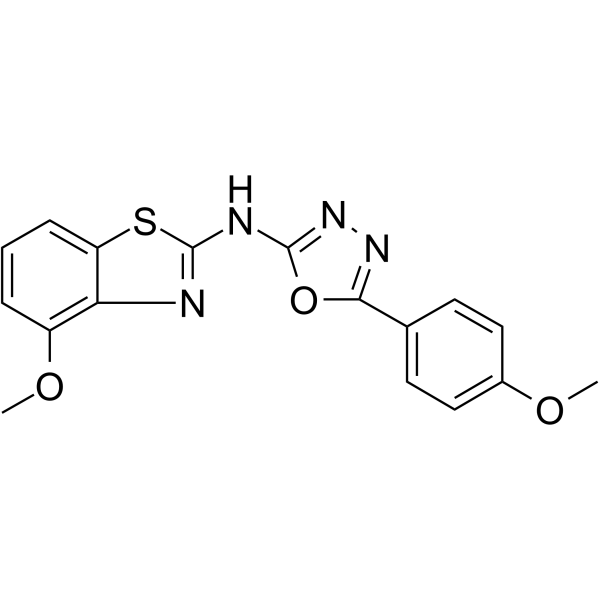
    SPOP-IN-2 (compound E1) is a Speckle-type POZ protein (SPOP) inhibitor with IC50 of 0.58 μM, which disrupt the SPOP-subtrate interaction and selectively inhibits proliferation of ccRCC [1].
    SPOP-IN-2
  • HY-170897

    CDK Cancer
    CDK2-IN-40 is a CDK2 (Cyclin dependent kinase 2) inhibitor, extracted from patent WO 2024/254245 A1 (Example 1). CDK2-IN-40 inhibits CDK2/Cyclin E1 with an IC50 of ≤ 10 nM [1].
    CDK2-IN-40
  • HY-137584

    1a,1b-Dihomo PGE1

    Prostaglandin Receptor Cardiovascular Disease
    1a,1b-Dihomo prostaglandin E1 (1a,1b-Dihomo PGE1) is an E1-type prostaglandin. 1a,1b-Dihomo prostaglandin E1 can be used for research on platelet aggregation [1].
    1a,1b-Dihomo prostaglandin E1
  • HY-120665

    PGB1

    Prostaglandin Receptor Endocrinology
    Prostaglandin B1 (PGB1) is a metabolite of Prostaglandin E1 (HY-B0131). Prostaglandin E1 is a prostanoid receptor ligand [1] .
    Prostaglandin B1
  • HY-113053

    Endogenous Metabolite Apoptosis Neurological Disease Inflammation/Immunology Endocrinology Cancer
    Prostaglandin A1 is a dehydration derivate of Prostaglandin E1. Prostaglandin A1 exhibits inhibitory activities against tumor growth, inflammation, virus replication, platelet aggregation and excitotoxin-induced neurons apoptosis [1].
    Prostaglandin A1
  • HY-109045A

    BTA074 hydrochloride; AP 611074 hydrochloride

    E1/E2/E3 Enzyme HPV Infection
    Teslexivir (BTA074) hydrochloride is a potent antiviral agent. Teslexivir hydrochloride is a potent and selective inhibitor of the interaction between two essential viral proteins, E1 and E2, an association that is a necessary step in the DNA replication and thus viral production for Human Papilloma Virus (HPV) 6 and 11. Teslexivir hydrochloride can be used for condyloma research [1].
    Teslexivir hydrochloride
  • HY-B0234S1

    E1-d2; Oestrone-d2

    Isotope-Labeled Compounds Estrogen Receptor/ERR Endogenous Metabolite Endocrinology Cancer
    Estrone-d2 is the deuterium labeled Estrone. Estrone (E1) is a natural estrogenic hormone. Estrone is the main representative of the endogenous estrogens and is produced by several tissues, especially adipose tissue. Estrone is the result of the process of aromatization of androstenedione that occurs in fat cells [1] .
    Estrone-d2
  • HY-B0234S

    E1-13C3; Oestrone-13C3

    Isotope-Labeled Compounds Estrogen Receptor/ERR Endogenous Metabolite Endocrinology Cancer
    Estrone- 13C3 is the 13C-labeled Estrone. Estrone (E1) is a natural estrogenic hormone. Estrone is the main representative of the endogenous estrogens and is produced by several tissues, especially adipose tissue. Estrone is the result of the process of aromatization of androstenedione that occurs in fat cells [1] .
    Estrone-13C3
  • HY-B0131R

    Alprostadil(Standard); PGE1 (Standard)

    Reference Standards Prostaglandin Receptor Endogenous Metabolite Cardiovascular Disease Endocrinology Cancer
    Prostaglandin E1 (Standard) is the analytical standard of Prostaglandin E1. This product is intended for research and analytical applications. Prostaglandin E1 (Alprostadil) is a prostanoid receptor ligand, with Kis of 1.1 nM, 2.1 nM, 10 nM, 33 nM and 36 nM for mouse EP3, EP4, EP2, IP and EP1, respectively. Prostaglandin E1 induces vasodilation and inhibits platelet aggregation. Prostaglandin E1 can be used as a vasodilator for the research of peripheral vascular diseases [1] .
    Prostaglandin E1 (Standard)
  • HY-114041S1

    RvE1-d4-1

    Isotope-Labeled Compounds Endogenous Metabolite Inflammation/Immunology
    Resolvin E1-d4-1 is the deuterium labeled Resolvin E1. Resolvin E1 (RvE1), a potent endogenous pro-resolving mediator of inflammation, is derived from omega-3 fatty acid eicosapentaenoic acid (EPA). Resolvin E1 is endogenously biosynthesized from EPA in the presence of Aspirin during the spontaneous resolution phase of acute inflammation, where specific cell-cell interactions occur. Resolvin E1 possesses unique counterregulatory actions that inhibit polymorphonuclear leukocyte (PMN) transendothelial migration. Resolvin E1 also acts as a potent inhibitor of leukocyte infiltration, dendritic cell migration, and IL-12 production [1] .
    Resolvin E1-d4-1
  • HY-116463

    Sigma Receptor Neurological Disease
    E1R is a positive allosteric modulator of sigma-1 receptors (Sig1R PAM) with cognition-enhancing activity [1].
    E1R
  • HY-116015

    Endogenous Metabolite Inflammation/Immunology
    Dihomo-γ-Linolenic acid methyl ester is the methyl ester form of Dihomo-γ-Linolenic Acid (DGLA) (HY-A0143). Dihomo-γ-Linolenic acid is an n-6 polyunsaturated fatty acid that is metabolized mainly through the cyclooxygenase (COX) pathway to the anti-inflammatory eicosanoid prostaglandin (PG) E1. Dihomo-γ-Linolenic acid has anti-inflammatory and antiproliferation effects [1] .
    Dihomo-γ-Linolenic acid methyl ester
  • HY-N11038

    Others Others
    Drynachromoside A is a chromone glycoside. Drynachromoside A has biochemical effects on the osteoblastic (MC3T3-E1 cells) proliferation activities [1].
    Drynachromoside A
  • HY-137117

    15-keto Prostaglandin E1

    Drug Metabolite Others
    15-keto-PGE1 is an inactive Prostaglandin E1 (PGE1) metabolite. Prostaglandin E1 induces vasodilation and inhibits platelet aggregation [1].
    15-keto-PGE1
  • HY-23337S

    Isotope-Labeled Compounds Others
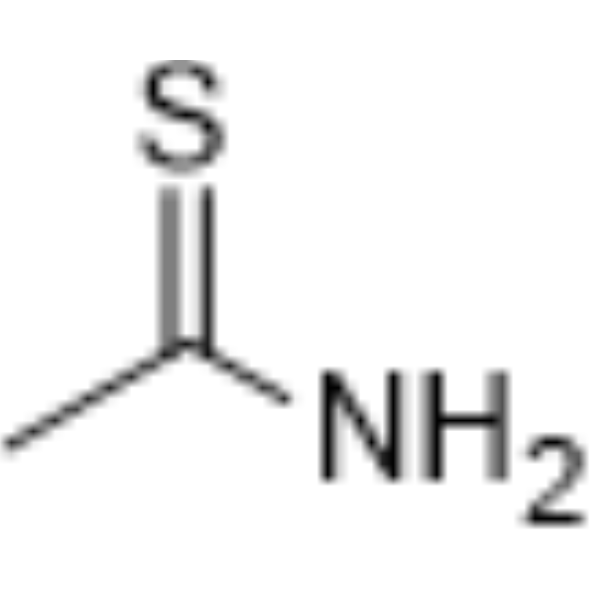
    1-Methyl-3-((tetrahydrofuran-3-yl)methyl)urea-d3 is the deuterium labeled γ-Tocotrienol. γ-Tocotrienol is an active form of vitamin E[1].
    1-Methyl-3-((tetrahydrofuran-3-yl)methyl)urea-d3
  • HY-114942

    Prostaglandin E1 Et ester; PGE1-EE

    Prostaglandin Receptor Cardiovascular Disease
    Prostaglandin E1 ethyl ester (Prostaglandin E1 Et ester) is the esterified form of Prostaglandin E1 (PGE1; HY-B0131). Prostaglandin E1 (Alprostadil) is a prostaglandin receptor ligand that induces vasodilation and inhibits platelet aggregation [1].
    Prostaglandin E1 ethyl ester
  • HY-138206

    PGE1 isopropyl ester

    Prostaglandin Receptor Cardiovascular Disease
    Prostaglandin E1 isopropyl ester is an isopropyl ester form of prostaglandin E1 (HY-B0131). Prostaglandin E1 isopropyl ester exhibits a faster penetration flux than prostaglandin E1 [1].
    Prostaglandin E1 isopropyl ester
  • HY-168397

    Prostaglandin Receptor Endocrinology
    tetranor-Prostaglandin E1 is metabolite of Prostaglandin E1 (HY-B0131) and Prostaglandin E2 (HY-101952) that is formed by β-oxidation [1].
    tetranor-Prostaglandin E1
  • HY-177936

    NEDD8-activating Enzyme Cancer
    NAE-IN-3 (compound 1) is a potent, selective and non-covalent competitive NEDD8-activating enzyme (NAE) inhibitor (IC50 = 0.8 μM). NAE-IN-3 inhibits NAE by blocking the ATP-binding domain. NAE-IN-3 exhibits selectivity over analogous E1 enzymes UAE and SAE. NAE-IN-3 can be used for cancer research [1].
    NAE-IN-3
  • HY-108531A

    RAR/RXR Cancer
    ER 50891 quarterhydrate is a RARα antagonist. ER 50891 can significantly antagonize the inhibitory effect of all-trans retinoic acid (ATRA) on the total cell metabolic activity and proliferation of MC3T3-E1 preosteoblasts. ER 50891 rescues ATRA-inhibited osteocalcin (OCN) expression and extracellular matrix mineralization, and suppresses alkaline phosphatase (ALP) activity synergistically. ER 50891 can be used for the study of osteoporosis related to ATRA-induced inhibition of osteoblastogenesis [1].
    ER 50891 quarterhydrate
  • HY-137567

    Prostaglandin Receptor Cancer
    Prostaglandin E1 ethanolamide is an analog of prostaglandin E1 (PGE1) and may effectively inhibit GLI2-induced expression of target genes, including Gli1 and Ptch1, and tumor growth [1].
    Prostaglandin E1 ethanolamide
  • HY-157976

    dinor-PGE1

    Endogenous Metabolite Prostaglandin Receptor Others
    Dinorprostaglandin E1 (dinor-PGE1) is the hepatocyte metabolite of prostaglandin E1 and prostaglandin E. Prostaglandin E1 and prostaglandin E inhibit glucagon, epinephrine, isoproterenol (beta-adrenergic agonist), or epinephrine-stimulated glycogenolysis when co-treated with Isoproterenol (HY-B0468) [1].
    Dinorprostaglandin E1
  • HY-137133

    Prostaglandin Receptor Inflammation/Immunology Cancer
    Prostaglandin E1 alcohol (compound 89) is a prostaglandin analog [1].
    Prostaglandin E1 alcohol
  • HY-130226

    11β-Prostaglandin E1

    Endogenous Metabolite Prostaglandin Receptor Cardiovascular Disease Endocrinology Cancer
    11-epi-PGE1 (11β-Prostaglandin E1) is a less potent isomer of Prostaglandin E1 (HY-B0131). Prostaglandin E1 is a prostanoid receptor ligand [1].
    11-epi-PGE1
  • HY-N12191

    HSV Others
    Cangorinine E-1 (compound 11) is a dihydroagarofuran derivative of the sesquiterpenoid family. Cangorinine E-1 exhibits weak inhibitory effects on herpes simplex virus type II (HSV) [1].
    Cangorinine E-1
  • HY-N12648

    Others Inflammation/Immunology
    Anemarsaponin E1 can be isolated from Guizhi-Shaoyao-Zhimu decoction (GSZD), and can be used for research of rheumatoid arthritis (RA), gout, osteoarthritis, etc [1].
    Anemarsaponin E1
  • HY-P2319

    p38 MAPK JNK Inflammation/Immunology
    OVA-E1 peptide, is an antagonist variant of SIINFEKL [OVA (257-264). OVA-E1 peptide, activates the p38 and JNK cascades similarly in mutant and wild-type thymocytes [1].
    OVA-E1 peptide
  • HY-128043

    AY-23578; Doproston B; 11-Deoxy-PGE1

    Prostaglandin Receptor Inflammation/Immunology
    11-Deoxy prostaglandin E1 (AY-23578; Doproston B) is an analog of prostaglandin E1 (PGE1) with bronchodilator activity. 11-Deoxy prostaglandin E1 inhibits histamine-induced bronchoconstriction and causes relaxation of tracheal strips in isolated guinea pigs [1].
    11-Deoxy prostaglandin E1
  • HY-19167

    AS 013; Lipo-pro-prostaglandin E1

    Prostaglandin Receptor Inflammation/Immunology
    Ecraprost is a prodrug of prostaglandin E1. Ecraprost inhibits platelet adhesion, macrophage infiltration and proliferating cell nuclear antigen positive cell expression on the injured arterial walls [1].
    Ecraprost

Inquiry Online

Your information is safe with us. * Required Fields.

Salutation


Country or Region *

Applicant Name *


Organization Name *

Department *


Email Address *


Product Name *

Cat. No.


Requested quantity *

Phone Number *


Remarks

Inquiry Online

Inquiry Information

Product Name:
Cat. No.:
Quantity:
MCE Japan Authorized Agent:

