
1. Search Result
Search Result
Pathways Recommended: Anti-infection
Results for "

Gram-positive bacteria infections

" in MedChemExpress (MCE) Product Catalog:

260

Inhibitors & Agonists

4

Biochemical Assay Reagents

15

Peptides

45

Natural
Products

18

Isotope-Labeled Compounds

Cat. No. 상품명 Target 연구분야 Chemical Structure
  • HY-B0474
    Tetracycline hydrochloride
    Maximum Cited Publications
    51 Publications Verification

    Environmental Pollutants Antibiotic Bacterial Infection Cancer
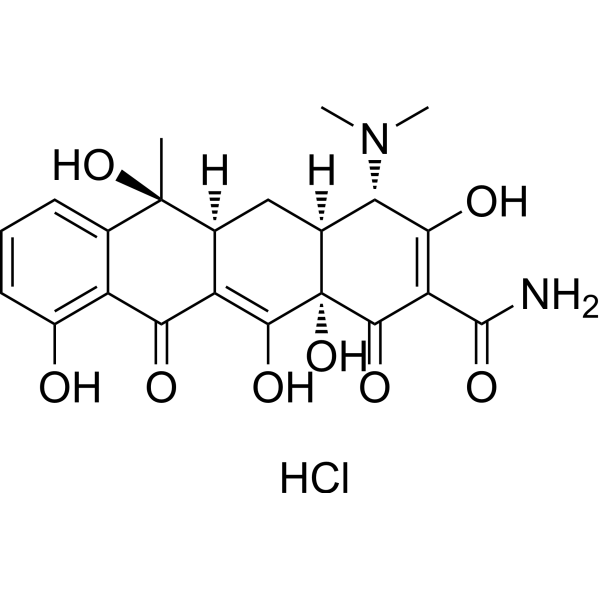
    Tetracycline hydrochloride is a broad-spectrum antibiotic with oral activity. Tetracycline hydrochloride exhibits activity against a wide range of bacteria including gram-positive, gram-negative bacteria, chlamydiae, mycoplasmas and rickettsiae. Tetracycline hydrochloride can be used for the research of infections .
    Tetracycline hydrochloride
  • HY-A0107
    Tetracycline
    Maximum Cited Publications
    51 Publications Verification

    Antibiotic Bacterial Infection Cancer
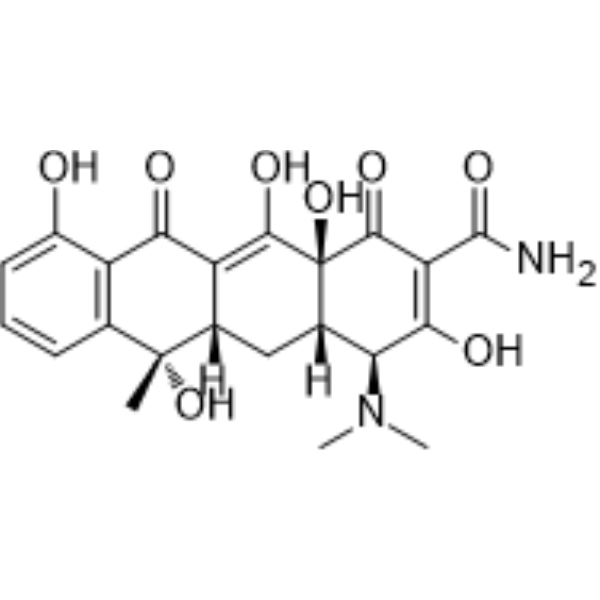
    Tetracycline is a broad-spectrum antibiotic with oral activity. Tetracycline exhibits activity against a wide range of bacteria including gram-positive, gram-negative bacteria, chlamydiae, mycoplasmas and rickettsiae. Tetracycline can be used for the research of infections .
    Tetracycline
  • HY-10394
    Linezolid
    Maximum Cited Publications
    52 Publications Verification

    PNU-100766

    Bacterial Antibiotic Infection Cancer
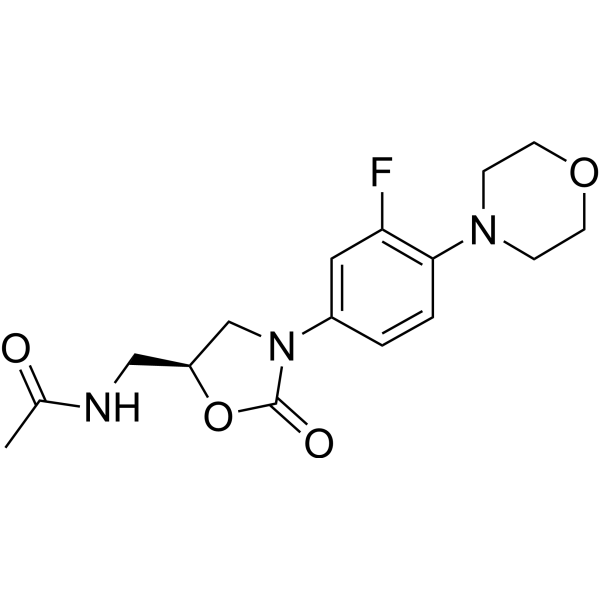
    Linezolid (PNU-100766) is the first member of the class of oxazolidinone synthetic antibiotic. Linezolid acts by inhibiting the initiation of bacterial protein synthesis. Linezolid is used for the treatment of serious infections caused by Gram-positive bacteria that are resistant to several other antibiotics .
    Linezolid
  • HY-B1369A
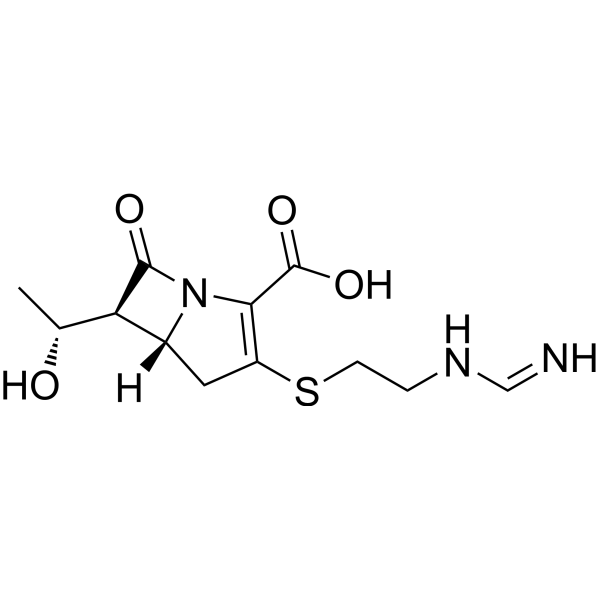
    Imipenem
    30+ Cited Publications

    N-Formimidoyl thienamycin; MK0787

    Antibiotic Bacterial Infection
    Imipenem (MK0787), a stable crystalline derivative of thienamycin, is an antibiotic and has the excellent activity against a broad range of gram-positive and gram-negative aerobic and anaerobic bacteria. Imipenem can be used for the research of carbapenem-nonsusceptible and P. aeruginosa biofilm infections .
    Imipenem
  • HY-A0256
    Clavulanic acid
    5+ Cited Publications

    Beta-lactamase Antibiotic Bacterial Infection Inflammation/Immunology
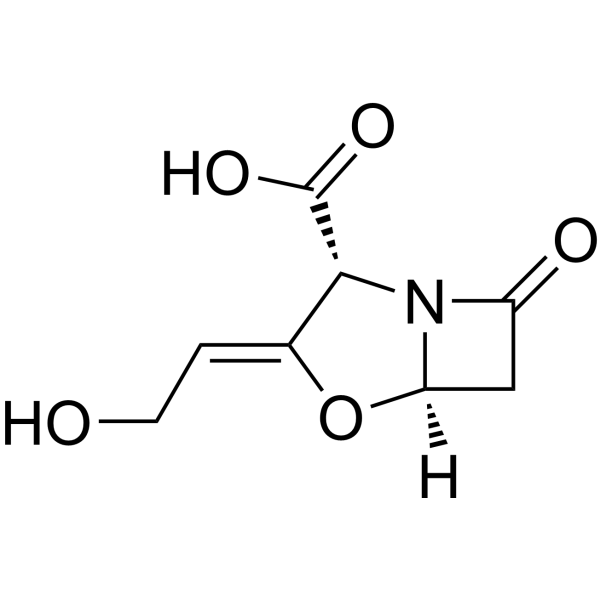
    Clavulanic acid is a naturally occurring powerful bacterial β-lactamases inhibitor for research of infections caused by bacteria, including infections of the ears. Clavulanic acid is active against a wide spectrum of gram-positive and gram-negative bacterias .
    Clavulanic acid
  • HY-B1369
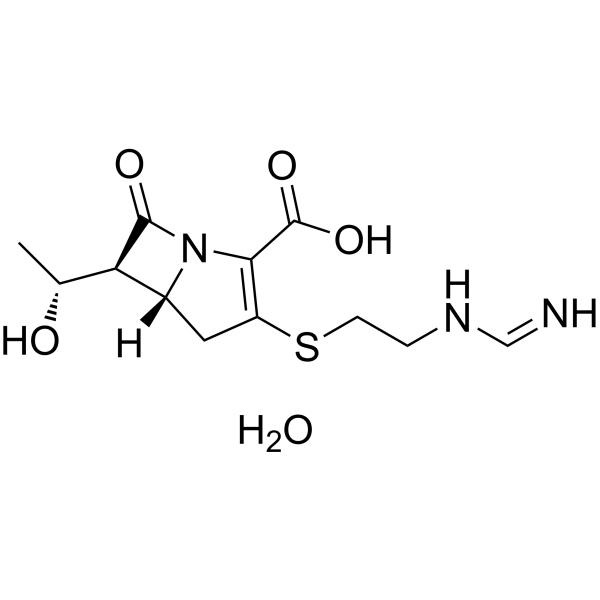
    Imipenem monohydrate
    30+ Cited Publications

    N-Formimidoyl thienamycin monohydrate; MK0787 monohydrate

    Antibiotic Bacterial Infection
    Imipenem monohydrate, a stable crystalline derivative of thienamycin, is an antibiotic and has the excellent activity against a broad range of gram-positive and gram-negative aerobic and anaerobic bacteria. Imipenem monohydrate can be used for the research of carbapenem-nonsusceptible and P. aeruginosa biofilm infections .
    Imipenem monohydrate
  • HY-B2237
    Lysozyme from chicken egg white
    5+ Cited Publications

    Bacterial HIV Infection
    Lysozyme from chicken egg white is a bactericidal enzyme, and it lyses gram-positive bacteria. Lysozyme from chicken egg white can also be used for the research of HIV infection and pulmonary emphysema .
    Lysozyme from chicken egg white
  • HY-B0510
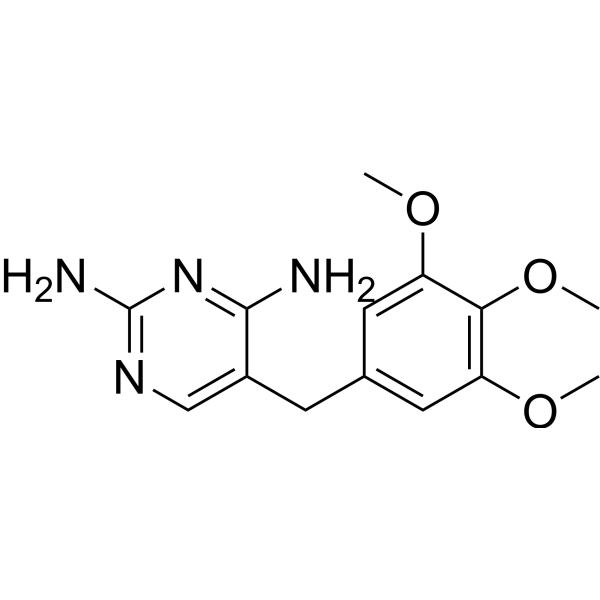
    Trimethoprim
    10+ Cited Publications

    Antifolate Bacterial Antibiotic Influenza Virus Infection Cancer
    Trimethoprim is a bacteriostatic antibiotic and an orally active dihydrofolate reductase inhibitor. Trimethoprim is active against a wide range of Gram-positive and Gram-negative aerobic bacteria. Trimethoprim has the potential for the research of urinary tract infections, Shigellosis and Pneumocystis pneumonia. Trimethoprim can inhibit infection of Influenza A virus in chick embryo when combinated with zinc .
    Trimethoprim
  • HY-B0958
    Mupirocin
    1 Publications Verification

    BRL-4910A; Pseudomonic acid

    Bacterial Antibiotic Aminoacyl-tRNA Synthetase Infection Endocrinology
    Mupirocin is an antibiotic. Mupirocin inhibits bacterial isoleucyl-tRNA synthetase, blocking protein synthesis. Mupirocin has high activity against Gram-positive bacteria such as Staphylococcus and Streptococcus, as well as some Gram-negative bacteria (such as Haemophilus influenzae). Mupirocin can be used in the research of diseases such as skin infections (such as MRSA infections) and chronic sinusitis .
    Mupirocin
  • HY-19915
    Contezolid
    3 Publications Verification

    MRX-I

    Bacterial Antibiotic Monoamine Oxidase Infection Inflammation/Immunology
    Contezolid (MRX-I), a new and orally active oxazolidinone, is an antibiotic in study for complicated skin and soft tissue infections (cSSTI) caused by resistant Gram-positive bacteria. Contezolid (MRX-I) markedly reduces potential for myelosuppression and monoamine oxidase inhibition (MAOI) .
    Contezolid
  • HY-B0136
    Cefdinir
    4 Publications Verification

    FK-482; CI-983

    Bacterial Antibiotic Infection
    Cefdinir (FK-482) is a semi-synthetic, broad-spectrum antibiotic in the third generation of the cephalosporin class, which is proved to be effective for infections caused by several Gram-negative and Gram-positive bacteria. Cefdinir can be used for the research of common bacterial infections of the ear, sinus, throat, and skin .
    Cefdinir
  • HY-105284
    Sulopenem
    2 Publications Verification

    CP-70429

    Beta-lactamase Bacterial Antibiotic Infection
    Sulopenem (CP-70429) is an orally active, parenteral penem antibiotic with broad-spectrum activities against Gram-positive and Gram-negative bacteria. Sulopenem has the potential for urinary tract infections and intra-abdominal infections treatment. Sulopenem is inactive against Pseudomonas aeruginosa and Xanthomonas maltophilia .
    Sulopenem
  • HY-B2237A
    Lysozyme chloride
    5+ Cited Publications

    Bacterial HIV Infection
    Lysozyme chloride is a bactericidal enzyme, and it lyses gram-positive bacteria. Lysozyme chloride can also be used for the research of HIV infection and pulmonary emphysema .
    Lysozyme chloride
  • HY-B1150
    Clofoctol
    1 Publications Verification

    Bacterial SARS-CoV Antibiotic Infection Cancer
    Clofoctol is a bacteriostatic antibiotic. Clofoctol is used in the treatment of respiratory tract and ear, nose and throat infections caused by Gram-positive bacteria. Clofoctol is only functional against Gram-positive bacteria and can penetrate into human lung tissue. Clofoctol is also an inhibitor of prostate cancer. Clofoctol has antiviral potency .
    Clofoctol
  • HY-B0395C
    Sitafloxacin hydrate
    5+ Cited Publications

    DU6859a hydrate

    Bacterial Antibiotic Infection
    Sitafloxacin (DU6859a) hydrate is an orally active fluoroquinolone antibiotic (antibiotic) with in vitro activity against a wide range of Gram-positive and -negative bacteria, including anaerobic bacteria, as well as atypical pathogens. Sitafloxacin is used in the study of respiratory tract infections and urinary tract infections .
    Sitafloxacin hydrate
  • HY-N7139

    Benzylpenicillin

    Antibiotic Bacterial Infection
    Penicillin G is a potent penicillinantibiotic. Penicillin G can be used for bacterial infection. Penicillin G has potent activity against all Gram-positive bacteria and Gram-negative cocci .
    Penicillin G
  • HY-B0977
    Dicloxacillin Sodium hydrate
    3 Publications Verification

    Dicloxacillin sodium salt monohydrate

    Bacterial Antibiotic Infection Inflammation/Immunology
    Dicloxacillin Sodium hydrate (Dicloxacillin sodium salt monohydrate) is a narrow-spectrum β-Lactam antibiotic of the penicillin class, is used to treat infections caused by susceptible Gram-positive bacteria, active against beta-lactamase-producing organisms such as Staphylococcus aureus .
    Dicloxacillin Sodium hydrate
  • HY-B0126

    Bacterial Antibiotic Infection
    Marbofloxacin is a third generation fluoroquinolone and orally active antimicrobial agent, which has a broad spectrum bactericidal activity and good efficacy. Marbofloxacin can be used for the research of infections by Gram-positive and Gram-negative bacteria and Mycoplasma .
    Marbofloxacin
  • HY-B1002
    Oxolinic acid
    3 Publications Verification

    Bacterial Antibiotic DNA/RNA Synthesis Infection
    Oxolinic acid is an antibiotic against both Gram-negative and Gram-positive bacteria. Oxolinic acid can be used for the research of acute and chronic urinary tract infections. Oxolinic acid is a DNA/RNA synthesis inhibitor. Oxolinic acid acts a dopamine uptake inhibitor and stimulants locomotor effect in mice .
    Oxolinic acid
  • HY-B1210
    Pipemidic acid
    1 Publications Verification

    Bacterial Antibiotic Infection
    Pipemidic acid , a derivative of Piromidic acid, is an antibacterial agent. Pipemidic acid inhibits DNA gyrase. Pipemidic acid is active against gram-negative bacteria including Pseudomonas aeruginosa as well as some gram-positive bacteria. Pipemidic acid can be used for the research of intestinal, urinary, and biliary tract infections .
    Pipemidic acid
  • HY-112959

    TD-6424

    Antibiotic Bacterial Infection
    Telavancin (TD-6424) is a semisynthetic lipoglycopeptide vancomycin-derivative, is a novel antimicrobial agent developed by Theravance for overcoming resistant Gram-positive bacterial infections, specifically methicillin-resistant Staphylococcus aureus (MRSA). Telavancin disrupts cell membrane integrity, can be used for research of complicated skin and skin structure infections (cSSSIs) caused by Gram-positive bacteria .
    Telavancin
  • HY-B1282
    Sulfaquinoxaline
    2 Publications Verification

    Environmental Pollutants Antibiotic Parasite Bacterial Infection
    Sulfaquinoxaline is an antimicrobial for veterinary use, with activity against a broad spectrum of Gram-negative and Gram-positive bacteria. Sulfaquinoxaline is used to prevent coccidiosis and bacterial infections .
    Sulfaquinoxaline
  • HY-B0395
    Sitafloxacin
    5+ Cited Publications

    DU6859a

    Bacterial Antibiotic Infection
    Sitafloxacin (DU6859a) is a potent, orally active fluoroquinolone antibiotic. Sitafloxacin shows antichlamydial activity and antibacterial activities against a broad range of gram-positive and gram-negative bacteria, including anaerobic bacteria, as well as against atypical pathogens. Sitafloxacin can be used for the research of respiratory tract infection and urinary tract infection .
    Sitafloxacin
  • HY-B0213
    Sulfameter
    2 Publications Verification

    Sulfametoxydiazine; 5-Methoxysulfadiazine; NSC 683528

    Antibiotic Bacterial Infection
    Sulfameter (Sulfametoxydiazine) is an orally active long-acting sulfonamide antibiotic. Sulfameter is active against both Gram-positive and Gram-negative bacteria. Sulfameter can be used for the research of diseases such as respiratory and urinary tract infections .
    Sulfameter
  • HY-B1924
    Norvancomycin monohydrochloride
    1 Publications Verification

    N-Demethylvancomycin monohydrochloride; NVCM monohydrochloride

    Bacterial Infection
    Norvancomycin hydrochloride is a cell wall synthesis inhibitor targeting peptidoglycan precursors of Gram-positive bacteria and cannot pass the blood-brain barrier. Norvancomycin hydrochloride can competitively bind to peptidoglycan precursors, irreversibly inhibit bacterial cell wall synthesis, and exert antibacterial activity. Norvancomycin hydrochloride is mainly used in the study of Gram-positive bacterial infections, especially infections caused by methicillin-resistant Staphylococcus aureus (MRSA) and methicillin-resistant Staphylococcus epidermidis (MRSE). Norvancomycin hydrochloride can also be incorporated into the bionic calcium phosphate coating of titanium implants to enhance antibacterial activity and inhibit postoperative orthopedic infections .
    Norvancomycin monohydrochloride
  • HY-W108875
    Mupirocin lithium
    1 Publications Verification

    BRL-4910A lithium; Pseudomonic acid lithium

    Antibiotic Bacterial Aminoacyl-tRNA Synthetase Infection Endocrinology
    Mupirocin lithium is an antibiotic. Mupirocin lithium inhibits bacterial isoleucyl-tRNA synthetase, blocking protein synthesis. Mupirocin lithium has high activity against Gram-positive bacteria such as Staphylococcus and Streptococcus, as well as some Gram-negative bacteria (such as Haemophilus influenzae). Mupirocin lithium can be used in the research of diseases such as skin infections (such as MRSA infections) and chronic sinusitis .
    Mupirocin lithium
  • HY-B0724A
    Pazufloxacin mesylate
    1 Publications Verification

    T-3762; Pazufloxacin methanesulfonate; Pazufloxacin mesilate

    Bacterial DNA/RNA Synthesis Infection
    Pazufloxacin mesylate is an orally active fluoroquinolone antimicrobial agent. Pazufloxacin mesylate inhibits DNA gyrase with IC50 values of 0.88 μg/mL (E. coli) and 1.9 μg/mL (P. aeruginosa). Pazufloxacin mesylate exhibits broad-spectrum antimicrobial activity, with MIC90 values ranging from 0.025 to 100 μg/mL against Gram-positive and Gram-negative bacteria, non-fermenting bacteria, Legionella spp., and anaerobic bacteria. Pazufloxacin mesylate is indicated for research on systemic infections, lung infections, urinary tract infections, and Legionella pneumonia .
    Pazufloxacin mesylate
  • HY-B0024
    Prulifloxacin
    2 Publications Verification

    NM441

    Bacterial Antibiotic Infection
    Prulifloxacin (NM441) is an orally active fluoroquinolone antibiotic with a broad spectrum of activity against Gram-positive and -negative bacteria. Prulifloxacin is a proagent of a thiazeto-quinoline carboxylic acid derivative Ulifloxacin (NM394). Prulifloxacin has the potential for lower urinary tract infections and exacerbations of chronic bronchitis .
    Prulifloxacin
  • HY-B1466

    BAY-f 1353 sodium

    Bacterial Antibiotic Infection
    Mezlocillin (BAY-f 1353) sodium is a β-lactam antibiotic, a semisynthetic and extended-spectrum antibiotic. Mezlocillin sodium is active against both gram-negative and gram-positive bacteria. Mezlocillin sodium can be used in bacterial infection research .
    Mezlocillin sodium
  • HY-B0159

    Q-35

    Bacterial Antibiotic Infection
    Balofloxacin (Q-35) is an orally active fluoroquinolone antibiotic with broad-spectrum antibacterial activity against gram-negative, gram-positive, and anaerobic bacteria. Balofloxacin can be used for the research of respiratory, intestinal, and urinary tract infections .
    Balofloxacin
  • HY-N13668

    Antibiotic Bacterial Infection
    Rhodomyrtone is an antibiotic that can be found in the leaves of Rhodomyrtus tomentosa. Rhodomyrtone kills Gram-positive bacterial cells without causing bacteriolysis. Rhodomyrtone exhibits activity against a variety of Gram-positive bacteria, including Bacillus cereus, Bacillus subtilis, Enterococcus faecalis, Staphylococcus epidermidis, Streptococcus gordonii, Streptococcus pneumoniae, Streptococcus pyogenes and Streptococcus salivarius. Rhodomyrtone is applicable to studies related to bacterial infections .
    Rhodomyrtone
  • HY-103249

    Reutericycline

    Bacterial Infection Metabolic Disease
    Reutericyclin (Reutericycline) is an orally active antibacterial and anti-obesity agent that selectively inhibits Gram-positive bacteria. By selectively dissipating transmembrane potential, Reutericyclin exerts non-lytic bactericidal or bacteriostatic activity against pathogens such as Clostridium difficile and Staphylococcus aureus, and rapidly kills vegetative cells and spores of Clostridium difficile. Reutericyclin possesses favorable properties including resistance to enzymatic hydrolysis, iron-chelating function, and poor absorption by colonic epithelium. Reutericyclin not only eradicates staphylococcal biofilms and inhibits drug-resistant strains, but also counteracts Risperidone (HY-11018)-induced weight gain by inducing changes in gut microbiota composition and restoring energy utilization efficiency. Reutericyclin can be used in research related to Clostridium difficile infection, Risperidone-induced weight gain, and staphylococcal superficial skin infections .
    Reutericyclin
  • HY-116228

    Caderofloxacin; CS-940

    Bacterial Infection
    Cadrofloxacin (Caderofloxacin; CS-940) is an orally active antibacterial agent with significant bactericidal activity against quinolone-resistant Staphylococcus aureus, Gram-positive bacteria, Gram-negative bacteria and anaerobic bacteria. Cadrofloxacin effectively improves systemic infection and experimental Klebsiella pneumoniae pneumonia in mice. Cadrofloxacin can be widely used in research related to systemic bacterial infections and bacterial pneumonia .
    Cadrofloxacin
  • HY-B1282A
    Sulfaquinoxaline sodium salt
    2 Publications Verification

    Bacterial Parasite Antibiotic Infection
    Sulfaquinoxaline sodium salt is an antimicrobial for veterinary use, with activity against a broad spectrum of Gram-negative and Gram-positive bacteria. Sulfaquinoxaline is used to prevent coccidiosis and bacterial infections .
    Sulfaquinoxaline sodium salt
  • HY-123779

    Bacterial Fungal Infection
    RWJ-49815 is a histidine kinase inhibitor. RWJ-49815 inhibits the autokinase activity of purified GST-Sln1 and the autophosphorylation of KinA in vitro. RWJ-49815 acts as a fungal growth inhibitor . RWJ-49815 serves as a bactericide against Gram-positive pathogenic bacteria. RWJ-49815 is applicable to research related to fungal infections and Gram-positive bacterial infections .
    RWJ-49815
  • HY-Y0850U5

    Polyvinyl alcohol (Mw 27000, 98-99% hydrolyzed, ~600 polymerization); Poly(Ethenol) (Mw 27000, 98-99% hydrolyzed, ~600 polymerization)

    Biochemical Assay Reagents Fungal Infection
    PVA (Polyvinyl alcohol) (Mw 27000, 98-99% hydrolyzed, ~600 polymerization) is a nonionic ethanol homopolymer with hydrophilicity, water solubility and biodegradability. PVA (Mw 27000, 98-99% hydrolyzed, ~600 polymerization) exhibits biocompatibility, non-toxicity and non-carcinogenicity, as well as antibacterial activity against Gram-positive bacteria, Gram-negative bacteria and fungal strains. PVA (Mw 27000, 98-99% hydrolyzed, ~600 polymerization) can serve as a solubilizer, stabilizer, mucoadhesive agent and sustained-release agent, and has a synergistic solubilizing effect on voriconazole/sulfobutyl ether β-cyclodextrin complexes. By stabilizing such complexes, PVA (Mw 27000, 98-99% hydrolyzed, ~600 polymerization) forms freeze-thaw hydrogels with high mucoadhesion, sustained drug release and ex vivo corneal permeability. When compounded with hyaluronic acid hydrogels, PVA (Mw 27000, 98-99% hydrolyzed, ~600 polymerization) supports chondrocyte growth in vitro, and also forms complexes with Cu 2+, Co 2+, Ni 2+ and Zn 2+ ions. PVA (Mw 27000, 98-99% hydrolyzed, ~600 polymerization) can be used in studies related to fungal keratitis, bacterial infections and fungal infections .
    PVA (Mw 27000, 98-99% hydrolyzed, ~600 polymerization)
  • HY-A0107R

    Reference Standards Bacterial Antibiotic Infection Cancer
    Tetracycline (Standard) is the analytical standard of Tetracycline. This product is intended for research and analytical applications. Tetracycline is a broad-spectrum antibiotic with oral activity. Tetracycline exhibits activity against a wide range of bacteria including gram-positive, gram-negative bacteria, chlamydiae, mycoplasmas and rickettsiae. Tetracycline can be used for the research of infections .
    Tetracycline (Standard)
  • HY-B0510B
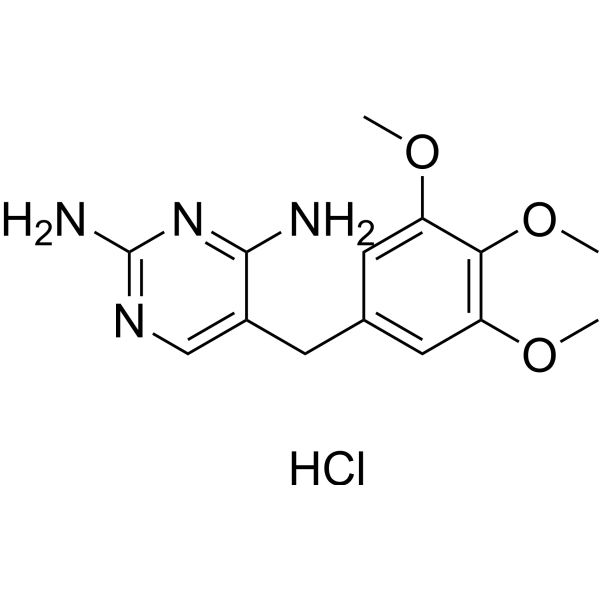
    Trimethoprim hydrochloride
    10+ Cited Publications

    Antifolate Bacterial Antibiotic Influenza Virus Infection Cancer
    Trimethoprim hydrochloride is a bacteriostatic antibiotic and an orally active dihydrofolate reductase inhibitor. Trimethoprim hydrochloride is active against a wide range of Gram-positive and Gram-negative aerobic bacteria. Trimethoprim hydrochloride has the potential for the research of urinary tract infections, Shigellosis and Pneumocystis pneumonia. Trimethoprim hydrochloride can inhibit infection of Influenza A virus in chick embryo when combinated with zinc .
    Trimethoprim hydrochloride
  • HY-B1466A

    BAY-f 1353

    Antibiotic Bacterial Infection
    Mezlocillin (BAY-f 1353) is a β-lactam antibiotic, a semisynthetic and extended-spectrum antibiotic. Mezlocillin is active against both gram-negative and gram-positive bacteria. Mezlocillin can be used in bacterial infection research .
    Mezlocillin
  • HY-N14107

    Bacterial Endogenous Metabolite Infection
    Cinnabarin is a natural phenoxazinone red pigment derived from Pycnoporus sanguineus. Cinnabarin reduces rabies virus infection levels in neuroblastoma cells and causes cytopathic effects on neuroblastoma cell monolayers at high concentrations. Cinnabarin exhibits antibacterial activity against bacteria, with a preference for Gram-positive bacteria and human isolates. Cinnabarin can be used in studies related to rabies and drug-resistant Gram-positive bacteria .
    Cinnabarin
  • HY-117778B

    Enolase Bacterial Antibiotic ATP Synthase Infection Cancer
    SF2312 ammonium is a phosphonate Antibiotic and Enolase inhibitor, with an IC50 of 18.4 nM against E. coli enolase. SF2312 ammonium reduces intracellular ATP levels and inhibits glycolytic flux. SF2312 ammonium exhibits activity against both Gram-positive and Gram-negative bacteria, and exerts synergistic effects against E. coli when combined with Fosfomycin (HY-B1075A). SF2312 ammonium shows selective toxicity toward gliomas with ENO1 gene knockout. SF2312 ammonium can be used in research related to bacterial infections and gliomas .
    SF2312 ammonium
  • HY-N15551

    Bacterial Infection
    Armeniaspirol C is a potent antibacterial agent targeting Gram-positive bacteria. Armeniaspirol C is is promising for research of infections caused by multidrug-resistant Gram-positive bacteria .
    Armeniaspirol C
  • HY-B1150R

    Reference Standards Bacterial SARS-CoV Antibiotic Infection Cancer
    Clofoctol (Standard) is the analytical standard of Clofoctol. This product is intended for research and analytical applications. Clofoctol is a bacteriostatic antibiotic. Clofoctol is used in the treatment of respiratory tract and ear, nose and throat infections caused by Gram-positive bacteria. Clofoctol is only functional against Gram-positive bacteria and can penetrate into human lung tissue. Clofoctol is also an inhibitor of prostate cancer. Clofoctol has antiviral potency .
    Clofoctol (Standard)
  • HY-175595

    ADEP26

    ClpP Bacterial Infection
    ADEP-14 (ADEP26) is a ClpP activator. ADEP-14 exhibits antibacterial activity against Gram-negative and Gram-positive bacteria. ADEP-14 can be used in studies related to bacterial infections .
    ADEP-14
  • HY-B0159A

    Q-35 dihydrate

    Bacterial Antibiotic Infection
    Balofloxacin dihydrate (Q-35 dihydrate) is an orally active fluoroquinolone antibiotic with broad-spectrum antibacterial activity against gram-negative, gram-positive, and anaerobic bacteria. Balofloxacin dihydrate can be used for the research of respiratory, intestinal, and urinary tract infections .
    Balofloxacin dihydrate
  • HY-101726

    Bacterial Infection
    DuP 105 is an orally active oxazolidinone with activity against Gram-positive bacteria. DuP 105 protects staphylococcal and streptococcal infections in mice. DuP 105 can be used for the study of infections caused by gram-positive bacteria .
    DuP 105
  • HY-125654

    Bacterial Infection Inflammation/Immunology
    Olanexidine is an antibacterial agent. Olanexidine is active against a wide range of bacteria, imcluding both Gram-positive and Gram-negative bacteria Olanexidine is also an antiseptic. Olanexidine can be used in the research of infection and inflammation .
    Olanexidine
  • HY-12888

    Topoisomerase Bacterial Infection
    AZD5099, an antibacterial agent, is a potent and selective bacterial topoisomerase II inhibitor. AZD5099 potently inhibits the infections caused by Gram-positive and fastidious Gram-negative bacteria .
    AZD5099
  • HY-113640

    Bacterial Infection
    BC-7013 is a novel semi-synthetic pleuromutilin derivative. BC-7013 has excellent activity against Gram-positive pathogenic bacteria. BC-7013 exhibits potent antibacterial properties against both Staphylococcus, Streptococcus and penicillin-resistant Streptococcus pneumoniae. BC-7013 has activity against Gram-positive pathogenic bacteria, BC-7013 is useful in the research of acute bacterial skin and skin structure infection (ABSSSI) .
    BC-7013
  • HY-B0395CR

    DU6859a hydrate (Standard)

    Bacterial Antibiotic Reference Standards Infection
    Sitafloxacin (hydrate) (Standard) is the analytical standard of Sitafloxacin (hydrate). This product is intended for research and analytical applications. Sitafloxacin (DU6859a) hydrate is an orally active fluoroquinolone antibiotic (antibiotic) with in vitro activity against a wide range of Gram-positive and -negative bacteria, including anaerobic bacteria, as well as atypical pathogens. Sitafloxacin is used in the study of respiratory tract infections and urinary tract infections .
    Sitafloxacin hydrate (Standard)

온라인 문의

Your information is safe with us. * Required Fields.

호칭


Country or Region *

고객명 *


회사명 *

Department *


메일주소 *


상품명 *

Cat. No.


Requested quantity *

전화번호 *


비고

온라인 문의

Inquiry Information

상품명:
Cat. No.:
수량:
MCE Japan Authorized Agent:

