
Search Result
Results for "
PDT
" in MedChemExpress (MCE) Product Catalog:
1
Biochemical Assay Reagents
1
Isotope-Labeled Compounds
| Cat. No. |
Product Name |
Target |
Research Areas |
Chemical Structure |
-
- HY-D0988
-
|
R-PE
|
Fluorescent Dye
Apoptosis
|
Cancer
|
|
R-Phycoerythrin is found in Heterosiphonia japonica. R-Phycoerythrin is an orange-red fluorescent probe with α, β, and γ subunits. R-Phycoerythrin can be used in photodynamic therapy (PDT) to induce apoptosis in tumor cells. R-Phycoerythrin can be used in fluorescence microscopy, flow cytometry, and immunofluorescence analysis (Ex: 495 nm).
|
-
-
- HY-128973
-
|
|
Reactive Oxygen Species (ROS)
|
Cancer
|
|
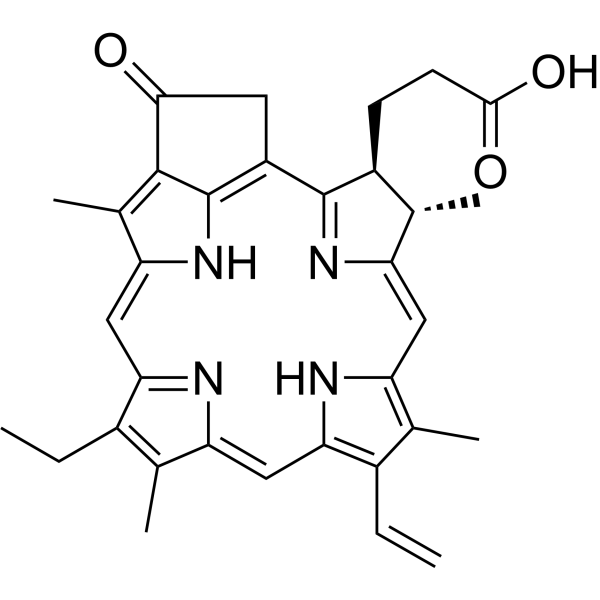
Pyropheophorbide-a (Ppa) is a photosensitizer used in photodynamic therapy (PDT) for tumors. Pyropheophorbide-a exhibits phototoxic effects on tumor cells, such as cervical cancer cells, and also has anti-lipogenesis activity. Pyropheophorbide-a shows potential for research in the fields of cancer and age-related macular degeneration (AMD). Pyropheophorbide-a derivatives also demonstrate inhibitory activity against tumor cells .
|
-
-
- HY-19204
-
-
-
- HY-16488
-
|
m-THPC; KW2345
|
Reactive Oxygen Species (ROS)
|
Cancer
|
|
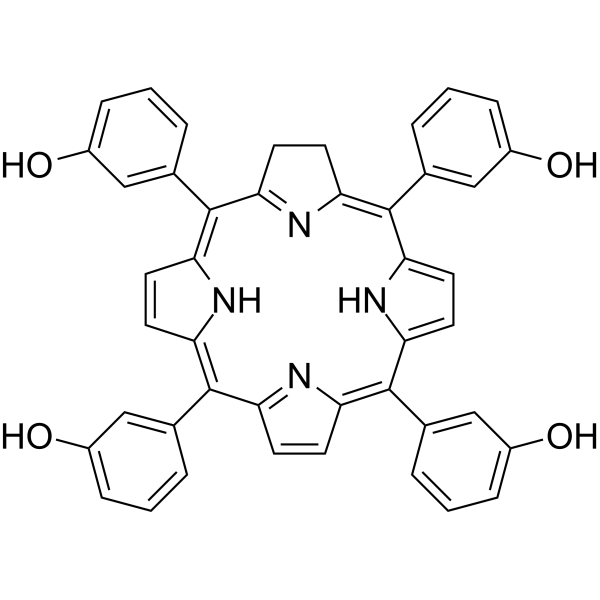
Temoporfin (m-THPC), a reduced porphyrin, is a potent second-generation photosensitizer. Temoporfin can be used in the research of photodynamic therapy (PDT) for head and neck cancers .
|
-
-
- HY-P2213
-
|
|
MMP
Apoptosis
|
Cancer
|
|
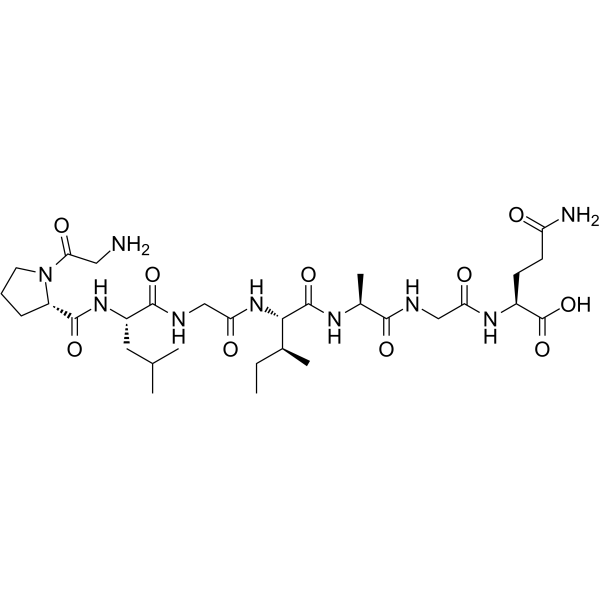
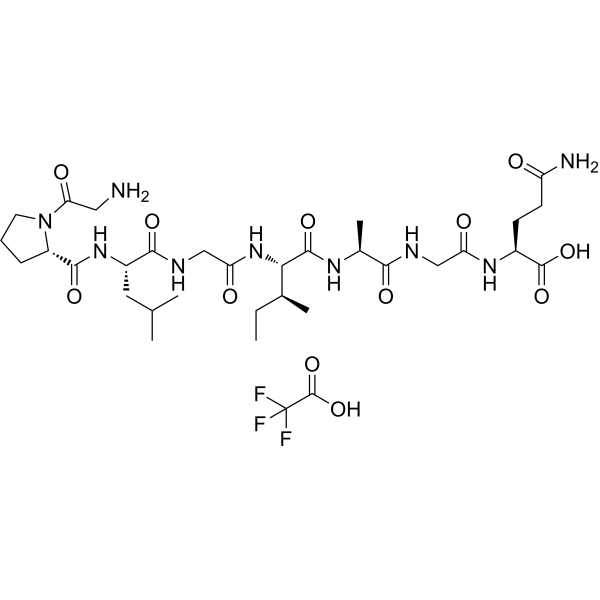
GPLGIAGQ, a MMP2-cleavable polypeptide, is used as a stimulus-sensitive linker in both liposomal and micellar nanocarriers for MMP2-triggered tumor targeting. GPLGIAGQ can be used to synthesis unique MMP2-targeted photosensitizer in photodynamic therapy (PDT) .
|
-
-
- HY-N2575
-
|
|
PKC
Bacterial
Parasite
HIV
VSV
VEGFR
Bcl-2 Family
Apoptosis
|
Infection
Metabolic Disease
Cancer
|
|
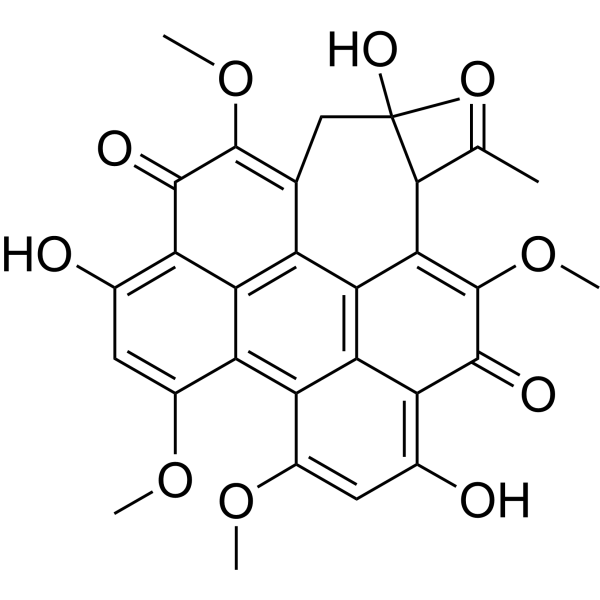
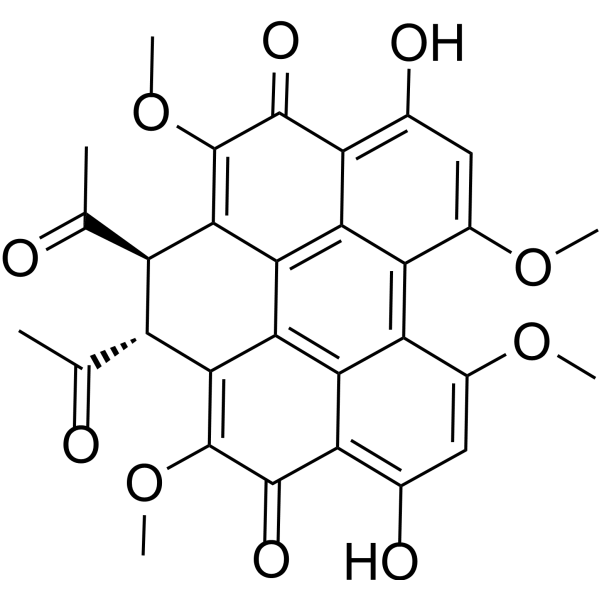
Hypocrellin A is a PKC inhibitor that exerts antidiabetic activity by reversing the effects of high glucose on endothelin (ET-1) expression. Hypocrellin A is also a photosensitizer for photodynamic therapy (PDT) with anticancer, antibacterial and antiviral activities, especially against human immunodeficiency virus (HIV). In addition, Hypocrellin-A also possesses anti-Leishmania activity (IC50=0.27 μg/ml) .
|
-
-
- HY-16045
-
|
Hexyl 5-aminolevulinate hydrochloride; P-1206; 5-Aminolevulinic acid hexyl ester hydrochloride
|
Fluorescent Dye
|
Cancer
|
|
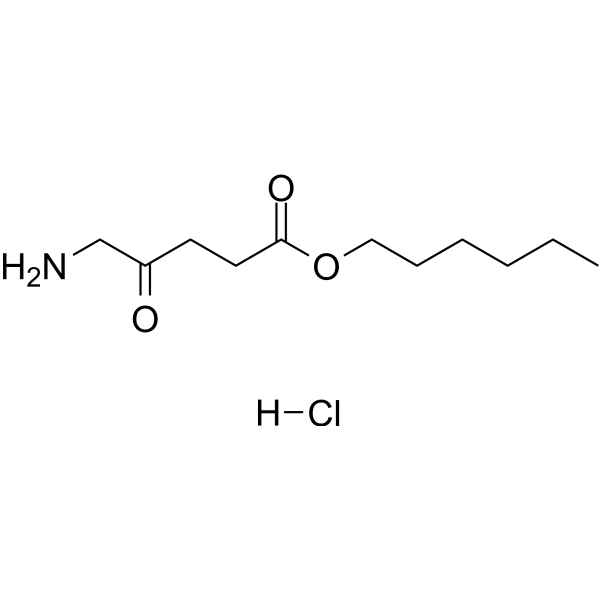
Hexaminolevulinate (Hexyl 5-aminolevulinate) hydrochloride, a porphyrin precursor, is a photosensitiser that can be used in photodynamic therapy (PDT) for certain tumor. Hexaminolevulinate hydrochloride can improve the visualisation of bladder tumours .
|
-
-
- HY-137473
-
|
Pyropheophorbide-a methyl ester
|
Apoptosis
|
Cancer
|
|
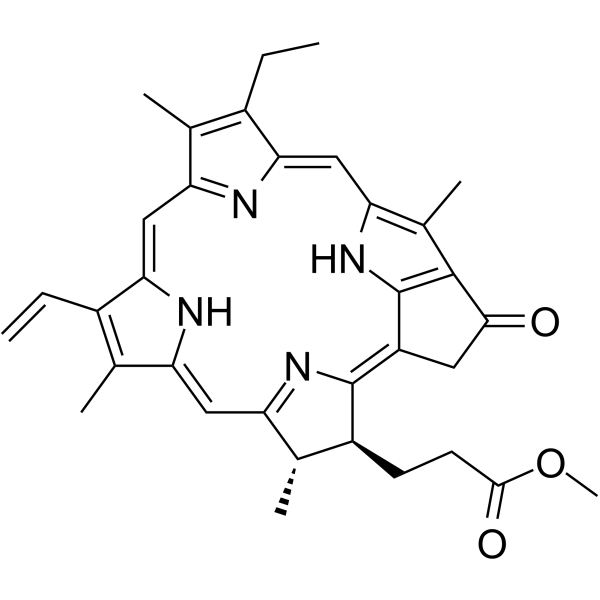
Methyl pyropheophorbide-a (Pyropheophorbide-a methyl ester), a chlorophyll-a derivative, is a potent photosensitizer that can be used in photodynamic therapy (PDT) of cancer. Methyl pyropheophorbide-a has photodynamic activity and can induce apoptosis and inhibit tumor growth .
|
-
-
- HY-13722
-
-
-
- HY-16477
-
|
ME2906; Mono-L-aspartyl chlorin e6; NPe6
|
Photosensitizer
|
Cancer
|
|
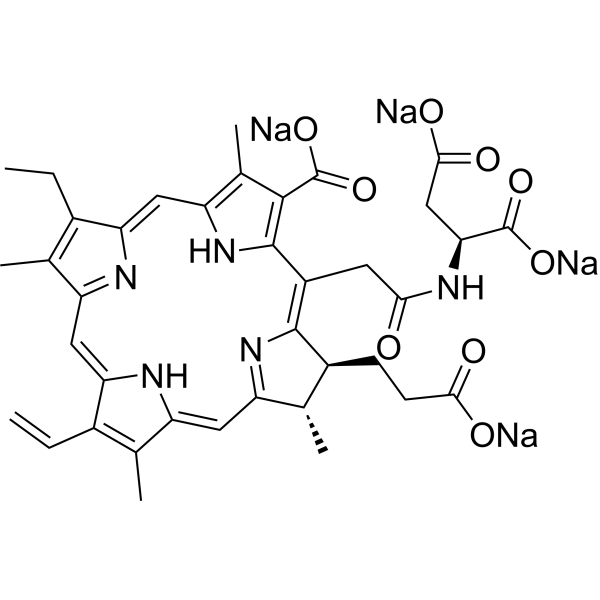
Talaporfin (ME2906) sodium is a chlorin based photosensitizer. Talaporfin sodium can be used for the research of various cancers by using photodynamic therapy (PDT) .
|
-
-
- HY-A0169A
-
|
|
Reactive Oxygen Species (ROS)
Photosensitizer
|
Cancer
|
|
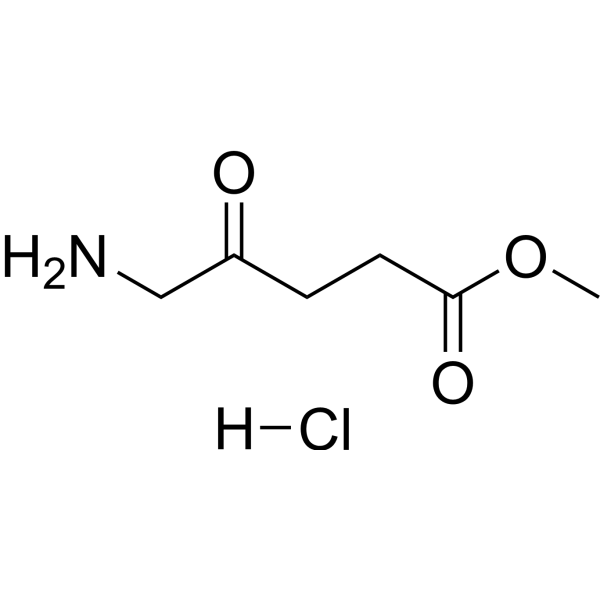
Methyl aminolevulinate hydrochloride is a sensitizer used in photodynamic therapy (PDT). Methyl aminolevulinate hydrochloride penetrates the skin and induces the production of photoactive porphyrins including protoporphyrin IX in cells; upon exposure to appropriate light, it generates ROS, which triggers cellular oxidation and cell death. Methyl aminolevulinate hydrochloride acts as a photo-damage reversing agent through epidermal reconstruction, cytokine-mediated activation of dermal fibroblasts, elastin breakdown, new collagen formation, and compression of dilated capillaries. Methyl aminolevulinate hydrochloride reduces the expression of the proliferation marker Ki-67 and the early skin carcinogenesis marker TP53. Methyl aminolevulinate hydrochloride delays the onset of ultraviolet-induced skin tumors and reduces tumor burden in hairless mice. Methyl aminolevulinate hydrochloride is applicable to research related to actinic keratosis and basal cell carcinoma .
|
-
-
- HY-N6743
-
|
CGP049090
|
PKC
|
Cancer
|
|
Cercosporin is produced by a plant pathogen, Pseudocercosporella capsellae. Cercosporin is a potent photosensitizer with a short activation wavelength, mostly suitable for superficial photodynamic therapy (PDT) treatments, especially when it is necessary to avoid perforations .
Cercosporin contains the perylenequinone structural features necessary to PKC activity with an IC50 of 0.6-1.3 μM .
|
-
-
- HY-U00128
-
|
|
Parasite
|
Infection
Inflammation/Immunology
|
|
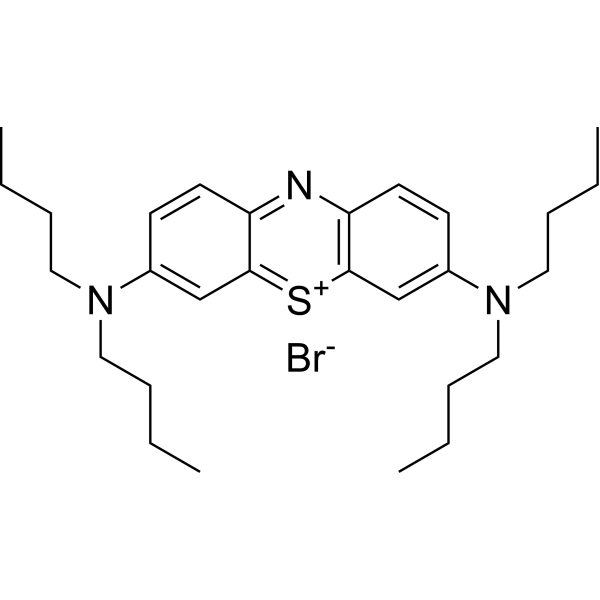
PPA-904 is a specific phenothiazine photosensitizer in photodynamic research (PDT) research, especially topical application for cutaneous leishmaniasis in vivo .
|
-
-
- HY-W130236
-
|
|
Cholinesterase (ChE)
|
Cancer
|
|
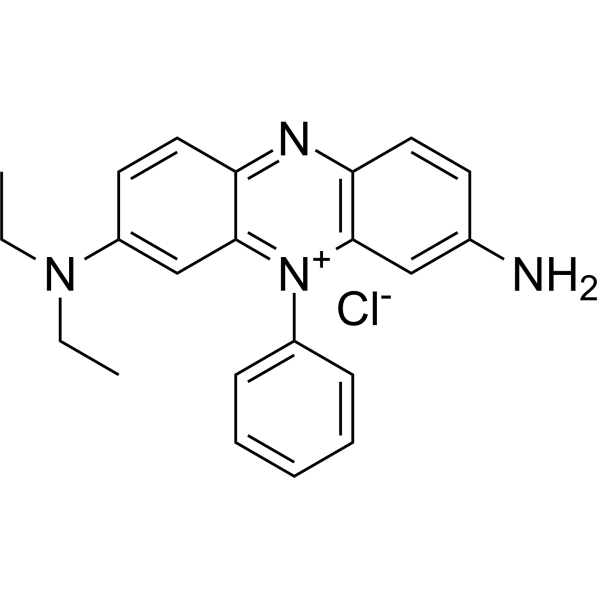
Methylene Violet 3RAX is a phenazine dye to stain the mitochondria of cells. Methylene Violet 3RAX can change the molecular structure of DNA, undermine the module of DNA, and induce the generation of the reactive singlet oxygen. Methylene Violet 3RAX shows inhibition for human erythrocyte AChE and human plasma BChE with an Kis of 1.58, 0.51 μM, respectively. Methylene Violet 3RAX has the potential for the research of potential photosensitizers for mitochondrial targeting action in PDT (photodynamic therapy) .
|
-
-
- HY-137475
-
-
-
- HY-W854659
-
|
Ce6 trisodium
|
Photosensitizer
|
Cancer
|
|
Chlorin e6 Ce6 (trisodium) is a water-soluble derivative of chlorophyll, belonging to the chlorin class of photosensitizers with an absorption wavelength range of 600-670 nm. Chlorin e6 trisodium emits characteristic red fluorescence upon light excitation, enabling real-time identification of tumor boundaries and progression. Chlorin e6 trisodium can be used for the study of photodynamic therapy (PDT) of cancers (bladder cancer) and fluorescence diagnosis of neoplastic lesions .
|
-
-
- HY-151486
-
|
|
GLUT
|
Cancer
|
|
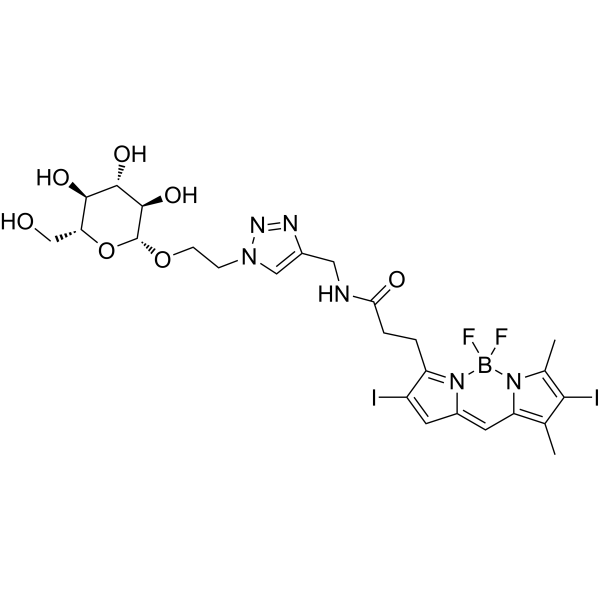
GLUT1-IN-1 is a glucose transporter 1 (GLUT1) inhibitor and has a GLUT1-specific inactivation ability. GLUT1-IN-1 exhibits concentration-dependent cytotoxicity for HeLa, A549 and HepG2 cells with IC50 values of 5.49 μM, 11.14 μM, and 8.73 μM, respectively. GLUT1-IN-1 can be used for the research of photodynamic therapy (PDT) and severals cancer .
|
-
-
- HY-137474
-
|
|
Photosensitizer
|
Cancer
|
|
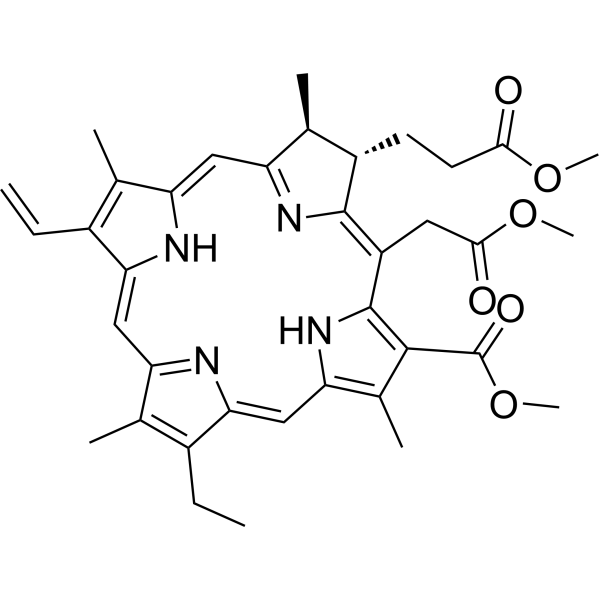
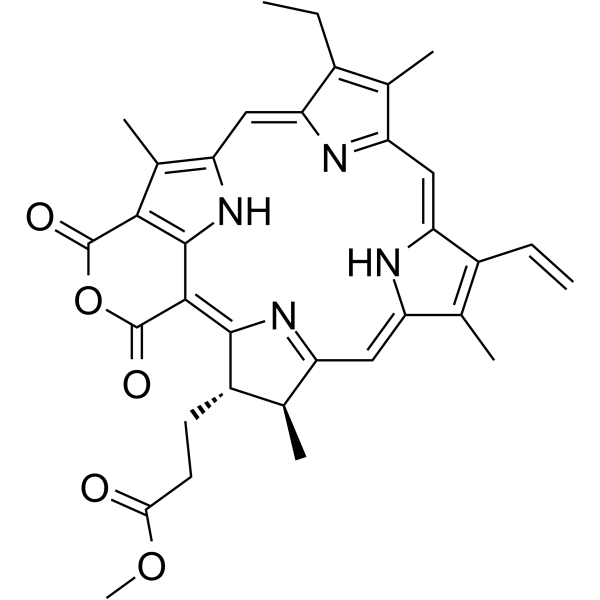
Purpurin 18 methyl ester, a chlorophyll-a derivative, is a photosensitizer that can be used in photodynamic therapy (PDT). Purpurin 18 methyl ester has photodynamic activity to induce cancer cell death .
|
-
-
- HY-P2213A
-
|
|
MMP
Apoptosis
|
Cancer
|
|
GPLGIAGQ TFA, a MMP2-cleavable polypeptide, is used as a stimulus-sensitive linker in both liposomal and micellar nanocarriers for MMP2-triggered tumor targeting. GPLGIAGQ TFA can be used to synthesis unique MMP2-targeted photosensitizer in photodynamic therapy (PDT) .
|
-
-
- HY-N10611
-
|
|
Reactive Oxygen Species (ROS)
Apoptosis
Autophagy
Fungal
Fluorescent Dye
|
Infection
Cancer
|
|
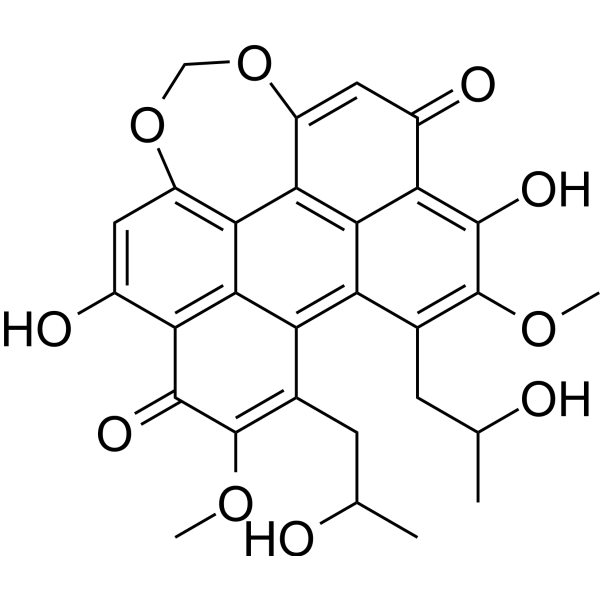
Elsinochrome A is a perylene quinone photosensitizer, and can generate reactive oxygen species (ROS) to induce apoptosis and autophagy under light excitation. Elsinochrome A also shows antifungal activity against C. albicans biofilm through photodynamic antimicrobial chemotherapy (PACT). Elsinochrome A can be used for research of photodynamic therapy (PDT) (Ex: 460 nm) .
|
-
-
- HY-137473R
-
|
Pyropheophorbide-a methyl ester (Standard)
|
Apoptosis
Reference Standards
|
Cancer
|
|
Methyl pyropheophorbide-a (Standard) is the analytical standard of Methyl pyropheophorbide-a. This product is intended for research and analytical applications. Methyl pyropheophorbide-a (Pyropheophorbide-a methyl ester), a chlorophyll-a derivative, is a potent photosensitizer that can be used in photodynamic therapy (PDT) of cancer. Methyl pyropheophorbide-a has photodynamic activity and can induce apoptosis and inhibit tumor growth .
|
-
-
- HY-16488R
-
|
m-THPC (Standard); KW2345 (Standard)
|
Reactive Oxygen Species (ROS)
Reference Standards
|
Cancer
|
|
Temoporfin (Standard) is the analytical standard of Temoporfin. This product is intended for research and analytical applications. Temoporfin (m-THPC), a reduced porphyrin, is a potent second-generation photosensitizer. Temoporfin can be used in the research of photodynamic therapy (PDT) for head and neck cancers .
|
-
-
- HY-116525
-
-
-
- HY-157470
-
|
|
Protoporphyrinogen IX oxidase
|
Cancer
|
|
PPO-IN-6 is a protoporphyrinogen oxidase (PPO) inhibitor that blocks the production of heme and chlorophyll. Pop-in-6 can be used IN the detection and research of cancer and other diseases .
|
-
-
- HY-W035145
-
|
|
Drug Intermediate
|
Others
|
|
Tris(2,2′-bipyridine)ruthenium(II)hexafluorophosphate can be used to prepare Ru(II)-containing photodynamic therapy (PDT) photosensitizers .
|
-
-
- HY-179415
-
|
|
Dihydrofolate reductase (DHFR)
Bacterial
|
Infection
|
|
DHFR-IN-24, a benzothiazole derivative, is a dihydrofolate reductase (DHFR) inhibitor. DHFR-IN-24 has intrinsic antibacterial activity against both Gram-positive and Gram-negative strains. DHFR-IN-24 synergistically combines DHFR inhibition with photodynamic therapy (PDT) for enhanced antibacterial activity against multidrug-resistant pathogens .
|
-
-
- HY-147690
-
|
|
Photosensitizer
|
Cancer
|
|
Photosensitizer-2 (compound 1) is a organic D-π-A sensitizer against phototoxicity. Photosensitizer-2 contains an acrylic acid moiety that exerts high levels of phototoxicity. Photosensitizer-2 shows antitumor activity against HeLa cells, with IC50 values of 20.9 ± 4.5 μM (dark) and 0.046 ± 0.012 μM (irradiation), respectively .
|
-
-
- HY-157943
-
|
HAL
|
Fluorescent Dye
|
Cancer
|
|
Hexyl 5-aminolevulinate (HAL) is a photosensitizer, and can increase the efficiency of PDT due to the high lipophilicity. Hexyl 5-aminolevulinate can be used for research of photodynamic therapy (PDT) .
|
-
-
- HY-162824
-
|
|
Apoptosis
|
Cancer
|
|
Antitumor photosensitizer-6 (Compound Ru2) shows synergetic type I/II photosensitization and photocatalytic activity upon 595 nm light excitation. Ru2 induces intracellular redox imbalance and affects the biosynthetic and metabolic processes, leading to cell apoptosis. Antitumor photosensitizer-6 can be used for research of photodynamic therapy (PDT) .
|
-
-
- HY-155003
-
|
|
Fluorescent Dye
|
Cancer
|
|
TPEQM-DMA is a NIR-II photosensitizer. TPEQM-DMA accumulates in cancerous mitochondria, and inhibits cancer cell growth. TPEQM-DMA has potent type-I phototherapeutic efficacy to overcome the intrinsic pitfalls of PDT in combating hypoxic tumors .
|
-
-
- HY-176724
-
|
|
Epigenetic Reader Domain
Reactive Oxygen Species (ROS)
HIF/HIF Prolyl-Hydroxylase
|
Cancer
|
|
ZnPc-O3-JQ1 is a light-triggered BRD4 degrader. Under illumination, ZnPc-O3-JQ1 generates reactive oxygen species (ROS) that degrades BRD4. The degradation of BRD4 results in downregulation of HIF-1α, thereby counteracting the photodynamic therapy (PDT) resistance induced by tumor hypoxia. ZnPc-O3-JQ1 exhibits both Type I and Type II PDT mechanisms. The structure of ZnPc-O3-JQ1 consists of three parts: BRD4 ligand (HY-78695); Linker (HY-W040165); Photosensitizer (HY-176725) .
|
-
-
- HY-149778
-
|
|
Fungal
|
Infection
|
|
Antifungal agent 87(10) acts as a highly potent PDT antimycotic photosensitizer (PDT-IC50 = 1 nM for T. rubrum) .
|
-
-
- HY-168854
-
|
|
Photosensitizer
Reactive Oxygen Species (ROS)
|
Cancer
|
|
TBC-1 is a chlorophyll-a derivative, is a photosensitizer that can be used in photodynamic therapy (PDT). TBC-1 efficiently generats Type-I ROS and endoplasmic reticulum targeting ability. TBC-1 shows biocompatibility and PDT efficiency in vitro under both normoxia and hypoxia .
|
-
-
- HY-D1673
-
|
|
Fluorescent Dye
|
Cancer
|
|
Tetrabromorhodamine 123 (TBR) bromide is a photosensitizer. Tetrabromorhodamine 123 bromide can be used for the research of photo dynamic therapy (PDT) and cancer .
|
-
-
- HY-16477A
-
|
ME2906 free acid; Mono-L-aspartyl chlorin e6 free acid; NPe6 free acid
|
Photosensitizer
|
Cancer
|
|
Talaporfin sodium, can be used in intraoperative photodynamic therapy (PDT) with a 664-nm semiconductor laser, was evaluated for efficacy and safety in treating primary malignant parenchymal brain tumors .
|
-
-
- HY-168097
-
|
|
Ferroptosis
Reactive Oxygen Species (ROS)
|
Cancer
|
|
Ferroptosis inducer 6 (6d) is a ferroptosis inducer with high potency for type I/-II photodynamic therapy by inducing ROS generation, oxidative stress and mitochondrial damage. Ferroptosis inducer 6 has anti-tumor activity .
|
-
-
- HY-13547
-
|
|
Apoptosis
|
Cancer
|
|
ADPM06, a lead candidate azadipyrromethene, is a novel nonporphyrin photodynamic therapeutic (PDT) agent. ADPM06 exhibits IC50 values in the micro-molar range in human tumor cells and induces apoptosis .
|
-
-
- HY-168261
-
|
|
Ferroptosis
|
Cancer
|
|
CQ-ER is a Coumarin (HY-N0709)-Quinazolinone based endoplasmic reticulum (ER)-targeted photosensitizer. CQ-ER can cause ferroptosis, thereby enhancing photodynamic therapy (PDT) .
|
-
-
- HY-157051
-
|
|
Photosensitizer
|
Cancer
|
|
[Ru(DIP)2TAP]Cl2, Ruthenium(II) polypyridyl compound, is a photosensitizer. [Ru(DIP)2TAP]Cl2 can be used for the research of photodynamic therapy (PDT) .
|
-
-
- HY-151940
-
|
|
Reactive Oxygen Species (ROS)
|
Cancer
|
|
Mal-Pc is a versatile molecular photosensitizer designed based phthalocyanine and maleimides. Mal-Pc can react with GSH to deplete GSH and reduce aggregation, thereby improving ROS (Reactive Oxygen Species)-mediated effect of photodynamic therapy (PDT) in cancer cells .
|
-
-
- HY-19873
-
|
|
Photosensitizer
|
Cancer
|
|
SL-052 is a hypocrellin-based photosensitizer that has recently shown promising results in clinical and preclinical testing for cancer photodynamic therapy (PDT). SL-052 is encapsulated in biodegradable polylactic-co-glycolic acid (PLGA) polymer nanoparticles optimized using single emulsion solvent evaporation technology. The SL-052-PLGA nanoparticles were more effective in PDT treatment of subcutaneous SCCVII squamous cell carcinoma compared to polyvinylpyrrolidone (PVP)-based and standard liposomal SL-052 formulations. A longer time interval between drug injection and tumor illumination can improve tumor cure rates, and SL-052-PLGA nanoparticles showed the best therapeutic effect among all SL-052 formulations.
|
-
-
- HY-W769206
-
|
ME2906 free acid-13C4,15N; Mono-L-aspartyl chlorin e6 free acid-13C4,15N; NPe6 free acid-13C4,15N
|
Isotope-Labeled Compounds
Photosensitizer
|
Cancer
|
|
Talaporfin- 13C4, 15N (ME2906 (free acid)- 13C4, 15N) is the 13C- and 15N-labeled Talaporfin (HY-16477A). Talaporfin sodium, can be used in intraoperative photodynamic therapy (PDT) with a 664-nm semiconductor laser, was evaluated for efficacy and safety in treating primary malignant parenchymal brain tumors .
|
-
-
- HY-D2620
-
|
|
Photosensitizer
Reactive Oxygen Species (ROS)
Ferroptosis
|
Cancer
|
|
CAR-2 is a BODIPY-based photosensitizer that induces ferroptosis in photodynamic therapy (PDT) by targeting the endoplasmic reticulum (ER) and lipid droplets (LDs). CAR-2 exhibits phototoxicity in breast cancer cells with IC50 of 0.01-0.02 μM. CAR-2 exhibits antitumor efficacy in 4T1 xenograft mouse models .
|
-
-
- HY-128973R
-
|
|
Reactive Oxygen Species (ROS)
Reference Standards
|
Cancer
|
|
Pyropheophorbide-a (Standard) is the analytical standard of Pyropheophorbide-a. This product is intended for research and analytical applications. Pyropheophorbide-a (Ppa) is a photosensitizer used in photodynamic therapy (PDT) for tumors. Pyropheophorbide-a exhibits phototoxic effects on tumor cells, such as cervical cancer cells, and also has anti-lipogenesis activity. Pyropheophorbide-a shows potential for research in the fields of cancer and age-related macular degeneration (AMD). Pyropheophorbide-a derivatives also demonstrate inhibitory activity against tumor cells .
|
-
-
- HY-162944
-
|
|
Ferroptosis
Mitochondrial Metabolism
STING
Autophagy
|
Cancer
|
|
NA-Ir is a Ferroptosis inducer. NA-Ir targets mitochondrial DNA (mtDNA) and activates the cGAS-STING pathway to induce ferritinophagy (Autophagy), while also generating reactive oxygen species (ROS) through photodynamic therapy (PDT), depleting glutathione (GSH), and downregulating glutathione peroxidase 4 (GPX4), thereby triggering lipid peroxidation and Ferroptosis. NA-Ir exhibits higher anticancer activity under light exposure and selectively inhibits cancer cells with high H2S levels .
|
-
-
- HY-161668
-
|
|
Ligands for E3 Ligase
Ferroptosis
|
Cancer
|
|
Ru-Poma is a Ru(II)-based photosensitizer, which attenuates Cisplatin (HY-17394)-resistant tumor through photodynamic therapy (PDT). Ru-Poma photodegrades CRBN through a Pomalidomide (HY-10984) moiety. Ru-Poma induces ferroptosis, through an increase in lipid peroxide, downregulation of GPX4 and GAPDH expression. Ru-Poma exhibits cytotoxicity in A549, with IC50 of 18.46 μM and 0.37 μM in dark and upon irradiation, respectively .
|
-
-
- HY-175214
-
|
|
Reactive Oxygen Species (ROS)
Photosensitizer
|
Cancer
|
|
Antitumor photosensitizer-9 is a near-infrared Photosensitizer (PS) with a high singlet oxygen production rate (relative rate = 1.79). Antitumor photosensitizer-9 exhibits strong phototoxicity against various cancer cells and induces ROS generation under light irradiation. Antitumor photosensitizer-9 inhibits tumor growth in vivo and exhibits excellent anticancer photodynamic therapy (PDT) efficacy at low drug and light doses. Antitumor photosensitizer-9 can be used in photodynamic therapy research .
|
-
-
- HY-157053
-
|
|
Biochemical Assay Reagents
|
Cancer
|
|
[Ru(dppn)2phen](PF6)2 (compound 4) is a polypyridylruthenium compound used in photodynamic therapy (PDT). [Ru(dppn)2phen](PF6)2 is normally nontoxic under dark conditions and induces mitochondrial respiratory damage upon light exposure. [Ru(dppn)2phen](PF6)2 exhibits high levels of singlet oxygen quantum yield and phototoxicity against cancer cells .
|
-
-
- HY-N2575R
-
|
|
Reference Standards
PKC
Bacterial
Parasite
HIV
VSV
VEGFR
Bcl-2 Family
Apoptosis
|
Infection
Metabolic Disease
Cancer
|
|
Hypocrellin A (Standard) is the analytical standard of Hypocrellin A. This product is intended for research and analytical applications. Hypocrellin A is a PKC inhibitor that exerts antidiabetic activity by reversing the effects of high glucose on endothelin (ET-1) expression. Hypocrellin A is also a photosensitizer for photodynamic therapy (PDT) with anticancer, antibacterial and antiviral activities, especially against human immunodeficiency virus (HIV). In addition, Hypocrellin-A also possesses anti-Leishmania activity (IC50=0.27 μg/ml)[1][2][3][4][5][6][7][8][9].
|
-
-
- HY-163691
-
|
|
Carbonic Anhydrase
|
Cancer
|
|
Antitumor agent-163 (Compound 3) is a photosensitizer used in Molecular-Targeted Photodynamic Therapy (MT-PDT) targeting carbonic anhydrase IX (CAIX). Antitumor agent-163 inactivates CAIX protein via singlet oxygen under 540 nm wavelength light, without affecting internal standard proteins such as α-tubulin, β-actin, and proliferating cell nuclear antigen (PCNA). Antitumor agent-163 induces cell membrane damage, inhibits cell viability (IC50 is 0.2 and 0.05 μM for A549 and U87MG). Antitumor agent-163 exhibits antitumor efficacy in mouse model .
|
-
- HY-A0169
-
|
|
Reactive Oxygen Species (ROS)
Photosensitizer
|
Cancer
|
|
Methyl aminolevulinate is a sensitizer used in photodynamic therapy (PDT). Methyl aminolevulinate penetrates the skin and induces the production of photoactive porphyrins including protoporphyrin IX in cells; upon exposure to appropriate light, it generates ROS, which triggers cellular oxidation and cell death. Methyl aminolevulinate acts as a photo-damage reversing agent through epidermal reconstruction, cytokine-mediated activation of dermal fibroblasts, elastin breakdown, new collagen formation, and compression of dilated capillaries. Methyl aminolevulinate reduces the expression of the proliferation marker Ki-67 and the early skin carcinogenesis marker TP53. Methyl aminolevulinate delays the onset of ultraviolet-induced skin tumors and reduces tumor burden in hairless mice. Methyl aminolevulinate is applicable to research related to actinic keratosis and basal cell carcinoma .
|
-
- HY-175163
-
|
|
Photosensitizer
|
Cancer
|
|
TPAPyN is a nitroreductase(NTR)-responsive type I photosensitizer. TPAPyN facilitates the imaging of hypoxic cancer cells and image-guided photodynamic therapy (PDT). TPAPyN does not emit fluorescence in the aqueous environment, but restores when NTR cleaves the nitrofuran quencher with aggregation-induced emission. TPAPyN can be used as a fluorescent probe for specific imaging of hypoxic cancer .
|
-
- HY-RS20201
-
|
|
Small Interfering RNA (siRNA)
|
Others
|
|
Twist1 Mouse Pre-designed siRNA Set A contains three designed siRNAs for Twist1 gene (Mouse), as well as a negative control, a positive control, and a FAM-labeled negative control.
|
-
Twist1 Mouse Pre-designed siRNA Set A
- HY-A0169AR
-
|
|
Reactive Oxygen Species (ROS)
Reference Standards
Photosensitizer
|
Inflammation/Immunology
Cancer
|
|
Methyl aminolevulinate hydrochloride (Standard) is the analytical standard of Methyl aminolevulinate hydrochloride. This product is intended for research and analytical applications. Methyl aminolevulinate hydrochloride is a sensitizer used in photodynamic therapy (PDT). Methyl aminolevulinate hydrochloride penetrates the skin and induces the production of photoactive porphyrins including protoporphyrin IX in cells; upon exposure to appropriate light, it generates ROS, which triggers cellular oxidation and cell death. Methyl aminolevulinate hydrochloride acts as a photo-damage reversing agent through epidermal reconstruction, cytokine-mediated activation of dermal fibroblasts, elastin breakdown, new collagen formation, and compression of dilated capillaries. Methyl aminolevulinate hydrochloride reduces the expression of the proliferation marker Ki-67 and the early skin carcinogenesis marker TP53. Methyl aminolevulinate hydrochloride delays the onset of ultraviolet-induced skin tumors and reduces tumor burden in hairless mice. Methyl aminolevulinate hydrochloride is applicable to research related to actinic keratosis and basal cell carcinoma .
|
-
- HY-W075248
-
-
- HY-W094745
-
|
|
MOFs
Photosensitizer
|
Inflammation/Immunology
|
|
5,10,15,20-Tetrakis(4-chlorophenyl)porphyrin (Compound 5) is a photosensitizer. 5,10,15,20-Tetrakis(4-chlorophenyl)porphyrin shows no significant photodynamic cytotoxicity. 5,10,15,20-Tetrakis(4-chlorophenyl)porphyrin is mainly used for the optimization of photosensitizer structure in photodynamic therapy (PDT) for psoriasis .
|
-
- HY-D0988A
-
|
R-PE (concentrated solution)
|
Fluorescent Dye
Apoptosis
|
Others
|
|
R-Phycoerythrin (R-PE) (concentrated solution) is found in Heterosiphonia japonica. R-Phycoerythrin (concentrated solution) is an orange-red fluorescent probe with α, β, and γ subunits. R-Phycoerythrin (concentrated solution) can be used in photodynamic therapy (PDT) to induce apoptosis in tumor cells. R-Phycoerythrin (concentrated solution) can be used in fluorescence microscopy, flow cytometry, and immunofluorescence analysis (Ex/Em = 496/578 nm) .
|
-
- HY-D0988B
-
|
R-PE ammonium sulfate precipitate
|
Fluorescent Dye
Apoptosis
|
Others
|
|
R-Phycoerythrin (R-PE) (ammonium sulfate precipitate) is found in Heterosiphonia japonica. R-Phycoerythrin (ammonium sulfate precipitate) is an orange-red fluorescent probe with α, β, and γ subunits. R-Phycoerythrin (concentrated solution) can be used in photodynamic therapy (PDT) to induce apoptosis in tumor cells. R-Phycoerythrin (ammonium sulfate precipitate) can be used in fluorescence microscopy, flow cytometry, and immunofluorescence analysis (Ex/Em = 496/578 nm) .
|
-
| Cat. No. |
Product Name |
Type |
-
- HY-D0988
-
|
R-PE
|
Fluorescent Dye
|
|
R-Phycoerythrin is found in Heterosiphonia japonica. R-Phycoerythrin is an orange-red fluorescent probe with α, β, and γ subunits. R-Phycoerythrin can be used in photodynamic therapy (PDT) to induce apoptosis in tumor cells. R-Phycoerythrin can be used in fluorescence microscopy, flow cytometry, and immunofluorescence analysis (Ex: 495 nm).
|
-
- HY-19204
-
|
ZnPc
|
Fluorescent Dye
|
|
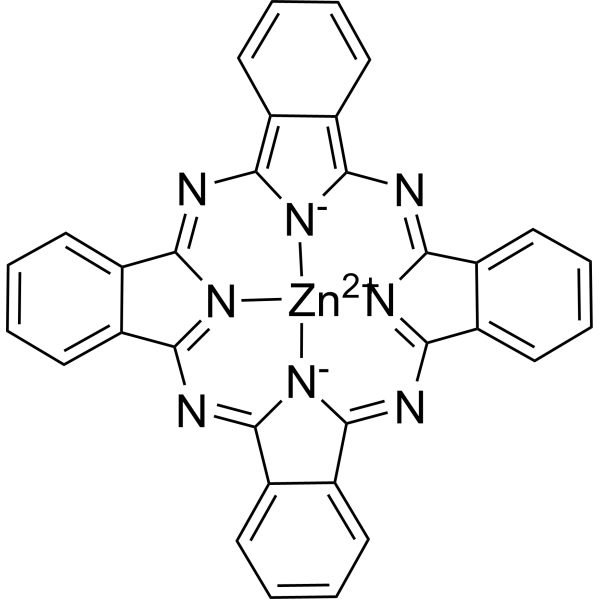
Zinc phthalocyanine (ZnPc) is commonly applied in industry (catalysts, photoconductors) and biomedical (photodynamic therapy, PDT). Zinc phthalocyanine can be used to photooxidise cyclohexane and is promising for research of solar-cell applications .
|
-
- HY-D2620
-
|
|
Fluorescent Dye
|
|
CAR-2 is a BODIPY-based photosensitizer that induces ferroptosis in photodynamic therapy (PDT) by targeting the endoplasmic reticulum (ER) and lipid droplets (LDs). CAR-2 exhibits phototoxicity in breast cancer cells with IC50 of 0.01-0.02 μM. CAR-2 exhibits antitumor efficacy in 4T1 xenograft mouse models .
|
-
- HY-D0988A
-
|
R-PE (concentrated solution)
|
Fluorescent Dye
|
|
R-Phycoerythrin (R-PE) (concentrated solution) is found in Heterosiphonia japonica. R-Phycoerythrin (concentrated solution) is an orange-red fluorescent probe with α, β, and γ subunits. R-Phycoerythrin (concentrated solution) can be used in photodynamic therapy (PDT) to induce apoptosis in tumor cells. R-Phycoerythrin (concentrated solution) can be used in fluorescence microscopy, flow cytometry, and immunofluorescence analysis (Ex/Em = 496/578 nm) .
|
-
- HY-D0988B
-
|
R-PE ammonium sulfate precipitate
|
Fluorescent Dye
|
|
R-Phycoerythrin (R-PE) (ammonium sulfate precipitate) is found in Heterosiphonia japonica. R-Phycoerythrin (ammonium sulfate precipitate) is an orange-red fluorescent probe with α, β, and γ subunits. R-Phycoerythrin (concentrated solution) can be used in photodynamic therapy (PDT) to induce apoptosis in tumor cells. R-Phycoerythrin (ammonium sulfate precipitate) can be used in fluorescence microscopy, flow cytometry, and immunofluorescence analysis (Ex/Em = 496/578 nm) .
|
| Cat. No. |
Product Name |
Type |
-
- HY-W854659
-
|
Ce6 trisodium
|
Biochemical Assay Reagents
|
|
Chlorin e6 Ce6 (trisodium) is a water-soluble derivative of chlorophyll, belonging to the chlorin class of photosensitizers with an absorption wavelength range of 600-670 nm. Chlorin e6 trisodium emits characteristic red fluorescence upon light excitation, enabling real-time identification of tumor boundaries and progression. Chlorin e6 trisodium can be used for the study of photodynamic therapy (PDT) of cancers (bladder cancer) and fluorescence diagnosis of neoplastic lesions .
|
| Cat. No. |
Product Name |
Target |
Research Area |
-
- HY-P2213
-
|
|
MMP
Apoptosis
|
Cancer
|
|
GPLGIAGQ, a MMP2-cleavable polypeptide, is used as a stimulus-sensitive linker in both liposomal and micellar nanocarriers for MMP2-triggered tumor targeting. GPLGIAGQ can be used to synthesis unique MMP2-targeted photosensitizer in photodynamic therapy (PDT) .
|
-
- HY-P2213A
-
|
|
MMP
Apoptosis
|
Cancer
|
|
GPLGIAGQ TFA, a MMP2-cleavable polypeptide, is used as a stimulus-sensitive linker in both liposomal and micellar nanocarriers for MMP2-triggered tumor targeting. GPLGIAGQ TFA can be used to synthesis unique MMP2-targeted photosensitizer in photodynamic therapy (PDT) .
|
| Cat. No. |
Product Name |
Category |
Target |
Chemical Structure |
| Cat. No. |
Product Name |
Chemical Structure |
-
- HY-W769206
-
|
|
|
Talaporfin- 13C4, 15N (ME2906 (free acid)- 13C4, 15N) is the 13C- and 15N-labeled Talaporfin (HY-16477A). Talaporfin sodium, can be used in intraoperative photodynamic therapy (PDT) with a 664-nm semiconductor laser, was evaluated for efficacy and safety in treating primary malignant parenchymal brain tumors .
|
-
| Cat. No. |
Product Name |
|
Classification |
-
- HY-RS20201
-
|
|
|
siRNAs
Mouse Pre-designed siRNA Sets
|
|
Twist1 Mouse Pre-designed siRNA Set A contains three designed siRNAs for Twist1 gene (Mouse), as well as a negative control, a positive control, and a FAM-labeled negative control.
|
Your information is safe with us. * Required Fields.
Inquiry Information
- Product Name:
- Cat. No.:
- Quantity:
- MCE Japan Authorized Agent:

