28 Results for "

Preterm

" in MedChemExpress (MCE) Product Catalog:
Products (28)

28 Results for "Preterm" in MCE Product Catalog:

7
7 Cited Publications
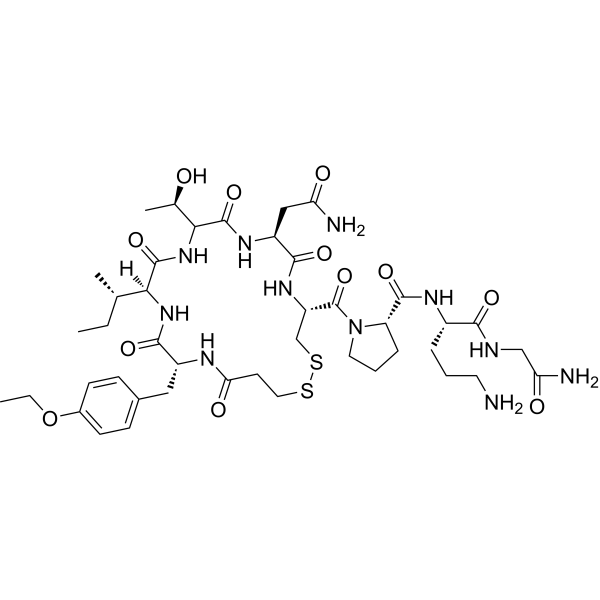
Cat. No.: HY-17572
CAS No.: 90779-69-4
Synonyms: RW22164; RWJ22164
Atosiban (RW22164; RWJ22164) is a nonapeptide competitive vasopressin/oxytocin receptor antagonist, and is a desamino-oxytocin analogue. Atosiban is the main tocolytic agent and has the potential for spontaneous preterm labor research .
loading...
    loading...
7
7 Cited Publications
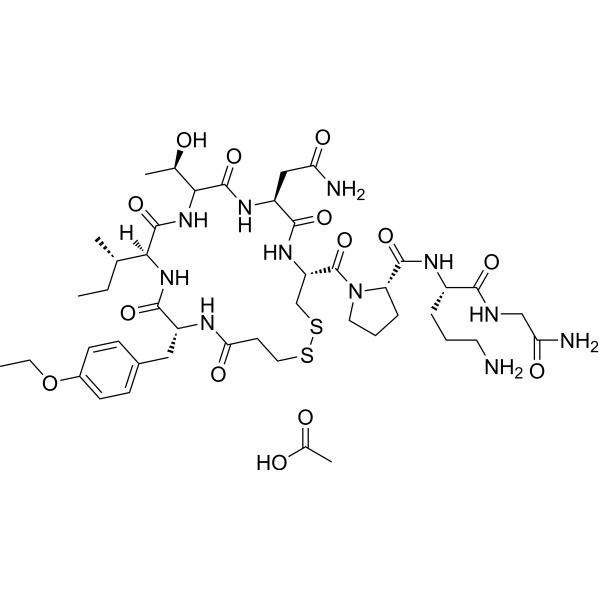
Cat. No.: HY-17572A
CAS No.: 914453-95-5
Synonyms: RW22164 acetate; RWJ22164 acetate
Atosiban acetate (RW22164 acetate;RWJ22164 acetate) is a nonapeptide competitive vasopressin/oxytocin receptor antagonist, and is a desamino-oxytocin analogue. Atosiban is the main tocolytic agent and has the potential for spontaneous preterm labor research .
loading...
    loading...
6
6 Cited Publications
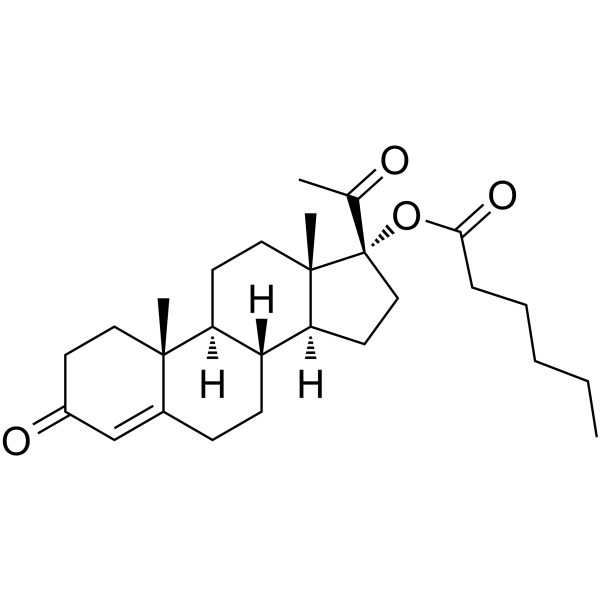
Cat. No.: HY-B0742
CAS No.: 630-56-8
Synonyms: 17α-Hydroxyprogesterone hexanoate; 17α-Hydroxyprogesterone caproate
Target:  

Progesterone Receptor

Research Areas:  

Endocrinology

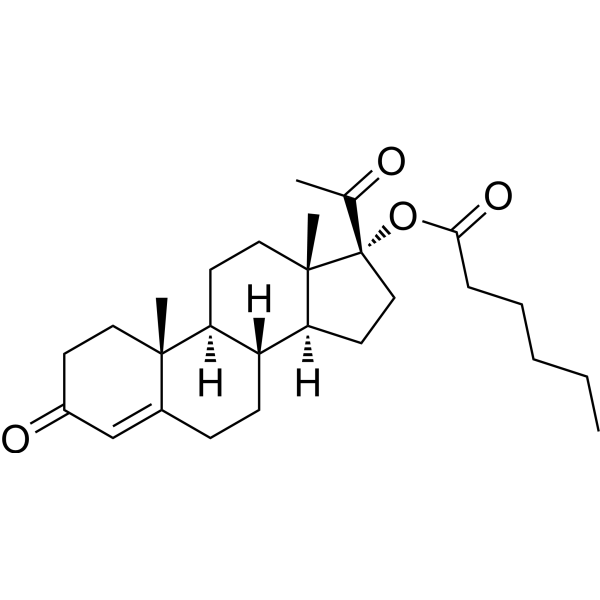
Hydroxyprogesterone caproate (17α-Hydroxyprogesterone hexanoate; 17α-Hydroxyprogesterone caproate) is a progesterone receptor (progesterone receptor) ligand and steroid hormone transcription inhibitor. Hydroxyprogesterone caproate downregulates estrogen receptors in target tissues and activates their metabolic pathways, and exhibits equivalent affinity for progesterone receptor A and progesterone receptor B. Hydroxyprogesterone caproate shows no consistent teratogenicity or developmental toxicity in rat, mouse and monkey models, but induces resorption or abortion in rhesus monkeys at human-equivalent doses. Hydroxyprogesterone caproate promotes the production of TNF-α in lipopolysaccharide-stimulated whole blood from non-pregnant women. Hydroxyprogesterone caproate can be used in scientific research related to preterm birth .
loading...
    loading...
6
6 Cited Publications
Cat. No.: HY-B0742R
CAS No.: 630-56-8
Synonyms: 17α-Hydroxyprogesterone hexanoate(Standard); 17α-Hydroxyprogesterone caproate (Standard)
Research Areas:  

Others

Hydroxyprogesterone caproate (Standard) is the analytical standard of Hydroxyprogesterone caproate. This product is intended for research and analytical applications. Hydroxyprogesterone caproate (17α-Hydroxyprogesterone hexanoate; 17α-Hydroxyprogesterone caproate) is a progesterone receptor (progesterone receptor) ligand and steroid hormone transcription inhibitor. Hydroxyprogesterone caproate downregulates estrogen receptors in target tissues and activates their metabolic pathways, and exhibits equivalent affinity for progesterone receptor A and progesterone receptor B. Hydroxyprogesterone caproate shows no consistent teratogenicity or developmental toxicity in rat, mouse and monkey models, but induces resorption or abortion in rhesus monkeys at human-equivalent doses. Hydroxyprogesterone caproate promotes the production of TNF-α in lipopolysaccharide-stimulated whole blood from non-pregnant women. Hydroxyprogesterone caproate can be used in scientific research related to preterm birth .
loading...
    loading...
2
2 Cited Publications
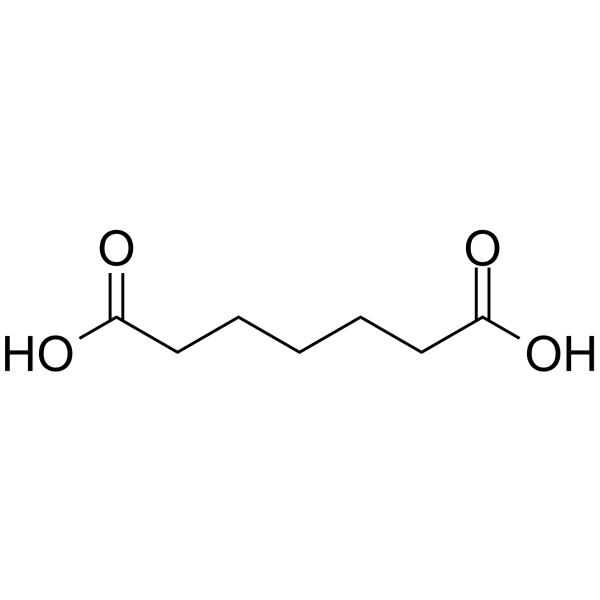
Cat. No.: HY-Y1139
CAS No.: 111-16-0
Synonyms: Heptanedioic acid; 1,5-Pentanedicarboxylic acid; 1,7-Heptanedioic acid
Pimelic acid (Heptanedioic acid; 1,5-Pentanedicarboxylic acid) is a seven-carbon α,ω-dicarboxylic acid and a downstream product of fatty acid synthesis. Pimelic acid is a key precursor in biotin biosynthesis. Pimelic acid can be converted to pimelic acid-CoA by the BioW enzyme, thereby bypassing exogenous biotin requirements to support growth in various biotinytrophic bacteria and fungi, and reversing antibiotic-induced inhibition of biotin synthesis. Furthermore, Pimelic acid has been proposed as a highly specific biomarker for oxygen-induced retinopathy in mice. Pimelic acid can be used to study retinopathy of preterm infants, oxygen-induced retinopathy, and microbial biotin metabolism .
loading...
    loading...
2
2 Cited Publications
Cat. No.: HY-B0452
CAS No.: 23239-51-2
Synonyms: DU21220 hydrochloride
Target:  

Adrenergic Receptor

Research Areas:  

Endocrinology

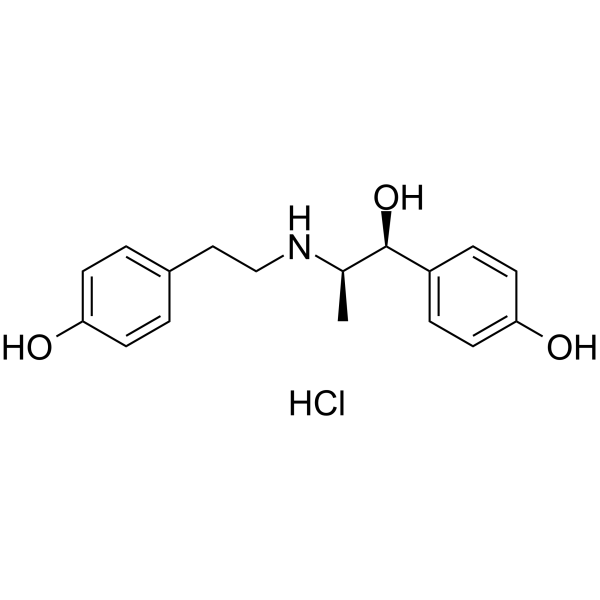
Ritodrine (DU21220) hydrochloride is a potent and orally active β-adrenergic agonist. Ritodrine hydrochloride decreases preterm delivery and uterine contraction. Ritodrine hydrochloride has the potential for the research of preterm labor .
loading...
    loading...
Cat. No.: HY-P2168
CAS No.: 113-78-0
Research Areas:  

Metabolic Disease

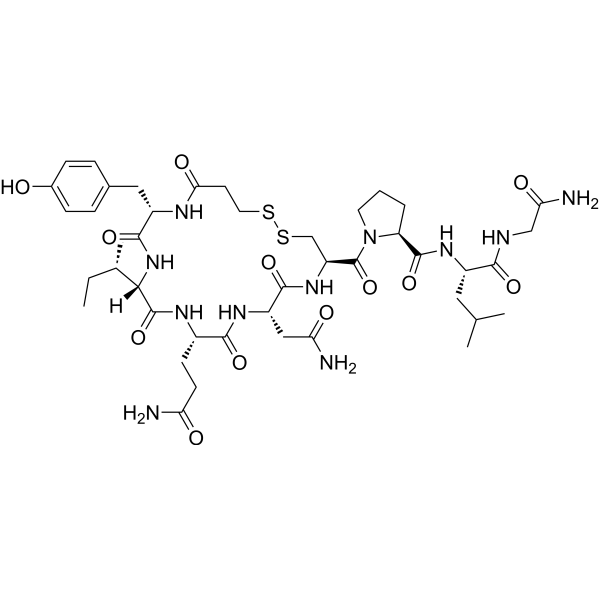
Demoxytocin is a heterologous cyclic peptide and an analog of Oxytocin (HY-17571). Demoxytocin affects the permeability of cell membranes and increases calcium ion levels in smooth muscle cells, thereby enhancing the contraction of smooth muscle cells. Demoxytocin also stimulates the contraction of uterine smooth muscle. Demoxytocin possesses the functions of oxytocin. Demoxytocin can be used to study labor stimulation in preterm premature rupture of membranes .
loading...
    loading...
Cat. No.: HY-P5523A
iE-DAP dihydrochloride is a Nod1 agonist. iE-DAP dihydrochloride activates NOD1, which in turn activates the NF-κB signaling pathway and MLCK signaling pathway, inducing cellular inflammatory responses and tight junction disruption. iE-DAP dihydrochloride downregulates the expression of ZO-1 and Occludin genes. iE-DAP dihydrochloride increases the secretion of IL-6, GRO-α, MCP-1, IL-8 and MIP-1β in term human trophoblast cell cultures. iE-DAP dihydrochloride triggers preterm birth in pregnant mice, reduces fetal body weight, and induces fetal inflammation. iE-DAP dihydrochloride can be used in studies related to mastitis and preterm birth .
loading...
    loading...
Cat. No.: HY-D1056A4
Synonyms: LPS, from Escherichia coli (O128:B12)
Lipopolysaccharides, from E. coli O128:B12 (LPS, from Escherichia coli (O128:B12)) are endotoxins and TLR4 activators extracted from Escherichia coli (E. coli O128:B12) and are classified as S (smooth) type LPS. Lipopolysaccharides, from E. coli O128:B12 possess the typical three-part structure: O-antigen, R3-type core oligosaccharide, and lipid A. Lipopolysaccharides, from E. coli O128:B12 activate TLR-4 in immune cells, can be used to construct animal models of neonatal brain inflammation, and may influence preterm birth in neonates .
It is recommended to prepare a solution with concentration ≥2 mg/mL. Vortex thoroughly for more than 10 minutes. Due to the adsorption characteristics of LPS, silanized container or low adsorption centrifuge tubes should be used for aliquoting and storage, and mix thoroughly before use.
loading...
    loading...
Cat. No.: HY-113111
CAS No.: 192461-95-3
Target:  

Drug Metabolite

Research Areas:  

Inflammation/Immunology

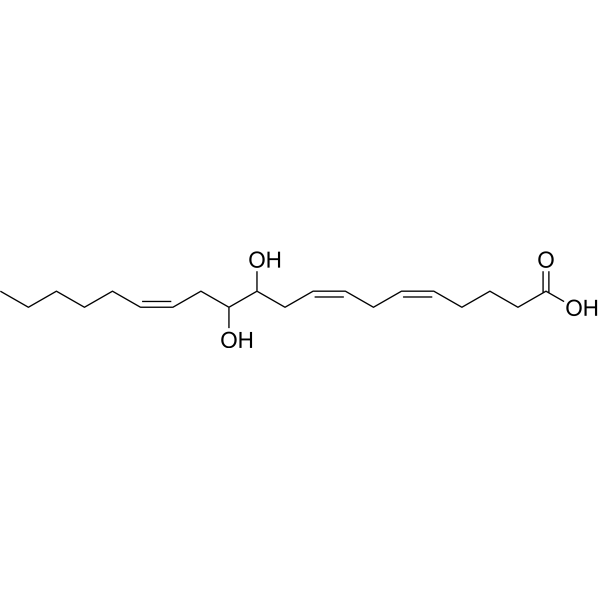
11,12-DiHETrE is a dihydroxy fatty acid metabolite of Arachidonic Acid (HY-109590). 11,12-DiHETrE is converted to 11,12-DiHETrE under elevated soluble epoxide hydrolase (sEH) activity, a process closely related to inflammation and oxidative stress. 11,12-DiHETrE can serve as a single biomarker to differentiate between NAFL (non-alcoholic fatty liver disease) and NASH (non-alcoholic steatohepatitis). 11,12-DiHETrE can be used in studies on preterm birth, autism, and pulmonary hypertension .
loading...
    loading...
Cat. No.: HY-14778
CAS No.: 820957-38-8
Purity:  98.97%
Synonyms: GSK 221149; GSK 221149A
Target:  

Oxytocin Receptor

Research Areas:  

Neurological Disease Endocrinology

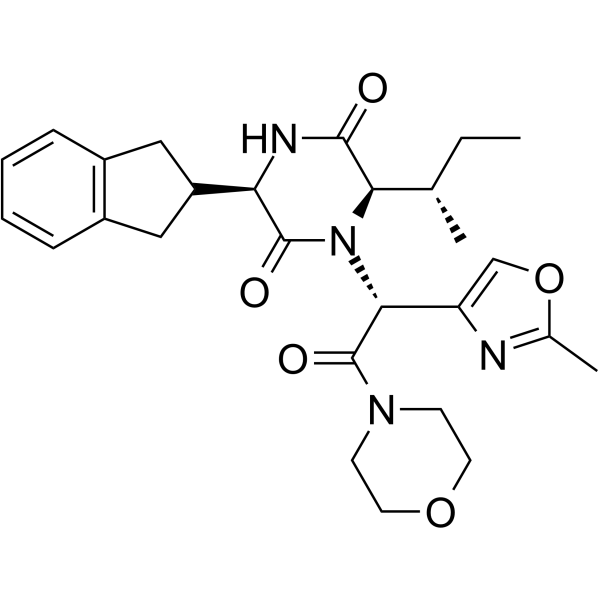
Retosiban (GSK221149A) is a potent, selective, and orally active oxytocin receptor antagonist (Ki (hOT) = 0.65 nM, Ki (rOT) = 4.1 nM) with no detectable agonist activity. Retosiban has nanomolar affinity for the oxytocin receptor with >1400-fold selectivity over the closely related vasopressin receptors. Retosiban inhibits spontaneous and induces uterine contractions. Retosiban can be studied in research for preterm labour .
loading...
    loading...
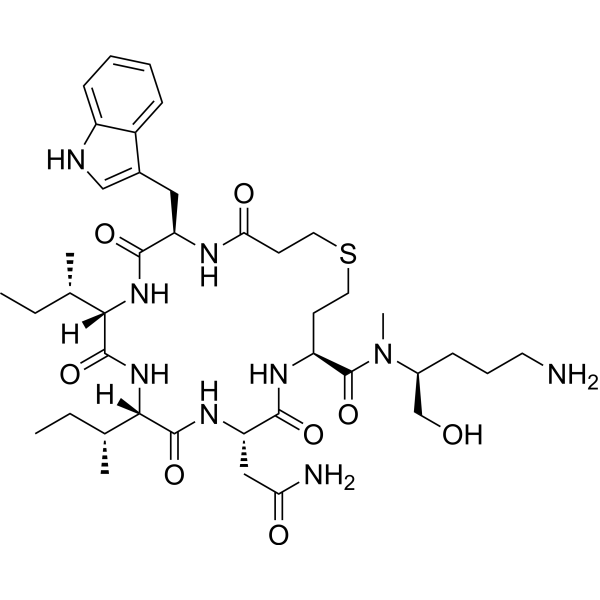
Cat. No.: HY-P3516
CAS No.: 285571-64-4
Synonyms: FE-200440
Target:  

Oxytocin Receptor

Research Areas:  

Endocrinology

Barusiban (FE-200440) is an oxytocin receptor (OT-R) antagonist (Ki=0.8 nM), inhibits OT-induced contraction. Barusiban can be used in preterm labor (PTL), in vitro fertilisation (IVF) and infertility research .
loading...
    loading...
Cat. No.: HY-P5523
CAS No.: 592520-07-5
iE-DAP is a Nod1 agonist. iE-DAP activates NOD1, which in turn activates the NF-κB signaling pathway and MLCK signaling pathway, inducing cellular inflammatory responses and tight junction disruption. iE-DAP downregulates the expression of ZO-1 and Occludin genes. iE-DAP increases the secretion of IL-6, GRO-α, MCP-1, IL-8 and MIP-1β in term human trophoblast cell cultures. iE-DAP triggers preterm birth in pregnant mice, reduces fetal body weight, and induces fetal inflammation. iE-DAP is applicable to research related to mastitis and preterm birth .
loading...
    loading...
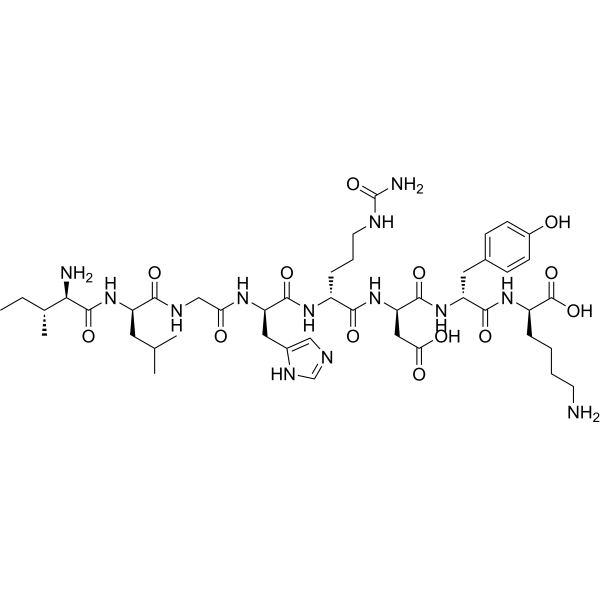
Cat. No.: HY-P4160
CAS No.: 634586-40-6
Synonyms: THG113.31; ILGHXDYK
Research Areas:  

Endocrinology

PDC31 (THG113.31; ILGHXDYK) is an allosteric and non-competitive inhibitor of FP Prostaglandin Receptor. PDC31 is the D-amino acid-based oligopeptide, is used for smooth muscle contractile agent. PDC31 decreases the strength and duration of uterine contractions in vivo, which can be used for research of preterm labor and primary dysmenorrhea (PD). PDC31 also enhances Ca 2+-dependent large-conductance K +-channel in human myometrial cells .
loading...
    loading...
Cat. No.: HY-15008
CAS No.: 148927-60-0
Target:  

Oxytocin Receptor

Research Areas:  

Endocrinology

L-368,899 is an orally active and selective OT (oxytocin ) receptor antagonist, with IC50s of 8.9 and 26 nM for uterus of rat and human, respectively. L-368,899 can cross the blood-brain barrier (BBB). L-368,899 inhibits oxytocin-stimulated uterine contractions in rats and can be used in study of preterm labor .
loading...
    loading...
Cat. No.: HY-16741
CAS No.: 1477482-19-1
Synonyms: OBE001
Target:  

Oxytocin Receptor

Research Areas:  

Endocrinology

Erlosiban (OBE001) is an orally active non-peptide type oxytocin receptor antagonist. Erlosiban inhibits the increase of intracellular calcium concentration, thereby reducing uterine smooth muscle contraction. Erlosiban can be used for research on premature birth and to improve embryo implantation and pregnancy rate in assisted reproductive technology (AR).
loading...
    loading...
Cat. No.: HY-B0452R
CAS No.: 23239-51-2
Synonyms: DU21220 hydrochloride (Standard)
Research Areas:  

Endocrinology

Ritodrine (hydrochloride) (Standard) is the analytical standard of Ritodrine (hydrochloride). This product is intended for research and analytical applications. Ritodrine (DU21220) hydrochloride is a potent and orally active β-adrenergic agonist. Ritodrine hydrochloride decreases preterm delivery and uterine contraction. Ritodrine hydrochloride has the potential for the research of preterm labor .
loading...
    loading...
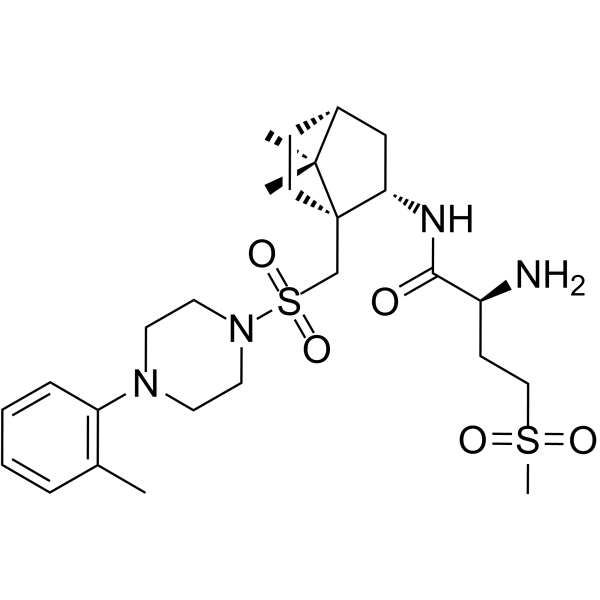
Cat. No.: HY-129333
CAS No.: 122211-31-8
Research Areas:  

Metabolic Disease

L-364918 is a potent and selective oxytocin and arginine vasopressin antagonist with Ki values of 30, 1300, 2400 nM for OT, AVP-V1, AVP-V2, respectively. L-364918 has the potential for the research of preterm labor and disturbances in water balance .
loading...
    loading...
Cat. No.: HY-17572R
CAS No.: 90779-69-4
Synonyms: RW22164 (Standard); RWJ22164 (Standard)
Atosiban (Standard) is the analytical standard of Atosiban. This product is intended for research and analytical applications. Atosiban (RW22164; RWJ22164) is a nonapeptide competitive vasopressin/oxytocin receptor antagonist, and is a desamino-oxytocin analogue. Atosiban is the main tocolytic agent and has the potential for spontaneous preterm labor research .
loading...
    loading...
Cat. No.: HY-17572AR
CAS No.: 914453-95-5
Synonyms: RW22164 acetate (Standard); RWJ22164 acetate (Standard)
Atosiban (acetate) (Standard) is the analytical standard of Atosiban (acetate). This product is intended for research and analytical applications. Atosiban acetate (RW22164 acetate;RWJ22164 acetate) is a nonapeptide competitive vasopressin/oxytocin receptor antagonist, and is a desamino-oxytocin analogue. Atosiban is the main tocolytic agent and has the potential for spontaneous preterm labor research .
loading...
    loading...

