22 Results for "

RANKL-induced osteoclast formation

" in MedChemExpress (MCE) Product Catalog:
Products (22)

22 Results for "RANKL-induced osteoclast formation" in MCE Product Catalog:

6
6 Publications Verification
Cat. No.: HY-B1246
CAS No.: 553-08-2
Target:  

Bacterial Proton Pump

Research Areas:  

Infection

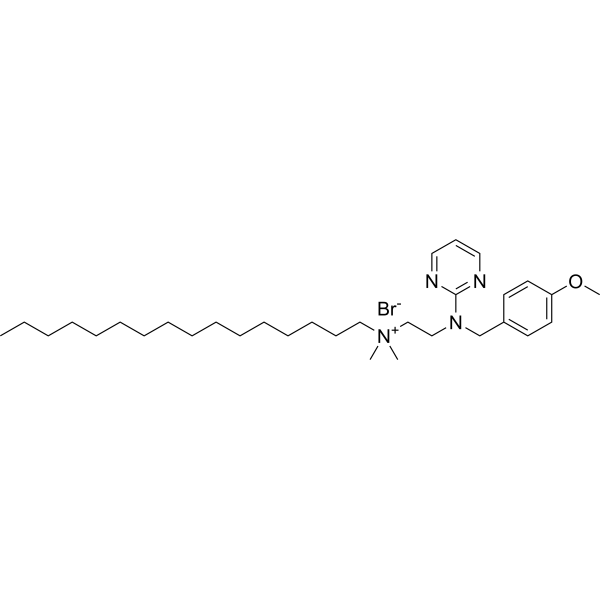
Thonzonium bromide is an antibacterial agent that is structurally similar to Farnesol (HY-Y0248A). Thonzonium bromide is also a monocationic surface-active agent, which inhibits RANKL-induced osteoclast formation and bone resorption in vitro and prevents LPS-induced bone loss in vivo. Thonzonium bromide inhibits proton transport in a dose-dependent manner (EC50=69 μM) .
loading...
    loading...
5
5 Cited Publications
Cat. No.: HY-N0259
CAS No.: 110623-73-9
Synonyms: Epmedin B
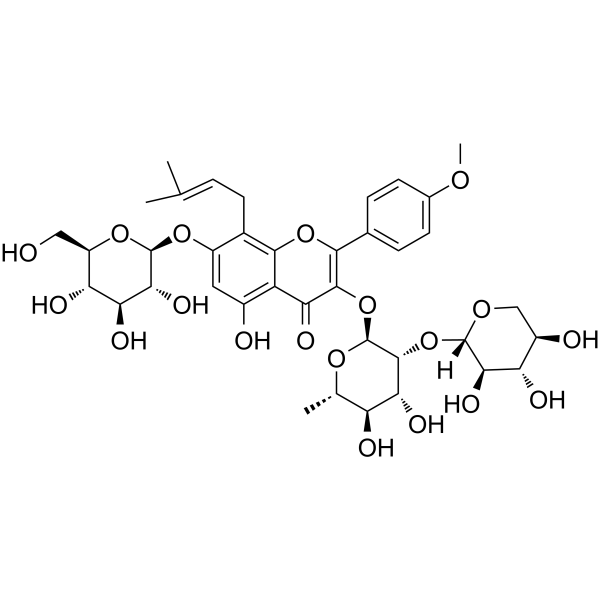
Epimedin B (Epmedin B) is a flavonoid active component found in Epimedium, with oral activity, and exhibits anti-osteoporotic and neuroprotective effects. Epimedin B inhibits RANKL-induced osteoclast differentiation, F-actin ring formation, and mature osteoclast bone resorption, inhibits the phosphorylation of JNK, p38 MAPK, PI3K, and AKT, activates the AMPK-Nrf2 antioxidant pathway, and reduces cellular and mitochondrial ROS. Epimedin B acts on ESR1 and exerts its effects via GPER. Epimedin B alleviates bone loss and improves bone microstructure in vivo, and in Parkinson's models protects dopaminergic neurons and maintains striatal dopamine levels through anti-apoptotic and anti-endoplasmic reticulum stress effects. Epimedin B can be used for research related to osteoporosis, diabetic osteoporosis, and Parkinson's disease .
loading...
    loading...
4
4 Cited Publications
Cat. No.: HY-147369
CAS No.: 1912422-56-0
Purity:  99.97%
Research Areas:  

Others

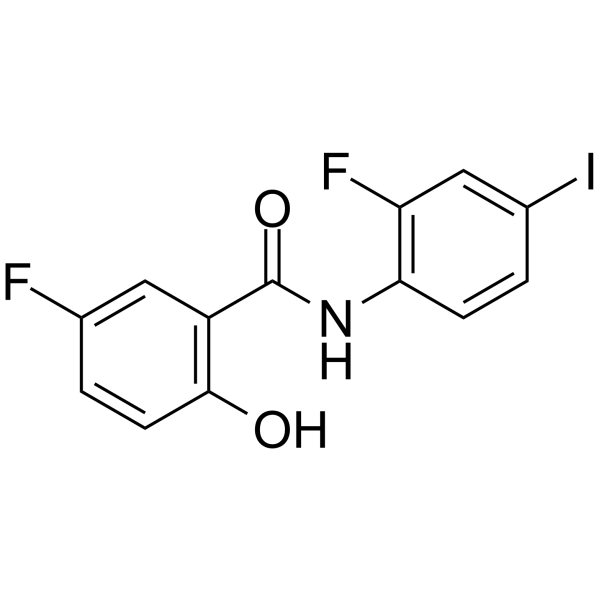
NFATc1-IN-1 (compound A04) is a potent inhibitor of RANKL-induced osteoclast formation, with an IC50 of 1.57 μM. NFATc1-IN-1 shows anti-osteoclastogenic effects through reducing the RANKL-induced nuclear translocation of NFATc1. NFATc1-IN-1 can be used for osteoclastic diseases research .
loading...
    loading...
2
2 Cited Publications
Cat. No.: HY-16782
CAS No.: 945614-12-0
Synonyms: ARRY-614
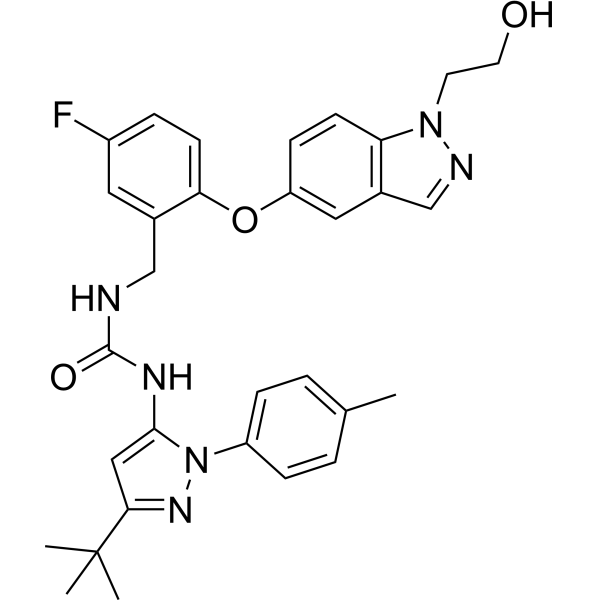
Pexmetinib (ARRY-614) is an orally active dual Tie-2 and p38 MAPK inhibitor. Pexmetinib binds to Tie-2 and p38 MAPK in a "DFG-out" conformation, attenuates the phosphorylation of p38, inhibits STAT3 activation, reduces the promoter-binding activity of NFATc1, and decreases the expression of MMPs. Pexmetinib inhibits leukemia cell proliferation, abrogates TNF-α-mediated myelosuppression of healthy hematopoietic stem cells, stimulates hematopoiesis in primary myelodysplastic syndrome (MDS) samples, inhibits RANKL-induced osteoclast formation and bone resorption, and suppresses migration, invasion and induced osteolysis of breast cancer cells. Pexmetinib can be used in research related to myelodysplastic syndrome, acute myeloid leukemia and breast cancer-induced osteolysis .
loading...
    loading...
2
2 Cited Publications
Cat. No.: HY-W008634
CAS No.: 56741-95-8
Synonyms: U-54461; U-54461S; PNU-54461
Research Areas:  

Cancer

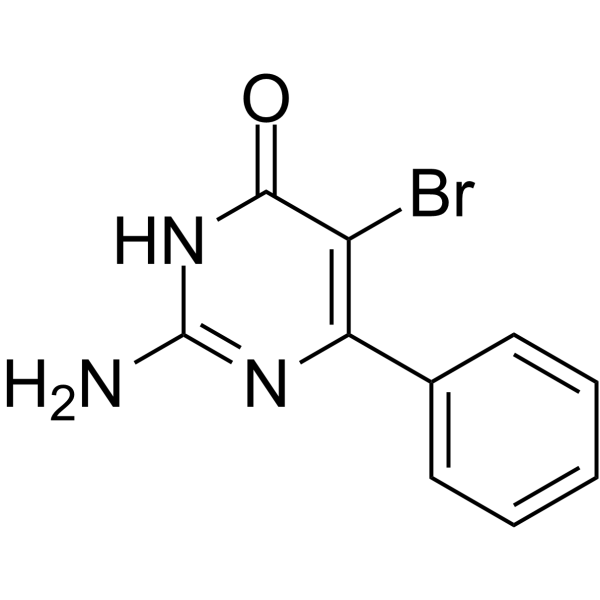
Bropirimine (U-54461; U-54461S; PNU-54461) is an orally active TLR7 agonist. Bropirimine inhibits RANKL-induced osteoclast differentiation of mouse bone marrow-derived macrophages (BMMs). Bropirimine exhibits dose-dependent direct inhibitory effects on colony formation of cultured KK-47 and 724 cells. Bropirimine can be used for the study of cancers and bone metabolic disorders such as osteoporosis .
loading...
    loading...
1
1 Cited Publications
Cat. No.: HY-N2736
CAS No.: 2150-11-0
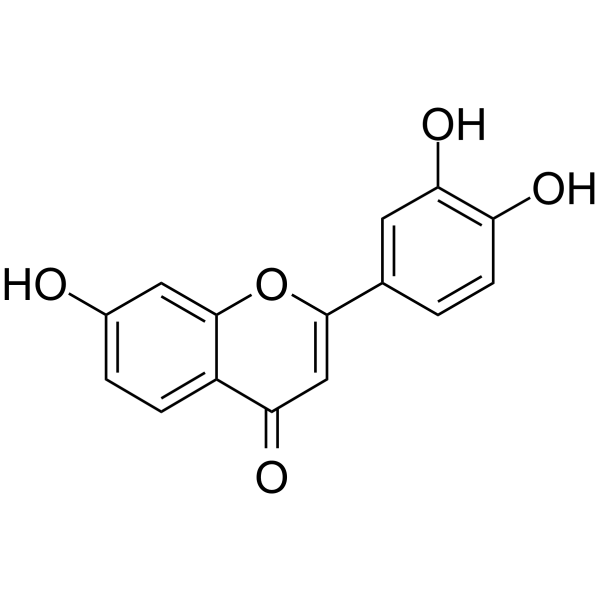
3′,4′,7-Trihydroxyflavone is an orally active inhibitor of OXA-48 (IC50 = 1.89 μM) and COX-1 (IC50 = 36.37 μM). 3′,4′,7-Trihydroxyflavone exhibits antioxidant and anti-inflammatory properties, inhibiting the release of inflammatory cytokines such as IL-6, IL-8, and TNF-α. 3′,4′,7-Trihydroxyflavone inhibits H2O2-induced neuronal apoptosis and ROS accumulation, and exerts anti-neuroinflammatory effects by suppressing the JNK-STAT1 pathway. 3′,4′,7-Trihydroxyflavone exhibits antimicrobial and antibiotic-modifying activities against multidrug-resistant Gram-negative enteric bacteria. 3′,4′,7-Trihydroxyflavone inhibits RANKL-induced osteoclast formation via NFATc1. 3′,4′,7-Trihydroxyflavone activates the CREB-BDNF axis and restores scopolamine (HY-N0296)-induced memory deficits in mice .
loading...
    loading...
1
1 Cited Publications
Cat. No.: HY-N0805A
CAS No.: 18649-93-9
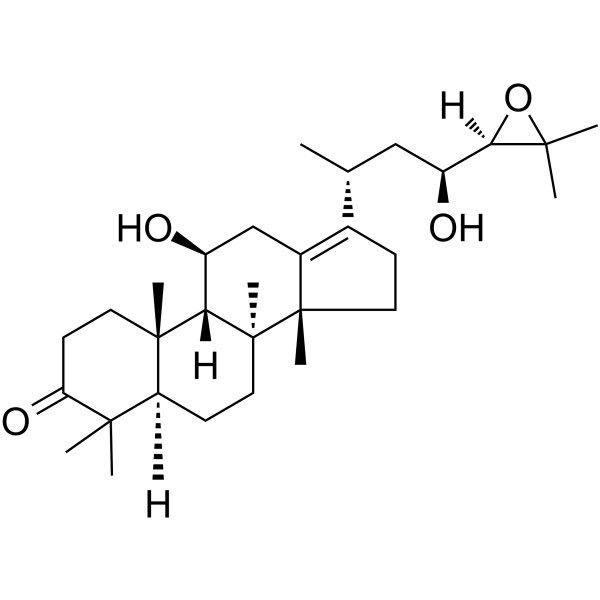
Alisol B is a triterpene with diverse biological activities. Alisol B binds human soluble epoxide hydrolase (sEH) with a Ki of 5.97 μM and reduces sEH activity. Alisol B inhibits RANKL-induced JNK phosphorylation, NFATc1 and c-Fos expression, osteoclast formation, mature osteoclast pit-forming and actin ring activity, and SERCA pump activity. Alisol B induces calcium mobilization, CaMKK-AMPK-mTOR pathway activation, autophagic flux, autophagosome formation, G1 phase cell cycle arrest, endoplasmic reticulum stress, unfolded protein responses, and cancer cell apoptosis. Alisol B can be used for the research of hypercalcemia, osteoporosis, rheumatoid arthritis, periodontitis, acute kidney injury, and breast cancer .
loading...
    loading...
Cat. No.: HY-111083
CAS No.: 931695-79-3
Purity:  99.65%
Synonyms: CID23612552
Target:  

GPR55 PERK PKC ERK p38 MAPK

Research Areas:  

Metabolic Disease Cancer

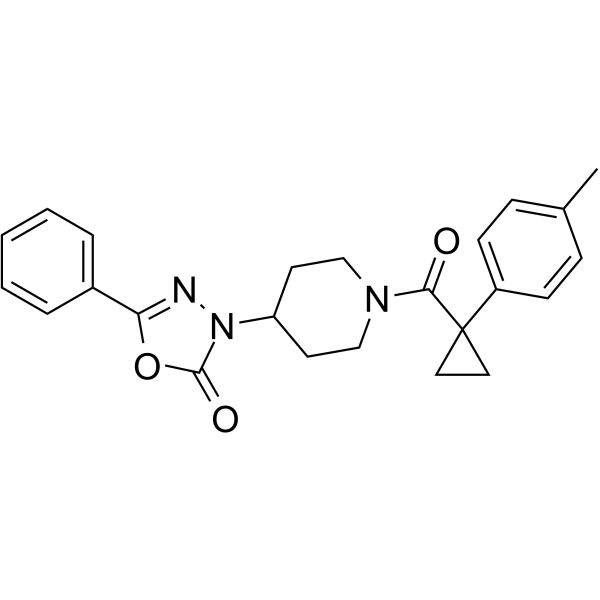
ML191 (CID23612552) is a GPR55 antagonist. ML191 inhibits ERK phosphorylation and PKC β II translocation downstream of GPR55 signaling. ML191 suppresses LPI-induced activation of ERK1/2 and p38 MAPK signaling, blocks the transcription of RANKL-induced osteoclastogenesis markers, and reduces the bone resorption activity of mature osteoclasts promoted by RANKL. ML191 can be used to investigate diseases associated with bone degradation caused by excessive osteoclast activation, such as osteoporosis and bone damage during the formation stage of bone metastases .
loading...
    loading...
Cat. No.: HY-N10117
CAS No.: 138250-72-3
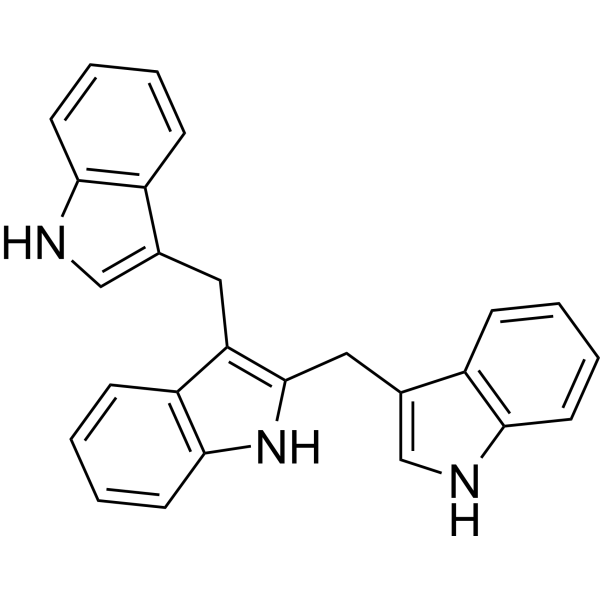
2,3-Bis(3-indolylmethyl)indole significantly suppresses RANKL-induced osteoclast formation, actin ring formation, and bone resorption in a concentration-dependent manner.
loading...
    loading...
Cat. No.: HY-168336
CAS No.: 2909474-29-7
Target:  

PPAR

Research Areas:  

Metabolic Disease

E0924G is an orally active activator for PPARδ with EC50 of 2.82 μM. E0924G promotes the upregulation of osteoprotegerin (OPG) with an EC50 of 0.29 μM. E0924G reduces RANKL-induced osteoclast differentiation and inhibites F-actin ring formation in RAW264.7 macrophages. E0924G regulates the bone density and bone loss in ovariectomized (OVX) and age-related osteoporosis models .
loading...
    loading...
Cat. No.: HY-121282B
CAS No.: 24360-97-2
Synonyms: Pecazine acetate
Target:  

Apoptosis MALT1

Research Areas:  

Others

Mepazine acetate (Pecazine acetate) is a drug that has the activity to inhibit the protease activity of MALT1. Mepazine acetate is often used to study the role of MALT1 in biology. Treatment of mouse bone marrow precursor cells with mepazine acetate strongly inhibited RANK ligand (RANKL)-induced osteoclast formation. Mepazine acetate also inhibited the expression of multiple osteoclast markers such as TRAP, feline hepsin K, and calcitonin. The protective effect of mepazine acetate was not affected by MALT1 deficiency. The mechanism of action of mepazine acetate may involve MALT1-independent mechanisms, and this aspect needs to be considered in future studies .
loading...
    loading...
Cat. No.: HY-N10062
CAS No.: 2923661-84-9
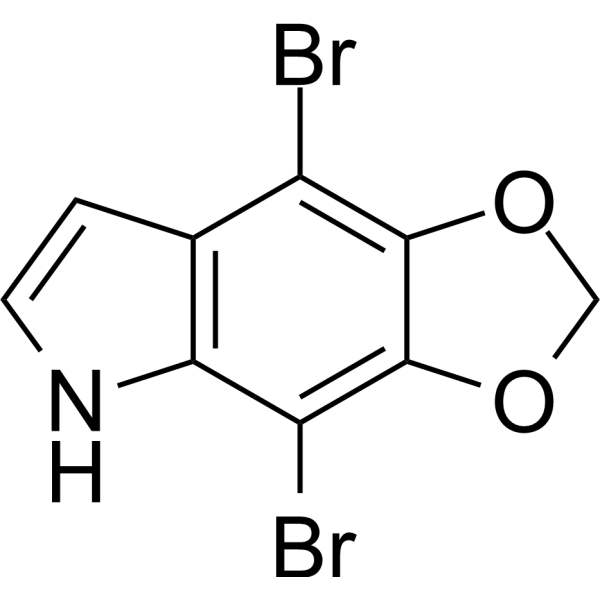
Amakusamine inhibits the receptor activator of nuclear factor-κB ligand (RANKL)-induced formation of multinuclear osteoclasts with an IC50 value of 10.5 μM in RAW264.7 cells.
loading...
    loading...
Cat. No.: HY-168090
CAS No.: 2869099-50-1
Target:  

p38 MAPK NF-κB RANKL/RANK

Research Areas:  

Endocrinology

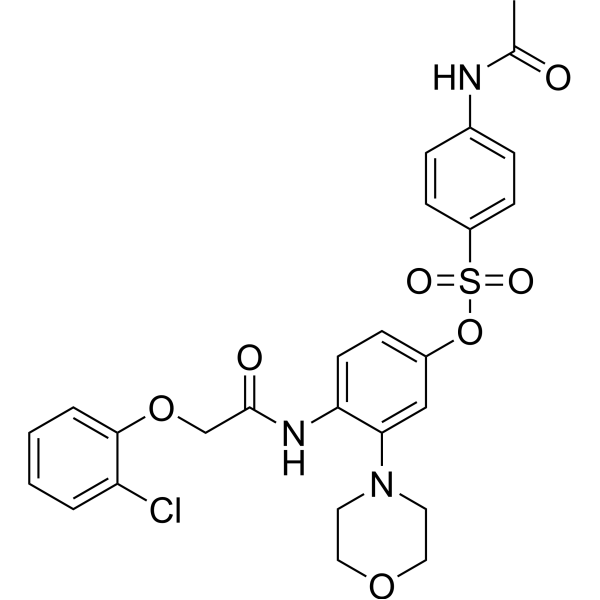
Anti-osteoporosis agent-11 (compound 3k) is an anti-osteoporosis compound targeting osteoclasts. Anti-osteoporosis agent-11 has the most significant inhibitory effect on osteoclast differentiation, with an IC50 value of 0.36 μM. In addition, Anti-osteoporosis agent-11 inhibits osteoclast formation, bone resorption, and the expression of osteoclast-specific genes by blocking rankl-induced mitogen-activated protein kinase (MAPK) and NF-κB signaling pathways .
loading...
    loading...
Cat. No.: HY-149472
CAS No.: 3046142-30-4
Target:  

NF-κB PI3K

Research Areas:  

Inflammation/Immunology

Anti-osteoporosis agent-4 (Compound 11h) inhibits differentiation of primary osteoclasts. Anti-osteoporosis agent-4 attenuates RANKL-induced osteoclastogenesis. Anti-osteoporosis agent-4 inhibits osteoclast formation with an IC50 value of 358.29 nM. Anti-osteoporosis agent-4 inhibits PI3K/AKT and IκBα/NF-κB signaling pathway activation .
loading...
    loading...
Cat. No.: HY-B1246R
CAS No.: 553-08-2
Research Areas:  

Infection

Thonzonium (bromide) (Standard) is the analytical standard of Thonzonium (bromide). This product is intended for research and analytical applications. Thonzonium bromide is an antibacterial agent that is structurally similar to Farnesol (HY-Y0248A). Thonzonium bromide is also a monocationic surface-active agent, which inhibits RANKL-induced osteoclast formation and bone resorption in vitro and prevents LPS-induced bone loss in vivo. Thonzonium bromide inhibits proton transport in a dose-dependent manner (EC50=69 μM) .
loading...
    loading...
Cat. No.: HY-N0805AR
CAS No.: 18649-93-9
Alisol B (Standard) is the analytical standard of Alisol B (HY-N0805A). This product is intended for research and analytical applications. Alisol B is a triterpene with diverse biological activities. Alisol B binds human soluble epoxide hydrolase (sEH) with a Ki of 5.97 μM and reduces sEH activity. Alisol B inhibits RANKL-induced JNK phosphorylation, NFATc1 and c-Fos expression, osteoclast formation, mature osteoclast pit-forming and actin ring activity, and SERCA pump activity. Alisol B induces calcium mobilization, CaMKK-AMPK-mTOR pathway activation, autophagic flux, autophagosome formation, G1 phase cell cycle arrest, endoplasmic reticulum stress, unfolded protein responses, and cancer cell apoptosis. Alisol B can be used for the research of hypercalcemia, osteoporosis, rheumatoid arthritis, periodontitis, acute kidney injury, and breast cancer.
loading...
    loading...
Cat. No.: HY-N0259R
CAS No.: 110623-73-9
Synonyms: Epmedin B (Standard)
Epimedin B (Standard) (Epmedin B (Standard)) is the analytical standard of Epimedin B (HY-N0259). This product is intended for research and analytical applications. Epimedin B (Epmedin B) is a flavonoid active component found in Epimedium, with oral activity, and exhibits anti-osteoporotic and neuroprotective effects. Epimedin B inhibits RANKL-induced osteoclast differentiation, F-actin ring formation, and mature osteoclast bone resorption, inhibits the phosphorylation of JNK, p38 MAPK, PI3K, and AKT, activates the AMPK-Nrf2 antioxidant pathway, and reduces cellular and mitochondrial ROS. Epimedin B acts on ESR1 and exerts its effects via GPER. Epimedin B alleviates bone loss and improves bone microstructure in vivo, and in Parkinson's models protects dopaminergic neurons and maintains striatal dopamine levels through anti-apoptotic and anti-endoplasmic reticulum stress effects. Epimedin B can be used for research related to osteoporosis, diabetic osteoporosis, and Parkinson's disease .
loading...
    loading...
Cat. No.: HY-16782R
CAS No.: 945614-12-0
Synonyms: ARRY-614 (Standard)
Pexmetinib (Standard) (ARRY-614 (Standard)) is the analytical standard of Pexmetinib (HY-16782). This product is intended for research and analytical applications. Pexmetinib (ARRY-614) is an orally active dual Tie-2 and p38 MAPK inhibitor. Pexmetinib binds to Tie-2 and p38 MAPK in a "DFG-out" conformation, attenuates the phosphorylation of p38, inhibits STAT3 activation, reduces the promoter-binding activity of NFATc1, and decreases the expression of MMPs. Pexmetinib inhibits leukemia cell proliferation, abrogates TNF-α-mediated myelosuppression of healthy hematopoietic stem cells, stimulates hematopoiesis in primary myelodysplastic syndrome (MDS) samples, inhibits RANKL-induced osteoclast formation and bone resorption, and suppresses migration, invasion and induced osteolysis of breast cancer cells. Pexmetinib can be used in research related to myelodysplastic syndrome, acute myeloid leukemia and breast cancer-induced osteolysis .
loading...
    loading...
Cat. No.: HY-181079
CAS No.: 2667022-87-7
RANKL-IN-2 is an orally active RANKL inhibitor with Kd values of 3.21 μM and 4.625 μM in the SPR and MST assays, respectively. RANKL-IN-2 binds to RANKL to interfere with RANKL-RANK interaction. RANKL-IN-2 suppresses osteoclastogenesis by inhibiting ROS, MAPK and NF-κB pathways. RANKL-IN-2 inhibits osteoclastogenesis via inhibition of RANKL-induced osteoclast formation, bone resorption, and osteoclast-specific gene and protein expressions in vitro.RANKL-IN-2 prevents bone loss in ovariectomized osteoporosis mice.RANKL-IN-2 can be used for the research of osteoporosis .
loading...
    loading...
Cat. No.: HY-181887
CAS No.: 3109883-60-2
Target:  

Keap1-Nrf2 NF-κB p38 MAPK

Research Areas:  

Metabolic Disease

Nrf2 activator-23 is an orally active Keap1 binder and Nrf2 activator, with KD values of 28.68 nM and 54.55 nM for Keap1 and its Kelch domain, respectively. Nrf2 activator-23 disrupts the Keap1-Nrf2 interaction, reduces ubiquitination and degradation of Nrf2, and activates the Nrf2 signaling pathway. Nrf2 activator-23 inhibits RANKL-induced osteoclast formation, bone resorptive activity, ROS production, and activation of the MAPK and NF-κB signaling pathways, while downregulating the expression of osteoclast-specific genes and proteins. Nrf2 activator-23 attenuates bone loss and reduces osteoclast formation in vivo without affecting osteoblast differentiation and mineralization. Nrf2 activator-23 can be used for the research of osteoporosis .
loading...
    loading...

