66 Results for "

Retinol

" in MedChemExpress (MCE) Product Catalog:
Products (66)

66 Results for "Retinol" in MCE Product Catalog:

4
4 Cited Publications
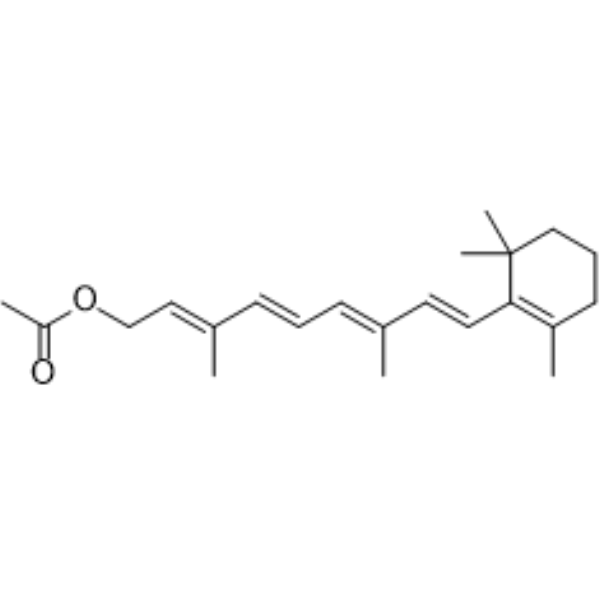
Cat. No.: HY-N0679
CAS No.: 127-47-9
Synonyms: Retinol acetate; Vitamin A acetate
Retinyl acetate is a synthetic acetate ester form derived from retinol and has potential antineoplastic and chemo preventive activities .
loading...
    loading...
3
3 Cited Publications
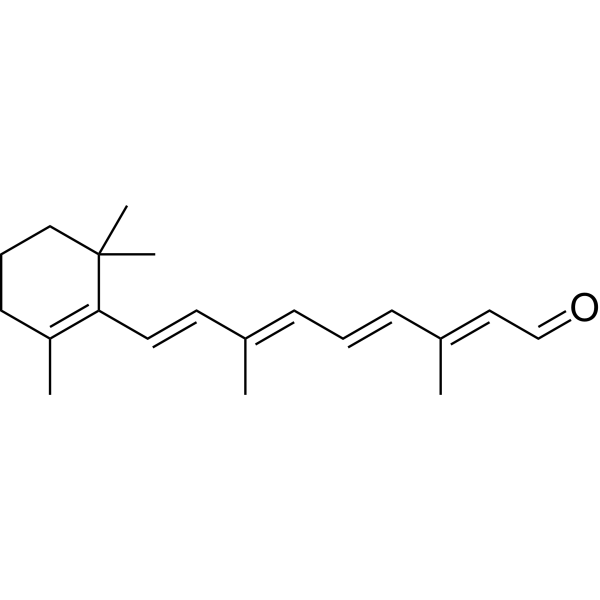
Cat. No.: HY-W004500
CAS No.: 116-31-4
All-trans-retinal is an vitamin A metabolite in the retina, and is produced following photo-isomerization of the visual chromophore 11-cis-Retinal. All-trans-retinal is cleared from photoreceptors by ATP-binding cassette transporter (ABCA4) and all-trans-retinol dehydrogenase (RDH). All-trans-retinal induces Bax activation via DNA damage to mediate retinal cell apoptosis .
loading...
    loading...
3
3 Cited Publications
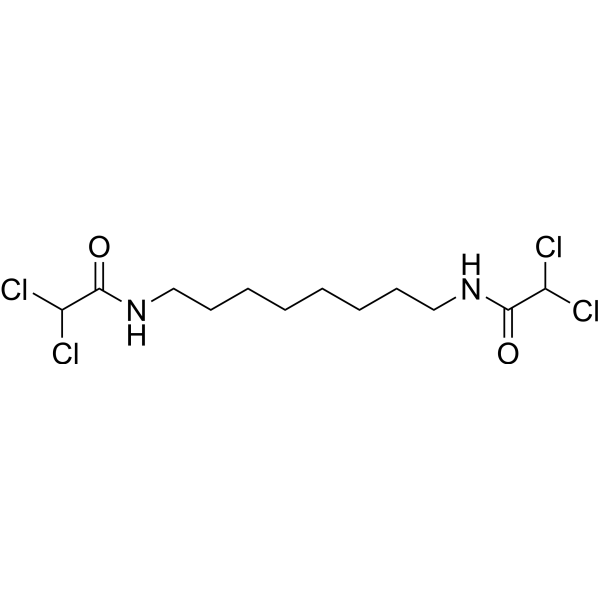
Cat. No.: HY-W011094
CAS No.: 1477-57-2
Research Areas:  

Endocrinology

Win 18446 is an orally active testes-specific enzyme ALDH1a2 inhibitor, with an IC50 of 0.3 μM. Win 18446 reversibly inhibits spermatogenesis in many species and inhibits Retinoic acid (HY-14649) biosynthesis from Retinol (HY-B1342) within the testes .
loading...
    loading...
1
1 Cited Publications
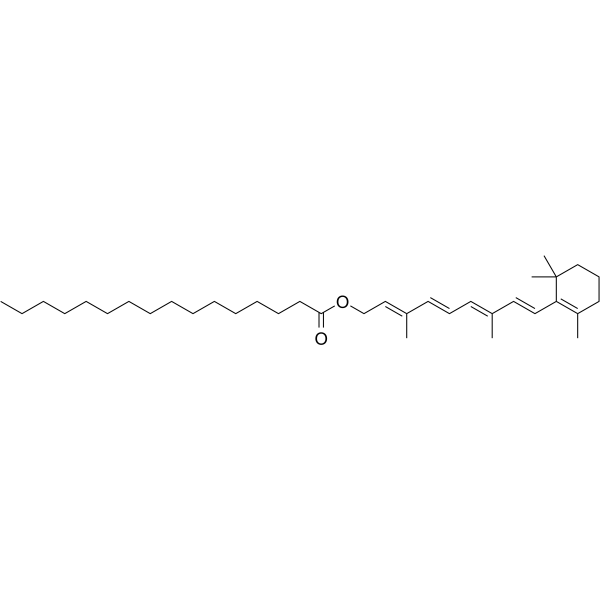
Cat. No.: HY-B1384
CAS No.: 79-81-2
Synonyms: Vitamin A palmitate; Retinol palmitate
Retinyl palmitate is an ester of Retinol and is the major form of vitamin A found in the epidermis. Retinyl palmitate has been widely used in researches of pharmaceutical and cosmetic formulations .
loading...
    loading...
1
1 Cited Publications
Cat. No.: HY-107633
CAS No.: 1152782-19-8
Purity:  99.73%
Target:  

Transthyretin (TTR)

Research Areas:  

Metabolic Disease

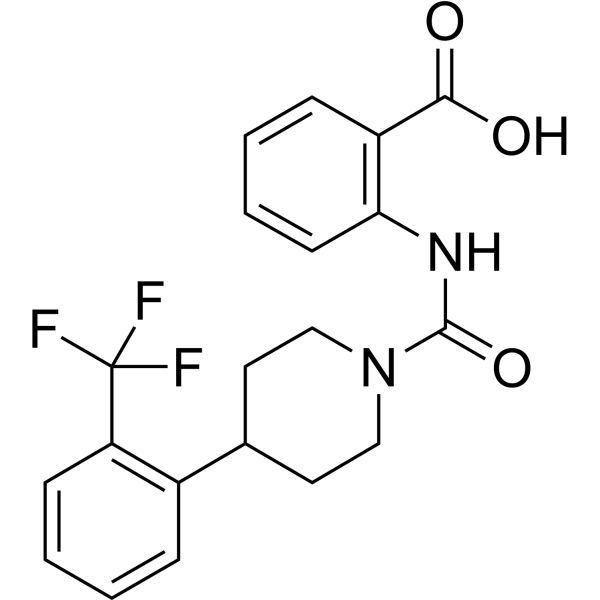
A 1120 is a high-affinity nonretinoid retinol-binding protein 4 (RBP4) antagonist with a Ki value of 8.3 nM. A 1120 disrupts the interaction between RBP4 and its binding partner transthyretin .
loading...
    loading...
1
1 Cited Publications
Cat. No.: HY-125904
CAS No.: 66592-72-1
Purity:  95.11%
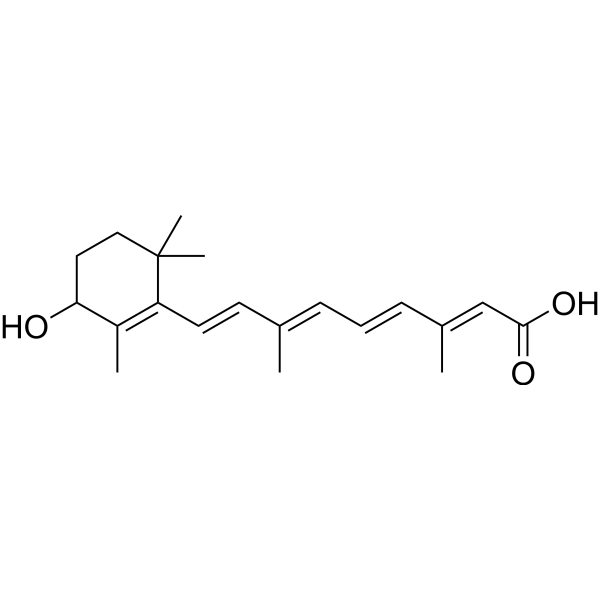
4-Hydroxyretinoic acid (4-HRA) is a derivative of Retinoic acid (HY-14649). 4-Hydroxyretinoic acid is formed via the catalysis of retinol by cytochrome P-450 isoenzymes. 4-Hydroxyretinoic acid also serves as a substrate for UDP-glucuronosyltransferase (s) and recombinant UGT2B7. 4-Hydroxyretinoic acid binds to the nuclear receptor RAR (Retinoic Acid Receptor), activates RAR and RXR-alpha, subsequently regulates gene expression and cell differentiation, and induces cancer cell apoptosis (Apoptosis). 4-Hydroxyretinoic acid also participates in multiple physiological processes such as immunoregulation, neuroprotection and antioxidation .
loading...
    loading...
1
1 Cited Publications
Cat. No.: HY-P71104
Purity:  ≥ 95%, as determined by reducing SDS-PAGE.
Synonyms: Retinol-binding protein 3; Interphotoreceptor retinoid-binding protein; IRBP; Interstitial Retinol-binding protein; RBP3
Species:  
Source:  
loading...
    loading...
1
1 Cited Publications
Cat. No.: HY-P72031
Purity:  ≥ 90%, as determined by reducing SDS-PAGE.
Synonyms: Plasma Retinol-binding protein; PRBP; RBP;
Species:  
Source:  
loading...
    loading...
1
1 Cited Publications
Cat. No.: HY-P74598
Purity:  ≥ 95%, as determined by reducing SDS-PAGE.
Synonyms: Plasma Retinol-binding protein; PRBP; RBP
Species:  
Rat
Source:  
loading...
    loading...
Cat. No.: HY-B1342
CAS No.: 68-26-8
Synonyms: Vitamin A1; all-trans-Retinol
Vitamin A (Vitamin A1) is an endogenous metabolite.
loading...
    loading...
Cat. No.: HY-W009310
CAS No.: 514-85-2
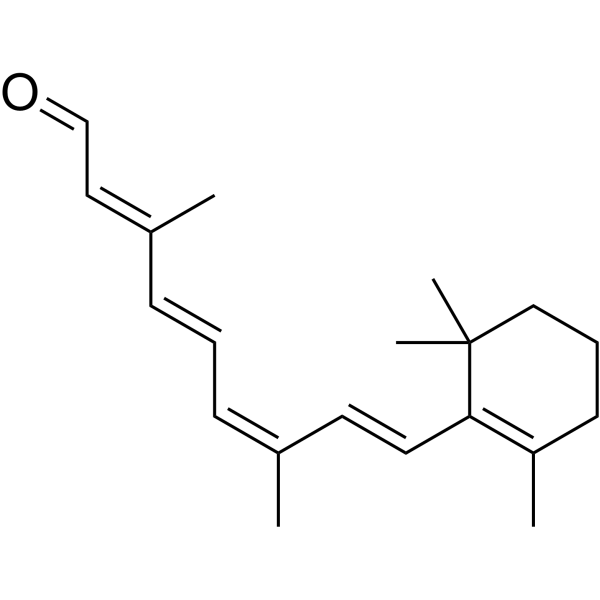
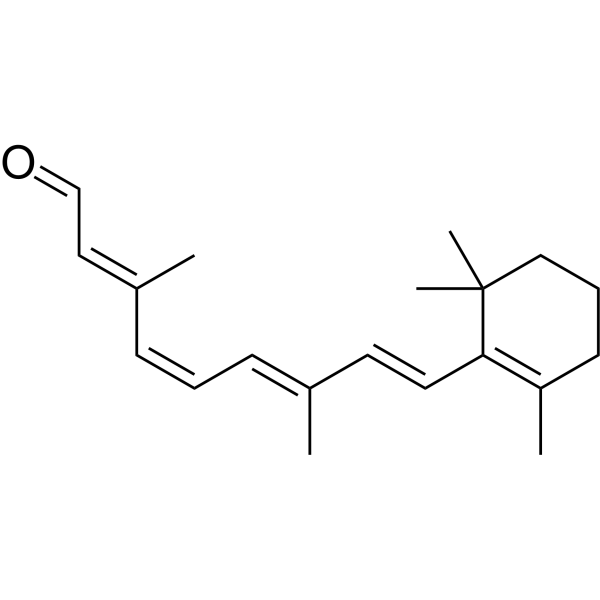
9-cis-Retinal is a natural retinoid. Dietary 9-cis-β-carotene generates 9-cis-retinoids via cleavage into 9-cis-retinal. 9-cis Retinal binds to cellular retinol-binding protein-I (CRBP-I) and CRBP-II with Kds of 8 nM and 5 nM, respectively. 9-cis-Retinal expedites differentiation and maturation of rod photoreceptors in retinal organoids .
loading...
    loading...
Cat. No.: HY-N7495
CAS No.: 1224-78-8
Synonyms: Anhydrovitamin A
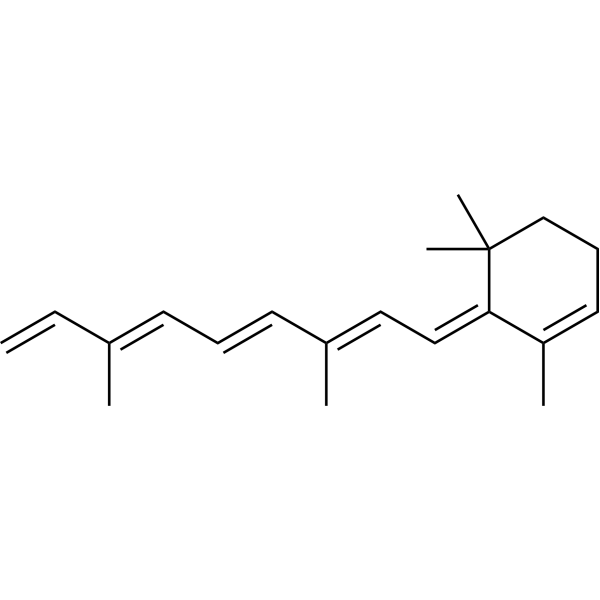
all-trans-Anhydro Retinol (Anhydrovitamin A) is an orally active degradation product formed by the dehydration of vitamin A alcohol and its esters under conditions such as acidic catalysis or hydroxylic solvents, with a biological activity only 0.4% of that of Vitamin A (HY-B1342). In rats, all-trans-Anhydro Retinol can be metabolized into hydroxy derivatives and their esters, but it cannot be converted into Vitamin A (HY-B1342) and has a low storage capacity in the body .
loading...
    loading...
Cat. No.: HY-116711
CAS No.: 564-87-4
Synonyms: 11-cis Retinaldehyde; 11-cis Vitamin A aldehyde
11-cis-Retinal (11-cis Retinaldehyde; 11-cis Vitamin A aldehyde), oxidized form of 11-cis-Retinol (HY-W587807), is a naturally occurring visual component. 11-cis-Retinal binds to opsin in the mammalian visual system as an inverse agonist forming the inactive conformation of rhodopsin. 11-cis-Retinal plays a crucial role in vision, growth and development. 11-cis-Retinal can restore visual function in moths with visual impairments. 11-cis-Retinal can restore retinal function in an early-age LCA2 retinal degeneration 12 mouse model .
loading...
    loading...
Cat. No.: HY-19720A
CAS No.: 1141934-97-5
Synonyms: ACU-4429 hydrochloride
Target:  

RPE65

Research Areas:  

Metabolic Disease

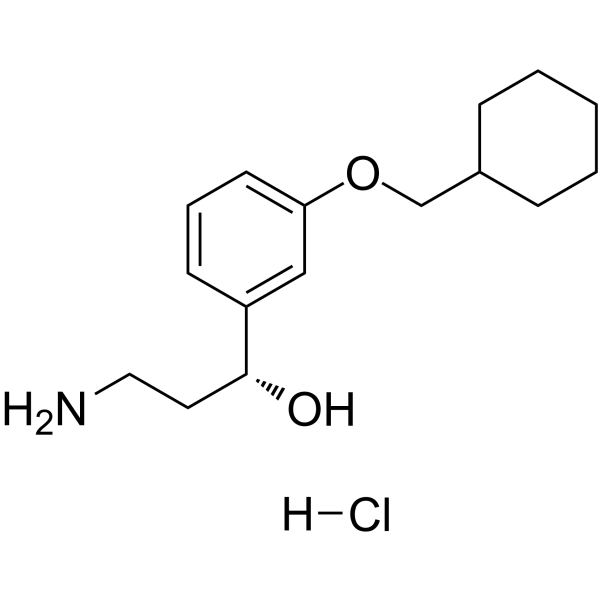
Emixustat (ACU-4429) hydrochloride is an orally active RPE65 inhibitor with an IC50 value of 4.4 nM. Emixustat hydrochloride is also a visual cycle modulator, capable of regulating visual cycle activity by inhibiting retinol isomerization, and holds potential for studying vision disorders such as age-related macular degeneration (AMD) .
loading...
    loading...
Cat. No.: HY-108059
CAS No.: 472-70-8
Synonyms: (3R)-β-Cryptoxanthin
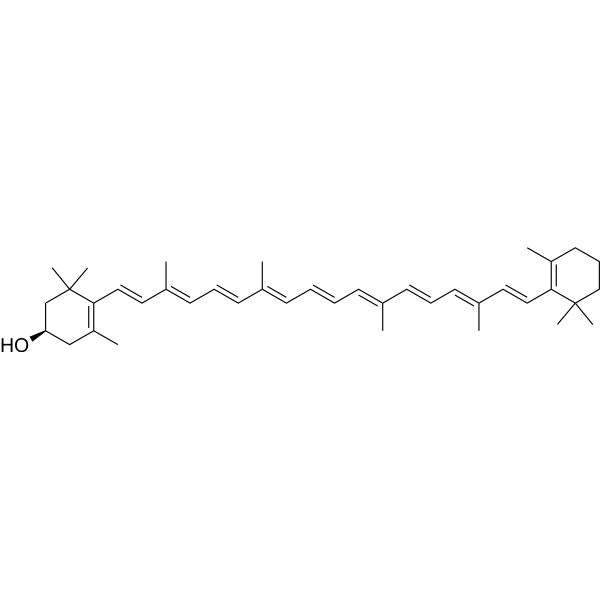
β-Cryptoxanthin ((3R)-β-Cryptoxanthin) is an orally active carotenoid found in fruits and vegetables such as angerines, red peppers, and pumpkin. β-Cryptoxanthin inhibits prevents osteoclast formation and inhibits bone resorption. β-Cryptoxanthin maintains retinol status in vivo. β-cryptoxanthin shows anti-inflammation and anticancer activity. β-Cryptoxanthin can be used for the researches of osteoporosis and bladder carcer .
loading...
    loading...
Cat. No.: HY-19720
CAS No.: 1141777-14-1
Synonyms: ACU-4429
Target:  

RPE65

Research Areas:  

Metabolic Disease

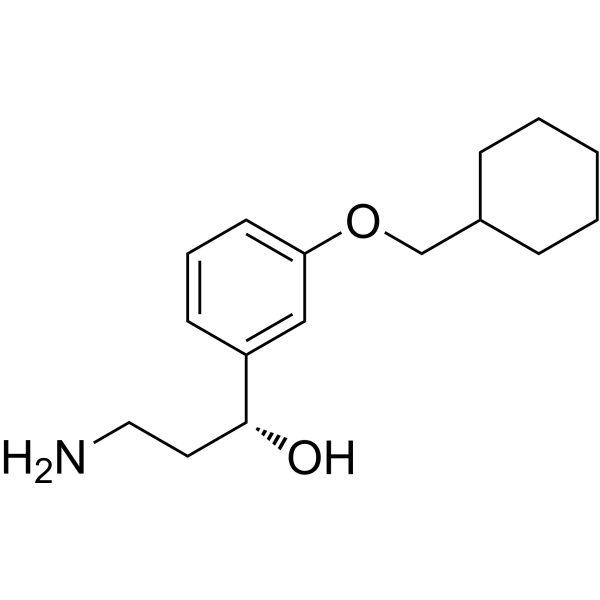
Emixustat is an orally active RPE65 inhibitor with an IC50 value of 4.4 nM. Emixustat is also a visual cycle modulator, capable of regulating visual cycle activity by inhibiting retinol isomerization, and holds potential for studying vision disorders such as age-related macular degeneration (AMD) .
loading...
    loading...
Cat. No.: HY-B1384R
CAS No.: 79-81-2
Synonyms: Vitamin A palmitate (Standard); Retinol palmitate (Standard)
Retinyl palmitate (Standard) is the analytical standard of Retinyl palmitate. This product is intended for research and analytical applications. Retinyl palmitate is an ester of Retinol and is the major form of vitamin A found in the epidermis. Retinyl palmitate has been widely used in pharmaceutical and cosmetic formulations.
loading...
    loading...
Cat. No.: HY-W739769
CAS No.: 115797-14-3
Synonyms: 13,14-DihydroRetinol
Target:  

Endogenous Metabolite

Research Areas:  

Others

all-trans-13,14-Dihydroretinol is a metabolite of all-trans-retinol (HY-B1342). all-trans-retinol is catalyzed by retinol saturase to form all-trans-13,14-Dihydroretinol .
loading...
    loading...
Cat. No.: HY-W654334
9-cis-Retinol-d5 is deuterium labeled 9-cis Retinol (HY-W587806). 9-cis Retinol is a precursor of 9-cis-Retinal (HY-W009310). 9-cis Retinol can inhibit 9-cis-Retinoic acid (HY-15128) synthesis in Hep G2 cells .
loading...
    loading...
Cat. No.: HY-N0679R
CAS No.: 127-47-9
Synonyms: Retinol acetate (Standard); Vitamin A acetate (Standard)
Retinyl acetate (Standard) is the analytical standard of Retinyl acetate. This product is intended for research and analytical applications. Retinyl acetate is a synthetic acetate ester form derived from retinol and has potential antineoplastic and chemo preventive activities .
loading...
    loading...

