1. Search Result
Search Result
Results for "

benzophenanthridine

" in MedChemExpress (MCE) Product Catalog:

11

Inhibitors & Agonists

10

Natural
Products

1

Isotope-Labeled Compounds

Cat. No. Product Name Target Research Areas Chemical Structure
  • HY-N0052A
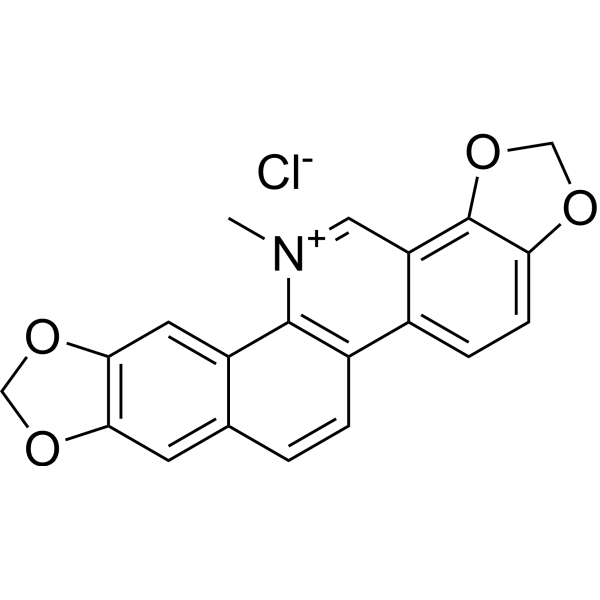
    Sanguinarine chloride
    10+ Cited Publications

    Sanguinarin chloride; Sanguinarium chloride; Pseudochelerythrine chloride

    Apoptosis Autophagy Bacterial Parasite Cancer
    Sanguinarine (Sanguinarin) chloride, a benzophenanthridine alkaloid derived from the root of Sanguinaria Canadensis, can stimulate apoptosis via activating the production of reactive oxygen species (ROS). Sanguinarine-induced apoptosis is associated with the activation of JNK and NF-κB.
    Sanguinarine chloride
  • HY-N0052

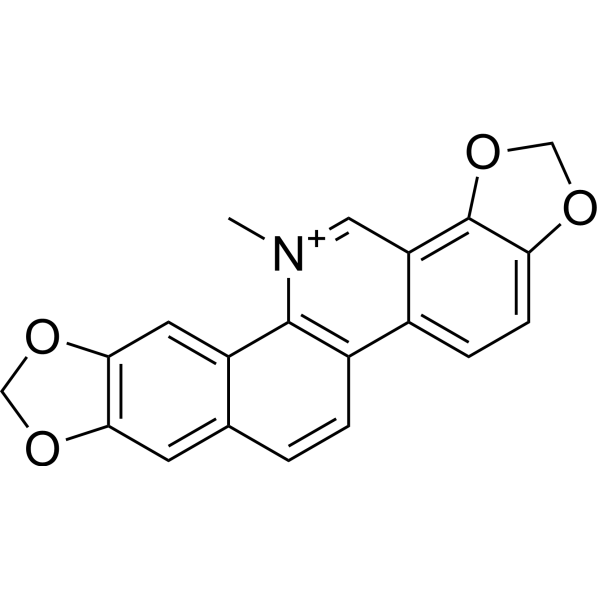
    Sanguinarin; Sanguinarium; Pseudochelerythrine

    Apoptosis Autophagy Cancer
    Sanguinarine (Sanguinarin), a benzophenanthridine alkaloid derived from the root of Sanguinaria Canadensis, can stimulate apoptosis via activating the production of reactive oxygen species (ROS). Sanguinarine-induced apoptosis is associated with the activation of JNK and NF-κB.
    Sanguinarine
  • HY-N4317
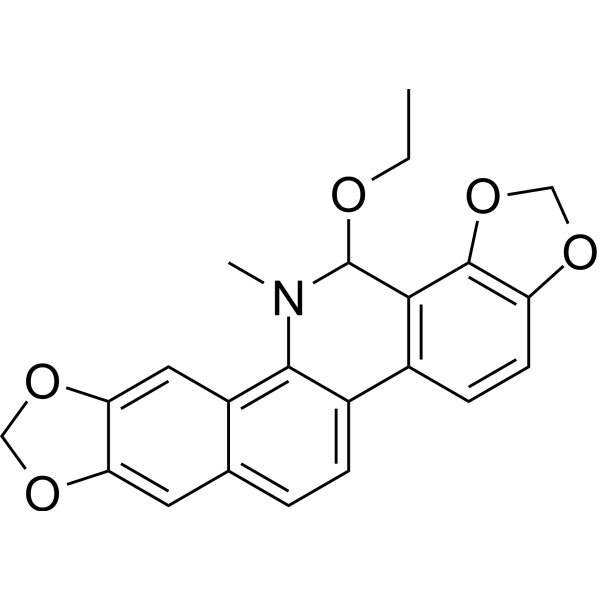
    Ethoxysanguinarine
    1 Publications Verification

    Apoptosis Cancer
    Ethoxysanguinarine is a benzophenanthridine alkaloid natural product that is mainly found in Macleaya cordata. Ethoxysanguinarine is an inhibitor of protein phosphatase 2A (CIP2A). Ethoxysanguinarine induces cell apoptosis and inhibits colorectal cancer cells growth .
    Ethoxysanguinarine
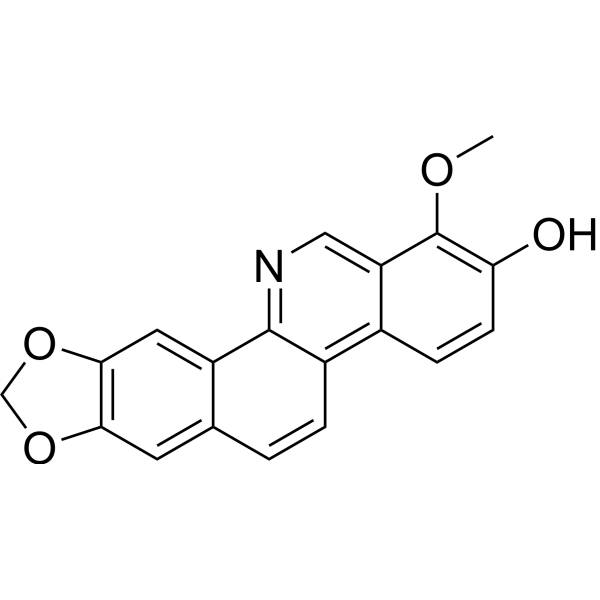
  • HY-N3700

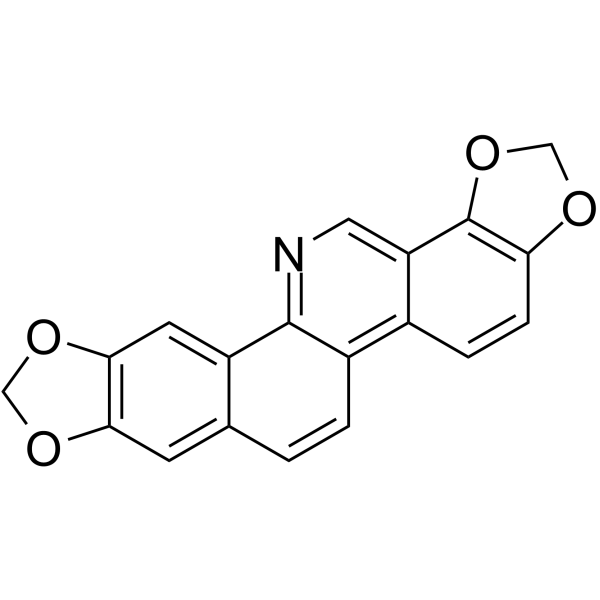
    Rutaceline

    Bacterial HIV TNF Receptor Interleukin Related Infection Inflammation/Immunology
    Decarine (Rutaceline) is a benzophenanthridine alkaloid found in Zanthoxylum species. Decarinewith shows anti-inflammatory, antimycobacterial, and anti-HIV activity. Decarine inhibits NO, TNF-α, IL-1β, IL-6, and IL-8 production in inflammatory cell models. Decarine inhibits growth of Mycobacterium tuberculosis strains, reduces intracellular Mycobacterium tuberculosis survival, and shows low cytotoxicity toward human macrophages. Decarine inhibits HIV replication in acutely infected lymphocytes. Decarine can be used for the researches of inflammation, tuberculosis, and HIV infection .
    Decarine
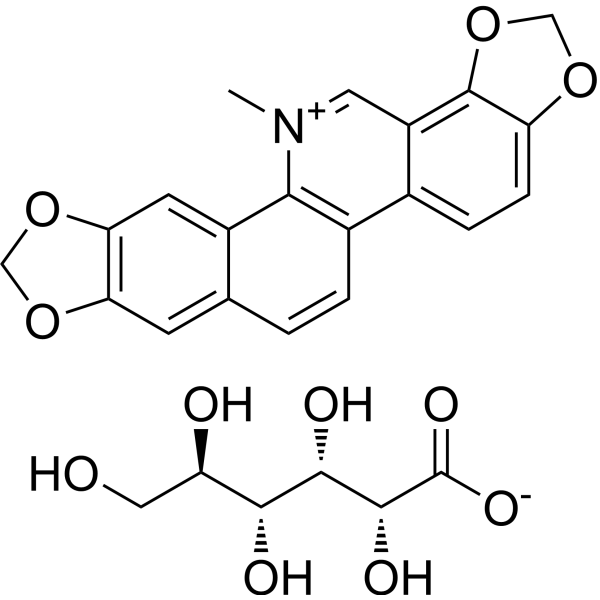
  • HY-N0052C

    Sanguinarin (gluconate); Sanguinarium (gluconate); Pseudochelerythrine (gluconate)

    Apoptosis Reactive Oxygen Species (ROS) Cancer
    Sanguinarine (Sanguinarin) gluconate, a benzophenanthridine alkaloid, can stimulate apoptosis via activating the production of reactive oxygen species (ROS). Sanguinarine-induced apoptosis is associated with the activation of JNK and NF-κB .
    Sanguinarine (gluconate)
  • HY-136341R

    Reference Standards Apoptosis NO Synthase Endogenous Metabolite Neurological Disease Inflammation/Immunology
    Sanguinarine (Standard) is the analytical standard of Sanguinarine. This product is intended for research and analytical applications. Sanguinarine (Sanguinarin), a benzophenanthridine alkaloid derived from the root of Sanguinaria Canadensis, can stimulate apoptosis via activating the production of reactive oxygen species (ROS). Sanguinarine-induced apoptosis is associated with the activation of JNK and NF-κB.
    7,8-Dihydroneopterin (Standard)
  • HY-N0052AR

    Sanguinarin chloride (Standard); Sanguinarium chloride (Standard); Pseudochelerythrine chloride (Standard)

    Reference Standards Apoptosis Autophagy Bacterial Parasite Cancer
    Sanguinarine (chloride) (Standard) is the analytical standard of Sanguinarine (chloride). This product is intended for research and analytical applications. Sanguinarine (Sanguinarin) chloride, a benzophenanthridine alkaloid derived from the root of Sanguinaria Canadensis, can stimulate apoptosis via activating the production of reactive oxygen species (ROS). Sanguinarine-induced apoptosis is associated with the activation of JNK and NF-κB.
    Sanguinarine chloride (Standard)
  • HY-W768895

    Sanguinarin chloride-13C,d3; Sanguinarium chloride-13C,d3; Pseudochelerythrine chloride-13C,d3

    Isotope-Labeled Compounds Apoptosis Bacterial Autophagy Parasite Cancer
    Sanguinarine chloride- 13C,d3 (Sanguinarin chloride- 13C,d3) is the deuterium labeled Sanguinarine chloride (HY-N0052A). Sanguinarine (Sanguinarin) chloride, a benzophenanthridine alkaloid derived from the root of Sanguinaria Canadensis, can stimulate apoptosis via activating the production of reactive oxygen species (ROS). Sanguinarine-induced apoptosis is associated with the activation of JNK and NF-κB.
    Sanguinarine chloride-13C,d3
  • HY-N18289

    Cholinesterase (ChE) Neurological Disease
    8-Hydroxydihydrochelerythrine is a benzophenanthridine alkaloid-derived, selective and competitive AChE inhibitor (IC50=0.61 μM) isolated from the roots of Zanthoxylum nitidum (Roxb.) DC. 8-Hydroxydihydrochelerythrine increases the content of acetylcholine in the synapses of cholinergic neurons and enhances cholinergic neurotransmission. 8-Hydroxydihydrochelerythrine is applicable to the research of neurodegenerative diseases with dementia such as Alzheimer's disease .
    8-Hydroxydihydrochelerythrine
  • HY-N18179

    Parasite Infection
    8-Acetonylidihydrochelerythrine is a benzophenanthridine alkaloid found in the stem bark of Zanthoxylum gilletii. 8-Acetonylidihydrochelerythrine inhibits growth of Chloroquine (HY-17589A)-resistant and Chloroquine-sensitive Plasmodium falciparum strains. 8-Acetonylidihydrochelerythrine can be used for the research of malaria .
    8-Acetonyldihydrochelerythrine
  • HY-N18222

    Bacterial Fungal Infection
    Dihydroavicine is a benzophenanthridine alkaloid antibacterial agent isolated from the stem bark of Zanthoxylum rhoifolium. Dihydroavicine inhibits the growth of Gram-positive bacteria, Gram-negative bacteria, and Candida albicans. Dihydroavicine shows no activity against Saccharomyces cerevisiae and Cryptococcus neoformans. Dihydroavicine can be used for the research of bacterial infections and candidal infections .
    Dihydroavicine

Inquiry Online

Your information is safe with us. * Required Fields.

Salutation


Country or Region *

Applicant Name *


Organization Name *

Department *


Email Address *


Product Name *

Cat. No.


Requested quantity *

Phone Number *


Remarks

Inquiry Online

Inquiry Information

Product Name:
Cat. No.:
Quantity:
MCE Japan Authorized Agent:

