

97 Results for "

capillary

" in MedChemExpress (MCE) Product Catalog:
Products (97)

97 Results for "capillary" in MCE Product Catalog:

248
248 Publications Verification
Cat. No.: HY-13948
CAS No.: 4474-91-3
Purity:  99.98%
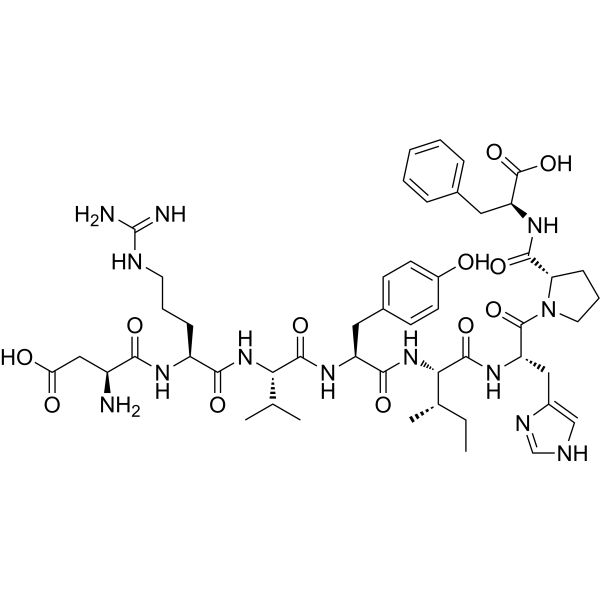
Synonyms: Angiotensin II; Ang II; DRVYIHPF
Angiotensin II (Angiotensin II) is a vasoconstrictor and a major bioactive peptide of the renin/angiotensin system. Angiotensin II human plays a central role in regulating human blood pressure, which is mainly mediated by interactions between Angiotensin II and the G-protein-coupled receptors (GPCRs) Angiotensin II type 1 receptor (AT1R) and Angiotensin II type 2 receptor (AT2R). Angiotensin II human stimulates sympathetic nervous stimulation, increases aldosterone biosynthesis and renal actions. Angiotensin II human induces growth of vascular smooth muscle cells, increases collagen type I and III synthesis in fibroblasts, leading to thickening of the vascular wall and myocardium, and fibrosis. Angiotensin II human also induces apoptosis. Angiotensin II induces capillary formation from endothelial cells via the LOX-1 dependent redox-sensitive pathway .
loading...
    loading...
248
248 Publications Verification
Cat. No.: HY-13948A
CAS No.: 68521-88-0
Purity:  99.62%
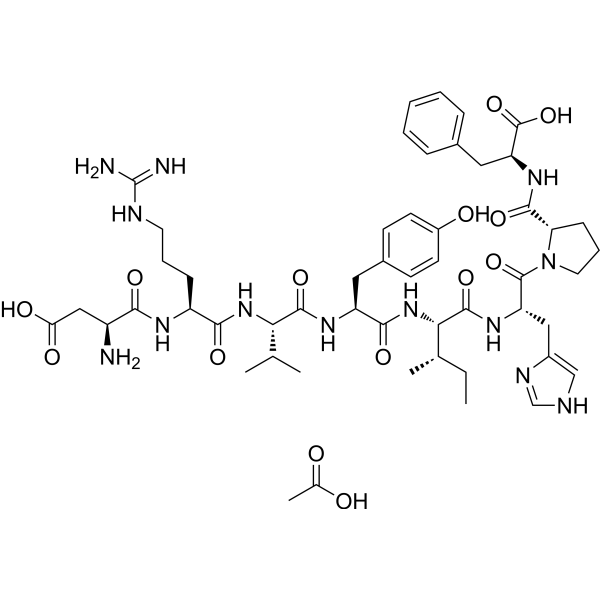
Synonyms: Angiotensin II acetate; Ang II acetate; DRVYIHPF acetate
Angiotensin II human (Angiotensin II) acetate is a vasoconstrictor and a major bioactive peptide of the renin/angiotensin system. Angiotensin II human acetate plays a central role in regulating human blood pressure, which is mainly mediated by interactions between Angiotensin II and the G-protein-coupled receptors (GPCRs) Angiotensin II type 1 receptor (AT1R) and Angiotensin II type 2 receptor (AT2R). Angiotensin II human acetate stimulates sympathetic nervous stimulation, increases aldosterone biosynthesis and renal actions. Angiotensin II human acetate induces growth of vascular smooth muscle cells, increases collagen type I and III synthesis in fibroblasts, leading to thickening of the vascular wall and myocardium, and fibrosis. Angiotensin II human acetate also induces apoptosis. Angiotensin II human acetate induces capillary formation from endothelial cells via the LOX-1 dependent redox-sensitive pathway .
loading...
    loading...
248
248 Publications Verification
Cat. No.: HY-13948B
CAS No.: 2761969-44-0
Purity:  98.84%
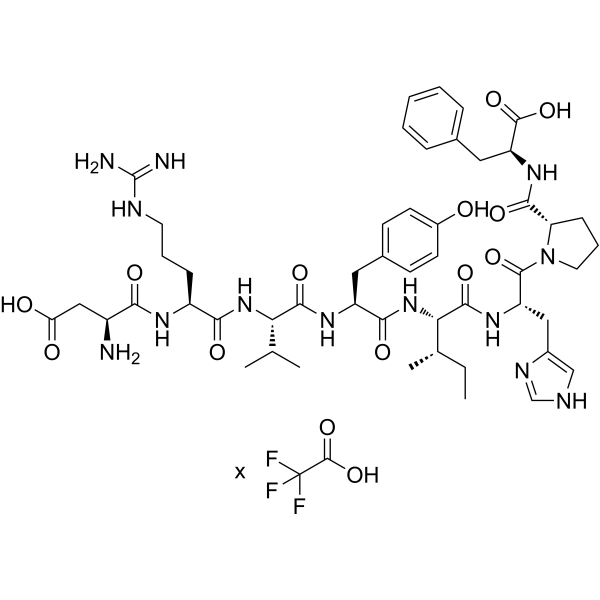
Synonyms: Angiotensin II TFA; Ang II TFA; DRVYIHPF TFA
Angiotensin II human (Angiotensin II) TFA is a vasoconstrictor and a major bioactive peptide of the renin/angiotensin system. Angiotensin II human TFA plays a central role in regulating human blood pressure, which is mainly mediated by interactions between Angiotensin II and the G-protein-coupled receptors (GPCRs) Angiotensin II type 1 receptor (AT1R) and Angiotensin II type 2 receptor (AT2R). Angiotensin II human TFA stimulates sympathetic nervous stimulation, increases aldosterone biosynthesis and renal actions. Angiotensin II human TFA induces growth of vascular smooth muscle cells, increases collagen type I and III synthesis in fibroblasts, leading to thickening of the vascular wall and myocardium, and fibrosis. Angiotensin II human TFA also induces apoptosis. Angiotensin II human TFA induces capillary formation from endothelial cells via the LOX-1 dependent redox-sensitive pathway .
loading...
    loading...
5
5 Cited Publications
Cat. No.: HY-N0794
CAS No.: 20347-71-1
Proanthocyanidin (Procyanidin) are a class of polyphenolic that are widely distributed in higher plants, consisted of an electrophilic flavanyl unit. Proanthocyanidin can be used as antioxidant and anti-cancers agent. Proanthocyanidin also exhibit anti-inflammatory, cardioprotective, antibacterial and antifungal properties, which can be used in the treatment of chronic venous insufficiency, capillary fragility, sunburn and retinopathy. .
loading...
    loading...
3
3 Cited Publications
Cat. No.: HY-113456
CAS No.: 73836-78-9
Purity:  ≥98.0%
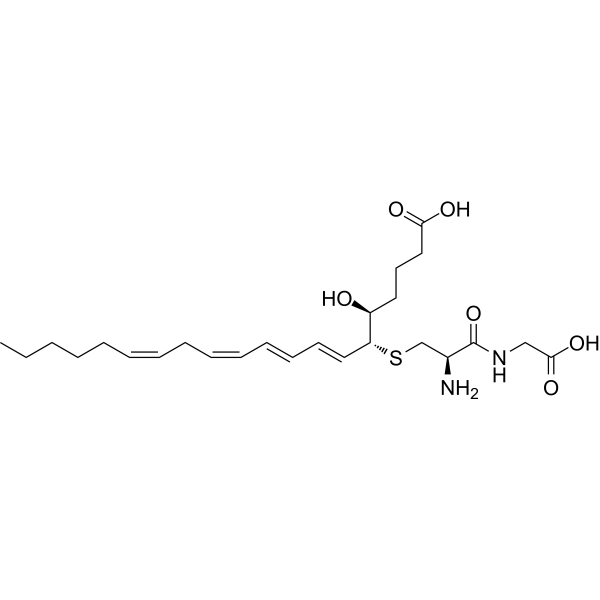
Leukotriene D4 is a potent bronchoconstrictor. Leukotriene D4 has the potential for the research of asthma. Leukotriene D4 induces edema and increases capillary permeability .
loading...
    loading...
2
2 Cited Publications
Cat. No.: HY-Y0669
CAS No.: 535-75-1
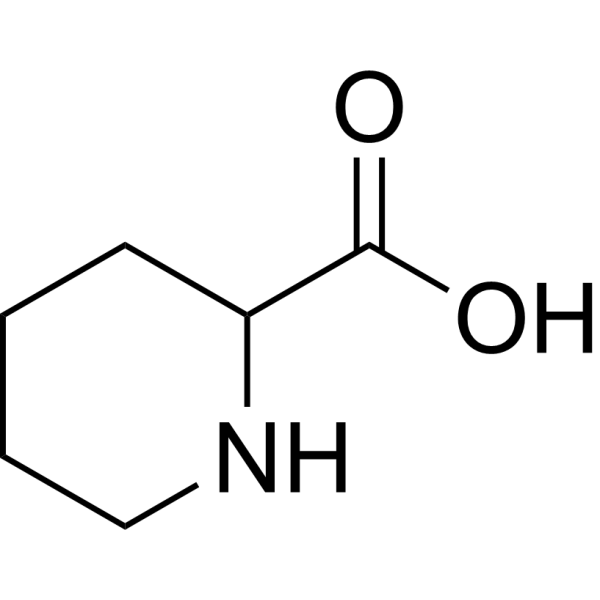
Pipecolic acid is an orally bioavailable, blood-brain barrier-permeable metabolite of lysine with antioxidant, inhibitor, and inducer activity. Pipecolic acid modulates the YAP-GPX4 signaling pathway, reduces retinal vascular tube formation, and mitigates ferroptosis. Pipecolic acid potentiates voltage-sensitive Ca 2+ channel currents and induces neuronal apoptosis. Pipecolic acid can be used for the research of diabetic retinopathy .
loading...
    loading...
2
2 Cited Publications
Cat. No.: HY-N0249
CAS No.: 20736-08-7
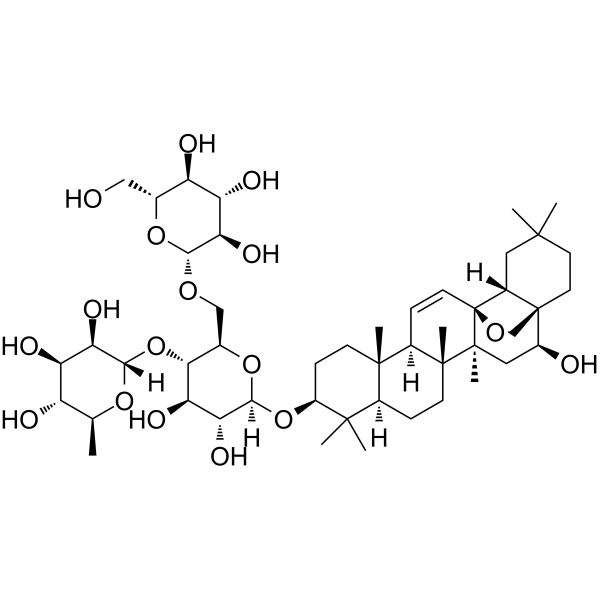
Saikosaponin C is an orally active MMP-2 inducer. Saikosaponin C induces the survival, growth, migration and capillary tube formation of endothelial cells. Saikosaponin C inhibits the early stage of hepatitis C virus infection. Saikosaponin C can be used in research related to ischemic tissue diseases, chronic kidney diseases and hepatitis C virus infection .
loading...
    loading...
1
1 Cited Publications
Cat. No.: HY-W088070A
CAS No.: 9012-36-6
Agarose,Low melting point is a kind of agarose, a kind of polysaccharide that can be derived from seaweed. It is commonly used in molecular biology and biochemistry to isolate and purify DNA and RNA fragments. Agarose,Low melting point is a low melting point agarose, which is suitable for the recovery of large DNA fragments and enzymatic reactions in gels and other applications. In addition, it has been used in various techniques, such as pulsed field gel electrophoresis and capillary electrophoresis for analyzing genetic material.
loading...
    loading...
1
1 Cited Publications
Cat. No.: HY-N2024
CAS No.: 69-79-4
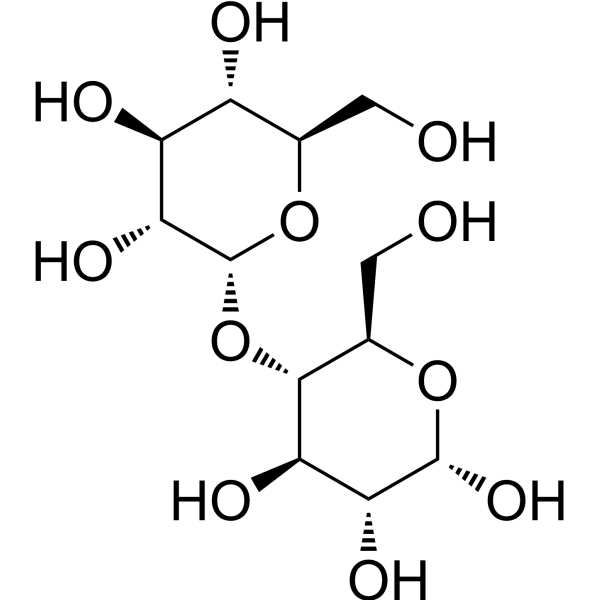
Maltose is a disaccharide composed of two glucose molecules linked together. Maltose is an endogenous metabolic product in plants, yeast, or bacteria, and it participates in carbon source storage and metabolism. Maltose is a key core metabolite and main transport form in the temporary starch degradation, carbon output, and subsequent sucrose synthesis metabolism of the night chloroplast. In X. dendrorhous, maltose can act as a sugar donor and is converted into isomaltulose by α-glucosidase). Maltose can act as a osmotic agent, supporting continuous capillary ultrafiltration and preventing severe metabolic disorders .
loading...
    loading...
1
1 Cited Publications
Cat. No.: HY-N2024A
CAS No.: 6363-53-7
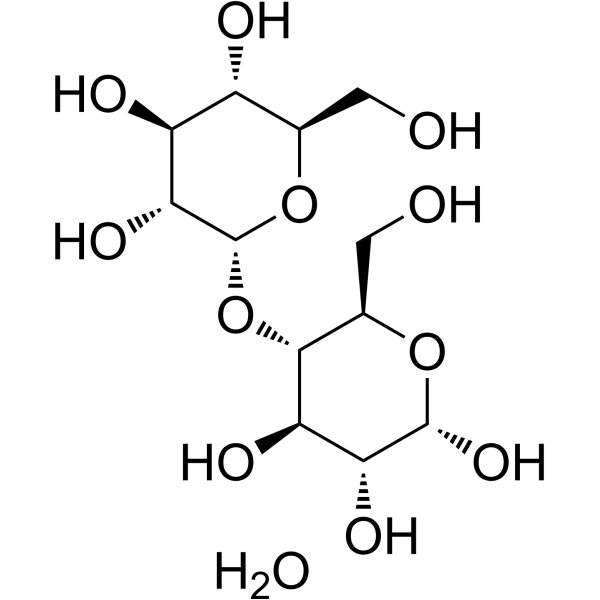
Maltose monohydrate is a disaccharide composed of two glucose molecules linked together. Maltose monohydrate is an endogenous metabolic product in plants, yeast, or bacteria, and it participates in carbon source storage and metabolism. Maltose monohydrate is a key core metabolite and main transport form in the temporary starch degradation, carbon output, and subsequent sucrose synthesis metabolism of the night chloroplast. In X. dendrorhous, maltose can act as a sugar donor and is converted into isomaltulose by α-glucosidase. Maltose monohydrate can act as a osmotic agent, supporting continuous capillary ultrafiltration and preventing severe metabolic disorders .
loading...
    loading...
1
1 Cited Publications
Cat. No.: HY-128700
CAS No.: 321-02-8
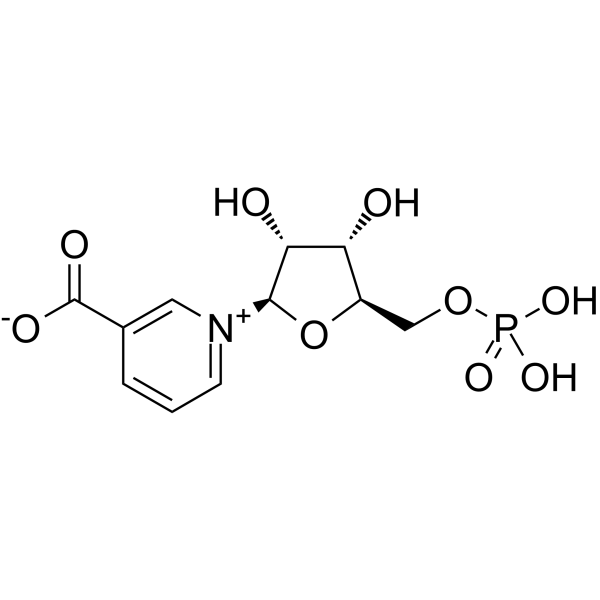
Nicotinic acid mononucleotide acts as a SARM1 inhibitor and a NAD + biosynthesis intermediate, with an IC50 value of 93.3 μM against SARM1. Nicotinic acid mononucleotide exerts axon-protective effects, delays axonal degeneration, elevates NAD + levels, enhances Sirt1 activity, improves myocardial capillary density and alleviates myocardial fibrosis. Nicotinic acid mononucleotide reverses diabetic cardiomyopathy in diabetic mice by increasing myocardial NAD + levels. Nicotinic acid mononucleotide is applicable to research related to cancer, multiple sclerosis, diabetic cardiomyopathy, neurodegenerative diseases and Huntington's disease .
loading...
    loading...
1
1 Cited Publications
Cat. No.: HY-108011
CAS No.: 15687-37-3
Purity:  ≥99.0%
Research Areas:  

Cardiovascular Disease

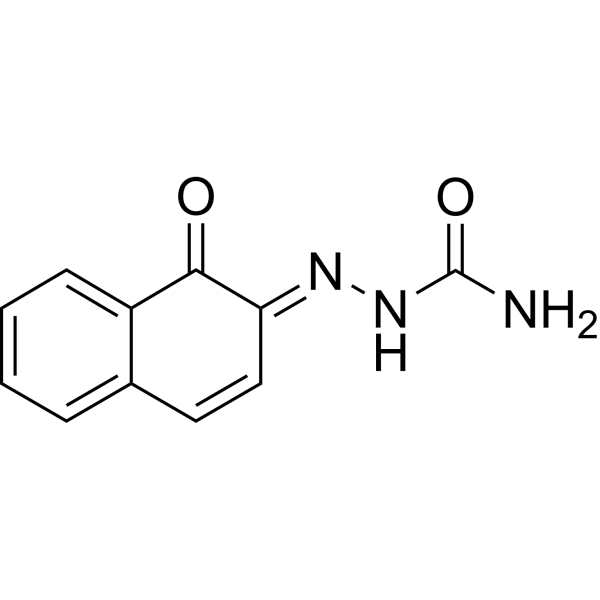
Naftazone is a naphthoquinone derivative, it can be used for the research of venous insufciency. Naftazone protects blood vessels, increases venous tonicity and capillary resistance, and improves lymphatic and venous circulation .
loading...
    loading...
1
1 Cited Publications
Cat. No.: HY-A0169A
CAS No.: 79416-27-6
Research Areas:  

Cancer

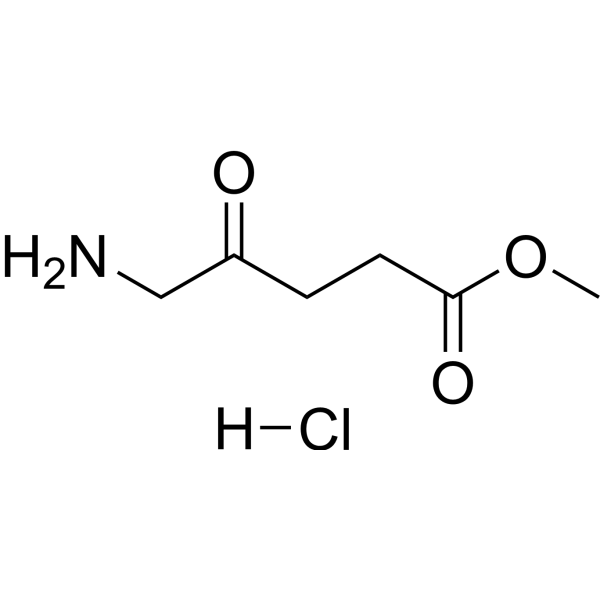
Methyl aminolevulinate hydrochloride is a sensitizer used in photodynamic therapy (PDT). Methyl aminolevulinate hydrochloride penetrates the skin and induces the production of photoactive porphyrins including protoporphyrin IX in cells; upon exposure to appropriate light, it generates ROS, which triggers cellular oxidation and cell death. Methyl aminolevulinate hydrochloride acts as a photo-damage reversing agent through epidermal reconstruction, cytokine-mediated activation of dermal fibroblasts, elastin breakdown, new collagen formation, and compression of dilated capillaries. Methyl aminolevulinate hydrochloride reduces the expression of the proliferation marker Ki-67 and the early skin carcinogenesis marker TP53. Methyl aminolevulinate hydrochloride delays the onset of ultraviolet-induced skin tumors and reduces tumor burden in hairless mice. Methyl aminolevulinate hydrochloride is applicable to research related to actinic keratosis and basal cell carcinoma .
loading...
    loading...
1
1 Cited Publications
Cat. No.: HY-A0075
CAS No.: 13073-96-6
Synonyms: UCB 1402 dihydrochloride; NSC289116 dihydrochloride
Research Areas:  

Inflammation/Immunology

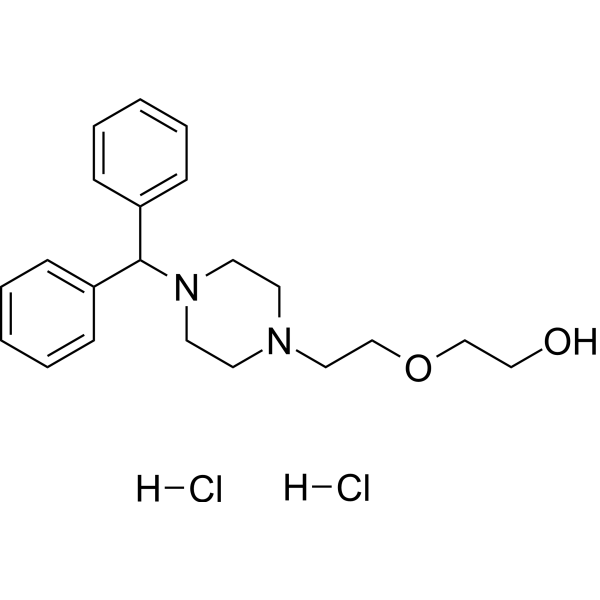
Decloxizine (UCB-1402; NSC289116) dihydrochloride is an orally active bronchodilator that can penetrate the blood-brain barrier. Decloxizine dihydrochloride is a piperazine-type H1 histamine receptor antagonist. Decloxizine dihydrochloride selectively blocks H1 histamine receptors, inhibiting histamine-induced capillary dilation, edema, and itching. Decloxizine dihydrochloride has some 5-HT2 receptor antagonistic activity. Decloxizine dihydrochloride can be used in studies of urticaria, allergic rhinitis, and bronchial asthma .
loading...
    loading...
1
1 Cited Publications
Cat. No.: HY-128700A
Purity:  98.28%
Research Areas:  

Metabolic Disease

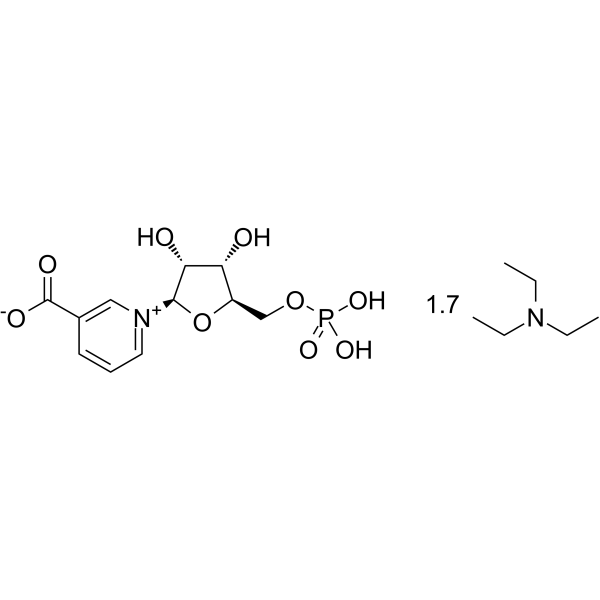
Nicotinic acid mononucleotide triethylamine acts as a SARM1 inhibitor and a NAD + biosynthesis intermediate, with an IC50 value of 93.3 μM against SARM1. Nicotinic acid mononucleotide triethylamine exerts axon-protective effects, delays axonal degeneration, elevates NAD + levels, enhances Sirt1 activity, improves myocardial capillary density and alleviates myocardial fibrosis. Nicotinic acid mononucleotide triethylamine reverses diabetic cardiomyopathy in diabetic mice by increasing myocardial NAD + levels. Nicotinic acid mononucleotide triethylamine is applicable to research related to cancer, multiple sclerosis, diabetic cardiomyopathy, neurodegenerative diseases and Huntington's disease .
loading...
    loading...
1
1 Cited Publications
Cat. No.: HY-17582
CAS No.: 3733-63-9
Synonyms: UCB-1402; NSC289116
Research Areas:  

Inflammation/Immunology

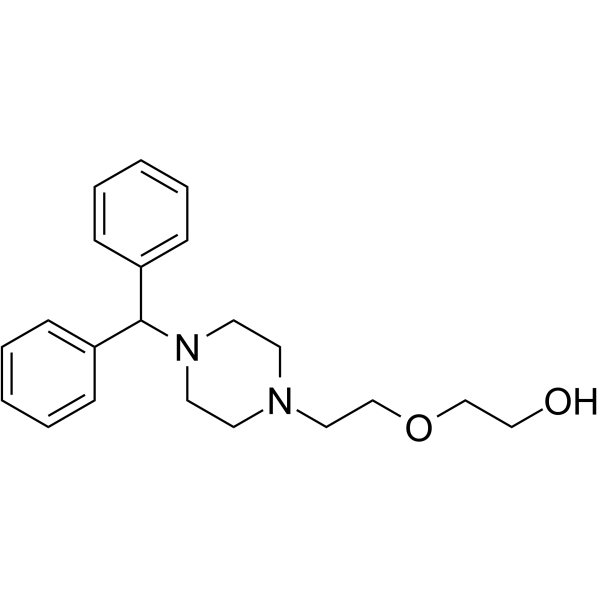
Decloxizine (UCB-1402; NSC289116) is an orally active bronchodilator that can penetrate the blood-brain barrier. Decloxizine is a piperazine-type H1 histamine receptor antagonist. Decloxizine selectively blocks H1 histamine receptors, inhibiting histamine-induced capillary dilation, edema, and itching. Decloxizine has some 5-HT2 receptor antagonistic activity. Decloxizine can be used in studies of urticaria, allergic rhinitis, and bronchial asthma .
loading...
    loading...
Cat. No.: HY-112624A
CAS No.: 9004-54-0
Synonyms: Dextran 1; Dextran D1; Dextran T1(MW 800-1200)
Dextran T1 (Dextran 1; Dextran D1) (with a molecular weight of 1,000) is a dehydrated glucose polymer with an average molecular weight of 1,000. Dextran T1 (MW 1,000) has excellent biodegradability and biocompatibility, and can be used as a nanobody carrier scaffold and a freeze-drying protectant. Dextran T1 (MW 1,000) promotes the retention of circulating tumor cells in the capillary bed .
loading...
    loading...
Cat. No.: HY-171306
Target:  

Liposome

Research Areas:  

Others

MK16 is a lipid material that can be used to construct blood-brain barrier penetrable lipid nanoparticles for mRNA delivery. MK16 facilitates blood-brain barrier crossing via γ-secretase-mediated and caveolae-mediated transcytosis. MK16 can be used for drug delivery research .
loading...
    loading...
Cat. No.: HY-B1074
CAS No.: 2624-44-4
Synonyms: Etamsylate
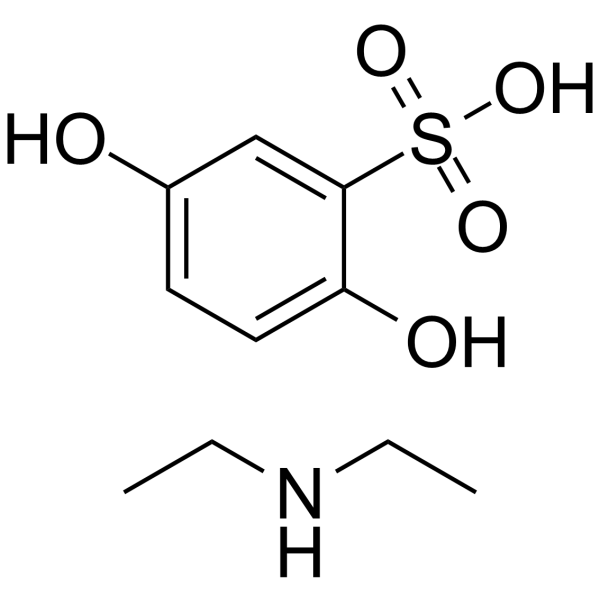
Ethamsylate (Etamsylate) is an orally active anti-hemorrhagic compound. Ethamsylate inhibits biosynthesis and action of prostaglandins. Ethamsylate has the potential to maintain early hemostasis as well as restores capillary resistance. Ethamsylate acts as an antiangiogenic factor, inhibiting wound healing and matrigel tubulogenesis. .
loading...
    loading...
Cat. No.: HY-W129394
CAS No.: 29390-67-8
Research Areas:  

Others

6-Amino-6-deoxy-β-cyclodextrin is a cyclodextrin derivative that can be used to prepare other cyclodextrin derivatives. 6-Amino-6-deoxy-β-cyclodextrin can also be used as a chiral selector for chiral separation of α-amino acid derivatives by capillary electrophoresis .
loading...
    loading...

