
1. Search Result
Search Result
Results for "

cationic

" in MedChemExpress (MCE) Product Catalog:

402

Inhibitors & Agonists

1

Screening Libraries

51

Fluorescent Dye

109

Biochemical Assay Reagents

50

Peptides

5

MCE Kits

1

Inhibitory Antibodies

16

Natural
Products

3

Recombinant Proteins

22

Isotope-Labeled Compounds

151

Oligonucleotides

5

GMP Molecules

Cat. No. Product Name Target Research Areas Chemical Structure
  • HY-112005
    DOPE
    5+ Cited Publications

    Dioleoylphosphatidylethanolamine; 1,2-Dioleoyl-sn-glycero-3-phosphoethanolamine

    Liposome Endogenous Metabolite Inflammation/Immunology
    DOPE (Dioleoylphosphatidylethanolamine) is a neutral helper lipid for cationic liposome and combines with cationic phospholipids to improve transfection efficiency of naked siRNA .
    DOPE
  • HY-112754A
    DOTAP chloride
    10+ Cited Publications

    1,2-Dioleoyl-3-trimethylammonium-propane chloride

    Liposome Cancer
    DOTAP chloride is a useful and effective cationic lipid for transient and stable transfection DNA (plasmids, bacmids) and modified nucleic acids (antisense oligonucleotides) with out the use of helper lipid .
    DOTAP chloride
  • HY-130751
    DODAP
    1 Publications Verification

    Liposome Inflammation/Immunology
    DODAP is a cationic lipid utilized as the lipid component in liposomes (pKa = 5.59 in TNS binding tests). DODAP is employed for encapsulating siRNA and delivering immunostimulated chemotherapeutic agents both in vitro and in vivo. DODAP holds great promise for research in vaccines and inflammation .
    DODAP
  • HY-W250110

    Environmental Pollutants Biochemical Assay Reagents Infection Others
    Polyethylenimine (branched) (30% in water) is a organic macromolecule with high cationic-charge-density potential. Polyethylenimine (branched) (30% in water) can ensnare DNA as well as attach to cell membrane. Polyethylenimine (branched) (30% in water) also retains a substantial buffering capacity at virtually any pH. Polyethylenimine (branched) (30% in water) is widely used as transfection reagent .
    Polyethylenimine (branched) (30% in water)
  • HY-B1464
    Cetylpyridinium chloride
    5+ Cited Publications

    Environmental Pollutants Bacterial HBV Infection Inflammation/Immunology
    Cetylpyridinium chloride, a cationic quaternary ammonium compound, is an anti-bacterial agent with broad-spectrum activity. Cetylpyridinium chloride is an effective anti-HBV capsid assembly inhibitor with an IC50 of 2.5 μM. Cetylpyridinium chloride is used in pesticides and various types of mouthwashes, and other personal care products .
    Cetylpyridinium chloride
  • HY-139200
    DOTMA
    1 Publications Verification

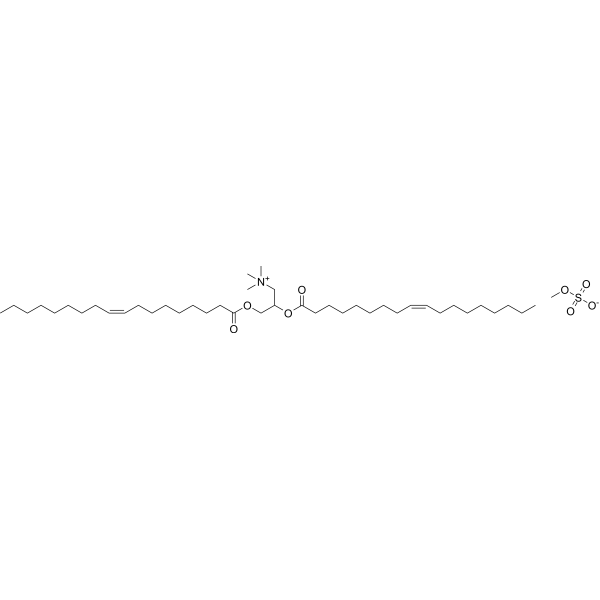
    Liposome Others
    DOTMA is a cationic lipid that has been used as a non-viral vector for gene therapy. DOTMA is used as a component of liposomes to encapsulate siRNA, microRNA, and oligonucleotides and for in vitro gene transfection. DOTMA promotes effective interaction between liposomes and cell membranes by inducing positive charge on the liposomes. DOTMA showed good gene transfection effect both in vitro and in vivo .
    DOTMA
  • HY-W751238

    DMMB

    Fluorescent Dye Others
    Dimethyl methylene blue zinc chloride double salt (DMMB) is a cationic dye. Dimethyl methylene blue zinc chloride double salt competitively binds to the active site of the PANI-Benz-Ag nanocomposite with endotoxin, releasing DMMB and increasing the fluorescence intensity. Dimethyl methylene blue zinc chloride double salt can be used as a fluorescent probe for the detection of bacteria (such as E. Coli) endotoxin . Dimethyl methylene blue zinc chloride double salt can be used for the quantification of sulfated glycosaminoglycans .
    Dimethyl methylene blue zinc chloride double salt
  • HY-D0987

    Calmodulin Others
    Stains-All, a cationic carbocyanine dye, is a convenient probe to study the structural features of the individual calcium-binding sites of calmodulin (CaM) and related calcium-binding proteins (CaBP) .
    Stains-All
  • HY-D0203

    Malachite green

    Environmental Pollutants Fluorescent Dye Others
    Basic green 4 (Malachite green) is a cationic dye that is widely used as a bactericide in aquaculture and is also commonly used in laboratories for the determination of phosphates. Basic green 4 exhibits high cytotoxicity and carcinogenicity to mammalian cells, specifically shown by its IC50 values of 2.03 µM for HEp-2 human laryngeal cells and 13.8 µM for Caco-2 human colorectal adenocarcinoma cells, and it can promote the development of liver tumors. The maximum absorbance wavelength is 621 nm .
    Basic green 4
  • HY-B1549

    Dimethylbenzyllaurylammonium chloride

    Environmental Pollutants Biochemical Assay Reagents Others
    Lauryl benzalkonium chloride (Dimethylbenzyllaurylammonium chloride) is a cationic surfactant .
    Lauryl benzalkonium chloride
  • HY-NP001
    Cationic Bovine Serum Albumin
    1 Publications Verification

    CBSA

    Biochemical Assay Reagents Neurological Disease
    Cationic Bovine Serum Albumin is a bovine serum albumin (BSA) modified with excess ethylenediamine, which has enhanced immunogenicity compared to native BSA. Positively charged primary amines block all negatively charged carboxyl groups, making Cationic Bovine Serum Albumin a cationic protein. Cationic Bovine Serum Albumin has remarkable neuroprotective effects on ischemic stroke when in combination with Tanshinone IIA (HY-N0135) .
    Cationic Bovine Serum Albumin
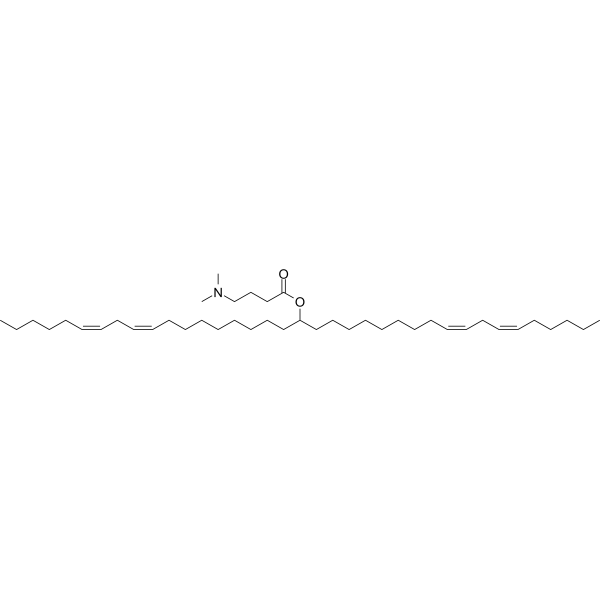
  • HY-139305
    CL4H6
    1 Publications Verification

    Liposome Cancer
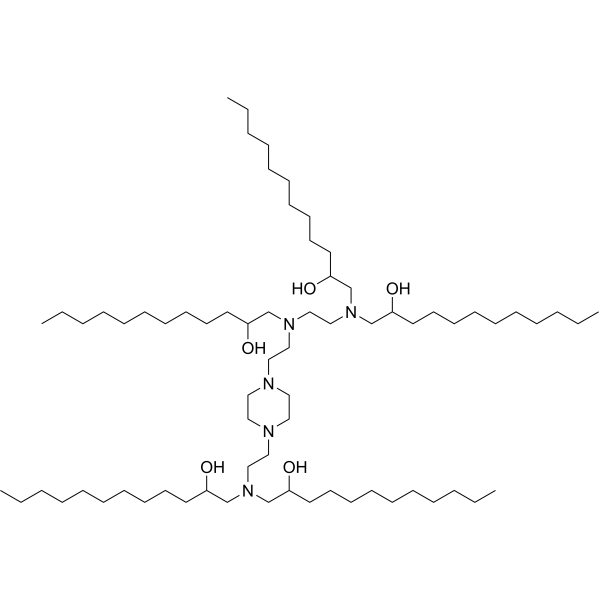
    CL4H6 is a pH-sensitive cationic lipid. CL4H6 is the main component of lipid nanoparticles (LNPs), which can be used to target and deliver siRNA, and induces a potent gene-silencing response .
    CL4H6
  • HY-105048
    Omiganan
    2 Publications Verification

    Bacterial Infection
    Omiganan is a cationic antimicrobial peptide. Omiganan as an analogue of indolicidin shows activity against gram-positive and gram-negative bacteria but also Candida spp. isolates. Omiganan can be used for the research of alcohol nose and acne .
    Omiganan
  • HY-121410
    Narasin
    2 Publications Verification

    Bacterial Apoptosis Parasite NF-κB Antibiotic Infection Cancer
    Narasin is a cationic ionophore antibiotic and coccidiostat agent. Narasin inhibits NF-κB signaling and induces tumor cells apoptosis. Narasin has antimicrobial, antiviral anticancer activity. Narasin inhibits tumor metastasis and growth of ERα‑positive breast cancer cells by inactivation of the TGF-β/SMAD3 and IL‑6/STAT3 signaling pathways .
    Narasin
  • HY-143702

    NBD-DOTAP

    Fluorescent Dye Liposome Inflammation/Immunology Cancer
    Fluorescent DOTAP (NBD-DOTAP) is a cationic lipid which can be used for nucleic acid and protein delivery. Fluorescent DOTAP is labeled with a fluorophore NBD (maximum excitation/emission wavelength ∼463/536 nm). Fluorescent DOTAP can be used for gene delivery systems, drug delivery, as well as cell imaging and nanocarrier tracking. Fluorescent DOTAP is an ideal candidate for both biological and pharmaceutical formulation (e.g. co-delivery of vaccines) research .
    Fluorescent DOTAP
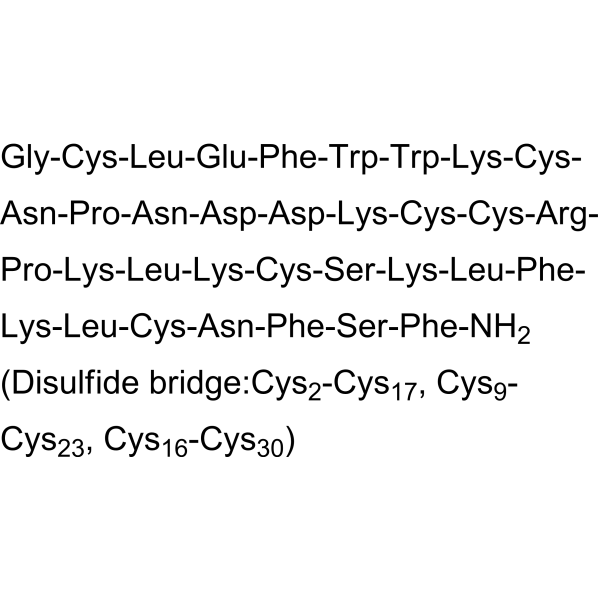
  • HY-P5601

    Bacterial Fungal Infection
    Thanatin is an inducible cationic antimicrobial peptide. Thanatin is a pathogen-inducible single-disulfide-bond-containing β-hairpin AMP. Thanatin displays broad-spectrum activity against both Gram-negative and Gram-positive bacteria as well as against various species of fungi with MICs of 0.3-40 µM, 0.6-40 µM and 0.6-20 µM, respectively. Thanatin has the property of competitive replacement of divalent cations from bacterial outer membrane (OM), leading to OM disruption .
    Thanatin
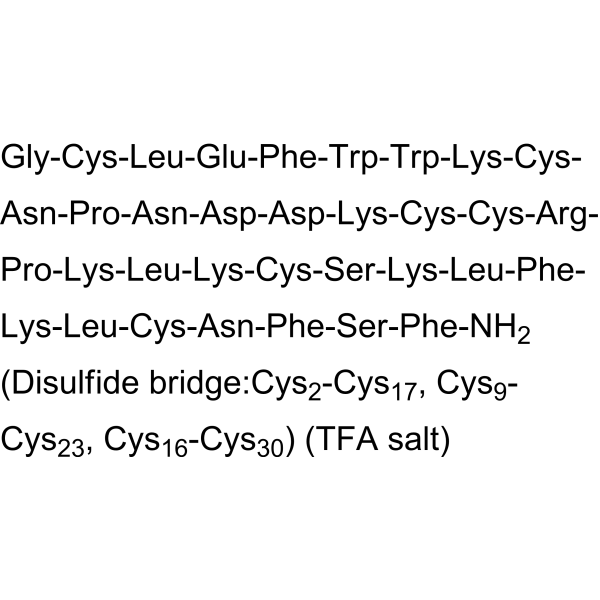
  • HY-P5601A

    Bacterial Fungal Infection
    Thanatin TFA is an inducible cationic antimicrobial peptide. Thanatin TFA s a pathogen-inducible single-disulfide-bond-containing β-hairpin AMP. Thanatin TFA displays broad-spectrum activity against both Gram-negative and Gram-positive bacteria as well as against various species of fungi with MICs of 0.3-40 µM, 0.6-40 µM and 0.6-20 µM, respectively. Thanatin TFA has the property of competitive replacement of divalent cations from bacterial outer membrane (OM), leading to OM disruption .
    Thanatin TFA
  • HY-W096983

    Dodecyltrimethylammonium chloride,for IPC,≥99%

    Environmental Pollutants Biochemical Assay Reagents Others
    DTAC (Dodecyltrimethylammonium chloride), for IPC, ≥99% is a quaternary ammonium cationic surfactant. DTAC, for IPC, ≥99% can form micelles in aqueous media, which interact with and encapsulate Diclofenac sodium (HY-15037) molecules; the micellization process is entropy-driven at lower temperatures and enthalpy-driven at higher temperatures .
    DTAC,for IPC,≥99%
  • HY-W590549

    DODAC

    Liposome Cancer
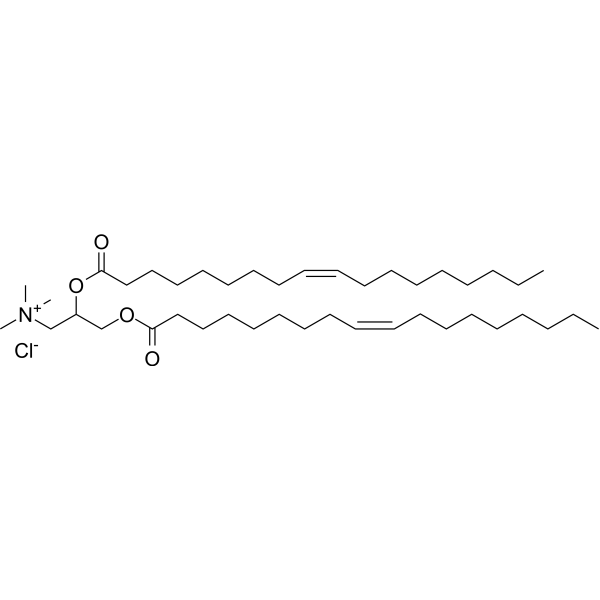
    Dioleyldimethylammonium chloride (DODAC) is a positively charged lipid promoter with membrane-disrupting activity, which is often formulated into cationic liposomes with dioleoylphosphatidylethanolamine. Dioleyldimethylammonium chloride is used in gene transfection research; through electrostatic interactions, it effectively promotes the binding of programmable fusion vesicles to cells and induces membrane disruption. Dioleyldimethylammonium chloride is also applied in studies on L1210 leukemia and LS180 human colon cancer .
    Dioleyldimethylammonium chloride
  • HY-113404

    Tyrosinase Dopamine Receptor Neurological Disease
    DL-Dopa is a dopamine precursor. It serves as a substrate for Mushroom Tyrosinase, which oxidizes it to dopaquinone, an intermediate in the DOPA-melanin polymerization process, and this reaction can be detected at 475 nm. DL-Dopa also forms synergistic hydrophobic and π-π stacking interactions with cationic surfactants. Its binding to cetylpyridinium chloride (HY-B1464) is stronger and exhibits better thermodynamic stability than its binding to benzalkonium chloride (HY-B2232). DL-Dopa can compensate for dopamine depletion in the brain and is applicable to research related to Parkinson's disease .
    DL-Dopa
  • HY-D0957

    Fluorescent Dye Bacterial Infection
    Ethyl Violet is a triphenylmethane cationic dye with antibacterial activity. Ethyl Violet is applicable to research related to antibacterial therapy and histological staining .
    Ethyl Violet
  • HY-144014

    Liposome Cancer
    MVL5 is a non-degradable multivalent cationic lipid. MVL5 is a highly efficient vector for both DNA and siRNA. MVL5 can be used in breast cancer research .
    MVL5
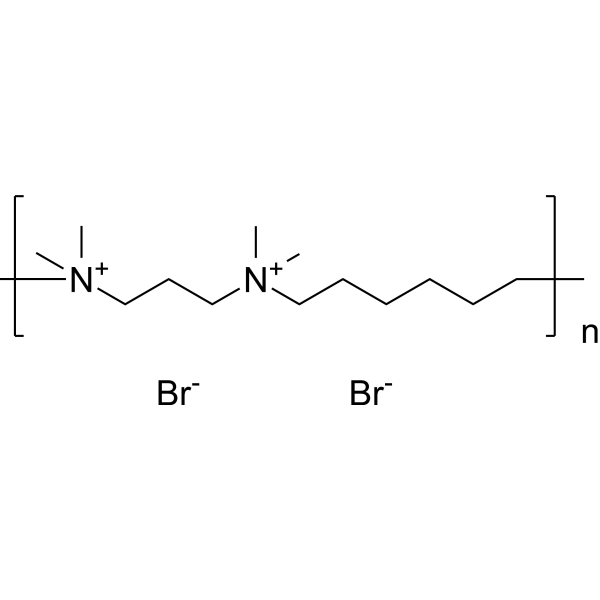
  • HY-108004

    Septefril; Decametoxin

    Bacterial Fungal Infection
    Decamethoxine (Septefril) is a cationic gemini surfactant. Decamethoxine exhibits strong bactericidal and fungicidal effects. Decamethoxine modifies the permeability of the microbial cell membrane, resulting in the destruction and death of diverse microorganisms .
    Decamethoxine
  • HY-D1543

    DNA Stain Infection
    Pyronin B is an organic cationic dye used for the staining of bacteria, mycobacteria and ribonucleic acids. Pyronin B is also used as a small hydrophobic (SH) protein channel inhibitor .
    Pyronin B
  • HY-D1509

    Fluorescent Dye Others
    Phenazine ethosulfate is a cationic dye (Ex=390 nm, Em=530 nm) and an electron acceptor that can be used in dye-linked enzyme assays. Phenazine ethosulfate is an intermediate for detecting nitric oxide reducatase (Nors) activity with the presence of ascorbic acid .
    Phenazine ethosulfate
  • HY-147087

    Liposome Cancer
    YSK 05 is a pH-sensitive cationic lipid. YSK 05 improves the intracellular trafficking of non-viral vectors. YSK 05-MEND shows significantly good gene silencing activity and hemolytic activity. YSK 05 overcomes the suppression of endosomal escape by PEGylation. YSK 05 effectively enhances siRNA delivery both in vitro and in vivo .
    YSK 05
  • HY-160553

    Liposome Others
    9322-O16B, an ionizable cationic lipid, is used for LNP generation .
    9322-O16B
  • HY-W598178

    Liposome Others
    93-O17O is a chalcogen-containing ionizable cationic lipidoid that used in the formation of lipid nanoparticles (LNPs) .
    93-O17O
  • HY-W590681

    Liposome Others
    113-O12B is a disulfide bond-containing ionizable cationic lipidoid. 113-O12B can be used in that generation of lipid nanoparticles (LNPs) for the delivery of mRNA .
    113-O12B
  • HY-154804

    Liposome Others
    DLin-M-C4-DMA (Compound MC4) is a cationic lipid. DLin-M-C4-DMA can be used for delivery of nucleic acids .
    DLin-M-C4-DMA
  • HY-144018

    Liposome Others
    18:1 EPC chloride is a cationic alkylated phospholipid and also an egg yolk phosphatidylcholine. 18:1 EPC chloride can be used in research on liposomes and drug delivery .
    18:1 EPC chloride
  • HY-D0303A

    Solvent Orange 3 hydrochloride

    Fluorescent Dye Others
    Chrysoidine G (Solvent Orange 3 hydrochloride) is an industrial azoic dye (cationic dye). Chrysoidine G (Solvent Orange 3 hydrochloride) is used for the construction of most textile dyestuffs and also in synthetic industrial compounds. Chrysoidine G (Solvent Orange 3 hydrochloride) concentration can be determined by UV-Vis spectroscopy .
    Chrysoidine G
  • HY-P1271

    Catestatin (cattle)

    nAChR Cardiovascular Disease
    Catestatin is a 21-amino acid residue, cationic and hydrophobic peptide. Catestatin is an endogenous peptide that regulates cardiac function and blood pressure . Catestatin is a non-competitive nicotinic antagonist acting through nicotinic acetylcholine receptors (nAChRs) to inhibit catecholamine release .
    Catestatin
  • HY-128443

    stearyldimethylbenzylammonium chloride; Benzyldimethyloctadecylammonium chloride

    Environmental Pollutants Biochemical Assay Reagents Others
    Benzyldimethylstearylammonium chloride is a quaternary ammonium cationic surfactant without embryotoxicity .
    Benzyldimethylstearylammonium chloride
  • HY-157252

    Liposome Cancer
    CL4F8-6 is an ionizable cationic lipid with a pKa of 6.14. CL4F8-6 can be used in lipid nanoparticles (LNPs)-based mRNA therapeutics .
    CL4F8-6
  • HY-W130025

    Cholinesterase (ChE) Neurological Disease
    p-Xylene bis(pyridinium bromide) (compound 21), a cationic charged quencher, is a week bisquaternary AChE and BChE inhibitor with IC50s of 1540 μM and 529 μM, respectively .
    p-Xylene bispyridinium bromide
  • HY-159854

    Liposome Cancer
    C14-O2 is an ionizable cationic lipid that can be used to synthesize lipid nanoparticles (LNP) for delivering mRNA and other payloads .
    C14-O2
  • HY-160852

    Liposome Inflammation/Immunology
    YSK 12C4 is an ionizable cationic lipid primarily used to enhance siRNA cellular delivery via multifunctional envelope-type nanodevices (MEND). YSK 12C4 promotes siRNA uptake and endosomal escape, effectively silencing genes in human immune cell lines .
    YSK 12C4
  • HY-139201C

    PDLHB (MW 1000-5000)

    CaSR Others
    Poly-D-lysine hydrobromide (MW 1000-5000) (PDLHB (MW 1000-5000)) is a synthetic cationic polypeptide polymer commonly used as a cell adhesion promoter and surface coating molecule. Poly-D-lysine hydrobromide is also known as a calcium-sensing receptor (CaSR) agonist peptide .
    Poly-D-lysine hydrobromide (MW 1000-5000)
  • HY-D1556

    1,2-dioleoyl-sn-glycero-3-phosphoethanolamine-N-(carboxyfluorescein) ammonium

    Fluorescent Dye Cancer
    18:1 PE CF (1,2-dioleoyl-sn-glycero-3-phosphoethanolamine-N-(carboxyfluorescein) (ammonium)) is a pH-sensitive fluorescent indicator. 18:1 PE CF exhibits changes in fluorescence intensity in response to pH variations and reflects the electrostatic states of cationic liposomes and lipoplexes. 18:1 PE CF supports real-time visualization of pH distribution and membrane deformation in giant unilamellar vesicles and is suitable for steady-state fluorescence testing in large unilamellar vesicle membranes. 18:1 PE CF is capable of monitoring the surface electrical potential of cationic liposomes and lipoplexes and can effectively label lipid bilayers and nanomicelles. 18:1 PE CF can be used for the research of the investigation of lung cancer (Ex = 495 nm; Em = 520 nm) .
    18:1 PE CF
  • HY-144016

    Liposome Others
    16:0 EPC chloride, a P-O-ethyl derivative, is a saturated cationic lipid. 16:0 EPC chloride can serve as a DNA and RNA transfecting agent. 16:0 EPC chloride can be used as a co-adjuvant for preparing vaccines and promote drug delivery .
    16:0 EPC chloride
  • HY-161159
    DMHBO+
    1 Publications Verification

    Fluorescent Dye Others
    DMHBO+ is a cationic chromophore that binds to the Chili aptamer with a Kd of 12 nM. The Chili-DMHBO+ complex is an ideal fluorescence donor for FRET to the rhodamine dye Atto 590, suitable for imaging RNA in cells. Ex/Em=456/592 nm .
    DMHBO+
  • HY-143700

    Biochemical Assay Reagents Others
    18:0 DAP is a cationic or ionizable lipid with no unsaturated bonds in its hydrocarbon chain. The mRNA encapsulation efficiency of 18:0 DAP is 0%. 18:0 DAP cannot form functional lipid nanoparticles suitable for mRNA delivery .
    18:0 DAP
  • HY-142999

    Liposome Inflammation/Immunology
    DOIC is a cationic lipid that can be used for RNA vaccines .
    DOIC
  • HY-W800783

    CDESA

    Liposome Others
    DSTAP chloride (CDESA) is a cationic lipid that used in the formation of lipid nanoparticles (LNPs). DORI chloride has high transfection efficiency .
    DSTAP chloride
  • HY-143688

    Liposome Others
    EDMPC, a cationic lipid, has an enhanced ability to deliver DNA to pulmonary tissues. EDMPC mediates intralobar DNA delivery to rodents .
    EDMPC
  • HY-112005GL

    Dioleoylphosphatidylethanolamine (GMP Like); 1,2-Dioleoyl-sn-glycero-3-phosphoethanolamine (GMP Like)

    Liposome Endogenous Metabolite Inflammation/Immunology
    DOPE (GMP Like) is the GMP Like class DOPE (HY-112005), and can be used as pharmaceutical excipients. GMP small molecules works appropriately as an auxiliary reagent for cell therapy manufacture. DOPE is a neutral helper lipid for cationic liposome and combines with cationic phospholipids to improve transfection efficiency of naked siRNA .
    DOPE (GMP Like)
  • HY-164070

    Biochemical Assay Reagents Others
    Dextran Hydroxypropyltrimonium Chloride is a cationic polymer with excellent antistatic, moisturizing, film-forming, foam-stabilizing and emulsifying abilities. Dextran Hydroxypropyltrimonium Chloride can be used in the research of pharmaceuticals and cosmetics .
    Dextran Hydroxypropyltrimonium Chloride
  • HY-W409806

    Liposome Inflammation/Immunology
    Cholesterylamine is a cationic lipid. Cholesterylamine can be added to the PLGA to prepare PLGA particle having surface charge. Cholesterylamine can be used for drug delivery. Cholesterylamine can be used for autoimmune diseases and allergy research .
    Cholesterylamine
  • HY-W414069

    Endogenous Metabolite Liposome Others
    Thiocholesterol is a member of the class of cholesteric liquid crystals (CLCs) that can be used to synthesis cationic lipid. Thiocholesterol is a stronger stabilizer of silver nanoparticles (SNPs). Thiocholesterol can be used for plasma membrane research and drug delivery .
    Thiocholesterol

Inquiry Online

Your information is safe with us. * Required Fields.

Salutation


Country or Region *

Applicant Name *


Organization Name *

Department *


Email Address *


Product Name *

Cat. No.


Requested quantity *

Phone Number *


Remarks

Inquiry Online

Inquiry Information

Product Name:
Cat. No.:
Quantity:
MCE Japan Authorized Agent:

