



874 Results for "

detection

" in MedChemExpress (MCE) Product Catalog:
Products (874)

874 Results for "detection" in MCE Product Catalog:

698
698 Publications Verification
Cat. No.: HY-15142
CAS No.: 25316-40-9
Purity:  99.90%
Synonyms: Hydroxydaunorubicin hydrochloride; ADR
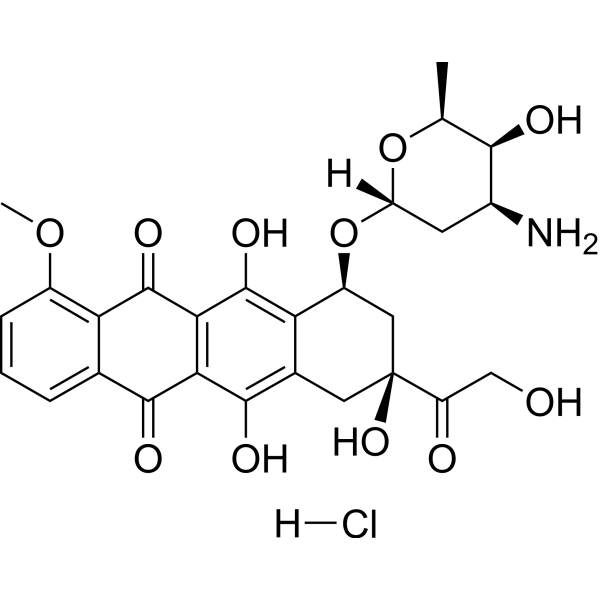
Doxorubicin hydrochloride (Hydroxydaunorubicin hydrochloride; ADR), a cytotoxic anthracycline antibiotic, is an anti-cancer chemotherapy agent. Doxorubicin hydrochloride is a potent human DNA topoisomerase I and topoisomerase II inhibitor with IC50s of 0.8 μM and 2.67 μM, respectively. Doxorubicin hydrochloride reduces basal phosphorylation of AMPK and its downstream target acetyl-CoA carboxylase. Doxorubicin hydrochloride induces apoptosis and autophagy .
loading...
    loading...
160
160 Cited Publications
Cat. No.: HY-D0815
CAS No.: 25535-16-4
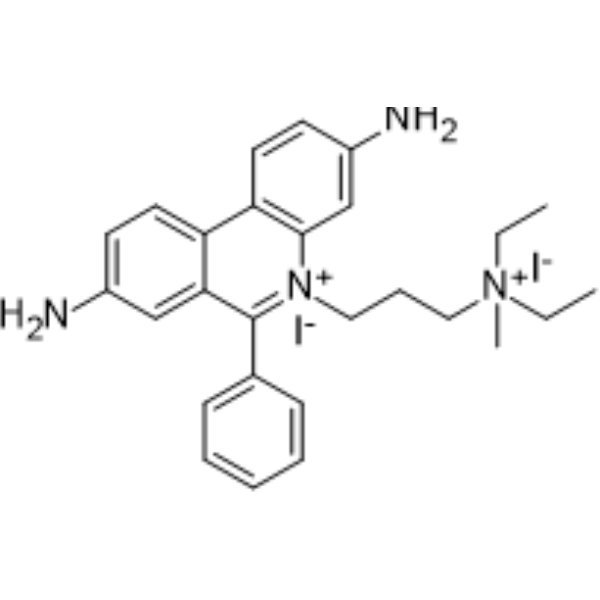
Propidium Iodide (PI) is a nuclear staining agent that stains DNA. Propidium Iodide is an analogue of ethidine bromide that emits red fluorescence upon embedding in double-stranded DNA. Propidium Iodide cannot pass through living cell membranes, but it can pass through damaged cell membranes to stain the nucleus. Propidium Iodide has a fluorescence wavelength of 493/617 nm and a wavelength of 536/635 nm after Mosaic with DNA. Propidium Iodide is commonly used in the detection of apoptosis (apoptosis) or necrosis (necrosis), and is often used in flow cytometry analysis.
loading...
    loading...
129
129 Cited Publications
Cat. No.: HY-D0718
CAS No.: 7385-67-3
Synonyms: Nile Blue A oxazone; Phenoxazone 9
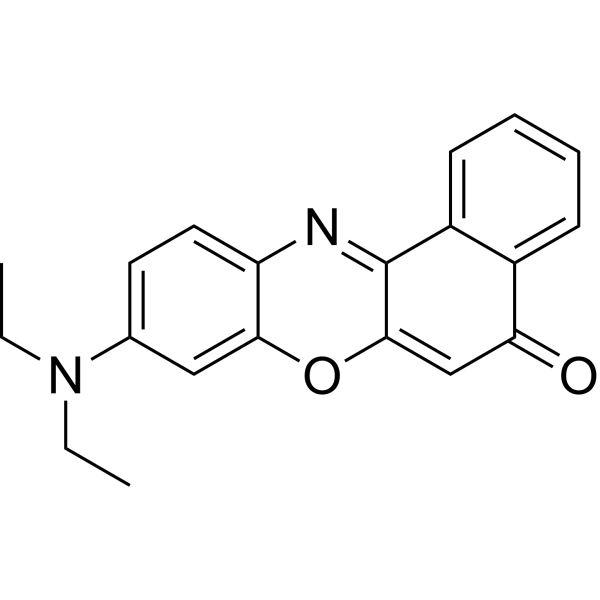
Nile red (Nile blue oxazone) is a lipophilic stain. Nile red has environment-sensitive fluorescence. Nile red is intensely fluorescent in a lipid-rich environment while it has minimal fluorescence in aqueous media. Nile red is an excellent vital stain for the detection of intracellular lipid droplets by fluorescence microscopy and flow cytof uorometry. Nile red stains intracellular lipid droplets red. The fluorescence wavelength is 559/635 nm .
loading...
    loading...
88
88 Cited Publications
Cat. No.: HY-D0041
CAS No.: 148504-34-1
Synonyms: Calcein acetoxymethyl ester
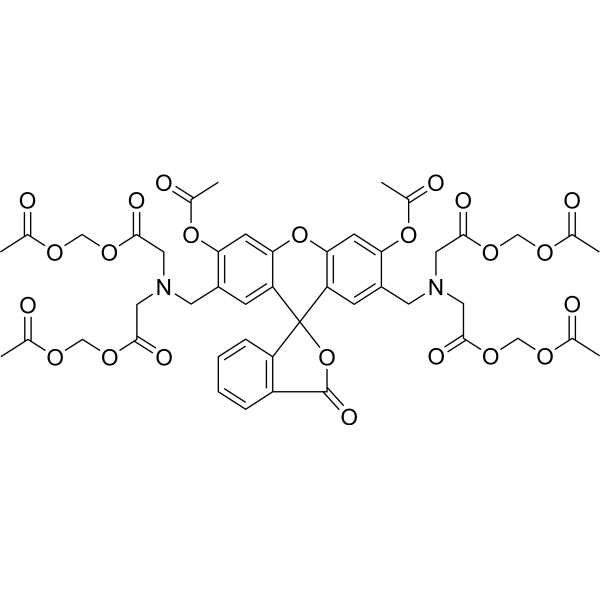
Calcein AM, has cell membrane permeability and can easily enter the cell. Calcein AM has no fluorescence and is hydrolyzed by endogenous esterase in the cell to produce polar molecule Calcein (Calcein), which has strong negative charge and cannot permeate the cell membrane. Calcein can emit strong green fluorescence, so it is often used with Propidium Iodide for cell viability/virulence detection, excitation/emission wavelength: 494/515 nm .
loading...
    loading...
83
83 Cited Publications
Cat. No.: HY-K1073

MCE Annexin V-FITC/PI Apoptosis Detection Kit provides a rapid and convenient method to detect cell apoptosis and necrosis. After staining, live cells show little or no fluorescence (Annexin V-/PI-), early apoptosis cells show green fluorescence(Annexin V+/PI-), late apoptosis cells and necrosis cells show red and green fluorescence (Annexin V+/PI+).


loading...
    loading...
82
82 Cited Publications
Cat. No.: HY-15910
CAS No.: 59-14-3
Purity:  99.89%
Synonyms: BrdU; 5-Bromo-2'-deoxyuridine; BUdR
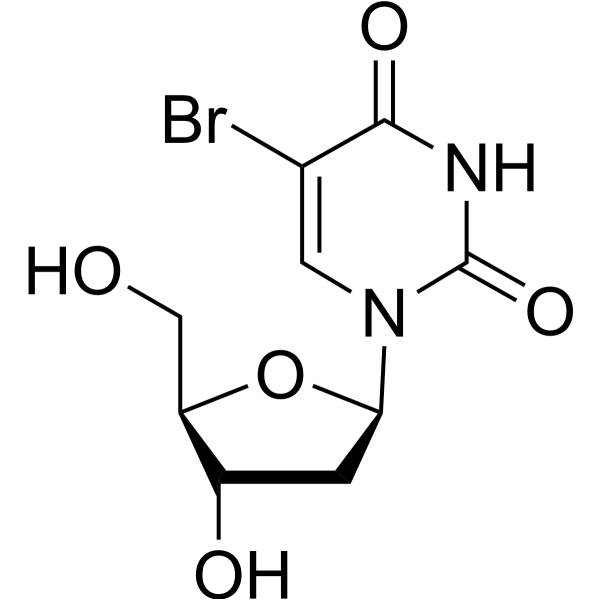
5-BrdU (BrdU) is a nucleoside analog that competes with thymidine for incorporation into DNA. 5-BrdU is commonly used in the detection of proliferating cells.
loading...
    loading...
81
81 Cited Publications
Cat. No.: HY-116215
CAS No.: 186689-07-6
Purity:  99.74%
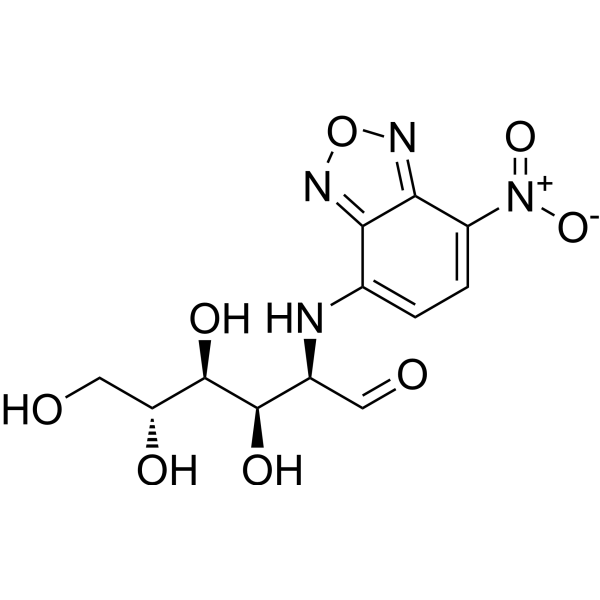
2-NBDG is a fluorescently-labeled deoxyglucose analog that is used primarily to directly monitor glucose uptake by living cells and tissues. It is also used as a topical contrast reagent for the detection of neoplasia. 2-NBDG can be used in real-time confocal, high-resolution, or wide-field fluorescence microscopy as well as in flow cytometry. The probe can be excited by the Argon laser at 488 nm to give the environment-sensitive fluorescence. It has lower photostability than the rhodamine-based fluorescent probes.
loading...
    loading...
45
45 Cited Publications
Cat. No.: HY-D1533
CAS No.: 1447815-38-4
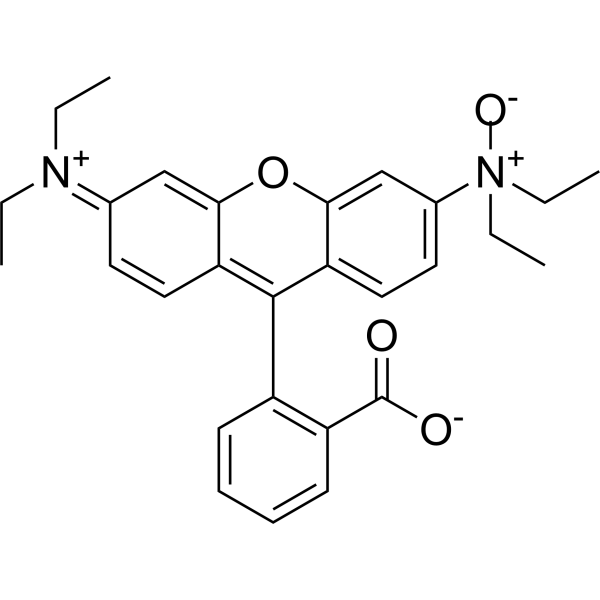
RhoNox-1 is a fluorescent probe for the specific detection of divalent iron ions, and when RhoNox-1 reacts with Fe 2+. RhoNox-1 can generate an irreversible orange (red) fluorescent product (Ex/Em:540/575 nm) . FeRhoNox-1 can enter the cell well, suitable for the detection of Fe 2+ in living cells, and tends to be localized in the Golgi apparatus .
loading...
    loading...
43
43 Cited Publications
Cat. No.: HY-D0952
CAS No.: 494-38-2
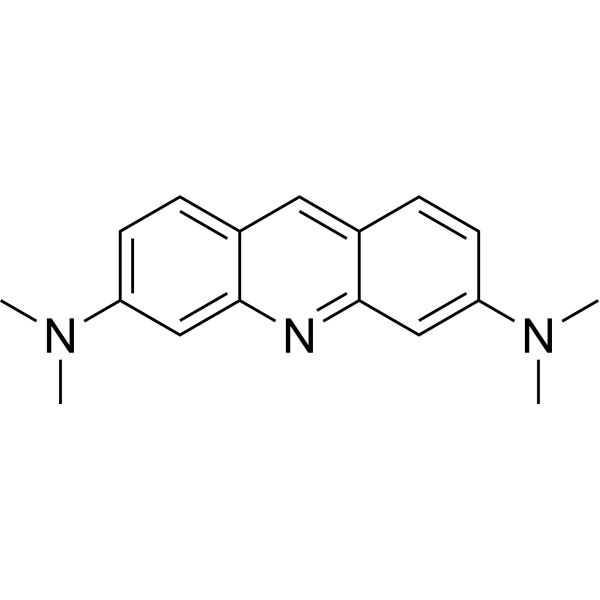
Acridine Orange base is a cell-permeable fluorescent dye that stains organisms (bacteria, parasites, viruses, etc.) bright orange and, when used under appropriate conditions (pH=3.5, Ex=460 nm), distinguishes human cells in green for detection by fluorescence microscopy. Acridine Orange base fluoresces green when bound to dsDNA (Ex=488, Em=520-524) and red when bound to ssDNA (Ex=457, Em=630-644) or ssRNA (Ex=457, Em=630-644), also can be used in cell cycle assays .
loading...
    loading...
42
42 Cited Publications
Cat. No.: HY-K1078

MCE One Step TUNEL Apoptosis Detection Kit (FITC) provides a rapid and convenient method to detect cell apoptosis. After staining cells with this kit, live cells have no fluorescence, apoptosis cells show green fluorescence.

loading...
    loading...
34
34 Cited Publications
Cat. No.: HY-141511
CAS No.: 874748-20-6
Purity:  97.74%
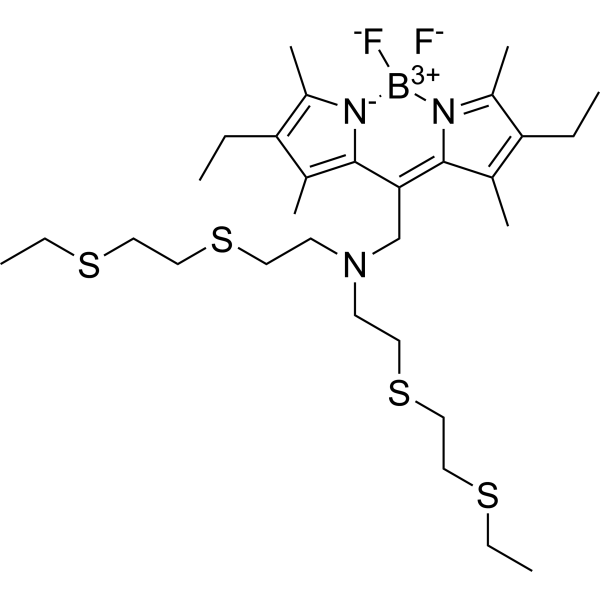
Coppersensor-1 (CS1) is a membrane-permeable fluorescent dye. Coppersensor-1 has a picomolar affinity for Cu + with high selectivity over competing cellular metalions. Coppersensor-1 as a probe, can selective and sensitive detection of copper(I) ions (Cu +) in biological samples, including live cells. Coppersensor-1 can be used for the research of imaging of severe diseases such as cancer, cardiovascular disorders and neurogenerative diseases .
loading...
    loading...
31
31 Cited Publications
Cat. No.: HY-K2005

High Sensitivity ECL Kit enables low picogram detection of antigen by oxidizing luminol in the presence of HRP and peroxide. This reaction produces a prolonged chemiluminescence which can be visualized on X-ray film or digital imaging systems. The 100 mL is defined as the base specification. All larger sizes correspond to incremental volumes of this base.

loading...
    loading...
30
30 Cited Publications
Cat. No.: HY-W011664
CAS No.: 5471-63-6
Synonyms: DPBF
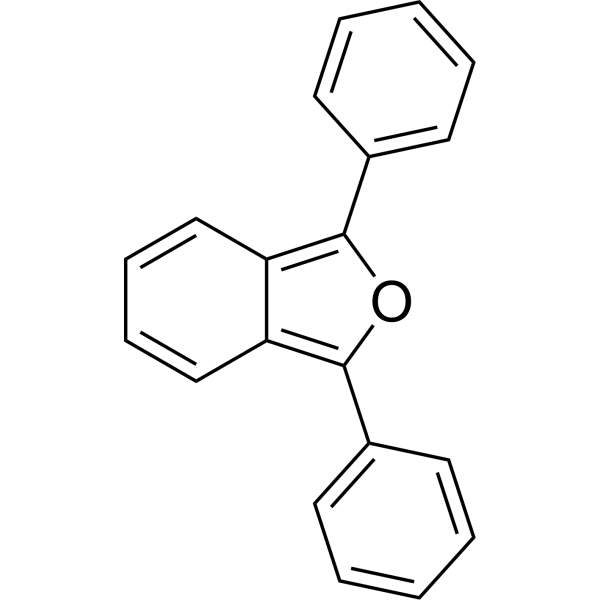
1,3-Diphenylisobenzofuran (DPBF) has been developed as a selective probe for the detection and quantitative determination of hydrogen peroxide in samples containing different reactive nitrogen and oxygen species (RNOS). DPBF is a fluorescent probe which, for almost 20 years, was believed to react in a highly specific manner toward some reactive oxygen species such as singlet oxygen and hydroxy, alkyloxy or alkylperoxy radicals .
loading...
    loading...
25
25 Cited Publications
Cat. No.: HY-108717
CAS No.: 39450-01-6
Synonyms: Protease K
Target:  

Ser/Thr Protease

연구분야:  

Others

Proteinase K (Protease K) is a nonspecific serine protease that is useful for general digestion of proteins. Proteinase K is active in the presence of SDS or urea and over a wide range of pH (4-12), salt concentrations, and temperatures. Proteinase K can be use for promoting methods of viral nucleic acid extraction, and detection .
loading...
    loading...
21
21 Cited Publications
Cat. No.: HY-D0090
CAS No.: 162558-52-3
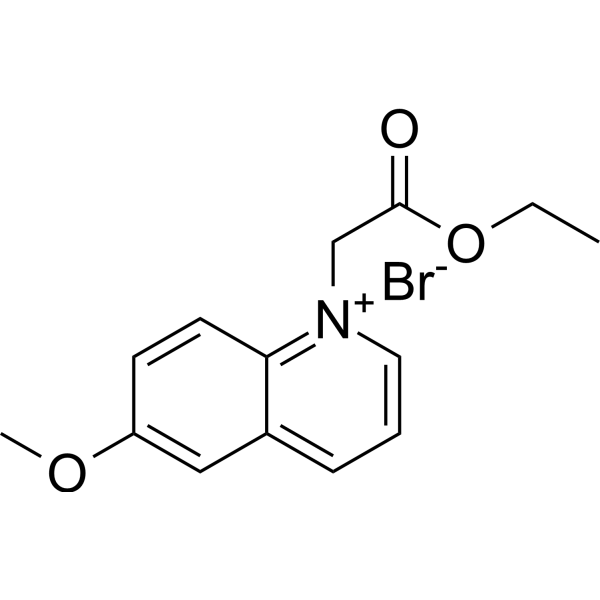
MQAE is a chloride ion (Cl -) fluorescent probe that can be used to measure chloride concentrations. The fluorescence intensity of MQAE decreases proportionally as Cl - ions increase. MQAE has high cell permeability and is suitable for fluorescence detection such as confocal microscopy and flow cytometry (Ex/Em=350/460 nm) .
loading...
    loading...
17
17 Cited Publications
Cat. No.: HY-D0717
CAS No.: 254109-22-3
Synonyms: Diaminofluorescein-FM diacetate
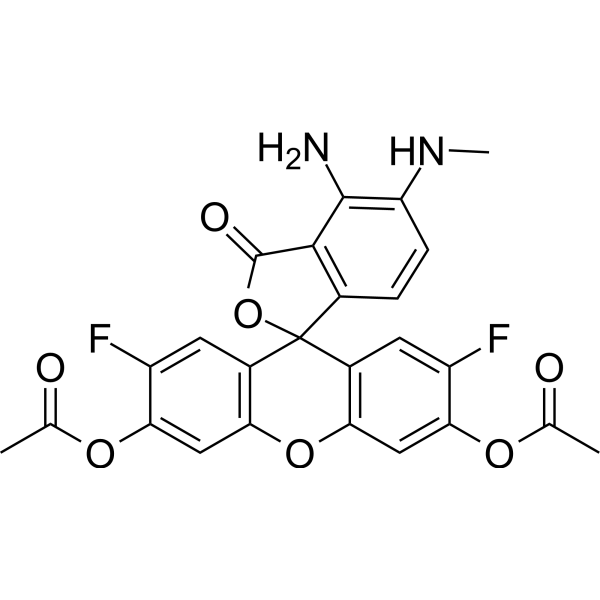
DAF-FM DA (Diaminofluorescein-FM diacetate) is a fluorescent probe for the detection and bioimaging of nitric oxide (NO). DAF-FM DA spontaneously crosses the plasma membrane and is subsequently cleaved by esterases to generate intracellular DAF-FM (Ex/Em=495/515 nm) .
loading...
    loading...
12
12 Cited Publications
Cat. No.: HY-K0302

MCE Cell-ATP Viability Detection Kit is used for detecting the number and viability of living cells in culture based on high-sensitivity bioluminescence detection technology of the ATP present.Product specifications: Large sizes are based on 100 mL increments.

loading...
    loading...
12
12 Cited Publications
Cat. No.: HY-128868E
CAS No.: 60842-46-8
FITC-Dextran (MW 70000) is a compound belonging to the class of fluorescent dyes. It is commonly used in biomedical research as a tracer molecule to label and track cells or other biological matter. FITC-Dextran consists of fluorescein isothiocyanate (FITC) and dextran, a complex carbohydrate derived from starch. The combination of the two creates a stable fluorescent tracer that can be viewed under a microscope or quantified using specialized detection instruments.
loading...
    loading...
11
11 Cited Publications
Cat. No.: HY-W074143
CAS No.: 36309-88-3
Synonyms: [Ru(DPP)3]Cl2
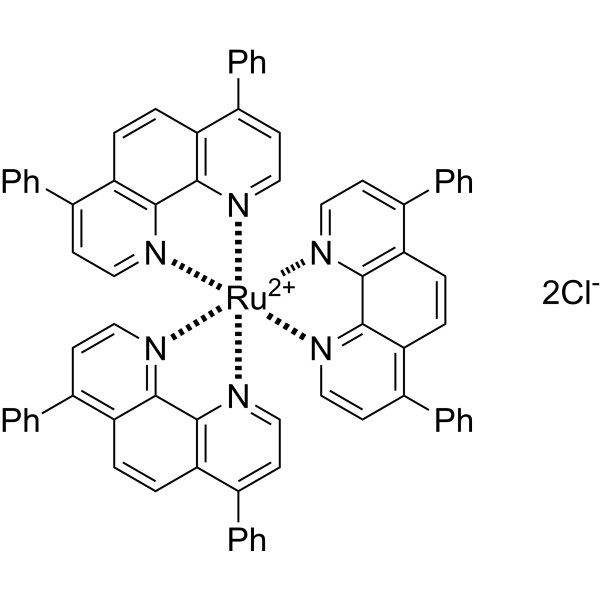
Tris(4,7-diphenyl-1,10-phenanthroline)ruthenium(II) dichloride ([Ru(dpp)3] 2+) is an electrochemiluminescent (ECL) probe and oxygen-sensitive sensor. Tris(4,7-diphenyl-1,10-phenanthroline)ruthenium(II) dichloride can be used to modify electrode surfaces for the detection of sulfates (S2O8 2-) and oxalates, based on electrochemical reactions that generate excited-state species, releasing photons through irreversible redox reactions. Tris(4,7-diphenyl-1,10-phenanthroline)ruthenium(II) dichloride utilizes the oxygen quenching of fluorescence mechanism, where fluorescence intensity reflects the metabolic rate of living microorganisms or oxygen levels within cells/tumors, allowing for real-time detection. Tris(4,7-diphenyl-1,10-phenanthroline)ruthenium(II) dichloride's main applications include microbial detection, antibacterial activity studies, and tumor microenvironment research .
loading...
    loading...
11
11 Cited Publications
Cat. No.: HY-126839
CAS No.: 138777-25-0
Purity:  99.82%
Synonyms: 5-Dodecanoylaminofluorescein di-β-D-Galactopyranoside
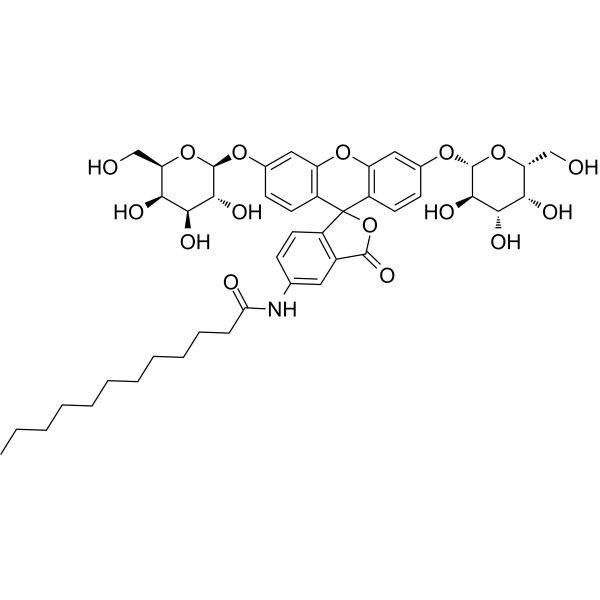
C12FDG (5-Dodecanoylaminofluorescein di-β-D-Galactopyranoside) is a lipophilic green fluorescent substrate for β-galactosidase detection. C12-FDG is more sensitive than Fluorescein di(β-D-galactopyranoside) (HY-101895) for beta-galactosidase activity determinations in animal cells (Ex/Em = 488/523 nm) .
loading...
    loading...

