1. Search Result
Search Result
Results for "

gram negative

" in MedChemExpress (MCE) Product Catalog:

1217

Inhibitors & Agonists

9

Fluorescent Dye

11

Biochemical Assay Reagents

130

Peptides

7

MCE Kits

377

Natural
Products

80

Isotope-Labeled Compounds

2

Click Chemistry

2

Oligonucleotides

1

GMP Molecules

Cat. No. Product Name Target Research Areas Chemical Structure
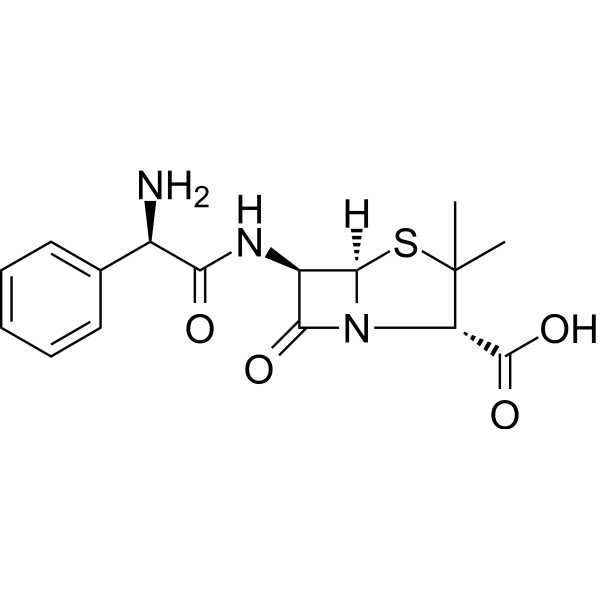
  • HY-B0522
    Ampicillin
    Maximum Cited Publications
    80 Publications Verification

    D-(-)-α-Aminobenzylpenicillin

    Bacterial Antibiotic Infection
    Ampicillin is a broad-spectrum beta-lactam antibiotic against a variety of gram-positive and gram-negative bacteria.
    Ampicillin
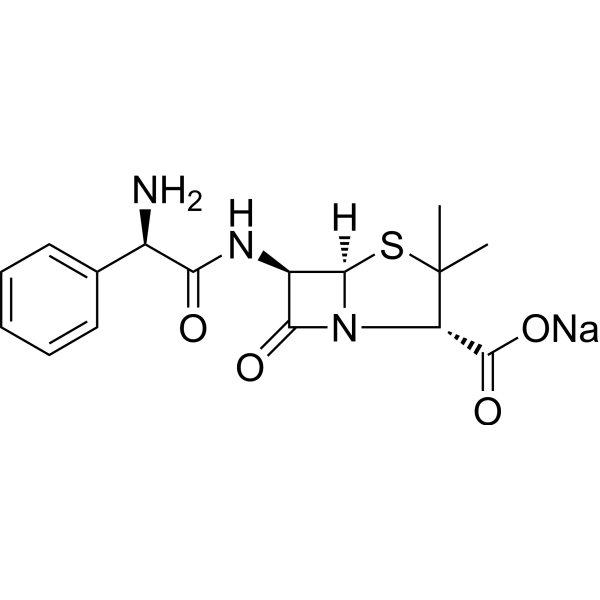
  • HY-B0522A
    Ampicillin sodium
    Maximum Cited Publications
    80 Publications Verification

    D-(-)-α-Aminobenzylpenicillin sodium salt

    Bacterial Antibiotic Infection
    Ampicillin sodium (D-(-)-α-Aminobenzylpenicillin sodium salt) is a broad-spectrum beta-lactam antibiotic against a variety of gram-positive and gram-negative bacteria .
    Ampicillin sodium
  • HY-A0089
    Colistin sulfate
    25+ Cited Publications

    Polymyxin E sulfate

    Bacterial Autophagy Antibiotic Infection
    Colistin sulfate is a polypeptide antibiotic which inhibits gram-negative bacteria by binding to lipopolysaccharides and phospholipids in the outer cell membrane of gram-negative bacteria.
    Colistin sulfate
  • HY-Y0264

    Endogenous Metabolite Bacterial Infection
    4-Hydroxybenzoic acid, a phenolic derivative of benzoic acid, could inhibit most gram-positive and some gram-negative bacteria, with an IC50 of 160 μg/mL.
    4-Hydroxybenzoic acid
  • HY-B1174

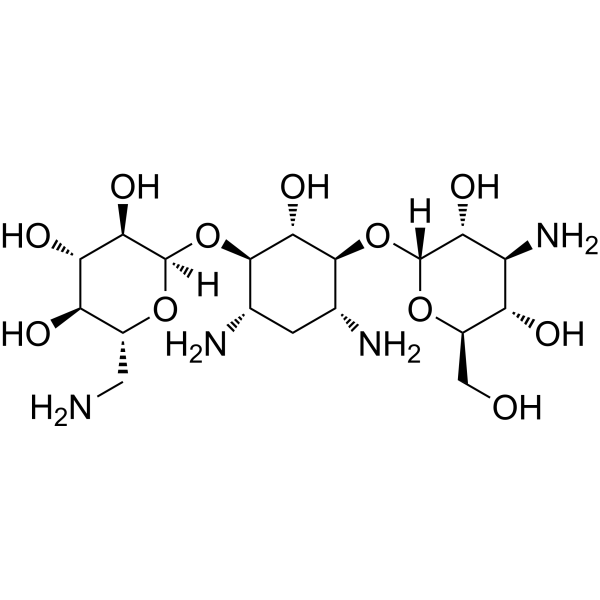
    Kanamycin B

    Antibiotic Bacterial Infection
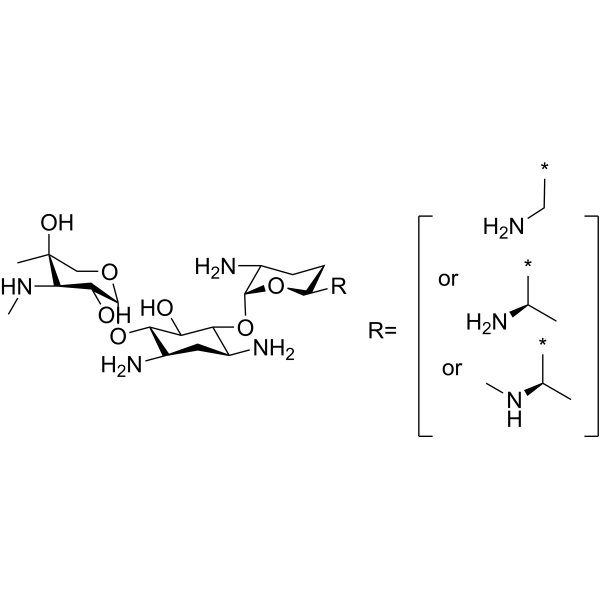
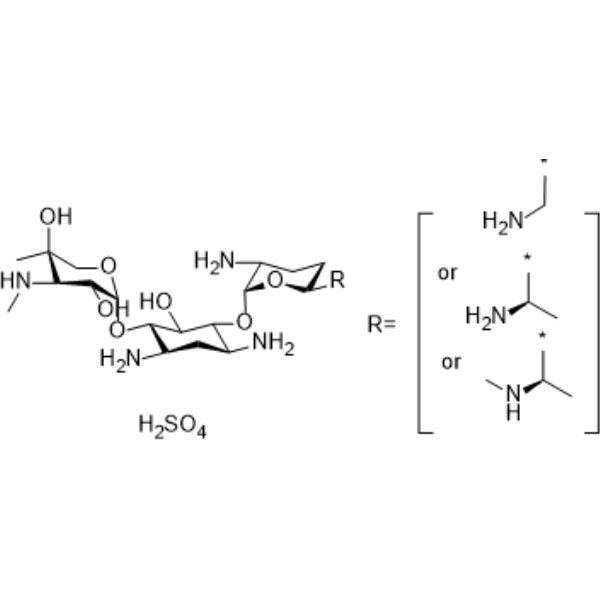
    Bekanamycin (Kanamycin B) is an aminoglycoside antibiotic produced by Streptomyces kanamyceticus, against an array of Gram-positive and Gram-negative bacterial strain .
    Bekanamycin
  • HY-W013699
    Chlorhexidine diacetate
    10+ Cited Publications

    Environmental Pollutants Antibiotic Necroptosis Bacterial Apoptosis Infection
    Chlorhexidine diacetate is a orally active cationic antimicrobial agent that targets microbial cell membranes. Chlorhexidine diacetate binds to cell membrane phospholipids non-specifically, destroys membrane structure and induces leakage of cell contents. Chlorhexidine diacetate has broad-spectrum bactericidal activity against both Gram-positive and Gram-negative bacteria. Chlorhexidine diacetate can interfere with membrane permeability, cause protein precipitation and energy metabolism disorders, such as rapid inhibition of microbial growth and induction of cell death (necrosis or apoptosis) .
    Chlorhexidine diacetate
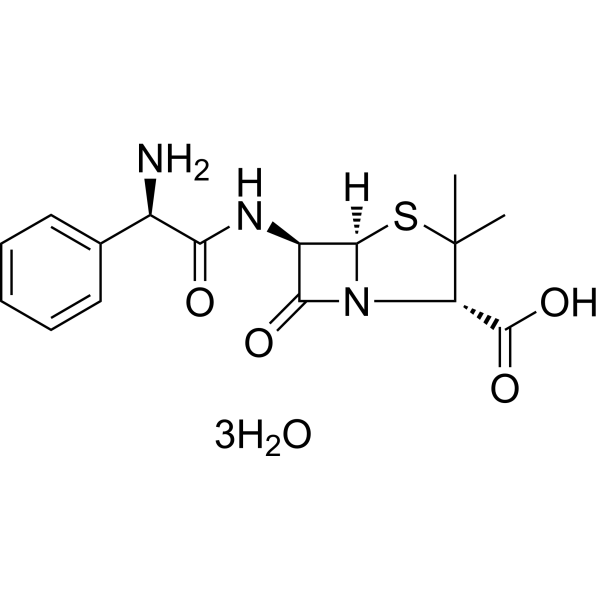
  • HY-B0522B
    Ampicillin trihydrate
    Maximum Cited Publications
    80 Publications Verification

    D-(-)-α-Aminobenzylpenicillin trihydrate

    Bacterial Antibiotic Infection
    Ampicillin trihydrate (D-(-)-α-Aminobenzylpenicillin trihydrate) is a broad-spectrum beta-lactam antibiotic against a variety of gram-positive and gram-negative bacteria.
    Ampicillin trihydrate
  • HY-A0246A
    Flucloxacillin sodium
    1 Publications Verification

    Bacterial Antibiotic Infection
    Flucloxacillin sodium is an active antibiotic against gram-positive and gram-negative bacteria .
    Flucloxacillin sodium
  • HY-100584

    Erythromycin Cyclocarbonate

    Bacterial Antibiotic Infection
    Davercin (Erythromycin Cyclocarbonate), derivative of Erythromycin, which is active against Gram-positive and some Gram-negative microorganisms.
    Davercin
  • HY-112853
    Fosmidomycin sodium salt
    2 Publications Verification

    FR-31564

    Bacterial Antibiotic Infection
    Fosmidomycin sodium salt is a phosphonic acid antibiotic and a antimalarial agent, which is active against both Gram-negative and Gram-positive bacteria.
    Fosmidomycin sodium salt
  • HY-A0253

    Cephacetrile; Cephacetril

    Bacterial Antibiotic Infection
    Cefacetrile (Cephacetrile) is a broad-spectrum antibiotic that is effective in gram-positive and gram-negative bacterial infection .
    Cefacetrile
  • HY-P1649
    SPR741
    3 Publications Verification

    NAB741

    Bacterial Antibiotic Infection
    SPR741 (NAB741) is a cationic peptide derived from polymyxin B and is a potentiator molecule. SPR741 increases the permeability of the outer membrane of Gram-negative bacteria and is used to treat severe Gram-negative bacteria infections. SPR741 inhibits multidrug-resistant Gram-negative bacteria. The spectrum of activity of the antibiotic can be widened when used in combination with SPR741 .
    SPR741
  • HY-N1416
    Pogostone
    2 Publications Verification

    Bacterial Apoptosis Autophagy Infection Inflammation/Immunology Cancer
    Pogostone is isolated from patchouli oil with anti-bacterial and anti-cancer activities. Pogostone inhibits both gram negative and gram positive bacteria, also show inhibitory effect on corynebacterium xerosis with a MIC value of 0.098 µg/ml . Pogostone induces cell apoptosis and autophagy .
    Pogostone
  • HY-135659
    BSH-IN-1
    2 Publications Verification

    Bacterial Infection
    BSH-IN-1 is a potent and covalent inhibitor of gut bacterial recombinant bile salt hydrolases (BSHs) with IC50s of 108 nM and 427 nM for B. longum BSH (Gram positive) and B. theta BSH (Gram negative), respectively .
    BSH-IN-1
  • HY-B1599

    Bacterial Antibiotic Infection
    Chloramphenicol palmitate is an orally active prodrug of Chloramphenicol (HY-B0239), obtained from the esterification reaction between the agent and Palmitic acid (HY-N0830). Chloramphenicol palmitate is rapidly and completely hydrolyzed by intestinal esterase, releasing Chloramphenicol. Chloramphenicol is an orally effective broad-spectrum antibiotic .
    Chloramphenicol palmitate
  • HY-B1908
    Midecamycin
    2 Publications Verification

    SF-837; Antibiotic SF-837

    Bacterial Antibiotic Infection
    Midecamycin, an acetoxy-substituted macrolide antibiotic, is tested against gram-positive and gram-negative bacteria.
    Midecamycin
  • HY-101128
    Bicyclomycin benzoate
    2 Publications Verification

    FR2054

    Bacterial Antibiotic Infection
    Bicyclomycin benzoate is an antibiotic exhibiting activity against a broad spectrum of Gram-negative bacteria and against the Gram-positive bacterium.
    Bicyclomycin benzoate
  • HY-N0195

    2-Nitroimidazole

    MOFs Bacterial Antibiotic Infection
    Azomycin (2-Nitroimidazole) is an antibiotic which can be active against aerobic Gram-positive and Gram-negative bacteria.
    Azomycin
  • HY-P1649B
    SPR741 acetate
    3 Publications Verification

    NAB741 acetate

    Bacterial Antibiotic Infection
    SPR741 acetate (NAB741 acetate) is a cationic peptide derived from polymyxin B and is a potentiator molecule. SPR741 acetate increases the permeability of the outer membrane of Gram-negative bacteria and is used to treat severe Gram-negative bacteria infections. SPR741 acetate inhibits multidrug-resistant Gram-negative bacteria. The spectrum of activity of the antibiotic can be widened when used in combination with SPR741 acetate .
    SPR741 acetate
  • HY-B0734A

    SCE-963 hydrochloride

    Antibiotic Bacterial Infection
    Cefotiam (SCE-963) hydrochloride is a parenteral cephalosporin antibiotic. Cefotiam hydrochloride has broad-spectrum activity against Gram-positive and Gram-negative bacteria .
    Cefotiam hydrochloride
  • HY-N5127

    Bacterial Infection
    Nonacosane, isolated from Baphia massaiensis, exhibits weak activities against E. coli, B. subtilis, P. aeruginosa and S. aureus .
    Nonacosane
  • HY-A0246
    Flucloxacillin
    1 Publications Verification

    Antibiotic Bacterial Infection
    Flucloxacillin is an active antibiotic against gram-positive and gram-negative bacteria .
    Flucloxacillin
  • HY-121144

    Refosporen

    Antibiotic Bacterial Infection
    Cefazedone (Refosporen) is a first-generation cephalosporin antibiotic. Cefazedone is active against both Gram-positive and Gram-negative bacteria .
    Cefazedone
  • HY-W074648

    MOFs Bacterial Infection
    Antibacterial agent 18 is a multi-arm AIE molecule extracted from patent CN110123801A, compound 23. Antibacterial agent 18 can be used for resisting Gram-positive and Gram-negative bacteria. Antibacterial agent 18 can be conjugated in the cell wall of rigid arm configuration insertion bacterium, and block cell wall turns sugar and turns peptide process, to inhibit or kill bacterium .
    Antibacterial agent 18
  • HY-B2094

    Antibiotic Bacterial Infection
    Arbekacin, an aminoglycoside antibiotic, exhibits broad antimicrobial activities against not only Gram-positive bacteria but also Gram-negative bacteria .
    Arbekacin
  • HY-121341

    Ro 10-5970

    Bacterial Infection
    Brodimoprim (Ro 10-5970), a trimethoprim analogue, is an orally active dihydrofolate reductase inhibitor. Brodimoprim is highly active against a broad spectrum of gram-negative and gram-positive bacteria .
    Brodimoprim
  • HY-N7699C

    Bacterial Neurological Disease
    D-Pentamannuronic acid, an alginate oligomer, is produced by marine brown algae and by a limited range of Gram negative bacteria. D-Pentamannuronic acid can be used for the research of pain and vascular dementia .
    D-Pentamannuronic acid
  • HY-151102

    Antibiotic Bacterial Infection
    Fabimycin is a FabI inhibitor with potent antibacterial activity against gram-negative bacteria. Fabimycin is effective against drug-resistant gram-negative Infections in vivo .
    Fabimycin
  • HY-126463

    Bacterial Infection
    LolCDE-IN-4 (Compound 1) is exhibits antibacterial efficacy against gram negative bacteria Escherichia coli (MIC of 0.25-32 µg/ml) and Haemophilus influenzae, through inhibition LolCDE complex and disruption of lipoproteins release from the inner membrane .
    LolCDE-IN-4
  • HY-W002677

    Antibiotic Bacterial Infection
    Fluoroquinolonic acid is a bacteriostatic antibiotic. Fluoroquinolonic acid has broad-spectrum activity against Gram-positive and Gram-negative bacteria .
    Fluoroquinolonic acid
  • HY-N7699B

    Bacterial Neurological Disease
    D-Tetramannuronic acid, an alginate oligomer, is produced by marine brown algae and by a limited range of Gram negative bacteria. D-Tetramannuronic acid can be used for the research of pain and vascular dementia .
    D-Tetramannuronic acid
  • HY-N7699F

    Bacterial Neurological Disease
    D-Octamannuronic acid, an alginate oligomer, is produced by marine brown algae and by a limited range of Gram negative bacteria. D-Octamannuronic acid can be used for the research of pain and vascular dementia .
    D-Octamannuronic acid
  • HY-121922

    Dibromoverongiaquinol

    Bacterial Infection
    Dienone B is a marine algicide with antibiotic activity against both Gram-positive and Gram-negative marine bacteria .
    Dienone B
  • HY-D1697

    Fluorescent Dye Infection
    OGDA is a green fluorescent D-amino acid. OGDA is suitable for labeling peptidoglycan in Gram-positive and Gram-negative bacteria .
    OGDA
  • HY-P5592A

    Bacterial Infection
    Temporin B acetate is an antimicrobial peptide against Gram-positive bacteria. Temporin B acetate is less active against Gram-negative bacteria .
    Temporin B acetate
  • HY-W013699R

    Reference Standards Antibiotic Bacterial Necroptosis Apoptosis Infection
    Chlorhexidine diacetate (Standard) is the analytical standard of Chlorhexidine diacetate (HY-W013699). This product is intended for research and analytical applications. Chlorhexidine diacetate is a orally active cationic antimicrobial agent that targets microbial cell membranes. Chlorhexidine diacetate binds to cell membrane phospholipids non-specifically, destroys membrane structure and induces leakage of cell contents. Chlorhexidine diacetate has broad-spectrum bactericidal activity against both Gram-positive and Gram-negative bacteria. Chlorhexidine diacetate can interfere with membrane permeability, cause protein precipitation and energy metabolism disorders, such as rapid inhibition of microbial growth and induction of cell death (necrosis or apoptosis) .
    Chlorhexidine diacetate (Standard)
  • HY-B0960R

    N-Sulfanilylbenzamide (Standard)

    Reference Standards Bacterial Autophagy MDM-2/p53 Caspase PARP DNA-PK Akt Infection Cancer
    Sulfabenzamide (N-Sulfanilylbenzamide) (Standard) is the analytical standard of Sulfabenzamide (HY-B0960). This product is intended for research and analytical applications. Sulfabenzamide is a sulfonamide antibacterial agent. Sulfabenzamide exhibit antibacterial activity against Staphylococcus aureus (ATCC 25923) and Escherichia coli (ATCC 8739). Sulfabenzamide can promote autophagic cell autophagy in breast cancer cells through p53/ DRAM pathway. Sulfabenzamide increases caspase-3 activity, deactivates PARP1 and DNA-PK, downregulates AKT1 and AKT2. Sulfabenzamide can be used for the researches of breast cancer and bacterial infections .
    Sulfabenzamide (Standard)
  • HY-N3296

    (-)-Meridinol

    Bacterial Fungal Inflammation/Immunology
    Meridinol ((-)-Meridinol) shows antimicrobial activity against a wide range of gram-positive and gram-negative bacteria and fungi.
    Meridinol
  • HY-P5592

    Bacterial Infection
    Temporin B is an antimicrobial peptide against Gram-positive bacteria. Temporin B is less active against Gram-negative bacteria .
    Temporin B
  • HY-132915

    Bacterial Infection
    Anti gram-positive/negative bacteria agent 1 is an antibiotic conjugate with an artificial MECAM-based siderophore.
    Anti gram-positive/negative bacteria agent 1
  • HY-113687

    Bacterial Infection
    T145 is an oxazolidinone with antibacterial activity that inhibits growth of gram negatives (K. pneumoniae, A. baumannii, P. aeruginosa and E. cloacae), gram positives (E. faecalis and S. aureus) and acid fast pathogens (Mab, Mav and Mtb) .
    T145
  • HY-N1416R

    Reference Standards Bacterial Apoptosis Autophagy Infection Inflammation/Immunology
    Pogostone (Standard) is the analytical standard of Pogostone. This product is intended for research and analytical applications. Pogostone is isolated from patchouli oil?with anti-bacterial and anti-cancer activities.?Pogostone inhibits both gram negative and gram positive bacteria, also show inhibitory effect on corynebacterium xerosis with a MIC value of 0.098 μg/ml .?Pogostone induces cell apoptosis and autophagy .
    Pogostone (Standard)
  • HY-121341R

    Ro 10-5970 (Standard)

    Reference Standards Bacterial Infection
    Brodimoprim (Standard) is the analytical standard of Brodimoprim. This product is intended for research and analytical applications. Brodimoprim (Ro 10-5970), a trimethoprim analogue, is an orally active dihydrofolate reductase inhibitor. Brodimoprim is highly active against a broad spectrum of gram-negative and gram-positive bacteria .
    Brodimoprim (Standard)
  • HY-N7699E

    Bacterial Neurological Disease
    D-Heptamannuronic acid, an alginate oligomer, is produced by marine brown algae and by a limited range of Gram negative bacteria. D-Heptamannuronic acid can be used for the research of pain and vascular dementia .
    D-Heptamannuronic acid
  • HY-N7699G

    Bacterial Neurological Disease
    D-Nonamannuronic acid, an alginate oligomer, is produced by marine brown algae and by a limited range of Gram negative bacteria. D-Nonamannuronic acid can be used for the research of pain and vascular dementia .
    D-Nonamannuronic acid
  • HY-N7699D

    Bacterial Neurological Disease
    D-Hexamannuronic acid, an alginate oligomer, is produced by marine brown algae and by a limited range of Gram negative bacteria. D-Hexamannuronic acid can be used for the research of pain and vascular dementia .
    D-Hexamannuronic acid
  • HY-N5127R

    Reference Standards Bacterial Infection
    Nonacosane (Standard) is the analytical standard of Nonacosane. This product is intended for research and analytical applications. Nonacosane, isolated from Baphia massaiensis, exhibits weak activities against E. coli, B. subtilis, P. aeruginosa and S. aureus .
    Nonacosane (Standard)
  • HY-NP020

    E.coli DH-5 alpha protein

    Bacterial Others
    E.coli DH-5 alpha Bacterial protein is a purified native protein from E.coli DH-5 alpha bacterial .
    E.coli DH-5 alpha Bacterial protein
  • HY-P10694

    Bacterial Infection Inflammation/Immunology
    IDR-HH2 is an immunomodulatory peptide with the ability to modulate the host cytokine/chemokine environment. IDR-HH2 can promote the adhesion of monocytes and THP-1 cells to fibronectin. Additionally, IDR-HH2 possesses antibacterial activity, inhibiting the activity of both P. aeruginosa and S. aureus with MIC values of 75 µg/mL and 38 µg/mL, respectively .
    IDR-HH2
  • HY-N14529

    Bacterial Infection
    Oganomycin B is more stable than cephalosporin and resistant to Gram-positive and negative bacteria. And it is more effective against Gram-negative bacteria than Gram-positive bacteria .
    Oganomycin B

Inquiry Online

Your information is safe with us. * Required Fields.

Salutation


Country or Region *

Applicant Name *


Organization Name *

Department *


Email Address *


Product Name *

Cat. No.


Requested quantity *

Phone Number *


Remarks

Inquiry Online

Inquiry Information

Product Name:
Cat. No.:
Quantity:
MCE Japan Authorized Agent:

