

1. Search Result
Search Result
Results for "

hcc

" in MedChemExpress (MCE) Product Catalog:

279

Inhibitors & Agonists

1

Screening Libraries

3

Fluorescent Dye

5

Biochemical Assay Reagents

4

Peptides

10

Inhibitory Antibodies

52

Natural
Products

11

Recombinant Proteins

5

Isotope-Labeled Compounds

12

Antibodies

1

Click Chemistry

11

Oligonucleotides

Cat. No. Product Name Target Research Areas Chemical Structure
  • HY-N7073
    Silymarin
    5+ Cited Publications

    SARS-CoV Infection Neurological Disease Inflammation/Immunology Cancer
    Silymarin is an extract of the milk thistle (Silybum marianum). Silymarin is an effective SARS-CoV-2 main protease (M pro) inhibitor. Silymarin can significantly reduce tumor cell proliferation, angiogenesis as well as insulin resistance. Silymarin has the chemopreventive effect on hepatocellular carcinoma (HCC). Silymarin has the potential for COVID-19 research .
    Silymarin
  • HY-131045
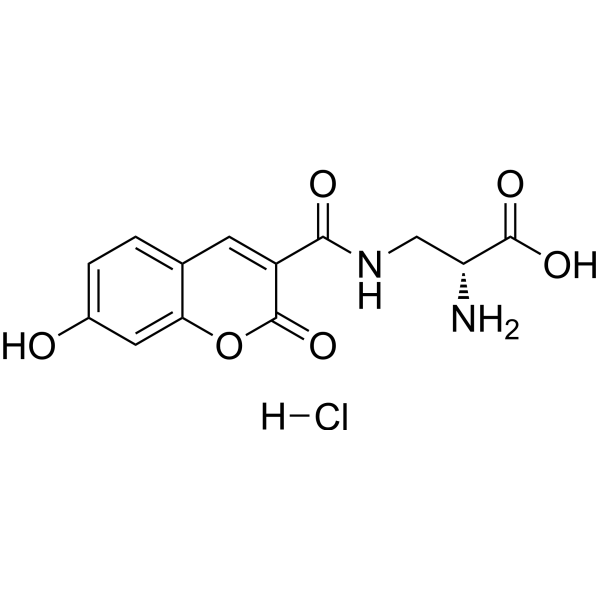
    HADA hydrochloride
    5+ Cited Publications

    hcc-Amino-D-alanine hydrochloride

    Bacterial Infection
    HADA hydrochloride (HCC-Amino-D-alanine hydrochloride) is a blue (λem~450 nm) fluorescent D-amino acid (FDAA). FDAAs are efficiently incorporated into the peptidoglycans (PGs) of diverse bacterial species at the sites of PG biosynthesis, allowing specific and covalent probing of bacterial growth with minimal perturbation .
    HADA hydrochloride
  • HY-W015309
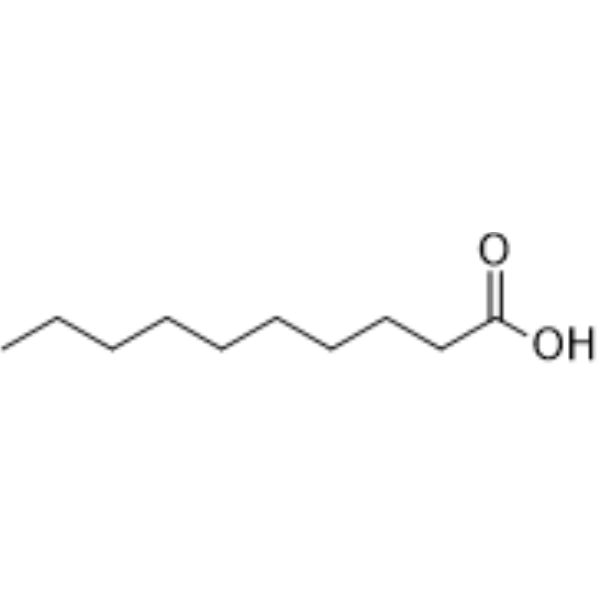
    Decanoic acid
    4 Publications Verification

    Environmental Pollutants Endogenous Metabolite iGluR Glutaminase c-Met/HGFR Tyrosinase Neurological Disease Metabolic Disease Cancer
    Decanoic acid is a key component of the medium-chain triglyceride (MCT) found in coconut oil. Decanoic acid is a brain-penetrant and non-competitive inhibitor of AMPA receptor showing antiseizure activity in rats. Decanoic acid reduces tyrosinase activity and inhibits melanosome maturation. Decanoic acid suppresses the phosphorylation of c-Met and induced apoptosis in hepatocellular carcinoma (HCC) cells by inhibiting the expression of various oncogenic proteins, which is promising for research in the field of mTORC1 signaling, HCC and epilepsy .
    Decanoic acid
  • HY-P99013
    Codrituzumab
    1 Publications Verification

    GC33; RO5137382

    Glycoprotein VI Cancer
    Codrituzumab (GC33) is a humanized monoclonal antibody targeting human GPC3 (glypican-3), with high affinity (Kd of 0.673 nM). GPC3 is an oncofetal protein expressed on the cell surface of hepatocellular carcinoma (HCC). Codrituzumab induces antibody-dependent cellular cytotoxicity (ADCC) and inhibits tumor growth .
    Codrituzumab
  • HY-123921
    Gefitinib-based PROTAC 3
    3 Publications Verification

    PROTACs EGFR Cancer
    Gefitinib-based PROTAC 3, conjugating an EGFR binding element to a von Hippel-Lindau ligand via a linker, induces EGFR degradation with DC50s of 11.7 nM and 22.3 nM in HCC827(exon 19 del) and H3255 (L858R mutantion) cells, respectively .
    Gefitinib-based PROTAC 3
  • HY-175606

    ATP Citrate Lyase Cancer
    EVT0185 is an orally active ATP citrate lyase (ACLY) inhibitor. EVT0185 is converted to a CoA thioester in the liver by SLC27A2 and interacts with the CoA-binding site of ACLY. EVT0185-CoA inhibits ACLY activity with an IC50 of 2.5 μM. EVT0185 can phenocopy the immune and antitumour effects of genetic ACLY deletion. EVT0185 can increase tumour-infiltrating B cells and chemokine CXCL13 levels. EVT0185 can be used for the research of cancer, such as hepatocellular carcinoma (HCC) .
    EVT0185
  • HY-15897
    LDN-212854
    1 Publications Verification

    TGF-β Receptor Cancer
    LDN-212854 is a bone morphogenetic protein (BMP) inhibitor that potently inhibits ALK2 (IC50: 1.3 nM). LDN-212854 also inhibits ALK1 (IC50: 2.40 nM). LDN-212854 can be used in the research of fibrodysplasia ossificans progressive and cancers, such as hepatocellular carcinoma (HCC) .
    LDN-212854
  • HY-P9971
    Camrelizumab
    4 Publications Verification

    SHR-1210; INCSHR1210

    PD-1/PD-L1 Cancer
    Camrelizumab (SHR-1210) is a potent humanied high-affinity IgG4-κ monoclonal antibody (mAb) to PD-1. Camrelizumab binds PD-1 at a high affinity of 3 nM and inhibits the binding interaction of PD-1 and PD-L1 with an IC50 of 0.70 nM. Camrelizumab acts as anti-PD-1/PD-L1 agent and can be used for cancer research, including NSCLC, ESCC, Hodgkin lymphoma, and advanced HCC et,al .
    Camrelizumab
  • HY-150072

    PKA Cancer
    DS89002333 is an orally active and potent PRKACA inhibitor, with an IC50 of 0.3 nM. DS89002333 shows good anti-tumor activity in an FL-HCC patient-derived xenograft model (expressing the DNAJB1-PRKACA fusion gene). DS89002333 can be used in study of fibrolamellar hepatocellular carcinoma (FL-HCC) .
    DS89002333
  • HY-N2591

    Endogenous Metabolite Cancer
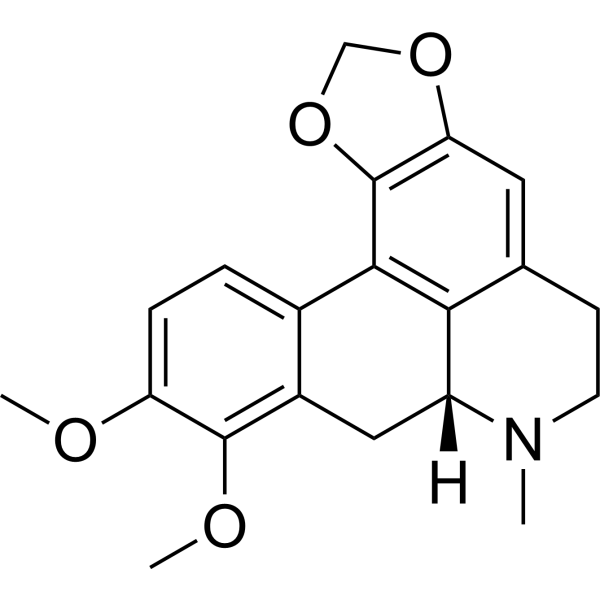
    Isocorydine is isolated from Dicranostigma leptopodum (Maxim.) Fedde (DLF). Isocorydine combines with Doxorubicin (DOX) has a promising potential to eradicate hepatocellular carcinoma (HCC) .
    Isocorydine
  • HY-150750

    Toll-like Receptor (TLR) Apoptosis Inflammation/Immunology Cancer
    ODN M362, a class C oligodeoxynucleotide, is a TLR-9 agonist and can be used as a vaccine adjuvant. ODN M362 induces cancer cell apoptosis .
    ODN M362
  • HY-15485
    Zardaverine
    1 Publications Verification

    Phosphodiesterase (PDE) Apoptosis Inflammation/Immunology Cancer
    Zardaverine is an orally active and selective PDE3/4 inhibitor (IC50)=0.58 uM/0.17 uM) with potent bronchodilator activity. Zardaverine also selectively inhibits the proliferation of HCC cells and induces apoptosis and cycle arrest (G0/G1 phase). Zardaverine has good antitumor potential and is effective in both bronchial relaxation and reduction of inflammation in asthma .
    Zardaverine
  • HY-P990297

    CCR HIV Infection Inflammation/Immunology Cancer
    Anti-Mouse/Rat/Human CCL2/MCP-1 Antibody (2H5) is an anti-mouse/rat/human CCL2/MCP-1 IgG monoclonal antibody. Anti-Mouse/Rat/Human CCL2/MCP-1 Antibody (2H5) can reverse the immunosuppressive microenvironment by blocking the CCL2 signaling pathway. Anti-Mouse/Rat/Human CCL2/MCP-1 Antibody (2H5) can reduce the secretion of IFN-γ and the infiltration of macrophages. CCL2/MCP-1 Antibody (2H5) can reduce the amount of HIV virus by increasing the proportion of T cells. Anti-Mouse/Rat/Human CCL2/MCP-1 Antibody (2H5) can be used for researches on inflammation conditions, virus infection and cancer such as inflammatory bowel disease (IBD), hepatocellular carcinoma (HCC) and HIV .
    Anti-Mouse/Rat/Human CCL2/MCP-1 Antibody (2H5)
  • HY-157581

    EGFR PROTACs Cancer
    MS39 (compound 6) is a PROTAC targeting EGFR. MS39 reduces the expression of EGFR and downstream signaling in HCC-827 and H3255 cells. MS39 inhibits the proliferation of H3255 cells .
    MS39
  • HY-19832
    SC66
    5 Publications Verification

    MOFs Akt Apoptosis Cancer
    SC66 is an Akt inhibitor, reduces cell viability in a dose- and time-dependent manner, inhibits colony formation and induces apoptosis in hepatocellular carcinoma (HCC) cells.
    SC66
  • HY-N6623
    Malvidin-3-galactoside chloride
    1 Publications Verification

    Apoptosis Endogenous Metabolite Reactive Oxygen Species (ROS) Cancer
    Malvidin-3-galactoside chloride, an anthocyanin monomer, induces hepatocellular carcinoma (HCC) cells cycle arrest and apoptosis. Malvidin-3-galactoside chloride inhibits the production and accumulation of ROS. Malvidin-3-galactoside chloride has anti-tumor function .
    Malvidin-3-galactoside chloride
  • HY-P99353
    Ascrinvacumab
    2 Publications Verification

    Anti-ACVRL1 / ALK-1 Reference Antibody (ascrinvacumab); PF-03446962; GT-90001C

    Anaplastic lymphoma kinase (ALK) Cancer
    Ascrinvacumab (PF-03446962) is a human IgG2 monoclonal antibody targets ALK-1. Ascrinvacumab shows binding efficiency with human ALK1 with a Kd value of 7 nM. Ascrinvacumab can be used for the research of hepatocellular carcinoma (HCC) .
    Ascrinvacumab
  • HY-147918

    DNA/RNA Synthesis Cancer
    Anticancer agent 73 (compound CIB-3b) is a anticancer agent, potently targeting TAR RNA-binding protein 2 (TRBP) and disrupts its interaction with Dicer. Anticancer agent 73 can rebalance the expression profile of oncogenic or tumor-suppressive miRNAs. Anticancer agent 73 suppresses the proliferation and metastasis of HCC in vitro and in vivo .
    Anticancer agent 73
  • HY-130173
    Bafilomycin C1
    1 Publications Verification

    Bacterial Fungal Na+/K+ ATPase Apoptosis Antibiotic Infection Cancer
    Bafilomycin C1 is a macrolide antibiotic isolated from Streptomyces sp. Bafilomycin C1 is a potent, specific and reversible inhibitor of vacuolar-type H +-ATPases (V-ATPases). Bafilomycin C1 inhibits growth of gram-positive bacteria and fungi . Bafilomycin C1 induces cell apoptosis and can be used for the study of hepatocellular carcinoma (HCC) .
    Bafilomycin C1
  • HY-150750A

    Toll-like Receptor (TLR) Apoptosis Interleukin Related TNF Receptor IFNAR Inflammation/Immunology Cancer
    ODN M362 sodium is a TLR9 agonist that acts as a vaccine adjuvant. ODN M362 sodium activates mouse splenocytes, induces apoptosis in human hepatocellular carcinoma cells, upregulates proinflammatory cytokines in human hepatocellular carcinoma cells, and inhibits the proliferation of human hepatocellular carcinoma cells. ODN M362 sodium upregulates the expression of TLR9/TLR6, activates downstream signaling pathways via IRAK4 and IRF7, and strongly amplifies antigen-specific cellular immune responses to participate in innate immune activation. ODN M362 sodium can be used in research related to hepatocellular carcinoma and breast cancer .
    ODN M362 sodium
  • HY-115449
    Chromeceptin
    2 Publications Verification

    94G6

    IGF-1R Akt mTOR Cancer
    Chromeceptin (94G6) is an IGF signaling pathway inhibitor. Chromeceptin suppresses IGF2 expression at mRNA and protein levels in hepatocyte and HCC cells. Chromeceptin inhibits the phosphorylation levels of AKT and mTOR .
    Chromeceptin
  • HY-132177
    α-L-Fucosidase, Microorganism
    1 Publications Verification

    EC 3.2.1.51; FUC

    Endogenous Metabolite Cancer
    α-L-Fucosidase, Microorganism (EC 3.2.1.51) is an enzyme that catalyzes the chemical reaction. Serum activity of α-L-Fucosidase, Microorganism, a lysosomal enzyme present in all mammalian cells, has been proposed as a marker of hepatocellular carcinoma (HCC) .
    α-L-Fucosidase, Microorganism
  • HY-175646

    Acyltransferase mTOR Ribosomal S6 Kinase (RSK) Apoptosis Cancer
    AGPAT4-IN-1 (Compound CL26) is a covalent AGPAT4 inhibitor with an IC50 of 795 nM. AGPAT4-IN-1 covalently binds to AGPAT4 at Cys 228 and significantly inhibits acyltransferase activity, LPA-to-PA conversion and downstream mTOR/S6K pathways. AGPAT4-IN-1 sensitizes hepatocellular carcinoma (HCC) tumors to Sorafenib (HY-10201) and significantly induces apoptosis with a synergistic response. AGPAT4-IN-1 has antitumor activity and reduces tumorigenicity and stemness in HCC xenograft mouse models .
    AGPAT4-IN-1
  • HY-N1244

    Sarmentosine; Sarmentosine (glycoside)

    Keap1-Nrf2 mTOR Apoptosis Cancer
    Sarmentosin is an activator of Nrf2. Sarmentosin inhibits mTOR signaling and induces autophagy-dependent apoptosis in human HCC cells .
    Sarmentosin
  • HY-D2312

    Fluorescent Dye Ferroptosis Cancer
    Mito-Rh-S is a ratiometric near-infrared (NIR) fluorescent probe that detects the fluctuation of mitochondrial HClO levels during ferroptosis in hepatocellular carcinoma (HCC) .
    Mito-Rh-S
  • HY-N4168B

    Others Cancer
    Methyl chlorogenate is an antioxidant, and has radical scavenging activity. Methyl chlorogenate is an anti-inflammatory agent. Methyl chlorogenate also inhibits hepatocellular carcinoma (HCC) cell proliferation and metastasis .
    Methyl chlorogenate
  • HY-147187

    STAT Apoptosis Bcl-2 Family Survivin Cancer
    MNK8 is a potent STAT3 (signal transducer and activator of transcription 3) inhibitor. MNK8 inhibits STAT3 activation and reduced its DNA binding ability. MNK8 shows good growth inhibition against hepatocellular carcinoma (HCC) cells. MNK8 induces apoptosis in HCC cells. MNK8 reduces prosurvival proteins expression and migration/invasion of HCC cells .
    MNK8
  • HY-164410

    Notch Cancer
    MO-I-1100 is an inhibitor of ASPH (Aspartyl-(Asparaginyl)-β-hydroxylase) enzymatic activity. MO-I-1100 suppresses HCC cell migration, invasion and anchorage independent growth. MO-I-1100 shows antitumor effects through inhibiting Notch signaling cascade in HCC .
    MO-I-1100
  • HY-162650

    ClpP Cancer
    SL44 is an agonist for human caseinolytic protease P (HsClpP), with an EC50 of 1.30 μM. SL44 inhibits the proliferation of LM3 with an IC50 of 3.1 μM. SL44 induces apoptosis in HCC cells, through the degradation of respiratory chain complex subunits. SL44 exhibits antitumor efficacy in mouse models without obvious toxicity (LD50=400 mg/kg). SL44 exhibits good pharmacokinetic characters in rat models .
    SL44
  • HY-N1260

    (-)-Scutebarbatine A

    Apoptosis Cancer
    Scutebarbatine A inhibits the proliferation of HCC cells and triggers their apoptosis via the activation of MAPK and ER stress .
    Scutebarbatine A
  • HY-155248

    HDAC Cancer
    HL23 is a histone deacetylase (HDAC) inhibitor with activity against hepatocellular carcinoma (HCC). HL23 enhances acetylation of the TXNIP promoter and upregulates TXNIP expression, thereby mediating potassium channel activity and triggering TXNIP-dependent potassium deprivation. HL23 inhibits HCC progression and metastasis and has a synergistic effect with Sorafenib (HY-10201) and is more potent than Sorafenib+Vorinostat (HY-10221) .
    HL23
  • HY-121799

    THCA

    Endogenous Metabolite Cancer
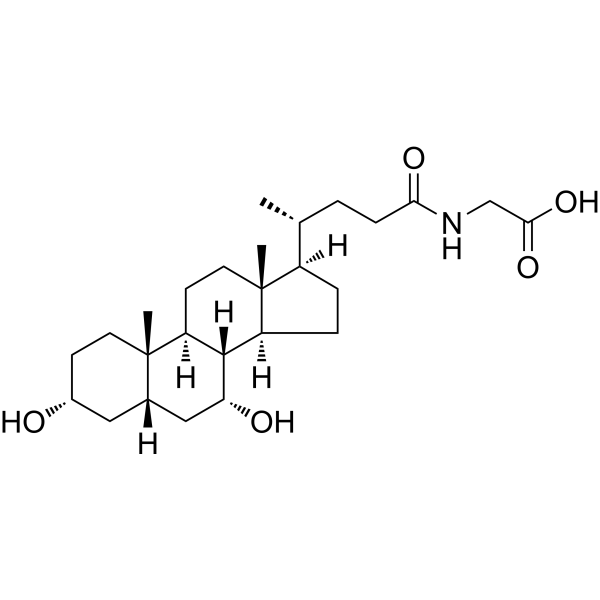
    Taurohyocholic acid is a taurine-conjugated hyocholic acid. Taurohyocholic acid is predictor of the efficacy of tyrosine kinase inhibitors combined withPD-1 inhibitors in hepatocellular carcinoma (HCC) .
    Taurohyocholic acid
  • HY-153901

    EGFR PROTACs Cancer
    PROTAC EGFR degrader 8 (T-184) is a PROTAC EGFR degrader. PROTAC EGFR degrader 8 degrades EGFR in HCC827 cell with a DC50 of 15.56 nM. PROTAC EGFR degrader 8 inhibits H1975, PC-9, HCC827 cell growth with IC50s of 7.72 nM, 121.9 nM, 14.21 nM. PROTAC EGFR degrader 8 can be used for research of cancer, especially NSCLC .
    PROTAC EGFR degrader 8
  • HY-121799A

    THCA sodium salt

    Endogenous Metabolite Others
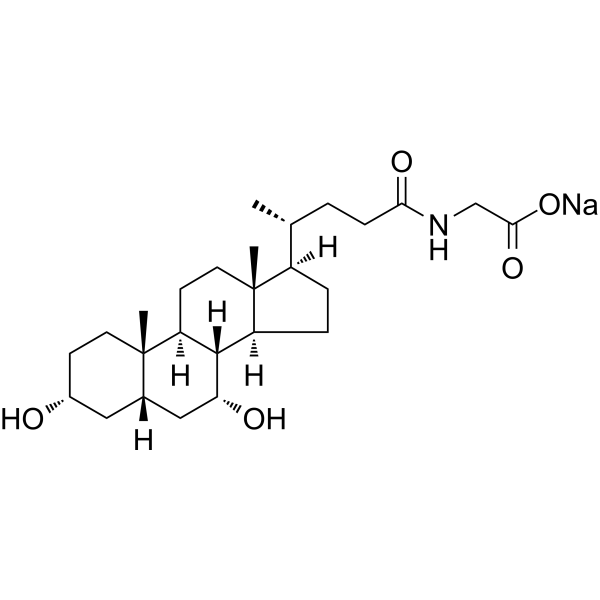
    Taurohyocholic acid (THCA) sodium salt is a taurine-conjugated hyocholic acid. Taurohyocholic acid sodium salt is predictor of the efficacy of tyrosine kinase inhibitors combined withPD-1 inhibitors in hepatocellular carcinoma (HCC) .
    Taurohyocholic acid sodium salt
  • HY-W266188

    Isotope-Labeled Compounds iGluR Tyrosinase c-Met/HGFR Glutaminase Neurological Disease Metabolic Disease Cancer
    Decanoic acid- 13C is the 13C-labeled Decanoic acid (HY-W015309). Decanoic acid is a key component of the medium-chain triglyceride (MCT) found in coconut oil. Decanoic acid is a brain-penetrant and non-competitive inhibitor of AMPA receptor showing antiseizure activity in rats. Decanoic acid reduces tyrosinase activity and inhibits melanosome maturation. Decanoic acid suppresses the phosphorylation of c-Met and induced apoptosis in hepatocellular carcinoma (HCC) cells by inhibiting the expression of various oncogenic proteins, which is promising for research in the field of mTORC1 signaling, HCC and epilepsy .
    Decanoic acid-13C
  • HY-N8540

    Phosphoglycerate Kinase (PGK) Fungal Apoptosis Infection Cancer
    Ilicicolin H is a selective and non-ATP-competitive phosphoglycerate kinase 1 (PGK1) (IC50 = 9.02 μM) and mitochondrial cytochrome bc1 reductase (IC50 = 2-3 ng/mL) inhibitor. Ilicicolin H directly binds to PGK1 with KD of 60 μM .Ilicicolin H can inhibit cell proliferation and induce apoptosis. Ilicicolin H can inhibit the lactate production and glucose uptake of hepatocellular carcinoma (HCC) cells. Ilicicolin H has a broad antifungal spectrum including C. albicans, Cryptococcus and A. fumigatus. Ilicicolin H can be used for the researches of cancer and infection, such as hepatocellular carcinoma (HCC) and C. albicans infection .
    Ilicicolin H
  • HY-160765

    APS-8-100-2

    Wnt Apoptosis Cancer
    WNTinib (APS-8-100-2) is a multi-kinase inhibitor that selectively antagonizes β-catenin (CTNNB1) mutated hepatocellular carcinoma (HCC). WNTinib downregulates oncogenicWntsignaling by inhibiting KIT/MAPK and downstream EZH2 activation .
    WNTinib
  • HY-W013514

    Environmental Pollutants DNA/RNA Synthesis Cancer
    2-Acetamidofluorene is a potent carcinogenan. 2-Acetamidofluorene is can be used fot induction of hepatocellular carcinoma (HCC) and multiple primary tumours .
    2-Acetamidofluorene
  • HY-162259

    PROTACs Histone Acetyltransferase Cancer
    QC-182 is a potent PROTAC degrader of p300/CBP. QC-182 reduces p300 protein in the SK-HEP-1 cells (DC50 = 93nM). QC-182 potently and effectively inhibits cell growth in the SK-HEP-1 and JHH7 cell lines with IC50 values of 0.733 and 0.477 μM, respectively. QC-182 can be used for the research of hepatocellular carcinoma (HCC) .
    QC-182
  • HY-N11429

    Endogenous Metabolite Metabolic Disease Cancer
    Glycochenodeoxycholic acid 3-glucuronide is a type of steroid glucuronide and a plasma metabolite that can be used in the research of biomarkers for diabetes and hepatocellular carcinoma (HCC) .
    Glycochenodeoxycholic acid 3-glucuronide
  • HY-175283

    Molecular Glues NEKs Cancer
    ABT-002 is a molecular glue degrader targeting GSPT1 and NEK7. ABT-002 is the active metabolite of ABS-752 (HY-W599279). ABT-002 is promising for research of hepatocellular carcinoma (HCC) .
    ABT-002
  • HY-151461

    Arf Family GTPase Cancer
    CHNQD-01255 is an orally active Arf-GEFs inhibitor with potent anti-hepatocellular carcinoma (HCC) efficacy .
    CHNQD-01255
  • HY-120349

    p38 MAPK JNK Apoptosis Reactive Oxygen Species (ROS) Cancer
    LL-Z1640-4 is a potent p38/JNK signaling inhibitor. LL-Z1640-4 significantly diminishes p38 and JNK activation in HCC cells transfected with MLK4 siRNA. LL-Z1640-4 markedly attenuates ROS production induced by MLK4 knockdown. LL-Z1640-4 significantly reduces the apoptotic cells in HCC cells transfected with siMLK4 .
    LL-Z1640-4
  • HY-119833

    MicroRNA Cancer
    Rubone, a chalcone analog, is a modulator of miR-34a. Rubone upregulates miR-34a expression in a p53 dependent manner, downregulates the downstream target Bcl-2 and Cyclin D1 expression, and suppresses hepatocellular carcinoma (HCC) growth in vivo. Rubone enhances the anticancer effect of Paclitaxel (PTX; HY-B0015) in PTX-resistant prostate cancer cell lines by reversing the expression of miR-34a downstream targets .
    Rubone
  • HY-171789

    Poly(ADP-ribose) Glycohydrolase (PARG) Cancer
    PARG-IN-7 (Example 38) is a Poly ADP-ribose glycohydrolase (PARG) inhibitor (IC50: < 0.1 μM). PARG-IN-7 inhibits cell viability of HCC1806-XRCC1 KD (knock down) cells with an IC50 < 1 μM. PARG-IN-7 can be used for cancer research .
    PARG-IN-7
  • HY-162890

    EGFR Cancer
    EGFR-IN-122 (compound Yfq07) is a potent EGFR inhibitor. EGFR-IN-122 suppresses the proliferation of PC-9GR and HCC827GR cells .
    EGFR-IN-122
  • HY-175819

    Wee1 Apoptosis Cancer
    PD-166285 is a PKMYT1 inhibitor, with an IC50 value of 17 nM. PD166285 shows strong antiproliferative effects against CCNE1-amplified OVCAR3 cells (IC50 = 0.14 μM) and HCC1569 cells (IC50 = 0.21 μM). PD166285 induces apoptosis and arrests CCNE1-amplified HCC1569 cells at the G1/S phase of the cell cycle. PD166285 can be used for the research of PKMYT1-targeted therapies for CCNE1-amplified cancers .
    PD-166285
  • HY-18750A

    AZD3759 hydrochloride

    EGFR Apoptosis Cancer
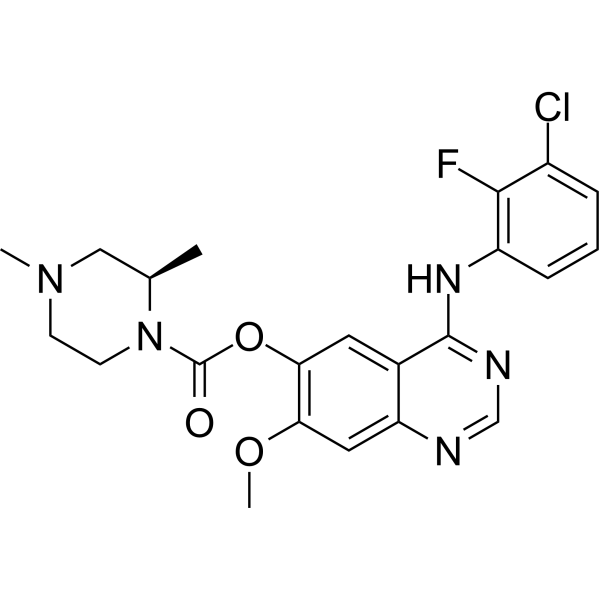
    Zorifertinib (AZD3759) hydrochloride is a potent, orally active, BBB-penetrant, EGFR inhibitor (IC50s: 0.3, 0.2, and 0.2 nM for EGFR wt, EGFR L858R, and EGFR exon 19Del, respectively). Zorifertinib hydrochloride induces cancer cell apoptosis. Zorifertinib hydrochloride has antitumor activity, and can be used for NSCLC, HCC etc. research .
    Zorifertinib hydrochloride
  • HY-W013514R

    DNA/RNA Synthesis Reference Standards Cancer
    2-Acetamidofluorene is a potent carcinogenan. 2-Acetamidofluorene is can be used fot induction of hepatocellular carcinoma (HCC) and multiple primary tumours .
    2-Acetamidofluorene (Standard)
  • HY-177269

    Arf Family GTPase Cancer
    CHNQD-01269, a brefeldin A-cinnamate derivative, is an Arf1 inhibitor. CHNQD-01269 exhibits potent cytotoxic activity against HepG2 and BEL-7402 cells, with IC50 values of 0.29 and 0.84 μM, respectively. CHNQD-01269 is indicated for hepatocellular carcinoma (HCC) research .
    CHNQD-01269

Inquiry Online

Your information is safe with us. * Required Fields.

Salutation


Country or Region *

Applicant Name *


Organization Name *

Department *


Email Address *


Product Name *

Cat. No.


Requested quantity *

Phone Number *


Remarks

Inquiry Online

Inquiry Information

Product Name:
Cat. No.:
Quantity:
MCE Japan Authorized Agent:

