19 Results for "

heme-iron

" in MedChemExpress (MCE) Product Catalog:
Products (19)

19 Results for "heme-iron" in MCE Product Catalog:

3
3 Cited Publications
Cat. No.: HY-126301
CAS No.: 1354790-56-9
Purity:  99.79%
Target:  

Ferroportin

Research Areas:  

Metabolic Disease

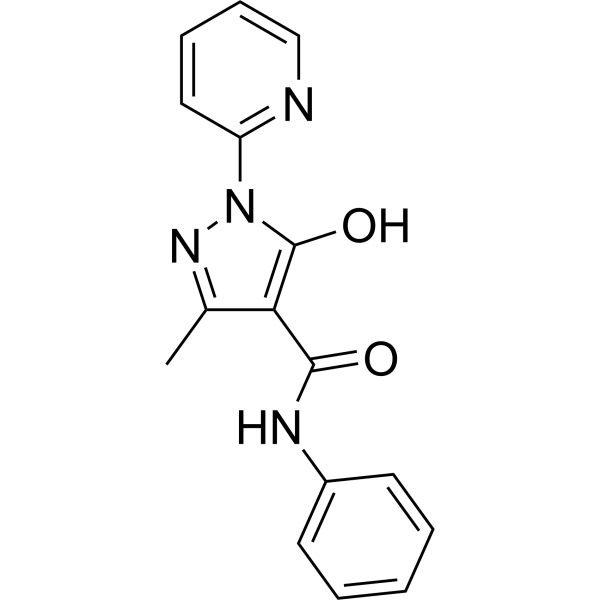
DMT1 blocker 1 is an orally active blocker of divalent metal transporter 1 (DMT1) with an IC50 of 0.64 μM. DMT1 blocker 1 inhibits intestinal cell absorption of non-heme iron, thereby alleviating iron overload by blocking the DMT1 transporter. DMT1 blocker 1 demonstrates significant efficacy in rodent models of acute iron hyperabsorption. DMT1 blocker 1 is useful for studying iron overload disorders such as hereditary hemochromatosis and thalassemia .
loading...
    loading...
2
2 Cited Publications
Cat. No.: HY-17500
CAS No.: 254877-67-3
Synonyms: HMR-1766
Target:  

Guanylate Cyclase

Research Areas:  

Cardiovascular Disease

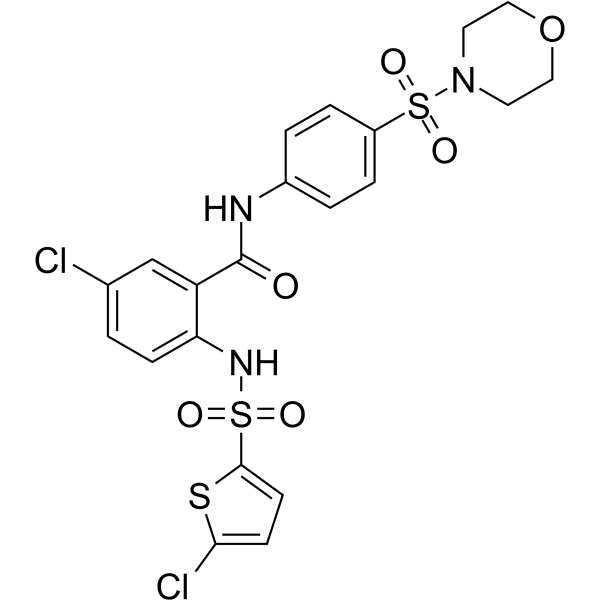
Ataciguat (HMR-1766) is a nitric oxide-independent soluble guanylate cyclase (sGC) activator. Ataciguat is able to activate the ferric heme-iron redox form of sGC that stimulate the production of cyclic GMP (cGMP). Ataciguat exhibits vasodilator effects .
loading...
    loading...
1
1 Cited Publications
Cat. No.: HY-P2915
CAS No.: 9029-47-4
Research Areas:  

Infection

Protocatechuate 3,4-dioxygenase is a dioxygenase. Protocatechuate 3,4-dioxygenase belongs to the non-heme iron dioxygenase class. Protocatechuate 3,4-dioxygenase catalyzes the cleavage of the aromatic ring of 3,4-dihydroxybenzoate, attaching two atoms of molecular oxygen to the compound to generate β-carboxy-cis,cis-muconate. Protocatechuate 3,4-dioxygenase is a key enzyme in the β-ketoadipic acid pathway. It is found in marine bacteria associated with Roseobacter. Protocatechuate 3,4-dioxygenase can be isolated from Pseudomonas aeruginosa .
loading...
    loading...
Cat. No.: HY-W698249
CAS No.: 299-29-6
Target:  

Ferroptosis Bacterial

Research Areas:  

Cardiovascular Disease Infection

Ferrous gluconate is a highly water-soluble iron-containing agent with high bioavailability and bactericidal activity. As a non-heme iron, Ferrous gluconate is used for meat product fortification and improvement of iron deficiency anemia. Ferrous gluconate induces ferroptosis in E. coli through Fe 2+ infiltration, reactive oxygen species burst, lipid peroxidation and direct interaction with DNA. Ferrous gluconate also downregulates the SOS responsive transcriptional repressor LexA. In addition, Ferrous gluconate regulates multiple key pathways in E. coli such as fatty acid metabolism, iron-sulfur cluster assembly and pyruvate metabolism, and is applied in studies related to *E. coli* infection and iron deficiency anemia .
loading...
    loading...
Cat. No.: HY-131926
CAS No.: 15708-41-5
Synonyms: Ethylenediaminetetraacetic acid (iron sodium)
Research Areas:  

Metabolic Disease Cancer

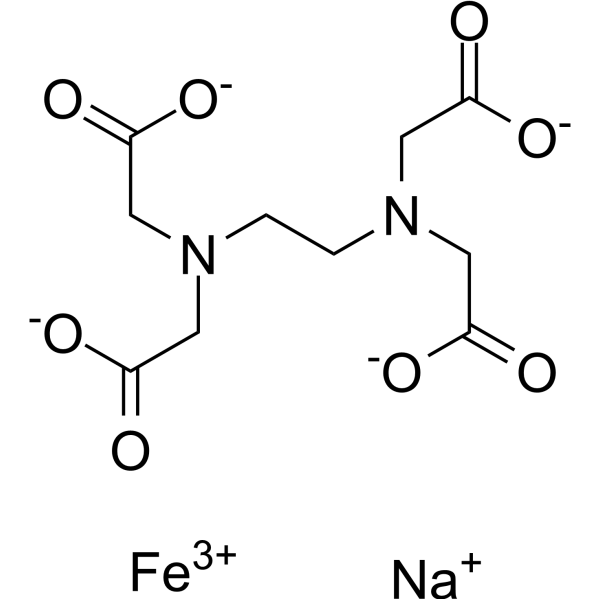
EDTA iron sodium (Ethylenediaminetetraacetic acid iron sodium) is an orally active food fortifier and iron chelate. EDTA iron sodium provides absorbable iron during consumption of fortified soy sauce, rice-based meals, or complementary foods made from high-phytate grains. EDTA iron sodium increases serum iron levels for up to 4 h, and total non-heme iron levels in the liver also rise with increasing doses. EDTA iron sodium is applicable to research on iron deficiency anemia and lymphoma .
loading...
    loading...
Cat. No.: HY-W041193
CAS No.: 496-64-0
3-Hydroxy-2-pyrone (Compound 12d) is a metalloenzyme inhibitor. 3-Hydroxy-2-pyrone shows an inhibition rate of approximately 50% for matrix metalloproteinases (MMP) and the inhibition rate for non-heme iron enzyme 5-lipoxygenase (5-LOX) was over 70% at 1 mM. 3-Hydroxy-2-pyrone also has certain inhibitory activity against copper-dependent enzyme tyrosinase. 3-Hydroxy-2-pyrone can be used for the research of cancer, infection and inflammation .
loading...
    loading...
Cat. No.: HY-W113615
CAS No.: 1680-44-0
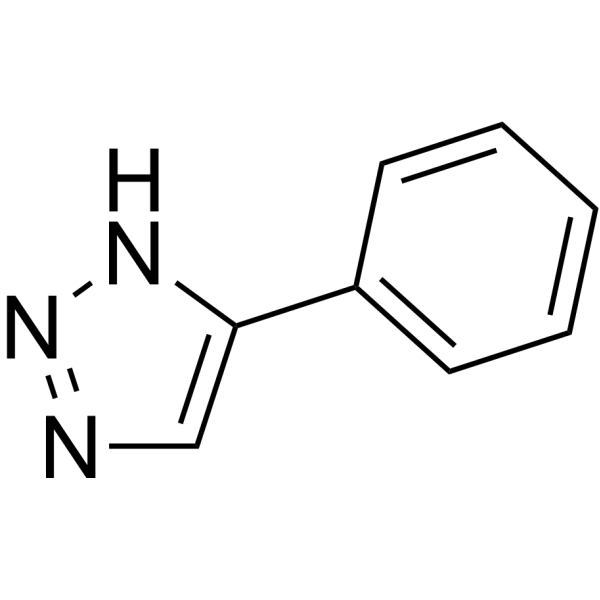
4-Phenyl-1H-1,2,3-triazole is a selective IDO1 inhibitor with an IC50 of 83 μM against human IDO1. 4-Phenyl-1H-1,2,3-triazole binds to the heme iron of IDO1 and occupies its active site, thereby inhibiting tryptophan catabolism. 4-Phenyl-1H-1,2,3-triazole can serve as a precursor for the synthesis of HIV-1 capsid protein inhibitors. 4-Phenyl-1H-1,2,3-triazole is applicable to research related to cancer and organic synthesis .
loading...
    loading...
Cat. No.: HY-B1610K
Sodium Citrate Buffer, 0.5M, pH 5.5 is a metal chelator and buffering agent. Sodium Citrate Buffer, 0.5M, pH 5.5 requires oxygen to participate in the oxidation process to reduce pink defects in cooked ground turkey, and it does not function via heme iron chelation or iron complex interaction. When mixed with 50% (by vol.) 1,3-dimethylimidazolium methyl sulfate, Sodium Citrate Buffer, 0.5M, pH 5.5 can serve as an aqueous buffering medium to maintain the catalytic efficiency of the hyperthermophilic β-glycosidase CelB for lactose hydrolysis at 80°C, while also acting as a reaction medium for CelB-catalyzed lactose hydrolysis and galactosyltransferase assays .
loading...
    loading...
Cat. No.: HY-N12196
CAS No.: 71911-90-5
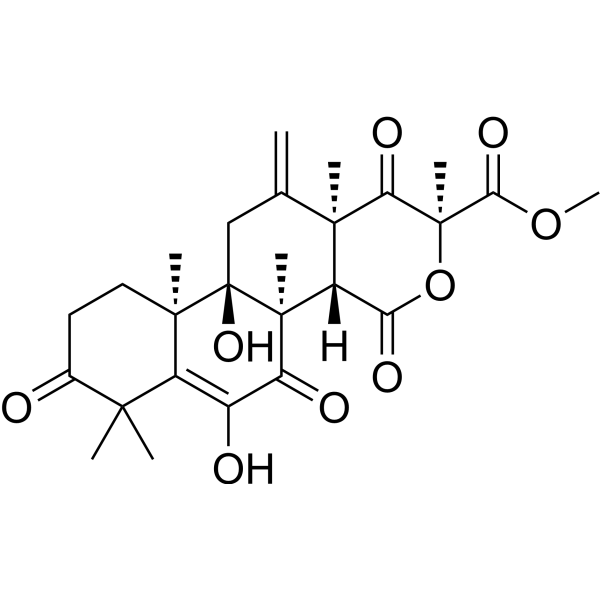
Terretonin is a fungal terpenoid isolated from Aspergillus terreus. The complete biosynthetic pathway of terretonin includes: cytochrome P450 Trt6 catalyzes the oxidation of terrenoid to obtain an unstable intermediate; then it is catalyzed by isomerase Trt14 and processed by non-heme iron-dependent dioxygenase Trt7 to complete the biosynthesis of terretonin .
loading...
    loading...
Cat. No.: HY-W698249R
CAS No.: 299-29-6
Ferrous gluconate (Standard) is the analytical standard of Ferrous gluconate. This product is intended for research and analytical applications. Ferrous gluconate is a highly water-soluble iron-containing agent with high bioavailability and bactericidal activity. As a non-heme iron, Ferrous gluconate is used for meat product fortification and improvement of iron deficiency anemia. Ferrous gluconate induces ferroptosis in E. coli through Fe 2+ infiltration, reactive oxygen species burst, lipid peroxidation and direct interaction with DNA. Ferrous gluconate also downregulates the SOS responsive transcriptional repressor LexA. In addition, Ferrous gluconate regulates multiple key pathways in E. coli such as fatty acid metabolism, iron-sulfur cluster assembly and pyruvate metabolism, and is applied in studies related to *E. coli* infection and iron deficiency anemia .
loading...
    loading...
Cat. No.: HY-184104
CAS No.: 537010-02-9
Research Areas:  

Cancer

IDO1/TDO-IN-17 is an IDO1/TDO inhibitor with human IDO1 IC50 ~280 μmol/L and human TDO IC50 204 μmol/L. IDO1/TDO-IN-17 binds to the heme-iron of IDO1. IDO1/TDO-IN-17 can be used for the research of cancer .
loading...
    loading...
Cat. No.: HY-E71170
Research Areas:  

Others

1,8-Cineole 2-endo-monooxygenase (EC 1.14.13.156) is a heme-thiolate protein (P-450) which uses a flavodoxin-like redox partner to reduce the heme iron.
loading...
    loading...
Cat. No.: HY-187622
CAS No.: 148714-92-5
Target:  

Cytochrome P450

Research Areas:  

Metabolic Disease Cancer

Org 33201 is an orally active and selective Aromatase inhibitor with an IC50 of 2.2 nM. Org 33201 inhibits the activity of Aromatase by binding to its heme iron. Org 33201 can be used in the study of estrogen-dependent diseases (such as postmenopausal breast cancer) .
loading...
    loading...
Cat. No.: HY-136745
CAS No.: 331684-05-0
Target:  

Cytochrome P450

Research Areas:  

Cancer

Aromatase-IN-1 is a competitive aromatase (P450arom) inhibitor with a human IC50 of 40 nM and a Ki of 1.05 nM. Aromatase-IN-1 binds via coordination of imidazole nitrogen to the heme iron of aromatase. Aromatase-IN-1 can be used for the research of breast cancer .
loading...
    loading...
Cat. No.: HY-E71434
Research Areas:  

Others

2,4-Dinitrotoluene dioxygenase (EC 1.14.12.24) belongs to the family of bacterial Rieske non-heme iron dioxygenases involved in naphthalene degradation. 2,4-Dinitrotoluene dioxygenase produces a cis-dihydroxylated product that spontaneously rearranges to form catechol, accompanied by the release of nitrite.
loading...
    loading...
Cat. No.: HY-E71109
Research Areas:  

Others

(S)-2-Hydroxypropylphosphonic acid epoxidase (EC 1.11.1.23) is the last enzyme in the biosynthetic pathway of fosfomycin, a broad-spectrum antibiotic produced by certain Streptomyces species. Contains non heme iron that forms a iron (IV)-oxo (ferryl) complex with hydrogen peroxide, which functions as a proton abstractor from the substrate.
loading...
    loading...
Cat. No.: HY-118558
CAS No.: 51308-54-4
Synonyms: S-1358
Research Areas:  

Others

Buthiobate (S-1358) is a fungicide. Buthiobate is a cytochrome P-450 inhibitor with an IC50 of 0.4 μM. Buthiobate binds to the heme iron of cytochrome P-450 (low-spin state) via its pyridine group, thereby blocking the initial hydroxylation of the 14α-methyl group. Buthiobate is used in research on powdery mildew in agricultural and horticultural crops .
loading...
    loading...
Cat. No.: HY-174332
CAS No.: 1630746-27-8
Target:  

Cytochrome P450

Research Areas:  

Neurological Disease

Cholesterol 24-hydroxylase-IN-3 is an orally active, selective, and blood-brain barrier-penetrant CH24H inhibitor (IC50 = 23 nM) belonging to 1,3-oxazole derivatives. Cholesterol 24-hydroxylase-IN-3 competitively inhibits CH24H enzyme activity by using the 1,3-oxazole nitrogen atom to coordinate the heme iron and the cyclopropyl group occupying the hydrophobic pocket. Cholesterol 24-hydroxylase-IN-3 can be used for research on epilepsy and other neurological diseases.
loading...
    loading...
Cat. No.: HY-P2915A
Research Areas:  

Infection

Protocatechuate 3,4-Dioxygenase, Bacteria is a dioxygenase. Protocatechuate 3,4-Dioxygenase, Bacteria belongs to the non-heme iron dioxygenase class. Protocatechuate 3,4-Dioxygenase, Bacteria catalyzes the cleavage of the aromatic ring of 3,4-dihydroxybenzoate, attaching two atoms of molecular oxygen to the compound to generate β-carboxy-cis,cis-muconate. Protocatechuate 3,4-Dioxygenase, Bacteria is a key enzyme in the β-ketoadipic acid pathway. Protocatechuate 3,4-Dioxygenase, Bacteria is found in marine bacteria associated with Roseobacter. Protocatechuate 3,4-Dioxygenase, Bacteria can be isolated from Pseudomonas aeruginosa .
loading...
    loading...
  • 1

