1. Search Result
Search Result
Pathways Recommended: MAPK/ERK Pathway
Results for "

inflammatory pathways

" in MedChemExpress (MCE) Product Catalog:

1080

Inhibitors & Agonists

10

Screening Libraries

3

Fluorescent Dye

14

Biochemical Assay Reagents

48

Peptides

22

Inhibitory Antibodies

511

Natural
Products

47

Isotope-Labeled Compounds

1

Click Chemistry

14

Oligonucleotides

1

GMP Molecules

Cat. No. Product Name Target Research Areas Chemical Structure
  • HY-114180
    RU.521
    80+ Cited Publications

    RU320521

    Cyclic GMP-AMP Synthase Metabolic Disease
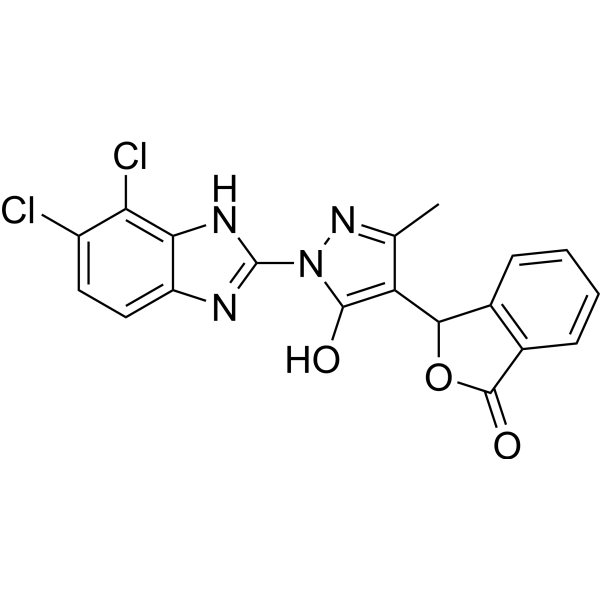
    RU.521 (RU320521) is a potent and selective cyclic GMP-AMP synthase (cGAS) inhibitor and inhibits cGAS-mediated interferon upregulation. RU.521 suppresses dsDNA-activated reporter activity with an IC50 of 0.7 μM. RU.521 reduces constitutive expression of interferon in macrophages from a mouse model of Aicardi-Goutières syndrome (AGS) .
    RU.521
  • HY-W001171
    3-Hydroxyanthranilic acid
    1 Publications Verification

    Endogenous Metabolite Cardiovascular Disease Neurological Disease Metabolic Disease Inflammation/Immunology Endocrinology Cancer
    3-Hydroxyanthranilic acid is a tryptophan metabolite in the kynurenine pathway.3-hydroxyanthranilic acid has anti-inflammatory, neuroprotective, and lipid-lowering effects. 3-hydroxyanthranilic acid can be used for researches of cardiovascular diseases, tumors, and metabolic diseases .
    3-Hydroxyanthranilic acid
  • HY-N0436
    Engeletin
    5+ Cited Publications

    NF-κB Infection Inflammation/Immunology
    Engeletin is a flavanonol glycoside isolated from Smilax glabra Roxb. , inhibits NF-κB signaling-pathway activation, and possesses anti-inflammatory, analgesic, diuresis, detumescence, and antibiosis effects.
    Engeletin
  • HY-N0399
    Wogonoside
    3 Publications Verification

    Autophagy Inflammation/Immunology Cancer
    Wogonoside, a flavonoid glycoside isolated from Huangqin, possesses anti-inflammatory effects. Wogonoside induces autophagy in breast cancer cells by regulating MAPK-mTOR pathway .
    Wogonoside
  • HY-112108
    Chitosan oligosaccharide
    5 Publications Verification

    COS

    AMPK Endogenous Metabolite Metabolic Disease Cancer
    Chitosan oligosaccharide (COS) is an oligomer of β-(1→4)-linked D-glucosamine. Chitosan oligosaccharide (COS) activates AMPK and inhibits inflammatory signaling pathways including NF-κB and MAPK pathways.
    Chitosan oligosaccharide
  • HY-P2048
    MOTS-c (human)
    1 Publications Verification

    Apoptosis GLUT AMPK Neurological Disease Metabolic Disease Inflammation/Immunology Endocrinology
    MOTS-c (human) is a blood-brain barrier-penetrating, mitochondrial-derived peptide that modulates the AMPK/PGC-1α pathway to enhance insulin sensitivity. MOTS-c (human) inhibits the folate cycle and de novo purine synthesis, increases AICAR levels to activate AMPK, and then regulates the Nrf2/Keap1 antioxidant pathway and inhibits the NF-κB inflammatory pathway, while promoting mitochondrial biogenesis and energy metabolism. MOTS-c (human) has the effects of improving glucose and lipid metabolism, anti-oxidative stress, anti-inflammatory and neuroprotection, and can be used in the study of type 2 diabetes, traumatic brain injury, inflammatory diseases and aging-related metabolic disorders .
    MOTS-c (human)
  • HY-N0498
    Nitidine chloride
    4 Publications Verification

    Parasite Apoptosis STAT Topoisomerase ERK FAK p38 MAPK NF-κB Inflammation/Immunology Cancer
    Nitidine chloride, a potential anti-malarial lead compound derived from Zanthoxylum nitidum (Roxb) DC, exerts potent anticancer activity through diverse pathways, including inducing apoptosis, inhibiting STAT3 signaling cascade, DNA topoisomerase 1 and 2A, ERK and c-Src/FAK associated signaling pathway, also has anti-inflammatory activity. Nitidine chloride inhibits LPS-induced inflammatory cytokines production via MAPK and NF-kB pathway .
    Nitidine chloride
  • HY-N7088
    Raffinose
    1 Publications Verification

    Melitose

    NF-κB Autophagy Keap1-Nrf2 Toll-like Receptor (TLR) MyD88 Metabolic Disease Inflammation/Immunology
    Raffinose (Melitose) regulates intestinal flora, inhibits TLR4-MyD88-NF-κB signaling pathway, and activates Nrf2 signaling pathway. Raffinose exhibits anti-inflammatory, antioxidant, and immunomodulatory activities. Raffinose is orally active .
    Raffinose
  • HY-N0314
    Pectolinarin
    3 Publications Verification

    Interleukin Related Prostaglandin Receptor Apoptosis Inflammation/Immunology
    Pectolinarin possesses anti-inflammatory activity . Pectolinarin inhibits secretion of IL-6 and IL-8, as well as the production of PGE2 and NO. Pectolinarin suppresses cell proliferation and inflammatory response and induces apoptosis via inactivation of the PI3K/Akt pathway .
    Pectolinarin
  • HY-N0628
    Kaempferitrin
    5 Publications Verification

    Lespedin; Lespenephryl

    Insulin Receptor Metabolic Disease Endocrinology Cancer
    Kaempferitrin is a natural flavonoid, possesses antinociceptive, anti-inflammatory, anti-diabetic, antitumoral and chemopreventive effects, and activates insulin signaling pathway.
    Kaempferitrin
  • HY-N11004
    Erinacine C
    1 Publications Verification

    NF-κB Keap1-Nrf2 Heme Oxygenase (HO) Neurological Disease Inflammation/Immunology
    Erinacine C is the inhibitor for NF-κB signaling pathway and the activator for Nrf2 signaling pathway. Erinacine C exhibits antioxidant, neuroprotective and anti-inflammatory effects .
    Erinacine C
  • HY-B1104

    (±)-Indoprofe

    Akt AMPK NF-κB p38 MAPK Inflammation/Immunology
    Indoprofen ((±)-Indoprofe) activates AKT-AMPK signaling pathway, inhibits NF-κB/MAPK signaling pathway. Indoprofen exhibits anti-inflammatory and immunomodulatory activities. Indoprofen is orally active .
    Indoprofen
  • HY-105935
    Keracyanin chloride
    1 Publications Verification

    Cyanidin 3-rutinoside chloride; Cyanidin 3-O-rutinoside chloride; Sambucin chloride

    NF-κB PPAR Reactive Oxygen Species (ROS) FAK p38 MAPK ERK JNK Metabolic Disease Inflammation/Immunology
    Keracyanin chloride inhibits NF-κB/FAK/MAPK signaling pathway. Keracyanin chloride exhibits antioxidant, anti-inflammatory and hypoglycemic effects, and is orally active .
    Keracyanin chloride
  • HY-N1382
    Asperuloside
    2 Publications Verification

    NO Synthase Metabolic Disease Inflammation/Immunology
    Asperuloside is an iridoid isolated from Hedyotis diffusa, with anti-inflammatory activity. Asperuloside inhibits inducible nitric oxide synthase (iNOS), suppresses NF-κB and MAPK signaling pathways .
    Asperuloside
  • HY-N8211
    Gypenoside L
    4 Publications Verification

    p38 MAPK ERK NF-κB Inflammation/Immunology Cancer
    Gypenoside L is a saponin that can be found in Gynostemma pentaphyllum. Gypenoside L increases the SA-β-galactosidase activity, promotes the production of senescence-associated secretory cytokines. Gypenoside L also can activate p38 and ERK MAPK pathways and NF-κB pathway to induce senescence. Gypenoside L exhibits anti-tumor and anti-inflammatory activities .
    Gypenoside L
  • HY-165428

    CXCR Arrestin Inflammation/Immunology
    SCH-900875 is an orally active, brain-penetrant and selective CXCR3 receptor inhibitor, which also shows high selectivity over CXCR1 and CXCR2 receptors. SCH-900875 binds to CXCR3, blocking the binding of ligands CXCL9, CXCL10, and CXCL11, inhibiting downstream G protein and β-arrestin signaling pathways to suppress inflammatory cell migration. SCH-900875 is promising for research of autoimmune diseases (rheumatoid arthritis, multiple sclerosis) and inflammatory disorders (psoriasis, inflammatory bowel disease) .
    SCH-900875
  • HY-P1626

    Opioid Receptor Neurological Disease
    Acetyl tetrapeptide-15 is a synthetic peptide. Acetyl tetrapeptide-15 is derived from endomorphin-2 (Tyr-Pro-Phe-Phe-NH2), a human μ-opioid agonist with selective anti-nociceptive effect. Acetyl tetrapeptide-15 reduces skin hyperreactivity producing inflammatory, chronic and neuropathic pain, by increasing the threshold of neuronal excitability in μ-opioid receptor via an endorphin-like pathway. Acetyl tetrapeptide-15 is used in the cosmetics for sensitive skin .
    Acetyl tetrapeptide-15
  • HY-N0237
    Atractyloside A
    3 Publications Verification

    Toll-like Receptor (TLR) MyD88 NF-κB Mitochondrial Metabolism Interleukin Related Aquaporin Cardiovascular Disease Metabolic Disease Inflammation/Immunology
    Atractyloside A is an orally active inhibitor of the TLR4/MyD88/NF-κB signaling pathway and also an opener of the mitochondrial permeability transition pore (MPTP). Atractyloside A interferes with the activation of the TLR4/MyD88/NF-κB pathway, thereby inhibiting intestinal inflammatory responses. Atractyloside A reverses mucin synthesis impairment, improves intestinal barrier integrity, and restores homeostasis by altering the composition of the gut microbiota. Atractyloside A can be used in studies related to spleen deficiency diarrhea and myocardial injury .
    Atractyloside A
  • HY-N0894
    Octahydrocurcumin
    1 Publications Verification

    Hexahydrobisdemethoxycurcumin

    Apoptosis MAP4K NF-κB COX Inflammation/Immunology Cancer
    Octahydrocurcumin (Hexahydrobisdemethoxycurcumin) is an orally active anticancer and anti-inflammatory agent, and is the final hydrogenated metabolite of Curcumin (HY-N0005) in vivo. Octahydrocurcumin exerts its anti-tumor and anti-inflammatory effects by inducing the mitochondrial apoptosis pathway and inhibiting the TAK1-NF-κB-COX-2 pathway, respectively .
    Octahydrocurcumin
  • HY-N0592

    NF-κB AMPK Reactive Oxygen Species (ROS) p38 MAPK Infection Metabolic Disease Inflammation/Immunology Cancer
    Demethyleneberberine is a blood-brain barrier-permeable antioxidant. Demethyleneberberine exerts antioxidant effects by targeting mitochondria, activates the AMPK signaling pathway to regulate lipid metabolism, and inhibits inflammation-related pathways such as NF-κB and MAPK. Demethyleneberberine can be used in the research of inflammatory and other diseases .
    Demethyleneberberine
  • HY-162405

    STAT TGF-beta/Smad Interleukin Related Inflammation/Immunology
    STAT6-IN-12 is a potent STAT6 inhibitor with an IC50 of 50 nM. STAT6-IN-12 also inhibits Smad2/3 with an IC50 of 68 nM. STAT6-IN-12 inhibits TGFβ-dependent Smad2/3 signaling pathway, IL-4-dependent STAT6 signaling pathway, and cellular inflammatory responses. STAT6-IN-12 can be used for the research of inflammation .
    STAT6-IN-12
  • HY-P990016

    ARGX-112; LEO-138559; LP-0145

    Interleukin Related Inflammation/Immunology
    Temtokibart (ARGX-112) is a monoclonal antibody and also an IL-22RA1 inhibitor. Temtokibart inhibits the signal transduction of IL-22, IL-20 and IL-24. Temtokibart reduces the expression levels of inflammatory proteins, chemokines, immune cell migration and markers of activated immune pathways. Temtokibart improves the expression of genes related to immunity and epidermal barrier function. Temtokibart is applicable to research on moderate-to-severe atopic dermatitis .
    Temtokibart
  • HY-120657

    CGRP Receptor NF-κB Neurological Disease Metabolic Disease Inflammation/Immunology
    9-PAHSA is an orally active endogenous GPR120 agonist (EC50=18 μM). 9-PAHSA significantly inhibits LPS-induced inflammatory responses by blocking the NF-κB pathway. 9-PAHSA induces adipocyte browning, enhances glucose uptake and reduces lipid accumulation, while improving mitochondrial function and the survival rate of steatotic hepatocytes. In terms of neuroprotection, 9-PAHSA regulates the expression of REST and BDNF in the prefrontal cortex of diabetic mice, and effectively prevents spatial working memory deficits and abnormal social behaviors. 9-PAHSA does not directly regulate insulin secretion or improve systemic insulin sensitivity, and possesses specific anti-inflammatory, metabolic regulatory and neuroprotective properties. 9-PAHSA can be used in the research of diabetes-related cognitive impairment, obesity and non-alcoholic fatty liver disease .
    9-PAHSA
  • HY-P2048A
    MOTS-c(human) acetate
    1 Publications Verification

    AMPK GLUT Neurological Disease Metabolic Disease Inflammation/Immunology Endocrinology
    MOTS-c (human) acetate is a blood-brain barrier-penetrating, mitochondrial-derived peptide that modulates the AMPK/PGC-1α pathway to enhance insulin sensitivity. MOTS-c (human) acetate inhibits the folate cycle and de novo purine synthesis, increases AICAR levels to activate AMPK, and then regulates the Nrf2/Keap1 antioxidant pathway and inhibits the NF-κB inflammatory pathway, while promoting mitochondrial biogenesis and energy metabolism. MOTS-c (human) acetate has the effects of improving glucose and lipid metabolism, anti-oxidative stress, anti-inflammatory and neuroprotection, and can be used in the study of type 2 diabetes, traumatic brain injury, inflammatory diseases and aging-related metabolic disorders .
    MOTS-c(human) acetate
  • HY-168906

    Bradykinin Receptor PI3K Akt TNF Receptor ERK Neurological Disease Inflammation/Immunology
    BI-113823 is an orally active, blood-brain barrier-permeable bradykinin B1 receptor antagonist, with a Ki value of 5.3 nM for human receptors and 13.3 nM for rat receptors. BI-113823 reduces inflammation-induced mechanical hyperalgesia, as well as the mechanical sensitivity of peripheral afferent nerves and spinal nociceptive-specific neurons. BI-113823 alleviates liver fibrosis and portal hypertension, and improves survival in chronic liver disease models. BI-113823 inhibits the activities of monocytes, neutrophils and hepatic stellate cells, as well as the PI3K/Akt signaling pathway. BI-113823 can be used in research related to inflammatory pain, liver fibrosis and portal hypertension .
    BI-113823
  • HY-109182

    JNJ-64251330

    JAK STAT Inflammation/Immunology
    Lorpucitinib (JNJ-64251330) is an orally active pan-JAK inhibitor with good enteric selectivity and safety. Lorpucitinib can inhibit the JAK/STAT pathway and reduce the levels of inflammatory biomarkers in serum. Lorpucitinib can be used in the research of familial adenomatous polyposis and gastrointestinal inflammatory diseases .
    Lorpucitinib
  • HY-P10227

    ONL-1204

    Fatty Acid Synthase (FASN) Apoptosis Interleukin Related Toll-like Receptor (TLR) NOD-like Receptor (NLR) Caspase Neurological Disease
    Xelafaslatide (ONL-1204) is a Fas receptor antagonist. Xelafaslatide blocks the Fas receptor signaling pathway and inhibits downstream apoptosis and inflammatory pathways. Xelafaslatide suppresses neuroinflammation and microglial activation in glaucoma models, protects retinal ganglion cells and prevents axonal degeneration. Xelafaslatide is applicable to relevant research on glaucoma .
    Xelafaslatide
  • HY-18325
    AN-3485
    1 Publications Verification

    Toll-like Receptor (TLR) NF-κB Interleukin Related Inflammation/Immunology Cancer
    AN-3485 is a benzoxaborole analogue and an orally active antagonist of the Toll-like pathway. AN-3485 can inhibit TLR-mediated inflammatory cytokine secretion and has significant anti-inflammatory activity. In addition, AN-3485 also has certain anti-tumor activity .
    AN-3485
  • HY-N2616
    Vomicine
    1 Publications Verification

    STING Inflammation/Immunology
    Vomicine modulates cGAS-STING-TBK1 signaling pathway, and exhibits anti-inflammatory activity. Vomicine is an alkaloid that can be isolated from Strychnos nux-vomica seeds .
    Vomicine
  • HY-N0208

    p38 MAPK NF-κB Inflammation/Immunology
    Kaempferol-3-O-glucorhamnoside, a flavonoid derived from plant Thesium chinense Turcz, inhibits inflammatory responses via MAPK and NF-κB pathways in vitro and in vivo .
    Kaempferol-3-O-glucorhamnoside
  • HY-N15720

    Pulsatilla saponin B

    Others Inflammation/Immunology
    HN-saponin F (Pulsatilla saponin B) is an orally active triterpenoid saponin found in Lonicera macranthoides. HN-saponin F exerts anti-inflammatory activity by regulating inflammation-related pathways (e.g., inhibiting pro-inflammatory factor release). HN-saponin F is promising for research of inflammatory diseases .
    HN-saponin F
  • HY-N0143A
    Phlorizin dihydrate
    Maximum Cited Publications
    15 Publications Verification

    Floridzin dihydrate

    SGLT PI3K Akt GLUT NF-κB JAK STAT Caspase Apoptosis DNA/RNA Synthesis mTOR Bacterial Infection Neurological Disease Metabolic Disease Cancer
    Phlorizin (Floridzin) dihydrate is an orally active non-selective sodium-glucose cotransporter (SGLT) inhibitor, with an IC50 of 0.04 μM and a Ki of 39 nM against hSGLT2, and an IC50 of 0.17 μM and a Ki of 0.31 μM against hSGLT1. Phlorizin dihydrate promotes GLUT4 translocation, inhibits gluconeogenesis and promotes glycogen synthesis by activating the PI3K/Akt/mTOR pathway. Phlorizin dihydrate reduces DNA damage and apoptosis (apoptosis) by inhibiting the NF-κB inflammatory pathway. Phlorizin dihydrate induces apoptosis via activating the Caspase pathway by antagonizing the JAK/STAT3 and PCK pathways. Phlorizin dihydrate also exhibits antibacterial, anti-inflammatory and neuroprotective activities .
    Phlorizin dihydrate
  • HY-N0592A
    Demethyleneberberine chloride
    3 Publications Verification

    NF-κB AMPK Reactive Oxygen Species (ROS) p38 MAPK Infection Neurological Disease Metabolic Disease Inflammation/Immunology Cancer
    Demethyleneberberine chloride is a blood-brain barrier-permeable antioxidant. Demethyleneberberine chloride exerts antioxidant effects by targeting mitochondria, activates the AMPK signaling pathway to regulate lipid metabolism, and inhibits inflammation-related pathways such as NF-κB and MAPK. Demethyleneberberine chloride can be used in the research of inflammatory and other diseases .
    Demethyleneberberine chloride
  • HY-N2281

    Apoptosis Inflammation/Immunology Cancer
    Leachianone A, isolated from Radix Sophorae, has anti-malarial, anti-inflammatory, and cytotoxic potent . Leachianone A induces apoptosis involved both extrinsic and intrinsic pathways .
    Leachianone A
  • HY-W001174

    ERK NF-κB Inflammation/Immunology
    2,5-Dihydroxyacetophenone, isolated from Rehmannia glutinosa, inhibits the production of inflammatory mediators in activated macrophages by blocking the ERK1/2 and NF-κB signaling pathways .
    2,5-Dihydroxyacetophenone
  • HY-N9971

    NF-κB Bacterial Infection Inflammation/Immunology Cancer
    Hentriacontane is a long-chain alkane. Hentriacontane exerts anti-inflammatory effects by inhibiting the NF-κB pathway. Hentriacontane has anti-inflammatory, antitumor and antibacterial activities .
    Hentriacontane
  • HY-127029A

    NO Synthase Lipoxygenase Neurological Disease Inflammation/Immunology Cancer
    Umbelliprenin, a prenylated coumarin, is an antioxidant with anticancer, anti-inflammatory and immunomodulatory effects. Umbelliprenin inhibits lipoxygenase managing the inflammation pathways. In inflammatory macrophages, Umbelliprenin suppresses nitric oxide production as well as inducible nitric oxide synthase (NO synthase) .
    Umbelliprenin
  • HY-137454
    Teplinovivint
    2 Publications Verification

    Wnt β-catenin Inflammation/Immunology
    Teplinovivint is a potent wnt/β-catenin signaling pathway inhibitor. Teplinovivint has anti-inflammatory activity and has the potential for tendinopathy research .
    Teplinovivint
  • HY-157570
    Anti-inflammatory agent 70
    1 Publications Verification

    PROTACs STING Infection
    Anti-inflammatory agent 70 (N-Me-SP23) is a STING protein PROTAC degrader and inhibits the STING signaling pathway. Anti-inflammatory agent 70 has anti-inflammatory activity. (Pink: STING inhibitor (HY-47709); Black: linker (HY-W008296); Blue: CRBN Ligand (HY-W460193)) .
    Anti-inflammatory agent 70
  • HY-126390
    (E/Z)-BCI
    1 Publications Verification

    NSC 150117

    Phosphatase Apoptosis Inflammation/Immunology Cancer
    (E/Z)-BCI (NSC 150117) is a dual-specificity phosphatase 6 (DUSP6) inhibitor with anti-inflammatory activities. (E/Z)-BCI attenuates LPS-induced inflammatory mediators and ROS production in macrophage cells via activating the Nrf2 signaling axis and inhibiting the NF-κB pathway .
    (E/Z)-BCI
  • HY-120314

    Apoptosis Caspase Endogenous Metabolite Inflammation/Immunology
    GEA 3162 is an orally active compound that acts as a NO/ONOO⁻ donor. GEA 3162 significantly inhibits the activation of human polymorphonuclear leukocytes (PMNs) through the cGMP pathway, inhibits the release of inflammatory mediators, and exerts anti-inflammatory and protective effects. GEA 3162 induces apoptosis of neutrophils and bone marrow cells by activating caspase-2/3/8/9 through the ONOO⁻ pathway. GEA 3162 has a bidirectional effect in the rat gastric ulcer model: at low doses, it significantly reduces gastric mucosal damage, while at high doses, it aggravates the ulcer area. GEA 3162 can be used for research on inflammatory conditions such as gastric ulcers .
    GEA 3162
  • HY-N8049

    Endogenous Metabolite Cardiovascular Disease Metabolic Disease
    Urolithin M7 is an orally active metabolite, which is generated through gut microbiota metabolism. Urolithin M7 inhibits oxidative stress and modulates inflammatory signaling pathways. Urolithin M7 is promising for research of gut microbiota metabolism and cardiovascular diseases .
    Urolithin M7
  • HY-153322

    PROTACs Itk Inflammation/Immunology Cancer
    ITK degrader 2 is an orally active ITK PROTAC degrader with a DC50 < 0.001 nM. ITK degrader 2 degrades ITK via the ubiquitin-proteasome pathway. ITK degrader 2 can be used in the research of cancer, autoimmune diseases and inflammatory diseases .
    ITK degrader 2
  • HY-175231

    5-HT Receptor Neurological Disease
    ST171 is a bitopic 5-HT1AR agonist with an Ki of 0.41  nM. ST171 selectively activates Gi/o signaling pathway and inhibits 5-HT1AR-mediated cAMP accumulation without Gs activation and marginal β-arrestin recruitment. T171 reduces hypersensitivity in chronic neuropathic and inflammatory pain mice model. ST171 can be used for pain research .
    ST171
  • HY-N15159

    Cyclic GMP-AMP Synthase STING Parasite Infection Inflammation/Immunology
    Cladophorol A is a cyclic GMP-AMP synthase (cGAS) inhibitor. Cladophorol A binds to the conserved adenosine nucleobase binding site within the cGAS active site to inhibit its catalytic activity. Cladophorol A effectively inhibits the overactivation of the cGAS-STING pathway with an IC50 of 370 nM. Cladophorol A inhibits asexual blood-stage Plasmodium falciparum with an EC50 of 0.7 μg/mL. Cladophorol A can be used for the researches of inflammatory disease and malaria .
    Cladophorol A
  • HY-N4231

    NF-κB Inflammation/Immunology
    Lucyoside B inhibits the production of inflammatory mediators via both NF-κB and activator protein-1 pathways in activated macrophages .
    Lucyoside B
  • HY-116640

    AP-1 Nuclear Factor of activated T Cells (NFAT) AMPK Autophagy Metabolic Disease Inflammation/Immunology Endocrinology
    Amorphigenin is a trothotenone compound. Amorphigenin inhibits osteoclast differentiation by suppressing the expression of c-Fos and NFATc1 in activated T cells. Amorphigenin degrades melanosome proteins by activating the AMPK-dependent autophagy pathway, but not in dependence of the mTOR pathway. Amorphigenin significantly protects bone mass and reduces bone erosion in a mouse model of inflammatory bone loss. Amorphigenin can be used to study inflammatory bone diseases, postmenopausal osteoporosis, and skin pigmentation disorders .
    Amorphigenin
  • HY-150212A

    IMO-2125 sodium

    Toll-like Receptor (TLR) Inflammation/Immunology Cancer
    Tilsotolimod (IMO-2125) sodium is a TLR9 agonist. Tilsotolimod sodium activates the TLR9 signaling pathway, triggers downstream pro-inflammatory and immunostimulatory pathways, enhances the uptake and killing of cancer cells, and induces adaptive immune responses. Tilsotolimod sodium is applicable to research related to melanoma and colorectal cancer .
    Tilsotolimod sodium
  • HY-150212

    IMO-2125

    Toll-like Receptor (TLR) Inflammation/Immunology Cancer
    Tilsotolimod (IMO-2125) is a TLR9 agonist. Tilsotolimod activates the TLR9 signaling pathway, triggers downstream pro-inflammatory and immunostimulatory pathways, enhances the uptake and killing of cancer cells, and induces adaptive immune responses. Tilsotolimod is applicable to research related to melanoma and colorectal cancer .
    Tilsotolimod
  • HY-174142

    BMX Kinase Cardiovascular Disease Inflammation/Immunology
    IHMT-15130 is a highly potent irreversible BMX kinase inhibitor (IC50=1.47 nM). IHMT-15130 inhibits the secretion of inflammatory cytokines, blocks inflammatory signaling pathways, and alleviates Angiotensin II-induced myocardial hypertrophy in mice. IHMT-15130 is promising for research of myocardial hypertrophy .
    IHMT-15130

Inquiry Online

Your information is safe with us. * Required Fields.

Salutation


Country or Region *

Applicant Name *


Organization Name *

Department *


Email Address *


Product Name *

Cat. No.


Requested quantity *

Phone Number *


Remarks

Inquiry Online

Inquiry Information

Product Name:
Cat. No.:
Quantity:
MCE Japan Authorized Agent:

