

1. Search Result
Search Result
Results for "

loop

" in MedChemExpress (MCE) Product Catalog:

151

Inhibitors & Agonists

2

Screening Libraries

6

Biochemical Assay Reagents

29

Peptides

1

MCE Kits

6

Inhibitory Antibodies

13

Natural
Products

4

Recombinant Proteins

5

Isotope-Labeled Compounds

61

Antibodies

10

Oligonucleotides

Cat. No. Product Name Target Research Area
  • HY-P0139
    Gap 27
    5+ Cited Publications

    Gap Junction Protein Cardiovascular Disease
    Gap 27, a synthetic connexin43 mimetic peptide, is a gap junction inhibitor. Gap 27 possesses conserved sequence homology to a portion of the second extracellular loop leading into the fourth transmembrane connexin segment .
  • HY-P1082
    Gap 26
    Maximum Cited Publications
    8 Publications Verification

    Connexin Gap Junction Protein Cardiovascular Disease
    Gap 26 is a connexin mimetic peptide, composed of residue numbers 63-75 of the first extracellular loop of connexin 43 (gap junction blocker), containing the SHVR amino acid motif .
  • HY-P10373

    JAK IFNAR Interleukin Related Infection Inflammation/Immunology
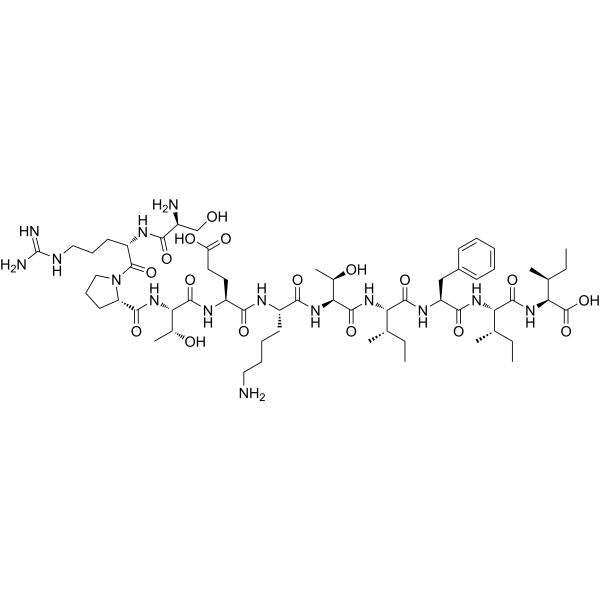
    pJAK2(1001-1013) is a cell-penetrating peptide that corresponds to the activation loop of JAK2 tyrosine kinase and functions as a SOCS1/3antagonist. pJAK2 (1001-1013) blocks SOCS1-mediated negative regulation of immune function, and enhances the biological activity of cytokines such as IFNγ and IL6. pJAK2(1001-1013) inhibits the replication of a broad range of viruses and exerts dose-dependent protective efficacy against lethal viral infections. pJAK2(1001-1013) can be used for the study of immune regulation and infection .
  • HY-P1136
    Gap19
    5 Publications Verification

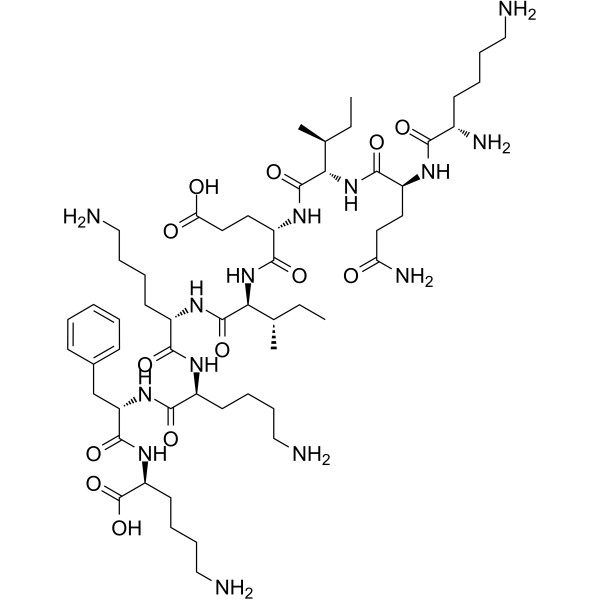
    Gap Junction Protein Cardiovascular Disease
    Gap19, a peptide derived from nine amino acids of the Cx43 cytoplasmic loop (CL), is a potent and selective connexin 43 (Cx43) hemichannel blocker. Gap19 inhibits hemichannels caused by preventing intramolecular interactions of the C-terminus (CT) with the CL. Gap19 is not blocking GJ channels or Cx40/pannexin-1 hemichannels. Gap19 has protective effects against myocardial .
  • HY-P10817

    Proton Pump Reactive Oxygen Species (ROS) Metabolic Disease
    Corza6 is a potent and selective human voltage-gated proton channel (hHv1) peptide inhibitor. Corza6 binds to the external voltage sensor domain (VSD) loop in hHv1 with a Kd of ~1 nM at the natural, hyperpolarized resting membrane potential (RMP) of mammalian cells. Corza6 allows capacitation in sperm and permits sustained reactive oxygen species (ROS) production in white blood cells (WBCs) .
  • HY-P1136A
    Gap19 TFA
    5 Publications Verification

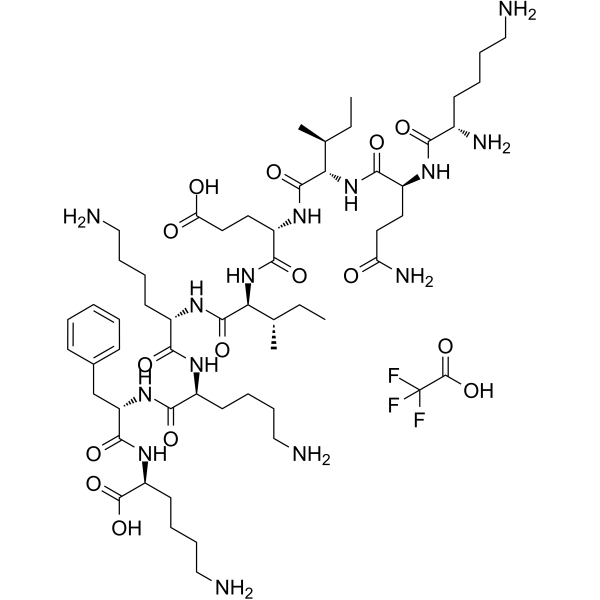
    Gap Junction Protein Cardiovascular Disease
    Gap19 TFA, a peptide derived from nine amino acids of the Cx43 cytoplasmic loop (CL), is a potent and selective connexin 43 (Cx43) hemichannel blocker. Gap19 TFA inhibits hemichannels caused by preventing intramolecular interactions of the C-terminus (CT) with the CL. Gap19 TFA is not blocking GJ channels or Cx40/pannexin-1 hemichannels. Gap19 TFA has protective effects against myocardial .
  • HY-P10817A

    Proton Pump Reactive Oxygen Species (ROS) Metabolic Disease
    Corza6 TFA is a potent and selective human voltage-gated proton channel (hHv1) peptide inhibitor. Corza6 TFA binds to the external voltage sensor domain (VSD) loop in hHv1 with a Kd of ~1 nM at the natural, hyperpolarized resting membrane potential (RMP) of mammalian cells. Corza6 TFA allows capacitation in sperm and permits sustained reactive oxygen species (ROS) production in white blood cells (WBCs) .
  • HY-P1082A
    Gap 26 TFA
    Maximum Cited Publications
    8 Publications Verification

    Connexin Gap Junction Protein Cardiovascular Disease
    Gap 26 TFA is a connexin mimetic peptide, composed of residue numbers 63-75 of the first extracellular loop of connexin 43 (gap junction blocker), containing the SHVR amino acid motif .
  • HY-P1594A

    Opioid Receptor iGluR Neurological Disease
    Dynorphin A (1-10) (TFA), an endogenous opioid neuropeptide, binds to extracellular loop 2 of the κ-opioid receptor. Dynorphin A (1-10) (TFA) also blocks NMDA-activated current with an IC50 of 42.0 μM.
  • HY-P1508

    Bactenecin, bovine

    Bacterial Fungal Antibiotic Infection
    Bactenecin (Bactenecin, bovine) is a potent 12-aa looped antimicrobial peptide isolated from bovine neutrophils. Bactenecin inhibits the growth of bacteria and yeast, and kills the fungus Trichophyton rubrum. Bactenecin increass membrane permeability, inhibits the growth and biofilm formation of B. pseudomallei .
  • HY-P1508A

    Bactenecin, bovine TFA

    Bacterial Fungal Infection
    Bactenecin TFA (Bactenecin, bovine TFA) is a potent 12-aa looped antimicrobial peptide isolated from bovine neutrophils. Bactenecin TFA inhibits the growth of bacteria and yeast, and kills the fungus Trichophyton rubrum. Bactenecin TFA increass membrane permeability, inhibits the growth and biofilm formation of B. pseudomallei .
  • HY-P2612A

    TNF Receptor Others Cancer
    WP9QY, TNF-a Antagonist, TNF-a Antagonist is a biological active peptide. (This cyclic peptide is designed to mimic the most critical tumor necrosis factor (TNF) recognition loop on TNF receptor I. It prevents interactions of TNF with its receptor. This TNF antagonist is a useful template for the development of small molecular inhibitors to prevent both inflammatory bone destruction and systemic bone loss in rheumatoid arthritis.)
  • HY-P5229A

    Peptides Others
    IHRIC TFA is a penta-peptide, correlated positively with hairpin DNA with tetramer loops. Therefore, IHRIC TFA joins hands with hairpin DNA (hpDNA) with improved selectivity as sensing materials in the detection system, used for surface plasmon resonance imaging (SPRi) .
  • HY-P11131

    Human lactoferrin (28-34)

    Bacterial Infection
    hLF (28-34) (Human lactoferrin (28-34)) is a loop region of human lactoferrin (hLF) that is essential for the high-affinity binding of LPS. hLF (28-34) is a key site responsible for its high-affinity binding to E. coli 055B5 lipopolysaccharide. hLF (28-34) can be used for antibacterial research .
  • HY-P10550

    VEGFR Cancer
    VGB4 is a VEGF-A and VEGF-B antagonist peptide that duplicates two binding domains of VEGF-B (loop 1 and loop3) and are linked together by the receptor-binding domain of VEGF-A (loop3). VGB4 has significant anti-angiogenic and anti-tumor activities and can regulate tumor growth and metastasis through multiple mechanisms. VGB4 could be used in anti-tumor research .
  • HY-P1594

    Opioid Receptor iGluR Neurological Disease
    Dynorphin A (1-10) an endogenous opioid neuropeptide, binds to extracellular loop 2 of the κ-opioid receptor. Dynorphin A (1-10) also blocks NMDA-activated current with an IC50 of 42.0 μM.
  • HY-P5389

    Gap Junction Protein Others
    Connexin mimetic peptide 40GAP27 is a biological active peptide. (This peptide corresponds to the GAP27 domain of the second extracellular loop of dominant vascular connexin (Cx40), designated as 40Gap 27. It was used to investigate mechanisms through which oxidant stress impairs communication via gap junctions. When administered, 40Gap27attenuates endothelium-dependent subintimal smooth muscle hyperpolarization.)
  • HY-P5642

    RC-101

    Bacterial Ser/Thr Protease Influenza Virus HSV SARS-CoV Toll-like Receptor (TLR) Fungal HIV Flavivirus Infection Inflammation/Immunology
    Retrocyclin-101 (RC-101) is a synthetic cyclic θ-defensin, a broad-spectrum antimicrobial peptide with anti-pathogen (covering viruses, bacteria and fungi) activity and anti-inflammatory activity. Retrocyclin-101 exhibits significant inhibitory activity against HIV, SARS-CoV-2, flaviviruses, influenza viruses, HSV-1/2, Staphylococcus aureus and others. Retrocyclin-101 inhibits TLR4 and TLR2-mediated signal transduction and reduces pro-inflammatory cytokine expression .
  • HY-P1598

    Peptides Others
    GroES mobile loop is a highly flexible region of free GroES, which binds to GroEL through the residues at the tip of the loop.
  • HY-P5229

    Peptides Others
    IHRIC is a penta-peptide, correlated positively with hairpin DNA with tetramer loops. Therefore, IHRIC joins hands with hairpin DNA (hpDNA) with improved selectivity as sensing materials in the detection system, used for surface plasmon resonance imaging (SPRi) .
  • HY-P5228

    Biochemical Assay Reagents Others
    KSDSC is a penta-peptide, correlated positively with hairpin DNA with tetramer loops. Therefore, KSDSC joins hands with hairpin DNA (hpDNA) with improved selectivity as sensing materials in the detection system, used for surface plasmon resonance imaging (SPRi) .
  • HY-P10829

    Dengue Virus Infection
    MLH40 is a peptide inhibitor with activity against Dengue virus (DENV) infection, which is found in the conserved ectodomain region of DENV membrane protein. MLH40 inhibits DENV through its N-terminal loop interaction with DENV envelope protein and altering the dimer conformation .
  • HY-P10597

    Angiotensin Receptor Others
    Angiotensin II type 1 receptor (181-187) is a 9-amino acid sequence of the second extracellular loop of angiotensin II (Ang II) in the renin-angiotensin system. Angiotensin II type 1 receptor (181-187) serves as the localization epitope of angiotensin II receptor autoantibodies (AT1RaAb) and is used to detect and quantify AT1RaAb levels in serum .
  • HY-P5387

    Peptides Others
    Connexin mimetic peptide 40,37GAP26 is a biological active peptide. (This peptide corresponds to the GAP26 domain of the extracellular loop of the major vascular connexins (Cx37, Cx40), designated as 37, 40Gap 26 according to Cx homology. It was used to investigate the role of gap junctions in the spread of endothelial hyperpolarizations evoked by cyclopiazonic acid (CPA) through the wall of the rodent iliac artery. The gap junction plaques constructed from Cx37 and Cx40 were abundant in the endothelium. This peptide provides inhibitory effects against subintimal hyperpolarization.)
  • HY-P5228A

    Biochemical Assay Reagents Others
    KSDSC TFA is a penta-peptide, correlated positively with hairpin DNA with tetramer loops. Therefore, KSDSC TFA joins hands with hairpin DNA (hpDNA) with improved selectivity as sensing materials in the detection system, used for surface plasmon resonance imaging (SPRi) .
  • HY-P11797
    EP9

    Transmembrane Glycoprotein Cardiovascular Disease
    EP9 is a 7-amino acid peptide targeting CD63. EP9 binds specifically to the extracellular region of CD63, including a groove in the large extracellular loop (EC2) or the extracellular end of CD63’s central cavity, triggering endocytosis of decorated nanoemulsions/liposomes into cells. EP9 promotes cellular uptake of decorated nanoemulsions/liposomes into activated cardiac fibroblasts and epicardial stromal cells via caveolae and/or clathrin-coated pits. EP9 can be used for the research of myocardial infarction, cardiac fibrosis .
  • HY-P11785

    Claudin Cancer
    Cpe30 MT2 is a short peptide that binds tightly junction protein Claudin‑4 (CLDN4) with high affinity, with a Kd value of 1.97 nM. Cpe30 MT2 can be used for the synthesis of PET molecular imaging probes targeting pancreatic cancer .
  • HY-P11553B

    Radionuclide-Drug Conjugates (RDCs) CCR Cardiovascular Disease Inflammation/Immunology Cancer
    DOTA-ECL1i is a conjugate of the CCR2 inhibitor ECL1i (HY-P11553) and DOTA. When radiolabeled with 68Ga, DOTA-ECL1i serves as a PET tracer that targets CCR2 expression. DOTA-ECL1i can be used in research related to pulmonary fibrosis, cardiac injury, abdominal aortic aneurysm inflammation, atherosclerosis, head and neck cancer, and pancreatic cancer .
  • HY-P5642A

    RC-101 TFA

    HIV SARS-CoV Influenza Virus Flavivirus HSV Bacterial Fungal Toll-like Receptor (TLR) Ser/Thr Protease Infection Inflammation/Immunology
    Retrocyclin-101 (RC-101) TFA is an artificially synthesized, cyclic-structured θ-defensin, a broad-spectrum agent with antimicrobial (covering viruses, bacteria, and fungi) activity and anti-inflammatory activity. Retrocyclin-101 TFA can inhibit the serine protease activity of ZIKV NS2B-NS3, with an IC50 of 7.20 μM. Retrocyclin-101 TFA has significant inhibitory activity against HIV, SARS-CoV-2, flaviviruses, influenza viruses, HSV-1/2, Staphylococcus aureus, etc. Retrocyclin-101 TFA inhibits the signal transduction mediated by TLR4 and TLR2, reducing the expression of pro-inflammatory cytokines .

Inquiry Online

Your information is safe with us. * Required Fields.

Salutation


Country or Region *

Applicant Name *


Organization Name *

Department *


Email Address *


Product Name *

Cat. No.


Requested quantity *

Phone Number *


Remarks

Inquiry Online

Inquiry Information

Product Name:
Cat. No.:
Quantity:
MCE Japan Authorized Agent:

