
10 Results for "

malignant prostate cancer cells

" in MedChemExpress (MCE) Product Catalog:
Products (10)

10 Results for "malignant prostate cancer cells" in MCE Product Catalog:

8
8 Publications Verification
Cat. No.: HY-14197A
CAS No.: 17780-75-5
Purity:  99.92%
Synonyms: M&B 9302 hydrochloride
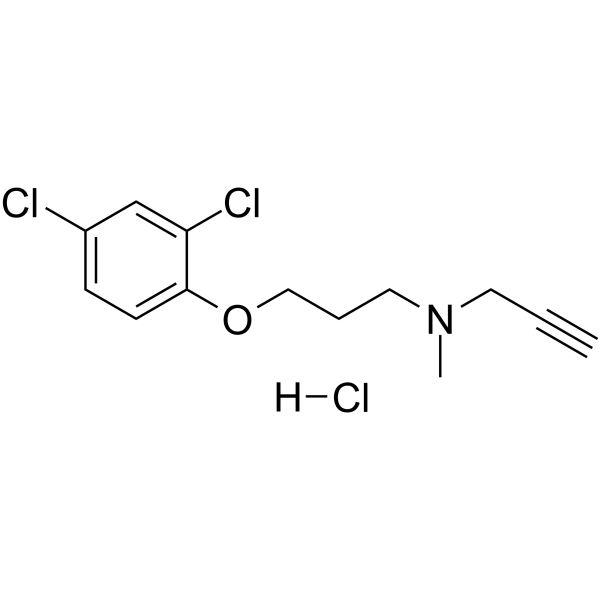
Clorgyline hydrochloride (M&B 9302 hydrochloride) is a selective, irreversible monoamine oxidase A (MAO-A) inhibitor that can cross the blood-brain barrier and exhibits activity against the 5-HT Receptor at very high doses. Clorgyline hydrochloride regulates monoamine neurotransmitter levels, the release of dopamine and acetylcholine, the uptake and effects of Tyramine (HY-W007606), noradrenergic function, circadian locomotor activity rhythms, feeding behavior, and body weight. Clorgyline hydrochloride induces tumor-suppressive transcriptional programs, secretory differentiation, androgen signaling regulation, Bcl-2 expression, and radioprotective effects in non-malignant cells. Clorgyline hydrochloride is used in the research of high-grade prostate cancer, Huntington's disease, major affective disorder, radiation-induced normal tissue toxicity, and obesity .
loading...
    loading...
8
8 Publications Verification
Cat. No.: HY-14197
CAS No.: 17780-72-2
Purity:  99.76%
Synonyms: M&B 9302
Clorgyline (M&B 9302) is a selective, irreversible monoamine oxidase A (MAO-A) inhibitor that can cross the blood-brain barrier and exhibits activity against the 5-HT Receptor at very high doses. Clorgyline regulates monoamine neurotransmitter levels, the release of dopamine and acetylcholine, the uptake and effects of Tyramine (HY-W007606), noradrenergic function, circadian locomotor activity rhythms, feeding behavior, and body weight. Clorgyline induces tumor-suppressive transcriptional programs, secretory differentiation, androgen signaling regulation, Bcl-2 expression, and radioprotective effects in non-malignant cells. Clorgyline is used in the research of high-grade prostate cancer, Huntington's disease, major affective disorder, radiation-induced normal tissue toxicity, and obesity .
loading...
    loading...
Cat. No.: HY-P99239
CAS No.: 2260767-49-3
Synonyms: HUJ-591; TLX591

Research Areas:  

Cancer

Rosopatamab (HuJ591) is a humanized antiPSMA IgG1 monoclonal antibody that can be used in cancer research, especially prostate cancer. Rosopatamab can be linked to the low-energy beta-emitting radioisotope lutetium-177 ( 177Lu) through the bifunctional chelator DOTA-NHS ester to obtain a radioimmunoconjugate that targets malignant prostate cells with high efficiency .
loading...
    loading...
Cat. No.: HY-W782083
CAS No.: 1583289-85-3
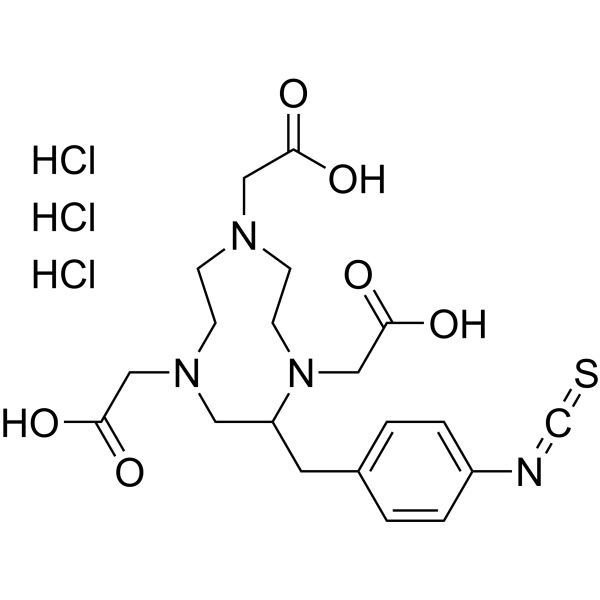
p-SCN-Bn-NOTA trihydrochloride is a macrocyclic chelator. p-SCN-Bn-NOTA trihydrochloride can be covalently coupled to molecules such as peptides through the thiocyanate group to form hexacoordinate copper (such as 64Cu) complexes. p-SCN-Bn-NOTA trihydrochloride specifically binds to GRPR or EGFR highly expressed on the surface of tumor cells, mediating tumor enrichment of radioactive probes. p-SCN-Bn-NOTA trihydrochloride can be used to study malignant tumors expressing GRPR or EGFR, such as prostate cancer and colorectal cancer .
loading...
    loading...
Cat. No.: HY-176763
CAS No.: 2376747-46-3
Target:  

Sec61

Research Areas:  

Cancer

KZR-261 is a Sec61 translocase inhibitor. KZR-261 binds directly to the Sec61 channel, thereby inhibiting the biosynthesis of certain Sec61 substrate proteins, including oncogenic factors. KZR-261 activates the endoplasmic reticulum stress response. KZR-261 exhibits broad in vitro anticancer activity. KZR-261 shows antitumor efficacy in mouse models of cancer. KZR-261 can be used for the research of multiple myeloma, colorectal cancer, small cell lung cancer, pancreatic cancer, prostate cancer, non-Hodgkin's lymphoma, and mantle cell lymphoma .
loading...
    loading...
Cat. No.: HY-117756
CAS No.: 1423758-00-2
Purity:  99.10%
Synonyms: DCFPYL
Target:  

PSMA

Research Areas:  

Cancer

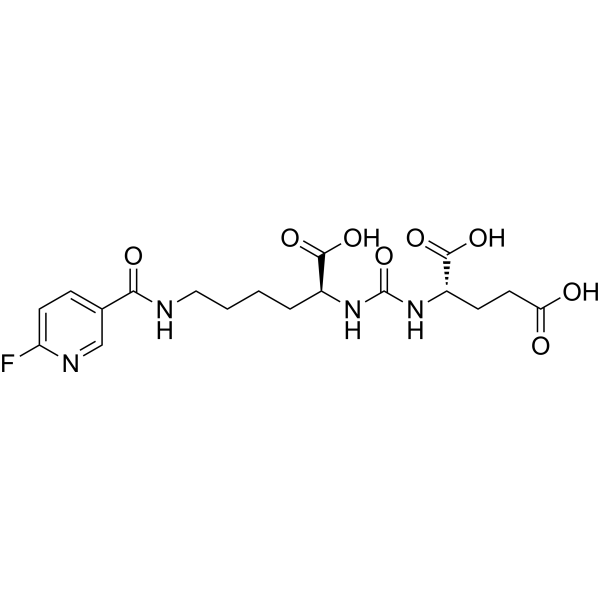
Piflufolastat (DCFPYL) can be used for the preparation of piflufolastat F 18 (DCFPyL F-18). Piflufolastat F-18 (DCFPyL F-18) is an 18F-labeled imaging agent. Piflufolastat F-18 can be used for positron emission tomography (PET) targeting prostate-specific membrane antigen (PSMA). Piflufolastat can be used for imaging of prostate cancer .
loading...
    loading...
Cat. No.: HY-176217
Research Areas:  

Cancer

dA-NHbenzylOCF3 is a DNA-targeted radiosensitizer that enhances the sensitivity of tumor cells to X-rays via the dissociative electron attachment (DEA) mechanism. dA-NHbenzylOCF3 shows low cytotoxicity to normal cells and mainly localizes to the cytoplasm and nucleus after entering cells. dA-NHbenzylOCF3 exerts its radiosensitizing effect by inducing cell cycle arrest at the radiation-sensitive G2/M phase. dA-NHbenzylOCF3 can be used for radiosensitization research on malignant tumors such as prostate cancer and breast cancer .
loading...
    loading...
Cat. No.: HY-122844B
CAS No.: 2761021-80-9
Synonyms: BI-853520 tosylate; IN-10018 tosylate
Target:  

FAK

Research Areas:  

Cancer

Ifebemtinib (tosylate) (BI-853520 (tosylate); IN-10018 (tosylate)) is a highly selective PTK2 kinase inhibitor. Ifebemtinib (tosylate) demonstrates anti-tumor activity. Ifebemtinib (tosylate) inhibits FAK autophosphorylation in prostate carcinoma cells. Ifebemtinib (tosylate) can inhibit spheroid formation and orthotopic tumor growth in vivo. Ifebemtinib (tosylate) can be studied in anticancer research such as solid tumors, breast cancer, and malignant pleural mesothelioma .
loading...
    loading...
Cat. No.: HY-14197AR
CAS No.: 17780-75-5
Synonyms: M&B 9302 hydrochloride (Standard)
Clorgyline hydrochloride (Standard) (M&B 9302 hydrochloride (Standard)) is the analytical standard of Clorgyline hydrochloride (HY-14197A). This product is intended for research and analytical applications. Clorgyline hydrochloride (M&B 9302 hydrochloride) is a selective, irreversible monoamine oxidase A (MAO-A) inhibitor that can cross the blood-brain barrier and exhibits activity against the 5-HT Receptor at very high doses. Clorgyline hydrochloride regulates monoamine neurotransmitter levels, the release of dopamine and acetylcholine, the uptake and effects of Tyramine (HY-W007606), noradrenergic function, circadian locomotor activity rhythms, feeding behavior, and body weight. Clorgyline hydrochloride induces tumor-suppressive transcriptional programs, secretory differentiation, androgen signaling regulation, Bcl-2 expression, and radioprotective effects in non-malignant cells. Clorgyline hydrochloride is used in the research of high-grade prostate cancer, Huntington's disease, major affective disorder, radiation-induced normal tissue toxicity, and obesity .
loading...
    loading...
Cat. No.: HY-N11231
CAS No.: 7176-02-5
Fucoxanthinol, a carotenoid, is a deacetylated Fucoxanthin (HY-N2302) metabolite with oral activity, and inhibits rat pancreatic lipase with an IC50 of 764 nM. Fucoxanthinol reduces expression of Bcl-2, Bcl-xL, survivin, XIAP, cIAP2, cyclin D1, cyclin D2, cyclin E, CDK4, CDK6, β-catenin, JunD, PPARγ, and induces GADD45α expression. Fucoxanthinol activates caspase-3, caspase-8, caspase-9, Nrf2/Keap1/ARE pathway, and inhibits activation of Akt, NF-κB, AP-1, PDPK1, GSK3β phosphorylation. Fucoxanthinol induces apoptosis, G0/G1 cell cycle arrest, inhibits cancer cell viability, proliferation, migration, invasiveness, tumour growth, adipocyte differentiation, oxidative stress, neurotoxicity, triglyceride absorption, angiogenesis, and obesity-induced inflammation. Fucoxanthinol can be used for the research of osteosarcoma, leukemia, lymphoma, adult T-cell leukemia, prostate cancer, colon cancer, breast cancer, hypertriglyceridaemia, Alzheimer’s disease, Parkinson’s disease, obesity, insulin resistance, malignant melanoma, and type II diabetes .
loading...
    loading...

