
Search Result
Results for "
monitor
" in MedChemExpress (MCE) Product Catalog:
41
Biochemical Assay Reagents
6
Isotope-Labeled Compounds
| Cat. No. |
Product Name |
Target |
Research Areas |
Chemical Structure |
-
- HY-125746
-
|
|
Fluorescent Dye
|
Others
|
|
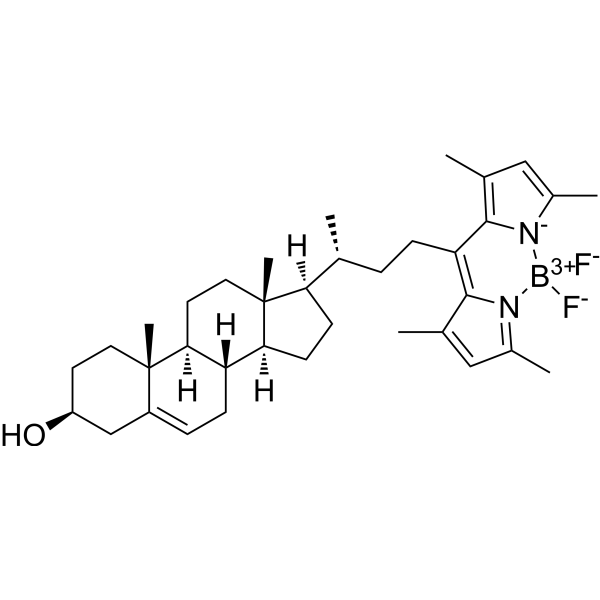
BODIPY-cholesterol is an intrinsically lipophilic, and cell-permeable analog of cholesterol with a fluorescent BODIPY group. BODIPY-cholesterol can be used to monitor sterol uptake and inter-organelle sterol flux in cells. (Excitation/Emission: 505/515 nm) .
|
-
-
- HY-133821
-
|
|
G-quadruplex
|
Neurological Disease
|
|
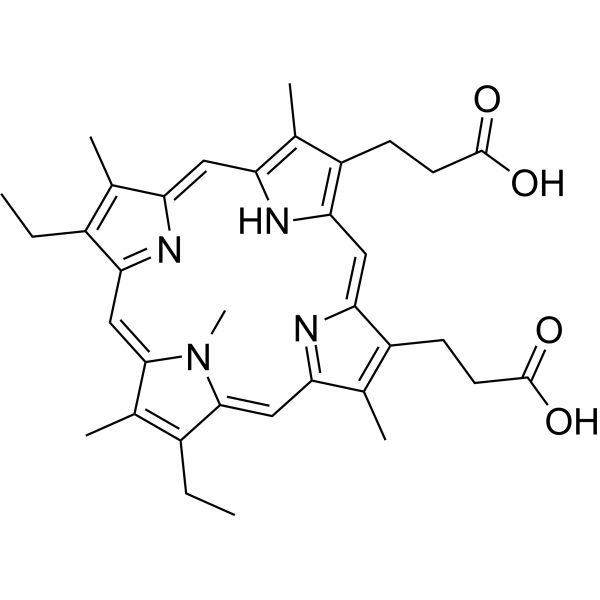
N-Methylmesoporphyrin IX (NMM), a widely used G-quadruplex DNA specific fluorescent binder, is an efficient probe for monitoring Aβ fibrillation. N-Methylmesoporphyrin IX is an in situ inhibitor and an ex situ monitor for Aβ amyloidogenesis both in vitro and in cells. N-Methylmesoporphyrin IX is sensitive to G-quadruplexes DNA but has no response to duplexes, triplexes and single-stranded forms DNA. N-Methylmesoporphyrin IX is nonfluorescent alone or in monomeric Aβ environments, but emits strong fluorescence through stacking with the Aβ assemblies .
|
-
-
- HY-P2775
-
|
|
Glycosidase
|
Others
|
|
β-Glucosidase, almond is the rate-limiting enzyme in cellulose degradation. β-Glucosidase is a major group among glycoside hydrolases. β-Glucosidase is involved in the degradation of cellulose in soils and has potential for monitoring soil quality .
|
-
-
- HY-D0084
-
|
DiOC6(3) iodide
|
Fluorescent Dye
|
Others
|
|
3,3'-Dihexyloxacarbocyanine iodide is a carbocyanine dye which can be used to monitor changes in mitochondrial membrane potential.
|
-
-
- HY-101890
-
|
DABS-Cl
|
Fluorescent Dye
|
Others
|
|
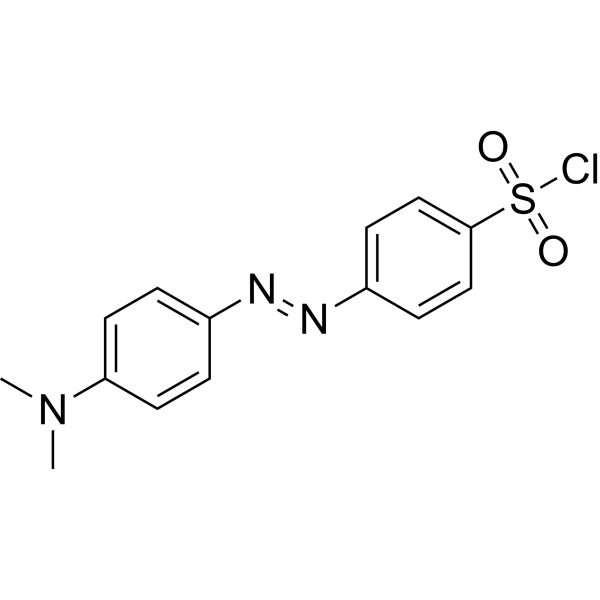
Dabsyl chloride is an amine derivatizing agent, able to give rise to stable products that can be easily monitored spectrophotometrically at 460 nm; Dabsyl chloride also used for labeling amino acids.
|
-
-
- HY-D1727
-
|
|
Fluorescent Dye
|
Others
|
|
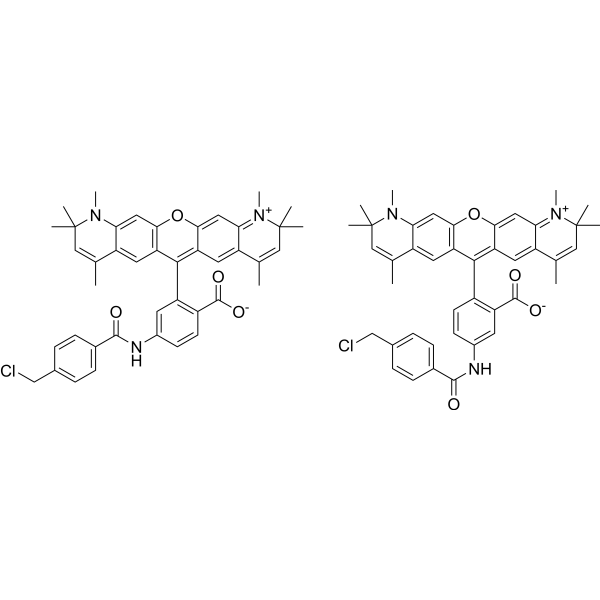
CellTracker Red CMTPX is a cell-permeable fluorescent dye that can be used as a cell tracer for monitoring cell movement and location (Ex/Em=586/614 nm) .
|
-
-
- HY-W116606
-
|
|
Fluorescent Dye
|
Others
|
|
Coumarin boronic acid is a fluorescent probe. The excitation and emission wavelengths of coumarin boronic acid are set to 360 nm and 430 nm, respectively. Coumarin boronic acid can be used to monitor the formation of amino acid and protein hydroxyl peroxides in real time, which is beneficial for understanding the mechanisms of oxidative stress and protein post-translational modification .
|
-
-
- HY-D1570
-
|
|
Fluorescent Dye
|
Others
|
|
BODIPYFL C12 is a BODIPY dye. BODIPY dye is a small molecule dye with strong ultraviolet absorption ability, its fluorescence peak is relatively sharp, and the quantum yield is high. They are relatively insensitive to the polarity and pH of the environment and are relatively stable under different physiological conditions. Due to its structural asymmetry, BODIPY derives a variety of structural products. BODIPY lipid droplet dyes can well pass through the cell membrane into the cell, and localize the neutral lipids in the cell to specifically stain the lipid droplets, which can be used for labeling of live cells and fixed cells . Maximum excitation/emission wavelength: 480/508 nm .
|
-
-
- HY-113005
-
|
|
Endogenous Metabolite
|
Metabolic Disease
|
|
Glutarylcarnitine is the diagnostic metabolite for malonic aciduria and glutaric aciduria type I monitored in most tandem mass spectrometry newborn screening programmes.
|
-
-
- HY-D2865
-
|
|
Fluorescent Dye
|
Others
|
|
Celltrack Deep Red is a fluorescent dye with a fluorescence signal that can be maintained for at least 72 h and has good stability. Celltrack Deep Red can be used for cell tracing and multi-generation cell movement tracking. Within a cell population, Celltrack Deep Red is only transferred to daughter cells and not to neighboring cells (Ex/Em = 630/650 nm) .
|
-
-
- HY-108715A
-
|
|
Fluorescent Dye
|
Neurological Disease
|
|
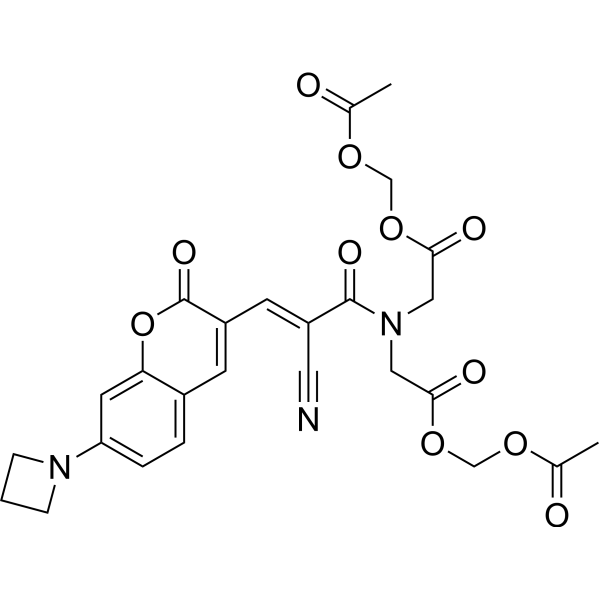
RT-AM is a pro-agent real thiol. Real Thiol is a reversible reaction-based fluorescent probe which can quantitatively monitor the real-time glutathione dynamics in living cells.
|
-
-
- HY-B1727S
-
|
|
Isotope-Labeled Compounds
|
Inflammation/Immunology
|
|
Phenanthrene-d10 is the deuterium labeled Phenanthrene. Phenanthrene is a polycyclic aromatic hydrocarbon (PAH) and has been frequently used as an indicator for monitoring PAH contaminated matrices . Phenanthrene induces oxidative stress and inflammation .
|
-
-
- HY-W013378
-
|
|
Drug Metabolite
|
Neurological Disease
|
|
Carbamazepine 10,11-epoxide is a metabolite of Carbamazepine (HY-B0246). Carbamazepine 10,11-epoxide can be used to monitor for Carbamazepine .
|
-
-
- HY-D1092
-
|
|
Fluorescent Dye
|
Neurological Disease
|
|
DiBaC4(5) is a fluorescent voltage-sensitive dye that can be used to monitor the transmembrane potentials when Papain-dissociated retinal cells from adult zebrafish were exposed to GABAergic ligands. DiBaC4(5) is a potential-sensitive fluorescence dye .
|
-
-
- HY-108715
-
|
|
Fluorescent Dye
|
Neurological Disease
|
|
Real Thiol is a reversible reaction-based fluorescent probe which can quantitatively monitor the real-time glutathione dynamics in living cells.
|
-
-
- HY-D1569
-
|
|
Fluorescent Dye
|
Others
|
|
CellTracker Orange CMRA Dye is a fluorescent dye. CellTracker Orange CMRA Dye can be used for cell imaging and monitoring the movement and location of cells .
|
-
-
- HY-153783
-
|
|
Fluorescent Dye
|
Others
Cancer
|
|
OBI is a Red Broccoli probe with red fluorescence. OBI enables Red Broccoli to be easily detected in living mammalian cells. OBI can be used to monitor intracellular metabolites .
|
-
-
- HY-113870
-
|
|
Fluorescent Dye
|
Others
|
|
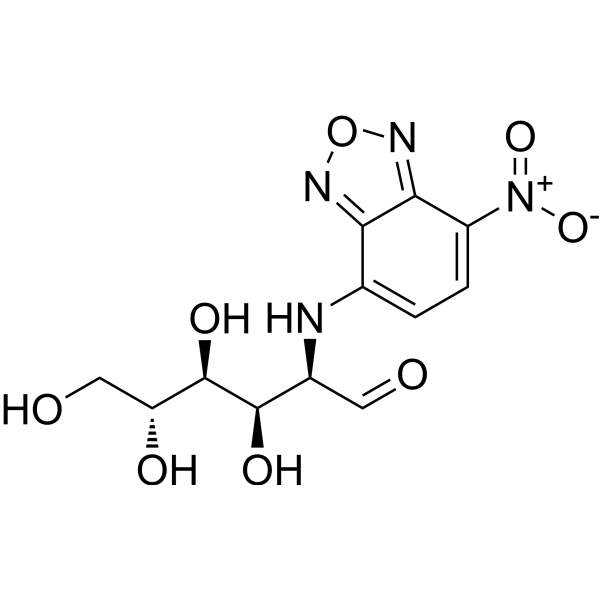
6-NBDG is a fluorescent glucose analogue, it can be used for fluorescence imaging and monitoring glucose transport and uptake. 6-NBDG can be used as a fluorescent probe for detecting macrophage-rich atherosclerotic plaques .
|
-
-
- HY-P11057
-
|
|
Fluorescent Dye
|
Others
|
|
FGGH is a water-soluble peptide-based probe. FGGH performs the sequential detection of Cu 2+ and S 2- by fluorescence and colorimetry with high sensitivity (LOD: 1.42 and 22.2 nM for Cu 2+ and S 2-, respectively) (Ex=488 nm, Em=525 nm), and images both two ions in living cells and zebrafish models with low cytotoxicity. FGGH can be used for in vivo imaging and environmental pollution monitoring research .
|
-
-
- HY-P3146A
-
|
|
Drug Metabolite
|
Cancer
|
|
FTISADTSK acetate is an endogenous stable signature peptide from Trastuzumab monitored by selected reaction monitoring (SRM) .
|
-
-
- HY-P3146S
-
|
|
Isotope-Labeled Compounds
|
Cancer
|
|
FTISADTSK- 13C6, 15N2 TFA is 13C- and 15N-labeled FTISADTSK (HY-P3146). FTISADTSK is an endogenous stable signature peptide from Trastuzumab monitored by selected reaction monitoring (SRM) .
|
-
-
- HY-D1158
-
-
-
- HY-155667A
-
|
|
Cathepsin
|
Others
|
|
Z-Nle-Lys-Arg-AMC acetate is a fluorogenic peptide substrate that specifically monitors cathepsin B activity over a broad pH range .
|
-
-
- HY-DY1075
-
|
|
G-quadruplex
|
Neurological Disease
|
N-Methylmesoporphyrin IX (NMM) (solution) , a widely used G-quadruplex DNA specific fluorescent binder, is an efficient probe for monitoring Aβ fibrillation. N-Methylmesoporphyrin IX is an in situ inhibitor and an ex situ monitor for Aβ amyloidogenesis both in vitro and in cells. N-Methylmesoporphyrin IX is sensitive to G-quadruplexes DNA but has no response to duplexes, triplexes and single-stranded forms DNA. N-Methylmesoporphyrin IX is nonfluorescent alone or in monomeric Aβ environments, but emits strong fluorescence through stacking with the Aβ assemblies . Solvent and concentration: DMSO: 2 mM
|
-
-
- HY-153082
-
|
|
Fluorescent Dye
|
Others
|
|
Firefly Luciferase circRNA will express a luciferase protein, originally isolated from the Photinus pyralis (Firefly). Firefly Luciferase circRNA is ideal for monitoring and optimizing transfection efficiency and is recommended as a positive control for circular RNA transfections.
|
-
-
- HY-A0135
-
|
|
Potassium Channel
|
Neurological Disease
|
|
Enflurane, a volatile anaesthetic, is a potent inhibitor of high conductance Ca 2+-activated K+ channels of Chara australis. Enflurane is an internal standard in monitoring halogenated volatile anaesthetics by headspace gas chromatography-mass spectrometry .
|
-
-
- HY-D1256
-
|
|
Fluorescent Dye
|
Neurological Disease
Metabolic Disease
|
|
Msr-blue is a first turn-on fluorescent probe for methionine sulfoxide reductase with a more than 100-fold fluorescence increment. Msr-blue is used for monitoring the enzyme activity in live cells (λex=340 nm, λem=440 nm) .
|
-
-
- HY-DY1029
-
|
|
Fluorescent Dye
|
Others
|
BODIPY-cholesterol (solution) is an intrinsically lipophilic, and cell-permeable analog of cholesterol with a fluorescent BODIPY group. BODIPY-cholesterol can be used to monitor sterol uptake and inter-organelle sterol flux in cells. (Excitation/Emission: 505/515 nm) . Solvent and concentration: DMSO: 1 mM
|
-
-
- HY-P3147A
-
|
|
Drug Metabolite
|
Others
|
|
IYPTNGYTR acetate, a deamidation-sensitive signature peptide, is a deamidation product of Trastuzumab. IYPTNGYTR acetate can be used to monitor in vivo Trastuzumab metabolism .
|
-
-
- HY-D1438
-
|
|
Fluorescent Dye
|
Others
|
|
RH 414 is the styryl pyridinium dye. RH 414 can be used for optical monitoring of synaptic vesicle membrane trafficking .
|
-
-
- HY-P10679
-
|
|
MMP
|
Cancer
|
|
GPLGLAGGWGERDGS is a peptide with MMP enzyme responsiveness and tumor targeting function, which can be used to monitor enzyme-guided nanoparticle assembly in tumors .
|
-
-
- HY-113005A
-
|
|
Endogenous Metabolite
|
Metabolic Disease
|
|
Glutarylcarnitine lithium is the diagnostic metabolite for malonic aciduria and glutaric aciduria type I monitored in most tandem mass spectrometry newborn screening programmes .
|
-
-
- HY-D2479
-
|
|
Fluorescent Dye
|
Metabolic Disease
|
|
DMANI is an intramolecular charge transfer (ICT)-based mitochondria-targeted ratiometric fluorescent probe. DMANI can monitor mitochondrial peroxynitrite (ONOO −) in living cells .
|
-
-
- HY-W018008
-
|
Ferrocenylacetylene; Ferrocenylethyne
|
Biochemical Assay Reagents
|
Others
|
|
Ethynylferrocene (Ferrocenylacetylene) is a click chemistry agent. Ethynylferrocene can be used for labeling of hairpin DNA probes to monitor the DNA hybridization via the Cu(I)-catalyzed azide-alkyne cycloaddition (CuAAC) .
|
-
-
- HY-148947
-
|
|
Fluorescent Dye
Phosphoramidites
|
Others
|
|
Cy5 Phosphoramidite is a fluorescent labeling reagent . Cy5 Phosphoramidite serves as a fluorescent tag for 3' terminal labeling of single-stranded DNA, enabling fluorescence-based nucleic acid detection, monitoring, quantification, and in vitro study .
|
-
-
- HY-W717548
-
|
|
Drug Metabolite
|
Others
|
|
Safinamide acid (Compound Imp-E) is the metabolite of Safinamide (HY-70057). Safinamide acid can be formed by hydrolysis of Safinamide intermediate under alkaline or acidic conditions. Safinamide acid is utilized to monitor process-related impurities and degradation products in safinamide samples .
|
-
-
- HY-175045
-
|
|
Bacterial
|
Infection
|
|
77PD-Q is a p-phenylenediamine (PPD) derivative. 77PD-Q exhibits toxic to the aquatic bacterium V. fischeri. 77PD-Q can be used as an exposure biomarker in environmental monitoring .
|
-
-
- HY-178819
-
|
|
Integrin
Drug Intermediate
|
Cancer
|
|
NM-001 is a theranostic prodrug that targets ανβ3 integrin. NM-001 consists of cRGD and GFLG peptides, a DCM fluorophore and Chlorambucil (HY-13593). NM-001 internalizes into lysosomes of tumor cells via the cRGD peptide, and generates NM-002 (HY-178820) and Chlorambucil through intracellular cleavage at the GFLG peptide by overexpressed Cathepsin B (CTSB). NM-001 exhibits green fluorescence under physiological conditions, and converts to NIR fluorescence by CTSB activation. NM-001 has significant antitumor activity with low toxicity in HeLa cell xenografts mouse models. NM-001 can be used for real-time drug release monitoring research .
|
-
-
- HY-NP194
-
|
|
Biochemical Assay Reagents
|
Inflammation/Immunology
|
|
Cyclosporin A-BSA is a conjugate of Cyclosporin A (HY-B0579) and BSA, primarily used as an immunogen to generate antibodies against Cyclosporin A for therapeutic drug monitoring and research assays .
|
-
-
- HY-113005S
-
|
|
Isotope-Labeled Compounds
Endogenous Metabolite
|
Metabolic Disease
|
|
Glutarylcarnitine-d9 (chloride) is the deuterium labeled Glutarylcarnitine chloride. Glutarylcarnitine is the diagnostic metabolite for malonic aciduria and glutaric aciduria type I monitored in most tandem mass spectrometry newborn screening programmes.
|
-
-
- HY-D1647
-
|
|
Phospholipase
|
Others
|
|
7-Hydroxycoumarinyl-γ-linolenate is a cytosolic phospholipase A2 (cPLA2) fluorogenic substrate. 7-Hydroxycoumarinyl-γ-linolenate can be used to monitor the enzymatic activity of cPLA2 .
|
-
-
- HY-W038795
-
|
|
Environmental Pollutants
|
Infection
|
|
(S)-Ethyl lactate ((S)-(-)-ethyl lactate) is a volatile compound produced by plant fermentation. (S)-Ethyl lactate cansynergistically attracts palm weevils with specific pheromones and is mainly used for pest monitoring and control research .
|
-
-
- HY-138031
-
|
PteGlu6
|
Endogenous Metabolite
|
Others
|
|
Pteroylhexaglutamate (PteGlu6) inhibits the T2-phage-induced synthetase by 50% at 0.6 μM in the absence of Mg 2+. Pteroylhexaglutamate is a substrate for pteroylpolyglutamate hydrolase, and can be used to monitor the activity of pteroylpolyglutamate hydrolase .
|
-
-
- HY-155667
-
|
|
Cathepsin
Fluorescent Dye
|
Others
|
|
Z-Nle-Lys-Arg-AMC is a fluorogenic peptide substrate that specifically monitors cathepsin B activity over a broad pH range .
|
-
-
- HY-155395
-
|
|
Fluorescent Dye
|
Infection
|
|
DDAN-MT is an enzymatic activated near-infrared fluorescent probe. DDAN-MT can be used for rapid, highly selective, and real-time monitoring of endogenous MtMET-AP1 activity in M. tuberculosis .
|
-
-
- HY-E70375
-
|
Fructosyl-peptide: oxygen oxidoreductase
|
Others
|
Others
|
|
Fructosyl-peptide oxidase (FPOX-CE) (Fructosyl-peptide: oxygen oxidoreductase) is an enzyme that catalyzes the oxidation of glycopeptides. Fructosyl-peptide oxidase (FPOX-CE) shows high activity against small molecule glycated peptides, but no activity is detected against the glycated hexapeptide standard fVHLTPE used in the study. Fructosyl-peptide oxidase (FPOX-CE) can be used in the study of diabetes monitoring .
|
-
-
- HY-107712
-
|
|
iGluR
|
Neurological Disease
|
|
TCN 213 is a selective, surmountable, glycine-dependentlly GluN1/GluN2A NMDAR antagonist with IC50s of 0.55, 3.5, 40 μM in the presence of 75, 750, 7500 nM glycine, respectively. TCN 213 can be used to monitor, pharmacologically, the switch in NMDAR expression in developing cortical neurones .
|
-
-
- HY-P3146
-
|
|
Drug Metabolite
|
Cancer
|
|
FTISADTSK is an endogenous stable signature peptide from Trastuzumab monitored by selected reaction monitoring (SRM) .
|
-
-
- HY-154916
-
|
13-DMT; 13-O-Demethyl FK 506
|
Drug Derivative
|
Infection
Inflammation/Immunology
Cancer
|
|
13-O-Desmethyl tacrolimus (13-DMT; 13-O-Demethyl FK 506) is the main metabolite of Tacrolimus (HY-13756). 13-O-Desmethyl tacrolimus has a weak immunosuppressive activity. 13-O-Desmethyl tacrolimus is mainly used in the research on monitoring Tacrolimus (HY-13756) by monitoring the ratio of 13-DMT/Tacrolimus .
|
-
-
- HY-D2115
-
|
|
Fluorescent Dye
|
Others
|
|
NBDT is sensitive and selective light-up fluorescent probe for monitoring gallium and chromium ionsin vitro and in vivo and can be detected at 574 nM .
|
-
- HY-D1424
-
|
|
Fluorescent Dye
|
Others
|
|
Coelenterazine hcp is a Coelenterazine analogue. Coelenterazine hcp shows high sensitivity to Ca 2+. Coelenterazine hcp is suited for monitoring intracellular Ca 2+ .
|
-
- HY-N15873
-
|
|
Biochemical Assay Reagents
|
Others
|
|
XY-69 triethylamine is a fluorescent analog of PIP2. XY-69 liposomal assay can be utilized in monitoring PLC enzymatic activity .
|
-
- HY-NP200
-
|
|
Biochemical Assay Reagents
|
Others
|
|
Keratin azure can be used to monitor the degradation of (β)-keratin. Keratin azure can be used as a substrate in keratin assays to assess keratinase degradation .
|
-
- HY-D0011
-
|
|
Biochemical Assay Reagents
|
Others
|
|
Bromophenol blue sodium is a pH indicator. It changes from yellow at pH 3.0 to blue at pH 4.6. Bromophenol blue sodium is also used as a tracking dye to monitor the process of agarose gel electrophoresis and polyacrylamide gel electrophoresis .
|
-
- HY-113217F
-
|
|
Fluorescent Dye
Liposome
|
Metabolic Disease
|
|
BODIPY 480/508-cholesteryl oleate is a fluorescently tagged derivative of Cholesteryl oleate (HY-113217). BODIPY 480/508-cholesteryl oleate can be used to monitor lipid transport mechanisms in mammalian cells (Ex/Em = 480/508 nm) .
|
-
- HY-D1511
-
|
|
Fluorescent Dye
|
Others
|
|
Oxonol Blue is a staining dye. Oxonol Blue can be used as a monitor of membrane potential .
|
-
- HY-P3147
-
|
|
Drug Metabolite
|
Others
|
|
IYPTNGYTR, a deamidation-sensitive signature peptide, is a deamidation product of Trastuzumab. IYPTNGYTR can be used to monitor in vivo Trastuzumab metabolism .
|
-
- HY-136672
-
|
|
Fluorescent Dye
|
Others
|
|
(E)-HBT-O is an isomer of HBT-O. HBT-O is a fluorescent probe used to monitor subtle pH fluctuations in living cells .
|
-
- HY-D1257
-
|
Msr-green
|
Fluorescent Dye
|
Others
|
|
Msr-Ratio (Msr-green) is a ratiometric fluorescent probe of methionine sulfoxide reductase (λex=375 nm, λem=550 nm). Msr-Ratio is used for monitoring the enzyme activity in vitro and in live cells .
|
-
- HY-121941
-
|
|
Fluorescent Dye
|
Others
|
|
Epoxy Fluor 7 is a sensitive fluorescent substrate for soluble epoxide hydrolase (sEH) that can be used for human and mouse enzymes. Epoxy Fluor 7 is hydrolyzed to yield fluorescence used for monitoring the activity of sEH.
|
-
- HY-125104
-
|
|
Antibiotic
Bacterial
|
Infection
|
|
Mirosamicin is an antibiotic with high antibacterial activity that targets a wide range of gram-positive bacteria and certain Gram-negative bacteria as well as mycoplasma. Mirosamicin can be used for research in the field of food safety monitoring .
|
-
- HY-113005R
-
|
|
Endogenous Metabolite
Reference Standards
|
Metabolic Disease
|
|
Glutarylcarnitine (Standard) is the analytical standard of Glutarylcarnitine. This product is intended for research and analytical applications. Glutarylcarnitine is the diagnostic metabolite for malonic aciduria and glutaric aciduria type I monitored in most tandem mass spectrometry newborn screening programmes.
|
-
- HY-178853
-
|
|
Others
|
Inflammation/Immunology
|
|
3,4-Dihydroxybenzeneethanimidamide can selectively react with Gly-Pro, the substrate for prolidase, and the prolidase activity is measured by monitoring the decrease in FL intensities. 3,4-Dihydroxybenzeneethanimidamide can be used for the study of inflammation .
|
-
- HY-D2266
-
|
|
Fluorescent Dye
|
Neurological Disease
|
|
FluoBar1 is an imaging fluorescence probe modified by a barbiturate ligand with fluorescent coumarin. FluoBar1 can monitor L-type voltage-gated calcium channels (LTCC) in living cells in real time for the study of neurological diseases .
|
-
- HY-D1427
-
|
|
Fluorescent Dye
|
Neurological Disease
|
|
Di-2-ANEPEQ is a voltage sensitive membrane potential fluorescence dye. Di-2-ANEPEQ can be used for the evaluation of voltage-sensitive fluorescence dyes for monitoring neuronal activity in the embryonic central nervous system .
|
-
- HY-151615
-
|
|
Fluorescent Dye
|
Neurological Disease
|
|
DCI-Br-3 is a rapid, highly sensitive, and selective probe to monitor thiols in the epileptic brain. (λex=537 nm, λem=675 nm).DCI-Br-3 can effectively cross the blood-brain barrier (BBB) .
|
-
- HY-P5202
-
|
|
Amino Acid Derivatives
|
Others
|
|
H-Gly-Gly-Arg-AMC is a fluorogenic peptidyl-AMC substrate containing C-terminal 7-amino-4-methylcoumarin (AMC). H-Gly-Gly-Arg-AMC is a suitable for monitoring continuous thrombin generation (TGT) .
|
-
- HY-D2261
-
|
|
Fluorescent Dye
|
Metabolic Disease
|
|
BODIPY-cholesterol conjugate-1 (compound 5) is a BODIPY-cholesterol conjugate. BODIPY-cholesterol conjugate-1 is a useful probe for simultaneous visualization of intracellular cholesterol pools and for monitoring cholesterol efflux from cells to extracellular acceptors . (λex 541 nm, λem 615 nm).
|
-
- HY-N0471B
-
|
Hyoscyamine hydrobromide
|
mAChR
|
Neurological Disease
|
|
L-Hyoscyamine (Hyoscyamine) hydrobromide is an anticholinergic agent that may potentially affect breastfeeding and milk production. L-Hyoscyamine hydrobromide is not likely to interfere with breastfeeding when used in single doses. L-Hyoscyamine hydrobromide should be monitored for signs of decreased lactation during long-term use.
|
-
- HY-W127721
-
|
Phthalocyanine tetrasulfonic acid
|
Biochemical Assay Reagents
|
Others
|
|
Tetrasulfophthalocyanine is an organic compound commonly used as dyes, photosensitive materials and catalysts. It can be used in certain organic batteries, solar cells, and laser printing, and is widely used in chemical analysis, biotechnology, and environmental monitoring. In addition, this compound is also used as a substrate or catalyst in certain biochemical reactions.
|
-
- HY-142955
-
|
|
Biochemical Assay Reagents
|
Cancer
|
|
Dual photoCORM 1 (compound 5) is metal-free, photochemically active dual CORM. Dual photoCORM 1 exhibits good cellular uptake and real-time monitoring ability of CO uncaging by a color change approach in cancerous B16F10 cells .
|
-
- HY-161476
-
|
|
Fluorescent Dye
|
Cancer
|
|
Ir-ImNO is a mitochondria-targeted two-photon probe with excellent cell membrane permeability, capable of detecting both endogenous and exogenous cell membrane permeability. Ir-ImNO can monitor different immune response states of macrophages through various imaging techniques, including one-photon and two-photon phosphorescence imaging as well as phosphorescence lifetime imaging. Ir-ImNO can be utilized in the research to assist in the clinical monitoring of immunotherapy .
|
-
- HY-178820
-
|
|
Drug Metabolite
|
Cancer
|
|
NM-002 is a metabolite of prodrug NM-001 (HY-178819), with NIR emission. NM-002 generates through activates the prodrug NM-001 by overexpressed Cathepsin B (CTSB) within tumor cells. NM-002 has no toxicity towards tumor cells and can escape from the lysosomes into the cytoplasm. NM-002 can be used for real-time drug release monitoring research .
|
-
- HY-W673672
-
|
4-Ketocapric acid; 4-ODA
|
Sex Pheromone
|
Infection
|
|
4-Oxodecanoic acid (4-Ketocapric acid) is a Sex pheromone component. 4-Oxodecanoic acid can be isolated from the sternal glands on the sixth abdominal segment of unmated female Vespa velutina. When mixed with 4-oxooctanoic acid at the natural secretion ratio of 0.78 in female wasps, 4-Oxodecanoic acid exhibits an attractive effect on male Vespa velutina. 4-Oxodecanoic acid can be used in population monitoring and control research on the invasive species Vespa velutina .
|
-
- HY-D3011
-
|
2-(9-Anthroyloxy)stearic acid
|
Fluorescent Dye
|
Others
|
|
2-AS is a fluorescent probe and can monitor the microenvironment and dynamic changes of biofilms .
|
-
- HY-P11595
-
|
|
Fluorescent Dye
|
Cancer
|
|
TBZ-1 is a fluorescent probe that monitors the activity of immunoproteasome (Proteasome) (iCP) in cells. TBZ-1 undergoes fluorescence activation after being selectively cleaved by β5i, which is used for intracellular activity monitoring. TBZ-1 is applicable to cancer-related research .
|
-
- HY-W416298
-
|
|
DNA/RNA Synthesis
|
Others
|
|
5-Vinyl-uridine (VU) is a uridine analog with a terminal alkene. 5-Vinyl-uridine is incorporated into new RNA by RNA polymerases, replacing endogenous uridine. Then, it can be detected rapidly and sensitively through an IEDDA reaction with a tetrazole probe, thereby enabling the monitoring of the transcription process using fluorescence techniques (such as monitoring through microscopes or flow cytometry).
|
-
- HY-127119
-
|
|
Endogenous Metabolite
|
Neurological Disease
|
|
Benanserin hydrochloride is a serotonin antagonist with psychopharmacological activity. Benanserin hydrochloride can be used to study specific behavioral manifestations in monitoring systems for drug effects. The effects of Benanserin hydrochloride can be sensitively and effectively assessed, for example, by measuring muscle movement capacity and reaction time. Benanserin hydrochloride is suitable for monitoring specific muscle physiological changes. The biological activity of Benanserin hydrochloride can provide reproducible bioassay parameters for experiments .
|
-
- HY-W587484
-
|
|
Drug Metabolite
|
Metabolic Disease
|
|
N-Acetyl-S-(N-methylcarbamoyl) cysteine is a metabolite of solvent N,N-dimethylformamide and could be used for monitoring industrial exposure.
|
-
- HY-182737
-
|
|
Biochemical Assay Reagents
|
Others
|
|
Hoagland's nutrient solution (1×) is a plant nutrient solution that meets the growth needs of plants in a soilless environment and allows for the monitoring of plant growth rates.
|
-
- HY-182737A
-
|
|
Biochemical Assay Reagents
|
Others
|
|
Hoagland's nutrient solution (100×) is a highly concentrated plant nutrient solution stock solution that meets the growth needs of plants in soilless environments and allows for the monitoring of plant growth rates.
|
-
- HY-D3308
-
|
|
Biochemical Assay Reagents
|
Others
|
|
CoelPhos is the cell-impermeable coelenterazine derivative. CoelPhos specifically recognizes extracellular GLuc and generates luminescent signals. CoelPhos is a practical bioluminescent tool for monitoring exocytic processes such as cell surface membrane fusion .
|
-
- HY-D3004
-
|
|
Fluorescent Dye
|
Others
|
|
GSH Tracker Probe (CPDSA) is a cyanine-based fluorescent probe with a NIR emission that is specific for GSH (excitation: 635 nm; emission: 655-755 nm). CPDSA can monitor and image GSH levels in live cells and in vivo .
|
-
- HY-113005AR
-
|
|
Endogenous Metabolite
Reference Standards
|
Metabolic Disease
|
|
Glutarylcarnitine (lithium) (Standard) is the analytical standard of Glutarylcarnitine (lithium). This product is intended for research and analytical applications. Glutarylcarnitine lithium is the diagnostic metabolite for malonic aciduria and glutaric aciduria type I monitored in most tandem mass spectrometry newborn screening programmes .
|
-
- HY-108715R
-
|
|
Fluorescent Dye
Reference Standards
|
Neurological Disease
|
|
Real Thiol (Standard) is the analytical standard of Real Thiol (HY-108715). This product is intended for research and analytical applications. Real Thiol is a reversible reaction-based fluorescent probe which can quantitatively monitor the real-time glutathione dynamics in living cells.
|
-
- HY-101890R
-
|
DABS-Cl (Standard)
|
Fluorescent Dye
Reference Standards
|
Others
|
|
Dabsyl chloride (Standard) is the analytical standard of Dabsyl chloride (HY-101890). This product is intended for research and analytical applications. Dabsyl chloride is an amine derivatizing agent, able to give rise to stable products that can be easily monitored spectrophotometrically at 460 nm; Dabsyl chloride also used for labeling amino acids.
|
-
- HY-W653727
-
|
Prochloraz-desimidazole-formylamino
|
Drug Metabolite
|
Others
|
|
BTS44596 (Prochloraz-desimidazole-formylamino) is a metabolite of the antifungal agent Prochloraz (HY-B0845). BTS44596 is one of the core target analytes for regulatory monitoring of Prochloraz residue limits in fruits and vegetables as well as for simultaneous detection via LC-MS/MS .
|
-
- HY-167482
-
|
|
Biochemical Assay Reagents
|
Others
|
|
PLLA2000-PEG3000-RhB is a terminal rhodamine-labeled polylactic acid derivative. PLLA2000-PEG3000-RhB can be used to label nanomicelles for real-time monitoring of drug release in vivo .
|
-
- HY-167480
-
|
|
Biochemical Assay Reagents
|
Others
|
|
PLLA3000-PEG1000-RhB is a terminal rhodamine-labeled polylactic acid derivative. PLLA3000-PEG1000-RhB can be used to label nanomicelles for real-time monitoring of drug release in vivo .
|
-
- HY-167491
-
|
|
Biochemical Assay Reagents
|
Others
|
|
PLLA10000-PEG2000-RhB is a terminal rhodamine-labeled polylactic acid derivative. PLLA10000-PEG2000-RhB can be used to label nanomicelles for real-time monitoring of drug release in vivo .
|
-
- HY-167488
-
|
|
Biochemical Assay Reagents
|
Others
|
|
PLLA1000-PEG1000-RhB is a terminal rhodamine-labeled polylactic acid derivative. PLLA1000-PEG1000-RhB can be used to label nanomicelles for real-time monitoring of drug release in vivo .
|
-
- HY-167486
-
|
|
Biochemical Assay Reagents
|
Others
|
|
PLLA1000-PEG3000-RhB is a terminal rhodamine-labeled polylactic acid derivative. PLLA1000-PEG3000-RhB can be used to label nanomicelles for real-time monitoring of drug release in vivo .
|
-
- HY-167490
-
|
|
Biochemical Assay Reagents
|
Others
|
|
PLLA10000-PEG3000-RhB is a terminal rhodamine-labeled polylactic acid derivative. PLLA10000-PEG3000-RhB can be used to label nanomicelles for real-time monitoring of drug release in vivo .
|
-
- HY-167484
-
|
|
Biochemical Assay Reagents
|
Others
|
|
PLLA2000-PEG1000-RhB is a terminal rhodamine-labeled polylactic acid derivative. PLLA2000-PEG1000-RhB can be used to label nanomicelles for real-time monitoring of drug release in vivo .
|
-
- HY-167487
-
|
|
Biochemical Assay Reagents
|
Others
|
|
PLLA1000-PEG2000-RhB is a terminal rhodamine-labeled polylactic acid derivative. PLLA1000-PEG2000-RhB can be used to label nanomicelles for real-time monitoring of drug release in vivo .
|
-
- HY-167483
-
|
|
Biochemical Assay Reagents
|
Others
|
|
PLLA2000-PEG2000-RhB is a terminal rhodamine-labeled polylactic acid derivative. PLLA2000-PEG2000-RhB can be used to label nanomicelles for real-time monitoring of drug release in vivo .
|
-
- HY-167485
-
|
|
Biochemical Assay Reagents
|
Others
|
|
PLLA1000-PEG5000-RhB is a terminal rhodamine-labeled polylactic acid derivative. PLLA1000-PEG5000-RhB can be used to label nanomicelles for real-time monitoring of drug release in vivo .
|
-
- HY-167492
-
|
|
Biochemical Assay Reagents
|
Others
|
|
PLLA10000-PEG1000-RhB is a terminal rhodamine-labeled polylactic acid derivative. PLLA10000-PEG1000-RhB can be used to label nanomicelles for real-time monitoring of drug release in vivo .
|
-
- HY-167489
-
|
|
Biochemical Assay Reagents
|
Others
|
|
PLLA10000-PEG5000-RhB is a terminal rhodamine-labeled polylactic acid derivative. PLLA10000-PEG5000-RhB can be used to label nanomicelles for real-time monitoring of drug release in vivo .
|
-
- HY-167481
-
|
|
Biochemical Assay Reagents
|
Others
|
|
PLLA2000-PEG5000-RhB is a terminal rhodamine-labeled polylactic acid derivative. PLLA2000-PEG5000-RhB can be used to label nanomicelles for real-time monitoring of drug release in vivo .
|
-
- HY-172577
-
|
Ion potassium green-4 TMA
|
Fluorescent Dye
Potassium Channel
|
Others
|
|
IPG-4 (Ion potassium green-4) TMA is an extracellular potassium ion fluorescence indicator with an Ex/Em ratio of 525/545 nm. IPG-4 TMA can be used for real-time monitoring and quantitative analysis of the transport of the biological electrochemical ion pump K⁺ .
|
-
- HY-143617
-
|
|
Photosensitizer
|
Cancer
|
|
photoCORM-1 (compound 8) is a combinatorial carbon monoxide releasing molecule (CORM). photoCORM-1 exhibits good cellular uptake and real-time monitoring ability of CO uncaging by a color change approach. photoCORM-1 has anti-tumor antivity .
|
-
- HY-143618
-
|
|
Biochemical Assay Reagents
|
Cancer
|
|
photoCORM-2 (compound 3) is a single carbon monoxide releasing molecule (CORM). photoCORM-2 exhibits good cellular uptake and real-time monitoring ability of CO uncaging by a color change approach. photoCORM-2 has anti-tumor activity .
|
-
- HY-P2952
-
|
Myokinase; Adk
|
Endogenous Metabolite
|
Others
|
|
Recombinant myokinase, Rabbit muscle (Myokinase), is a phosphotransferase enzyme, is often used in biochemical studies. Recombinant myokinase, Rabbit muscle catalyzes the interconversion of adenosine phosphates. Recombinant myokinase, Rabbit muscle monitors phosphate nucleotide levels inside the cell, it plays an important role in cellular energy homeostasis .
|
-
- HY-147508
-
|
|
Fluorescent Dye
|
Others
|
|
SBP-2 is a sulfite bioluminescent probe (SBP). The recognition of SBP-2 towards sulfite is based on the mechanism of a sulfite-mediated intramolecular cleavage reaction .
|
-
- HY-147509
-
|
|
Fluorescent Dye
|
Others
|
|
SBP-3 is a sulfite bioluminescent probe (SBP). The recognition of SBP-3 towards sulfite is based on the mechanism of a sulfite-mediated intramolecular cleavage reaction .
|
-
- HY-W777012
-
|
|
Fluorescent Dye
|
|
|
Acridinium C2 NHS ester is a chemiluminescent label that is active for the development of protein and nucleic acid probes. Acridinium C2 NHS ester can be used in bioanalysis and diagnostics to provide highly sensitive detection solutions. Acridinium C2 NHS ester is widely used in medical research, especially in the monitoring and analysis of biomolecules.
|
-
- HY-121432
-
|
|
Drug Metabolite
|
Others
|
|
Kitol is peptide used for after-sun repair cosmetics. The dominant degradation reaction for vitamin A derivatives is heat-induced formation of kitols, i.e., dimers or higher oligomers. Vitamin A esters are used as a model system to evaluate microcalorimetry as a tool for monitoring the stability of heat-sensitive substances .
|
-
- HY-D2262
-
|
|
Fluorescent Dye
|
Metabolic Disease
|
|
BODIPY-cholesterol conjugate-2 (compound 6) is a BODIPY-cholesterol conjugate. BODIPY-cholesterol conjugate-2 is a useful probe for simultaneous visualization of intracellular cholesterol pools and for monitoring cholesterol efflux from cells to extracellular acceptors. (λex=589 nm, λem=638 nm) .
|
-
- HY-D1631A
-
|
|
Fluorescent Dye
|
Neurological Disease
|
|
Calcium green-5N hexapotassium is a cell-impermeant Ca 2+-sensitive fluorescent probe. Calcium green-5N hexapotassium shows enhancement in fluorescence intensity on binding Ca 2+, and can monitor free Ca 2+ in neurons .
|
-
- HY-145323
-
|
|
Biochemical Assay Reagents
|
Cancer
|
|
Mitochondria-Targeted Photoactivatable Proagent accumulates in the mitochondria and shows light-triggered temporally controlled cell death. Mitochondria-Targeted Photoactivatable Proagent can be used in a novel drug delivery platform that provides on-demand, real-time, organelle-specific agent release and monitoring upon photoactivation .
|
-
- HY-116022
-
|
p-Nitrophenyl phosphate
|
Biochemical Assay Reagents
|
Others
|
|
4-Nitrophenyl phosphate (p-Nitrophenyl phosphate) is widely used as a small molecule phosphotyrosine-like substrate in activity assays for protein tyrosine phosphatases.4-Nitrophenyl phosphate is a colorless substrate that upon hydrolysis is converted to a yellow 4-nitrophenolate ion that can be monitored by absorbance at 405 nm .
|
-
- HY-W013378R
-
|
|
Reference Standards
Drug Metabolite
|
Neurological Disease
|
|
Carbamazepine 10,11-epoxide (Standard) is the analytical standard of Carbamazepine 10,11-epoxide (HY-W013378). Carbamazepine 10,11-epoxide is a metabolite of Carbamazepine (HY-B0246). Carbamazepine 10,11-epoxide can be used to monitor for Carbamazepine .
|
-
- HY-D2480
-
|
|
Fluorescent Dye
|
Metabolic Disease
|
|
BODIPY 480/508-cholesteryl linoleate is a cell-permeable and fluorescently tagged derivative of Cholesteryl Linoleate (HY-W010697). BODIPY 480/508-cholesteryl linoleate has been used to monitor cholesterol trafficking in isolated human monocyte-derived macrophages (Ex/Em=480/508 nm).
|
-
- HY-D1631
-
-
- HY-P99834
-
|
IAB22M2C; ImaginAb
|
Transmembrane Glycoprotein
|
Cancer
|
|
Crefmirlimab (IAB22M2C; ImaginAb) is a humanized CD8-specific single-domain antibody. Conjugation of Crefmirlimab with radioisotopes (e.g., 89Zr) enables tumor immune infiltration assessment, autoimmune disease detection, and immunotherapy response monitoring. Crefmirlimab is applicable for cancer research .
|
-
- HY-116022A
-
|
p-Nitrophenyl phosphate disodium hexahydrate
|
Biochemical Assay Reagents
|
Others
|
|
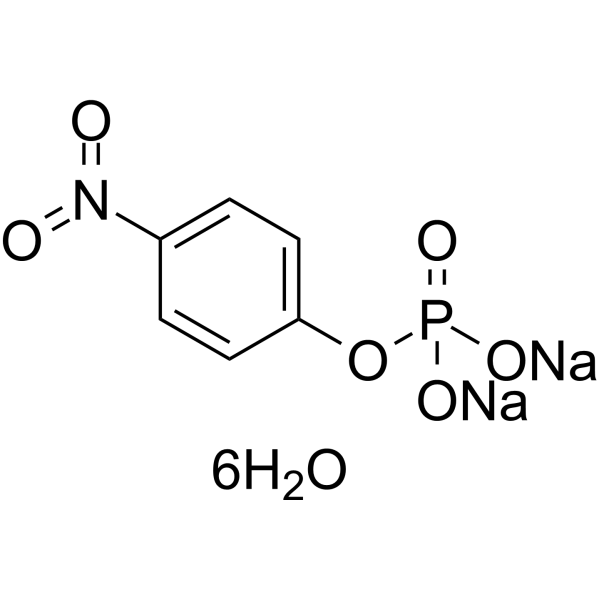
4-Nitrophenyl phosphate (p-nitrophenyl phosphate) disodium hexahydrate is widely used as a small molecule phosphotyrosine-like substrate in activity assays for protein tyrosine phosphatases. 4-Nitrophenyl phosphate disodium hexahydrate is a colorless substrate that upon hydrolysis is converted to a yellow 4-nitrophenolate ion that can be monitored by absorbance at 405 nm .
|
-
- HY-W016414R
-
|
|
Endogenous Metabolite
Reference Standards
|
Others
|
|
Triethyl phosphate is a chemical compound with biological activity and uses as a solvent. Triethyl phosphate is widely used in chemical synthesis as a reaction medium to improve reaction efficiency. Triethyl phosphate is also commonly used as a plasticizer to improve the flexibility and durability of materials. The presence of triethyl phosphate can also be used as a biomarker to help detect and monitor the effects of certain pollutants in the environment .
|
-
- HY-D1275
-
|
|
Fluorescent Dye
|
Others
|
|
CAY10731 (compound 3) is a highly selective fluorescent probe for detection of hydrogen sulfide (H2S). CAY10731 is used to monitor exo- and endogenous H2S in both cancer and normal cells. CAY10731 is applied for imaging of H2S in living tissues at variable depths and in nematodes .
|
-
- HY-W585831
-
|
BDCPP
|
Biochemical Assay Reagents
|
Others
|
|
Bis(1,3-dichloro-2-propyl) phosphate (BDCPP) is a metabolite of the flame retardant TDCPP (HY-108712) and has endocrine disrupting properties. Bis(1,3-dichloro-2-propyl) phosphate can be used in environmental monitoring, toxicology, and exposure assessment studies .
|
-
- HY-W099643
-
|
Erucyl alcohol
|
Endogenous Metabolite
|
Others
|
|
Cis-13-docosenol (Erucyl alcohol) is a long-chain alcohol pheromone in insects. Cis-13-docosenol exhibits attractive effects on both male and female adult Holotrichia parallela. Cis-13-docosenol can be used for the monitoring and control of adult Holotrichia parallela .
|
-
- HY-P10162A
-
|
|
Caspase
|
Others
|
|
Ac-DMQD-AMC TFA is a fluorogenic substrate for caspase-3 or caspase-10. Similar to Ac-DEVD-AMC, it releases the AMC (7-amino-4-methylcoumarin) fluorophore, resulting in fluorescence. Ac-DMQD-AMC TFA can be used to measure caspase activity in in vitro apoptosis monitoring .
|
-
- HY-W087913
-
|
|
Biochemical Assay Reagents
|
Others
|
|
alpha-Naphtholphthalein is an indicator that is light yellow at pH 6 and gradually shows a clear color change with increasing pH to light green-green-blue. alpha-Naphtholphthalein can be impregnated into cotton-blend fabrics and used to develop medical supplies for wound pH monitoring, such as medical gauze, hospital gowns and compression bandages .
|
-
- HY-153081
-
|
|
Fluorescent Dye
|
Others
|
|
The eGFP circRNA will express green fluorescent protein, originally isolated from the jellyfish, Aequorea victoria. The eGFP is a commonly used direct detection reporter in mammalian cell culture, yielding bright green fluorescence with an emission peak at 509 nm. The eGFP circRNA is therefore ideal for monitoring and optimizing transfection efficiency and is recommended as a positive control for circular RNA transfections.
|
-
- HY-171458
-
|
|
Fluorescent Dye
|
Others
|
|
U-104067 can be used as a molecular probe to observe and to quantitate a variety of physical phenomena, such as transfer into lipid membranes, partitioning between surface phases, and partitioning between lipid carriers and target membranes. U-104067 is a sensitive reporter of the tilt/ripple phase transition, monitored by its fluorescence anisotropy and quantum yield changes .
|
-
- HY-112698
-
CA-5f
4 Publications Verification
|
p62
Atg8/LC3
Autophagy
Apoptosis
|
Cancer
|
|
CA-5f is a potent late-stage macroautophagy/autophagy inhibitor via inhibiting autophagosome-lysosome fusion. CA-5f increases LC3B-II (a marker to monitor autophagy) and SQSTM1 protein, and also increases ROS production. Anti-tumor activity .
|
-
- HY-151537
-
|
|
Fluorescent Dye
|
Infection
Inflammation/Immunology
|
|
Gol-NTR is a Golgi-targetable probe with high selectivity and sensitivity. Gol-NTR is Nitroreductase (NTR)-activated and has visualization acute lung injury (ALI) and repair function. Gol-NTR has a low detection limit of 54.8 ng/mL. Gol-NTR can be used for the research for monitoring and assessing research response of sepsis-induced ALI .
|
-
- HY-165096
-
|
|
Endogenous Metabolite
|
Others
|
|
(E)-4-Tridecenyl acetate is a sex pheromone produced by female Keiferia lycopersicella and an attractant for male Keiferia lycopersicella moths. (E)-4-Tridecenyl acetate can be used in field traps for monitoring Keiferia lycopersicella presence and spread. (E)-4-Tridecenyl acetate can be used for the research of Keiferia lycopersicella infestation [1] [2].
|
-
- HY-128736B
-
|
|
Endogenous Metabolite
|
|
|
D-2-Phosphoglyceric acid is an important metabolic intermediate that has the activity of promoting cellular energy metabolism and regulating biosynthesis. D-2-Phosphoglyceric acid plays a key role in glycolysis and photosynthesis and is essential for the energy supply of cells. D-2-Phosphoglyceric acid can also be used as a biomarker to monitor the metabolic status in different organisms.
|
-
- HY-124324
-
|
p-Nitopheyl β-D-cellotioside
|
Fluorescent Dye
|
Others
|
|
4-Nitrophenyl β-D-cellotrioside (p-Nitopheyl β-D-cellotioside) is a chromogenic substrate for endoglucanases and cellulose biohydrolases. As a fluorescent dye, nitrophenyl β-D-Cellotrioside can be hydrolyzed by enzymes to release 4-nitrophenol, producing a yellow color. The activity of the enzyme can be quantitatively analyzed by monitoring the change in absorbance at 405 nm .
|
-
- HY-D3005
-
|
|
Fluorescent Dye
Autophagy
|
Inflammation/Immunology
|
|
NpCy-4 is a reliable reporter for monitoring lysosomal pH and viscosity changes in real time during Autophagy (λex = 650 nm; λem = 660-740 nm). NpCy-4 demonstrates a superior signal-to-background ratio (SBR) for cellular imaging. NpCy-4 facilitates real-time, noninvasive diagnostic imaging of acute gastritis model with high contrast .
|
-
- HY-P10364
-
|
UBI(29-41)
|
Bacterial
Antibiotic
|
Infection
Inflammation/Immunology
|
|
Ubiquicidin (29-41) (UBI (29-41)) is an Antimicrobial peptide and infection-localizing agent. Ubiquicidin (29-41) acts as an infection-specific imaging agent and infection-targeting agent. Ubiquicidin (29-41) serves as an antibiotic efficacy monitoring agent, and its aggregation level in infections induced by Staphylococcus aureus is higher than that in infections induced by Escherichia coli .
|
-
- HY-175146
-
|
|
Fluorescent Dye
Calcium Channel
|
Others
|
|
Fura-2 leakage resistant AM (Fura-PE3) is a new ratiometric calcium indicator. Fura-2 leakage resistant AM has calcium-binding characteristics (Kd = 146 nM) and fluorescent properties (emission: 510 nm; alternating excitation: 340 nm and 380 nm). Fura-2 leakage resistant AM monitors calcium concentration in platelet .
|
-
- HY-138241
-
|
|
Fluorescent Dye
|
Others
|
|
PBD-BODIPY is a probe for the spectrophotometric measurement of autoxidation reactions. Co-autoxidation of the PBD-BODIPY signal carrier and a hydrocarbon co-substrate can be quantified by monitoring loss of absorbance at 591 nm. PBD-BODIPY has been used to measure the activity of radical-trapping antioxidants in cell-free assays. It has also been used as a fluorescent probe for the detection of epoxidation activity.
|
-
- HY-129420
-
|
|
Fluorescent Dye
|
Cancer
|
|
WSP-5 is a H2S-selective fluorescent probe (Ex/Em = 502/525 nm). WSP-5 enables visual monitoring of H2S released and accumulated from peptide-H2S donor conjugates in glioma cells. WSP-5 is applicable to glioma research .
|
-
- HY-130767
-
|
|
Biochemical Assay Reagents
|
Others
|
|
Naphthol AS-TR Phosphate is a water-soluble dye commonly used as an enzyme substrate in various biochemical assays to detect alkaline phosphatase activity. Naphthol AS-TR Phosphate has unique chemical properties that allow it to be hydrolyzed by alkaline phosphatase to form a colored product that can be detected spectrophotometrically. This makes it a useful tool for monitoring enzyme activity in biological samples such as serum or urine.
|
-
- HY-P10633
-
|
|
Amino Acid Derivatives
|
Others
|
|
SmBiT Tag is an 11-amino-acid short peptide with extremely low natural affinity for LgBiT, with a Kd value of approximately 190 μM. It serves as a core component of the NanoLuc Binary Technology (NanoBiT) system. NanoBiT is a bioluminescent reporter system based on protein fragment complementation technology, which is used to monitor dynamic protein-protein interactions in live cells and in vitro .
|
-
- HY-W041019
-
|
|
Endogenous Metabolite
|
Metabolic Disease
|
|
5-Hydroxytryptophol is a mammalian serotonin metabolite that can be used as a sensitive biomarker for recent alcohol intake. 5-Hydroxytryptophol is formed by alcohol-induced changes in the serotonin metabolic pathway and is excreted in the urine as a glucuronic acid conjugate. 5-Hydroxytryptophol is elevated in urine excretion and can be used clinically to monitor alcohol intake in scenarios such as alcohol relapse .
|
-
- HY-P2149
-
|
|
Mitosis
|
Infection
Metabolic Disease
Inflammation/Immunology
Cancer
|
|
Concanavalin A can be coupled to agarose to form Concanavalin A (agarose) (HY-P2149A). Concanavalin A (ConA) is a selective, competitive binding agent that targets specific carbohydrate structures containing glucose and mannose; it acts as a mitogen and exhibits varying degrees of cytotoxicity, hepatotoxicity, and teratogenicity. Concanavalin A is also utilized for in vivo blood glucose monitoring in the context of diabetes .
|
-
- HY-W041019R
-
|
|
Reference Standards
Endogenous Metabolite
|
Metabolic Disease
|
|
5-Hydroxytryptophol is a mammalian serotonin metabolite that can be used as a sensitive biomarker for recent alcohol intake. 5-Hydroxytryptophol is formed by alcohol-induced changes in the serotonin metabolic pathway and is excreted in the urine as a glucuronic acid conjugate. 5-Hydroxytryptophol is elevated in urine excretion and can be used clinically to monitor alcohol intake in scenarios such as alcohol relapse .
|
-
- HY-W130177
-
|
|
Biochemical Assay Reagents
|
Cancer
|
|
Iodocholine iodide is a non-toxic, metabolizable "green" catalyst that can catalyze the free radical polymerization of functional polymers. Iodocholine iodide is also the non-radioactive iodide of Carbon-11 choline. C-11 Choline can be used in PET imaging and non-informative bone scintigraphy, CT or MRI to monitor various types of cancer .
|
-
- HY-153101
-
|
|
Biochemical Assay Reagents
|
Others
|
|
Gal-G2-CNP is a galactopyranosyl maltoside. Gal-G2-CNP is an amylase substrate specific to salivary amylase, which produces a yellow hydrolyzate upon decomposition. Gal-G2-CNP can serve as a matrix for the assays of novel amylases and pancreatic amylases .
|
-
- HY-D2966
-
|
|
Fluorescent Dye
|
Others
|
|
TMR-NO-BG is a hybrid probe (Ex/Em: 557 nm/571 nm). TMR-NO-BG covalently connects the tetramethylrhodamine (TMR) lactone NO sensing unit with the SNAP-tag reactive benzyl guanine (BG) for achieving subcellular-specific nitric oxide (NO) detection .
|
-
- HY-D2971
-
|
|
Fluorescent Dye
Autophagy
|
Neurological Disease
|
|
NCIC-VIS is a lysosome-targeted, viscosity-sensitive two-photon near-infrared fluorescent probe. NCIC-VIS has a rigid structure that can restrict molecular torsion, thereby increasing the fluorescence quantum yield and two-photon absorption cross-section. NCIC-VIS enables real-time imaging of the autophagy process in cells .
|
-
- HY-130767A
-
|
|
Biochemical Assay Reagents
|
Cancer
|
|
Naphthol AS-TR Phosphate disodium is a water-soluble dye commonly used as an enzymatic substrate in various biochemical assays to detect alkaline phosphatase activity. Naphthol AS-TR Phosphate disodium has unique chemical properties that allow it to be hydrolyzed by alkaline phosphatase, forming a colored product that can be detected spectrophotometrically. This makes it a useful tool for monitoring enzyme activity in biological samples such as serum or urine.
|
-
- HY-147181
-
|
|
Fluorescent Dye
|
Others
|
|
1,3-Di-(2-pyrenyl)propane is a fluorescent indicator. 1,3-Di-(2-pyrenyl)propane can be used in fluidity of bacterial membrane lipids monitored by intramolecular excimerization. 1,3-Di-(2-pyrenyl)propane shows temperature dependence of fluorescence lifetime distributions .
|
-
- HY-D1560
-
|
|
Fluorescent Dye
|
Others
|
|
FG 488 DHPE is a lipid-coupled fluorochrome, has be used as a fluorophore Oregon Green 488. FG 488 DHPE monitors acidification of lipid vesicles with λex/λem=508/534 nm.FG 488 DHPE is also used for Hv1-induced proton translocation quantificatio with λex/λem=508/534 nm as well .
|
-
- HY-D2338
-
|
|
Fluorescent Dye
|
Others
|
|
PMBD is a lysosome (Lyso)-targeting fluorescent probe. PMBD selectively and sensitively detects endogenous N-acylethanolamine amidase (NAAA), allowing real-time visual monitoring of endogenous NAAA in living cells. PMBD has a maximum absorption peak at 350 nm. After the metabolism of NAAA, the maximum absorption peak of the product AMBD shifts red to 450 nm, and a significant fluorescence emission signal appears at 550 nm .
|
-
- HY-D1247
-
|
|
Biochemical Assay Reagents
|
Others
|
|
Hydroxynaphthol Blue is an azo dye and serves as a metal indicator. Hydroxynaphthol Blue binds to specific metal ions to form stable complexes with distinct color and fluorescence properties. Hydroxynaphthol Blue is used for the visual monitoring of isothermal nucleic acid amplification results. A visible color difference appears between positive and negative nucleic acid amplification reactions, allowing result discrimination by the naked eye without opening the reaction tube .
|
-
- HY-Y0699
-
|
|
Environmental Pollutants
Fluorescent Dye
|
Others
|
|
Methyl red is a pH-sensitive acid-base indicator and colorimetric reagent with a pKa of 5.1. Methyl red achieves visual judgment of the titration endpoint through reversible structural changes of protonation (red, pH <4.4) and deprotonation (yellow, pH >6.2). Methyl red is widely used in acid-base titration in chemical analysis and buffer pH monitoring in biochemistry .
|
-
- HY-147507
-
|
|
Fluorescent Dye
|
Others
|
|
SBP-1 is a sulfite bioluminescent probe (SBP). SBP-1 exhibits the excellent responsivity, selectivity and sensitivity towards sulfite. The recognition of SBP-1 towards sulfite is based on the mechanism of a sulfite-mediated intramolecular cleavage reaction. SBP-1 can be used for detection of exogenous and endogenous sulfite in living animal. SBP-1 also possesses a capability for quantitatively detecting sulfite within a certain concentration range in solution .
|
-
- HY-D0856
-
|
|
Biochemical Assay Reagents
|
Others
|
|
Bis-Tris is an amine buffer suitable for protein and nucleic acid systems with a pH buffer range of 5.8-7.2. Bis-Tris can also be mixed with HEPES and cacodylic acid buffer to create a pH 8 environment and monitor fluorescence emission intensity at 305 nm. Gels formulated with Bis-Tris also avoid protein degradation in samples prepared at higher pH (pH 8.5) .
|
-
- HY-D2973
-
|
|
Fluorescent Dye
|
Others
|
|
YH-APN is a high-performance APN activated near-infrared fluorescent probe. YH-APN has high sensitivity, high selectivity, fast response, and can achieve extremely high tumor/normal tissue signal-to-noise ratio through in situ spraying. YH-APN can specifically distinguish cancer cells with high expression of APN from normal cells and monitor the migration of cancer cells .
|
-
- HY-D2482
-
|
APG-1 AM
|
Fluorescent Dye
|
Neurological Disease
|
|
Asante potassium green-1 AM (APG-1 AM) is a cell-permeable K +-sensitive fluorescent indicator and potassium ion indicator that exhibits minimal interference from Na + and pH at physiologically relevant intracellular levels. Asante potassium green-1 AM enables non-invasive monitoring and quantitative analysis of intracellular potassium ion concentration (ᵢ) . Its excitation/emission maxima are 525/545 nm, respectively.
|
-
- HY-165119
-
|
PE(18:0/20:5); 18:0/20:5-PE
|
Endogenous Metabolite
|
Others
|
|
1-Stearoyl-2-eicosapentaenoyl-sn-glycero-3-PE (PE(18:0/20:5)) is a phospholipid identified in plasma lipid profile analysis, with similar lipid level changes in high-grade cervical intraepithelial neoplasia and cervical cancer compared with normal state and low-grade cervical intraepithelial neoplasia, and can be used to monitor cervical cancer progression.
|
-
- HY-151536
-
|
|
Fluorescent Dye
|
Neurological Disease
|
|
meso-Benzothiazole-BODIPY 505/515 is a boron dipyrromethenes (BODIPY) -based fluorescent probemonitor cellular viscosity changes and autophagy. meso-Benzothiazole-BODIPY 505/515 can be used for the research of Alzheimer’s diseases, lysosomal storage diseases and neural degeneration diseases .
|
-
- HY-W105681
-
|
|
Biochemical Assay Reagents
|
Others
|
|
Bis-Tris hydrochloride is an amine buffer suitable for protein and nucleic acid systems with a pH buffer range of 5.8-7.2. Bis-Tris hydrochloride can also be mixed with HEPES and cacodylic acid buffer to create a pH 8 environment and monitor fluorescence emission intensity at 305 nm. Gels formulated with Bis-Tris also avoid protein degradation in samples prepared at higher pH (pH 8.5) .
|
-
- HY-W927376
-
|
|
Fluorescent Dye
|
Others
|
|
Boc-Val-Arg-AMC is a synthetic peptide compound. As a specific fluorescent substrate, Boc-Val-Arg-AMC can be specifically cleaved by specific enzymes, especially thrombin, to release a fluorescent molecule AMC (7-amino-4-methylcoumarin), which can be used to monitor thrombin activity. Boc-Val-Arg-AMC can be used to detect thrombin activity in plasma samples .
|
-
- HY-P2149A
-
|
|
Mitosis
|
Others
Metabolic Disease
|
|
Concanavalin A (agarose) is composed of Concanavalin A (HY-P2149) conjugated with agarose. Concanavalin A (ConA) is a selective competitive binder targeting the specific carbohydrate structures of glucose and mannose, inducing mitosis, and exhibiting certain cytotoxicity, hepatotoxicity, and teratogenicity. Concanav in A (agarose) can be used for in vivo blood glucose monitoring in diabetes, and for "fishing out" specific glycoproteins or removing sugar impurities from complex samples .
|
-
- HY-D0034
-
|
ABMDMA
|
Fluorescent Dye
MOFs
|
Cancer
|
|
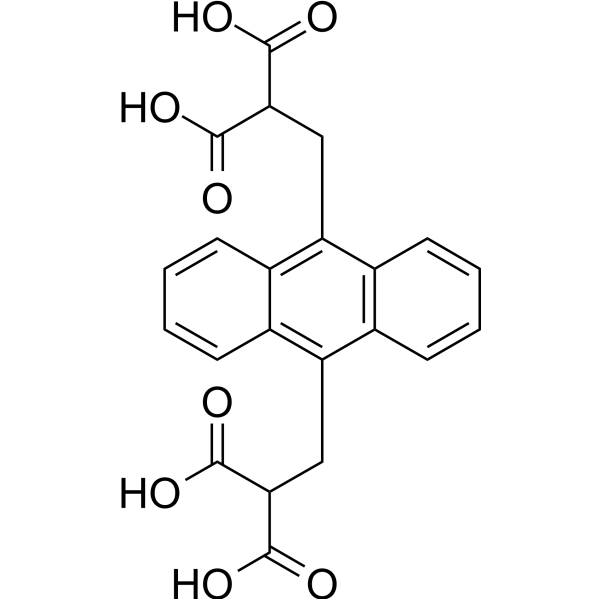
9,10-Anthracenediyl-bis(methylene)dimalonic acid (ABMDMA) is a biological dye and indicator used to detect singlet oxygen generation (SOG). 9,10-Anthracenediyl-bis(methylene)dimalonic acid is water-soluble derivative of anthracene. 9,10-Anthracenediyl-bis(methylene)dimalonic acid can be photobleached by singlet oxygen to its corresponding endoperoxide. This reaction can be monitored spectrophotometrically by recording the decrease of absorbance at 400 nm .
|
-
- HY-W800703
-
|
|
Fluorescent Dye
|
Others
|
|
Alexa Fluor 594 azide is an azide-modified fluorescent dye and also a FRET acceptor reactant. Owing to its negligible direct absorption under 488 nm excitation light, excellent photostability, and the ability of its azide group to participate in the CuAAC reaction, Alexa Fluor 594 azide can be paired with a donor dye for single-molecule imaging via TIRFM, thereby enabling the visual monitoring of CuNP-catalyzed click reactions .
|
-
- HY-W110896
-
|
Phthalein Purple
|
Biochemical Assay Reagents
|
Others
|
|
Phthalate complexing agent [Chelation indicator] is a class of organic compounds belonging to the category of chelation indicators. It is commonly used in analytical chemistry to detect and quantify metal ions in aqueous solutions, especially in complexometric titration. Phthalate complexing agent [Chelation indicator] works by forming stable complexes with metal ions, which can then be measured using various spectroscopic or electrochemical techniques. In addition, it also has potential applications in wastewater treatment and environmental monitoring.
|
-
- HY-W411215
-
|
|
Fluorescent Dye
|
Others
|
|
1,4-Diacetoxy-2,3-dicyanobenzene is a cell-permeable fluorescent probe. 1,4-Diacetoxy-2,3-dicyanobenzene crosses the cell membrane and is cleaved by cytosolic esterases to the fluorescent pH indicator 2,3-dicyano-hydroquinone (DCH). 1,4-Diacetoxy-2,3-dicyanobenzene can be used to monitor intracellular pH .
|
-
- HY-162543
-
|
18:1 Lissamine rhodamine PE
|
Fluorescent Dye
|
Others
|
|
18:1 Liss Rhod (18:1 Lissamine rhodamine) PE is a fluorescent phospholipid and fluorescent probe.18:1 Liss Rhod PE admixes into phospholipid inks for large-scale monitoring of dip-pen nanolithography-generated lithographic structures via fluorescence microscopy.18:1 Liss Rhod PE undergoes phase separation or self-quenching under certain conditions in thin lipid membrane stacks .
|
-
- HY-W108419A
-
|
|
Sex Pheromone
|
Infection
|
|
trans-5-Decenyl acetate is a synthetic sex pheromone component. trans-5-Decenyl acetate attracts male Anarsia lineatella moths when used in a mixture with trans-5-decen-1-ol (HY-W127516). trans-5-Decenyl acetate can be used to monitor male Anarsia lineatella moth activity in peach and almond orchard field .
|
-
- HY-177435
-
|
|
FAP
|
Inflammation/Immunology
|
|
FAPI-800CW is a near-infrared (NIR) fluorescent-labeled fibroblast activation protein (FAP) inhibitor. FAPI-800CW shows specific uptake in inflamed paws in collagen-induced arthritis (CIA) model mice. FAPI-800CW can be used for in vivo molecular imaging of FAP expression in inflammatory diseases such as rheumatoid arthritis (RA) to monitor joint inflammation and disease activity .
|
-
- HY-136675
-
|
|
Fluorescent Dye
|
Others
|
|
ASMI is a ratiometric, two-photon excited fluorescent probe, composed of a highly two-photon active and biocompatible merocyanine fluorophore and an acrylate moiety as a thiol reactive site. ASMI is able to selectively detect and monitor mitochondrial Cys with rapid responsiveness, imaging living cells and intact tissues with high contrast and brightness at a depth of 150 μm. The two-photon action cross section (Φσmax) of ASMI is 65.2 GM, corresponding to an excitation wavelength (λex) of 740 nm.
|
-
- HY-P11844
-
|
|
Cathepsin
Radionuclide-Drug Conjugates (RDCs)
|
Cancer
|
|
NOTA-FZCD-3 is a NOTA (HY-134418)-labeled FZCD-3 polypeptide precursor that targets cathepsin D (CTSD) with a KD of 0.65 μM. NOTA-FZCD-3 binds specifically to the active site of CTSD, exhibits rapid in vivo clearance properties, and remains stable in blood for more than 2 h. NOTA-FZCD-3 can be used in studies monitoring CTSD-positive tumors .
|
-
- HY-158741
-
|
APG-2 Acetoxymethyl ester
|
Fluorescent Dye
Potassium Channel
|
Others
|
|
IPG-2 AM (APG-2 Acetoxymethyl ester) is a membrane-permeant acetoxymethyl ester derivative and selective fluorescent potassium ion indicator. IPG-2 AM exhibits fluorescence increases proportional to extracellular potassium ion concentrations. IPG-2 AM enables real-time monitoring of cytosolic free potassium ion fluxes in human platelets and macrophages. IPG-2 AM can be used for the research of intracellular potassium concentration dynamics .
|
-
- HY-D2939
-
|
|
Fluorescent Dye
|
Others
|
BGSBD is a SNAP-tag-based fluorescent probe (Ex/Em: 435 nm/516 nm) based on the environmentally sensitive fluorescent group SBD, specifically designed for protein labeling of live cells without washing. BGSBD achieves a 280-fold fluorescence enhancement after labeling by ingeniously utilizing the hydrophobic binding pocket of the SNAP-tag protein, providing an ideal tool for real-time monitoring of protein dynamics within cells .
|
-
- HY-128692
-
|
|
Fluorescent Dye
|
Neurological Disease
|
|
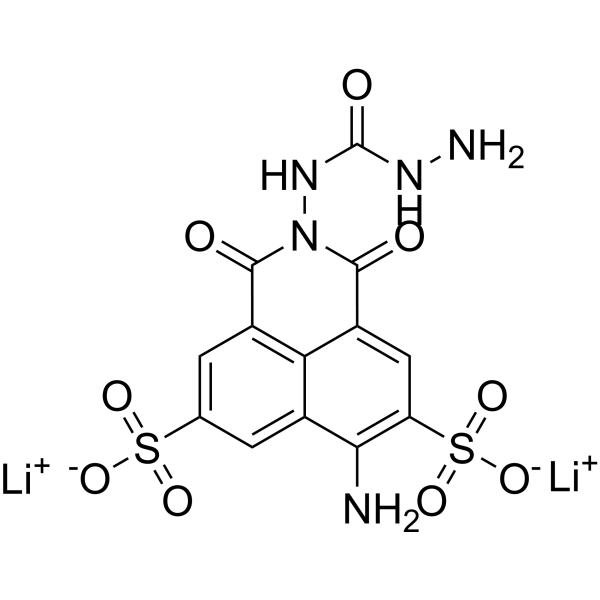
Luc Yellow CH dilithium is a high-intensity fluorescent probe containing free hydrazyl groups. Luc Yellow CH can react with fatty aldehydes at room temperature. Luc Yellow CH serves as a biological tracer to monitor neuronal branching, regeneration, gap junction detection and characterization, and selective ablation of cells after aldehyde fixation. Luc Yellow CH displays the maximum excitation/emission of 430 nm/540 nm, respectively .
|
-
- HY-W127715
-
|
|
Fluorescent Dye
|
Others
|
|
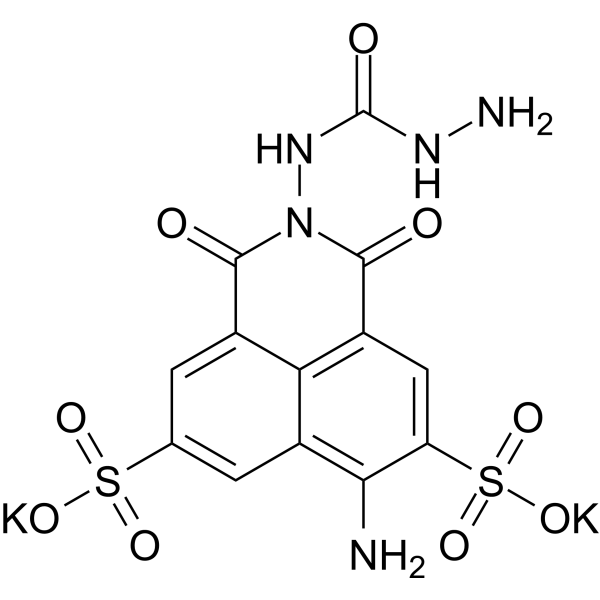
Lucifer Yellow CH dipotassium is a high-intensity fluorescent probe containing free hydrazyl groups. Lucifer Yellow CH can react with fatty aldehydes at room temperature. Lucifer Yellow CH serves as a biological tracer to monitor neuronal branching, regeneration, gap junction detection and characterization, and selective ablation of cells after aldehyde fixation. Lucifer yellow CH displays the maximum excitation/emission of 430 nm/540 nm, respectively .
|
-
- HY-143285
-
|
|
Fluorescent Dye
|
Infection
|
|
AMC-GlcNAc (compound 1) is a potent fluorogenic probe for detection and characterization of β-hexosaminidase enzyme activity. AMC-GlcNAc enables continuous monitoring by turn-on fluorescence and fluorescence signal is constant over a wide pH range (Ex=325 nm, Em=390 nm). AMC-GlcNAc enables ratiometric fluorescence detection with high sensitivity and low background, which can be used to screen for recombinant dispersin B activity in E. coli cell lysate .
|
-
- HY-D3251
-
|
|
Fluorescent Dye
|
Cancer
|
|
LCP is a fluorescent probe applicable for subcellular localization. LCP responds to polarity changes in the cellular microenvironment via fluorescence resonance energy transfer, emitting blue fluorescence in low-polarity environments and red fluorescence in high-polarity environments. LCP enables dual-color visualization of dynamic changes in lysosomes and cytoplasmic membranes during drug-induced cell apoptosis, and monitors cell viability through localization and emission color changes. LCP can be used in cancer research .
|
-
- HY-D3250
-
|
|
Fluorescent Dye
NO Synthase
|
Cardiovascular Disease
|
|
PYSNO is a lysosome-targeted fluorescent probe based on a pyridazinone skeleton (λem=515-565 nm, λex=405 nm) that can be used to track nitric oxide (NO) production in vivo. PYSNO exhibits a rapid, highly sensitive and highly selective "turn-on" response to endogenous and exogenous NO by blocking photoinduced electron transfer and regulating radiative decay rates. PYSNO enables precise in vivo monitoring in a mouse model of myocardial fibrosis and can be applied to the research of related diseases .
|
-
- HY-125385
-
|
|
Endogenous Metabolite
|
Metabolic Disease
|
|
Sulforhodamine 101 DHPE is a fluorescent probe made from the conjugation of the phospholipid 1,2-dipalmitoyl-sn-glycero-3-PE to sulforhodamine 101, a red fluorescent dye that displays excitation/emission spectra of 586/605 nm, respectively. It integrates into phospholipid bilayers and has been used for imaging of solid supported lipid bilayers, detection of protein-ligand binding on bilayers, and to monitor colocalization of lipid probes in liposomes via resonance energy transfer (RET).
|
-
- HY-116215
-
2-NBDG
Maximum Cited Publications
74 Publications Verification
|
Fluorescent Dye
|
Others
|
|
2-NBDG is a fluorescently-labeled deoxyglucose analog that is used primarily to directly monitor glucose uptake by living cells and tissues. It is also used as a topical contrast reagent for the detection of neoplasia. 2-NBDG can be used in real-time confocal, high-resolution, or wide-field fluorescence microscopy as well as in flow cytometry. The probe can be excited by the Argon laser at 488 nm to give the environment-sensitive fluorescence. It has lower photostability than the rhodamine-based fluorescent probes.
|
-
- HY-D1361
-
|
|
Fluorescent Dye
|
Others
|
|
Alkyne cyanine dye 718 is a multifunctional dye. Dyes are important tools in biological experiments. They can help researchers observe and analyze cell structures, track biomolecules, evaluate cell functions, distinguish cell types, detect biomolecules, study tissue pathology and monitor microorganisms. Their applications range from basic scientific research to clinical A wide range of diagnostics. Dyes are also widely used in traditional fields such as textile dyeing, as well as in emerging fields such as functional textile processing, food pigments and dye-sensitized solar cells.
|
-
- HY-D1162
-
|
|
Fluorescent Dye
|
Others
|
|
Solvent orange 62 is a multifunctional dye. Dyes are important tools in biological experiments. They can help researchers observe and analyze cell structures, track biomolecules, evaluate cell functions, distinguish cell types, detect biomolecules, study tissue pathology and monitor microorganisms. Their applications range from basic scientific research to clinical A wide range of diagnostics. Dyes are also widely used in traditional fields such as textile dyeing, as well as in emerging fields such as functional textile processing, food pigments and dye-sensitized solar cells.
|
-
- HY-D0230
-
|
|
Fluorescent Dye
|
Others
|
|
Tetrabromo-o-sulfobenzoic anhydride is a multifunctional dye. Dyes are important tools in biological experiments. They can help researchers observe and analyze cell structures, track biomolecules, evaluate cell functions, distinguish cell types, detect biomolecules, study tissue pathology and monitor microorganisms. Their applications range from basic scientific research to clinical A wide range of diagnostics. Dyes are also widely used in traditional fields such as textile dyeing, as well as in emerging fields such as functional textile processing, food pigments and dye-sensitized solar cells.
|
-
- HY-D0362
-
|
|
Fluorescent Dye
|
Others
|
|
Olive GB is a multifunctional dye. Dyes are important tools in biological experiments. They can help researchers observe and analyze cell structures, track biomolecules, evaluate cell functions, distinguish cell types, detect biomolecules, study tissue pathology and monitor microorganisms. Their applications range from basic scientific research to clinical A wide range of diagnostics. Dyes are also widely used in traditional fields such as textile dyeing, as well as in emerging fields such as functional textile processing, food pigments and dye-sensitized solar cells.
|
-
- HY-D1675
-
|
|
Fluorescent Dye
|
Others
|
|
6-HoeHESIR is a multifunctional dye. Dyes are important tools in biological experiments. They can help researchers observe and analyze cell structures, track biomolecules, evaluate cell functions, distinguish cell types, detect biomolecules, study tissue pathology and monitor microorganisms. Their applications range from basic scientific research to clinical A wide range of diagnostics. Dyes are also widely used in traditional fields such as textile dyeing, as well as in emerging fields such as functional textile processing, food pigments and dye-sensitized solar cells.
|
-
- HY-D0856R
-
|
|
Biochemical Assay Reagents
Reference Standards
|
Others
|
|
Bis-Tris (Standard) is the analytical standard of Bis-Tris. This product is intended for research and analytical applications. Bis-Tris is an amine buffer suitable for protein and nucleic acid systems with a pH buffer range of 5.8-7.2. Bis-Tris can also be mixed with HEPES and cacodylic acid buffer to create a pH 8 environment and monitor fluorescence emission intensity at 305 nm. Gels formulated with Bis-Tris also avoid protein degradation in samples prepared at higher pH (pH 8.5) .
|
-
- HY-D1108
-
|
|
Fluorescent Dye
|
Others
|
|
6 TMR Tre is a multifunctional dye. Dyes are important tools in biological experiments. They can help researchers observe and analyze cell structures, track biomolecules, evaluate cell functions, distinguish cell types, detect biomolecules, study tissue pathology and monitor microorganisms. Their applications range from basic scientific research to clinical A wide range of diagnostics. Dyes are also widely used in traditional fields such as textile dyeing, as well as in emerging fields such as functional textile processing, food pigments and dye-sensitized solar cells.
|
-
- HY-D1206
-
|
|
Fluorescent Dye
|
Others
|
|
Hide powder Azure is a multifunctional dye. Dyes are important tools in biological experiments. They can help researchers observe and analyze cell structures, track biomolecules, evaluate cell functions, distinguish cell types, detect biomolecules, study tissue pathology and monitor microorganisms. Their applications range from basic scientific research to clinical A wide range of diagnostics. Dyes are also widely used in traditional fields such as textile dyeing, as well as in emerging fields such as functional textile processing, food pigments and dye-sensitized solar cells.
|
-
- HY-D1382
-
|
|
Fluorescent Dye
|
Others
|
|
BrIR2 is a multifunctional dye. Dyes are important tools in biological experiments. They can help researchers observe and analyze cell structures, track biomolecules, evaluate cell functions, distinguish cell types, detect biomolecules, study tissue pathology and monitor microorganisms. Their applications range from basic scientific research to clinical A wide range of diagnostics. Dyes are also widely used in traditional fields such as textile dyeing, as well as in emerging fields such as functional textile processing, food pigments and dye-sensitized solar cells.
|
-
- HY-D0592
-
|
|
Fluorescent Dye
|
Others
|
|
Yellow brown XF is a multifunctional dye. Dyes are important tools in biological experiments. They can help researchers observe and analyze cell structures, track biomolecules, evaluate cell functions, distinguish cell types, detect biomolecules, study tissue pathology and monitor microorganisms. Their applications range from basic scientific research to clinical A wide range of diagnostics. Dyes are also widely used in traditional fields such as textile dyeing, as well as in emerging fields such as functional textile processing, food pigments and dye-sensitized solar cells.
|
-
- HY-D1212
-
|
|
Fluorescent Dye
|
Others
|
|
BCIP (dipotassium) is a multifunctional dye. Dyes are important tools in biological experiments. They can help researchers observe and analyze cell structures, track biomolecules, evaluate cell functions, distinguish cell types, detect biomolecules, study tissue pathology and monitor microorganisms. Their applications range from basic scientific research to clinical A wide range of diagnostics. Dyes are also widely used in traditional fields such as textile dyeing, as well as in emerging fields such as functional textile processing, food pigments and dye-sensitized solar cells.
|
-
- HY-D0578
-
|
|
Fluorescent Dye
|
Others
|
|
Basic yellow 28 is a multifunctional dye. Dyes are important tools in biological experiments. They can help researchers observe and analyze cell structures, track biomolecules, evaluate cell functions, distinguish cell types, detect biomolecules, study tissue pathology and monitor microorganisms. Their applications range from basic scientific research to clinical A wide range of diagnostics. Dyes are also widely used in traditional fields such as textile dyeing, as well as in emerging fields such as functional textile processing, food pigments and dye-sensitized solar cells.
|
-
- HY-161492
-
|
|
Fluorescent Dye
|
Others
|
|
Estradiol/OVA is a multifunctional dye. Dyes are important tools in biological experiments. They can help researchers observe and analyze cell structures, track biomolecules, evaluate cell functions, distinguish cell types, detect biomolecules, study tissue pathology and monitor microorganisms. Their applications range from basic scientific research to clinical A wide range of diagnostics. Dyes are also widely used in traditional fields such as textile dyeing, as well as in emerging fields such as functional textile processing, food pigments and dye-sensitized solar cells.
|
-
- HY-D1354
-
|
|
Fluorescent Dye
|
Others
|
|
Azide MegaStokes dye 673 is a multifunctional dye. Dyes are important tools in biological experiments. They can help researchers observe and analyze cell structures, track biomolecules, evaluate cell functions, distinguish cell types, detect biomolecules, study tissue pathology and monitor microorganisms. Their applications range from basic scientific research to clinical A wide range of diagnostics. Dyes are also widely used in traditional fields such as textile dyeing, as well as in emerging fields such as functional textile processing, food pigments and dye-sensitized solar cells.
|
-
- HY-D0370
-
|
|
Environmental Pollutants
Biochemical Assay Reagents
|
Others
|
|
Solvent Yellow 16 is a disperse dye. Dyes are important tools in biological experiments. They can help researchers observe and analyze cell structures, track biomolecules, evaluate cell functions, distinguish cell types, detect biomolecules, study tissue pathology and monitor microorganisms. Their applications range from basic scientific research to clinical A wide range of diagnostics. Dyes are also widely used in traditional fields such as textile dyeing, as well as in emerging fields such as functional textile processing, food pigments and dye-sensitized solar cells .
|
-
- HY-D0712
-
|
|
Fluorescent Dye
|
Others
|
|
α-CN-TO is a multifunctional dye. Dyes are important tools in biological experiments. They can help researchers observe and analyze cell structures, track biomolecules, evaluate cell functions, distinguish cell types, detect biomolecules, study tissue pathology and monitor microorganisms. Their applications range from basic scientific research to clinical A wide range of diagnostics. Dyes are also widely used in traditional fields such as textile dyeing, as well as in emerging fields such as functional textile processing, food pigments and dye-sensitized solar cells.
|
-
- HY-D0563
-
|
|
Fluorescent Dye
|
Others
|
|
Direct yellow 86 is a multifunctional dye. Dyes are important tools in biological experiments. They can help researchers observe and analyze cell structures, track biomolecules, evaluate cell functions, distinguish cell types, detect biomolecules, study tissue pathology and monitor microorganisms. Their applications range from basic scientific research to clinical A wide range of diagnostics. Dyes are also widely used in traditional fields such as textile dyeing, as well as in emerging fields such as functional textile processing, food pigments and dye-sensitized solar cells.
|
-
- HY-D0461
-
|
|
Fluorescent Dye
|
Others
|
|
beta-Naphthol violet is a multifunctional dye. Dyes are important tools in biological experiments. They can help researchers observe and analyze cell structures, track biomolecules, evaluate cell functions, distinguish cell types, detect biomolecules, study tissue pathology and monitor microorganisms. Their applications range from basic scientific research to clinical A wide range of diagnostics. Dyes are also widely used in traditional fields such as textile dyeing, as well as in emerging fields such as functional textile processing, food pigments and dye-sensitized solar cells.
|
-
- HY-D1454
-
|
|
Fluorescent Dye
|
Others
|
|
Nitro Blue Diformazan is a multifunctional dye. Dyes are important tools in biological experiments. They can help researchers observe and analyze cell structures, track biomolecules, evaluate cell functions, distinguish cell types, detect biomolecules, study tissue pathology and monitor microorganisms. Their applications range from basic scientific research to clinical A wide range of diagnostics. Dyes are also widely used in traditional fields such as textile dyeing, as well as in emerging fields such as functional textile processing, food pigments and dye-sensitized solar cells.
|
-
- HY-D1150
-
|
|
Fluorescent Dye
|
Others
|
|
Mito-PN is a multifunctional dye. Dyes are important tools in biological experiments. They can help researchers observe and analyze cell structures, track biomolecules, evaluate cell functions, distinguish cell types, detect biomolecules, study tissue pathology and monitor microorganisms. Their applications range from basic scientific research to clinical A wide range of diagnostics. Dyes are also widely used in traditional fields such as textile dyeing, as well as in emerging fields such as functional textile processing, food pigments and dye-sensitized solar cells.
|
-
- HY-D0796
-
|
|
Fluorescent Dye
|
Others
|
|
Propyl red is a multifunctional dye. Dyes are important tools in biological experiments. They can help researchers observe and analyze cell structures, track biomolecules, evaluate cell functions, distinguish cell types, detect biomolecules, study tissue pathology and monitor microorganisms. Their applications range from basic scientific research to clinical A wide range of diagnostics. Dyes are also widely used in traditional fields such as textile dyeing, as well as in emerging fields such as functional textile processing, food pigments and dye-sensitized solar cells.
|
-
- HY-D0951
-
|
|
Fluorescent Dye
|
Others
|
|
Methyl violet dye is a multifunctional dye. Dyes are important tools in biological experiments. They can help researchers observe and analyze cell structures, track biomolecules, evaluate cell functions, distinguish cell types, detect biomolecules, study tissue pathology and monitor microorganisms. Their applications range from basic scientific research to clinical A wide range of diagnostics. Dyes are also widely used in traditional fields such as textile dyeing, as well as in emerging fields such as functional textile processing, food pigments and dye-sensitized solar cells.
|
-
- HY-D0355
-
|
|
Fluorescent Dye
|
Others
|
|
Flazo Orange is a multifunctional dye. Dyes are important tools in biological experiments. They can help researchers observe and analyze cell structures, track biomolecules, evaluate cell functions, distinguish cell types, detect biomolecules, study tissue pathology and monitor microorganisms. Their applications range from basic scientific research to clinical A wide range of diagnostics. Dyes are also widely used in traditional fields such as textile dyeing, as well as in emerging fields such as functional textile processing, food pigments and dye-sensitized solar cells.
|
-
- HY-D0095
-
|
|
Fluorescent Dye
|
Others
|
|
B261 is a multifunctional dye. Dyes are important tools in biological experiments. They can help researchers observe and analyze cell structures, track biomolecules, evaluate cell functions, distinguish cell types, detect biomolecules, study tissue pathology and monitor microorganisms. Their applications range from basic scientific research to clinical A wide range of diagnostics. Dyes are also widely used in traditional fields such as textile dyeing, as well as in emerging fields such as functional textile processing, food pigments and dye-sensitized solar cells.
|
-
- HY-D0117
-
|
|
Fluorescent Dye
|
Others
|
|
BHHCT is a multifunctional dye. Dyes are important tools in biological experiments. They can help researchers observe and analyze cell structures, track biomolecules, evaluate cell functions, distinguish cell types, detect biomolecules, study tissue pathology and monitor microorganisms. Their applications range from basic scientific research to clinical A wide range of diagnostics. Dyes are also widely used in traditional fields such as textile dyeing, as well as in emerging fields such as functional textile processing, food pigments and dye-sensitized solar cells.
|
-
- HY-D1303
-
|
|
Fluorescent Dye
|
Others
|
|
Marina blue is a multifunctional dye. Dyes are important tools in biological experiments. They can help researchers observe and analyze cell structures, track biomolecules, evaluate cell functions, distinguish cell types, detect biomolecules, study tissue pathology and monitor microorganisms. Their applications range from basic scientific research to clinical A wide range of diagnostics. Dyes are also widely used in traditional fields such as textile dyeing, as well as in emerging fields such as functional textile processing, food pigments and dye-sensitized solar cells.
|
-
- HY-D0652
-
|
|
Fluorescent Dye
|
Others
|
|
Disperse orange 80 is a multifunctional dye. Dyes are important tools in biological experiments. They can help researchers observe and analyze cell structures, track biomolecules, evaluate cell functions, distinguish cell types, detect biomolecules, study tissue pathology and monitor microorganisms. Their applications range from basic scientific research to clinical A wide range of diagnostics. Dyes are also widely used in traditional fields such as textile dyeing, as well as in emerging fields such as functional textile processing, food pigments and dye-sensitized solar cells.
|
-
- HY-D1358
-
|
|
Fluorescent Dye
|
Others
|
|
Alkyne MegaStokes dye 608 is a multifunctional dye. Dyes are important tools in biological experiments. They can help researchers observe and analyze cell structures, track biomolecules, evaluate cell functions, distinguish cell types, detect biomolecules, study tissue pathology and monitor microorganisms. Their applications range from basic scientific research to clinical A wide range of diagnostics. Dyes are also widely used in traditional fields such as textile dyeing, as well as in emerging fields such as functional textile processing, food pigments and dye-sensitized solar cells.
|
-
- HY-D0214A
-
|
|
Fluorescent Dye
|
Others
|
|
Acid Red 94 lactone is a multifunctional dye. Dyes are important tools in biological experiments. They can help researchers observe and analyze cell structures, track biomolecules, evaluate cell functions, distinguish cell types, detect biomolecules, study tissue pathology and monitor microorganisms. Their applications range from basic scientific research to clinical A wide range of diagnostics. Dyes are also widely used in traditional fields such as textile dyeing, as well as in emerging fields such as functional textile processing, food pigments and dye-sensitized solar cells.
|
-
- HY-D2982
-
|
|
Fluorescent Dye
|
Infection
|
|
BTP9-Neu5Ac is a fluorescent imaging probe specifically designed for detecting the neuraminidase (NA) sialidase activity of influenza viruses. BTP9-Neu5Ac can visualize the intracellular Golgi localization of the viral NA activity. BTP9-Neu5Ac can be used for precise and temporal monitoring of the key enzyme activities during the viral life cycle .
|
-
- HY-D1357
-
|
|
Fluorescent Dye
|
Others
|
|
Alkyne MegaStokes dye 735 is a multifunctional dye. Dyes are important tools in biological experiments. They can help researchers observe and analyze cell structures, track biomolecules, evaluate cell functions, distinguish cell types, detect biomolecules, study tissue pathology and monitor microorganisms. Their applications range from basic scientific research to clinical A wide range of diagnostics. Dyes are also widely used in traditional fields such as textile dyeing, as well as in emerging fields such as functional textile processing, food pigments and dye-sensitized solar cells.
|
-
- HY-D0783
-
|
|
Fluorescent Dye
|
Others
|
|
5-Maleimido-eosin is a multifunctional dye. Dyes are important tools in biological experiments. They can help researchers observe and analyze cell structures, track biomolecules, evaluate cell functions, distinguish cell types, detect biomolecules, study tissue pathology and monitor microorganisms. Their applications range from basic scientific research to clinical A wide range of diagnostics. Dyes are also widely used in traditional fields such as textile dyeing, as well as in emerging fields such as functional textile processing, food pigments and dye-sensitized solar cells.
|
-
- HY-D0453
-
|
|
Fluorescent Dye
|
Others
|
|
Disperse orange A is a multifunctional dye. Dyes are important tools in biological experiments. They can help researchers observe and analyze cell structures, track biomolecules, evaluate cell functions, distinguish cell types, detect biomolecules, study tissue pathology and monitor microorganisms. Their applications range from basic scientific research to clinical A wide range of diagnostics. Dyes are also widely used in traditional fields such as textile dyeing, as well as in emerging fields such as functional textile processing, food pigments and dye-sensitized solar cells.
|
-
- HY-D0264
-
|
|
Fluorescent Dye
|
Others
|
|
1,8-Dinitroanthraquinone is a multifunctional dye. Dyes are important tools in biological experiments. They can help researchers observe and analyze cell structures, track biomolecules, evaluate cell functions, distinguish cell types, detect biomolecules, study tissue pathology and monitor microorganisms. Their applications range from basic scientific research to clinical A wide range of diagnostics. Dyes are also widely used in traditional fields such as textile dyeing, as well as in emerging fields such as functional textile processing, food pigments and dye-sensitized solar cells.
|
-
- HY-D1332
-
|
|
Fluorescent Dye
|
Others
|
|
BODIPY FL hydrazide hydrochloride is a multifunctional dye. Dyes are important tools in biological experiments. They can help researchers observe and analyze cell structures, track biomolecules, evaluate cell functions, distinguish cell types, detect biomolecules, study tissue pathology and monitor microorganisms. Their applications range from basic scientific research to clinical A wide range of diagnostics. Dyes are also widely used in traditional fields such as textile dyeing, as well as in emerging fields such as functional textile processing, food pigments and dye-sensitized solar cells.
|
-
- HY-D0206
-
|
|
Fluorescent Dye
|
Others
|
|
Chromotropic acid disodium is a multifunctional dye. Dyes are important tools in biological experiments. They can help researchers observe and analyze cell structures, track biomolecules, evaluate cell functions, distinguish cell types, detect biomolecules, study tissue pathology and monitor microorganisms. Their applications range from basic scientific research to clinical A wide range of diagnostics. Dyes are also widely used in traditional fields such as textile dyeing, as well as in emerging fields such as functional textile processing, food pigments and dye-sensitized solar cells.
|
-
- HY-D0589
-
|
|
Fluorescent Dye
|
Others
|
|
Disperse green 9 is a multifunctional dye. Dyes are important tools in biological experiments. They can help researchers observe and analyze cell structures, track biomolecules, evaluate cell functions, distinguish cell types, detect biomolecules, study tissue pathology and monitor microorganisms. Their applications range from basic scientific research to clinical A wide range of diagnostics. Dyes are also widely used in traditional fields such as textile dyeing, as well as in emerging fields such as functional textile processing, food pigments and dye-sensitized solar cells.
|
-
- HY-D0576
-
|
|
Fluorescent Dye
|
Others
|
|
Pigment orange 62 is a multifunctional dye. Dyes are important tools in biological experiments. They can help researchers observe and analyze cell structures, track biomolecules, evaluate cell functions, distinguish cell types, detect biomolecules, study tissue pathology and monitor microorganisms. Their applications range from basic scientific research to clinical A wide range of diagnostics. Dyes are also widely used in traditional fields such as textile dyeing, as well as in emerging fields such as functional textile processing, food pigments and dye-sensitized solar cells.
|
-
- HY-D0634
-
|
|
Fluorescent Dye
|
Others
|
|
Reactive Black 39 is a multifunctional dye. Dyes are important tools in biological experiments. They can help researchers observe and analyze cell structures, track biomolecules, evaluate cell functions, distinguish cell types, detect biomolecules, study tissue pathology and monitor microorganisms. Their applications range from basic scientific research to clinical A wide range of diagnostics. Dyes are also widely used in traditional fields such as textile dyeing, as well as in emerging fields such as functional textile processing, food pigments and dye-sensitized solar cells.
|
-
- HY-D1245
-
|
|
Fluorescent Dye
|
Others
|
|
Oxazole blue is a multifunctional dye. Dyes are important tools in biological experiments. They can help researchers observe and analyze cell structures, track biomolecules, evaluate cell functions, distinguish cell types, detect biomolecules, study tissue pathology and monitor microorganisms. Their applications range from basic scientific research to clinical A wide range of diagnostics. Dyes are also widely used in traditional fields such as textile dyeing, as well as in emerging fields such as functional textile processing, food pigments and dye-sensitized solar cells.
|
-
- HY-D0787
-
|
|
Fluorescent Dye
|
Others
|
|
NBD-undecanoic acid is a multifunctional dye. Dyes are important tools in biological experiments. They can help researchers observe and analyze cell structures, track biomolecules, evaluate cell functions, distinguish cell types, detect biomolecules, study tissue pathology and monitor microorganisms. Their applications range from basic scientific research to clinical A wide range of diagnostics. Dyes are also widely used in traditional fields such as textile dyeing, as well as in emerging fields such as functional textile processing, food pigments and dye-sensitized solar cells.
|
-
- HY-D0920
-
|
|
Fluorescent Dye
|
Others
|
|
TOTO-3 is a multifunctional dye. Dyes are important tools in biological experiments. They can help researchers observe and analyze cell structures, track biomolecules, evaluate cell functions, distinguish cell types, detect biomolecules, study tissue pathology and monitor microorganisms. Their applications range from basic scientific research to clinical A wide range of diagnostics. Dyes are also widely used in traditional fields such as textile dyeing, as well as in emerging fields such as functional textile processing, food pigments and dye-sensitized solar cells.
|
-
- HY-D0754
-
|
|
Fluorescent Dye
|
Others
|
|
Marine blue is a multifunctional dye. Dyes are important tools in biological experiments. They can help researchers observe and analyze cell structures, track biomolecules, evaluate cell functions, distinguish cell types, detect biomolecules, study tissue pathology and monitor microorganisms. Their applications range from basic scientific research to clinical A wide range of diagnostics. Dyes are also widely used in traditional fields such as textile dyeing, as well as in emerging fields such as functional textile processing, food pigments and dye-sensitized solar cells.
|
-
- HY-D0805
-
|
|
Fluorescent Dye
|
Others
|
|
Eosin 5-isothiocyanate is a multifunctional dye. Dyes are important tools in biological experiments. They can help researchers observe and analyze cell structures, track biomolecules, evaluate cell functions, distinguish cell types, detect biomolecules, study tissue pathology and monitor microorganisms. Their applications range from basic scientific research to clinical A wide range of diagnostics. Dyes are also widely used in traditional fields such as textile dyeing, as well as in emerging fields such as functional textile processing, food pigments and dye-sensitized solar cells.
|
-
- HY-D0399
-
|
|
Fluorescent Dye
|
Others
|
|
C.I. Acid blue 40 is a multifunctional dye. Dyes are important tools in biological experiments. They can help researchers observe and analyze cell structures, track biomolecules, evaluate cell functions, distinguish cell types, detect biomolecules, study tissue pathology and monitor microorganisms. Their applications range from basic scientific research to clinical A wide range of diagnostics. Dyes are also widely used in traditional fields such as textile dyeing, as well as in emerging fields such as functional textile processing, food pigments and dye-sensitized solar cells.
|
-
- HY-D1679
-
|
|
Fluorescent Dye
|
Others
|
|
Phalloidin-f-HM-SiR is a multifunctional dye. Dyes are important tools in biological experiments. They can help researchers observe and analyze cell structures, track biomolecules, evaluate cell functions, distinguish cell types, detect biomolecules, study tissue pathology and monitor microorganisms. Their applications range from basic scientific research to clinical A wide range of diagnostics. Dyes are also widely used in traditional fields such as textile dyeing, as well as in emerging fields such as functional textile processing, food pigments and dye-sensitized solar cells.
|
-
- HY-D1198
-
|
Acid Red 91
|
Fluorescent Dye
|
Others
|
|
Eosin B (Acid Red 91) is a multifunctional dye. Dyes are important tools in biological experiments. They can help researchers observe and analyze cell structures, track biomolecules, evaluate cell functions, distinguish cell types, detect biomolecules, study tissue pathology and monitor microorganisms. Their applications range from basic scientific research to clinical A wide range of diagnostics. Dyes are also widely used in traditional fields such as textile dyeing, as well as in emerging fields such as functional textile processing, food pigments and dye-sensitized solar cells.
|
-
- HY-D0311
-
|
|
Fluorescent Dye
|
Others
|
|
Brown Y is a multifunctional dye. Dyes are important tools in biological experiments. They can help researchers observe and analyze cell structures, track biomolecules, evaluate cell functions, distinguish cell types, detect biomolecules, study tissue pathology and monitor microorganisms. Their applications range from basic scientific research to clinical A wide range of diagnostics. Dyes are also widely used in traditional fields such as textile dyeing, as well as in emerging fields such as functional textile processing, food pigments and dye-sensitized solar cells.
|
-
- HY-D0856S1
-
|
|
Isotope-Labeled Compounds
Biochemical Assay Reagents
|
Others
|
|
Bis-Tris-d14 is the deuterium labeled Bis-Tris (HY-D0856). Bis-Tris is an amine buffer suitable for protein and nucleic acid systems with a pH buffer range of 5.8-7.2. Bis-Tris can also be mixed with HEPES and cacodylic acid buffer to create a pH 8 environment and monitor fluorescence emission intensity at 305 nm. Gels formulated with Bis-Tris also avoid protein degradation in samples prepared at higher pH (pH 8.5) .
|
-
- HY-D0101A
-
|
|
Fluorescent Dye
|
Others
|
|
Fluorescein-diphosphat (ammonium) is a multifunctional dye. Dyes are important tools in biological experiments. They can help researchers observe and analyze cell structures, track biomolecules, evaluate cell functions, distinguish cell types, detect biomolecules, study tissue pathology and monitor microorganisms. Their applications range from basic scientific research to clinical A wide range of diagnostics. Dyes are also widely used in traditional fields such as textile dyeing, as well as in emerging fields such as functional textile processing, food pigments and dye-sensitized solar cells.
|
-
- HY-D0377
-
|
|
Fluorescent Dye
|
Others
|
|
Solvaperm Green G is a multifunctional dye. Dyes are important tools in biological experiments. They can help researchers observe and analyze cell structures, track biomolecules, evaluate cell functions, distinguish cell types, detect biomolecules, study tissue pathology and monitor microorganisms. Their applications range from basic scientific research to clinical A wide range of diagnostics. Dyes are also widely used in traditional fields such as textile dyeing, as well as in emerging fields such as functional textile processing, food pigments and dye-sensitized solar cells.
|
-
- HY-D0655
-
|
|
Fluorescent Dye
|
Others
|
|
Reactive red 24 is a multifunctional dye. Dyes are important tools in biological experiments. They can help researchers observe and analyze cell structures, track biomolecules, evaluate cell functions, distinguish cell types, detect biomolecules, study tissue pathology and monitor microorganisms. Their applications range from basic scientific research to clinical A wide range of diagnostics. Dyes are also widely used in traditional fields such as textile dyeing, as well as in emerging fields such as functional textile processing, food pigments and dye-sensitized solar cells.
|
-
- HY-W040047
-
|
|
Endogenous Metabolite
|
Metabolic Disease
|
|
Pregnanediol 3-glucuronide is the main terminal metabolite of Progesterone (HY-N0437). Pregnanediol 3-glucuronide is the metabolite of Progesterone produced in the liver through hydroxylation and glucuronidation, with high hydrophilicity and easy excretion through urine. A decrease in the level of Pregnanediol 3-glucuronide is associated with an increased risk of thyroid cancer, while an increase is associated with the state of pregnancy. Pregnanediol 3-glucuronide is of great significance in the monitoring of female reproductive health, pregnancy assessment, and the diagnosis of endocrine diseases .
|
-
- HY-W112090
-
|
PdTFPP; 5,10,15,20-Tetrakis(pentafluorophenyl)-21H,23H-porphine palladium(II)
|
Fluorescent Dye
|
Others
|
|
Palladium meso-tetra(pentafluorophenyl)porphyrin (PdTFPP) derives from palladium(II), acting as a fluorescence-quenched optical probe and high-performance oxygen concentration sensor with outstanding photostability and antioxidant capacity. Palladium meso-tetra(pentafluorophenyl)porphyrin exhibits reduced luminescence intensity as dissolved oxygen concentration rises. Palladium meso-tetra(pentafluorophenyl)porphyrin can be applied for real-time monitoring of live-cell respiration, hypoxic tissue imaging, and nanofibrous organic semiconductors in photodetectors for ambient oxygen detection .
|
-
- HY-D0501
-
|
|
Fluorescent Dye
|
Others
|
|
Cationic red GTL is a multifunctional dye. Dyes are important tools in biological experiments. They can help researchers observe and analyze cell structures, track biomolecules, evaluate cell functions, distinguish cell types, detect biomolecules, study tissue pathology and monitor microorganisms. Their applications range from basic scientific research to clinical A wide range of diagnostics. Dyes are also widely used in traditional fields such as textile dyeing, as well as in emerging fields such as functional textile processing, food pigments and dye-sensitized solar cells.
|
-
- HY-D2942
-
|
|
Fluorescent Dye
|
Others
|
|
BDP-V BG-BODIPY is a SNAP tag fluorescent probe labeled with a BODIPY molecular motor. BDP-V BG-BODIPY contains a BODIPY molecular rotor that functions as a viscosity-sensitive fluorophore, which is highly responsive to local viscosity changes and enables the specific monitoring of the local microviscosity of proteins. BDP-V BG-BODIPY supports one-photon and two-photon imaging, with an excitation wavelength (Ex) of 488 nm (for one-photon excitation) and 850 nm (for two-photon excitation), and an emission wavelength (Em) of 500-600 nm .
|
-
- HY-D0373
-
|
|
Fluorescent Dye
|
Others
|
|
Indanthren Brown LMG is a multifunctional dye. Dyes are important tools in biological experiments. They can help researchers observe and analyze cell structures, track biomolecules, evaluate cell functions, distinguish cell types, detect biomolecules, study tissue pathology and monitor microorganisms. Their applications range from basic scientific research to clinical A wide range of diagnostics. Dyes are also widely used in traditional fields such as textile dyeing, as well as in emerging fields such as functional textile processing, food pigments and dye-sensitized solar cells.
|
-
- HY-D0210
-
|
|
Fluorescent Dye
|
Others
|
|
N-Ethyl-o-toluidine is a multifunctional dye. Dyes are important tools in biological experiments. They can help researchers observe and analyze cell structures, track biomolecules, evaluate cell functions, distinguish cell types, detect biomolecules, study tissue pathology and monitor microorganisms. Their applications range from basic scientific research to clinical A wide range of diagnostics. Dyes are also widely used in traditional fields such as textile dyeing, as well as in emerging fields such as functional textile processing, food pigments and dye-sensitized solar cells.
|
-
- HY-D0258
-
|
|
Fluorescent Dye
|
Others
|
|
Alizarin Yellow R sodium is a multifunctional dye. Dyes are important tools in biological experiments. They can help researchers observe and analyze cell structures, track biomolecules, evaluate cell functions, distinguish cell types, detect biomolecules, study tissue pathology and monitor microorganisms. Their applications range from basic scientific research to clinical A wide range of diagnostics. Dyes are also widely used in traditional fields such as textile dyeing, as well as in emerging fields such as functional textile processing, food pigments and dye-sensitized solar cells.
|
-
- HY-D0013
-
|
Dichlorophenolsulphonephthalein
|
Fluorescent Dye
|
Others
|
|
Chlorophenol red (Dichlorophenolsulphonephthalein) is a multifunctional dye. Dyes are important tools in biological experiments. They can help researchers observe and analyze cell structures, track biomolecules, evaluate cell functions, distinguish cell types, detect biomolecules, study tissue pathology and monitor microorganisms. Their applications range from basic scientific research to clinical A wide range of diagnostics. Dyes are also widely used in traditional fields such as textile dyeing, as well as in emerging fields such as functional textile processing, food pigments and dye-sensitized solar cells.
|
-
- HY-D0588
-
|
|
Fluorescent Dye
|
Others
|
|
Acid red 266 is a multifunctional dye. Dyes are important tools in biological experiments. They can help researchers observe and analyze cell structures, track biomolecules, evaluate cell functions, distinguish cell types, detect biomolecules, study tissue pathology and monitor microorganisms. Their applications range from basic scientific research to clinical A wide range of diagnostics. Dyes are also widely used in traditional fields such as textile dyeing, as well as in emerging fields such as functional textile processing, food pigments and dye-sensitized solar cells.
|
-
- HY-D0472
-
|
|
Fluorescent Dye
|
Others
|
|
C.I. Acid red 97 is a multifunctional dye. Dyes are important tools in biological experiments. They can help researchers observe and analyze cell structures, track biomolecules, evaluate cell functions, distinguish cell types, detect biomolecules, study tissue pathology and monitor microorganisms. Their applications range from basic scientific research to clinical A wide range of diagnostics. Dyes are also widely used in traditional fields such as textile dyeing, as well as in emerging fields such as functional textile processing, food pigments and dye-sensitized solar cells.
|
-
- HY-D0962
-
|
|
Fluorescent Dye
|
Others
|
|
Azure B eosinate is a multifunctional dye. Dyes are important tools in biological experiments. They can help researchers observe and analyze cell structures, track biomolecules, evaluate cell functions, distinguish cell types, detect biomolecules, study tissue pathology and monitor microorganisms. Their applications range from basic scientific research to clinical A wide range of diagnostics. Dyes are also widely used in traditional fields such as textile dyeing, as well as in emerging fields such as functional textile processing, food pigments and dye-sensitized solar cells.
|
-
- HY-D0006A
-
|
|
Fluorescent Dye
|
Others
|
|
Bathophenanthroline disulfonic acid sodium is a multifunctional dye. Dyes are important tools in biological experiments. They can help researchers observe and analyze cell structures, track biomolecules, evaluate cell functions, distinguish cell types, detect biomolecules, study tissue pathology and monitor microorganisms. Their applications range from basic scientific research to clinical A wide range of diagnostics. Dyes are also widely used in traditional fields such as textile dyeing, as well as in emerging fields such as functional textile processing, food pigments and dye-sensitized solar cells.
|
-
- HY-D0250
-
|
|
Fluorescent Dye
|
Others
|
|
o-Cresolphthalein complexone is a multifunctional dye. Dyes are important tools in biological experiments. They can help researchers observe and analyze cell structures, track biomolecules, evaluate cell functions, distinguish cell types, detect biomolecules, study tissue pathology and monitor microorganisms. Their applications range from basic scientific research to clinical A wide range of diagnostics. Dyes are also widely used in traditional fields such as textile dyeing, as well as in emerging fields such as functional textile processing, food pigments and dye-sensitized solar cells.
|
-
- HY-D1235
-
|
|
Fluorescent Dye
|
Others
|
|
Fluorescent brightener 210 is a multifunctional dye. Dyes are important tools in biological experiments. They can help researchers observe and analyze cell structures, track biomolecules, evaluate cell functions, distinguish cell types, detect biomolecules, study tissue pathology and monitor microorganisms. Their applications range from basic scientific research to clinical A wide range of diagnostics. Dyes are also widely used in traditional fields such as textile dyeing, as well as in emerging fields such as functional textile processing, food pigments and dye-sensitized solar cells.
|
-
- HY-D0407
-
|
|
Fluorescent Dye
|
Others
|
|
C.I. Acid black 94 is a multifunctional dye. Dyes are important tools in biological experiments. They can help researchers observe and analyze cell structures, track biomolecules, evaluate cell functions, distinguish cell types, detect biomolecules, study tissue pathology and monitor microorganisms. Their applications range from basic scientific research to clinical A wide range of diagnostics. Dyes are also widely used in traditional fields such as textile dyeing, as well as in emerging fields such as functional textile processing, food pigments and dye-sensitized solar cells.
|
-
- HY-D0118
-
|
|
Fluorescent Dye
|
Others
|
|
A-205 is a multifunctional dye. Dyes are important tools in biological experiments. They can help researchers observe and analyze cell structures, track biomolecules, evaluate cell functions, distinguish cell types, detect biomolecules, study tissue pathology and monitor microorganisms. Their applications range from basic scientific research to clinical A wide range of diagnostics. Dyes are also widely used in traditional fields such as textile dyeing, as well as in emerging fields such as functional textile processing, food pigments and dye-sensitized solar cells.
|
-
- HY-D0010
-
|
Dibromopyrogallolsulfonphthaleine
|
Fluorescent Dye
|
Others
|
|
Bromopyrogallol red (Dibromopyrogallolsulfonphthaleine) is a multifunctional dye. Dyes are important tools in biological experiments. They can help researchers observe and analyze cell structures, track biomolecules, evaluate cell functions, distinguish cell types, detect biomolecules, study tissue pathology and monitor microorganisms. Their applications range from basic scientific research to clinical A wide range of diagnostics. Dyes are also widely used in traditional fields such as textile dyeing, as well as in emerging fields such as functional textile processing, food pigments and dye-sensitized solar cells.
|
-
- HY-D0124
-
|
|
Fluorescent Dye
|
Others
|
|
Phthalimidylbenzenesulfonyl chloride is a multifunctional dye. Dyes are important tools in biological experiments. They can help researchers observe and analyze cell structures, track biomolecules, evaluate cell functions, distinguish cell types, detect biomolecules, study tissue pathology and monitor microorganisms. Their applications range from basic scientific research to clinical A wide range of diagnostics. Dyes are also widely used in traditional fields such as textile dyeing, as well as in emerging fields such as functional textile processing, food pigments and dye-sensitized solar cells.
|
-
- HY-D0558
-
|
|
Fluorescent Dye
|
Others
|
|
Disperse blue 165 is a multifunctional dye. Dyes are important tools in biological experiments. They can help researchers observe and analyze cell structures, track biomolecules, evaluate cell functions, distinguish cell types, detect biomolecules, study tissue pathology and monitor microorganisms. Their applications range from basic scientific research to clinical A wide range of diagnostics. Dyes are also widely used in traditional fields such as textile dyeing, as well as in emerging fields such as functional textile processing, food pigments and dye-sensitized solar cells.
|
-
- HY-D0464
-
|
|
Fluorescent Dye
|
Others
|
|
Pigment red 48:1 is a multifunctional dye. Dyes are important tools in biological experiments. They can help researchers observe and analyze cell structures, track biomolecules, evaluate cell functions, distinguish cell types, detect biomolecules, study tissue pathology and monitor microorganisms. Their applications range from basic scientific research to clinical A wide range of diagnostics. Dyes are also widely used in traditional fields such as textile dyeing, as well as in emerging fields such as functional textile processing, food pigments and dye-sensitized solar cells.
|
-
- HY-D1298
-
|
|
Fluorescent Dye
|
Others
|
|
Dye 40 is a multifunctional dye. Dyes are important tools in biological experiments. They can help researchers observe and analyze cell structures, track biomolecules, evaluate cell functions, distinguish cell types, detect biomolecules, study tissue pathology and monitor microorganisms. Their applications range from basic scientific research to clinical A wide range of diagnostics. Dyes are also widely used in traditional fields such as textile dyeing, as well as in emerging fields such as functional textile processing, food pigments and dye-sensitized solar cells.
|
-
- HY-D2306
-
|
|
Fluorescent Dye
|
Others
|
|
DBCO-PEG-SH is a multifunctional dye. Dyes are important tools in biological experiments. They can help researchers observe and analyze cell structures, track biomolecules, evaluate cell functions, distinguish cell types, detect biomolecules, study tissue pathology and monitor microorganisms. Their applications range from basic scientific research to clinical A wide range of diagnostics. Dyes are also widely used in traditional fields such as textile dyeing, as well as in emerging fields such as functional textile processing, food pigments and dye-sensitized solar cells.
|
-
- HY-D0052
-
|
|
Fluorescent Dye
|
Others
|
|
5(6)-Carboxyeosin-diacetate is a multifunctional dye. Dyes are important tools in biological experiments. They can help researchers observe and analyze cell structures, track biomolecules, evaluate cell functions, distinguish cell types, detect biomolecules, study tissue pathology and monitor microorganisms. Their applications range from basic scientific research to clinical A wide range of diagnostics. Dyes are also widely used in traditional fields such as textile dyeing, as well as in emerging fields such as functional textile processing, food pigments and dye-sensitized solar cells.
|
-
- HY-D1218
-
|
|
Fluorescent Dye
|
Others
|
|
Fast Red TR (napadisylate) is a multifunctional dye. Dyes are important tools in biological experiments. They can help researchers observe and analyze cell structures, track biomolecules, evaluate cell functions, distinguish cell types, detect biomolecules, study tissue pathology and monitor microorganisms. Their applications range from basic scientific research to clinical A wide range of diagnostics. Dyes are also widely used in traditional fields such as textile dyeing, as well as in emerging fields such as functional textile processing, food pigments and dye-sensitized solar cells.
|
-
- HY-D0956
-
|
|
Fluorescent Dye
|
Others
|
|
Acridine yellow G is a multifunctional dye. Dyes are important tools in biological experiments. They can help researchers observe and analyze cell structures, track biomolecules, evaluate cell functions, distinguish cell types, detect biomolecules, study tissue pathology and monitor microorganisms. Their applications range from basic scientific research to clinical A wide range of diagnostics. Dyes are also widely used in traditional fields such as textile dyeing, as well as in emerging fields such as functional textile processing, food pigments and dye-sensitized solar cells.
|
-
- HY-D0462
-
|
|
Fluorescent Dye
|
Others
|
|
Direct Yellow 44 is a multifunctional dye. Dyes are important tools in biological experiments. They can help researchers observe and analyze cell structures, track biomolecules, evaluate cell functions, distinguish cell types, detect biomolecules, study tissue pathology and monitor microorganisms. Their applications range from basic scientific research to clinical A wide range of diagnostics. Dyes are also widely used in traditional fields such as textile dyeing, as well as in emerging fields such as functional textile processing, food pigments and dye-sensitized solar cells.
|
-
- HY-171995
-
|
Rotor NO.4 TFA
|
Fluorescent Dye
Bacterial
|
Infection
|
|
Rf470 (Rotor NO.4) TFA is a FMR-probe-D-lysine conjugate (Max Ex: 470 nM; Max Em: 640 nM) that can be covalently incorporated into peptidoglycan by bacteria. Rf470 TFA has extremely weak fluorescence in the free state, but its fluorescence is significantly enhanced when it is catalytically incorporated into peptidoglycan by transpeptidases. Through fluorescence changes, Rf470 TFA can be used for real-time monitoring of peptidoglycan biosynthesis, detection of transpeptidase activity, and screening of antibiotics, etc .
|
-
- HY-D0572
-
|
|
Fluorescent Dye
|
Others
|
|
Acid red 260 is a multifunctional dye. Dyes are important tools in biological experiments. They can help researchers observe and analyze cell structures, track biomolecules, evaluate cell functions, distinguish cell types, detect biomolecules, study tissue pathology and monitor microorganisms. Their applications range from basic scientific research to clinical A wide range of diagnostics. Dyes are also widely used in traditional fields such as textile dyeing, as well as in emerging fields such as functional textile processing, food pigments and dye-sensitized solar cells.
|
-
- HY-153080
-
|
|
Fluorescent Dye
mRNA
|
Others
|
|
Firefly Luciferase mRNA (N1-Me-Pseudo UTP) is a modified form of firefly luciferase mRNA, which is N1-methylated pseudo uridine (N1-Me-Pseudo UTP). Firefly Luciferase mRNA (N1-Me-Pseudo UTP) is a commonly used reporter molecule in biomedical and mRNA research and its core function is to rapidly and quantitatively monitor the expression and delivery efficiency of mRNA through the emission of light signals .
|
-
- HY-D0414
-
|
|
Fluorescent Dye
|
Others
|
|
C.I. Acid blue 158 is a multifunctional dye. Dyes are important tools in biological experiments. They can help researchers observe and analyze cell structures, track biomolecules, evaluate cell functions, distinguish cell types, detect biomolecules, study tissue pathology and monitor microorganisms. Their applications range from basic scientific research to clinical A wide range of diagnostics. Dyes are also widely used in traditional fields such as textile dyeing, as well as in emerging fields such as functional textile processing, food pigments and dye-sensitized solar cells.
|
-
- HY-D1680
-
|
|
Fluorescent Dye
|
Others
|
|
LysoSR-549 is a multifunctional dye. Dyes are important tools in biological experiments. They can help researchers observe and analyze cell structures, track biomolecules, evaluate cell functions, distinguish cell types, detect biomolecules, study tissue pathology and monitor microorganisms. Their applications range from basic scientific research to clinical A wide range of diagnostics. Dyes are also widely used in traditional fields such as textile dyeing, as well as in emerging fields such as functional textile processing, food pigments and dye-sensitized solar cells.
|
-
- HY-D0554
-
|
|
Fluorescent Dye
|
Others
|
|
Sumitone fast red b is a multifunctional dye. Dyes are important tools in biological experiments. They can help researchers observe and analyze cell structures, track biomolecules, evaluate cell functions, distinguish cell types, detect biomolecules, study tissue pathology and monitor microorganisms. Their applications range from basic scientific research to clinical A wide range of diagnostics. Dyes are also widely used in traditional fields such as textile dyeing, as well as in emerging fields such as functional textile processing, food pigments and dye-sensitized solar cells.
|
-
- HY-D0474
-
|
|
Fluorescent Dye
|
Others
|
|
Acid green 12 is a multifunctional dye. Dyes are important tools in biological experiments. They can help researchers observe and analyze cell structures, track biomolecules, evaluate cell functions, distinguish cell types, detect biomolecules, study tissue pathology and monitor microorganisms. Their applications range from basic scientific research to clinical A wide range of diagnostics. Dyes are also widely used in traditional fields such as textile dyeing, as well as in emerging fields such as functional textile processing, food pigments and dye-sensitized solar cells.
|
-
- HY-D0403
-
|
|
Fluorescent Dye
|
Others
|
|
Chlorantine yellow is a multifunctional dye. Dyes are important tools in biological experiments. They can help researchers observe and analyze cell structures, track biomolecules, evaluate cell functions, distinguish cell types, detect biomolecules, study tissue pathology and monitor microorganisms. Their applications range from basic scientific research to clinical A wide range of diagnostics. Dyes are also widely used in traditional fields such as textile dyeing, as well as in emerging fields such as functional textile processing, food pigments and dye-sensitized solar cells.
|
-
- HY-D0087
-
|
|
Fluorescent Dye
|
Others
|
|
MDCC is a multifunctional dye. Dyes are important tools in biological experiments. They can help researchers observe and analyze cell structures, track biomolecules, evaluate cell functions, distinguish cell types, detect biomolecules, study tissue pathology and monitor microorganisms. Their applications range from basic scientific research to clinical A wide range of diagnostics. Dyes are also widely used in traditional fields such as textile dyeing, as well as in emerging fields such as functional textile processing, food pigments and dye-sensitized solar cells.
|
-
- HY-D1356
-
|
|
Fluorescent Dye
|
Others
|
|
Azide MegaStokes dye 735 is a multifunctional dye. Dyes are important tools in biological experiments. They can help researchers observe and analyze cell structures, track biomolecules, evaluate cell functions, distinguish cell types, detect biomolecules, study tissue pathology and monitor microorganisms. Their applications range from basic scientific research to clinical A wide range of diagnostics. Dyes are also widely used in traditional fields such as textile dyeing, as well as in emerging fields such as functional textile processing, food pigments and dye-sensitized solar cells.
|
-
- HY-D1465
-
|
|
Fluorescent Dye
|
Others
|
|
Alexa 532 is a multifunctional dye. Dyes are important tools in biological experiments. They can help researchers observe and analyze cell structures, track biomolecules, evaluate cell functions, distinguish cell types, detect biomolecules, study tissue pathology and monitor microorganisms. Their applications range from basic scientific research to clinical A wide range of diagnostics. Dyes are also widely used in traditional fields such as textile dyeing, as well as in emerging fields such as functional textile processing, food pigments and dye-sensitized solar cells.
|
-
- HY-D1277
-
|
|
Fluorescent Dye
|
Others
|
|
Pigment red 21 is a multifunctional dye. Dyes are important tools in biological experiments. They can help researchers observe and analyze cell structures, track biomolecules, evaluate cell functions, distinguish cell types, detect biomolecules, study tissue pathology and monitor microorganisms. Their applications range from basic scientific research to clinical A wide range of diagnostics. Dyes are also widely used in traditional fields such as textile dyeing, as well as in emerging fields such as functional textile processing, food pigments and dye-sensitized solar cells.
|
-
- HY-D0037
-
|
|
Fluorescent Dye
|
Others
|
|
5-Bromomethyl-fluorescein is a multifunctional dye. Dyes are important tools in biological experiments. They can help researchers observe and analyze cell structures, track biomolecules, evaluate cell functions, distinguish cell types, detect biomolecules, study tissue pathology and monitor microorganisms. Their applications range from basic scientific research to clinical A wide range of diagnostics. Dyes are also widely used in traditional fields such as textile dyeing, as well as in emerging fields such as functional textile processing, food pigments and dye-sensitized solar cells.
|
-
- HY-D1032
-
|
|
Fluorescent Dye
|
Others
|
|
DiZHSeC is a multifunctional dye. Dyes are important tools in biological experiments. They can help researchers observe and analyze cell structures, track biomolecules, evaluate cell functions, distinguish cell types, detect biomolecules, study tissue pathology and monitor microorganisms. Their applications range from basic scientific research to clinical A wide range of diagnostics. Dyes are also widely used in traditional fields such as textile dyeing, as well as in emerging fields such as functional textile processing, food pigments and dye-sensitized solar cells.
|
-
- HY-D0290
-
|
|
Fluorescent Dye
|
Others
|
|
Quinoline yellow 2SF is a multifunctional dye. Dyes are important tools in biological experiments. They can help researchers observe and analyze cell structures, track biomolecules, evaluate cell functions, distinguish cell types, detect biomolecules, study tissue pathology and monitor microorganisms. Their applications range from basic scientific research to clinical A wide range of diagnostics. Dyes are also widely used in traditional fields such as textile dyeing, as well as in emerging fields such as functional textile processing, food pigments and dye-sensitized solar cells.
|
-
- HY-D1313
-
|
|
Fluorescent Dye
|
Others
|
|
PEP azide is a multifunctional dye. Dyes are important tools in biological experiments. They can help researchers observe and analyze cell structures, track biomolecules, evaluate cell functions, distinguish cell types, detect biomolecules, study tissue pathology and monitor microorganisms. Their applications range from basic scientific research to clinical A wide range of diagnostics. Dyes are also widely used in traditional fields such as textile dyeing, as well as in emerging fields such as functional textile processing, food pigments and dye-sensitized solar cells.
|
-
- HY-D0089
-
|
|
Fluorescent Dye
|
Others
|
|
O'-(carboxymethyl)fluoresceinamide is a multifunctional dye. Dyes are important tools in biological experiments. They can help researchers observe and analyze cell structures, track biomolecules, evaluate cell functions, distinguish cell types, detect biomolecules, study tissue pathology and monitor microorganisms. Their applications range from basic scientific research to clinical A wide range of diagnostics. Dyes are also widely used in traditional fields such as textile dyeing, as well as in emerging fields such as functional textile processing, food pigments and dye-sensitized solar cells.
|
-
- HY-D0991
-
|
|
Fluorescent Dye
|
Others
|
|
Pro-AMC is a multifunctional dye. Dyes are important tools in biological experiments. They can help researchers observe and analyze cell structures, track biomolecules, evaluate cell functions, distinguish cell types, detect biomolecules, study tissue pathology and monitor microorganisms. Their applications range from basic scientific research to clinical A wide range of diagnostics. Dyes are also widely used in traditional fields such as textile dyeing, as well as in emerging fields such as functional textile processing, food pigments and dye-sensitized solar cells.
|
-
- HY-D0741
-
|
|
Fluorescent Dye
|
Others
|
|
Pigment black 32 is a multifunctional dye. Dyes are important tools in biological experiments. They can help researchers observe and analyze cell structures, track biomolecules, evaluate cell functions, distinguish cell types, detect biomolecules, study tissue pathology and monitor microorganisms. Their applications range from basic scientific research to clinical A wide range of diagnostics. Dyes are also widely used in traditional fields such as textile dyeing, as well as in emerging fields such as functional textile processing, food pigments and dye-sensitized solar cells.
|
-
- HY-D1637
-
|
|
Fluorescent Dye
|
Others
|
|
5-Nitro BAPTA tetramethyl ester is a calcium chelator. 5-Nitro BAPTA tetramethyl ester involves in the two-photon probe synthesis, and is used for real-time imaging of intracellular calcium ions, calcium waves monitoring at a depth of 100-300 μm in liver tissues for 1100-4000 s. 5-Nitro BAPTA tetramethyl ester, together with fluorescent compound 2-Me-substituted TM, can be used to form a red fluorescent probe (CaTM-2 AM) .
|
-
- HY-D0139
-
|
|
Fluorescent Dye
|
Others
|
|
Octadecyl Rhodamine B (perchlorate) is a multifunctional dye. Dyes are important tools in biological experiments. They can help researchers observe and analyze cell structures, track biomolecules, evaluate cell functions, distinguish cell types, detect biomolecules, study tissue pathology and monitor microorganisms. Their applications range from basic scientific research to clinical A wide range of diagnostics. Dyes are also widely used in traditional fields such as textile dyeing, as well as in emerging fields such as functional textile processing, food pigments and dye-sensitized solar cells.
|
-
- HY-D0463
-
|
|
Fluorescent Dye
|
Others
|
|
Disperse yellow 54 is a multifunctional dye. Dyes are important tools in biological experiments. They can help researchers observe and analyze cell structures, track biomolecules, evaluate cell functions, distinguish cell types, detect biomolecules, study tissue pathology and monitor microorganisms. Their applications range from basic scientific research to clinical A wide range of diagnostics. Dyes are also widely used in traditional fields such as textile dyeing, as well as in emerging fields such as functional textile processing, food pigments and dye-sensitized solar cells.
|
-
- HY-D1192
-
|
|
Fluorescent Dye
|
Others
|
|
3-Nitrotetrazolium blue (chloride) is a multifunctional dye. Dyes are important tools in biological experiments. They can help researchers observe and analyze cell structures, track biomolecules, evaluate cell functions, distinguish cell types, detect biomolecules, study tissue pathology and monitor microorganisms. Their applications range from basic scientific research to clinical A wide range of diagnostics. Dyes are also widely used in traditional fields such as textile dyeing, as well as in emerging fields such as functional textile processing, food pigments and dye-sensitized solar cells.
|
-
- HY-D0296
-
|
|
Fluorescent Dye
|
Others
|
|
Isoviolanthrone is a multifunctional dye. Dyes are important tools in biological experiments. They can help researchers observe and analyze cell structures, track biomolecules, evaluate cell functions, distinguish cell types, detect biomolecules, study tissue pathology and monitor microorganisms. Their applications range from basic scientific research to clinical A wide range of diagnostics. Dyes are also widely used in traditional fields such as textile dyeing, as well as in emerging fields such as functional textile processing, food pigments and dye-sensitized solar cells.
|
-
- HY-D0665
-
|
|
Fluorescent Dye
|
Others
|
|
Lana yellow 4G is a multifunctional dye. Dyes are important tools in biological experiments. They can help researchers observe and analyze cell structures, track biomolecules, evaluate cell functions, distinguish cell types, detect biomolecules, study tissue pathology and monitor microorganisms. Their applications range from basic scientific research to clinical A wide range of diagnostics. Dyes are also widely used in traditional fields such as textile dyeing, as well as in emerging fields such as functional textile processing, food pigments and dye-sensitized solar cells.
|
-
- HY-D0583
-
|
|
Fluorescent Dye
|
Others
|
|
Disperse blue 291 is a multifunctional dye. Dyes are important tools in biological experiments. They can help researchers observe and analyze cell structures, track biomolecules, evaluate cell functions, distinguish cell types, detect biomolecules, study tissue pathology and monitor microorganisms. Their applications range from basic scientific research to clinical A wide range of diagnostics. Dyes are also widely used in traditional fields such as textile dyeing, as well as in emerging fields such as functional textile processing, food pigments and dye-sensitized solar cells.
|
-
- HY-D0142
-
|
|
Fluorescent Dye
|
Others
|
|
Pyrene-1,3,6,8-tetrasulfonic acid tetrasodium is a fluorescent dye and pH indicator, also as a ligand of multifunctional metal-organic framework. Pyrene-1,3,6,8-tetrasulfonic acid tetrasodium has been used to detect CO2 release. Pyrene-1,3,6,8-tetrasulfonic acid tetrasodium acts as a water-soluble fluorescent dye for fluorescence quenching assays monitoring gramicidin ion-channel activity .
|
-
- HY-D0119
-
|
|
Fluorescent Dye
|
Others
|
|
IPB is a multifunctional dye. Dyes are important tools in biological experiments. They can help researchers observe and analyze cell structures, track biomolecules, evaluate cell functions, distinguish cell types, detect biomolecules, study tissue pathology and monitor microorganisms. Their applications range from basic scientific research to clinical A wide range of diagnostics. Dyes are also widely used in traditional fields such as textile dyeing, as well as in emerging fields such as functional textile processing, food pigments and dye-sensitized solar cells.
|
-
- HY-171179
-
|
|
Fluorescent Dye
|
Neurological Disease
|
|
BD-Oligo is an oligomer-specific fluorescent chemical probe. BD-Oligo preferentially identifies Aβ oligomer assemblies over monomers or fibrils by using diversity-directed fluorescent library (DOFL) screening and computational techniques. BD-Oligo exhibits dynamic oligomer monitoring capabilities during Aβ peptide fibril formation as Aβ is induced to form oligomers and ultimately fibrils over time. BD-Oligo also exhibits blood-brain barrier permeability with the ability to stain Aβ oligomers in vivo .
|
-
- HY-D0130
-
|
|
Fluorescent Dye
|
Others
|
|
Xanthamide 8 is a multifunctional dye. Dyes are important tools in biological experiments. They can help researchers observe and analyze cell structures, track biomolecules, evaluate cell functions, distinguish cell types, detect biomolecules, study tissue pathology and monitor microorganisms. Their applications range from basic scientific research to clinical A wide range of diagnostics. Dyes are also widely used in traditional fields such as textile dyeing, as well as in emerging fields such as functional textile processing, food pigments and dye-sensitized solar cells.
|
-
- HY-D1284
-
|
|
Fluorescent Dye
|
Others
|
|
BOP-JF646 is a multifunctional dye. Dyes are important tools in biological experiments. They can help researchers observe and analyze cell structures, track biomolecules, evaluate cell functions, distinguish cell types, detect biomolecules, study tissue pathology and monitor microorganisms. Their applications range from basic scientific research to clinical A wide range of diagnostics. Dyes are also widely used in traditional fields such as textile dyeing, as well as in emerging fields such as functional textile processing, food pigments and dye-sensitized solar cells.
|
-
- HY-D1355
-
|
|
Fluorescent Dye
|
Others
|
|
Azide cyanine dye 728 is a multifunctional dye. Dyes are important tools in biological experiments. They can help researchers observe and analyze cell structures, track biomolecules, evaluate cell functions, distinguish cell types, detect biomolecules, study tissue pathology and monitor microorganisms. Their applications range from basic scientific research to clinical A wide range of diagnostics. Dyes are also widely used in traditional fields such as textile dyeing, as well as in emerging fields such as functional textile processing, food pigments and dye-sensitized solar cells.
|
-
- HY-D0030
-
|
|
Fluorescent Dye
|
Others
|
|
2-Anthracenylsulfonyl chloride is a multifunctional dye. Dyes are important tools in biological experiments. They can help researchers observe and analyze cell structures, track biomolecules, evaluate cell functions, distinguish cell types, detect biomolecules, study tissue pathology and monitor microorganisms. Their applications range from basic scientific research to clinical A wide range of diagnostics. Dyes are also widely used in traditional fields such as textile dyeing, as well as in emerging fields such as functional textile processing, food pigments and dye-sensitized solar cells.
|
-
- HY-D0239
-
|
|
Fluorescent Dye
|
Others
|
|
4-Nitro-m-phenylenediamine is a multifunctional dye. Dyes are important tools in biological experiments. They can help researchers observe and analyze cell structures, track biomolecules, evaluate cell functions, distinguish cell types, detect biomolecules, study tissue pathology and monitor microorganisms. Their applications range from basic scientific research to clinical A wide range of diagnostics. Dyes are also widely used in traditional fields such as textile dyeing, as well as in emerging fields such as functional textile processing, food pigments and dye-sensitized solar cells.
|
-
- HY-D1292
-
|
|
Fluorescent Dye
|
Others
|
|
Photoacoustic contrast agent-2 is a multifunctional dye. Dyes are important tools in biological experiments. They can help researchers observe and analyze cell structures, track biomolecules, evaluate cell functions, distinguish cell types, detect biomolecules, study tissue pathology and monitor microorganisms. Their applications range from basic scientific research to clinical A wide range of diagnostics. Dyes are also widely used in traditional fields such as textile dyeing, as well as in emerging fields such as functional textile processing, food pigments and dye-sensitized solar cells.
|
-
- HY-D1292C
-
|
|
Fluorescent Dye
|
Others
|
|
Photoacoustic contrast agent-2 (acetate) is a multifunctional dye. Dyes are important tools in biological experiments. They can help researchers observe and analyze cell structures, track biomolecules, evaluate cell functions, distinguish cell types, detect biomolecules, study tissue pathology and monitor microorganisms. Their applications range from basic scientific research to clinical A wide range of diagnostics. Dyes are also widely used in traditional fields such as textile dyeing, as well as in emerging fields such as functional textile processing, food pigments and dye-sensitized solar cells.
|
-
- HY-D1187
-
|
|
Fluorescent Dye
|
Others
|
|
2-Aza-ε-cAMP is a multifunctional dye. Dyes are important tools in biological experiments. They can help researchers observe and analyze cell structures, track biomolecules, evaluate cell functions, distinguish cell types, detect biomolecules, study tissue pathology and monitor microorganisms. Their applications range from basic scientific research to clinical A wide range of diagnostics. Dyes are also widely used in traditional fields such as textile dyeing, as well as in emerging fields such as functional textile processing, food pigments and dye-sensitized solar cells.
|
-
- HY-D0317
-
|
Sunchromine Pure Blue BX
|
Fluorescent Dye
|
Others
|
|
Chrome Pure Blue BX (Sunchromine Pure Blue BX) is a multifunctional dye. Dyes are important tools in biological experiments. They can help researchers observe and analyze cell structures, track biomolecules, evaluate cell functions, distinguish cell types, detect biomolecules, study tissue pathology and monitor microorganisms. Their applications range from basic scientific research to clinical A wide range of diagnostics. Dyes are also widely used in traditional fields such as textile dyeing, as well as in emerging fields such as functional textile processing, food pigments and dye-sensitized solar cells.
|
-
- HY-D1187A
-
|
|
Fluorescent Dye
|
Others
|
|
2-Aza-ε-cAMP (sodium) is a multifunctional dye. Dyes are important tools in biological experiments. They can help researchers observe and analyze cell structures, track biomolecules, evaluate cell functions, distinguish cell types, detect biomolecules, study tissue pathology and monitor microorganisms. Their applications range from basic scientific research to clinical A wide range of diagnostics. Dyes are also widely used in traditional fields such as textile dyeing, as well as in emerging fields such as functional textile processing, food pigments and dye-sensitized solar cells.
|
-
- HY-D0963
-
|
|
Fluorescent Dye
|
Others
|
|
16,17-Bis(decyloxy)violanthrone is a multifunctional dye. Dyes are important tools in biological experiments. They can help researchers observe and analyze cell structures, track biomolecules, evaluate cell functions, distinguish cell types, detect biomolecules, study tissue pathology and monitor microorganisms. Their applications range from basic scientific research to clinical A wide range of diagnostics. Dyes are also widely used in traditional fields such as textile dyeing, as well as in emerging fields such as functional textile processing, food pigments and dye-sensitized solar cells.
|
-
- HY-D0161
-
|
|
Fluorescent Dye
|
Others
|
|
ZnAF-2F DA is a multifunctional dye. Dyes are important tools in biological experiments. They can help researchers observe and analyze cell structures, track biomolecules, evaluate cell functions, distinguish cell types, detect biomolecules, study tissue pathology and monitor microorganisms. Their applications range from basic scientific research to clinical A wide range of diagnostics. Dyes are also widely used in traditional fields such as textile dyeing, as well as in emerging fields such as functional textile processing, food pigments and dye-sensitized solar cells.
|
-
- HY-D0559
-
|
|
Fluorescent Dye
|
Others
|
|
C.I. Disperse blue 284 is a multifunctional dye. Dyes are important tools in biological experiments. They can help researchers observe and analyze cell structures, track biomolecules, evaluate cell functions, distinguish cell types, detect biomolecules, study tissue pathology and monitor microorganisms. Their applications range from basic scientific research to clinical A wide range of diagnostics. Dyes are also widely used in traditional fields such as textile dyeing, as well as in emerging fields such as functional textile processing, food pigments and dye-sensitized solar cells.
|
-
- HY-D0136
-
|
|
Fluorescent Dye
|
Others
|
|
4-Nitro-7-piperazinobenzofurazan is a multifunctional dye. Dyes are important tools in biological experiments. They can help researchers observe and analyze cell structures, track biomolecules, evaluate cell functions, distinguish cell types, detect biomolecules, study tissue pathology and monitor microorganisms. Their applications range from basic scientific research to clinical A wide range of diagnostics. Dyes are also widely used in traditional fields such as textile dyeing, as well as in emerging fields such as functional textile processing, food pigments and dye-sensitized solar cells.
|
-
- HY-D1033
-
|
|
Fluorescent Dye
|
Others
|
|
Biotin-tagged KR-33493 is a multifunctional dye. Dyes are important tools in biological experiments. They can help researchers observe and analyze cell structures, track biomolecules, evaluate cell functions, distinguish cell types, detect biomolecules, study tissue pathology and monitor microorganisms. Their applications range from basic scientific research to clinical A wide range of diagnostics. Dyes are also widely used in traditional fields such as textile dyeing, as well as in emerging fields such as functional textile processing, food pigments and dye-sensitized solar cells.
|
-
- HY-D3185
-
|
|
Fluorescent Dye
Aldehyde Dehydrogenase (ALDH)
|
Cancer
|
|
AlDeSense AM is a cell-permeable ALDH1A1-selective fluorescent reporter. AlDeSense AM is oxidized by ALDH1A1, which eliminates photoinduced electron transfer quenching and enhances the fluorescent signal. AlDeSense AM can be used to detect cells with cancer stem cell properties, as well as to monitor the plasticity of cancer stem cells in cell culture systems and animal models. AlDeSense AM is applicable to the study of cancers associated with cancer stem cells, including chronic myeloid leukemia, melanoma, and breast cancer .
|
-
- HY-D0253
-
|
Basic Blue 11
|
Fluorescent Dye
|
Others
|
|
Victoria Blue R (Basic Blue 11) is a multifunctional dye. Dyes are important tools in biological experiments. They can help researchers observe and analyze cell structures, track biomolecules, evaluate cell functions, distinguish cell types, detect biomolecules, study tissue pathology and monitor microorganisms. Their applications range from basic scientific research to clinical A wide range of diagnostics. Dyes are also widely used in traditional fields such as textile dyeing, as well as in emerging fields such as functional textile processing, food pigments and dye-sensitized solar cells.
|
-
- HY-D0473
-
|
|
Fluorescent Dye
|
Others
|
|
C.I. Direct yellow 27 is a multifunctional dye. Dyes are important tools in biological experiments. They can help researchers observe and analyze cell structures, track biomolecules, evaluate cell functions, distinguish cell types, detect biomolecules, study tissue pathology and monitor microorganisms. Their applications range from basic scientific research to clinical A wide range of diagnostics. Dyes are also widely used in traditional fields such as textile dyeing, as well as in emerging fields such as functional textile processing, food pigments and dye-sensitized solar cells.
|
-
- HY-D2188
-
|
|
Deubiquitinase
|
Cancer
|
|
IMP-2373 is a low-toxicity activity-based probe targeting covalent pan-deubiquitinase (DUB), which modulates and monitors DUB activity via covalent binding to the catalytic cysteine and active site of DUB. IMP-2373 enables real-time tracking of dynamic intracellular DUB activity in physiologically relevant living cell systems, and quantitative analysis of activity changes induced by pharmacological inhibition or MYC dysregulation. IMP-2373 can be used for research on related diseases such as B-cell lymphoma .
|
-
- HY-W800700
-
|
|
Fluorescent Dye
|
Others
|
|
BP Fluor 488 Azide is a multifunctional dye. Dyes are important tools in biological experiments, helping researchers observe and analyze cell structures, track biomolecules, evaluate cell functions, distinguish cell types, detect biomolecules, study tissue pathology, and monitor microorganisms. Their applications cover a wide range of fields from basic scientific research to clinical diagnosis. Dyes are also widely used in traditional fields such as textile dyeing, as well as emerging fields such as functional textile processing, food pigments, and dye-sensitized solar cells .
|
-
- HY-D0292
-
|
|
Fluorescent Dye
|
Others
|
|
1,4-Bis(mesitylamino)anthraquinone is a multifunctional dye. Dyes are important tools in biological experiments. They can help researchers observe and analyze cell structures, track biomolecules, evaluate cell functions, distinguish cell types, detect biomolecules, study tissue pathology and monitor microorganisms. Their applications range from basic scientific research to clinical A wide range of diagnostics. Dyes are also widely used in traditional fields such as textile dyeing, as well as in emerging fields such as functional textile processing, food pigments and dye-sensitized solar cells.
|
-
- HY-D2968
-
|
|
Fluorescent Dye
|
Neurological Disease
|
|
DCM-ONOO is a near-infrared two-photon fluorescence probe specifically designed for real-time monitoring of the dynamic fluctuations of peroxynitrite (ONOO⁻) in epilepsy models. DCM-ONOO exhibits excellent optical properties, with a single photon excitation (Ex) of 520 nm; a single photon emission (Em) of 685 nm; a two-photon excitation of 820 nm; and a Stokes shift of 165 nm. When DCM-ONOO is combined with ONOO⁻, it shifts from 460 nm to 512 nm, and only generates a significant fluorescence response to ONOO⁻. DCM-ONOO has been successfully applied to rat epilepsy models .
|
-
- HY-P10978
-
|
|
PD-1/PD-L1
|
Cancer
|
|
NK224 is a peptide-based radiotracer targeting human PD-L1, with dual-radionuclide ( 68Ga and 18F) labeling compatibility enabled by the NOTA chelator. NK224 exhibits high binding affinity to PD-L1, with an IC50 value of 2.45 nM. NK224 visualizes intrapatient tumor heterogeneity and dynamically monitors PD-L1 target occupancy during immunotherapy. NK224 can be used for the study of non-small cell lung cancer (NSCLC) .
|
-
- HY-D0397
-
|
|
Fluorescent Dye
|
Others
|
|
C.I. Direct Violet 9 is a multifunctional dye. Dyes are important tools in biological experiments. They can help researchers observe and analyze cell structures, track biomolecules, evaluate cell functions, distinguish cell types, detect biomolecules, study tissue pathology and monitor microorganisms. Their applications range from basic scientific research to clinical A wide range of diagnostics. Dyes are also widely used in traditional fields such as textile dyeing, as well as in emerging fields such as functional textile processing, food pigments and dye-sensitized solar cells.
|
-
- HY-D0125
-
|
|
Fluorescent Dye
|
Others
|
|
4-(1-Methylhydrazino)-7-nitrobenzofurazan is a multifunctional dye. Dyes are important tools in biological experiments. They can help researchers observe and analyze cell structures, track biomolecules, evaluate cell functions, distinguish cell types, detect biomolecules, study tissue pathology and monitor microorganisms. Their applications range from basic scientific research to clinical A wide range of diagnostics. Dyes are also widely used in traditional fields such as textile dyeing, as well as in emerging fields such as functional textile processing, food pigments and dye-sensitized solar cells.
|
-
- HY-D0070
-
|
Diaminofluorescein 2T
|
Fluorescent Dye
|
Others
|
|
DAF-2T (Diaminofluorescein 2T) is a multifunctional dye. Dyes are important tools in biological experiments. They can help researchers observe and analyze cell structures, track biomolecules, evaluate cell functions, distinguish cell types, detect biomolecules, study tissue pathology and monitor microorganisms. Their applications range from basic scientific research to clinical A wide range of diagnostics. Dyes are also widely used in traditional fields such as textile dyeing, as well as in emerging fields such as functional textile processing, food pigments and dye-sensitized solar cells.
|
-
- HY-D0678
-
|
|
Fluorescent Dye
|
Others
|
|
C.I. Reactive yellow 86 is a multifunctional dye. Dyes are important tools in biological experiments. They can help researchers observe and analyze cell structures, track biomolecules, evaluate cell functions, distinguish cell types, detect biomolecules, study tissue pathology and monitor microorganisms. Their applications range from basic scientific research to clinical A wide range of diagnostics. Dyes are also widely used in traditional fields such as textile dyeing, as well as in emerging fields such as functional textile processing, food pigments and dye-sensitized solar cells.
|
-
- HY-D0058
-
|
|
Fluorescent Dye
|
Others
|
|
3,3'-Dipropylthiacarbocyanine (iodide) is a multifunctional dye. Dyes are important tools in biological experiments. They can help researchers observe and analyze cell structures, track biomolecules, evaluate cell functions, distinguish cell types, detect biomolecules, study tissue pathology and monitor microorganisms. Their applications range from basic scientific research to clinical A wide range of diagnostics. Dyes are also widely used in traditional fields such as textile dyeing, as well as in emerging fields such as functional textile processing, food pigments and dye-sensitized solar cells.
|
-
- HY-D0121B
-
|
|
Fluorescent Dye
|
Others
|
|
INDO 1 pentasodium is a cell-impermeant ratiometric, free calcium ion (Ca 2+) fluorescent indicator that can quantitatively monitor dynamic changes in intracellular free Ca 2+ concentrations. When unbound to Ca 2+ (free state), INDO 1 pentasodium exhibits a peak emission wavelength of 485 nm under UV excitation (350 nm). Upon binding to Ca 2+ (bound state), the emission peak shifts to 405 nm. INDO 1 pentasodium is highly photolabile and susceptible to photobleaching, and its emission spectrum may overlap with the autofluorescence of NADH .
|
-
- HY-D0241
-
|
Variamine Blue RT sulfate
|
Fluorescent Dye
|
Others
|
|
4-Aminodiphenylamine sulfate (Variamine Blue RT sulfate) is a multifunctional dye. Dyes are important tools in biological experiments. They can help researchers observe and analyze cell structures, track biomolecules, evaluate cell functions, distinguish cell types, detect biomolecules, study tissue pathology and monitor microorganisms. Their applications range from basic scientific research to clinical A wide range of diagnostics. Dyes are also widely used in traditional fields such as textile dyeing, as well as in emerging fields such as functional textile processing, food pigments and dye-sensitized solar cells.
|
-
- HY-D0532
-
|
|
Fluorescent Dye
|
Others
|
|
N-[5-2-[Azo]phenyl]acetamide is a multifunctional dye. Dyes are important tools in biological experiments. They can help researchers observe and analyze cell structures, track biomolecules, evaluate cell functions, distinguish cell types, detect biomolecules, study tissue pathology and monitor microorganisms. Their applications range from basic scientific research to clinical A wide range of diagnostics. Dyes are also widely used in traditional fields such as textile dyeing, as well as in emerging fields such as functional textile processing, food pigments and dye-sensitized solar cells.
|
-
- HY-D1446
-
|
|
Fluorescent Dye
|
Others
|
|
3′,6′-Bis(allyloxy)-Fluoran is a multifunctional dye. Dyes are important tools in biological experiments. They can help researchers observe and analyze cell structures, track biomolecules, evaluate cell functions, distinguish cell types, detect biomolecules, study tissue pathology and monitor microorganisms. Their applications range from basic scientific research to clinical A wide range of diagnostics. Dyes are also widely used in traditional fields such as textile dyeing, as well as in emerging fields such as functional textile processing, food pigments and dye-sensitized solar cells.
|
-
- HY-D1302
-
|
|
Fluorescent Dye
|
Others
|
|
Near-IR fluorescent probe-1 is a multifunctional dye. Dyes are important tools in biological experiments. They can help researchers observe and analyze cell structures, track biomolecules, evaluate cell functions, distinguish cell types, detect biomolecules, study tissue pathology and monitor microorganisms. Their applications range from basic scientific research to clinical A wide range of diagnostics. Dyes are also widely used in traditional fields such as textile dyeing, as well as in emerging fields such as functional textile processing, food pigments and dye-sensitized solar cells.
|
-
- HY-D0790
-
|
|
Fluorescent Dye
|
Others
|
|
10-Octadecylacridine orange (bromide) is a multifunctional dye. Dyes are important tools in biological experiments. They can help researchers observe and analyze cell structures, track biomolecules, evaluate cell functions, distinguish cell types, detect biomolecules, study tissue pathology and monitor microorganisms. Their applications range from basic scientific research to clinical A wide range of diagnostics. Dyes are also widely used in traditional fields such as textile dyeing, as well as in emerging fields such as functional textile processing, food pigments and dye-sensitized solar cells.
|
-
- HY-W612175
-
|
|
Leukotriene Receptor
|
Others
|
|
H-Ala-pNA is an L-amino acid p-nitroaniline (pNA) derivative and a specific substrate for leukotriene A4 hydrolase. The D-enantiomer of H-Ala-pNA shows no activity toward leukotriene A4 hydrolase. H-Ala-pNA can be catalytically hydrolyzed by leukotriene A4 hydrolase, and the p-nitroaniline produced during the reaction is monitored spectrophotometrically at 405 nm to enable quantitative detection of enzyme activity. H-Ala-pNA is used to evaluate the potency of inhibitors targeting the amidase activity of leukotriene A4 hydrolase .
|
-
- HY-D0793
-
|
|
Fluorescent Dye
|
Others
|
|
Oenthacid-4-(trifluormethyl)-umbelliferone is a multifunctional dye. Dyes are important tools in biological experiments. They can help researchers observe and analyze cell structures, track biomolecules, evaluate cell functions, distinguish cell types, detect biomolecules, study tissue pathology and monitor microorganisms. Their applications range from basic scientific research to clinical A wide range of diagnostics. Dyes are also widely used in traditional fields such as textile dyeing, as well as in emerging fields such as functional textile processing, food pigments and dye-sensitized solar cells.
|
-
- HY-D1292A
-
|
|
Fluorescent Dye
|
Others
|
|
Photoacoustic contrast agent-2 (perchlorate) is a multifunctional dye. Dyes are important tools in biological experiments. They can help researchers observe and analyze cell structures, track biomolecules, evaluate cell functions, distinguish cell types, detect biomolecules, study tissue pathology and monitor microorganisms. Their applications range from basic scientific research to clinical A wide range of diagnostics. Dyes are also widely used in traditional fields such as textile dyeing, as well as in emerging fields such as functional textile processing, food pigments and dye-sensitized solar cells.
|
-
- HY-D0294
-
|
|
Fluorescent Dye
|
Others
|
|
4-(2,4-Dinitroanilino)phenol is a multifunctional dye. Dyes are important tools in biological experiments. They can help researchers observe and analyze cell structures, track biomolecules, evaluate cell functions, distinguish cell types, detect biomolecules, study tissue pathology and monitor microorganisms. Their applications range from basic scientific research to clinical A wide range of diagnostics. Dyes are also widely used in traditional fields such as textile dyeing, as well as in emerging fields such as functional textile processing, food pigments and dye-sensitized solar cells.
|
-
- HY-D0044
-
|
|
Fluorescent Dye
|
Others
|
|
5(6)-Carboxy-X-rhodamin N-succinimidyl ester is a multifunctional dye. Dyes are important tools in biological experiments. They can help researchers observe and analyze cell structures, track biomolecules, evaluate cell functions, distinguish cell types, detect biomolecules, study tissue pathology and monitor microorganisms. Their applications range from basic scientific research to clinical A wide range of diagnostics. Dyes are also widely used in traditional fields such as textile dyeing, as well as in emerging fields such as functional textile processing, food pigments and dye-sensitized solar cells.
|
-
- HY-D0919
-
|
|
Fluorescent Dye
|
Others
|
|
NIR-Red Dead Cell-3 Dye is a multifunctional dye. Dyes are important tools in biological experiments. They can help researchers observe and analyze cell structures, track biomolecules, evaluate cell functions, distinguish cell types, detect biomolecules, study tissue pathology and monitor microorganisms. Their applications range from basic scientific research to clinical A wide range of diagnostics. Dyes are also widely used in traditional fields such as textile dyeing, as well as in emerging fields such as functional textile processing, food pigments and dye-sensitized solar cells.
|
-
- HY-D0553
-
|
|
Fluorescent Dye
|
Others
|
|
Cationic golden yellow 2K is a multifunctional dye. Dyes are important tools in biological experiments. They can help researchers observe and analyze cell structures, track biomolecules, evaluate cell functions, distinguish cell types, detect biomolecules, study tissue pathology and monitor microorganisms. Their applications range from basic scientific research to clinical A wide range of diagnostics. Dyes are also widely used in traditional fields such as textile dyeing, as well as in emerging fields such as functional textile processing, food pigments and dye-sensitized solar cells.
|
-
- HY-D1211
-
|
|
Fluorescent Dye
|
Others
|
|
10-Dodecylacridine Orange Bromide is a multifunctional dye. Dyes are important tools in biological experiments. They can help researchers observe and analyze cell structures, track biomolecules, evaluate cell functions, distinguish cell types, detect biomolecules, study tissue pathology and monitor microorganisms. Their applications range from basic scientific research to clinical A wide range of diagnostics. Dyes are also widely used in traditional fields such as textile dyeing, as well as in emerging fields such as functional textile processing, food pigments and dye-sensitized solar cells.
|
-
- HY-D0051
-
|
|
Fluorescent Dye
|
Others
|
|
5(6)-Carboxy-eosin is a multifunctional dye. Dyes are important tools in biological experiments. They can help researchers observe and analyze cell structures, track biomolecules, evaluate cell functions, distinguish cell types, detect biomolecules, study tissue pathology and monitor microorganisms. Their applications range from basic scientific research to clinical A wide range of diagnostics. Dyes are also widely used in traditional fields such as textile dyeing, as well as in emerging fields such as functional textile processing, food pigments and dye-sensitized solar cells.
|
-
- HY-D0273
-
|
|
Fluorescent Dye
|
Others
|
|
4'-Aminoazobenzene-4-sulphonic acid is a multifunctional dye. Dyes are important tools in biological experiments. They can help researchers observe and analyze cell structures, track biomolecules, evaluate cell functions, distinguish cell types, detect biomolecules, study tissue pathology and monitor microorganisms. Their applications range from basic scientific research to clinical A wide range of diagnostics. Dyes are also widely used in traditional fields such as textile dyeing, as well as in emerging fields such as functional textile processing, food pigments and dye-sensitized solar cells.
|
-
- HY-D1381
-
|
|
Fluorescent Dye
|
Others
|
|
CH1055-PEG is a multifunctional dye. Dyes are important tools in biological experiments. They can help researchers observe and analyze cell structures, track biomolecules, evaluate cell functions, distinguish cell types, detect biomolecules, study tissue pathology and monitor microorganisms. Their applications range from basic scientific research to clinical A wide range of diagnostics. Dyes are also widely used in traditional fields such as textile dyeing, as well as in emerging fields such as functional textile processing, food pigments and dye-sensitized solar cells.
|
-
- HY-W018004
-
|
|
Amino Acid Derivatives
Endogenous Metabolite
|
Inflammation/Immunology
|
|
L-Homocitrulline is a carbamoylated derivative amino acid and a structural analog of L-citrulline. L-Homocitrulline serves not only as an intermediate in polypeptide synthesis but also converts into a variety of cyclic derivatives under enzymatic or acidic conditions. The level of L-Homocitrulline is significantly elevated in the serum of patients with non-alcoholic fatty liver disease (NAFLD), with high diagnostic accuracy. L-Homocitrulline also exists in patients with related diseases such as hypercitrullinemia. L-Homocitrulline is a key biomarker for monitoring abnormal liver metabolism and is widely used in NAFLD research .
|
-
- HY-D0487
-
|
|
Fluorescent Dye
|
Others
|
|
C.I. Pigment yellow 97 is a multifunctional dye. Dyes are important tools in biological experiments. They can help researchers observe and analyze cell structures, track biomolecules, evaluate cell functions, distinguish cell types, detect biomolecules, study tissue pathology and monitor microorganisms. Their applications range from basic scientific research to clinical A wide range of diagnostics. Dyes are also widely used in traditional fields such as textile dyeing, as well as in emerging fields such as functional textile processing, food pigments and dye-sensitized solar cells.
|
-
- HY-D0585
-
|
|
Fluorescent Dye
|
Others
|
|
Procion red MX 8B is a multifunctional dye. Dyes are important tools in biological experiments. They can help researchers observe and analyze cell structures, track biomolecules, evaluate cell functions, distinguish cell types, detect biomolecules, study tissue pathology and monitor microorganisms. Their applications range from basic scientific research to clinical A wide range of diagnostics. Dyes are also widely used in traditional fields such as textile dyeing, as well as in emerging fields such as functional textile processing, food pigments and dye-sensitized solar cells.
|
-
- HY-D0456
-
|
|
Fluorescent Dye
|
Others
|
|
C.I. Direct violet 66 is a multifunctional dye. Dyes are important tools in biological experiments. They can help researchers observe and analyze cell structures, track biomolecules, evaluate cell functions, distinguish cell types, detect biomolecules, study tissue pathology and monitor microorganisms. Their applications range from basic scientific research to clinical A wide range of diagnostics. Dyes are also widely used in traditional fields such as textile dyeing, as well as in emerging fields such as functional textile processing, food pigments and dye-sensitized solar cells.
|
-
- HY-14341
-
|
|
5-HT Receptor
|
Metabolic Disease
|
|
E-6837 is a selective and orally active 5-HT6 receptor ligand. E-6837 demonstrates partial agonism at a presumably silent rat 5-HT6 receptor and full agonism at a constitutively active human 5-HT6 receptor by monitoring the cAMP signaling pathway. E-6837 induces hypophagia, reduces fat mass and body weight, and improves glycemic control. E-6837 can be used for the research of obesity .
|
-
- HY-D1304
-
|
|
Fluorescent Dye
|
Others
|
|
Alexa fluor 488 azide ditriethylamine is a multifunctional dye. Dyes are important tools in biological experiments. They can help researchers observe and analyze cell structures, track biomolecules, evaluate cell functions, distinguish cell types, detect biomolecules, study tissue pathology and monitor microorganisms. Their applications range from basic scientific research to clinical A wide range of diagnostics. Dyes are also widely used in traditional fields such as textile dyeing, as well as in emerging fields such as functional textile processing, food pigments and dye-sensitized solar cells.
|
-
- HY-D0590
-
|
|
Fluorescent Dye
|
Others
|
|
C.I. Pigment red 187 is a multifunctional dye. Dyes are important tools in biological experiments. They can help researchers observe and analyze cell structures, track biomolecules, evaluate cell functions, distinguish cell types, detect biomolecules, study tissue pathology and monitor microorganisms. Their applications range from basic scientific research to clinical A wide range of diagnostics. Dyes are also widely used in traditional fields such as textile dyeing, as well as in emerging fields such as functional textile processing, food pigments and dye-sensitized solar cells.
|
-
- HY-W089353
-
|
|
MOFs
Fluorescent Dye
|
Others
|
|
8-Phenyl-BODIPY 505/515 is a molecular rotor based on the BODIPY scaffold, specifically used as a microviscosity probe. The working principle of 8-Phenyl-BODIPY 505/515 is based on the restriction of molecular motion by viscosity: in a high-viscosity environment, the rotational freedom of its chemical bonds is inhibited, which leads to a significant extension of fluorescence lifetime. This property makes 8-Phenyl-BODIPY 505/515 an effective tool for monitoring changes in the viscosity of intracellular microenvironments via fluorescence lifetime imaging (FLIM) technology .
|
-
- HY-D0062
-
|
|
Fluorescent Dye
|
Others
|
|
(-)-8,8-Dichlorocampherylsulfonyl-oxaziridine is a multifunctional dye. Dyes are important tools in biological experiments. They can help researchers observe and analyze cell structures, track biomolecules, evaluate cell functions, distinguish cell types, detect biomolecules, study tissue pathology and monitor microorganisms. Their applications range from basic scientific research to clinical A wide range of diagnostics. Dyes are also widely used in traditional fields such as textile dyeing, as well as in emerging fields such as functional textile processing, food pigments and dye-sensitized solar cells.
|
-
- HY-D1278
-
|
|
Fluorescent Dye
|
Others
|
|
4-(5)-(((4-ChloroMethyl)Benzoyl)AMino)TetraMethylrhodaMine is a multifunctional dye. Dyes are important tools in biological experiments. They can help researchers observe and analyze cell structures, track biomolecules, evaluate cell functions, distinguish cell types, detect biomolecules, study tissue pathology and monitor microorganisms. Their applications range from basic scientific research to clinical A wide range of diagnostics. Dyes are also widely used in traditional fields such as textile dyeing, as well as in emerging fields such as functional textile processing, food pigments and dye-sensitized solar cells.
|
-
- HY-D0560
-
|
|
Fluorescent Dye
|
Others
|
|
C.I. Pigment red 247 is a multifunctional dye. Dyes are important tools in biological experiments. They can help researchers observe and analyze cell structures, track biomolecules, evaluate cell functions, distinguish cell types, detect biomolecules, study tissue pathology and monitor microorganisms. Their applications range from basic scientific research to clinical A wide range of diagnostics. Dyes are also widely used in traditional fields such as textile dyeing, as well as in emerging fields such as functional textile processing, food pigments and dye-sensitized solar cells.
|
-
- HY-D0624
-
|
|
Fluorescent Dye
|
Others
|
|
Procion Yellow H-E 4R is a multifunctional dye. Dyes are important tools in biological experiments. They can help researchers observe and analyze cell structures, track biomolecules, evaluate cell functions, distinguish cell types, detect biomolecules, study tissue pathology and monitor microorganisms. Their applications range from basic scientific research to clinical A wide range of diagnostics. Dyes are also widely used in traditional fields such as textile dyeing, as well as in emerging fields such as functional textile processing, food pigments and dye-sensitized solar cells.
|
-
- HY-D0134
-
|
|
Fluorescent Dye
|
Others
|
|
NIR-797-isothiocyanate is a multifunctional dye. Dyes are important tools in biological experiments. They can help researchers observe and analyze cell structures, track biomolecules, evaluate cell functions, distinguish cell types, detect biomolecules, study tissue pathology and monitor microorganisms. Their applications range from basic scientific research to clinical A wide range of diagnostics. Dyes are also widely used in traditional fields such as textile dyeing, as well as in emerging fields such as functional textile processing, food pigments and dye-sensitized solar cells.
|
-
- HY-D0523
-
|
|
Fluorescent Dye
|
Others
|
|
C.I. Food Blue 5:2 is a multifunctional dye. Dyes are important tools in biological experiments. They can help researchers observe and analyze cell structures, track biomolecules, evaluate cell functions, distinguish cell types, detect biomolecules, study tissue pathology and monitor microorganisms. Their applications range from basic scientific research to clinical A wide range of diagnostics. Dyes are also widely used in traditional fields such as textile dyeing, as well as in emerging fields such as functional textile processing, food pigments and dye-sensitized solar cells.
|
-
- HY-D0912
-
|
|
Fluorescent Dye
|
Others
|
|
3,3',5,5'-Tetraethylbenzidine is a multifunctional dye. Dyes are important tools in biological experiments. They can help researchers observe and analyze cell structures, track biomolecules, evaluate cell functions, distinguish cell types, detect biomolecules, study tissue pathology and monitor microorganisms. Their applications range from basic scientific research to clinical A wide range of diagnostics. Dyes are also widely used in traditional fields such as textile dyeing, as well as in emerging fields such as functional textile processing, food pigments and dye-sensitized solar cells.
|
-
- HY-D1205
-
|
|
Fluorescent Dye
|
Others
|
|
4-Carboxy-pennsylvania green is a multifunctional dye. Dyes are important tools in biological experiments. They can help researchers observe and analyze cell structures, track biomolecules, evaluate cell functions, distinguish cell types, detect biomolecules, study tissue pathology and monitor microorganisms. Their applications range from basic scientific research to clinical A wide range of diagnostics. Dyes are also widely used in traditional fields such as textile dyeing, as well as in emerging fields such as functional textile processing, food pigments and dye-sensitized solar cells.
|
-
- HY-W108424
-
|
|
Sex Pheromone
|
Others
|
|
(Z)-11-Tetradecenyl acetate is a sex pheromone component and attractant for male Euhyponomeutoides albithoracellus. (Z)-11-Tetradecenyl acetate elicits strong, consistent electrophysiological responses in male Euhyponomeutoides albithoracellus antennal receptors. (Z)-11-Tetradecenyl acetate attracts male Euhyponomeutoides albithoracellus when paired with (E)-11-tetradecenyl acetate, with highest attraction at specific E:Z isomer ratios. (Z)-11-Tetradecenyl acetate can be used for the research of sustainable pest control including monitoring and mating disruption .
|
-
- HY-D0395
-
|
|
Fluorescent Dye
|
Others
|
|
C.I. Mordant Orange 29 is a multifunctional dye. Dyes are important tools in biological experiments. They can help researchers observe and analyze cell structures, track biomolecules, evaluate cell functions, distinguish cell types, detect biomolecules, study tissue pathology and monitor microorganisms. Their applications range from basic scientific research to clinical A wide range of diagnostics. Dyes are also widely used in traditional fields such as textile dyeing, as well as in emerging fields such as functional textile processing, food pigments and dye-sensitized solar cells.
|
-
- HY-D0132
-
|
|
Fluorescent Dye
|
Others
|
|
N-(4-Methylumbelliferyl)-maleinimid is a multifunctional dye. Dyes are important tools in biological experiments. They can help researchers observe and analyze cell structures, track biomolecules, evaluate cell functions, distinguish cell types, detect biomolecules, study tissue pathology and monitor microorganisms. Their applications range from basic scientific research to clinical A wide range of diagnostics. Dyes are also widely used in traditional fields such as textile dyeing, as well as in emerging fields such as functional textile processing, food pigments and dye-sensitized solar cells.
|
-
- HY-DY1019
-
|
|
Fluorescent Dye
|
Others
|
2-NBDG (solution) is a fluorescently-labeled deoxyglucose analog that is used primarily to directly monitor glucose uptake by living cells and tissues. It is also used as a topical contrast reagent for the detection of neoplasia. 2-NBDG can be used in real-time confocal, high-resolution, or wide-field fluorescence microscopy as well as in flow cytometry. The probe can be excited by the Argon laser at 488 nm to give the environment-sensitive fluorescence. It has lower photostability than the rhodamine-based fluorescent probes. Solvent and Concentration: Sterile PBS: 5 mM
|
-
- HY-D1422
-
|
BDNCA-346
|
Fluorescent Dye
|
Others
|
|
ER Tracker Yellow is an endoplasmic reticulum-targeted temperature-visible fluorescent probe. ER Tracker Yellow has high temperature sensitivity (3.9%/°C) and is not affected by pH and Ca 2+ interference. ER Tracker Yellow can be used for real-time monitoring of local temperature changes in the ER area. ER Tracker Yellow maintains its function in fixed cells. ER Tracker Yellow is suitable for various cell lines and primary cells, such as HeLa cells, MEF cells, and other cells .
|
-
- HY-W394935
-
|
Disulfide,bis(2,4-dimethylphenyl)
|
Biochemical Assay Reagents
|
Others
|
|
Dixylyl disulphide (Disulfide, bis(2,4-dimethylphenyl)) is a 1,2-bis(2,4-dimethylphenyl) thioether that can serve as an impurity reference standard for hydrobromide vortioxetine, used for monitoring impurities in the synthesis process. Hydrobromide vortioxetine is a 5-HT3, 5-HT7, and 5-HT1D receptor antagonist and a 5-HT1A receptor agonist, exhibiting antidepressant activity .
|
-
- HY-D0298
-
|
|
Fluorescent Dye
|
Others
|
|
4,4'-Diamino-1,1'-iminodianthraquinone is a multifunctional dye. Dyes are important tools in biological experiments. They can help researchers observe and analyze cell structures, track biomolecules, evaluate cell functions, distinguish cell types, detect biomolecules, study tissue pathology and monitor microorganisms. Their applications range from basic scientific research to clinical A wide range of diagnostics. Dyes are also widely used in traditional fields such as textile dyeing, as well as in emerging fields such as functional textile processing, food pigments and dye-sensitized solar cells.
|
-
- HY-D0028
-
|
|
Fluorescent Dye
|
Others
|
|
6-(4-Acetamido-1,8-naphthalamido)hexanoic acid is a multifunctional dye. Dyes are important tools in biological experiments. They can help researchers observe and analyze cell structures, track biomolecules, evaluate cell functions, distinguish cell types, detect biomolecules, study tissue pathology and monitor microorganisms. Their applications range from basic scientific research to clinical A wide range of diagnostics. Dyes are also widely used in traditional fields such as textile dyeing, as well as in emerging fields such as functional textile processing, food pigments and dye-sensitized solar cells.
|
-
- HY-D0978
-
|
|
Fluorescent Dye
|
Others
|
|
γ-(6-Aminohexyl)-ATP-biotin is a multifunctional dye. Dyes are important tools in biological experiments. They can help researchers observe and analyze cell structures, track biomolecules, evaluate cell functions, distinguish cell types, detect biomolecules, study tissue pathology and monitor microorganisms. Their applications range from basic scientific research to clinical A wide range of diagnostics. Dyes are also widely used in traditional fields such as textile dyeing, as well as in emerging fields such as functional textile processing, food pigments and dye-sensitized solar cells.
|
-
- HY-D0303
-
|
Solvent Orange 3; Chrysoidine Y base
|
Fluorescent Dye
|
Others
|
|
Chrysoidine G (free base) (Solvent Orange 3; Chrysoidine Y base) is a multifunctional dye. Dyes are important tools in biological experiments. They can help researchers observe and analyze cell structures, track biomolecules, evaluate cell functions, distinguish cell types, detect biomolecules, study tissue pathology and monitor microorganisms. Their applications range from basic scientific research to clinical A wide range of diagnostics. Dyes are also widely used in traditional fields such as textile dyeing, as well as in emerging fields such as functional textile processing, food pigments and dye-sensitized solar cells.
|
-
- HY-D0061
-
|
DACB-CN
|
Fluorescent Dye
|
Others
|
|
4-(7-Diethylaminocoumarin-3-yl)benzoyl cyanide (DACB-CN) is a multifunctional dye. Dyes are important tools in biological experiments. They can help researchers observe and analyze cell structures, track biomolecules, evaluate cell functions, distinguish cell types, detect biomolecules, study tissue pathology and monitor microorganisms. Their applications range from basic scientific research to clinical A wide range of diagnostics. Dyes are also widely used in traditional fields such as textile dyeing, as well as in emerging fields such as functional textile processing, food pigments and dye-sensitized solar cells.
|
-
- HY-D0313
-
|
|
Fluorescent Dye
|
Others
|
|
Ethyl 8'-apo-caroten-8'-oate is a multifunctional dye. Dyes are important tools in biological experiments. They can help researchers observe and analyze cell structures, track biomolecules, evaluate cell functions, distinguish cell types, detect biomolecules, study tissue pathology and monitor microorganisms. Their applications range from basic scientific research to clinical A wide range of diagnostics. Dyes are also widely used in traditional fields such as textile dyeing, as well as in emerging fields such as functional textile processing, food pigments and dye-sensitized solar cells.
|
-
- HY-131146
-
AMOZ
1 Publications Verification
3-Amino-5-morpholinomethyl-2-oxazolidone
|
Drug Metabolite
|
Infection
|
|
AMOZ is a carcinogenic metabolite of Furaltadone (HY-B1148A), which forms stable tissue residues by covalently binding to proteins as a hapten. AMOZ can be coupled with carrier proteins (such as BSA/OVA) to induce immune response and is released after acid hydrolysis. AMOZ residues can be detected by competitive ELISA method, and the detection limit in the monoclonal antibody 2E5.1 test is as low as 0.16 μg/kg (shrimp sample). AMOZ can be used as a typical marker to monitor drug residues in animal-derived foods in the field of food safety[1][2].
|
-
- HY-D0291
-
|
|
Fluorescent Dye
|
Others
|
|
4-(9H-Carbazol-3-ylamino)phenol is a multifunctional dye. Dyes are important tools in biological experiments. They can help researchers observe and analyze cell structures, track biomolecules, evaluate cell functions, distinguish cell types, detect biomolecules, study tissue pathology and monitor microorganisms. Their applications range from basic scientific research to clinical A wide range of diagnostics. Dyes are also widely used in traditional fields such as textile dyeing, as well as in emerging fields such as functional textile processing, food pigments and dye-sensitized solar cells.
|
-
- HY-D0096
-
|
|
Fluorescent Dye
|
Others
|
|
3-(2-Furoyl)quinoline-2-carboxaldehyde is a multifunctional dye. Dyes are important tools in biological experiments. They can help researchers observe and analyze cell structures, track biomolecules, evaluate cell functions, distinguish cell types, detect biomolecules, study tissue pathology and monitor microorganisms. Their applications range from basic scientific research to clinical A wide range of diagnostics. Dyes are also widely used in traditional fields such as textile dyeing, as well as in emerging fields such as functional textile processing, food pigments and dye-sensitized solar cells.
|
-
- HY-D0138
-
|
|
Fluorescent Dye
|
Others
|
|
2-(Naphthalen-2-yl)-2-(pentyloxy)acetonitrile is a multifunctional dye. Dyes are important tools in biological experiments. They can help researchers observe and analyze cell structures, track biomolecules, evaluate cell functions, distinguish cell types, detect biomolecules, study tissue pathology and monitor microorganisms. Their applications range from basic scientific research to clinical A wide range of diagnostics. Dyes are also widely used in traditional fields such as textile dyeing, as well as in emerging fields such as functional textile processing, food pigments and dye-sensitized solar cells.
|
-
- HY-D0299
-
|
|
Fluorescent Dye
|
Others
|
|
1,8-Diamino-4,5-dihydroxyanthraquinone is a multifunctional dye. Dyes are important tools in biological experiments. They can help researchers observe and analyze cell structures, track biomolecules, evaluate cell functions, distinguish cell types, detect biomolecules, study tissue pathology and monitor microorganisms. Their applications range from basic scientific research to clinical A wide range of diagnostics. Dyes are also widely used in traditional fields such as textile dyeing, as well as in emerging fields such as functional textile processing, food pigments and dye-sensitized solar cells.
|
-
- HY-D0088
-
|
|
Fluorescent Dye
|
Others
|
|
7-Diethylamino-3-N-(4-maleimidopropyl)carbamoylcoumarin is a multifunctional dye. Dyes are important tools in biological experiments. They can help researchers observe and analyze cell structures, track biomolecules, evaluate cell functions, distinguish cell types, detect biomolecules, study tissue pathology and monitor microorganisms. Their applications range from basic scientific research to clinical A wide range of diagnostics. Dyes are also widely used in traditional fields such as textile dyeing, as well as in emerging fields such as functional textile processing, food pigments and dye-sensitized solar cells.
|
-
- HY-D3226
-
|
|
Fluorescent Dye
|
Neurological Disease
|
|
Zinc (II) probe-1 (Compound DNP) is a dual-color Fluorescent probe that can simultaneously monitor Zn 2+ and H +. Upon interaction with Zn 2+, Zinc (II) probe-1 produces bright blue fluorescence (excitation wavelength: 405 nm; blue channel wavelength: 420-500 nm). Upon interaction with H +, Zinc (II) probe-1 exhibits red fluorescence (excitation wavelength: 561 nm; red channel emission wavelength: 630-730 nm). Zinc (II) probe-1 can be used in studies related to depression .
|
-
- HY-W928283
-
|
|
Biochemical Assay Reagents
|
|
|
L-Hydroxyproline 7-amido-4-methylcoumarin hydrochloride is a fluorescent substrate with biological activity for enzyme activity detection. L-Hydroxyproline 7-amido-4-methylcoumarin hydrochloride is often used in biochemical research to detect reactions associated with specific enzymes. L-Hydroxyproline 7-amido-4-methylcoumarin hydrochloride helps scientists monitor the progress of reactions through its fluorescent properties. L-Hydroxyproline 7-amido-4-methylcoumarin hydrochloride has important application value in compound development and basic biological research.
|
-
- HY-D0148
-
|
|
Fluorescent Dye
|
Others
|
|
Ru(bpy)2(phen-ITC)(PF6)2 is a multifunctional dye. Dyes are important tools in biological experiments. They can help researchers observe and analyze cell structures, track biomolecules, evaluate cell functions, distinguish cell types, detect biomolecules, study tissue pathology and monitor microorganisms. Their applications range from basic scientific research to clinical A wide range of diagnostics. Dyes are also widely used in traditional fields such as textile dyeing, as well as in emerging fields such as functional textile processing, food pigments and dye-sensitized solar cells.
|
-
- HY-D0081
-
|
|
Fluorescent Dye
|
Others
|
|
4,5-Diamino-N,N,N',N'-tetraethyl-rhodamin is a multifunctional dye. Dyes are important tools in biological experiments. They can help researchers observe and analyze cell structures, track biomolecules, evaluate cell functions, distinguish cell types, detect biomolecules, study tissue pathology and monitor microorganisms. Their applications range from basic scientific research to clinical A wide range of diagnostics. Dyes are also widely used in traditional fields such as textile dyeing, as well as in emerging fields such as functional textile processing, food pigments and dye-sensitized solar cells.
|
-
- HY-D0979
-
|
|
Fluorescent Dye
|
Others
|
|
γ-[(6-Aminohexyl)-imido]-ATP-biotin is a multifunctional dye. Dyes are important tools in biological experiments. They can help researchers observe and analyze cell structures, track biomolecules, evaluate cell functions, distinguish cell types, detect biomolecules, study tissue pathology and monitor microorganisms. Their applications range from basic scientific research to clinical A wide range of diagnostics. Dyes are also widely used in traditional fields such as textile dyeing, as well as in emerging fields such as functional textile processing, food pigments and dye-sensitized solar cells.
|
-
- HY-D0219A
-
|
|
Fluorescent Dye
|
Others
|
|
Thymol Blue sodium is an acid-base indicator used to indicate changes in pH. Thymol Blue sodium fades from red to yellow at pH 1.2 to 2.8 and from yellow to blue at pH 8.0 to 9.6. Quantitative detection is achieved through the absorption peak shift (435 nm/596 nm) of the UV-visible spectrum. Thymol blue sodium can be fixed in a silica gel matrix through sol-gel technology to form a solid-state sensor for in-situ pH measurement in the marine environment and acid-base monitoring in the biomedical field .
|
-
- HY-D0131
-
|
|
Fluorescent Dye
|
Others
|
|
2-Methoxy-2-(naphthalen-2-yl)acetonitrile is a multifunctional dye. Dyes are important tools in biological experiments. They can help researchers observe and analyze cell structures, track biomolecules, evaluate cell functions, distinguish cell types, detect biomolecules, study tissue pathology and monitor microorganisms. Their applications range from basic scientific research to clinical A wide range of diagnostics. Dyes are also widely used in traditional fields such as textile dyeing, as well as in emerging fields such as functional textile processing, food pigments and dye-sensitized solar cells.
|
-
- HY-125959
-
Ucf-101
1 Publications Verification
|
Apoptosis
|
Cardiovascular Disease
Neurological Disease
|
|
Ucf-101 is a selective and competitive inhibitor of pro-apoptotic protease Omi/HtrA2, with an IC50 of 9.5 μM for His-Omi. Ucf-101 exhibits very little activity against various other serine proteases (IC50>200 μM). Ucf-101 has a natural red fluorescence at 543 nm that is used to monitor its ability to enter mammalian cells. Ucf-101 has a significant cardioprotective effect against MI/R injury and also has certain neuroprotective effect .
|
-
- HY-D0094
-
|
|
Fluorescent Dye
|
Others
|
|
2-Ethoxy-2-(2-naphthyl)ethanenitril is a multifunctional dye. Dyes are important tools in biological experiments. They can help researchers observe and analyze cell structures, track biomolecules, evaluate cell functions, distinguish cell types, detect biomolecules, study tissue pathology and monitor microorganisms. Their applications range from basic scientific research to clinical A wide range of diagnostics. Dyes are also widely used in traditional fields such as textile dyeing, as well as in emerging fields such as functional textile processing, food pigments and dye-sensitized solar cells.
|
-
- HY-D0137
-
|
|
Fluorescent Dye
|
Others
|
|
2-(Benzyloxy)-2-(naphthalen-2-yl)acetonitrile is a multifunctional dye. Dyes are important tools in biological experiments. They can help researchers observe and analyze cell structures, track biomolecules, evaluate cell functions, distinguish cell types, detect biomolecules, study tissue pathology and monitor microorganisms. Their applications range from basic scientific research to clinical A wide range of diagnostics. Dyes are also widely used in traditional fields such as textile dyeing, as well as in emerging fields such as functional textile processing, food pigments and dye-sensitized solar cells.
|
-
- HY-D0120
-
|
7-(Isobutyloxycarbonyloxy)-3H-phenoxazin-3-on
|
Fluorescent Dye
|
Others
|
|
CytoRed (7-(Isobutyloxycarbonyloxy)-3H-phenoxazin-3-on) is a multifunctional dye. Dyes are important tools in biological experiments. They can help researchers observe and analyze cell structures, track biomolecules, evaluate cell functions, distinguish cell types, detect biomolecules, study tissue pathology and monitor microorganisms. Their applications range from basic scientific research to clinical A wide range of diagnostics. Dyes are also widely used in traditional fields such as textile dyeing, as well as in emerging fields such as functional textile processing, food pigments and dye-sensitized solar cells.
|
-
- HY-D1223
-
|
|
Fluorescent Dye
|
Others
|
|
AF488 NHS ester diTEA is a multifunctional dye. Dyes are important tools in biological experiments. They can help researchers observe and analyze cell structures, track biomolecules, evaluate cell functions, distinguish cell types, detect biomolecules, study tissue pathology and monitor microorganisms. Their applications range from basic scientific research to clinical A wide range of diagnostics. Dyes are also widely used in traditional fields such as textile dyeing, as well as in emerging fields such as functional textile processing, food pigments and dye-sensitized solar cells. AF488 exhibits the λem and λex wavelength of 520 nm and 470 nm, respectively .
|
-
- HY-D1524A
-
|
1,8-EDNAS sodium
|
Fluorescent Dye
|
Others
|
|
N-(Aminoethyl)-8-naphthylamine-1-sulfonic acid sodium (1,8-EDNAS sodium) is a multifunctional dye. Dyes are important tools in biological experiments. They can help researchers observe and analyze cell structures, track biomolecules, evaluate cell functions, distinguish cell types, detect biomolecules, study tissue pathology and monitor microorganisms. Their applications range from basic scientific research to clinical A wide range of diagnostics. Dyes are also widely used in traditional fields such as textile dyeing, as well as in emerging fields such as functional textile processing, food pigments and dye-sensitized solar cells.
|
-
- HY-D0498
-
|
|
Fluorescent Dye
|
Others
|
|
2-N-Ethyl-p-(6-methoxybenzothiazol-2-yl)azoanilinoethanol is a multifunctional dye. Dyes are important tools in biological experiments. They can help researchers observe and analyze cell structures, track biomolecules, evaluate cell functions, distinguish cell types, detect biomolecules, study tissue pathology and monitor microorganisms. Their applications range from basic scientific research to clinical A wide range of diagnostics. Dyes are also widely used in traditional fields such as textile dyeing, as well as in emerging fields such as functional textile processing, food pigments and dye-sensitized solar cells.
|
-
- HY-D0002
-
|
Coumarin 120 hydrogensulfate; AMC hydrogensulfate
|
Fluorescent Dye
|
Others
|
|
7-Amino-4-methylcoumarin hydrogensulfate (Coumarin 120 hydrogensulfate; AMC hydrogensulfate) is a multifunctional dye. Dyes are important tools in biological experiments. They can help researchers observe and analyze cell structures, track biomolecules, evaluate cell functions, distinguish cell types, detect biomolecules, study tissue pathology and monitor microorganisms. Their applications range from basic scientific research to clinical A wide range of diagnostics. Dyes are also widely used in traditional fields such as textile dyeing, as well as in emerging fields such as functional textile processing, food pigments and dye-sensitized solar cells.
|
-
- HY-D1186
-
|
2-Aza-1,N6-ethenoadenosine
|
Fluorescent Dye
|
Others
|
|
2-Aza-ε-adenosine (2-Aza-1,N6-ethenoadenosine) is a multifunctional dye. Dyes are important tools in biological experiments. They can help researchers observe and analyze cell structures, track biomolecules, evaluate cell functions, distinguish cell types, detect biomolecules, study tissue pathology and monitor microorganisms. Their applications range from basic scientific research to clinical A wide range of diagnostics. Dyes are also widely used in traditional fields such as textile dyeing, as well as in emerging fields such as functional textile processing, food pigments and dye-sensitized solar cells.
|
-
- HY-D0307
-
|
Acid Red 27 free acid; Azorubin S free acid; FD & C Red Dye No. 2 free acid
|
Fluorescent Dye
|
Others
|
|
Amaranth free acid (Acid Red 27 free acid; Azorubin S free acid; FD & C Red Dye No. 2 free acid) is a multifunctional dye. Dyes are important tools in biological experiments. They can help researchers observe and analyze cell structures, track biomolecules, evaluate cell functions, distinguish cell types, detect biomolecules, study tissue pathology and monitor microorganisms. Their applications range from basic scientific research to clinical A wide range of diagnostics. Dyes are also widely used in traditional fields such as textile dyeing, as well as in emerging fields such as functional textile processing, food pigments and dye-sensitized solar cells.
|
-
- HY-161491
-
|
|
Fluorescent Dye
|
Others
|
|
1-(2-Aminoethyl)-1H-pyrazol-4-ylphosphonic acid-linker/OVA is a multifunctional dye. Dyes are important tools in biological experiments. They can help researchers observe and analyze cell structures, track biomolecules, evaluate cell functions, distinguish cell types, detect biomolecules, study tissue pathology and monitor microorganisms. Their applications range from basic scientific research to clinical A wide range of diagnostics. Dyes are also widely used in traditional fields such as textile dyeing, as well as in emerging fields such as functional textile processing, food pigments and dye-sensitized solar cells.
|
-
- HY-P11743
-
|
|
Biochemical Assay Reagents
Reactive Oxygen Species (ROS)
|
Metabolic Disease
|
|
Mitochondrial penetrating peptide is a peptide sequence (FrFKFrFK-CONH2) that selectively transports cargo into mitochondria. Mitochondrial penetrating peptide possesses special physicochemical properties, enabling it to selectively translocate dinuclear Ru (II) polypyridine complexes into mitochondria of living mammalian cells without the aid of solvents or membrane permeabilization treatments, thus achieving precise mitochondrial localization and enrichment of the complexes while excluding their distribution in the nucleus. Mitochondrial penetrating peptide enables dynamic monitoring of mitochondrial oxygen concentration and ROS production in living mammalian cells via changes in the luminescence lifetime of the coupled Ru (II) complex .
|
-
- HY-180306
-
|
|
Estrogen Receptor/ERR
Radionuclide-Drug Conjugates (RDCs)
|
Cancer
|
Fluoroestradiol is an Estrogen receptor PET imaging tracer precursor. Fluoroestradiol, when radiolabeled with 18F, can be used as an Estrogen receptor PET imaging tracer. 18F-Fluoroestradiol exhibits the highest uptake selectivity and target-to-background ratio among several 18F-labeled estrogens. 18F-Fluoroestradiol has demonstrated Estrogen receptor expression in normal brain tissues and in meningiomas. 18F-Fluoroestradiol can quantify regional Estrogen receptor expression in breast cancer. 18F-Fluoroestradiol has potential applications in assessing and monitoring heterogeneity in ovarian cancer .
|
-
- HY-158220C
-
|
HAMA (MW 50000)
|
Biochemical Assay Reagents
|
Others
|
|
Hyaluronic acid methacryloyl (HAMA) (MW 50000) is a methacrylate-modified hyaluronic acid that serves as a hydrogel former, hydrolysis-resistant material, photocrosslinkable hydrogel scaffold, and drug delivery carrier for tissue engineering. Hyaluronic acid methacryloyl (MW 50000) forms hydrogels via photocrosslinking; when combined with AuMA NPs through a one-step photocrosslinking method, its effective swelling ratio increases, and the mechanical reinforcement effect of Au NPs compensates for the impact caused by reduced crosslinking density. Hyaluronic acid methacryloyl (MW 50000) can be combined with AuMA NPs via a one-step photocrosslinking method, enabling non-invasive monitoring of hydrogel degradation with contrast-enhanced micro-CT .
|
-
- HY-P2996B
-
|
|
Others
|
Others
|
|
Nitrate Reductase (NAD[P]H), Pichia pastoris (recombinant) is a simplified version of nitrate reductase S-NaR1 expressed and purified by Pichia pastoris. Nitrate Reductase (NAD[P]H), Pichia Pastoris (recombinant) contains sites binding molybdenum-molybdenopyridine (Mo-MPT) and nitrate reduction active sites and only contains two domains instead of the five domains of the complete NaR. This simplified form of nitrate reductase was expressed in high density in P. pastoris and purified to homogeneity in one step by fixed metal affinity chromatography (IMAC). Nitrate Reductase (NAD[P]H), Pichia Pastoris (recombinant) can be used in the development of biosensors and environmental monitoring .
|
-
- HY-D0896
-
ANS
1 Publications Verification
ANSA; 8-Anilino-1-naphthalenesulfonic acid
|
Bacterial
|
Infection
|
|
ANS (8-Anilino-1-naphthalenesulfonic acid) is a competitive inhibitor targeting thyroxine binding globulin (TBG) (Ki=2.09×10 6 M -1). ANS is used in radioimmunoassay by displacing bound triiodothyronine (T3) to improve detection sensitivity. ANS can block the protein binding site of T3 and release free T3 for antibody recognition. As a fluorescent probe, ANS can specifically bind to the hydrophobic region of proteins (such as membrane proteins) and monitor the dynamics of protein conformation through changes in fluorescent signals. It is widely used in biochemical research and antibacterial material development .
|
-
- HY-W040047S
-
|
|
Endogenous Metabolite
Isotope-Labeled Compounds
|
Endocrinology
|
|
Pregnanediol 3-glucuronide is the main end-metabolite of Progesterone (HY-N0437). Pregnanediol 3-glucuronide is a metabolite of Progesterone formed by hydroxylation and glucuronidation in the liver, with high hydrophilicity and easy excretion through urine. Pregnanediol 3-glucuronide excretion rate of ≥ 9 μmol/24 h can serve as biochemical evidence of ovulation. Pregnanediol 3-glucuronide reflects the quality of the luteal phase, and a level of < 7 μmol/24 h may indicate anovulation or luteal insufficiency. Pregnanediol 3-glucuronide holds significant importance in monitoring female reproductive health, assessing pregnancy, and diagnosing endocrine disorders.
|
-
- HY-D3221
-
|
|
Fluorescent Dye
Monoamine Oxidase
Amyloid-β
|
Neurological Disease
|
|
MAO Probe 1 is a reactive two-photon fluorescent probe capable of crossing the blood-brain barrier, which is used to detect the activity of monoamine oxidases (MAO-A/MAO-B), with Km values of 70 μM (MAO-A) and 75 μM (MAO-B), respectively. IBC 2 (benzo[g]imino-coumarin 2), the enzymatic product of MAO Probe 1, can further specifically bind to and image Aβ plaques, enabling in vivo two-photon co-monitoring of MAO activity and Aβ plaques. MAO Probe 1 can be used in Alzheimer's disease research (IBC 2: Ex/Em = 850 nm/570-620 nm) .
|
-
- HY-125623
-
|
|
Fluorescent Dye
|
Others
|
|
MitoPerOx is a mitochondrial-targeted, lipid peroxidation-indicating fluorescent probe with BODIPY581/591 fluorophores. The triphenylphosphine cation (TPP+) of MitoPerOx can be selectively enriched in mitochondria (depending on membrane potential) and can be used to detect lipid peroxidation in the inner mitochondrial membrane. Under the action of lipid peroxides, the BODIPY581/591 fluorophores of MitoPerOx shift their emission wavelength from 590 nm (reduced state) to 520 nm (oxidized state), and ratiometric detection can be performed at an excitation wavelength of 488 nm. MitoPerOx can specifically monitor the peroxidation of mitochondrial phospholipids (especially cardiolipin) and is used in the study of oxidative stress-related diseases (such as aging, neurodegenerative diseases, and mitochondrial dysfunction)[1][2].
|
-
- HY-114652
-
|
2-Amino-α-carboline; AαC
|
Endogenous Metabolite
|
Cancer
|
|
AalphaC (AαC) is a potential carcinogen with carcinogenic activity. AalphaC is an important biomarker in tobacco smoke and is associated with tobacco smoke exposure. Urinary concentrations of AalphaC are significantly higher in dedicated smokers than in non-smokers, indicating its importance in monitoring tobacco exposure. AalphaC levels increase significantly with increasing serum nicotine levels, indicating its close relationship with tobacco use. In addition, consuming high-temperature cooked beef significantly increases the amount of AalphaC in urine, while consuming vegetables is associated with a decrease in AalphaC concentrations. Smoking half a pack of cigarettes is associated with a significant increase in the amount of AalphaC, which further confirms the biological activity of AalphaC and its association with dietary habits .
|
-
- HY-D0072
-
|
1-(4,6-Dichloro-1,3,5-triazin-2-yl)pyrene
|
Fluorescent Dye
|
Others
|
|
1-(Dichloro-1,3,5-triazinyl)-pyrene (1-(4,6-Dichloro-1,3,5-triazin-2-yl)pyrene) is a multifunctional dye. Dyes are important tools in biological experiments. They can help researchers observe and analyze cell structures, track biomolecules, evaluate cell functions, distinguish cell types, detect biomolecules, study tissue pathology and monitor microorganisms. Their applications range from basic scientific research to clinical A wide range of diagnostics. Dyes are also widely used in traditional fields such as textile dyeing, as well as in emerging fields such as functional textile processing, food pigments and dye-sensitized solar cells.
|
-
- HY-D3311
-
|
|
Fluorescent Dye
|
Cancer
|
|
M1219 is a GSH/ATP dual near-infrared activated fluorescent probe that enables independent real-time monitoring of dynamic changes in intracellular GSH and ATP without spectral crosstalk (GSH: Ex=640 nm, Em=740~800 nm; ATP: Ex=594 nm/610 nm, Em=650~700 nm). M1219 not only visualizes the metabolic regulatory mechanism of TNBC under single/dual-target inhibition of SLC7A11/GLUT1 and accurately evaluates its in vivo efficacy, but also achieves precise localization of the TNBC tumor invasion boundary. M1219 can be used for the research of triple-negative breast cancer .
|
-
- HY-34439
-
|
NSC 49139
|
Environmental Pollutants
Endogenous Metabolite
|
Metabolic Disease
|
|
2,5-Dimethylpyrazine (NSC 49139) is an endogenous metabolite. 2,5-Dimethylpyrazine in produced in food systems of two whey protein hydrolysates, obtained using either trypsin or proteinase from Aspergillus melleus. 2,5-Dimethylpyrazine can be qualitatively monitored using a stable isotope dilution assay. 2,5-Dimethylpyrazine can also be generated via microbial mechanisms using Bacillus subtilis. 2,5-Dimethylpyrazine can be oxidized to form 5-methylpyrazine-2-carboxylic acid, which is the intermediate in the synthesis of antilipoltic agent. 2,5-Dimethylpyrazine is a volatile compound that can give a roasted peanut flavor .
|
-
- HY-D0065
-
|
2-(6,7-Dimethoxy-2-oxo-2H-chromen-4-yl)acetic acid
|
Fluorescent Dye
|
Others
|
|
6,7-Dimethoxy-4-coumarinylacetic acid (2-(6,7-Dimethoxy-2-oxo-2H-chromen-4-yl)acetic acid) is a multifunctional dye. Dyes are important tools in biological experiments. They can help researchers observe and analyze cell structures, track biomolecules, evaluate cell functions, distinguish cell types, detect biomolecules, study tissue pathology and monitor microorganisms. Their applications range from basic scientific research to clinical A wide range of diagnostics. Dyes are also widely used in traditional fields such as textile dyeing, as well as in emerging fields such as functional textile processing, food pigments and dye-sensitized solar cells.
|
-
- HY-118159
-
|
DPPP
|
Fluorescent Dye
|
Others
|
|
Diphenyl-1-pyrenylphosphine (DPPP) is a functional organic molecule with both fluorescent properties and metal coordination ability, which is commonly used in materials and coordination chemistry research. Upon exposure to ultraviolet light, Diphenyl-1-pyrenylphosphine undergoes photoinduced phosphorus atom oxidation to form O-DPPP, triggering a transition from aggregation-induced emission (AIE) to aggregation-caused quenching (ACQ). Diphenyl-1-pyrenylphosphine reacts stoichiometrically with lipid hydroperoxides to produce fluorescent diphenyl-1-pyrenylphosphine oxide. Diphenyl-1-pyrenylphosphine can insert into cell membranes to monitor lipid peroxidation processes in living cells .
|
-
- HY-125959R
-
|
|
Apoptosis
|
Cardiovascular Disease
Neurological Disease
|
|
Ucf-101 (Standard) is the analytical standard of Ucf-101. This product is intended for research and analytical applications. Ucf-101 is a selective and competitive inhibitor of pro-apoptotic protease Omi/HtrA2, with an IC50 of 9.5 μM for His-Omi. Ucf-101 exhibits very little activity against various other serine proteases (IC50>200 μM). Ucf-101 has a natural red fluorescence at 543 nm that is used to monitor its ability to enter mammalian cells. Ucf-101 has a significant cardioprotective effect against MI/R injury and also has certain neuroprotective effect .
|
-
- HY-DY1073
-
|
|
Fluorescent Dye
|
Others
|
MitoPerOx (solution) is a mitochondrial-targeted, lipid peroxidation-indicating fluorescent probe with BODIPY581/591 fluorophores. The triphenylphosphine cation (TPP+) of MitoPerOx can be selectively enriched in mitochondria (depending on membrane potential) and can be used to detect lipid peroxidation in the inner mitochondrial membrane. Under the action of lipid peroxides, the BODIPY581/591 fluorophores of MitoPerOx shift their emission wavelength from 590 nm (reduced state) to 520 nm (oxidized state) , and ratiometric detection can be performed at an excitation wavelength of 488 nm. MitoPerOx can specifically monitor the peroxidation of mitochondrial phospholipids (especially cardiolipin) and is used in the study of oxidative stress-related diseases (such as aging, neurodegenerative diseases, and mitochondrial dysfunction) . Solvent and concentration: DMSO: 2 mM
|
-
- HY-W127832
-
|
|
Fluorescent Dye
|
Others
|
|
Ru(dpp)3(PF6)2 is a complex containing metallic ruthenium (Ru) and is a chemiluminescent oxygen probe. [Ru(dpp)3] 2+ is a luminescent substance that can undergo metal-to-ligand charge transfer (MLCT), and fluorescence will appear during the transfer of Ru to the ligand. At the same time, the fluorescence of Ru(dpp)3(PF6)2 is effectively quenched by molecular oxygen, so it is widely used in biosensors, environmental monitoring, and materials science. The property of Ru(dpp)3(PF6)2, which oxidizes Ru 2+ to Ru 3+, has also been used to design and construct solid-state light-emitting electrochemical cells .
|
-
- HY-D0219
-
|
Thymolsulphonephthalein
|
Fluorescent Dye
|
Others
|
|
Thymol blue is a reversible pH indicator that responds to the pH of the solution through structural changes of protonation and deprotonation. Thymol blue is red (HI - form) under acidic conditions and blue (I 2- form) under alkaline conditions. Quantitative detection is achieved through the absorption peak shift (435 nm/596 nm) of the UV-visible spectrum. Thymol blue selectively responds to pH changes, changing from red to yellow at pH 1.2-2.8 and from yellow to blue at pH 8.0-9.6. Thymol blue can be fixed in a silica gel matrix through sol-gel technology to form a solid-state sensor for in-situ pH measurement in the marine environment and acid-base monitoring in the biomedical field[1][2].
|
-
- HY-W010991
-
|
FAPGG
|
Angiotensin-converting Enzyme (ACE)
|
Others
|
|
N-[3-(2-Furyl)acryloyl]-Phe-Gly-Gly (FAPGG) is a specific substrate of angiotensin converting enzyme (ACE) with a Ki of 2.546×10 -4 M. It is used as a chromogenic probe for quantitative detection of ACE activity. N-[3-(2-Furyl)acryloyl]-Phe-Gly-Gly can be hydrolyzed by ACE to generate N-[3-(2-furyl)acryloyl]-Phe (FAP) and Gly-Gly, and the ACE inhibitory effect is monitored by photometry. FAPGG competitively binds to the active center of ACE and is a key tool for screening ACE inhibitors such as Captopril (HY-B0368) and Dioscorin. Its reversible mechanism of action supports hypertension research and drug development targeting the renin-angiotensin system .
|
-
- HY-W106720
-
|
|
Insecticide
|
Infection
|
|
(E)-11-Tetradecenyl acetate is a monounsaturated 14-carbon acetate insecticide and a component of the sex pheromone of the currant shoot borer. (E)-11-Tetradecenyl acetate triggers strong antennal responses in males and is used in combination with (Z)-11-tetradecenyl acetate to produce an attracting effect. (E)-11-Tetradecenyl acetate has important application value in the sustainable control of pests, and can be used to monitor population dynamics and implement mating disruption. (E)-11-Tetradecenyl acetate is highly species-specific, triggering only extremely weak responses and showing no attracting activity towards Melanotus communis beetles. (E)-11-Tetradecenyl acetate can be used in studies related to the currant shoot borer and targeted pest control .
|
-
- HY-P9975
-
|
TGN1412; TAB08
|
CD28
|
Inflammation/Immunology
|
|
Theralizumab (TGN1412) is a humanized lgG4 superagonistic anti-CD28 monoclonal antibody that directly stimulates T cells. Theralizumab can cause cytokine release syndrome (CRS). Theralizumab can be used for the research of rheumatoid arthritis .
|
-
- HY-D1556
-
|
1,2-dioleoyl-sn-glycero-3-phosphoethanolamine-N-(carboxyfluorescein) ammonium
|
Fluorescent Dye
|
Cancer
|
|
18:1 PE CF (1,2-dioleoyl-sn-glycero-3-phosphoethanolamine-N-(carboxyfluorescein) (ammonium)) is a pH-sensitive fluorescent indicator. 18:1 PE CF exhibits changes in fluorescence intensity in response to pH variations and reflects the electrostatic states of cationic liposomes and lipoplexes. 18:1 PE CF supports real-time visualization of pH distribution and membrane deformation in giant unilamellar vesicles and is suitable for steady-state fluorescence testing in large unilamellar vesicle membranes. 18:1 PE CF is capable of monitoring the surface electrical potential of cationic liposomes and lipoplexes and can effectively label lipid bilayers and nanomicelles. 18:1 PE CF can be used for the research of the investigation of lung cancer (Ex = 495 nm; Em = 520 nm) .
|
-
- HY-P11590
-
|
|
EGFR
|
Cancer
|
|
WGYRGFYC (WC8) is a selective HER2-targeting peptide that binds specifically to HER2 by mimicking the antigen-binding site of trastuzumab. The DOTA precursor of WGYRGFYC has a KD of 61.20 nM for HER2. WGYRGFYC enables specific and highly sensitive detection of HER2 expression in HER2-positive breast cancer cells and tumor tissues, and monitors the dynamic downregulation of HER2 expression. WGYRGFYC rapidly distributes to target tissues and is efficiently cleared from non-target tissues via the kidneys, generating an ideal tumor-to-background ratio in imaging; it is a component of the PET radiotracer Ga-DOTA-WC8. WGYRGFYC exhibits no significant cytotoxicity in breast cancer cells, and can be used for non-invasive imaging diagnosis and therapeutic efficacy evaluation of HER2-positive breast cancer .
|
-
- HY-N9459
-
|
D-Glucosamine Hydrochloride
|
GLUT
|
Infection
Neurological Disease
Cancer
|
2-Amino-2-deoxyglucose hydrochloride (D-Glucosamine Hydrochloride) is a glucose analog that is specifically recognized and transported by the cell membrane GLUT1. 2-Amino-2-deoxyglucose hydrochloride acts as a tumor-targeting ligand and a guiding molecule for the synthesis of prodrug conjugates, thus delivering drugs precisely to tumor cells. 2-Amino-2-deoxyglucose hydrochloride is applicable to diagnostic imaging and therapeutic efficacy monitoring of solid tumors and various cancers (e.g., breast cancer, glioblastoma). 2-Amino-2-deoxyglucose hydrochloride also helps bacteria resist lysozyme digestion by integrating into the non-N-acetylated residues of Streptococcus pneumoniae peptidoglycan. 2-Amino-2-deoxyglucose hydrochloride is used in studies on tumor metabolism and the exploration of bacterial drug resistance mechanisms .
|
-
- HY-W034953
-
|
|
Biochemical Assay Reagents
|
Others
|
|
Bathocuproine disulfonate disodium (BCS) is an organic compound used as a highly sensitive colorimetric reagent for copper ions in biochemical and analytical applications. It has a bright yellow color and absorbs light at specific wavelengths, so it can be used to detect and quantify trace copper. In biochemical applications, BCS is commonly used to study the role of copper ions in various biological processes. Copper is an essential nutrient for many organisms, but it can also be toxic in high concentrations, so accurate measurement of copper levels is important to understand its impact on living systems. In terms of analysis, BCS is often used in environmental monitoring and water quality testing to detect copper pollution. It can detect copper even at very low concentrations, making it an invaluable tool for identifying potential sources of pollution and assessing the impact of industrial activities on aquatic ecosystems.
|
-
- HY-D1291A
-
|
|
Fluorescent Dye
|
Cancer
|
|
Photoacoustic contrast agent-1 perchlorate (Compound F-1) is a photo/sono-sensitizer that can produce a significant cell killing effect under illuminated conditions. Photoacoustic contrast agent-1 perchlorate can be used in the research of tumor diagnosis and treatment. Photoacoustic contrast agent-1 perchlorate is a multifunctional dye. Dyes are important tools in biological experiments. They can help researchers observe and analyze cell structures, track biomolecules, evaluate cell functions, distinguish cell types, detect biomolecules, study tissue pathology and monitor microorganisms. Their applications range from basic scientific research to clinical A wide range of diagnostics. Dyes are also widely used in traditional fields such as textile dyeing, as well as in emerging fields such as functional textile processing, food pigments and dye-sensitized solar cells .
|
-
- HY-W700491
-
|
2-Amino-α-carboline-15N3; AαC-15N3
|
Isotope-Labeled Compounds
Endogenous Metabolite
|
Cancer
|
|
AalphaC- 15N3 (2-Amino-α-carboline- 15N3) is 15N labeled AalphaC. AalphaC (AαC) is a potential carcinogen with carcinogenic activity. AalphaC is an important biomarker in tobacco smoke and is associated with tobacco smoke exposure. Urinary concentrations of AalphaC are significantly higher in dedicated smokers than in non-smokers, indicating its importance in monitoring tobacco exposure. AalphaC levels increase significantly with increasing serum nicotine levels, indicating its close relationship with tobacco use. In addition, consuming high-temperature cooked beef significantly increases the amount of AalphaC in urine, while consuming vegetables is associated with a decrease in AalphaC concentrations. Smoking half a pack of cigarettes is associated with a significant increase in the amount of AalphaC, which further confirms the biological activity of AalphaC and its association with dietary habits .
|
-
- HY-D1291
-
|
|
Fluorescent Dye
|
Cancer
|
|
Photoacoustic contrast agent-1 (Compound F-1) is a photo/sono-sensitizer that can produce a significant cell killing effect under illuminated conditions. Photoacoustic contrast agent-1 can be used in the research of tumor diagnosis and treatment. Photoacoustic contrast agent-1 is a multifunctional dye. Dyes are important tools in biological experiments. They can help researchers observe and analyze cell structures, track biomolecules, evaluate cell functions, distinguish cell types, detect biomolecules, study tissue pathology and monitor microorganisms. Their applications range from basic scientific research to clinical A wide range of diagnostics. Dyes are also widely used in traditional fields such as textile dyeing, as well as in emerging fields such as functional textile processing, food pigments and dye-sensitized solar cells .
|
-
- HY-P5377
-
|
Cathepsin K substrate
|
Ser/Thr Protease
|
Others
|
|
Abz-HPGGPQ-EDDnp (Cathepsin K substrate) is a biological active peptide. (Cathepsins are a class of globular lysosomal proteases, playing a vital role in mammalian cellular turnover. They degrade polypeptides and are distinguished by their substrate specificities. Cathepsin K is the lysosomal cysteine protease involved in bone remodeling and resorption. It has potential as a drug target in autoimmune diseases and osteoporosis.This FRET peptide can be used to monitor selectively cathepsin K activity in physiological fluids and cell lysates. Abz-HPGGPQ-EDDnp [where Abz represents o-aminobenzoic acid and EDDnp represents N -(2, 4-dinitrophenyl)-ethylenediamine], a substrate initially developed for trypanosomal enzymes, is efficiently cleaved at the Gly-Gly bond by cathepsin K. This peptide is resistant to hydrolysis by cathepsins B, F, H, L, S and V, Ex/Em=340 nm/420 nm.)
|
-
- HY-131498
-
|
Mca-Pro-Leu-Gly-Leu-Dpa-Ala-Arg-NH2
|
Fluorescent Dye
MMP
|
Cancer
|
MOCAc-PLGL (Dpa) AR (Mca-Pro-Leu-Gly-Leu-Dpa-Ala-Arg-NH2) is a synthetic fluorescent substrate mainly used for in vitro enzymatic activity assays of MMP-7 (detection at 393 nm after excitation at 328 nm). MOCAc-PLGL (Dpa) AR is specifically cleaved and hydrolyzed by MMP-7 at the Gly-Leu peptide bond, allowing enzymatic activity to be monitored via fluorometry or HPLC (DMSO is usually added to ensure sufficient dissolution when determining kinetic parameters). MOCAc-PLGL (Dpa) AR is used to accurately evaluate the catalytic activity and pH dependence of recombinant mature human MMP-7 in vitro. MOCAc-PLGL (Dpa) AR is suitable for research on the mechanisms of tumor metastasis and invasion, particularly in fields such as prostate cancer, colon cancer, lung cancer and breast cancer .\n
|
-
- HY-W001952
-
|
|
Fluorescent Dye
Drug Intermediate
|
Others
|
|
6-Bromo-2-naphthol is an RTP (real-time polymerase chain reaction) probe that forms a 1:1 or 2:1 complex with β-cyclodextrin (β-CD). 6-Bromo-2-naphthol is capable of real-time monitoring of PCR reactions and quantification of specific nucleic acid sequences. RTP probes are a class of small DNA or RNA sequences labeled with fluorescent dyes and quencher molecules, which can be widely used in gene expression analysis, SNP genotyping, and pathogen detection. 6-Bromo-2-naphthol embeds into the cyclodextrin cavity through hydrophobic interactions, inhibits the oxygen quenching effect, and emits a phosphorescent signal at room temperature. 6-Bromo-2-naphthol can also be used as an intermediate for the synthesis of antibacterial azo dyes, and its derivatives show antibacterial activity against Staphylococcus aureus, Escherichia coli and other bacteria .
|
-
- HY-W783351
-
|
Coppersensor 790 acetoxymethyl ester
|
Fluorescent Dye
|
Metabolic Disease
|
|
CS790AM (Coppersensor 790 acetoxymethyl ester) is a cell-permeable, Cu +-targeted near-infrared fluorescent probe (λabs=760 nm, λem=790 nm) applicable to live cells. CS790AM can cross lipophilic cell membranes, and is converted into negatively charged CS790 under the action of intracellular esterases to be retained, thus enabling highly sensitive, reversible "turn-on" detection of labile Cu + pools in live cells and mice. CS790AM possesses excellent biocompatibility and selectivity, avoids interference from other metal ions, shows no obvious toxicity, and can be rapidly cleared. CS790AM allows long-term longitudinal monitoring of individual mice, visualizes copper levels in internal organs and isolated livers, and effectively evaluates abnormal copper accumulation in Wilson's disease models (Atp7b -/-) as well as dynamic changes after chelator treatment. CS790AM can be used for research on Wilson's disease and related copper metabolic disorders .
|
-
- HY-111297
-
|
|
Biochemical Assay Reagents
|
Cancer
|
|
BMVC4 is a G-quadruplex (G4) stabilizer of the human telomeric sequence d[AG3(T2AG3)3]. Screening by circular dichroism (CD) spectroscopy revealed that BMVC4 is more suitable as the core molecule of G4 stabilizers than BMVC. The results showed that BMVC4-12C and BMVC4-8C3O are better candidates for G4 stabilizers and are worthy of further study. A simple and rapid screening method based on Cu2+-induced G4 unfolding can be used to find better G4 stabilizers for potential anticancer applications. CD results showed that the trivalent cations of 9-substituted BMVC derivatives are more suitable as G4 stabilizers than the divalent cations of BMVC. In addition, by monitoring the disappearance of the 291 nm CD band of human telomeres after Cu2+ addition, it was found that the core molecule of G4 stabilizer BMVC4 has better stability.
|
-
-
-
HY-L217
-
|
|
336 compounds
|
|
Metabolic abnormalities lead to dysfunction of metabolic pathways and the accumulation or lack of metabolites, which are recognized hallmarks of the disease. The metabolite signature is closely related to the disease phenotype and is very useful for predicting the diagnosis and prognosis of the disease as well as monitoring treatment. Metabolites can be used as disease markers for diagnostic therapy. As the classic model of disease experiment in vivo, mice metabolites also play a role in disease diagnosis and mechanism research.
MCE provides 336 mouse metabolites that can be used in disease research.
|
-
-
HY-L247
-
|
|
872 compounds
|
|
Environmental pollution refers to the process where human activities release harmful chemicals or energy (such as industrial waste, pesticides, and plastic particles) into the natural environment at a rate that exceeds the ecosystem's capacity for self-purification, leading to deterioration in the composition or state of the atmosphere, water bodies, and soil. Environmental pollution is not only a direct threat to biodiversity but also ultimately impacts human health through the bioaccumulation effect of the food chain. Therefore, the accurate identification and dynamic monitoring of pollutants constitute the scientific cornerstone for formulating environmental policies, assessing ecological risks, and promoting green chemistry transformation.
MCE features a collection of 872 environmental pollutants, covering categories such as air pollutants, water pollutants, and pesticides, for research in the field of environmental chemistry.
|
-
-
HY-L207
-
|
|
664 compounds
|
|
Metabolomics is the large-scale study of cellular metabolic complement, with proven utility in both basic and applied studies of plants, microorganisms, and mammals. As an important tool for the study of complex biological systems, metabolomics monitors the complex molecular networks that exist in the natural flow of information from genes to mRNA and proteins to organisms. The metabolome is composed of biomolecules that most closely resemble the phenotype of an organism, and changes in its composition can easily lead to the production of diseases. Therefore, metabolomics has received much attention in drug target discovery, drug response and translational research of disease mechanisms. Mass spectrometry-based metabolomics methods can simultaneously detect and quantify thousands of metabolite signatures, thereby characterizing the pathophysiological mechanisms of various biomedical symptoms.
MCE can provide 664 mass spectrometry human endogenous metabolites that can be used for metabolite identification and quantification, functional cell detection and phenotypic screening of mass spectrometry.
|
| Cat. No. |
Product Name |
Type |
-
- HY-116215
-
2-NBDG
Maximum Cited Publications
74 Publications Verification
|
Fluorescent Dyes
|
|
2-NBDG is a fluorescently-labeled deoxyglucose analog that is used primarily to directly monitor glucose uptake by living cells and tissues. It is also used as a topical contrast reagent for the detection of neoplasia. 2-NBDG can be used in real-time confocal, high-resolution, or wide-field fluorescence microscopy as well as in flow cytometry. The probe can be excited by the Argon laser at 488 nm to give the environment-sensitive fluorescence. It has lower photostability than the rhodamine-based fluorescent probes.
|
-
- HY-125746
-
|
|
Fluorescent Dyes
|
|
BODIPY-cholesterol is an intrinsically lipophilic, and cell-permeable analog of cholesterol with a fluorescent BODIPY group. BODIPY-cholesterol can be used to monitor sterol uptake and inter-organelle sterol flux in cells. (Excitation/Emission: 505/515 nm) .
|
-
- HY-128692
-
|
|
Fluorescent Dyes
|
|
Luc Yellow CH dilithium is a high-intensity fluorescent probe containing free hydrazyl groups. Luc Yellow CH can react with fatty aldehydes at room temperature. Luc Yellow CH serves as a biological tracer to monitor neuronal branching, regeneration, gap junction detection and characterization, and selective ablation of cells after aldehyde fixation. Luc Yellow CH displays the maximum excitation/emission of 430 nm/540 nm, respectively .
|
-
- HY-133821
-
|
|
Fluorescent Dyes
|
|
N-Methylmesoporphyrin IX (NMM), a widely used G-quadruplex DNA specific fluorescent binder, is an efficient probe for monitoring Aβ fibrillation. N-Methylmesoporphyrin IX is an in situ inhibitor and an ex situ monitor for Aβ amyloidogenesis both in vitro and in cells. N-Methylmesoporphyrin IX is sensitive to G-quadruplexes DNA but has no response to duplexes, triplexes and single-stranded forms DNA. N-Methylmesoporphyrin IX is nonfluorescent alone or in monomeric Aβ environments, but emits strong fluorescence through stacking with the Aβ assemblies .
|
-
- HY-W127715
-
|
|
Fluorescent Dyes
|
|
Lucifer Yellow CH dipotassium is a high-intensity fluorescent probe containing free hydrazyl groups. Lucifer Yellow CH can react with fatty aldehydes at room temperature. Lucifer Yellow CH serves as a biological tracer to monitor neuronal branching, regeneration, gap junction detection and characterization, and selective ablation of cells after aldehyde fixation. Lucifer yellow CH displays the maximum excitation/emission of 430 nm/540 nm, respectively .
|
-
- HY-D0034
-
|
ABMDMA
|
Fluorescent Dyes
|
|
9,10-Anthracenediyl-bis(methylene)dimalonic acid (ABMDMA) is a biological dye and indicator used to detect singlet oxygen generation (SOG). 9,10-Anthracenediyl-bis(methylene)dimalonic acid is water-soluble derivative of anthracene. 9,10-Anthracenediyl-bis(methylene)dimalonic acid can be photobleached by singlet oxygen to its corresponding endoperoxide. This reaction can be monitored spectrophotometrically by recording the decrease of absorbance at 400 nm .
|
-
- HY-D0084
-
|
DiOC6(3) iodide
|
Fluorescent Dyes
|
|
3,3'-Dihexyloxacarbocyanine iodide is a carbocyanine dye which can be used to monitor changes in mitochondrial membrane potential.
|
-
- HY-129420
-
|
|
Fluorescent Dyes
|
|
WSP-5 is a H2S-selective fluorescent probe (Ex/Em = 502/525 nm). WSP-5 enables visual monitoring of H2S released and accumulated from peptide-H2S donor conjugates in glioma cells. WSP-5 is applicable to glioma research .
|
-
- HY-101890
-
|
DABS-Cl
|
Fluorescent Dyes
|
|
Dabsyl chloride is an amine derivatizing agent, able to give rise to stable products that can be easily monitored spectrophotometrically at 460 nm; Dabsyl chloride also used for labeling amino acids.
|
-
- HY-D1570
-
|
|
Fluorescent Dyes
|
|
BODIPYFL C12 is a BODIPY dye. BODIPY dye is a small molecule dye with strong ultraviolet absorption ability, its fluorescence peak is relatively sharp, and the quantum yield is high. They are relatively insensitive to the polarity and pH of the environment and are relatively stable under different physiological conditions. Due to its structural asymmetry, BODIPY derives a variety of structural products. BODIPY lipid droplet dyes can well pass through the cell membrane into the cell, and localize the neutral lipids in the cell to specifically stain the lipid droplets, which can be used for labeling of live cells and fixed cells . Maximum excitation/emission wavelength: 480/508 nm .
|
-
- HY-D2865
-
|
|
Fluorescent Dyes
|
|
Celltrack Deep Red is a fluorescent dye with a fluorescence signal that can be maintained for at least 72 h and has good stability. Celltrack Deep Red can be used for cell tracing and multi-generation cell movement tracking. Within a cell population, Celltrack Deep Red is only transferred to daughter cells and not to neighboring cells (Ex/Em = 630/650 nm) .
|
-
- HY-D1631
-
|
|
Fluorescent Dyes
|
|
Calcium Green-5N AM is a Ca 2+-sensitive fluorescent probe (Kd = 14 μM). Calcium Green-5N AM shows enhanced fluorescence intensity upon binding to Ca 2+, and it can monitor free Ca 2+ in neurons .
|
-
- HY-D1092
-
|
|
Fluorescent Dyes
|
|
DiBaC4(5) is a fluorescent voltage-sensitive dye that can be used to monitor the transmembrane potentials when Papain-dissociated retinal cells from adult zebrafish were exposed to GABAergic ligands. DiBaC4(5) is a potential-sensitive fluorescence dye .
|
-
- HY-108715
-
|
|
Fluorescent Dyes
|
|
Real Thiol is a reversible reaction-based fluorescent probe which can quantitatively monitor the real-time glutathione dynamics in living cells.
|
-
- HY-D1569
-
|
|
Fluorescent Dyes
|
|
CellTracker Orange CMRA Dye is a fluorescent dye. CellTracker Orange CMRA Dye can be used for cell imaging and monitoring the movement and location of cells .
|
-
- HY-113870
-
|
|
Fluorescent Dyes
|
|
6-NBDG is a fluorescent glucose analogue, it can be used for fluorescence imaging and monitoring glucose transport and uptake. 6-NBDG can be used as a fluorescent probe for detecting macrophage-rich atherosclerotic plaques .
|
-
- HY-D0214A
-
|
|
Fluorescent Dyes
|
|
Acid Red 94 lactone is a multifunctional dye. Dyes are important tools in biological experiments. They can help researchers observe and analyze cell structures, track biomolecules, evaluate cell functions, distinguish cell types, detect biomolecules, study tissue pathology and monitor microorganisms. Their applications range from basic scientific research to clinical A wide range of diagnostics. Dyes are also widely used in traditional fields such as textile dyeing, as well as in emerging fields such as functional textile processing, food pigments and dye-sensitized solar cells.
|
-
- HY-D0805
-
|
|
Fluorescent Dyes
|
|
Eosin 5-isothiocyanate is a multifunctional dye. Dyes are important tools in biological experiments. They can help researchers observe and analyze cell structures, track biomolecules, evaluate cell functions, distinguish cell types, detect biomolecules, study tissue pathology and monitor microorganisms. Their applications range from basic scientific research to clinical A wide range of diagnostics. Dyes are also widely used in traditional fields such as textile dyeing, as well as in emerging fields such as functional textile processing, food pigments and dye-sensitized solar cells.
|
-
- HY-D0920
-
|
|
Fluorescent Dyes
|
|
TOTO-3 is a multifunctional dye. Dyes are important tools in biological experiments. They can help researchers observe and analyze cell structures, track biomolecules, evaluate cell functions, distinguish cell types, detect biomolecules, study tissue pathology and monitor microorganisms. Their applications range from basic scientific research to clinical A wide range of diagnostics. Dyes are also widely used in traditional fields such as textile dyeing, as well as in emerging fields such as functional textile processing, food pigments and dye-sensitized solar cells.
|
-
- HY-D1158
-
|
|
Fluorescent Dyes
|
|
HKOCl-4m is a selective and mitochondria-targeting rhodol-based fluorescent probe for monitoring mitochondrial hypochlorous acid (HOCl) .
|
-
- HY-DY1075
-
|
|
Fluorescent Dyes
|
N-Methylmesoporphyrin IX (NMM) (solution) , a widely used G-quadruplex DNA specific fluorescent binder, is an efficient probe for monitoring Aβ fibrillation. N-Methylmesoporphyrin IX is an in situ inhibitor and an ex situ monitor for Aβ amyloidogenesis both in vitro and in cells. N-Methylmesoporphyrin IX is sensitive to G-quadruplexes DNA but has no response to duplexes, triplexes and single-stranded forms DNA. N-Methylmesoporphyrin IX is nonfluorescent alone or in monomeric Aβ environments, but emits strong fluorescence through stacking with the Aβ assemblies . Solvent and concentration: DMSO: 2 mM
|
-
- HY-D1256
-
|
|
Fluorescent Dyes
|
|
Msr-blue is a first turn-on fluorescent probe for methionine sulfoxide reductase with a more than 100-fold fluorescence increment. Msr-blue is used for monitoring the enzyme activity in live cells (λex=340 nm, λem=440 nm) .
|
-
- HY-DY1029
-
|
|
Fluorescent Dyes
|
BODIPY-cholesterol (solution) is an intrinsically lipophilic, and cell-permeable analog of cholesterol with a fluorescent BODIPY group. BODIPY-cholesterol can be used to monitor sterol uptake and inter-organelle sterol flux in cells. (Excitation/Emission: 505/515 nm) . Solvent and concentration: DMSO: 1 mM
|
-
- HY-D2482
-
|
APG-1 AM
|
Fluorescent Dyes
|
|
Asante potassium green-1 AM (APG-1 AM) is a cell-permeable K +-sensitive fluorescent indicator and potassium ion indicator that exhibits minimal interference from Na + and pH at physiologically relevant intracellular levels. Asante potassium green-1 AM enables non-invasive monitoring and quantitative analysis of intracellular potassium ion concentration (ᵢ) . Its excitation/emission maxima are 525/545 nm, respectively.
|
-
- HY-158741
-
|
APG-2 Acetoxymethyl ester
|
Fluorescent Dyes
|
|
IPG-2 AM (APG-2 Acetoxymethyl ester) is a membrane-permeant acetoxymethyl ester derivative and selective fluorescent potassium ion indicator. IPG-2 AM exhibits fluorescence increases proportional to extracellular potassium ion concentrations. IPG-2 AM enables real-time monitoring of cytosolic free potassium ion fluxes in human platelets and macrophages. IPG-2 AM can be used for the research of intracellular potassium concentration dynamics .
|
-
- HY-D0370
-
|
|
Fluorescent Dyes
|
|
Solvent Yellow 16 is a disperse dye. Dyes are important tools in biological experiments. They can help researchers observe and analyze cell structures, track biomolecules, evaluate cell functions, distinguish cell types, detect biomolecules, study tissue pathology and monitor microorganisms. Their applications range from basic scientific research to clinical A wide range of diagnostics. Dyes are also widely used in traditional fields such as textile dyeing, as well as in emerging fields such as functional textile processing, food pigments and dye-sensitized solar cells .
|
-
- HY-D0563
-
|
|
Fluorescent Dyes
|
|
Direct yellow 86 is a multifunctional dye. Dyes are important tools in biological experiments. They can help researchers observe and analyze cell structures, track biomolecules, evaluate cell functions, distinguish cell types, detect biomolecules, study tissue pathology and monitor microorganisms. Their applications range from basic scientific research to clinical A wide range of diagnostics. Dyes are also widely used in traditional fields such as textile dyeing, as well as in emerging fields such as functional textile processing, food pigments and dye-sensitized solar cells.
|
-
- HY-D1438
-
|
|
Fluorescent Dyes
|
|
RH 414 is the styryl pyridinium dye. RH 414 can be used for optical monitoring of synaptic vesicle membrane trafficking .
|
-
- HY-D2479
-
|
|
Fluorescent Dyes
|
|
DMANI is an intramolecular charge transfer (ICT)-based mitochondria-targeted ratiometric fluorescent probe. DMANI can monitor mitochondrial peroxynitrite (ONOO −) in living cells .
|
-
- HY-D1631A
-
|
|
Fluorescent Dyes
|
|
Calcium green-5N hexapotassium is a cell-impermeant Ca 2+-sensitive fluorescent probe. Calcium green-5N hexapotassium shows enhancement in fluorescence intensity on binding Ca 2+, and can monitor free Ca 2+ in neurons .
|
-
- HY-D1275
-
|
|
Fluorescent Dyes
|
|
CAY10731 (compound 3) is a highly selective fluorescent probe for detection of hydrogen sulfide (H2S). CAY10731 is used to monitor exo- and endogenous H2S in both cancer and normal cells. CAY10731 is applied for imaging of H2S in living tissues at variable depths and in nematodes .
|
-
- HY-D1560
-
|
|
Fluorescent Dyes
|
|
FG 488 DHPE is a lipid-coupled fluorochrome, has be used as a fluorophore Oregon Green 488. FG 488 DHPE monitors acidification of lipid vesicles with λex/λem=508/534 nm.FG 488 DHPE is also used for Hv1-induced proton translocation quantificatio with λex/λem=508/534 nm as well .
|
-
- HY-D0783
-
|
|
Fluorescent Dyes
|
|
5-Maleimido-eosin is a multifunctional dye. Dyes are important tools in biological experiments. They can help researchers observe and analyze cell structures, track biomolecules, evaluate cell functions, distinguish cell types, detect biomolecules, study tissue pathology and monitor microorganisms. Their applications range from basic scientific research to clinical A wide range of diagnostics. Dyes are also widely used in traditional fields such as textile dyeing, as well as in emerging fields such as functional textile processing, food pigments and dye-sensitized solar cells.
|
-
- HY-D1647
-
|
|
Fluorescent Dyes
|
|
7-Hydroxycoumarinyl-γ-linolenate is a cytosolic phospholipase A2 (cPLA2) fluorogenic substrate. 7-Hydroxycoumarinyl-γ-linolenate can be used to monitor the enzymatic activity of cPLA2 .
|
-
- HY-D2262
-
|
|
Fluorescent Dyes
|
|
BODIPY-cholesterol conjugate-2 (compound 6) is a BODIPY-cholesterol conjugate. BODIPY-cholesterol conjugate-2 is a useful probe for simultaneous visualization of intracellular cholesterol pools and for monitoring cholesterol efflux from cells to extracellular acceptors. (λex=589 nm, λem=638 nm) .
|
-
- HY-151537
-
|
|
Fluorescent Dyes
|
|
Gol-NTR is a Golgi-targetable probe with high selectivity and sensitivity. Gol-NTR is Nitroreductase (NTR)-activated and has visualization acute lung injury (ALI) and repair function. Gol-NTR has a low detection limit of 54.8 ng/mL. Gol-NTR can be used for the research for monitoring and assessing research response of sepsis-induced ALI .
|
-
- HY-D1245
-
|
|
Fluorescent Dyes
|
|
Oxazole blue is a multifunctional dye. Dyes are important tools in biological experiments. They can help researchers observe and analyze cell structures, track biomolecules, evaluate cell functions, distinguish cell types, detect biomolecules, study tissue pathology and monitor microorganisms. Their applications range from basic scientific research to clinical A wide range of diagnostics. Dyes are also widely used in traditional fields such as textile dyeing, as well as in emerging fields such as functional textile processing, food pigments and dye-sensitized solar cells.
|
-
- HY-D2115
-
|
|
Fluorescent Dyes
|
|
NBDT is sensitive and selective light-up fluorescent probe for monitoring gallium and chromium ionsin vitro and in vivo and can be detected at 574 nM .
|
-
- HY-D1424
-
|
|
Fluorescent Dyes
|
|
Coelenterazine hcp is a Coelenterazine analogue. Coelenterazine hcp shows high sensitivity to Ca 2+. Coelenterazine hcp is suited for monitoring intracellular Ca 2+ .
|
-
- HY-D0011
-
|
|
Fluorescent Dyes
|
|
Bromophenol blue sodium is a pH indicator. It changes from yellow at pH 3.0 to blue at pH 4.6. Bromophenol blue sodium is also used as a tracking dye to monitor the process of agarose gel electrophoresis and polyacrylamide gel electrophoresis .
|
-
- HY-113217F
-
|
|
Fluorescent Dyes
|
|
BODIPY 480/508-cholesteryl oleate is a fluorescently tagged derivative of Cholesteryl oleate (HY-113217). BODIPY 480/508-cholesteryl oleate can be used to monitor lipid transport mechanisms in mammalian cells (Ex/Em = 480/508 nm) .
|
-
- HY-124324
-
|
p-Nitopheyl β-D-cellotioside
|
Fluorescent Dyes
|
|
4-Nitrophenyl β-D-cellotrioside (p-Nitopheyl β-D-cellotioside) is a chromogenic substrate for endoglucanases and cellulose biohydrolases. As a fluorescent dye, nitrophenyl β-D-Cellotrioside can be hydrolyzed by enzymes to release 4-nitrophenol, producing a yellow color. The activity of the enzyme can be quantitatively analyzed by monitoring the change in absorbance at 405 nm .
|
-
- HY-D2966
-
|
|
Fluorescent Dyes
|
|
TMR-NO-BG is a hybrid probe (Ex/Em: 557 nm/571 nm). TMR-NO-BG covalently connects the tetramethylrhodamine (TMR) lactone NO sensing unit with the SNAP-tag reactive benzyl guanine (BG) for achieving subcellular-specific nitric oxide (NO) detection .
|
-
- HY-D2971
-
|
|
Fluorescent Dyes
|
|
NCIC-VIS is a lysosome-targeted, viscosity-sensitive two-photon near-infrared fluorescent probe. NCIC-VIS has a rigid structure that can restrict molecular torsion, thereby increasing the fluorescence quantum yield and two-photon absorption cross-section. NCIC-VIS enables real-time imaging of the autophagy process in cells .
|
-
- HY-D2338
-
|
|
Fluorescent Dyes
|
|
PMBD is a lysosome (Lyso)-targeting fluorescent probe. PMBD selectively and sensitively detects endogenous N-acylethanolamine amidase (NAAA), allowing real-time visual monitoring of endogenous NAAA in living cells. PMBD has a maximum absorption peak at 350 nm. After the metabolism of NAAA, the maximum absorption peak of the product AMBD shifts red to 450 nm, and a significant fluorescence emission signal appears at 550 nm .
|
-
- HY-143285
-
|
|
Fluorescent Dyes
|
|
AMC-GlcNAc (compound 1) is a potent fluorogenic probe for detection and characterization of β-hexosaminidase enzyme activity. AMC-GlcNAc enables continuous monitoring by turn-on fluorescence and fluorescence signal is constant over a wide pH range (Ex=325 nm, Em=390 nm). AMC-GlcNAc enables ratiometric fluorescence detection with high sensitivity and low background, which can be used to screen for recombinant dispersin B activity in E. coli cell lysate .
|
-
- HY-D0578
-
|
|
Fluorescent Dyes
|
|
Basic yellow 28 is a multifunctional dye. Dyes are important tools in biological experiments. They can help researchers observe and analyze cell structures, track biomolecules, evaluate cell functions, distinguish cell types, detect biomolecules, study tissue pathology and monitor microorganisms. Their applications range from basic scientific research to clinical A wide range of diagnostics. Dyes are also widely used in traditional fields such as textile dyeing, as well as in emerging fields such as functional textile processing, food pigments and dye-sensitized solar cells.
|
-
- HY-D1354
-
|
|
Fluorescent Dyes
|
|
Azide MegaStokes dye 673 is a multifunctional dye. Dyes are important tools in biological experiments. They can help researchers observe and analyze cell structures, track biomolecules, evaluate cell functions, distinguish cell types, detect biomolecules, study tissue pathology and monitor microorganisms. Their applications range from basic scientific research to clinical A wide range of diagnostics. Dyes are also widely used in traditional fields such as textile dyeing, as well as in emerging fields such as functional textile processing, food pigments and dye-sensitized solar cells.
|
-
- HY-D0461
-
|
|
Fluorescent Dyes
|
|
beta-Naphthol violet is a multifunctional dye. Dyes are important tools in biological experiments. They can help researchers observe and analyze cell structures, track biomolecules, evaluate cell functions, distinguish cell types, detect biomolecules, study tissue pathology and monitor microorganisms. Their applications range from basic scientific research to clinical A wide range of diagnostics. Dyes are also widely used in traditional fields such as textile dyeing, as well as in emerging fields such as functional textile processing, food pigments and dye-sensitized solar cells.
|
-
- HY-D0951
-
|
|
Fluorescent Dyes
|
|
Methyl violet dye is a multifunctional dye. Dyes are important tools in biological experiments. They can help researchers observe and analyze cell structures, track biomolecules, evaluate cell functions, distinguish cell types, detect biomolecules, study tissue pathology and monitor microorganisms. Their applications range from basic scientific research to clinical A wide range of diagnostics. Dyes are also widely used in traditional fields such as textile dyeing, as well as in emerging fields such as functional textile processing, food pigments and dye-sensitized solar cells.
|
- HY-D1303
-
|
|
Fluorescent Dyes
|
|
Marina blue is a multifunctional dye. Dyes are important tools in biological experiments. They can help researchers observe and analyze cell structures, track biomolecules, evaluate cell functions, distinguish cell types, detect biomolecules, study tissue pathology and monitor microorganisms. Their applications range from basic scientific research to clinical A wide range of diagnostics. Dyes are also widely used in traditional fields such as textile dyeing, as well as in emerging fields such as functional textile processing, food pigments and dye-sensitized solar cells.
|
- HY-D0206
-
|
|
Fluorescent Dyes
|
|
Chromotropic acid disodium is a multifunctional dye. Dyes are important tools in biological experiments. They can help researchers observe and analyze cell structures, track biomolecules, evaluate cell functions, distinguish cell types, detect biomolecules, study tissue pathology and monitor microorganisms. Their applications range from basic scientific research to clinical A wide range of diagnostics. Dyes are also widely used in traditional fields such as textile dyeing, as well as in emerging fields such as functional textile processing, food pigments and dye-sensitized solar cells.
|
- HY-D0634
-
|
|
Fluorescent Dyes
|
|
Reactive Black 39 is a multifunctional dye. Dyes are important tools in biological experiments. They can help researchers observe and analyze cell structures, track biomolecules, evaluate cell functions, distinguish cell types, detect biomolecules, study tissue pathology and monitor microorganisms. Their applications range from basic scientific research to clinical A wide range of diagnostics. Dyes are also widely used in traditional fields such as textile dyeing, as well as in emerging fields such as functional textile processing, food pigments and dye-sensitized solar cells.
|
- HY-D1511
-
|
|
Fluorescent Dyes
|
|
Oxonol Blue is a staining dye. Oxonol Blue can be used as a monitor of membrane potential .
|
- HY-D1257
-
|
Msr-green
|
Fluorescent Dyes
|
|
Msr-Ratio (Msr-green) is a ratiometric fluorescent probe of methionine sulfoxide reductase (λex=375 nm, λem=550 nm). Msr-Ratio is used for monitoring the enzyme activity in vitro and in live cells .
|
- HY-121941
-
|
|
Fluorescent Dyes
|
|
Epoxy Fluor 7 is a sensitive fluorescent substrate for soluble epoxide hydrolase (sEH) that can be used for human and mouse enzymes. Epoxy Fluor 7 is hydrolyzed to yield fluorescence used for monitoring the activity of sEH.
|
- HY-D2266
-
|
|
Fluorescent Dyes
|
|
FluoBar1 is an imaging fluorescence probe modified by a barbiturate ligand with fluorescent coumarin. FluoBar1 can monitor L-type voltage-gated calcium channels (LTCC) in living cells in real time for the study of neurological diseases .
|
- HY-D1427
-
|
|
Fluorescent Dyes
|
|
Di-2-ANEPEQ is a voltage sensitive membrane potential fluorescence dye. Di-2-ANEPEQ can be used for the evaluation of voltage-sensitive fluorescence dyes for monitoring neuronal activity in the embryonic central nervous system .
|
- HY-151615
-
|
|
Fluorescent Dyes
|
|
DCI-Br-3 is a rapid, highly sensitive, and selective probe to monitor thiols in the epileptic brain. (λex=537 nm, λem=675 nm).DCI-Br-3 can effectively cross the blood-brain barrier (BBB) .
|
- HY-W127721
-
|
Phthalocyanine tetrasulfonic acid
|
Fluorescent Dyes
|
|
Tetrasulfophthalocyanine is an organic compound commonly used as dyes, photosensitive materials and catalysts. It can be used in certain organic batteries, solar cells, and laser printing, and is widely used in chemical analysis, biotechnology, and environmental monitoring. In addition, this compound is also used as a substrate or catalyst in certain biochemical reactions.
|
- HY-D2480
-
|
|
Fluorescent Dyes
|
|
BODIPY 480/508-cholesteryl linoleate is a cell-permeable and fluorescently tagged derivative of Cholesteryl Linoleate (HY-W010697). BODIPY 480/508-cholesteryl linoleate has been used to monitor cholesterol trafficking in isolated human monocyte-derived macrophages (Ex/Em=480/508 nm).
|
- HY-D3005
-
|
|
Fluorescent Dyes
|
|
NpCy-4 is a reliable reporter for monitoring lysosomal pH and viscosity changes in real time during Autophagy (λex = 650 nm; λem = 660-740 nm). NpCy-4 demonstrates a superior signal-to-background ratio (SBR) for cellular imaging. NpCy-4 facilitates real-time, noninvasive diagnostic imaging of acute gastritis model with high contrast .
|
- HY-W411215
-
|
|
Fluorescent Dyes
|
|
1,4-Diacetoxy-2,3-dicyanobenzene is a cell-permeable fluorescent probe. 1,4-Diacetoxy-2,3-dicyanobenzene crosses the cell membrane and is cleaved by cytosolic esterases to the fluorescent pH indicator 2,3-dicyano-hydroquinone (DCH). 1,4-Diacetoxy-2,3-dicyanobenzene can be used to monitor intracellular pH .
|
- HY-D1361
-
|
|
Fluorescent Dyes
|
|
Alkyne cyanine dye 718 is a multifunctional dye. Dyes are important tools in biological experiments. They can help researchers observe and analyze cell structures, track biomolecules, evaluate cell functions, distinguish cell types, detect biomolecules, study tissue pathology and monitor microorganisms. Their applications range from basic scientific research to clinical A wide range of diagnostics. Dyes are also widely used in traditional fields such as textile dyeing, as well as in emerging fields such as functional textile processing, food pigments and dye-sensitized solar cells.
|
- HY-D1162
-
|
|
Fluorescent Dyes
|
|
Solvent orange 62 is a multifunctional dye. Dyes are important tools in biological experiments. They can help researchers observe and analyze cell structures, track biomolecules, evaluate cell functions, distinguish cell types, detect biomolecules, study tissue pathology and monitor microorganisms. Their applications range from basic scientific research to clinical A wide range of diagnostics. Dyes are also widely used in traditional fields such as textile dyeing, as well as in emerging fields such as functional textile processing, food pigments and dye-sensitized solar cells.
|
- HY-D0230
-
|
|
Fluorescent Dyes
|
|
Tetrabromo-o-sulfobenzoic anhydride is a multifunctional dye. Dyes are important tools in biological experiments. They can help researchers observe and analyze cell structures, track biomolecules, evaluate cell functions, distinguish cell types, detect biomolecules, study tissue pathology and monitor microorganisms. Their applications range from basic scientific research to clinical A wide range of diagnostics. Dyes are also widely used in traditional fields such as textile dyeing, as well as in emerging fields such as functional textile processing, food pigments and dye-sensitized solar cells.
|
- HY-D0362
-
|
|
Fluorescent Dyes
|
|
Olive GB is a multifunctional dye. Dyes are important tools in biological experiments. They can help researchers observe and analyze cell structures, track biomolecules, evaluate cell functions, distinguish cell types, detect biomolecules, study tissue pathology and monitor microorganisms. Their applications range from basic scientific research to clinical A wide range of diagnostics. Dyes are also widely used in traditional fields such as textile dyeing, as well as in emerging fields such as functional textile processing, food pigments and dye-sensitized solar cells.
|
- HY-D1675
-
|
|
Fluorescent Dyes
|
|
6-HoeHESIR is a multifunctional dye. Dyes are important tools in biological experiments. They can help researchers observe and analyze cell structures, track biomolecules, evaluate cell functions, distinguish cell types, detect biomolecules, study tissue pathology and monitor microorganisms. Their applications range from basic scientific research to clinical A wide range of diagnostics. Dyes are also widely used in traditional fields such as textile dyeing, as well as in emerging fields such as functional textile processing, food pigments and dye-sensitized solar cells.
|
- HY-D1108
-
|
|
Fluorescent Dyes
|
|
6 TMR Tre is a multifunctional dye. Dyes are important tools in biological experiments. They can help researchers observe and analyze cell structures, track biomolecules, evaluate cell functions, distinguish cell types, detect biomolecules, study tissue pathology and monitor microorganisms. Their applications range from basic scientific research to clinical A wide range of diagnostics. Dyes are also widely used in traditional fields such as textile dyeing, as well as in emerging fields such as functional textile processing, food pigments and dye-sensitized solar cells.
|
- HY-D1206
-
|
|
Fluorescent Dyes
|
|
Hide powder Azure is a multifunctional dye. Dyes are important tools in biological experiments. They can help researchers observe and analyze cell structures, track biomolecules, evaluate cell functions, distinguish cell types, detect biomolecules, study tissue pathology and monitor microorganisms. Their applications range from basic scientific research to clinical A wide range of diagnostics. Dyes are also widely used in traditional fields such as textile dyeing, as well as in emerging fields such as functional textile processing, food pigments and dye-sensitized solar cells.
|
- HY-D1382
-
|
|
Fluorescent Dyes
|
|
BrIR2 is a multifunctional dye. Dyes are important tools in biological experiments. They can help researchers observe and analyze cell structures, track biomolecules, evaluate cell functions, distinguish cell types, detect biomolecules, study tissue pathology and monitor microorganisms. Their applications range from basic scientific research to clinical A wide range of diagnostics. Dyes are also widely used in traditional fields such as textile dyeing, as well as in emerging fields such as functional textile processing, food pigments and dye-sensitized solar cells.
|
- HY-D0592
-
|
|
Fluorescent Dyes
|
|
Yellow brown XF is a multifunctional dye. Dyes are important tools in biological experiments. They can help researchers observe and analyze cell structures, track biomolecules, evaluate cell functions, distinguish cell types, detect biomolecules, study tissue pathology and monitor microorganisms. Their applications range from basic scientific research to clinical A wide range of diagnostics. Dyes are also widely used in traditional fields such as textile dyeing, as well as in emerging fields such as functional textile processing, food pigments and dye-sensitized solar cells.
|
- HY-D1212
-
|
|
Fluorescent Dyes
|
|
BCIP (dipotassium) is a multifunctional dye. Dyes are important tools in biological experiments. They can help researchers observe and analyze cell structures, track biomolecules, evaluate cell functions, distinguish cell types, detect biomolecules, study tissue pathology and monitor microorganisms. Their applications range from basic scientific research to clinical A wide range of diagnostics. Dyes are also widely used in traditional fields such as textile dyeing, as well as in emerging fields such as functional textile processing, food pigments and dye-sensitized solar cells.
|
- HY-D0712
-
|
|
Fluorescent Dyes
|
|
α-CN-TO is a multifunctional dye. Dyes are important tools in biological experiments. They can help researchers observe and analyze cell structures, track biomolecules, evaluate cell functions, distinguish cell types, detect biomolecules, study tissue pathology and monitor microorganisms. Their applications range from basic scientific research to clinical A wide range of diagnostics. Dyes are also widely used in traditional fields such as textile dyeing, as well as in emerging fields such as functional textile processing, food pigments and dye-sensitized solar cells.
|
- HY-D1454
-
|
|
Fluorescent Dyes
|
|
Nitro Blue Diformazan is a multifunctional dye. Dyes are important tools in biological experiments. They can help researchers observe and analyze cell structures, track biomolecules, evaluate cell functions, distinguish cell types, detect biomolecules, study tissue pathology and monitor microorganisms. Their applications range from basic scientific research to clinical A wide range of diagnostics. Dyes are also widely used in traditional fields such as textile dyeing, as well as in emerging fields such as functional textile processing, food pigments and dye-sensitized solar cells.
|
- HY-D1150
-
|
|
Fluorescent Dyes
|
|
Mito-PN is a multifunctional dye. Dyes are important tools in biological experiments. They can help researchers observe and analyze cell structures, track biomolecules, evaluate cell functions, distinguish cell types, detect biomolecules, study tissue pathology and monitor microorganisms. Their applications range from basic scientific research to clinical A wide range of diagnostics. Dyes are also widely used in traditional fields such as textile dyeing, as well as in emerging fields such as functional textile processing, food pigments and dye-sensitized solar cells.
|
- HY-D0796
-
|
|
Fluorescent Dyes
|
|
Propyl red is a multifunctional dye. Dyes are important tools in biological experiments. They can help researchers observe and analyze cell structures, track biomolecules, evaluate cell functions, distinguish cell types, detect biomolecules, study tissue pathology and monitor microorganisms. Their applications range from basic scientific research to clinical A wide range of diagnostics. Dyes are also widely used in traditional fields such as textile dyeing, as well as in emerging fields such as functional textile processing, food pigments and dye-sensitized solar cells.
|
- HY-D0355
-
|
|
Fluorescent Dyes
|
|
Flazo Orange is a multifunctional dye. Dyes are important tools in biological experiments. They can help researchers observe and analyze cell structures, track biomolecules, evaluate cell functions, distinguish cell types, detect biomolecules, study tissue pathology and monitor microorganisms. Their applications range from basic scientific research to clinical A wide range of diagnostics. Dyes are also widely used in traditional fields such as textile dyeing, as well as in emerging fields such as functional textile processing, food pigments and dye-sensitized solar cells.
|
- HY-D0095
-
|
|
Fluorescent Dyes
|
|
B261 is a multifunctional dye. Dyes are important tools in biological experiments. They can help researchers observe and analyze cell structures, track biomolecules, evaluate cell functions, distinguish cell types, detect biomolecules, study tissue pathology and monitor microorganisms. Their applications range from basic scientific research to clinical A wide range of diagnostics. Dyes are also widely used in traditional fields such as textile dyeing, as well as in emerging fields such as functional textile processing, food pigments and dye-sensitized solar cells.
|
- HY-D0117
-
|
|
Fluorescent Dyes
|
|
BHHCT is a multifunctional dye. Dyes are important tools in biological experiments. They can help researchers observe and analyze cell structures, track biomolecules, evaluate cell functions, distinguish cell types, detect biomolecules, study tissue pathology and monitor microorganisms. Their applications range from basic scientific research to clinical A wide range of diagnostics. Dyes are also widely used in traditional fields such as textile dyeing, as well as in emerging fields such as functional textile processing, food pigments and dye-sensitized solar cells.
|
- HY-D0652
-
|
|
Fluorescent Dyes
|
|
Disperse orange 80 is a multifunctional dye. Dyes are important tools in biological experiments. They can help researchers observe and analyze cell structures, track biomolecules, evaluate cell functions, distinguish cell types, detect biomolecules, study tissue pathology and monitor microorganisms. Their applications range from basic scientific research to clinical A wide range of diagnostics. Dyes are also widely used in traditional fields such as textile dyeing, as well as in emerging fields such as functional textile processing, food pigments and dye-sensitized solar cells.
|
- HY-D1358
-
|
|
Fluorescent Dyes
|
|
Alkyne MegaStokes dye 608 is a multifunctional dye. Dyes are important tools in biological experiments. They can help researchers observe and analyze cell structures, track biomolecules, evaluate cell functions, distinguish cell types, detect biomolecules, study tissue pathology and monitor microorganisms. Their applications range from basic scientific research to clinical A wide range of diagnostics. Dyes are also widely used in traditional fields such as textile dyeing, as well as in emerging fields such as functional textile processing, food pigments and dye-sensitized solar cells.
|
- HY-D1357
-
|
|
Fluorescent Dyes
|
|
Alkyne MegaStokes dye 735 is a multifunctional dye. Dyes are important tools in biological experiments. They can help researchers observe and analyze cell structures, track biomolecules, evaluate cell functions, distinguish cell types, detect biomolecules, study tissue pathology and monitor microorganisms. Their applications range from basic scientific research to clinical A wide range of diagnostics. Dyes are also widely used in traditional fields such as textile dyeing, as well as in emerging fields such as functional textile processing, food pigments and dye-sensitized solar cells.
|
- HY-D0453
-
|
|
Fluorescent Dyes
|
|
Disperse orange A is a multifunctional dye. Dyes are important tools in biological experiments. They can help researchers observe and analyze cell structures, track biomolecules, evaluate cell functions, distinguish cell types, detect biomolecules, study tissue pathology and monitor microorganisms. Their applications range from basic scientific research to clinical A wide range of diagnostics. Dyes are also widely used in traditional fields such as textile dyeing, as well as in emerging fields such as functional textile processing, food pigments and dye-sensitized solar cells.
|
- HY-D0264
-
|
|
Fluorescent Dyes
|
|
1,8-Dinitroanthraquinone is a multifunctional dye. Dyes are important tools in biological experiments. They can help researchers observe and analyze cell structures, track biomolecules, evaluate cell functions, distinguish cell types, detect biomolecules, study tissue pathology and monitor microorganisms. Their applications range from basic scientific research to clinical A wide range of diagnostics. Dyes are also widely used in traditional fields such as textile dyeing, as well as in emerging fields such as functional textile processing, food pigments and dye-sensitized solar cells.
|
- HY-D1332
-
|
|
Fluorescent Dyes
|
|
BODIPY FL hydrazide hydrochloride is a multifunctional dye. Dyes are important tools in biological experiments. They can help researchers observe and analyze cell structures, track biomolecules, evaluate cell functions, distinguish cell types, detect biomolecules, study tissue pathology and monitor microorganisms. Their applications range from basic scientific research to clinical A wide range of diagnostics. Dyes are also widely used in traditional fields such as textile dyeing, as well as in emerging fields such as functional textile processing, food pigments and dye-sensitized solar cells.
|
- HY-D0589
-
|
|
Fluorescent Dyes
|
|
Disperse green 9 is a multifunctional dye. Dyes are important tools in biological experiments. They can help researchers observe and analyze cell structures, track biomolecules, evaluate cell functions, distinguish cell types, detect biomolecules, study tissue pathology and monitor microorganisms. Their applications range from basic scientific research to clinical A wide range of diagnostics. Dyes are also widely used in traditional fields such as textile dyeing, as well as in emerging fields such as functional textile processing, food pigments and dye-sensitized solar cells.
|
- HY-D0576
-
|
|
Fluorescent Dyes
|
|
Pigment orange 62 is a multifunctional dye. Dyes are important tools in biological experiments. They can help researchers observe and analyze cell structures, track biomolecules, evaluate cell functions, distinguish cell types, detect biomolecules, study tissue pathology and monitor microorganisms. Their applications range from basic scientific research to clinical A wide range of diagnostics. Dyes are also widely used in traditional fields such as textile dyeing, as well as in emerging fields such as functional textile processing, food pigments and dye-sensitized solar cells.
|
- HY-D0787
-
|
|
Fluorescent Dyes
|
|
NBD-undecanoic acid is a multifunctional dye. Dyes are important tools in biological experiments. They can help researchers observe and analyze cell structures, track biomolecules, evaluate cell functions, distinguish cell types, detect biomolecules, study tissue pathology and monitor microorganisms. Their applications range from basic scientific research to clinical A wide range of diagnostics. Dyes are also widely used in traditional fields such as textile dyeing, as well as in emerging fields such as functional textile processing, food pigments and dye-sensitized solar cells.
|
- HY-D0754
-
|
|
Fluorescent Dyes
|
|
Marine blue is a multifunctional dye. Dyes are important tools in biological experiments. They can help researchers observe and analyze cell structures, track biomolecules, evaluate cell functions, distinguish cell types, detect biomolecules, study tissue pathology and monitor microorganisms. Their applications range from basic scientific research to clinical A wide range of diagnostics. Dyes are also widely used in traditional fields such as textile dyeing, as well as in emerging fields such as functional textile processing, food pigments and dye-sensitized solar cells.
|
- HY-D3011
-
|
2-(9-Anthroyloxy)stearic acid
|
Fluorescent Dyes
|
|
2-AS is a fluorescent probe and can monitor the microenvironment and dynamic changes of biofilms .
|
- HY-D3308
-
|
|
Fluorescent Dyes
|
|
CoelPhos is the cell-impermeable coelenterazine derivative. CoelPhos specifically recognizes extracellular GLuc and generates luminescent signals. CoelPhos is a practical bioluminescent tool for monitoring exocytic processes such as cell surface membrane fusion .
|
- HY-D3004
-
|
|
Fluorescent Dyes
|
|
GSH Tracker Probe (CPDSA) is a cyanine-based fluorescent probe with a NIR emission that is specific for GSH (excitation: 635 nm; emission: 655-755 nm). CPDSA can monitor and image GSH levels in live cells and in vivo .
|
- HY-108715R
-
|
|
Fluorescent Dyes
|
|
Real Thiol (Standard) is the analytical standard of Real Thiol (HY-108715). This product is intended for research and analytical applications. Real Thiol is a reversible reaction-based fluorescent probe which can quantitatively monitor the real-time glutathione dynamics in living cells.
|
- HY-101890R
-
|
DABS-Cl (Standard)
|
Fluorescent Dyes
|
|
Dabsyl chloride (Standard) is the analytical standard of Dabsyl chloride (HY-101890). This product is intended for research and analytical applications. Dabsyl chloride is an amine derivatizing agent, able to give rise to stable products that can be easily monitored spectrophotometrically at 460 nm; Dabsyl chloride also used for labeling amino acids.
|
- HY-D2973
-
|
|
Fluorescent Dyes
|
|
YH-APN is a high-performance APN activated near-infrared fluorescent probe. YH-APN has high sensitivity, high selectivity, fast response, and can achieve extremely high tumor/normal tissue signal-to-noise ratio through in situ spraying. YH-APN can specifically distinguish cancer cells with high expression of APN from normal cells and monitor the migration of cancer cells .
|
- HY-D2939
-
|
|
Fluorescent Dyes
|
BGSBD is a SNAP-tag-based fluorescent probe (Ex/Em: 435 nm/516 nm) based on the environmentally sensitive fluorescent group SBD, specifically designed for protein labeling of live cells without washing. BGSBD achieves a 280-fold fluorescence enhancement after labeling by ingeniously utilizing the hydrophobic binding pocket of the SNAP-tag protein, providing an ideal tool for real-time monitoring of protein dynamics within cells .
|
- HY-D3251
-
|
|
Fluorescent Dyes
|
|
LCP is a fluorescent probe applicable for subcellular localization. LCP responds to polarity changes in the cellular microenvironment via fluorescence resonance energy transfer, emitting blue fluorescence in low-polarity environments and red fluorescence in high-polarity environments. LCP enables dual-color visualization of dynamic changes in lysosomes and cytoplasmic membranes during drug-induced cell apoptosis, and monitors cell viability through localization and emission color changes. LCP can be used in cancer research .
|
- HY-D3250
-
|
|
Fluorescent Dyes
|
|
PYSNO is a lysosome-targeted fluorescent probe based on a pyridazinone skeleton (λem=515-565 nm, λex=405 nm) that can be used to track nitric oxide (NO) production in vivo. PYSNO exhibits a rapid, highly sensitive and highly selective "turn-on" response to endogenous and exogenous NO by blocking photoinduced electron transfer and regulating radiative decay rates. PYSNO enables precise in vivo monitoring in a mouse model of myocardial fibrosis and can be applied to the research of related diseases .
|
- HY-D2982
-
|
|
Fluorescent Dyes
|
|
BTP9-Neu5Ac is a fluorescent imaging probe specifically designed for detecting the neuraminidase (NA) sialidase activity of influenza viruses. BTP9-Neu5Ac can visualize the intracellular Golgi localization of the viral NA activity. BTP9-Neu5Ac can be used for precise and temporal monitoring of the key enzyme activities during the viral life cycle .
|
- HY-D0399
-
|
|
Fluorescent Dyes
|
|
C.I. Acid blue 40 is a multifunctional dye. Dyes are important tools in biological experiments. They can help researchers observe and analyze cell structures, track biomolecules, evaluate cell functions, distinguish cell types, detect biomolecules, study tissue pathology and monitor microorganisms. Their applications range from basic scientific research to clinical A wide range of diagnostics. Dyes are also widely used in traditional fields such as textile dyeing, as well as in emerging fields such as functional textile processing, food pigments and dye-sensitized solar cells.
|
- HY-D1679
-
|
|
Fluorescent Dyes
|
|
Phalloidin-f-HM-SiR is a multifunctional dye. Dyes are important tools in biological experiments. They can help researchers observe and analyze cell structures, track biomolecules, evaluate cell functions, distinguish cell types, detect biomolecules, study tissue pathology and monitor microorganisms. Their applications range from basic scientific research to clinical A wide range of diagnostics. Dyes are also widely used in traditional fields such as textile dyeing, as well as in emerging fields such as functional textile processing, food pigments and dye-sensitized solar cells.
|
- HY-D1198
-
|
Acid Red 91
|
Fluorescent Dyes
|
|
Eosin B (Acid Red 91) is a multifunctional dye. Dyes are important tools in biological experiments. They can help researchers observe and analyze cell structures, track biomolecules, evaluate cell functions, distinguish cell types, detect biomolecules, study tissue pathology and monitor microorganisms. Their applications range from basic scientific research to clinical A wide range of diagnostics. Dyes are also widely used in traditional fields such as textile dyeing, as well as in emerging fields such as functional textile processing, food pigments and dye-sensitized solar cells.
|
- HY-D0311
-
|
|
Fluorescent Dyes
|
|
Brown Y is a multifunctional dye. Dyes are important tools in biological experiments. They can help researchers observe and analyze cell structures, track biomolecules, evaluate cell functions, distinguish cell types, detect biomolecules, study tissue pathology and monitor microorganisms. Their applications range from basic scientific research to clinical A wide range of diagnostics. Dyes are also widely used in traditional fields such as textile dyeing, as well as in emerging fields such as functional textile processing, food pigments and dye-sensitized solar cells.
|
- HY-D0101A
-
|
|
Fluorescent Dyes
|
|
Fluorescein-diphosphat (ammonium) is a multifunctional dye. Dyes are important tools in biological experiments. They can help researchers observe and analyze cell structures, track biomolecules, evaluate cell functions, distinguish cell types, detect biomolecules, study tissue pathology and monitor microorganisms. Their applications range from basic scientific research to clinical A wide range of diagnostics. Dyes are also widely used in traditional fields such as textile dyeing, as well as in emerging fields such as functional textile processing, food pigments and dye-sensitized solar cells.
|
- HY-D0377
-
|
|
Fluorescent Dyes
|
|
Solvaperm Green G is a multifunctional dye. Dyes are important tools in biological experiments. They can help researchers observe and analyze cell structures, track biomolecules, evaluate cell functions, distinguish cell types, detect biomolecules, study tissue pathology and monitor microorganisms. Their applications range from basic scientific research to clinical A wide range of diagnostics. Dyes are also widely used in traditional fields such as textile dyeing, as well as in emerging fields such as functional textile processing, food pigments and dye-sensitized solar cells.
|
- HY-D0655
-
|
|
Fluorescent Dyes
|
|
Reactive red 24 is a multifunctional dye. Dyes are important tools in biological experiments. They can help researchers observe and analyze cell structures, track biomolecules, evaluate cell functions, distinguish cell types, detect biomolecules, study tissue pathology and monitor microorganisms. Their applications range from basic scientific research to clinical A wide range of diagnostics. Dyes are also widely used in traditional fields such as textile dyeing, as well as in emerging fields such as functional textile processing, food pigments and dye-sensitized solar cells.
|
- HY-D0501
-
|
|
Fluorescent Dyes
|
|
Cationic red GTL is a multifunctional dye. Dyes are important tools in biological experiments. They can help researchers observe and analyze cell structures, track biomolecules, evaluate cell functions, distinguish cell types, detect biomolecules, study tissue pathology and monitor microorganisms. Their applications range from basic scientific research to clinical A wide range of diagnostics. Dyes are also widely used in traditional fields such as textile dyeing, as well as in emerging fields such as functional textile processing, food pigments and dye-sensitized solar cells.
|
- HY-D2942
-
|
|
Fluorescent Dyes
|
|
BDP-V BG-BODIPY is a SNAP tag fluorescent probe labeled with a BODIPY molecular motor. BDP-V BG-BODIPY contains a BODIPY molecular rotor that functions as a viscosity-sensitive fluorophore, which is highly responsive to local viscosity changes and enables the specific monitoring of the local microviscosity of proteins. BDP-V BG-BODIPY supports one-photon and two-photon imaging, with an excitation wavelength (Ex) of 488 nm (for one-photon excitation) and 850 nm (for two-photon excitation), and an emission wavelength (Em) of 500-600 nm .
|
- HY-D0373
-
|
|
Fluorescent Dyes
|
|
Indanthren Brown LMG is a multifunctional dye. Dyes are important tools in biological experiments. They can help researchers observe and analyze cell structures, track biomolecules, evaluate cell functions, distinguish cell types, detect biomolecules, study tissue pathology and monitor microorganisms. Their applications range from basic scientific research to clinical A wide range of diagnostics. Dyes are also widely used in traditional fields such as textile dyeing, as well as in emerging fields such as functional textile processing, food pigments and dye-sensitized solar cells.
|
- HY-D0210
-
|
|
Fluorescent Dyes
|
|
N-Ethyl-o-toluidine is a multifunctional dye. Dyes are important tools in biological experiments. They can help researchers observe and analyze cell structures, track biomolecules, evaluate cell functions, distinguish cell types, detect biomolecules, study tissue pathology and monitor microorganisms. Their applications range from basic scientific research to clinical A wide range of diagnostics. Dyes are also widely used in traditional fields such as textile dyeing, as well as in emerging fields such as functional textile processing, food pigments and dye-sensitized solar cells.
|
- HY-D0258
-
|
|
Fluorescent Dyes
|
|
Alizarin Yellow R sodium is a multifunctional dye. Dyes are important tools in biological experiments. They can help researchers observe and analyze cell structures, track biomolecules, evaluate cell functions, distinguish cell types, detect biomolecules, study tissue pathology and monitor microorganisms. Their applications range from basic scientific research to clinical A wide range of diagnostics. Dyes are also widely used in traditional fields such as textile dyeing, as well as in emerging fields such as functional textile processing, food pigments and dye-sensitized solar cells.
|
- HY-D0013
-
|
Dichlorophenolsulphonephthalein
|
Fluorescent Dyes
|
|
Chlorophenol red (Dichlorophenolsulphonephthalein) is a multifunctional dye. Dyes are important tools in biological experiments. They can help researchers observe and analyze cell structures, track biomolecules, evaluate cell functions, distinguish cell types, detect biomolecules, study tissue pathology and monitor microorganisms. Their applications range from basic scientific research to clinical A wide range of diagnostics. Dyes are also widely used in traditional fields such as textile dyeing, as well as in emerging fields such as functional textile processing, food pigments and dye-sensitized solar cells.
|
- HY-D0588
-
|
|
Fluorescent Dyes
|
|
Acid red 266 is a multifunctional dye. Dyes are important tools in biological experiments. They can help researchers observe and analyze cell structures, track biomolecules, evaluate cell functions, distinguish cell types, detect biomolecules, study tissue pathology and monitor microorganisms. Their applications range from basic scientific research to clinical A wide range of diagnostics. Dyes are also widely used in traditional fields such as textile dyeing, as well as in emerging fields such as functional textile processing, food pigments and dye-sensitized solar cells.
|
- HY-D0472
-
|
|
Fluorescent Dyes
|
|
C.I. Acid red 97 is a multifunctional dye. Dyes are important tools in biological experiments. They can help researchers observe and analyze cell structures, track biomolecules, evaluate cell functions, distinguish cell types, detect biomolecules, study tissue pathology and monitor microorganisms. Their applications range from basic scientific research to clinical A wide range of diagnostics. Dyes are also widely used in traditional fields such as textile dyeing, as well as in emerging fields such as functional textile processing, food pigments and dye-sensitized solar cells.
|
- HY-D0962
-
|
|
Fluorescent Dyes
|
|
Azure B eosinate is a multifunctional dye. Dyes are important tools in biological experiments. They can help researchers observe and analyze cell structures, track biomolecules, evaluate cell functions, distinguish cell types, detect biomolecules, study tissue pathology and monitor microorganisms. Their applications range from basic scientific research to clinical A wide range of diagnostics. Dyes are also widely used in traditional fields such as textile dyeing, as well as in emerging fields such as functional textile processing, food pigments and dye-sensitized solar cells.
|
- HY-D0006A
-
|
|
Fluorescent Dyes
|
|
Bathophenanthroline disulfonic acid sodium is a multifunctional dye. Dyes are important tools in biological experiments. They can help researchers observe and analyze cell structures, track biomolecules, evaluate cell functions, distinguish cell types, detect biomolecules, study tissue pathology and monitor microorganisms. Their applications range from basic scientific research to clinical A wide range of diagnostics. Dyes are also widely used in traditional fields such as textile dyeing, as well as in emerging fields such as functional textile processing, food pigments and dye-sensitized solar cells.
|
- HY-D0250
-
|
|
Fluorescent Dyes
|
|
o-Cresolphthalein complexone is a multifunctional dye. Dyes are important tools in biological experiments. They can help researchers observe and analyze cell structures, track biomolecules, evaluate cell functions, distinguish cell types, detect biomolecules, study tissue pathology and monitor microorganisms. Their applications range from basic scientific research to clinical A wide range of diagnostics. Dyes are also widely used in traditional fields such as textile dyeing, as well as in emerging fields such as functional textile processing, food pigments and dye-sensitized solar cells.
|
- HY-D1235
-
|
|
Fluorescent Dyes
|
|
Fluorescent brightener 210 is a multifunctional dye. Dyes are important tools in biological experiments. They can help researchers observe and analyze cell structures, track biomolecules, evaluate cell functions, distinguish cell types, detect biomolecules, study tissue pathology and monitor microorganisms. Their applications range from basic scientific research to clinical A wide range of diagnostics. Dyes are also widely used in traditional fields such as textile dyeing, as well as in emerging fields such as functional textile processing, food pigments and dye-sensitized solar cells.
|
- HY-D0407
-
|
|
Fluorescent Dyes
|
|
C.I. Acid black 94 is a multifunctional dye. Dyes are important tools in biological experiments. They can help researchers observe and analyze cell structures, track biomolecules, evaluate cell functions, distinguish cell types, detect biomolecules, study tissue pathology and monitor microorganisms. Their applications range from basic scientific research to clinical A wide range of diagnostics. Dyes are also widely used in traditional fields such as textile dyeing, as well as in emerging fields such as functional textile processing, food pigments and dye-sensitized solar cells.
|
- HY-D0118
-
|
|
Fluorescent Dyes
|
|
A-205 is a multifunctional dye. Dyes are important tools in biological experiments. They can help researchers observe and analyze cell structures, track biomolecules, evaluate cell functions, distinguish cell types, detect biomolecules, study tissue pathology and monitor microorganisms. Their applications range from basic scientific research to clinical A wide range of diagnostics. Dyes are also widely used in traditional fields such as textile dyeing, as well as in emerging fields such as functional textile processing, food pigments and dye-sensitized solar cells.
|
- HY-D0010
-
|
Dibromopyrogallolsulfonphthaleine
|
Fluorescent Dyes
|
|
Bromopyrogallol red (Dibromopyrogallolsulfonphthaleine) is a multifunctional dye. Dyes are important tools in biological experiments. They can help researchers observe and analyze cell structures, track biomolecules, evaluate cell functions, distinguish cell types, detect biomolecules, study tissue pathology and monitor microorganisms. Their applications range from basic scientific research to clinical A wide range of diagnostics. Dyes are also widely used in traditional fields such as textile dyeing, as well as in emerging fields such as functional textile processing, food pigments and dye-sensitized solar cells.
|
- HY-D0124
-
|
|
Fluorescent Dyes
|
|
Phthalimidylbenzenesulfonyl chloride is a multifunctional dye. Dyes are important tools in biological experiments. They can help researchers observe and analyze cell structures, track biomolecules, evaluate cell functions, distinguish cell types, detect biomolecules, study tissue pathology and monitor microorganisms. Their applications range from basic scientific research to clinical A wide range of diagnostics. Dyes are also widely used in traditional fields such as textile dyeing, as well as in emerging fields such as functional textile processing, food pigments and dye-sensitized solar cells.
|
- HY-D0558
-
|
|
Fluorescent Dyes
|
|
Disperse blue 165 is a multifunctional dye. Dyes are important tools in biological experiments. They can help researchers observe and analyze cell structures, track biomolecules, evaluate cell functions, distinguish cell types, detect biomolecules, study tissue pathology and monitor microorganisms. Their applications range from basic scientific research to clinical A wide range of diagnostics. Dyes are also widely used in traditional fields such as textile dyeing, as well as in emerging fields such as functional textile processing, food pigments and dye-sensitized solar cells.
|
- HY-D0464
-
|
|
Fluorescent Dyes
|
|
Pigment red 48:1 is a multifunctional dye. Dyes are important tools in biological experiments. They can help researchers observe and analyze cell structures, track biomolecules, evaluate cell functions, distinguish cell types, detect biomolecules, study tissue pathology and monitor microorganisms. Their applications range from basic scientific research to clinical A wide range of diagnostics. Dyes are also widely used in traditional fields such as textile dyeing, as well as in emerging fields such as functional textile processing, food pigments and dye-sensitized solar cells.
|
- HY-D1298
-
|
|
Fluorescent Dyes
|
|
Dye 40 is a multifunctional dye. Dyes are important tools in biological experiments. They can help researchers observe and analyze cell structures, track biomolecules, evaluate cell functions, distinguish cell types, detect biomolecules, study tissue pathology and monitor microorganisms. Their applications range from basic scientific research to clinical A wide range of diagnostics. Dyes are also widely used in traditional fields such as textile dyeing, as well as in emerging fields such as functional textile processing, food pigments and dye-sensitized solar cells.
|
- HY-D2306
-
|
|
Fluorescent Dyes
|
|
DBCO-PEG-SH is a multifunctional dye. Dyes are important tools in biological experiments. They can help researchers observe and analyze cell structures, track biomolecules, evaluate cell functions, distinguish cell types, detect biomolecules, study tissue pathology and monitor microorganisms. Their applications range from basic scientific research to clinical A wide range of diagnostics. Dyes are also widely used in traditional fields such as textile dyeing, as well as in emerging fields such as functional textile processing, food pigments and dye-sensitized solar cells.
|
- HY-D0052
-
|
|
Fluorescent Dyes
|
|
5(6)-Carboxyeosin-diacetate is a multifunctional dye. Dyes are important tools in biological experiments. They can help researchers observe and analyze cell structures, track biomolecules, evaluate cell functions, distinguish cell types, detect biomolecules, study tissue pathology and monitor microorganisms. Their applications range from basic scientific research to clinical A wide range of diagnostics. Dyes are also widely used in traditional fields such as textile dyeing, as well as in emerging fields such as functional textile processing, food pigments and dye-sensitized solar cells.
|
- HY-D1218
-
|
|
Fluorescent Dyes
|
|
Fast Red TR (napadisylate) is a multifunctional dye. Dyes are important tools in biological experiments. They can help researchers observe and analyze cell structures, track biomolecules, evaluate cell functions, distinguish cell types, detect biomolecules, study tissue pathology and monitor microorganisms. Their applications range from basic scientific research to clinical A wide range of diagnostics. Dyes are also widely used in traditional fields such as textile dyeing, as well as in emerging fields such as functional textile processing, food pigments and dye-sensitized solar cells.
|
- HY-D0956
-
|
|
Fluorescent Dyes
|
|
Acridine yellow G is a multifunctional dye. Dyes are important tools in biological experiments. They can help researchers observe and analyze cell structures, track biomolecules, evaluate cell functions, distinguish cell types, detect biomolecules, study tissue pathology and monitor microorganisms. Their applications range from basic scientific research to clinical A wide range of diagnostics. Dyes are also widely used in traditional fields such as textile dyeing, as well as in emerging fields such as functional textile processing, food pigments and dye-sensitized solar cells.
|
- HY-D0462
-
|
|
Fluorescent Dyes
|
|
Direct Yellow 44 is a multifunctional dye. Dyes are important tools in biological experiments. They can help researchers observe and analyze cell structures, track biomolecules, evaluate cell functions, distinguish cell types, detect biomolecules, study tissue pathology and monitor microorganisms. Their applications range from basic scientific research to clinical A wide range of diagnostics. Dyes are also widely used in traditional fields such as textile dyeing, as well as in emerging fields such as functional textile processing, food pigments and dye-sensitized solar cells.
|
- HY-D0572
-
|
|
Fluorescent Dyes
|
|
Acid red 260 is a multifunctional dye. Dyes are important tools in biological experiments. They can help researchers observe and analyze cell structures, track biomolecules, evaluate cell functions, distinguish cell types, detect biomolecules, study tissue pathology and monitor microorganisms. Their applications range from basic scientific research to clinical A wide range of diagnostics. Dyes are also widely used in traditional fields such as textile dyeing, as well as in emerging fields such as functional textile processing, food pigments and dye-sensitized solar cells.
|
- HY-D0414
-
|
|
Fluorescent Dyes
|
|
C.I. Acid blue 158 is a multifunctional dye. Dyes are important tools in biological experiments. They can help researchers observe and analyze cell structures, track biomolecules, evaluate cell functions, distinguish cell types, detect biomolecules, study tissue pathology and monitor microorganisms. Their applications range from basic scientific research to clinical A wide range of diagnostics. Dyes are also widely used in traditional fields such as textile dyeing, as well as in emerging fields such as functional textile processing, food pigments and dye-sensitized solar cells.
|
- HY-D1680
-
|
|
Fluorescent Dyes
|
|
LysoSR-549 is a multifunctional dye. Dyes are important tools in biological experiments. They can help researchers observe and analyze cell structures, track biomolecules, evaluate cell functions, distinguish cell types, detect biomolecules, study tissue pathology and monitor microorganisms. Their applications range from basic scientific research to clinical A wide range of diagnostics. Dyes are also widely used in traditional fields such as textile dyeing, as well as in emerging fields such as functional textile processing, food pigments and dye-sensitized solar cells.
|
- HY-D0554
-
|
|
Fluorescent Dyes
|
|
Sumitone fast red b is a multifunctional dye. Dyes are important tools in biological experiments. They can help researchers observe and analyze cell structures, track biomolecules, evaluate cell functions, distinguish cell types, detect biomolecules, study tissue pathology and monitor microorganisms. Their applications range from basic scientific research to clinical A wide range of diagnostics. Dyes are also widely used in traditional fields such as textile dyeing, as well as in emerging fields such as functional textile processing, food pigments and dye-sensitized solar cells.
|
- HY-D0474
-
|
|
Fluorescent Dyes
|
|
Acid green 12 is a multifunctional dye. Dyes are important tools in biological experiments. They can help researchers observe and analyze cell structures, track biomolecules, evaluate cell functions, distinguish cell types, detect biomolecules, study tissue pathology and monitor microorganisms. Their applications range from basic scientific research to clinical A wide range of diagnostics. Dyes are also widely used in traditional fields such as textile dyeing, as well as in emerging fields such as functional textile processing, food pigments and dye-sensitized solar cells.
|
- HY-D0403
-
|
|
Fluorescent Dyes
|
|
Chlorantine yellow is a multifunctional dye. Dyes are important tools in biological experiments. They can help researchers observe and analyze cell structures, track biomolecules, evaluate cell functions, distinguish cell types, detect biomolecules, study tissue pathology and monitor microorganisms. Their applications range from basic scientific research to clinical A wide range of diagnostics. Dyes are also widely used in traditional fields such as textile dyeing, as well as in emerging fields such as functional textile processing, food pigments and dye-sensitized solar cells.
|
- HY-D0087
-
|
|
Fluorescent Dyes
|
|
MDCC is a multifunctional dye. Dyes are important tools in biological experiments. They can help researchers observe and analyze cell structures, track biomolecules, evaluate cell functions, distinguish cell types, detect biomolecules, study tissue pathology and monitor microorganisms. Their applications range from basic scientific research to clinical A wide range of diagnostics. Dyes are also widely used in traditional fields such as textile dyeing, as well as in emerging fields such as functional textile processing, food pigments and dye-sensitized solar cells.
|
- HY-D1356
-
|
|
Fluorescent Dyes
|
|
Azide MegaStokes dye 735 is a multifunctional dye. Dyes are important tools in biological experiments. They can help researchers observe and analyze cell structures, track biomolecules, evaluate cell functions, distinguish cell types, detect biomolecules, study tissue pathology and monitor microorganisms. Their applications range from basic scientific research to clinical A wide range of diagnostics. Dyes are also widely used in traditional fields such as textile dyeing, as well as in emerging fields such as functional textile processing, food pigments and dye-sensitized solar cells.
|
- HY-D1465
-
|
|
Fluorescent Dyes
|
|
Alexa 532 is a multifunctional dye. Dyes are important tools in biological experiments. They can help researchers observe and analyze cell structures, track biomolecules, evaluate cell functions, distinguish cell types, detect biomolecules, study tissue pathology and monitor microorganisms. Their applications range from basic scientific research to clinical A wide range of diagnostics. Dyes are also widely used in traditional fields such as textile dyeing, as well as in emerging fields such as functional textile processing, food pigments and dye-sensitized solar cells.
|
- HY-D1277
-
|
|
Fluorescent Dyes
|
|
Pigment red 21 is a multifunctional dye. Dyes are important tools in biological experiments. They can help researchers observe and analyze cell structures, track biomolecules, evaluate cell functions, distinguish cell types, detect biomolecules, study tissue pathology and monitor microorganisms. Their applications range from basic scientific research to clinical A wide range of diagnostics. Dyes are also widely used in traditional fields such as textile dyeing, as well as in emerging fields such as functional textile processing, food pigments and dye-sensitized solar cells.
|
- HY-D0037
-
|
|
Fluorescent Dyes
|
|
5-Bromomethyl-fluorescein is a multifunctional dye. Dyes are important tools in biological experiments. They can help researchers observe and analyze cell structures, track biomolecules, evaluate cell functions, distinguish cell types, detect biomolecules, study tissue pathology and monitor microorganisms. Their applications range from basic scientific research to clinical A wide range of diagnostics. Dyes are also widely used in traditional fields such as textile dyeing, as well as in emerging fields such as functional textile processing, food pigments and dye-sensitized solar cells.
|
- HY-D1032
-
|
|
Fluorescent Dyes
|
|
DiZHSeC is a multifunctional dye. Dyes are important tools in biological experiments. They can help researchers observe and analyze cell structures, track biomolecules, evaluate cell functions, distinguish cell types, detect biomolecules, study tissue pathology and monitor microorganisms. Their applications range from basic scientific research to clinical A wide range of diagnostics. Dyes are also widely used in traditional fields such as textile dyeing, as well as in emerging fields such as functional textile processing, food pigments and dye-sensitized solar cells.
|
- HY-D0290
-
|
|
Fluorescent Dyes
|
|
Quinoline yellow 2SF is a multifunctional dye. Dyes are important tools in biological experiments. They can help researchers observe and analyze cell structures, track biomolecules, evaluate cell functions, distinguish cell types, detect biomolecules, study tissue pathology and monitor microorganisms. Their applications range from basic scientific research to clinical A wide range of diagnostics. Dyes are also widely used in traditional fields such as textile dyeing, as well as in emerging fields such as functional textile processing, food pigments and dye-sensitized solar cells.
|
- HY-D1313
-
|
|
Fluorescent Dyes
|
|
PEP azide is a multifunctional dye. Dyes are important tools in biological experiments. They can help researchers observe and analyze cell structures, track biomolecules, evaluate cell functions, distinguish cell types, detect biomolecules, study tissue pathology and monitor microorganisms. Their applications range from basic scientific research to clinical A wide range of diagnostics. Dyes are also widely used in traditional fields such as textile dyeing, as well as in emerging fields such as functional textile processing, food pigments and dye-sensitized solar cells.
|
- HY-D0089
-
|
|
Fluorescent Dyes
|
|
O'-(carboxymethyl)fluoresceinamide is a multifunctional dye. Dyes are important tools in biological experiments. They can help researchers observe and analyze cell structures, track biomolecules, evaluate cell functions, distinguish cell types, detect biomolecules, study tissue pathology and monitor microorganisms. Their applications range from basic scientific research to clinical A wide range of diagnostics. Dyes are also widely used in traditional fields such as textile dyeing, as well as in emerging fields such as functional textile processing, food pigments and dye-sensitized solar cells.
|
- HY-D0991
-
|
|
Fluorescent Dyes
|
|
Pro-AMC is a multifunctional dye. Dyes are important tools in biological experiments. They can help researchers observe and analyze cell structures, track biomolecules, evaluate cell functions, distinguish cell types, detect biomolecules, study tissue pathology and monitor microorganisms. Their applications range from basic scientific research to clinical A wide range of diagnostics. Dyes are also widely used in traditional fields such as textile dyeing, as well as in emerging fields such as functional textile processing, food pigments and dye-sensitized solar cells.
|
- HY-D0741
-
|
|
Fluorescent Dyes
|
|
Pigment black 32 is a multifunctional dye. Dyes are important tools in biological experiments. They can help researchers observe and analyze cell structures, track biomolecules, evaluate cell functions, distinguish cell types, detect biomolecules, study tissue pathology and monitor microorganisms. Their applications range from basic scientific research to clinical A wide range of diagnostics. Dyes are also widely used in traditional fields such as textile dyeing, as well as in emerging fields such as functional textile processing, food pigments and dye-sensitized solar cells.
|
- HY-D0139
-
|
|
Fluorescent Dyes
|
|
Octadecyl Rhodamine B (perchlorate) is a multifunctional dye. Dyes are important tools in biological experiments. They can help researchers observe and analyze cell structures, track biomolecules, evaluate cell functions, distinguish cell types, detect biomolecules, study tissue pathology and monitor microorganisms. Their applications range from basic scientific research to clinical A wide range of diagnostics. Dyes are also widely used in traditional fields such as textile dyeing, as well as in emerging fields such as functional textile processing, food pigments and dye-sensitized solar cells.
|
- HY-D0463
-
|
|
Fluorescent Dyes
|
|
Disperse yellow 54 is a multifunctional dye. Dyes are important tools in biological experiments. They can help researchers observe and analyze cell structures, track biomolecules, evaluate cell functions, distinguish cell types, detect biomolecules, study tissue pathology and monitor microorganisms. Their applications range from basic scientific research to clinical A wide range of diagnostics. Dyes are also widely used in traditional fields such as textile dyeing, as well as in emerging fields such as functional textile processing, food pigments and dye-sensitized solar cells.
|
- HY-D1192
-
|
|
Fluorescent Dyes
|
|
3-Nitrotetrazolium blue (chloride) is a multifunctional dye. Dyes are important tools in biological experiments. They can help researchers observe and analyze cell structures, track biomolecules, evaluate cell functions, distinguish cell types, detect biomolecules, study tissue pathology and monitor microorganisms. Their applications range from basic scientific research to clinical A wide range of diagnostics. Dyes are also widely used in traditional fields such as textile dyeing, as well as in emerging fields such as functional textile processing, food pigments and dye-sensitized solar cells.
|
- HY-D0296
-
|
|
Fluorescent Dyes
|
|
Isoviolanthrone is a multifunctional dye. Dyes are important tools in biological experiments. They can help researchers observe and analyze cell structures, track biomolecules, evaluate cell functions, distinguish cell types, detect biomolecules, study tissue pathology and monitor microorganisms. Their applications range from basic scientific research to clinical A wide range of diagnostics. Dyes are also widely used in traditional fields such as textile dyeing, as well as in emerging fields such as functional textile processing, food pigments and dye-sensitized solar cells.
|
- HY-D0665
-
|
|
Fluorescent Dyes
|
|
Lana yellow 4G is a multifunctional dye. Dyes are important tools in biological experiments. They can help researchers observe and analyze cell structures, track biomolecules, evaluate cell functions, distinguish cell types, detect biomolecules, study tissue pathology and monitor microorganisms. Their applications range from basic scientific research to clinical A wide range of diagnostics. Dyes are also widely used in traditional fields such as textile dyeing, as well as in emerging fields such as functional textile processing, food pigments and dye-sensitized solar cells.
|
- HY-D0583
-
|
|
Fluorescent Dyes
|
|
Disperse blue 291 is a multifunctional dye. Dyes are important tools in biological experiments. They can help researchers observe and analyze cell structures, track biomolecules, evaluate cell functions, distinguish cell types, detect biomolecules, study tissue pathology and monitor microorganisms. Their applications range from basic scientific research to clinical A wide range of diagnostics. Dyes are also widely used in traditional fields such as textile dyeing, as well as in emerging fields such as functional textile processing, food pigments and dye-sensitized solar cells.
|
- HY-D0142
-
|
|
Fluorescent Dyes
|
|
Pyrene-1,3,6,8-tetrasulfonic acid tetrasodium is a fluorescent dye and pH indicator, also as a ligand of multifunctional metal-organic framework. Pyrene-1,3,6,8-tetrasulfonic acid tetrasodium has been used to detect CO2 release. Pyrene-1,3,6,8-tetrasulfonic acid tetrasodium acts as a water-soluble fluorescent dye for fluorescence quenching assays monitoring gramicidin ion-channel activity .
|
- HY-D0119
-
|
|
Fluorescent Dyes
|
|
IPB is a multifunctional dye. Dyes are important tools in biological experiments. They can help researchers observe and analyze cell structures, track biomolecules, evaluate cell functions, distinguish cell types, detect biomolecules, study tissue pathology and monitor microorganisms. Their applications range from basic scientific research to clinical A wide range of diagnostics. Dyes are also widely used in traditional fields such as textile dyeing, as well as in emerging fields such as functional textile processing, food pigments and dye-sensitized solar cells.
|
- HY-171179
-
|
|
Fluorescent Dyes
|
|
BD-Oligo is an oligomer-specific fluorescent chemical probe. BD-Oligo preferentially identifies Aβ oligomer assemblies over monomers or fibrils by using diversity-directed fluorescent library (DOFL) screening and computational techniques. BD-Oligo exhibits dynamic oligomer monitoring capabilities during Aβ peptide fibril formation as Aβ is induced to form oligomers and ultimately fibrils over time. BD-Oligo also exhibits blood-brain barrier permeability with the ability to stain Aβ oligomers in vivo .
|
- HY-D0130
-
|
|
Fluorescent Dyes
|
|
Xanthamide 8 is a multifunctional dye. Dyes are important tools in biological experiments. They can help researchers observe and analyze cell structures, track biomolecules, evaluate cell functions, distinguish cell types, detect biomolecules, study tissue pathology and monitor microorganisms. Their applications range from basic scientific research to clinical A wide range of diagnostics. Dyes are also widely used in traditional fields such as textile dyeing, as well as in emerging fields such as functional textile processing, food pigments and dye-sensitized solar cells.
|
- HY-D1284
-
|
|
Fluorescent Dyes
|
|
BOP-JF646 is a multifunctional dye. Dyes are important tools in biological experiments. They can help researchers observe and analyze cell structures, track biomolecules, evaluate cell functions, distinguish cell types, detect biomolecules, study tissue pathology and monitor microorganisms. Their applications range from basic scientific research to clinical A wide range of diagnostics. Dyes are also widely used in traditional fields such as textile dyeing, as well as in emerging fields such as functional textile processing, food pigments and dye-sensitized solar cells.
|
- HY-D1355
-
|
|
Fluorescent Dyes
|
|
Azide cyanine dye 728 is a multifunctional dye. Dyes are important tools in biological experiments. They can help researchers observe and analyze cell structures, track biomolecules, evaluate cell functions, distinguish cell types, detect biomolecules, study tissue pathology and monitor microorganisms. Their applications range from basic scientific research to clinical A wide range of diagnostics. Dyes are also widely used in traditional fields such as textile dyeing, as well as in emerging fields such as functional textile processing, food pigments and dye-sensitized solar cells.
|
- HY-D0030
-
|
|
Fluorescent Dyes
|
|
2-Anthracenylsulfonyl chloride is a multifunctional dye. Dyes are important tools in biological experiments. They can help researchers observe and analyze cell structures, track biomolecules, evaluate cell functions, distinguish cell types, detect biomolecules, study tissue pathology and monitor microorganisms. Their applications range from basic scientific research to clinical A wide range of diagnostics. Dyes are also widely used in traditional fields such as textile dyeing, as well as in emerging fields such as functional textile processing, food pigments and dye-sensitized solar cells.
|
- HY-D0239
-
|
|
Fluorescent Dyes
|
|
4-Nitro-m-phenylenediamine is a multifunctional dye. Dyes are important tools in biological experiments. They can help researchers observe and analyze cell structures, track biomolecules, evaluate cell functions, distinguish cell types, detect biomolecules, study tissue pathology and monitor microorganisms. Their applications range from basic scientific research to clinical A wide range of diagnostics. Dyes are also widely used in traditional fields such as textile dyeing, as well as in emerging fields such as functional textile processing, food pigments and dye-sensitized solar cells.
|
- HY-D1292
-
|
|
Fluorescent Dyes
|
|
Photoacoustic contrast agent-2 is a multifunctional dye. Dyes are important tools in biological experiments. They can help researchers observe and analyze cell structures, track biomolecules, evaluate cell functions, distinguish cell types, detect biomolecules, study tissue pathology and monitor microorganisms. Their applications range from basic scientific research to clinical A wide range of diagnostics. Dyes are also widely used in traditional fields such as textile dyeing, as well as in emerging fields such as functional textile processing, food pigments and dye-sensitized solar cells.
|
- HY-D1292C
-
|
|
Fluorescent Dyes
|
|
Photoacoustic contrast agent-2 (acetate) is a multifunctional dye. Dyes are important tools in biological experiments. They can help researchers observe and analyze cell structures, track biomolecules, evaluate cell functions, distinguish cell types, detect biomolecules, study tissue pathology and monitor microorganisms. Their applications range from basic scientific research to clinical A wide range of diagnostics. Dyes are also widely used in traditional fields such as textile dyeing, as well as in emerging fields such as functional textile processing, food pigments and dye-sensitized solar cells.
|
- HY-D1187
-
|
|
Fluorescent Dyes
|
|
2-Aza-ε-cAMP is a multifunctional dye. Dyes are important tools in biological experiments. They can help researchers observe and analyze cell structures, track biomolecules, evaluate cell functions, distinguish cell types, detect biomolecules, study tissue pathology and monitor microorganisms. Their applications range from basic scientific research to clinical A wide range of diagnostics. Dyes are also widely used in traditional fields such as textile dyeing, as well as in emerging fields such as functional textile processing, food pigments and dye-sensitized solar cells.
|
- HY-D0317
-
|
Sunchromine Pure Blue BX
|
Fluorescent Dyes
|
|
Chrome Pure Blue BX (Sunchromine Pure Blue BX) is a multifunctional dye. Dyes are important tools in biological experiments. They can help researchers observe and analyze cell structures, track biomolecules, evaluate cell functions, distinguish cell types, detect biomolecules, study tissue pathology and monitor microorganisms. Their applications range from basic scientific research to clinical A wide range of diagnostics. Dyes are also widely used in traditional fields such as textile dyeing, as well as in emerging fields such as functional textile processing, food pigments and dye-sensitized solar cells.
|
- HY-D1187A
-
|
|
Fluorescent Dyes
|
|
2-Aza-ε-cAMP (sodium) is a multifunctional dye. Dyes are important tools in biological experiments. They can help researchers observe and analyze cell structures, track biomolecules, evaluate cell functions, distinguish cell types, detect biomolecules, study tissue pathology and monitor microorganisms. Their applications range from basic scientific research to clinical A wide range of diagnostics. Dyes are also widely used in traditional fields such as textile dyeing, as well as in emerging fields such as functional textile processing, food pigments and dye-sensitized solar cells.
|
- HY-D0963
-
|
|
Fluorescent Dyes
|
|
16,17-Bis(decyloxy)violanthrone is a multifunctional dye. Dyes are important tools in biological experiments. They can help researchers observe and analyze cell structures, track biomolecules, evaluate cell functions, distinguish cell types, detect biomolecules, study tissue pathology and monitor microorganisms. Their applications range from basic scientific research to clinical A wide range of diagnostics. Dyes are also widely used in traditional fields such as textile dyeing, as well as in emerging fields such as functional textile processing, food pigments and dye-sensitized solar cells.
|
- HY-D0161
-
|
|
Fluorescent Dyes
|
|
ZnAF-2F DA is a multifunctional dye. Dyes are important tools in biological experiments. They can help researchers observe and analyze cell structures, track biomolecules, evaluate cell functions, distinguish cell types, detect biomolecules, study tissue pathology and monitor microorganisms. Their applications range from basic scientific research to clinical A wide range of diagnostics. Dyes are also widely used in traditional fields such as textile dyeing, as well as in emerging fields such as functional textile processing, food pigments and dye-sensitized solar cells.
|
- HY-D0559
-
|
|
Fluorescent Dyes
|
|
C.I. Disperse blue 284 is a multifunctional dye. Dyes are important tools in biological experiments. They can help researchers observe and analyze cell structures, track biomolecules, evaluate cell functions, distinguish cell types, detect biomolecules, study tissue pathology and monitor microorganisms. Their applications range from basic scientific research to clinical A wide range of diagnostics. Dyes are also widely used in traditional fields such as textile dyeing, as well as in emerging fields such as functional textile processing, food pigments and dye-sensitized solar cells.
|
- HY-D0136
-
|
|
Fluorescent Dyes
|
|
4-Nitro-7-piperazinobenzofurazan is a multifunctional dye. Dyes are important tools in biological experiments. They can help researchers observe and analyze cell structures, track biomolecules, evaluate cell functions, distinguish cell types, detect biomolecules, study tissue pathology and monitor microorganisms. Their applications range from basic scientific research to clinical A wide range of diagnostics. Dyes are also widely used in traditional fields such as textile dyeing, as well as in emerging fields such as functional textile processing, food pigments and dye-sensitized solar cells.
|
- HY-D1033
-
|
|
Fluorescent Dyes
|
|
Biotin-tagged KR-33493 is a multifunctional dye. Dyes are important tools in biological experiments. They can help researchers observe and analyze cell structures, track biomolecules, evaluate cell functions, distinguish cell types, detect biomolecules, study tissue pathology and monitor microorganisms. Their applications range from basic scientific research to clinical A wide range of diagnostics. Dyes are also widely used in traditional fields such as textile dyeing, as well as in emerging fields such as functional textile processing, food pigments and dye-sensitized solar cells.
|
- HY-D3185
-
|
|
Fluorescent Dyes
|
|
AlDeSense AM is a cell-permeable ALDH1A1-selective fluorescent reporter. AlDeSense AM is oxidized by ALDH1A1, which eliminates photoinduced electron transfer quenching and enhances the fluorescent signal. AlDeSense AM can be used to detect cells with cancer stem cell properties, as well as to monitor the plasticity of cancer stem cells in cell culture systems and animal models. AlDeSense AM is applicable to the study of cancers associated with cancer stem cells, including chronic myeloid leukemia, melanoma, and breast cancer .
|
- HY-D0253
-
|
Basic Blue 11
|
Fluorescent Dyes
|
|
Victoria Blue R (Basic Blue 11) is a multifunctional dye. Dyes are important tools in biological experiments. They can help researchers observe and analyze cell structures, track biomolecules, evaluate cell functions, distinguish cell types, detect biomolecules, study tissue pathology and monitor microorganisms. Their applications range from basic scientific research to clinical A wide range of diagnostics. Dyes are also widely used in traditional fields such as textile dyeing, as well as in emerging fields such as functional textile processing, food pigments and dye-sensitized solar cells.
|
- HY-D0473
-
|
|
Fluorescent Dyes
|
|
C.I. Direct yellow 27 is a multifunctional dye. Dyes are important tools in biological experiments. They can help researchers observe and analyze cell structures, track biomolecules, evaluate cell functions, distinguish cell types, detect biomolecules, study tissue pathology and monitor microorganisms. Their applications range from basic scientific research to clinical A wide range of diagnostics. Dyes are also widely used in traditional fields such as textile dyeing, as well as in emerging fields such as functional textile processing, food pigments and dye-sensitized solar cells.
|
- HY-D2188
-
|
|
Fluorescent Dyes
|
|
IMP-2373 is a low-toxicity activity-based probe targeting covalent pan-deubiquitinase (DUB), which modulates and monitors DUB activity via covalent binding to the catalytic cysteine and active site of DUB. IMP-2373 enables real-time tracking of dynamic intracellular DUB activity in physiologically relevant living cell systems, and quantitative analysis of activity changes induced by pharmacological inhibition or MYC dysregulation. IMP-2373 can be used for research on related diseases such as B-cell lymphoma .
|
- HY-D0292
-
|
|
Fluorescent Dyes
|
|
1,4-Bis(mesitylamino)anthraquinone is a multifunctional dye. Dyes are important tools in biological experiments. They can help researchers observe and analyze cell structures, track biomolecules, evaluate cell functions, distinguish cell types, detect biomolecules, study tissue pathology and monitor microorganisms. Their applications range from basic scientific research to clinical A wide range of diagnostics. Dyes are also widely used in traditional fields such as textile dyeing, as well as in emerging fields such as functional textile processing, food pigments and dye-sensitized solar cells.
|
- HY-D2968
-
|
|
Fluorescent Dyes
|
|
DCM-ONOO is a near-infrared two-photon fluorescence probe specifically designed for real-time monitoring of the dynamic fluctuations of peroxynitrite (ONOO⁻) in epilepsy models. DCM-ONOO exhibits excellent optical properties, with a single photon excitation (Ex) of 520 nm; a single photon emission (Em) of 685 nm; a two-photon excitation of 820 nm; and a Stokes shift of 165 nm. When DCM-ONOO is combined with ONOO⁻, it shifts from 460 nm to 512 nm, and only generates a significant fluorescence response to ONOO⁻. DCM-ONOO has been successfully applied to rat epilepsy models .
|
- HY-D0397
-
|
|
Fluorescent Dyes
|
|
C.I. Direct Violet 9 is a multifunctional dye. Dyes are important tools in biological experiments. They can help researchers observe and analyze cell structures, track biomolecules, evaluate cell functions, distinguish cell types, detect biomolecules, study tissue pathology and monitor microorganisms. Their applications range from basic scientific research to clinical A wide range of diagnostics. Dyes are also widely used in traditional fields such as textile dyeing, as well as in emerging fields such as functional textile processing, food pigments and dye-sensitized solar cells.
|
- HY-D0125
-
|
|
Fluorescent Dyes
|
|
4-(1-Methylhydrazino)-7-nitrobenzofurazan is a multifunctional dye. Dyes are important tools in biological experiments. They can help researchers observe and analyze cell structures, track biomolecules, evaluate cell functions, distinguish cell types, detect biomolecules, study tissue pathology and monitor microorganisms. Their applications range from basic scientific research to clinical A wide range of diagnostics. Dyes are also widely used in traditional fields such as textile dyeing, as well as in emerging fields such as functional textile processing, food pigments and dye-sensitized solar cells.
|
- HY-D0070
-
|
Diaminofluorescein 2T
|
Fluorescent Dyes
|
|
DAF-2T (Diaminofluorescein 2T) is a multifunctional dye. Dyes are important tools in biological experiments. They can help researchers observe and analyze cell structures, track biomolecules, evaluate cell functions, distinguish cell types, detect biomolecules, study tissue pathology and monitor microorganisms. Their applications range from basic scientific research to clinical A wide range of diagnostics. Dyes are also widely used in traditional fields such as textile dyeing, as well as in emerging fields such as functional textile processing, food pigments and dye-sensitized solar cells.
|
- HY-D0678
-
|
|
Fluorescent Dyes
|
|
C.I. Reactive yellow 86 is a multifunctional dye. Dyes are important tools in biological experiments. They can help researchers observe and analyze cell structures, track biomolecules, evaluate cell functions, distinguish cell types, detect biomolecules, study tissue pathology and monitor microorganisms. Their applications range from basic scientific research to clinical A wide range of diagnostics. Dyes are also widely used in traditional fields such as textile dyeing, as well as in emerging fields such as functional textile processing, food pigments and dye-sensitized solar cells.
|
- HY-D0058
-
|
|
Fluorescent Dyes
|
|
3,3'-Dipropylthiacarbocyanine (iodide) is a multifunctional dye. Dyes are important tools in biological experiments. They can help researchers observe and analyze cell structures, track biomolecules, evaluate cell functions, distinguish cell types, detect biomolecules, study tissue pathology and monitor microorganisms. Their applications range from basic scientific research to clinical A wide range of diagnostics. Dyes are also widely used in traditional fields such as textile dyeing, as well as in emerging fields such as functional textile processing, food pigments and dye-sensitized solar cells.
|
- HY-D0121B
-
|
|
Fluorescent Dyes
|
|
INDO 1 pentasodium is a cell-impermeant ratiometric, free calcium ion (Ca 2+) fluorescent indicator that can quantitatively monitor dynamic changes in intracellular free Ca 2+ concentrations. When unbound to Ca 2+ (free state), INDO 1 pentasodium exhibits a peak emission wavelength of 485 nm under UV excitation (350 nm). Upon binding to Ca 2+ (bound state), the emission peak shifts to 405 nm. INDO 1 pentasodium is highly photolabile and susceptible to photobleaching, and its emission spectrum may overlap with the autofluorescence of NADH .
|
- HY-D0241
-
|
Variamine Blue RT sulfate
|
Fluorescent Dyes
|
|
4-Aminodiphenylamine sulfate (Variamine Blue RT sulfate) is a multifunctional dye. Dyes are important tools in biological experiments. They can help researchers observe and analyze cell structures, track biomolecules, evaluate cell functions, distinguish cell types, detect biomolecules, study tissue pathology and monitor microorganisms. Their applications range from basic scientific research to clinical A wide range of diagnostics. Dyes are also widely used in traditional fields such as textile dyeing, as well as in emerging fields such as functional textile processing, food pigments and dye-sensitized solar cells.
|
- HY-D0532
-
|
|
Fluorescent Dyes
|
|
N-[5-2-[Azo]phenyl]acetamide is a multifunctional dye. Dyes are important tools in biological experiments. They can help researchers observe and analyze cell structures, track biomolecules, evaluate cell functions, distinguish cell types, detect biomolecules, study tissue pathology and monitor microorganisms. Their applications range from basic scientific research to clinical A wide range of diagnostics. Dyes are also widely used in traditional fields such as textile dyeing, as well as in emerging fields such as functional textile processing, food pigments and dye-sensitized solar cells.
|
- HY-D1446
-
|
|
Fluorescent Dyes
|
|
3′,6′-Bis(allyloxy)-Fluoran is a multifunctional dye. Dyes are important tools in biological experiments. They can help researchers observe and analyze cell structures, track biomolecules, evaluate cell functions, distinguish cell types, detect biomolecules, study tissue pathology and monitor microorganisms. Their applications range from basic scientific research to clinical A wide range of diagnostics. Dyes are also widely used in traditional fields such as textile dyeing, as well as in emerging fields such as functional textile processing, food pigments and dye-sensitized solar cells.
|
- HY-D1302
-
|
|
Fluorescent Dyes
|
|
Near-IR fluorescent probe-1 is a multifunctional dye. Dyes are important tools in biological experiments. They can help researchers observe and analyze cell structures, track biomolecules, evaluate cell functions, distinguish cell types, detect biomolecules, study tissue pathology and monitor microorganisms. Their applications range from basic scientific research to clinical A wide range of diagnostics. Dyes are also widely used in traditional fields such as textile dyeing, as well as in emerging fields such as functional textile processing, food pigments and dye-sensitized solar cells.
|
- HY-D0790
-
|
|
Fluorescent Dyes
|
|
10-Octadecylacridine orange (bromide) is a multifunctional dye. Dyes are important tools in biological experiments. They can help researchers observe and analyze cell structures, track biomolecules, evaluate cell functions, distinguish cell types, detect biomolecules, study tissue pathology and monitor microorganisms. Their applications range from basic scientific research to clinical A wide range of diagnostics. Dyes are also widely used in traditional fields such as textile dyeing, as well as in emerging fields such as functional textile processing, food pigments and dye-sensitized solar cells.
|
- HY-D0793
-
|
|
Fluorescent Dyes
|
|
Oenthacid-4-(trifluormethyl)-umbelliferone is a multifunctional dye. Dyes are important tools in biological experiments. They can help researchers observe and analyze cell structures, track biomolecules, evaluate cell functions, distinguish cell types, detect biomolecules, study tissue pathology and monitor microorganisms. Their applications range from basic scientific research to clinical A wide range of diagnostics. Dyes are also widely used in traditional fields such as textile dyeing, as well as in emerging fields such as functional textile processing, food pigments and dye-sensitized solar cells.
|
- HY-D1292A
-
|
|
Fluorescent Dyes
|
|
Photoacoustic contrast agent-2 (perchlorate) is a multifunctional dye. Dyes are important tools in biological experiments. They can help researchers observe and analyze cell structures, track biomolecules, evaluate cell functions, distinguish cell types, detect biomolecules, study tissue pathology and monitor microorganisms. Their applications range from basic scientific research to clinical A wide range of diagnostics. Dyes are also widely used in traditional fields such as textile dyeing, as well as in emerging fields such as functional textile processing, food pigments and dye-sensitized solar cells.
|
- HY-D0294
-
|
|
Fluorescent Dyes
|
|
4-(2,4-Dinitroanilino)phenol is a multifunctional dye. Dyes are important tools in biological experiments. They can help researchers observe and analyze cell structures, track biomolecules, evaluate cell functions, distinguish cell types, detect biomolecules, study tissue pathology and monitor microorganisms. Their applications range from basic scientific research to clinical A wide range of diagnostics. Dyes are also widely used in traditional fields such as textile dyeing, as well as in emerging fields such as functional textile processing, food pigments and dye-sensitized solar cells.
|
- HY-D0044
-
|
|
Fluorescent Dyes
|
|
5(6)-Carboxy-X-rhodamin N-succinimidyl ester is a multifunctional dye. Dyes are important tools in biological experiments. They can help researchers observe and analyze cell structures, track biomolecules, evaluate cell functions, distinguish cell types, detect biomolecules, study tissue pathology and monitor microorganisms. Their applications range from basic scientific research to clinical A wide range of diagnostics. Dyes are also widely used in traditional fields such as textile dyeing, as well as in emerging fields such as functional textile processing, food pigments and dye-sensitized solar cells.
|
- HY-D0919
-
|
|
Fluorescent Dyes
|
|
NIR-Red Dead Cell-3 Dye is a multifunctional dye. Dyes are important tools in biological experiments. They can help researchers observe and analyze cell structures, track biomolecules, evaluate cell functions, distinguish cell types, detect biomolecules, study tissue pathology and monitor microorganisms. Their applications range from basic scientific research to clinical A wide range of diagnostics. Dyes are also widely used in traditional fields such as textile dyeing, as well as in emerging fields such as functional textile processing, food pigments and dye-sensitized solar cells.
|
- HY-D0553
-
|
|
Fluorescent Dyes
|
|
Cationic golden yellow 2K is a multifunctional dye. Dyes are important tools in biological experiments. They can help researchers observe and analyze cell structures, track biomolecules, evaluate cell functions, distinguish cell types, detect biomolecules, study tissue pathology and monitor microorganisms. Their applications range from basic scientific research to clinical A wide range of diagnostics. Dyes are also widely used in traditional fields such as textile dyeing, as well as in emerging fields such as functional textile processing, food pigments and dye-sensitized solar cells.
|
- HY-D1211
-
|
|
Fluorescent Dyes
|
|
10-Dodecylacridine Orange Bromide is a multifunctional dye. Dyes are important tools in biological experiments. They can help researchers observe and analyze cell structures, track biomolecules, evaluate cell functions, distinguish cell types, detect biomolecules, study tissue pathology and monitor microorganisms. Their applications range from basic scientific research to clinical A wide range of diagnostics. Dyes are also widely used in traditional fields such as textile dyeing, as well as in emerging fields such as functional textile processing, food pigments and dye-sensitized solar cells.
|
- HY-D0051
-
|
|
Fluorescent Dyes
|
|
5(6)-Carboxy-eosin is a multifunctional dye. Dyes are important tools in biological experiments. They can help researchers observe and analyze cell structures, track biomolecules, evaluate cell functions, distinguish cell types, detect biomolecules, study tissue pathology and monitor microorganisms. Their applications range from basic scientific research to clinical A wide range of diagnostics. Dyes are also widely used in traditional fields such as textile dyeing, as well as in emerging fields such as functional textile processing, food pigments and dye-sensitized solar cells.
|
- HY-D0273
-
|
|
Fluorescent Dyes
|
|
4'-Aminoazobenzene-4-sulphonic acid is a multifunctional dye. Dyes are important tools in biological experiments. They can help researchers observe and analyze cell structures, track biomolecules, evaluate cell functions, distinguish cell types, detect biomolecules, study tissue pathology and monitor microorganisms. Their applications range from basic scientific research to clinical A wide range of diagnostics. Dyes are also widely used in traditional fields such as textile dyeing, as well as in emerging fields such as functional textile processing, food pigments and dye-sensitized solar cells.
|
- HY-D1381
-
|
|
Fluorescent Dyes
|
|
CH1055-PEG is a multifunctional dye. Dyes are important tools in biological experiments. They can help researchers observe and analyze cell structures, track biomolecules, evaluate cell functions, distinguish cell types, detect biomolecules, study tissue pathology and monitor microorganisms. Their applications range from basic scientific research to clinical A wide range of diagnostics. Dyes are also widely used in traditional fields such as textile dyeing, as well as in emerging fields such as functional textile processing, food pigments and dye-sensitized solar cells.
|
- HY-D0487
-
|
|
Fluorescent Dyes
|
|
C.I. Pigment yellow 97 is a multifunctional dye. Dyes are important tools in biological experiments. They can help researchers observe and analyze cell structures, track biomolecules, evaluate cell functions, distinguish cell types, detect biomolecules, study tissue pathology and monitor microorganisms. Their applications range from basic scientific research to clinical A wide range of diagnostics. Dyes are also widely used in traditional fields such as textile dyeing, as well as in emerging fields such as functional textile processing, food pigments and dye-sensitized solar cells.
|
- HY-D0585
-
|
|
Fluorescent Dyes
|
|
Procion red MX 8B is a multifunctional dye. Dyes are important tools in biological experiments. They can help researchers observe and analyze cell structures, track biomolecules, evaluate cell functions, distinguish cell types, detect biomolecules, study tissue pathology and monitor microorganisms. Their applications range from basic scientific research to clinical A wide range of diagnostics. Dyes are also widely used in traditional fields such as textile dyeing, as well as in emerging fields such as functional textile processing, food pigments and dye-sensitized solar cells.
|
- HY-D0456
-
|
|
Fluorescent Dyes
|
|
C.I. Direct violet 66 is a multifunctional dye. Dyes are important tools in biological experiments. They can help researchers observe and analyze cell structures, track biomolecules, evaluate cell functions, distinguish cell types, detect biomolecules, study tissue pathology and monitor microorganisms. Their applications range from basic scientific research to clinical A wide range of diagnostics. Dyes are also widely used in traditional fields such as textile dyeing, as well as in emerging fields such as functional textile processing, food pigments and dye-sensitized solar cells.
|
- HY-D1304
-
|
|
Fluorescent Dyes
|
|
Alexa fluor 488 azide ditriethylamine is a multifunctional dye. Dyes are important tools in biological experiments. They can help researchers observe and analyze cell structures, track biomolecules, evaluate cell functions, distinguish cell types, detect biomolecules, study tissue pathology and monitor microorganisms. Their applications range from basic scientific research to clinical A wide range of diagnostics. Dyes are also widely used in traditional fields such as textile dyeing, as well as in emerging fields such as functional textile processing, food pigments and dye-sensitized solar cells.
|
- HY-D0590
-
|
|
Fluorescent Dyes
|
|
C.I. Pigment red 187 is a multifunctional dye. Dyes are important tools in biological experiments. They can help researchers observe and analyze cell structures, track biomolecules, evaluate cell functions, distinguish cell types, detect biomolecules, study tissue pathology and monitor microorganisms. Their applications range from basic scientific research to clinical A wide range of diagnostics. Dyes are also widely used in traditional fields such as textile dyeing, as well as in emerging fields such as functional textile processing, food pigments and dye-sensitized solar cells.
|
- HY-W089353
-
|
|
Fluorescent Dyes
|
|
8-Phenyl-BODIPY 505/515 is a molecular rotor based on the BODIPY scaffold, specifically used as a microviscosity probe. The working principle of 8-Phenyl-BODIPY 505/515 is based on the restriction of molecular motion by viscosity: in a high-viscosity environment, the rotational freedom of its chemical bonds is inhibited, which leads to a significant extension of fluorescence lifetime. This property makes 8-Phenyl-BODIPY 505/515 an effective tool for monitoring changes in the viscosity of intracellular microenvironments via fluorescence lifetime imaging (FLIM) technology .
|
- HY-D0062
-
|
|
Fluorescent Dyes
|
|
(-)-8,8-Dichlorocampherylsulfonyl-oxaziridine is a multifunctional dye. Dyes are important tools in biological experiments. They can help researchers observe and analyze cell structures, track biomolecules, evaluate cell functions, distinguish cell types, detect biomolecules, study tissue pathology and monitor microorganisms. Their applications range from basic scientific research to clinical A wide range of diagnostics. Dyes are also widely used in traditional fields such as textile dyeing, as well as in emerging fields such as functional textile processing, food pigments and dye-sensitized solar cells.
|
- HY-D1278
-
|
|
Fluorescent Dyes
|
|
4-(5)-(((4-ChloroMethyl)Benzoyl)AMino)TetraMethylrhodaMine is a multifunctional dye. Dyes are important tools in biological experiments. They can help researchers observe and analyze cell structures, track biomolecules, evaluate cell functions, distinguish cell types, detect biomolecules, study tissue pathology and monitor microorganisms. Their applications range from basic scientific research to clinical A wide range of diagnostics. Dyes are also widely used in traditional fields such as textile dyeing, as well as in emerging fields such as functional textile processing, food pigments and dye-sensitized solar cells.
|
- HY-D0560
-
|
|
Fluorescent Dyes
|
|
C.I. Pigment red 247 is a multifunctional dye. Dyes are important tools in biological experiments. They can help researchers observe and analyze cell structures, track biomolecules, evaluate cell functions, distinguish cell types, detect biomolecules, study tissue pathology and monitor microorganisms. Their applications range from basic scientific research to clinical A wide range of diagnostics. Dyes are also widely used in traditional fields such as textile dyeing, as well as in emerging fields such as functional textile processing, food pigments and dye-sensitized solar cells.
|
- HY-D0624
-
|
|
Fluorescent Dyes
|
|
Procion Yellow H-E 4R is a multifunctional dye. Dyes are important tools in biological experiments. They can help researchers observe and analyze cell structures, track biomolecules, evaluate cell functions, distinguish cell types, detect biomolecules, study tissue pathology and monitor microorganisms. Their applications range from basic scientific research to clinical A wide range of diagnostics. Dyes are also widely used in traditional fields such as textile dyeing, as well as in emerging fields such as functional textile processing, food pigments and dye-sensitized solar cells.
|
- HY-D0134
-
|
|
Fluorescent Dyes
|
|
NIR-797-isothiocyanate is a multifunctional dye. Dyes are important tools in biological experiments. They can help researchers observe and analyze cell structures, track biomolecules, evaluate cell functions, distinguish cell types, detect biomolecules, study tissue pathology and monitor microorganisms. Their applications range from basic scientific research to clinical A wide range of diagnostics. Dyes are also widely used in traditional fields such as textile dyeing, as well as in emerging fields such as functional textile processing, food pigments and dye-sensitized solar cells.
|
- HY-D0523
-
|
|
Fluorescent Dyes
|
|
C.I. Food Blue 5:2 is a multifunctional dye. Dyes are important tools in biological experiments. They can help researchers observe and analyze cell structures, track biomolecules, evaluate cell functions, distinguish cell types, detect biomolecules, study tissue pathology and monitor microorganisms. Their applications range from basic scientific research to clinical A wide range of diagnostics. Dyes are also widely used in traditional fields such as textile dyeing, as well as in emerging fields such as functional textile processing, food pigments and dye-sensitized solar cells.
|
- HY-D0912
-
|
|
Fluorescent Dyes
|
|
3,3',5,5'-Tetraethylbenzidine is a multifunctional dye. Dyes are important tools in biological experiments. They can help researchers observe and analyze cell structures, track biomolecules, evaluate cell functions, distinguish cell types, detect biomolecules, study tissue pathology and monitor microorganisms. Their applications range from basic scientific research to clinical A wide range of diagnostics. Dyes are also widely used in traditional fields such as textile dyeing, as well as in emerging fields such as functional textile processing, food pigments and dye-sensitized solar cells.
|
- HY-D1205
-
|
|
Fluorescent Dyes
|
|
4-Carboxy-pennsylvania green is a multifunctional dye. Dyes are important tools in biological experiments. They can help researchers observe and analyze cell structures, track biomolecules, evaluate cell functions, distinguish cell types, detect biomolecules, study tissue pathology and monitor microorganisms. Their applications range from basic scientific research to clinical A wide range of diagnostics. Dyes are also widely used in traditional fields such as textile dyeing, as well as in emerging fields such as functional textile processing, food pigments and dye-sensitized solar cells.
|
- HY-D0395
-
|
|
Fluorescent Dyes
|
|
C.I. Mordant Orange 29 is a multifunctional dye. Dyes are important tools in biological experiments. They can help researchers observe and analyze cell structures, track biomolecules, evaluate cell functions, distinguish cell types, detect biomolecules, study tissue pathology and monitor microorganisms. Their applications range from basic scientific research to clinical A wide range of diagnostics. Dyes are also widely used in traditional fields such as textile dyeing, as well as in emerging fields such as functional textile processing, food pigments and dye-sensitized solar cells.
|
- HY-D0132
-
|
|
Fluorescent Dyes
|
|
N-(4-Methylumbelliferyl)-maleinimid is a multifunctional dye. Dyes are important tools in biological experiments. They can help researchers observe and analyze cell structures, track biomolecules, evaluate cell functions, distinguish cell types, detect biomolecules, study tissue pathology and monitor microorganisms. Their applications range from basic scientific research to clinical A wide range of diagnostics. Dyes are also widely used in traditional fields such as textile dyeing, as well as in emerging fields such as functional textile processing, food pigments and dye-sensitized solar cells.
|
- HY-DY1019
-
|
|
Fluorescent Dyes
|
2-NBDG (solution) is a fluorescently-labeled deoxyglucose analog that is used primarily to directly monitor glucose uptake by living cells and tissues. It is also used as a topical contrast reagent for the detection of neoplasia. 2-NBDG can be used in real-time confocal, high-resolution, or wide-field fluorescence microscopy as well as in flow cytometry. The probe can be excited by the Argon laser at 488 nm to give the environment-sensitive fluorescence. It has lower photostability than the rhodamine-based fluorescent probes. Solvent and Concentration: Sterile PBS: 5 mM
|
- HY-D1422
-
|
BDNCA-346
|
Fluorescent Dyes
|
|
ER Tracker Yellow is an endoplasmic reticulum-targeted temperature-visible fluorescent probe. ER Tracker Yellow has high temperature sensitivity (3.9%/°C) and is not affected by pH and Ca 2+ interference. ER Tracker Yellow can be used for real-time monitoring of local temperature changes in the ER area. ER Tracker Yellow maintains its function in fixed cells. ER Tracker Yellow is suitable for various cell lines and primary cells, such as HeLa cells, MEF cells, and other cells .
|
- HY-D0298
-
|
|
Fluorescent Dyes
|
|
4,4'-Diamino-1,1'-iminodianthraquinone is a multifunctional dye. Dyes are important tools in biological experiments. They can help researchers observe and analyze cell structures, track biomolecules, evaluate cell functions, distinguish cell types, detect biomolecules, study tissue pathology and monitor microorganisms. Their applications range from basic scientific research to clinical A wide range of diagnostics. Dyes are also widely used in traditional fields such as textile dyeing, as well as in emerging fields such as functional textile processing, food pigments and dye-sensitized solar cells.
|
- HY-D0028
-
|
|
Fluorescent Dyes
|
|
6-(4-Acetamido-1,8-naphthalamido)hexanoic acid is a multifunctional dye. Dyes are important tools in biological experiments. They can help researchers observe and analyze cell structures, track biomolecules, evaluate cell functions, distinguish cell types, detect biomolecules, study tissue pathology and monitor microorganisms. Their applications range from basic scientific research to clinical A wide range of diagnostics. Dyes are also widely used in traditional fields such as textile dyeing, as well as in emerging fields such as functional textile processing, food pigments and dye-sensitized solar cells.
|
- HY-D0978
-
|
|
Fluorescent Dyes
|
|
γ-(6-Aminohexyl)-ATP-biotin is a multifunctional dye. Dyes are important tools in biological experiments. They can help researchers observe and analyze cell structures, track biomolecules, evaluate cell functions, distinguish cell types, detect biomolecules, study tissue pathology and monitor microorganisms. Their applications range from basic scientific research to clinical A wide range of diagnostics. Dyes are also widely used in traditional fields such as textile dyeing, as well as in emerging fields such as functional textile processing, food pigments and dye-sensitized solar cells.
|
- HY-D0303
-
|
Solvent Orange 3; Chrysoidine Y base
|
Fluorescent Dyes
|
|
Chrysoidine G (free base) (Solvent Orange 3; Chrysoidine Y base) is a multifunctional dye. Dyes are important tools in biological experiments. They can help researchers observe and analyze cell structures, track biomolecules, evaluate cell functions, distinguish cell types, detect biomolecules, study tissue pathology and monitor microorganisms. Their applications range from basic scientific research to clinical A wide range of diagnostics. Dyes are also widely used in traditional fields such as textile dyeing, as well as in emerging fields such as functional textile processing, food pigments and dye-sensitized solar cells.
|
- HY-D0061
-
|
DACB-CN
|
Fluorescent Dyes
|
|
4-(7-Diethylaminocoumarin-3-yl)benzoyl cyanide (DACB-CN) is a multifunctional dye. Dyes are important tools in biological experiments. They can help researchers observe and analyze cell structures, track biomolecules, evaluate cell functions, distinguish cell types, detect biomolecules, study tissue pathology and monitor microorganisms. Their applications range from basic scientific research to clinical A wide range of diagnostics. Dyes are also widely used in traditional fields such as textile dyeing, as well as in emerging fields such as functional textile processing, food pigments and dye-sensitized solar cells.
|
- HY-D0313
-
|
|
Fluorescent Dyes
|
|
Ethyl 8'-apo-caroten-8'-oate is a multifunctional dye. Dyes are important tools in biological experiments. They can help researchers observe and analyze cell structures, track biomolecules, evaluate cell functions, distinguish cell types, detect biomolecules, study tissue pathology and monitor microorganisms. Their applications range from basic scientific research to clinical A wide range of diagnostics. Dyes are also widely used in traditional fields such as textile dyeing, as well as in emerging fields such as functional textile processing, food pigments and dye-sensitized solar cells.
|
- HY-D0291
-
|
|
Fluorescent Dyes
|
|
4-(9H-Carbazol-3-ylamino)phenol is a multifunctional dye. Dyes are important tools in biological experiments. They can help researchers observe and analyze cell structures, track biomolecules, evaluate cell functions, distinguish cell types, detect biomolecules, study tissue pathology and monitor microorganisms. Their applications range from basic scientific research to clinical A wide range of diagnostics. Dyes are also widely used in traditional fields such as textile dyeing, as well as in emerging fields such as functional textile processing, food pigments and dye-sensitized solar cells.
|
- HY-D0096
-
|
|
Fluorescent Dyes
|
|
3-(2-Furoyl)quinoline-2-carboxaldehyde is a multifunctional dye. Dyes are important tools in biological experiments. They can help researchers observe and analyze cell structures, track biomolecules, evaluate cell functions, distinguish cell types, detect biomolecules, study tissue pathology and monitor microorganisms. Their applications range from basic scientific research to clinical A wide range of diagnostics. Dyes are also widely used in traditional fields such as textile dyeing, as well as in emerging fields such as functional textile processing, food pigments and dye-sensitized solar cells.
|
- HY-D0138
-
|
|
Fluorescent Dyes
|
|
2-(Naphthalen-2-yl)-2-(pentyloxy)acetonitrile is a multifunctional dye. Dyes are important tools in biological experiments. They can help researchers observe and analyze cell structures, track biomolecules, evaluate cell functions, distinguish cell types, detect biomolecules, study tissue pathology and monitor microorganisms. Their applications range from basic scientific research to clinical A wide range of diagnostics. Dyes are also widely used in traditional fields such as textile dyeing, as well as in emerging fields such as functional textile processing, food pigments and dye-sensitized solar cells.
|
- HY-D0299
-
|
|
Fluorescent Dyes
|
|
1,8-Diamino-4,5-dihydroxyanthraquinone is a multifunctional dye. Dyes are important tools in biological experiments. They can help researchers observe and analyze cell structures, track biomolecules, evaluate cell functions, distinguish cell types, detect biomolecules, study tissue pathology and monitor microorganisms. Their applications range from basic scientific research to clinical A wide range of diagnostics. Dyes are also widely used in traditional fields such as textile dyeing, as well as in emerging fields such as functional textile processing, food pigments and dye-sensitized solar cells.
|
- HY-D0088
-
|
|
Fluorescent Dyes
|
|
7-Diethylamino-3-N-(4-maleimidopropyl)carbamoylcoumarin is a multifunctional dye. Dyes are important tools in biological experiments. They can help researchers observe and analyze cell structures, track biomolecules, evaluate cell functions, distinguish cell types, detect biomolecules, study tissue pathology and monitor microorganisms. Their applications range from basic scientific research to clinical A wide range of diagnostics. Dyes are also widely used in traditional fields such as textile dyeing, as well as in emerging fields such as functional textile processing, food pigments and dye-sensitized solar cells.
|
- HY-D3226
-
|
|
Fluorescent Dyes
|
|
Zinc (II) probe-1 (Compound DNP) is a dual-color Fluorescent probe that can simultaneously monitor Zn 2+ and H +. Upon interaction with Zn 2+, Zinc (II) probe-1 produces bright blue fluorescence (excitation wavelength: 405 nm; blue channel wavelength: 420-500 nm). Upon interaction with H +, Zinc (II) probe-1 exhibits red fluorescence (excitation wavelength: 561 nm; red channel emission wavelength: 630-730 nm). Zinc (II) probe-1 can be used in studies related to depression .
|
- HY-D0081
-
|
|
Fluorescent Dyes
|
|
4,5-Diamino-N,N,N',N'-tetraethyl-rhodamin is a multifunctional dye. Dyes are important tools in biological experiments. They can help researchers observe and analyze cell structures, track biomolecules, evaluate cell functions, distinguish cell types, detect biomolecules, study tissue pathology and monitor microorganisms. Their applications range from basic scientific research to clinical A wide range of diagnostics. Dyes are also widely used in traditional fields such as textile dyeing, as well as in emerging fields such as functional textile processing, food pigments and dye-sensitized solar cells.
|
- HY-D0979
-
|
|
Fluorescent Dyes
|
|
γ-[(6-Aminohexyl)-imido]-ATP-biotin is a multifunctional dye. Dyes are important tools in biological experiments. They can help researchers observe and analyze cell structures, track biomolecules, evaluate cell functions, distinguish cell types, detect biomolecules, study tissue pathology and monitor microorganisms. Their applications range from basic scientific research to clinical A wide range of diagnostics. Dyes are also widely used in traditional fields such as textile dyeing, as well as in emerging fields such as functional textile processing, food pigments and dye-sensitized solar cells.
|
- HY-D0219A
-
|
|
Fluorescent Dyes
|
|
Thymol Blue sodium is an acid-base indicator used to indicate changes in pH. Thymol Blue sodium fades from red to yellow at pH 1.2 to 2.8 and from yellow to blue at pH 8.0 to 9.6. Quantitative detection is achieved through the absorption peak shift (435 nm/596 nm) of the UV-visible spectrum. Thymol blue sodium can be fixed in a silica gel matrix through sol-gel technology to form a solid-state sensor for in-situ pH measurement in the marine environment and acid-base monitoring in the biomedical field .
|
- HY-D0131
-
|
|
Fluorescent Dyes
|
|
2-Methoxy-2-(naphthalen-2-yl)acetonitrile is a multifunctional dye. Dyes are important tools in biological experiments. They can help researchers observe and analyze cell structures, track biomolecules, evaluate cell functions, distinguish cell types, detect biomolecules, study tissue pathology and monitor microorganisms. Their applications range from basic scientific research to clinical A wide range of diagnostics. Dyes are also widely used in traditional fields such as textile dyeing, as well as in emerging fields such as functional textile processing, food pigments and dye-sensitized solar cells.
|
- HY-D0094
-
|
|
Fluorescent Dyes
|
|
2-Ethoxy-2-(2-naphthyl)ethanenitril is a multifunctional dye. Dyes are important tools in biological experiments. They can help researchers observe and analyze cell structures, track biomolecules, evaluate cell functions, distinguish cell types, detect biomolecules, study tissue pathology and monitor microorganisms. Their applications range from basic scientific research to clinical A wide range of diagnostics. Dyes are also widely used in traditional fields such as textile dyeing, as well as in emerging fields such as functional textile processing, food pigments and dye-sensitized solar cells.
|
- HY-D0137
-
|
|
Fluorescent Dyes
|
|
2-(Benzyloxy)-2-(naphthalen-2-yl)acetonitrile is a multifunctional dye. Dyes are important tools in biological experiments. They can help researchers observe and analyze cell structures, track biomolecules, evaluate cell functions, distinguish cell types, detect biomolecules, study tissue pathology and monitor microorganisms. Their applications range from basic scientific research to clinical A wide range of diagnostics. Dyes are also widely used in traditional fields such as textile dyeing, as well as in emerging fields such as functional textile processing, food pigments and dye-sensitized solar cells.
|
- HY-D0120
-
|
7-(Isobutyloxycarbonyloxy)-3H-phenoxazin-3-on
|
Fluorescent Dyes
|
|
CytoRed (7-(Isobutyloxycarbonyloxy)-3H-phenoxazin-3-on) is a multifunctional dye. Dyes are important tools in biological experiments. They can help researchers observe and analyze cell structures, track biomolecules, evaluate cell functions, distinguish cell types, detect biomolecules, study tissue pathology and monitor microorganisms. Their applications range from basic scientific research to clinical A wide range of diagnostics. Dyes are also widely used in traditional fields such as textile dyeing, as well as in emerging fields such as functional textile processing, food pigments and dye-sensitized solar cells.
|
- HY-D1223
-
|
|
Fluorescent Dyes
|
|
AF488 NHS ester diTEA is a multifunctional dye. Dyes are important tools in biological experiments. They can help researchers observe and analyze cell structures, track biomolecules, evaluate cell functions, distinguish cell types, detect biomolecules, study tissue pathology and monitor microorganisms. Their applications range from basic scientific research to clinical A wide range of diagnostics. Dyes are also widely used in traditional fields such as textile dyeing, as well as in emerging fields such as functional textile processing, food pigments and dye-sensitized solar cells. AF488 exhibits the λem and λex wavelength of 520 nm and 470 nm, respectively .
|
- HY-D1524A
-
|
1,8-EDNAS sodium
|
Fluorescent Dyes
|
|
N-(Aminoethyl)-8-naphthylamine-1-sulfonic acid sodium (1,8-EDNAS sodium) is a multifunctional dye. Dyes are important tools in biological experiments. They can help researchers observe and analyze cell structures, track biomolecules, evaluate cell functions, distinguish cell types, detect biomolecules, study tissue pathology and monitor microorganisms. Their applications range from basic scientific research to clinical A wide range of diagnostics. Dyes are also widely used in traditional fields such as textile dyeing, as well as in emerging fields such as functional textile processing, food pigments and dye-sensitized solar cells.
|
- HY-D0498
-
|
|
Fluorescent Dyes
|
|
2-N-Ethyl-p-(6-methoxybenzothiazol-2-yl)azoanilinoethanol is a multifunctional dye. Dyes are important tools in biological experiments. They can help researchers observe and analyze cell structures, track biomolecules, evaluate cell functions, distinguish cell types, detect biomolecules, study tissue pathology and monitor microorganisms. Their applications range from basic scientific research to clinical A wide range of diagnostics. Dyes are also widely used in traditional fields such as textile dyeing, as well as in emerging fields such as functional textile processing, food pigments and dye-sensitized solar cells.
|
- HY-D0002
-
|
Coumarin 120 hydrogensulfate; AMC hydrogensulfate
|
Fluorescent Dyes
|
|
7-Amino-4-methylcoumarin hydrogensulfate (Coumarin 120 hydrogensulfate; AMC hydrogensulfate) is a multifunctional dye. Dyes are important tools in biological experiments. They can help researchers observe and analyze cell structures, track biomolecules, evaluate cell functions, distinguish cell types, detect biomolecules, study tissue pathology and monitor microorganisms. Their applications range from basic scientific research to clinical A wide range of diagnostics. Dyes are also widely used in traditional fields such as textile dyeing, as well as in emerging fields such as functional textile processing, food pigments and dye-sensitized solar cells.
|
- HY-D1186
-
|
2-Aza-1,N6-ethenoadenosine
|
Fluorescent Dyes
|
|
2-Aza-ε-adenosine (2-Aza-1,N6-ethenoadenosine) is a multifunctional dye. Dyes are important tools in biological experiments. They can help researchers observe and analyze cell structures, track biomolecules, evaluate cell functions, distinguish cell types, detect biomolecules, study tissue pathology and monitor microorganisms. Their applications range from basic scientific research to clinical A wide range of diagnostics. Dyes are also widely used in traditional fields such as textile dyeing, as well as in emerging fields such as functional textile processing, food pigments and dye-sensitized solar cells.
|
- HY-D0307
-
|
Acid Red 27 free acid; Azorubin S free acid; FD & C Red Dye No. 2 free acid
|
Fluorescent Dyes
|
|
Amaranth free acid (Acid Red 27 free acid; Azorubin S free acid; FD & C Red Dye No. 2 free acid) is a multifunctional dye. Dyes are important tools in biological experiments. They can help researchers observe and analyze cell structures, track biomolecules, evaluate cell functions, distinguish cell types, detect biomolecules, study tissue pathology and monitor microorganisms. Their applications range from basic scientific research to clinical A wide range of diagnostics. Dyes are also widely used in traditional fields such as textile dyeing, as well as in emerging fields such as functional textile processing, food pigments and dye-sensitized solar cells.
|
- HY-D0896
-
ANS
1 Publications Verification
ANSA; 8-Anilino-1-naphthalenesulfonic acid
|
Fluorescent Dyes
|
|
ANS (8-Anilino-1-naphthalenesulfonic acid) is a competitive inhibitor targeting thyroxine binding globulin (TBG) (Ki=2.09×10 6 M -1). ANS is used in radioimmunoassay by displacing bound triiodothyronine (T3) to improve detection sensitivity. ANS can block the protein binding site of T3 and release free T3 for antibody recognition. As a fluorescent probe, ANS can specifically bind to the hydrophobic region of proteins (such as membrane proteins) and monitor the dynamics of protein conformation through changes in fluorescent signals. It is widely used in biochemical research and antibacterial material development .
|
- HY-D3221
-
|
|
Fluorescent Dyes
|
|
MAO Probe 1 is a reactive two-photon fluorescent probe capable of crossing the blood-brain barrier, which is used to detect the activity of monoamine oxidases (MAO-A/MAO-B), with Km values of 70 μM (MAO-A) and 75 μM (MAO-B), respectively. IBC 2 (benzo[g]imino-coumarin 2), the enzymatic product of MAO Probe 1, can further specifically bind to and image Aβ plaques, enabling in vivo two-photon co-monitoring of MAO activity and Aβ plaques. MAO Probe 1 can be used in Alzheimer's disease research (IBC 2: Ex/Em = 850 nm/570-620 nm) .
|
- HY-125623
-
|
|
Fluorescent Dyes
|
|
MitoPerOx is a mitochondrial-targeted, lipid peroxidation-indicating fluorescent probe with BODIPY581/591 fluorophores. The triphenylphosphine cation (TPP+) of MitoPerOx can be selectively enriched in mitochondria (depending on membrane potential) and can be used to detect lipid peroxidation in the inner mitochondrial membrane. Under the action of lipid peroxides, the BODIPY581/591 fluorophores of MitoPerOx shift their emission wavelength from 590 nm (reduced state) to 520 nm (oxidized state), and ratiometric detection can be performed at an excitation wavelength of 488 nm. MitoPerOx can specifically monitor the peroxidation of mitochondrial phospholipids (especially cardiolipin) and is used in the study of oxidative stress-related diseases (such as aging, neurodegenerative diseases, and mitochondrial dysfunction)[1][2].
|
- HY-D0072
-
|
1-(4,6-Dichloro-1,3,5-triazin-2-yl)pyrene
|
Fluorescent Dyes
|
|
1-(Dichloro-1,3,5-triazinyl)-pyrene (1-(4,6-Dichloro-1,3,5-triazin-2-yl)pyrene) is a multifunctional dye. Dyes are important tools in biological experiments. They can help researchers observe and analyze cell structures, track biomolecules, evaluate cell functions, distinguish cell types, detect biomolecules, study tissue pathology and monitor microorganisms. Their applications range from basic scientific research to clinical A wide range of diagnostics. Dyes are also widely used in traditional fields such as textile dyeing, as well as in emerging fields such as functional textile processing, food pigments and dye-sensitized solar cells.
|
- HY-D3311
-
|
|
Fluorescent Dyes
|
|
M1219 is a GSH/ATP dual near-infrared activated fluorescent probe that enables independent real-time monitoring of dynamic changes in intracellular GSH and ATP without spectral crosstalk (GSH: Ex=640 nm, Em=740~800 nm; ATP: Ex=594 nm/610 nm, Em=650~700 nm). M1219 not only visualizes the metabolic regulatory mechanism of TNBC under single/dual-target inhibition of SLC7A11/GLUT1 and accurately evaluates its in vivo efficacy, but also achieves precise localization of the TNBC tumor invasion boundary. M1219 can be used for the research of triple-negative breast cancer .
|
- HY-D0065
-
|
2-(6,7-Dimethoxy-2-oxo-2H-chromen-4-yl)acetic acid
|
Fluorescent Dyes
|
|
6,7-Dimethoxy-4-coumarinylacetic acid (2-(6,7-Dimethoxy-2-oxo-2H-chromen-4-yl)acetic acid) is a multifunctional dye. Dyes are important tools in biological experiments. They can help researchers observe and analyze cell structures, track biomolecules, evaluate cell functions, distinguish cell types, detect biomolecules, study tissue pathology and monitor microorganisms. Their applications range from basic scientific research to clinical A wide range of diagnostics. Dyes are also widely used in traditional fields such as textile dyeing, as well as in emerging fields such as functional textile processing, food pigments and dye-sensitized solar cells.
|
- HY-118159
-
|
DPPP
|
Fluorescent Dyes
|
|
Diphenyl-1-pyrenylphosphine (DPPP) is a functional organic molecule with both fluorescent properties and metal coordination ability, which is commonly used in materials and coordination chemistry research. Upon exposure to ultraviolet light, Diphenyl-1-pyrenylphosphine undergoes photoinduced phosphorus atom oxidation to form O-DPPP, triggering a transition from aggregation-induced emission (AIE) to aggregation-caused quenching (ACQ). Diphenyl-1-pyrenylphosphine reacts stoichiometrically with lipid hydroperoxides to produce fluorescent diphenyl-1-pyrenylphosphine oxide. Diphenyl-1-pyrenylphosphine can insert into cell membranes to monitor lipid peroxidation processes in living cells .
|
- HY-DY1073
-
|
|
Fluorescent Dyes
|
MitoPerOx (solution) is a mitochondrial-targeted, lipid peroxidation-indicating fluorescent probe with BODIPY581/591 fluorophores. The triphenylphosphine cation (TPP+) of MitoPerOx can be selectively enriched in mitochondria (depending on membrane potential) and can be used to detect lipid peroxidation in the inner mitochondrial membrane. Under the action of lipid peroxides, the BODIPY581/591 fluorophores of MitoPerOx shift their emission wavelength from 590 nm (reduced state) to 520 nm (oxidized state) , and ratiometric detection can be performed at an excitation wavelength of 488 nm. MitoPerOx can specifically monitor the peroxidation of mitochondrial phospholipids (especially cardiolipin) and is used in the study of oxidative stress-related diseases (such as aging, neurodegenerative diseases, and mitochondrial dysfunction) . Solvent and concentration: DMSO: 2 mM
|
- HY-D0219
-
|
Thymolsulphonephthalein
|
Fluorescent Dyes
|
|
Thymol blue is a reversible pH indicator that responds to the pH of the solution through structural changes of protonation and deprotonation. Thymol blue is red (HI - form) under acidic conditions and blue (I 2- form) under alkaline conditions. Quantitative detection is achieved through the absorption peak shift (435 nm/596 nm) of the UV-visible spectrum. Thymol blue selectively responds to pH changes, changing from red to yellow at pH 1.2-2.8 and from yellow to blue at pH 8.0-9.6. Thymol blue can be fixed in a silica gel matrix through sol-gel technology to form a solid-state sensor for in-situ pH measurement in the marine environment and acid-base monitoring in the biomedical field[1][2].
|
- HY-W010991
-
|
FAPGG
|
Fluorescent Dyes
|
|
N-[3-(2-Furyl)acryloyl]-Phe-Gly-Gly (FAPGG) is a specific substrate of angiotensin converting enzyme (ACE) with a Ki of 2.546×10 -4 M. It is used as a chromogenic probe for quantitative detection of ACE activity. N-[3-(2-Furyl)acryloyl]-Phe-Gly-Gly can be hydrolyzed by ACE to generate N-[3-(2-furyl)acryloyl]-Phe (FAP) and Gly-Gly, and the ACE inhibitory effect is monitored by photometry. FAPGG competitively binds to the active center of ACE and is a key tool for screening ACE inhibitors such as Captopril (HY-B0368) and Dioscorin. Its reversible mechanism of action supports hypertension research and drug development targeting the renin-angiotensin system .
|
- HY-D1556
-
|
1,2-dioleoyl-sn-glycero-3-phosphoethanolamine-N-(carboxyfluorescein) ammonium
|
Fluorescent Dyes
|
|
18:1 PE CF (1,2-dioleoyl-sn-glycero-3-phosphoethanolamine-N-(carboxyfluorescein) (ammonium)) is a pH-sensitive fluorescent indicator. 18:1 PE CF exhibits changes in fluorescence intensity in response to pH variations and reflects the electrostatic states of cationic liposomes and lipoplexes. 18:1 PE CF supports real-time visualization of pH distribution and membrane deformation in giant unilamellar vesicles and is suitable for steady-state fluorescence testing in large unilamellar vesicle membranes. 18:1 PE CF is capable of monitoring the surface electrical potential of cationic liposomes and lipoplexes and can effectively label lipid bilayers and nanomicelles. 18:1 PE CF can be used for the research of the investigation of lung cancer (Ex = 495 nm; Em = 520 nm) .
|
- HY-D1291A
-
|
|
Fluorescent Dyes
|
|
Photoacoustic contrast agent-1 perchlorate (Compound F-1) is a photo/sono-sensitizer that can produce a significant cell killing effect under illuminated conditions. Photoacoustic contrast agent-1 perchlorate can be used in the research of tumor diagnosis and treatment. Photoacoustic contrast agent-1 perchlorate is a multifunctional dye. Dyes are important tools in biological experiments. They can help researchers observe and analyze cell structures, track biomolecules, evaluate cell functions, distinguish cell types, detect biomolecules, study tissue pathology and monitor microorganisms. Their applications range from basic scientific research to clinical A wide range of diagnostics. Dyes are also widely used in traditional fields such as textile dyeing, as well as in emerging fields such as functional textile processing, food pigments and dye-sensitized solar cells .
|
- HY-D1291
-
|
|
Fluorescent Dyes
|
|
Photoacoustic contrast agent-1 (Compound F-1) is a photo/sono-sensitizer that can produce a significant cell killing effect under illuminated conditions. Photoacoustic contrast agent-1 can be used in the research of tumor diagnosis and treatment. Photoacoustic contrast agent-1 is a multifunctional dye. Dyes are important tools in biological experiments. They can help researchers observe and analyze cell structures, track biomolecules, evaluate cell functions, distinguish cell types, detect biomolecules, study tissue pathology and monitor microorganisms. Their applications range from basic scientific research to clinical A wide range of diagnostics. Dyes are also widely used in traditional fields such as textile dyeing, as well as in emerging fields such as functional textile processing, food pigments and dye-sensitized solar cells .
|
- HY-131498
-
|
Mca-Pro-Leu-Gly-Leu-Dpa-Ala-Arg-NH2
|
Fluorescent Dyes
|
MOCAc-PLGL (Dpa) AR (Mca-Pro-Leu-Gly-Leu-Dpa-Ala-Arg-NH2) is a synthetic fluorescent substrate mainly used for in vitro enzymatic activity assays of MMP-7 (detection at 393 nm after excitation at 328 nm). MOCAc-PLGL (Dpa) AR is specifically cleaved and hydrolyzed by MMP-7 at the Gly-Leu peptide bond, allowing enzymatic activity to be monitored via fluorometry or HPLC (DMSO is usually added to ensure sufficient dissolution when determining kinetic parameters). MOCAc-PLGL (Dpa) AR is used to accurately evaluate the catalytic activity and pH dependence of recombinant mature human MMP-7 in vitro. MOCAc-PLGL (Dpa) AR is suitable for research on the mechanisms of tumor metastasis and invasion, particularly in fields such as prostate cancer, colon cancer, lung cancer and breast cancer .\n
|
| Cat. No. |
Product Name |
Type |
-
- HY-P2149
-
|
|
Biochemical Assay Reagents
|
|
Concanavalin A can be coupled to agarose to form Concanavalin A (agarose) (HY-P2149A). Concanavalin A (ConA) is a selective, competitive binding agent that targets specific carbohydrate structures containing glucose and mannose; it acts as a mitogen and exhibits varying degrees of cytotoxicity, hepatotoxicity, and teratogenicity. Concanavalin A is also utilized for in vivo blood glucose monitoring in the context of diabetes .
|
-
- HY-W034953
-
|
|
Biochemical Assay Reagents
|
|
Bathocuproine disulfonate disodium (BCS) is an organic compound used as a highly sensitive colorimetric reagent for copper ions in biochemical and analytical applications. It has a bright yellow color and absorbs light at specific wavelengths, so it can be used to detect and quantify trace copper. In biochemical applications, BCS is commonly used to study the role of copper ions in various biological processes. Copper is an essential nutrient for many organisms, but it can also be toxic in high concentrations, so accurate measurement of copper levels is important to understand its impact on living systems. In terms of analysis, BCS is often used in environmental monitoring and water quality testing to detect copper pollution. It can detect copper even at very low concentrations, making it an invaluable tool for identifying potential sources of pollution and assessing the impact of industrial activities on aquatic ecosystems.
|
-
- HY-D0856
-
|
|
Biochemical Assay Reagents
|
|
Bis-Tris is an amine buffer suitable for protein and nucleic acid systems with a pH buffer range of 5.8-7.2. Bis-Tris can also be mixed with HEPES and cacodylic acid buffer to create a pH 8 environment and monitor fluorescence emission intensity at 305 nm. Gels formulated with Bis-Tris also avoid protein degradation in samples prepared at higher pH (pH 8.5) .
|
-
- HY-116022A
-
|
p-Nitrophenyl phosphate disodium hexahydrate
|
Biochemical Assay Reagents
|
|
4-Nitrophenyl phosphate (p-nitrophenyl phosphate) disodium hexahydrate is widely used as a small molecule phosphotyrosine-like substrate in activity assays for protein tyrosine phosphatases. 4-Nitrophenyl phosphate disodium hexahydrate is a colorless substrate that upon hydrolysis is converted to a yellow 4-nitrophenolate ion that can be monitored by absorbance at 405 nm .
|
-
- HY-D0896
-
ANS
1 Publications Verification
ANSA; 8-Anilino-1-naphthalenesulfonic acid
|
Biochemical Assay Reagents
|
|
ANS (8-Anilino-1-naphthalenesulfonic acid) is a competitive inhibitor targeting thyroxine binding globulin (TBG) (Ki=2.09×10 6 M -1). ANS is used in radioimmunoassay by displacing bound triiodothyronine (T3) to improve detection sensitivity. ANS can block the protein binding site of T3 and release free T3 for antibody recognition. As a fluorescent probe, ANS can specifically bind to the hydrophobic region of proteins (such as membrane proteins) and monitor the dynamics of protein conformation through changes in fluorescent signals. It is widely used in biochemical research and antibacterial material development .
|
-
- HY-D1247
-
|
|
Biochemical Assay Reagents
|
|
Hydroxynaphthol Blue is an azo dye and serves as a metal indicator. Hydroxynaphthol Blue binds to specific metal ions to form stable complexes with distinct color and fluorescence properties. Hydroxynaphthol Blue is used for the visual monitoring of isothermal nucleic acid amplification results. A visible color difference appears between positive and negative nucleic acid amplification reactions, allowing result discrimination by the naked eye without opening the reaction tube .
|
-
- HY-P2149A
-
|
|
Biochemical Assay Reagents
|
|
Concanavalin A (agarose) is composed of Concanavalin A (HY-P2149) conjugated with agarose. Concanavalin A (ConA) is a selective competitive binder targeting the specific carbohydrate structures of glucose and mannose, inducing mitosis, and exhibiting certain cytotoxicity, hepatotoxicity, and teratogenicity. Concanav in A (agarose) can be used for in vivo blood glucose monitoring in diabetes, and for "fishing out" specific glycoproteins or removing sugar impurities from complex samples .
|
-
- HY-Y0699
-
|
|
Biochemical Assay Reagents
|
|
Methyl red is a pH-sensitive acid-base indicator and colorimetric reagent with a pKa of 5.1. Methyl red achieves visual judgment of the titration endpoint through reversible structural changes of protonation (red, pH <4.4) and deprotonation (yellow, pH >6.2). Methyl red is widely used in acid-base titration in chemical analysis and buffer pH monitoring in biochemistry .
|
-
- HY-W105681
-
|
|
Biochemical Assay Reagents
|
|
Bis-Tris hydrochloride is an amine buffer suitable for protein and nucleic acid systems with a pH buffer range of 5.8-7.2. Bis-Tris hydrochloride can also be mixed with HEPES and cacodylic acid buffer to create a pH 8 environment and monitor fluorescence emission intensity at 305 nm. Gels formulated with Bis-Tris also avoid protein degradation in samples prepared at higher pH (pH 8.5) .
|
-
- HY-W777012
-
|
|
Biochemical Assay Reagents
|
|
Acridinium C2 NHS ester is a chemiluminescent label that is active for the development of protein and nucleic acid probes. Acridinium C2 NHS ester can be used in bioanalysis and diagnostics to provide highly sensitive detection solutions. Acridinium C2 NHS ester is widely used in medical research, especially in the monitoring and analysis of biomolecules.
|
-
- HY-W001952
-
|
|
Biochemical Assay Reagents
|
|
6-Bromo-2-naphthol is an RTP (real-time polymerase chain reaction) probe that forms a 1:1 or 2:1 complex with β-cyclodextrin (β-CD). 6-Bromo-2-naphthol is capable of real-time monitoring of PCR reactions and quantification of specific nucleic acid sequences. RTP probes are a class of small DNA or RNA sequences labeled with fluorescent dyes and quencher molecules, which can be widely used in gene expression analysis, SNP genotyping, and pathogen detection. 6-Bromo-2-naphthol embeds into the cyclodextrin cavity through hydrophobic interactions, inhibits the oxygen quenching effect, and emits a phosphorescent signal at room temperature. 6-Bromo-2-naphthol can also be used as an intermediate for the synthesis of antibacterial azo dyes, and its derivatives show antibacterial activity against Staphylococcus aureus, Escherichia coli and other bacteria .
|
-
- HY-W099643
-
|
Erucyl alcohol
|
Biochemical Assay Reagents
|
|
Cis-13-docosenol (Erucyl alcohol) is a long-chain alcohol pheromone in insects. Cis-13-docosenol exhibits attractive effects on both male and female adult Holotrichia parallela. Cis-13-docosenol can be used for the monitoring and control of adult Holotrichia parallela .
|
-
- HY-153101
-
|
|
Biochemical Assay Reagents
|
|
Gal-G2-CNP is a galactopyranosyl maltoside. Gal-G2-CNP is an amylase substrate specific to salivary amylase, which produces a yellow hydrolyzate upon decomposition. Gal-G2-CNP can serve as a matrix for the assays of novel amylases and pancreatic amylases .
|
-
- HY-W127832
-
|
|
Biochemical Assay Reagents
|
|
Ru(dpp)3(PF6)2 is a complex containing metallic ruthenium (Ru) and is a chemiluminescent oxygen probe. [Ru(dpp)3] 2+ is a luminescent substance that can undergo metal-to-ligand charge transfer (MLCT), and fluorescence will appear during the transfer of Ru to the ligand. At the same time, the fluorescence of Ru(dpp)3(PF6)2 is effectively quenched by molecular oxygen, so it is widely used in biosensors, environmental monitoring, and materials science. The property of Ru(dpp)3(PF6)2, which oxidizes Ru 2+ to Ru 3+, has also been used to design and construct solid-state light-emitting electrochemical cells .
|
-
- HY-NP194
-
|
|
Biochemical Assay Reagents
|
|
Cyclosporin A-BSA is a conjugate of Cyclosporin A (HY-B0579) and BSA, primarily used as an immunogen to generate antibodies against Cyclosporin A for therapeutic drug monitoring and research assays .
|
-
- HY-W130177
-
|
|
Biochemical Assay Reagents
|
|
Iodocholine iodide is a non-toxic, metabolizable "green" catalyst that can catalyze the free radical polymerization of functional polymers. Iodocholine iodide is also the non-radioactive iodide of Carbon-11 choline. C-11 Choline can be used in PET imaging and non-informative bone scintigraphy, CT or MRI to monitor various types of cancer .
|
-
- HY-158220C
-
|
HAMA (MW 50000)
|
Biochemical Assay Reagents
|
|
Hyaluronic acid methacryloyl (HAMA) (MW 50000) is a methacrylate-modified hyaluronic acid that serves as a hydrogel former, hydrolysis-resistant material, photocrosslinkable hydrogel scaffold, and drug delivery carrier for tissue engineering. Hyaluronic acid methacryloyl (MW 50000) forms hydrogels via photocrosslinking; when combined with AuMA NPs through a one-step photocrosslinking method, its effective swelling ratio increases, and the mechanical reinforcement effect of Au NPs compensates for the impact caused by reduced crosslinking density. Hyaluronic acid methacryloyl (MW 50000) can be combined with AuMA NPs via a one-step photocrosslinking method, enabling non-invasive monitoring of hydrogel degradation with contrast-enhanced micro-CT .
|
-
- HY-NP200
-
|
|
Biochemical Assay Reagents
|
|
Keratin azure can be used to monitor the degradation of (β)-keratin. Keratin azure can be used as a substrate in keratin assays to assess keratinase degradation .
|
-
- HY-D0011
-
|
|
Biochemical Assay Reagents
|
|
Bromophenol blue sodium is a pH indicator. It changes from yellow at pH 3.0 to blue at pH 4.6. Bromophenol blue sodium is also used as a tracking dye to monitor the process of agarose gel electrophoresis and polyacrylamide gel electrophoresis .
|
-
- HY-W087913
-
|
|
Biochemical Assay Reagents
|
|
alpha-Naphtholphthalein is an indicator that is light yellow at pH 6 and gradually shows a clear color change with increasing pH to light green-green-blue. alpha-Naphtholphthalein can be impregnated into cotton-blend fabrics and used to develop medical supplies for wound pH monitoring, such as medical gauze, hospital gowns and compression bandages .
|
-
- HY-W110896
-
|
Phthalein Purple
|
Biochemical Assay Reagents
|
|
Phthalate complexing agent [Chelation indicator] is a class of organic compounds belonging to the category of chelation indicators. It is commonly used in analytical chemistry to detect and quantify metal ions in aqueous solutions, especially in complexometric titration. Phthalate complexing agent [Chelation indicator] works by forming stable complexes with metal ions, which can then be measured using various spectroscopic or electrochemical techniques. In addition, it also has potential applications in wastewater treatment and environmental monitoring.
|
-
- HY-130767
-
|
|
Biochemical Assay Reagents
|
|
Naphthol AS-TR Phosphate is a water-soluble dye commonly used as an enzyme substrate in various biochemical assays to detect alkaline phosphatase activity. Naphthol AS-TR Phosphate has unique chemical properties that allow it to be hydrolyzed by alkaline phosphatase to form a colored product that can be detected spectrophotometrically. This makes it a useful tool for monitoring enzyme activity in biological samples such as serum or urine.
|
-
- HY-D0856R
-
|
|
Biochemical Assay Reagents
|
|
Bis-Tris (Standard) is the analytical standard of Bis-Tris. This product is intended for research and analytical applications. Bis-Tris is an amine buffer suitable for protein and nucleic acid systems with a pH buffer range of 5.8-7.2. Bis-Tris can also be mixed with HEPES and cacodylic acid buffer to create a pH 8 environment and monitor fluorescence emission intensity at 305 nm. Gels formulated with Bis-Tris also avoid protein degradation in samples prepared at higher pH (pH 8.5) .
|
-
- HY-161492
-
|
|
Biochemical Assay Reagents
|
|
Estradiol/OVA is a multifunctional dye. Dyes are important tools in biological experiments. They can help researchers observe and analyze cell structures, track biomolecules, evaluate cell functions, distinguish cell types, detect biomolecules, study tissue pathology and monitor microorganisms. Their applications range from basic scientific research to clinical A wide range of diagnostics. Dyes are also widely used in traditional fields such as textile dyeing, as well as in emerging fields such as functional textile processing, food pigments and dye-sensitized solar cells.
|
-
- HY-W928283
-
|
|
Biochemical Assay Reagents
|
|
L-Hydroxyproline 7-amido-4-methylcoumarin hydrochloride is a fluorescent substrate with biological activity for enzyme activity detection. L-Hydroxyproline 7-amido-4-methylcoumarin hydrochloride is often used in biochemical research to detect reactions associated with specific enzymes. L-Hydroxyproline 7-amido-4-methylcoumarin hydrochloride helps scientists monitor the progress of reactions through its fluorescent properties. L-Hydroxyproline 7-amido-4-methylcoumarin hydrochloride has important application value in compound development and basic biological research.
|
-
- HY-161491
-
|
|
Biochemical Assay Reagents
|
|
1-(2-Aminoethyl)-1H-pyrazol-4-ylphosphonic acid-linker/OVA is a multifunctional dye. Dyes are important tools in biological experiments. They can help researchers observe and analyze cell structures, track biomolecules, evaluate cell functions, distinguish cell types, detect biomolecules, study tissue pathology and monitor microorganisms. Their applications range from basic scientific research to clinical A wide range of diagnostics. Dyes are also widely used in traditional fields such as textile dyeing, as well as in emerging fields such as functional textile processing, food pigments and dye-sensitized solar cells.
|
-
- HY-182737
-
|
|
Biochemical Assay Reagents
|
|
Hoagland's nutrient solution (1×) is a plant nutrient solution that meets the growth needs of plants in a soilless environment and allows for the monitoring of plant growth rates.
|
-
- HY-182737A
-
|
|
Biochemical Assay Reagents
|
|
Hoagland's nutrient solution (100×) is a highly concentrated plant nutrient solution stock solution that meets the growth needs of plants in soilless environments and allows for the monitoring of plant growth rates.
|
-
- HY-167482
-
|
|
Biochemical Assay Reagents
|
|
PLLA2000-PEG3000-RhB is a terminal rhodamine-labeled polylactic acid derivative. PLLA2000-PEG3000-RhB can be used to label nanomicelles for real-time monitoring of drug release in vivo .
|
-
- HY-167480
-
|
|
Biochemical Assay Reagents
|
|
PLLA3000-PEG1000-RhB is a terminal rhodamine-labeled polylactic acid derivative. PLLA3000-PEG1000-RhB can be used to label nanomicelles for real-time monitoring of drug release in vivo .
|
-
- HY-167491
-
|
|
Biochemical Assay Reagents
|
|
PLLA10000-PEG2000-RhB is a terminal rhodamine-labeled polylactic acid derivative. PLLA10000-PEG2000-RhB can be used to label nanomicelles for real-time monitoring of drug release in vivo .
|
-
- HY-167488
-
|
|
Biochemical Assay Reagents
|
|
PLLA1000-PEG1000-RhB is a terminal rhodamine-labeled polylactic acid derivative. PLLA1000-PEG1000-RhB can be used to label nanomicelles for real-time monitoring of drug release in vivo .
|
-
- HY-167486
-
|
|
Biochemical Assay Reagents
|
|
PLLA1000-PEG3000-RhB is a terminal rhodamine-labeled polylactic acid derivative. PLLA1000-PEG3000-RhB can be used to label nanomicelles for real-time monitoring of drug release in vivo .
|
-
- HY-167490
-
|
|
Biochemical Assay Reagents
|
|
PLLA10000-PEG3000-RhB is a terminal rhodamine-labeled polylactic acid derivative. PLLA10000-PEG3000-RhB can be used to label nanomicelles for real-time monitoring of drug release in vivo .
|
-
- HY-167484
-
|
|
Biochemical Assay Reagents
|
|
PLLA2000-PEG1000-RhB is a terminal rhodamine-labeled polylactic acid derivative. PLLA2000-PEG1000-RhB can be used to label nanomicelles for real-time monitoring of drug release in vivo .
|
-
- HY-167487
-
|
|
Biochemical Assay Reagents
|
|
PLLA1000-PEG2000-RhB is a terminal rhodamine-labeled polylactic acid derivative. PLLA1000-PEG2000-RhB can be used to label nanomicelles for real-time monitoring of drug release in vivo .
|
-
- HY-167483
-
|
|
Biochemical Assay Reagents
|
|
PLLA2000-PEG2000-RhB is a terminal rhodamine-labeled polylactic acid derivative. PLLA2000-PEG2000-RhB can be used to label nanomicelles for real-time monitoring of drug release in vivo .
|
-
- HY-167485
-
|
|
Biochemical Assay Reagents
|
|
PLLA1000-PEG5000-RhB is a terminal rhodamine-labeled polylactic acid derivative. PLLA1000-PEG5000-RhB can be used to label nanomicelles for real-time monitoring of drug release in vivo .
|
-
- HY-167492
-
|
|
Biochemical Assay Reagents
|
|
PLLA10000-PEG1000-RhB is a terminal rhodamine-labeled polylactic acid derivative. PLLA10000-PEG1000-RhB can be used to label nanomicelles for real-time monitoring of drug release in vivo .
|
-
- HY-167489
-
|
|
Biochemical Assay Reagents
|
|
PLLA10000-PEG5000-RhB is a terminal rhodamine-labeled polylactic acid derivative. PLLA10000-PEG5000-RhB can be used to label nanomicelles for real-time monitoring of drug release in vivo .
|
-
- HY-167481
-
|
|
Biochemical Assay Reagents
|
|
PLLA2000-PEG5000-RhB is a terminal rhodamine-labeled polylactic acid derivative. PLLA2000-PEG5000-RhB can be used to label nanomicelles for real-time monitoring of drug release in vivo .
|
| Cat. No. |
Product Name |
Target |
Research Area |
-
- HY-W010991
-
|
FAPGG
|
Angiotensin-converting Enzyme (ACE)
|
Others
|
|
N-[3-(2-Furyl)acryloyl]-Phe-Gly-Gly (FAPGG) is a specific substrate of angiotensin converting enzyme (ACE) with a Ki of 2.546×10 -4 M. It is used as a chromogenic probe for quantitative detection of ACE activity. N-[3-(2-Furyl)acryloyl]-Phe-Gly-Gly can be hydrolyzed by ACE to generate N-[3-(2-furyl)acryloyl]-Phe (FAP) and Gly-Gly, and the ACE inhibitory effect is monitored by photometry. FAPGG competitively binds to the active center of ACE and is a key tool for screening ACE inhibitors such as Captopril (HY-B0368) and Dioscorin. Its reversible mechanism of action supports hypertension research and drug development targeting the renin-angiotensin system .
|
-
- HY-P10633
-
|
|
Amino Acid Derivatives
|
Others
|
|
SmBiT Tag is an 11-amino-acid short peptide with extremely low natural affinity for LgBiT, with a Kd value of approximately 190 μM. It serves as a core component of the NanoLuc Binary Technology (NanoBiT) system. NanoBiT is a bioluminescent reporter system based on protein fragment complementation technology, which is used to monitor dynamic protein-protein interactions in live cells and in vitro .
|
-
- HY-P4116
-
|
pHLIP
|
Peptides
|
Metabolic Disease
Cancer
|
|
pH-Low Insertion Peptide (pHLIP) is a short, pH-responsive peptide capable of inserting across a cell membrane to form a transmembrane helix at acidic pH. pH-Low Insertion Peptide targets the acidic tumor microenvironment for tumors at early and metastatic stages with high specificity, used as a specific ligand. pH-Low Insertion Peptide successfully modify polylysine polymers to have the pH-responsive capability. pH-Low Insertion Peptide-based targeting of cancer presents an opportunity to monitor metabolic changes, and to selectively deliver imaging and therapeutic agents to tumors .
|
-
- HY-P11057
-
|
|
Fluorescent Dye
|
Others
|
|
FGGH is a water-soluble peptide-based probe. FGGH performs the sequential detection of Cu 2+ and S 2- by fluorescence and colorimetry with high sensitivity (LOD: 1.42 and 22.2 nM for Cu 2+ and S 2-, respectively) (Ex=488 nm, Em=525 nm), and images both two ions in living cells and zebrafish models with low cytotoxicity. FGGH can be used for in vivo imaging and environmental pollution monitoring research .
|
-
- HY-P3146A
-
|
|
Drug Metabolite
|
Cancer
|
|
FTISADTSK acetate is an endogenous stable signature peptide from Trastuzumab monitored by selected reaction monitoring (SRM) .
|
-
- HY-P3146S
-
|
|
Isotope-Labeled Compounds
|
Cancer
|
|
FTISADTSK- 13C6, 15N2 TFA is 13C- and 15N-labeled FTISADTSK (HY-P3146). FTISADTSK is an endogenous stable signature peptide from Trastuzumab monitored by selected reaction monitoring (SRM) .
|
-
- HY-P5348
-
|
|
Peptides
|
Others
|
|
Ac-LEHD-pNA is a biological active peptide. (Caspase-9 substrate; pNA (4-nitroaniline)-derived caspase substrates are widely used for the colorimetric detection of various caspase activities. Cleavage of pNA peptides by caspases generates pNA that is monitored colorimetrically at ~405 nm. pNA has maximum absorption around 408 nm.)
|
-
- HY-P3147A
-
|
|
Drug Metabolite
|
Others
|
|
IYPTNGYTR acetate, a deamidation-sensitive signature peptide, is a deamidation product of Trastuzumab. IYPTNGYTR acetate can be used to monitor in vivo Trastuzumab metabolism .
|
-
- HY-P10679
-
|
|
MMP
|
Cancer
|
|
GPLGLAGGWGERDGS is a peptide with MMP enzyme responsiveness and tumor targeting function, which can be used to monitor enzyme-guided nanoparticle assembly in tumors .
|
-
- HY-P10364
-
|
UBI(29-41)
|
Bacterial
Antibiotic
|
Infection
Inflammation/Immunology
|
|
Ubiquicidin (29-41) (UBI (29-41)) is an Antimicrobial peptide and infection-localizing agent. Ubiquicidin (29-41) acts as an infection-specific imaging agent and infection-targeting agent. Ubiquicidin (29-41) serves as an antibiotic efficacy monitoring agent, and its aggregation level in infections induced by Staphylococcus aureus is higher than that in infections induced by Escherichia coli .
|
-
- HY-P4116A
-
|
pHLIP TFA
|
Peptides
|
Metabolic Disease
Cancer
|
|
pH-Low Insertion Peptide TFA (pHLIP TFA) is a short, pH-responsive peptide capable of inserting across a cell membrane to form a transmembrane helix at acidic pH. pH-Low Insertion Peptide TFA targets the acidic tumor microenvironment for tumors at early and metastatic stages with high specificity, used as a specific ligand. pH-Low Insertion Peptide TFA successfully modifys polylysine polymers to have the pH-responsive capability. pH-Low Insertion Peptide TFA -based targeting of cancer presents an opportunity to monitor metabolic changes and to selectively deliver imaging and therapeutic agents to tumors .
|
-
- HY-P11318
-
|
|
Peptides
|
Cancer
|
|
NOTA-NOC is a peptide conjugated to a radiotracer, such as gallium-68 or fluorine-18, for use in PET/CT scans to diagnose and monitor neuroendocrine tumors .
|
-
- HY-P10978
-
|
|
PD-1/PD-L1
|
Cancer
|
|
NK224 is a peptide-based radiotracer targeting human PD-L1, with dual-radionuclide ( 68Ga and 18F) labeling compatibility enabled by the NOTA chelator. NK224 exhibits high binding affinity to PD-L1, with an IC50 value of 2.45 nM. NK224 visualizes intrapatient tumor heterogeneity and dynamically monitors PD-L1 target occupancy during immunotherapy. NK224 can be used for the study of non-small cell lung cancer (NSCLC) .
|
-
- HY-P3146
-
|
|
Drug Metabolite
|
Cancer
|
|
FTISADTSK is an endogenous stable signature peptide from Trastuzumab monitored by selected reaction monitoring (SRM) .
|
-
- HY-P1557
-
|
1-12-Somatostatin-28
|
Peptides
|
Neurological Disease
|
|
Somatostatin-28 (1-12) is a somatostatin fragment that is monitored in brain tissue to track processing of somatostatin.
|
-
- HY-P5377
-
|
Cathepsin K substrate
|
Ser/Thr Protease
|
Others
|
|
Abz-HPGGPQ-EDDnp (Cathepsin K substrate) is a biological active peptide. (Cathepsins are a class of globular lysosomal proteases, playing a vital role in mammalian cellular turnover. They degrade polypeptides and are distinguished by their substrate specificities. Cathepsin K is the lysosomal cysteine protease involved in bone remodeling and resorption. It has potential as a drug target in autoimmune diseases and osteoporosis.This FRET peptide can be used to monitor selectively cathepsin K activity in physiological fluids and cell lysates. Abz-HPGGPQ-EDDnp [where Abz represents o-aminobenzoic acid and EDDnp represents N -(2, 4-dinitrophenyl)-ethylenediamine], a substrate initially developed for trypanosomal enzymes, is efficiently cleaved at the Gly-Gly bond by cathepsin K. This peptide is resistant to hydrolysis by cathepsins B, F, H, L, S and V, Ex/Em=340 nm/420 nm.)
|
-
- HY-P3147
-
|
|
Drug Metabolite
|
Others
|
|
IYPTNGYTR, a deamidation-sensitive signature peptide, is a deamidation product of Trastuzumab. IYPTNGYTR can be used to monitor in vivo Trastuzumab metabolism .
|
-
- HY-P5202
-
|
|
Amino Acid Derivatives
|
Others
|
|
H-Gly-Gly-Arg-AMC is a fluorogenic peptidyl-AMC substrate containing C-terminal 7-amino-4-methylcoumarin (AMC). H-Gly-Gly-Arg-AMC is a suitable for monitoring continuous thrombin generation (TGT) .
|
-
- HY-P10162A
-
|
|
Caspase
|
Others
|
|
Ac-DMQD-AMC TFA is a fluorogenic substrate for caspase-3 or caspase-10. Similar to Ac-DEVD-AMC, it releases the AMC (7-amino-4-methylcoumarin) fluorophore, resulting in fluorescence. Ac-DMQD-AMC TFA can be used to measure caspase activity in in vitro apoptosis monitoring .
|
-
- HY-P11595
-
|
|
Fluorescent Dye
|
Cancer
|
|
TBZ-1 is a fluorescent probe that monitors the activity of immunoproteasome (Proteasome) (iCP) in cells. TBZ-1 undergoes fluorescence activation after being selectively cleaved by β5i, which is used for intracellular activity monitoring. TBZ-1 is applicable to cancer-related research .
|
-
- HY-P11844
-
|
|
Cathepsin
Radionuclide-Drug Conjugates (RDCs)
|
Cancer
|
|
NOTA-FZCD-3 is a NOTA (HY-134418)-labeled FZCD-3 polypeptide precursor that targets cathepsin D (CTSD) with a KD of 0.65 μM. NOTA-FZCD-3 binds specifically to the active site of CTSD, exhibits rapid in vivo clearance properties, and remains stable in blood for more than 2 h. NOTA-FZCD-3 can be used in studies monitoring CTSD-positive tumors .
|
-
- HY-P11743
-
|
|
Biochemical Assay Reagents
Reactive Oxygen Species (ROS)
|
Metabolic Disease
|
|
Mitochondrial penetrating peptide is a peptide sequence (FrFKFrFK-CONH2) that selectively transports cargo into mitochondria. Mitochondrial penetrating peptide possesses special physicochemical properties, enabling it to selectively translocate dinuclear Ru (II) polypyridine complexes into mitochondria of living mammalian cells without the aid of solvents or membrane permeabilization treatments, thus achieving precise mitochondrial localization and enrichment of the complexes while excluding their distribution in the nucleus. Mitochondrial penetrating peptide enables dynamic monitoring of mitochondrial oxygen concentration and ROS production in living mammalian cells via changes in the luminescence lifetime of the coupled Ru (II) complex .
|
-
- HY-P11590
-
|
|
EGFR
|
Cancer
|
|
WGYRGFYC (WC8) is a selective HER2-targeting peptide that binds specifically to HER2 by mimicking the antigen-binding site of trastuzumab. The DOTA precursor of WGYRGFYC has a KD of 61.20 nM for HER2. WGYRGFYC enables specific and highly sensitive detection of HER2 expression in HER2-positive breast cancer cells and tumor tissues, and monitors the dynamic downregulation of HER2 expression. WGYRGFYC rapidly distributes to target tissues and is efficiently cleared from non-target tissues via the kidneys, generating an ideal tumor-to-background ratio in imaging; it is a component of the PET radiotracer Ga-DOTA-WC8. WGYRGFYC exhibits no significant cytotoxicity in breast cancer cells, and can be used for non-invasive imaging diagnosis and therapeutic efficacy evaluation of HER2-positive breast cancer .
|
| Cat. No. |
Product Name |
Target |
Research Area |
Image |
-
- HY-P9975
-
|
TGN1412; TAB08
|
CD28
|
Inflammation/Immunology
|
|
Theralizumab (TGN1412) is a humanized lgG4 superagonistic anti-CD28 monoclonal antibody that directly stimulates T cells. Theralizumab can cause cytokine release syndrome (CRS). Theralizumab can be used for the research of rheumatoid arthritis .
|
-
(5)
-
- HY-P99834
-
|
IAB22M2C; ImaginAb
|
Transmembrane Glycoprotein
|
Cancer
|
|
Crefmirlimab (IAB22M2C; ImaginAb) is a humanized CD8-specific single-domain antibody. Conjugation of Crefmirlimab with radioisotopes (e.g., 89Zr) enables tumor immune infiltration assessment, autoimmune disease detection, and immunotherapy response monitoring. Crefmirlimab is applicable for cancer research .
|
-
(5)
-
- HY-P991319
-
|
|
Inhibitory Antibodies
|
Cancer
|
|
TAB-004 is a murine IgG1 monoclonal antibody that specifically binds to the tumor-associated hypoglycosylated mucin 1 (tMUC1), with high selectivity for human tMUC1. TAB-004 can be conjugated with Indocyanine green (ICG) (HY-D0711) for in vivo targeted imaging. TAB-004 can be used for the research of early detection, tumor progression monitoring and cancer stem cell targeting in breast cancer and pancreatic cancer.
|
-
(5)
| Cat. No. |
Product Name |
Category |
Target |
Chemical Structure |
| Cat. No. |
Product Name |
Chemical Structure |
-
- HY-B1727S
-
|
|
|
Phenanthrene-d10 is the deuterium labeled Phenanthrene. Phenanthrene is a polycyclic aromatic hydrocarbon (PAH) and has been frequently used as an indicator for monitoring PAH contaminated matrices . Phenanthrene induces oxidative stress and inflammation .
|
-
-
- HY-P3146S
-
|
|
|
FTISADTSK- 13C6, 15N2 TFA is 13C- and 15N-labeled FTISADTSK (HY-P3146). FTISADTSK is an endogenous stable signature peptide from Trastuzumab monitored by selected reaction monitoring (SRM) .
|
-
-
- HY-113005S
-
|
|
|
Glutarylcarnitine-d9 (chloride) is the deuterium labeled Glutarylcarnitine chloride. Glutarylcarnitine is the diagnostic metabolite for malonic aciduria and glutaric aciduria type I monitored in most tandem mass spectrometry newborn screening programmes.
|
-
-
- HY-W040047S
-
|
|
|
Pregnanediol 3-glucuronide is the main end-metabolite of Progesterone (HY-N0437). Pregnanediol 3-glucuronide is a metabolite of Progesterone formed by hydroxylation and glucuronidation in the liver, with high hydrophilicity and easy excretion through urine. Pregnanediol 3-glucuronide excretion rate of ≥ 9 μmol/24 h can serve as biochemical evidence of ovulation. Pregnanediol 3-glucuronide reflects the quality of the luteal phase, and a level of < 7 μmol/24 h may indicate anovulation or luteal insufficiency. Pregnanediol 3-glucuronide holds significant importance in monitoring female reproductive health, assessing pregnancy, and diagnosing endocrine disorders.
|
-
-
- HY-D0856S1
-
|
|
|
Bis-Tris-d14 is the deuterium labeled Bis-Tris (HY-D0856). Bis-Tris is an amine buffer suitable for protein and nucleic acid systems with a pH buffer range of 5.8-7.2. Bis-Tris can also be mixed with HEPES and cacodylic acid buffer to create a pH 8 environment and monitor fluorescence emission intensity at 305 nm. Gels formulated with Bis-Tris also avoid protein degradation in samples prepared at higher pH (pH 8.5) .
|
-
-
- HY-W700491
-
|
|
|
AalphaC- 15N3 (2-Amino-α-carboline- 15N3) is 15N labeled AalphaC. AalphaC (AαC) is a potential carcinogen with carcinogenic activity. AalphaC is an important biomarker in tobacco smoke and is associated with tobacco smoke exposure. Urinary concentrations of AalphaC are significantly higher in dedicated smokers than in non-smokers, indicating its importance in monitoring tobacco exposure. AalphaC levels increase significantly with increasing serum nicotine levels, indicating its close relationship with tobacco use. In addition, consuming high-temperature cooked beef significantly increases the amount of AalphaC in urine, while consuming vegetables is associated with a decrease in AalphaC concentrations. Smoking half a pack of cigarettes is associated with a significant increase in the amount of AalphaC, which further confirms the biological activity of AalphaC and its association with dietary habits .
|
-
| Cat. No. |
Product Name |
|
Classification |
-
- HY-W800703
-
|
|
|
Azide
|
|
Alexa Fluor 594 azide is an azide-modified fluorescent dye and also a FRET acceptor reactant. Owing to its negligible direct absorption under 488 nm excitation light, excellent photostability, and the ability of its azide group to participate in the CuAAC reaction, Alexa Fluor 594 azide can be paired with a donor dye for single-molecule imaging via TIRFM, thereby enabling the visual monitoring of CuNP-catalyzed click reactions .
|
-
- HY-D1304
-
|
|
|
Azide
|
|
Alexa fluor 488 azide ditriethylamine is a multifunctional dye. Dyes are important tools in biological experiments. They can help researchers observe and analyze cell structures, track biomolecules, evaluate cell functions, distinguish cell types, detect biomolecules, study tissue pathology and monitor microorganisms. Their applications range from basic scientific research to clinical A wide range of diagnostics. Dyes are also widely used in traditional fields such as textile dyeing, as well as in emerging fields such as functional textile processing, food pigments and dye-sensitized solar cells.
|
-
- HY-D2306
-
|
|
|
DBCO
|
|
DBCO-PEG-SH is a multifunctional dye. Dyes are important tools in biological experiments. They can help researchers observe and analyze cell structures, track biomolecules, evaluate cell functions, distinguish cell types, detect biomolecules, study tissue pathology and monitor microorganisms. Their applications range from basic scientific research to clinical A wide range of diagnostics. Dyes are also widely used in traditional fields such as textile dyeing, as well as in emerging fields such as functional textile processing, food pigments and dye-sensitized solar cells.
|
-
- HY-D1354
-
|
|
|
Azide
|
|
Azide MegaStokes dye 673 is a multifunctional dye. Dyes are important tools in biological experiments. They can help researchers observe and analyze cell structures, track biomolecules, evaluate cell functions, distinguish cell types, detect biomolecules, study tissue pathology and monitor microorganisms. Their applications range from basic scientific research to clinical A wide range of diagnostics. Dyes are also widely used in traditional fields such as textile dyeing, as well as in emerging fields such as functional textile processing, food pigments and dye-sensitized solar cells.
|
-
- HY-D1361
-
|
|
|
Alkynes
|
|
Alkyne cyanine dye 718 is a multifunctional dye. Dyes are important tools in biological experiments. They can help researchers observe and analyze cell structures, track biomolecules, evaluate cell functions, distinguish cell types, detect biomolecules, study tissue pathology and monitor microorganisms. Their applications range from basic scientific research to clinical A wide range of diagnostics. Dyes are also widely used in traditional fields such as textile dyeing, as well as in emerging fields such as functional textile processing, food pigments and dye-sensitized solar cells.
|
-
- HY-D1358
-
|
|
|
Alkynes
|
|
Alkyne MegaStokes dye 608 is a multifunctional dye. Dyes are important tools in biological experiments. They can help researchers observe and analyze cell structures, track biomolecules, evaluate cell functions, distinguish cell types, detect biomolecules, study tissue pathology and monitor microorganisms. Their applications range from basic scientific research to clinical A wide range of diagnostics. Dyes are also widely used in traditional fields such as textile dyeing, as well as in emerging fields such as functional textile processing, food pigments and dye-sensitized solar cells.
|
-
- HY-D1357
-
|
|
|
Alkynes
|
|
Alkyne MegaStokes dye 735 is a multifunctional dye. Dyes are important tools in biological experiments. They can help researchers observe and analyze cell structures, track biomolecules, evaluate cell functions, distinguish cell types, detect biomolecules, study tissue pathology and monitor microorganisms. Their applications range from basic scientific research to clinical A wide range of diagnostics. Dyes are also widely used in traditional fields such as textile dyeing, as well as in emerging fields such as functional textile processing, food pigments and dye-sensitized solar cells.
|
-
- HY-D1356
-
|
|
|
Azide
|
|
Azide MegaStokes dye 735 is a multifunctional dye. Dyes are important tools in biological experiments. They can help researchers observe and analyze cell structures, track biomolecules, evaluate cell functions, distinguish cell types, detect biomolecules, study tissue pathology and monitor microorganisms. Their applications range from basic scientific research to clinical A wide range of diagnostics. Dyes are also widely used in traditional fields such as textile dyeing, as well as in emerging fields such as functional textile processing, food pigments and dye-sensitized solar cells.
|
-
- HY-D1313
-
|
|
|
Azide
|
|
PEP azide is a multifunctional dye. Dyes are important tools in biological experiments. They can help researchers observe and analyze cell structures, track biomolecules, evaluate cell functions, distinguish cell types, detect biomolecules, study tissue pathology and monitor microorganisms. Their applications range from basic scientific research to clinical A wide range of diagnostics. Dyes are also widely used in traditional fields such as textile dyeing, as well as in emerging fields such as functional textile processing, food pigments and dye-sensitized solar cells.
|
-
- HY-D1355
-
|
|
|
Azide
|
|
Azide cyanine dye 728 is a multifunctional dye. Dyes are important tools in biological experiments. They can help researchers observe and analyze cell structures, track biomolecules, evaluate cell functions, distinguish cell types, detect biomolecules, study tissue pathology and monitor microorganisms. Their applications range from basic scientific research to clinical A wide range of diagnostics. Dyes are also widely used in traditional fields such as textile dyeing, as well as in emerging fields such as functional textile processing, food pigments and dye-sensitized solar cells.
|
| Cat. No. |
Product Name |
|
Classification |
-
- HY-125746
-
|
|
|
Cholesterol
|
|
BODIPY-cholesterol is an intrinsically lipophilic, and cell-permeable analog of cholesterol with a fluorescent BODIPY group. BODIPY-cholesterol can be used to monitor sterol uptake and inter-organelle sterol flux in cells. (Excitation/Emission: 505/515 nm) .
|
-
- HY-162543
-
|
18:1 Lissamine rhodamine PE
|
|
Phospholipids
|
|
18:1 Liss Rhod (18:1 Lissamine rhodamine) PE is a fluorescent phospholipid and fluorescent probe.18:1 Liss Rhod PE admixes into phospholipid inks for large-scale monitoring of dip-pen nanolithography-generated lithographic structures via fluorescence microscopy.18:1 Liss Rhod PE undergoes phase separation or self-quenching under certain conditions in thin lipid membrane stacks .
|
-
- HY-153080
-
|
|
|
mRNA
|
|
Firefly Luciferase mRNA (N1-Me-Pseudo UTP) is a modified form of firefly luciferase mRNA, which is N1-methylated pseudo uridine (N1-Me-Pseudo UTP). Firefly Luciferase mRNA (N1-Me-Pseudo UTP) is a commonly used reporter molecule in biomedical and mRNA research and its core function is to rapidly and quantitatively monitor the expression and delivery efficiency of mRNA through the emission of light signals .
|
-
- HY-DY1029
-
|
|
|
Cholesterol
|
BODIPY-cholesterol (solution) is an intrinsically lipophilic, and cell-permeable analog of cholesterol with a fluorescent BODIPY group. BODIPY-cholesterol can be used to monitor sterol uptake and inter-organelle sterol flux in cells. (Excitation/Emission: 505/515 nm) . Solvent and concentration: DMSO: 1 mM
|
-
- HY-148947
-
|
|
|
Phosphoramidites
Fluorescent Dye Phosphoramidite
|
|
Cy5 Phosphoramidite is a fluorescent labeling reagent . Cy5 Phosphoramidite serves as a fluorescent tag for 3' terminal labeling of single-stranded DNA, enabling fluorescence-based nucleic acid detection, monitoring, quantification, and in vitro study .
|
-
- HY-D1186
-
|
2-Aza-1,N6-ethenoadenosine
|
|
Nucleoside Analogs
Adenosine
|
|
2-Aza-ε-adenosine (2-Aza-1,N6-ethenoadenosine) is a multifunctional dye. Dyes are important tools in biological experiments. They can help researchers observe and analyze cell structures, track biomolecules, evaluate cell functions, distinguish cell types, detect biomolecules, study tissue pathology and monitor microorganisms. Their applications range from basic scientific research to clinical A wide range of diagnostics. Dyes are also widely used in traditional fields such as textile dyeing, as well as in emerging fields such as functional textile processing, food pigments and dye-sensitized solar cells.
|
-
- HY-W416298
-
|
|
|
Nucleoside Analogs
Uridine
|
|
5-Vinyl-uridine (VU) is a uridine analog with a terminal alkene. 5-Vinyl-uridine is incorporated into new RNA by RNA polymerases, replacing endogenous uridine. Then, it can be detected rapidly and sensitively through an IEDDA reaction with a tetrazole probe, thereby enabling the monitoring of the transcription process using fluorescence techniques (such as monitoring through microscopes or flow cytometry).
|
Your information is safe with us. * Required Fields.
Inquiry Information
- Product Name:
- Cat. No.:
- Quantity:
- MCE Japan Authorized Agent: