
1. Search Result
Search Result
Results for "

nitric oxide production

" in MedChemExpress (MCE) Product Catalog:

200

Inhibitors & Agonists

2

Fluorescent Dyes

9

Biochemical Assay Reagents

2

Peptides

116

Natural
Products

6

Isotope-Labeled Compounds

Targets Recommended:
Cat. No. Product Name Target Research Areas Chemical Structure
  • HY-W074890
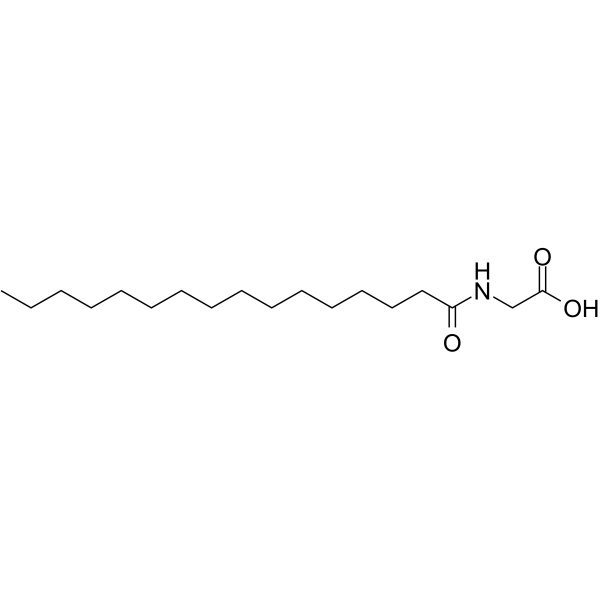
    Palmitoylglycine
    1 Publications Verification

    N-palmitoyl glycine

    Calcium Channel NO Synthase Neurological Disease Inflammation/Immunology
    Palmitoylglycine (N-palmitoyl glycine), an endogenous lipid that acts as a modulator of calcium influx and nitric oxide () production in sensory neurons. Palmitoylglycine is linked to an increased risk of Background Brugada syndrome (BrS) and interacts with BrS-associated proteins, demonstrating moderate binding affinities for DCC, CR1, CTSB, NAAA, DEFB1, EPHA1, IGF1/IGFBP3/ALS, and LTA .
    Palmitoylglycine
  • HY-W251598B

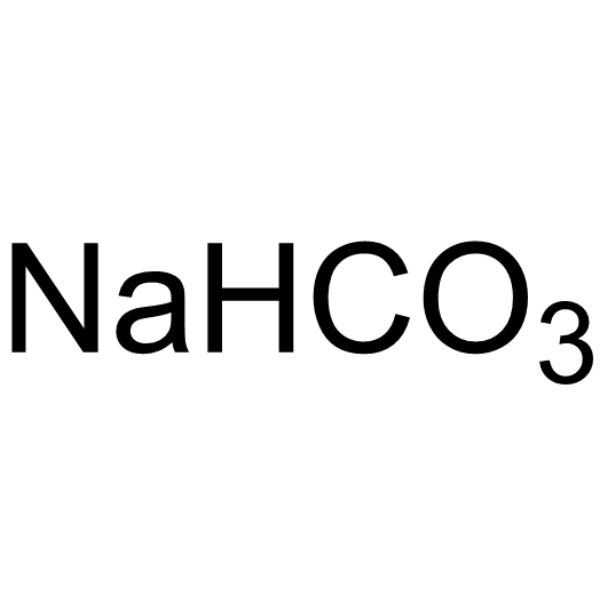
    Sodium hydrogen carbonate for molecular biology; Soda bicarbonate for molecular biology

    Bacterial NO Synthase Inflammation/Immunology Cancer
    Sodium bicarbonate, for molecular biology (Sodium hydrogen carbonate for molecular biolog; Soda bicarbonate for molecular biolog) is an inorganic salt. Sodium bicarbonate can maintain the pH of the culture medium, thereby affecting the expression of inducible nitric oxide synthase (iNOS) and nitric oxide (NO) production in macrophages and reversing the acidosis of the tumor microenvironment. Sodium bicarbonate is widely used in the fields of food, cosmetics, etc. Its main uses include buffers, flavoring agents, disinfectants, pharmaceuticals, and proton gradient regulators. Sodium bicarbonate is also commonly used as an antacid to inhibit gastrointestinal diseases, neutralize gastric acid, and reduce gastric discomfort .
    Sodium bicarbonate, for molecular biology
  • HY-W003969

    Ascensil; 2-Amino-4-methylpyridine

    NO Synthase Inflammation/Immunology
    Aminopicoline (Ascensil) is a potent and non-selective inhibitor of nitric oxide synthase (NOS) isoenzymes (iNOS, nNOS, eNOS). Aminopicoline competes with arginine at the substrate-binding site of nitric oxide synthase, reduces cellular nitric oxide production, inhibits the elevation of plasma nitrate, increases mean arterial pressure at high doses, and also serves as a basis for radiolabeled ligands to localize nitric oxide synthase binding sites. Aminopicoline can be used in the research of diseases associated with septic shock, joint inflammation, intestinal inflammation, and CNS inflammation .
    Aminopicoline
  • HY-N3383

    Ligstroside

    Mitochondrial Metabolism Neurological Disease
    Ligustroside (Ligstroside), a secoiridoid derivative, has outstanding performance on mitochondrial bioenergetics in models of early Alzheimer's disease (AD) and brain ageing by mechanisms that may not interfere with Aβ production. Ligustroside significantly inhibits nitric oxide production in lipopolysaccharide-activated RAW264.7 macrophages .
    Ligustroside
  • HY-20074

    (1S,2S,3R,5S)-(+)-Pinanediol

    Biochemical Assay Reagents Others
    (+)-Pinanediol ((1S,2S,3R,5S)-(+)-Pinanediol) is a potent inducer of melanin production. In S91 cells, it acts by inducing higher levels of pigmentation and nitric oxide (NO) synthesis .
    (+)-Pinanediol
  • HY-15509A
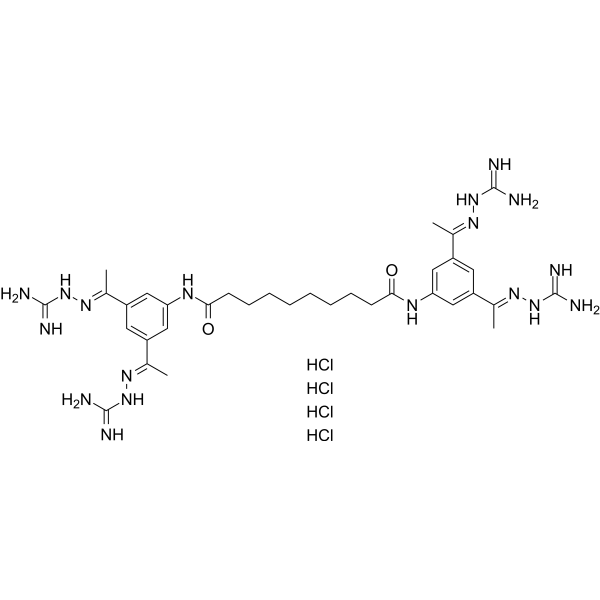
    Semapimod tetrahydrochloride
    4 Publications Verification

    CNI-1493; CPSI-2364 tetrahydrochloride

    TNF Receptor Interleukin Related p38 MAPK Inflammation/Immunology Cancer
    Semapimod tetrahydrochloride (CNI-1493), an inhibitor of proinflammatory cytokine production, can inhibit TNF-α, IL-1β, and IL-6. Semapimod tetrahydrochloride inhibits TLR4 signaling (IC50≈0.3 μM). Semapimod tetrahydrochloride inhibits p38 MAPK and nitric oxide production in macrophages. Semapimod tetrahydrochloride has potential in a variety of inflammatory and autoimmune disorders .
    Semapimod tetrahydrochloride
  • HY-N2300
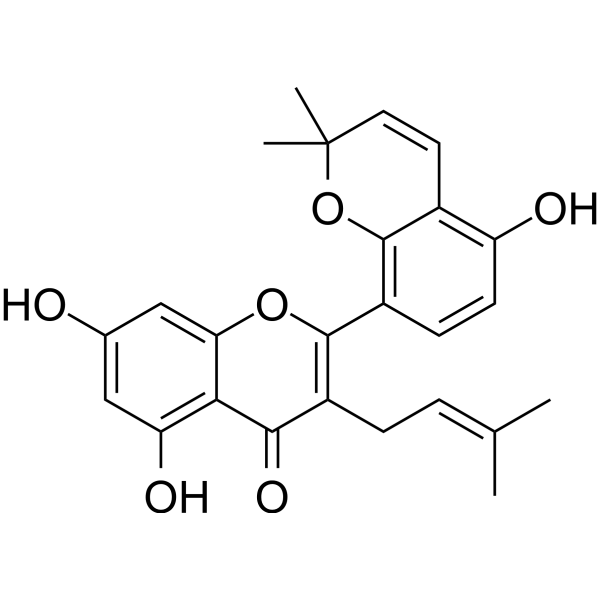
    Kuwanon A
    1 Publications Verification

    NO Synthase Metabolic Disease Inflammation/Immunology
    Kuwanon A is a flavone derivative isolated from the root barks of the mulberry tree (Morus alba L.); inhibits nitric oxide production with an IC50 of 10.5 μM.
    Kuwanon A
  • HY-N0268
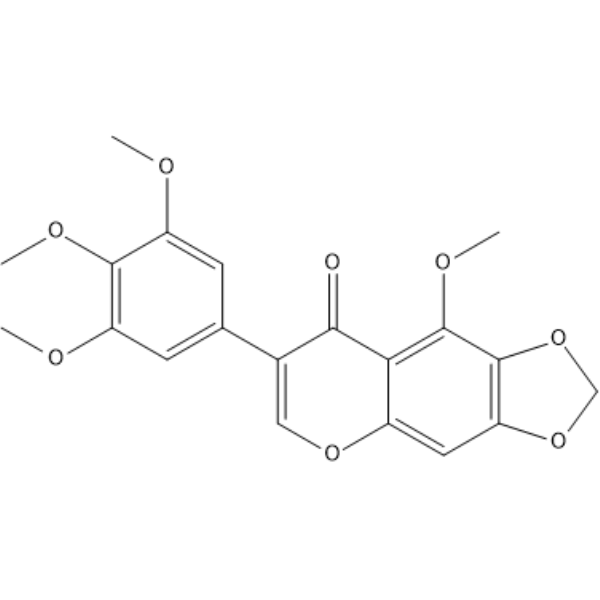
    Irisflorentin
    4 Publications Verification

    NO Synthase Inflammation/Immunology
    Irisflorentin, a naturally occurring isoflavone, is an abundant active constituent in Belamcanda chinensis. Irisflorentin markedly reduces the transcriptional and translational levels of inducible nitric oxide synthase (iNOS) as well as the production of NO. Anti-inflammatory activity .
    Irisflorentin
  • HY-17500
    Ataciguat
    1 Publications Verification

    HMR-1766

    Guanylate Cyclase Cardiovascular Disease
    Ataciguat (HMR-1766) is a nitric oxide-independent soluble guanylate cyclase (sGC) activator. Ataciguat is able to activate the ferric heme-iron redox form of sGC that stimulate the production of cyclic GMP (cGMP). Ataciguat exhibits vasodilator effects .
    Ataciguat
  • HY-N0479
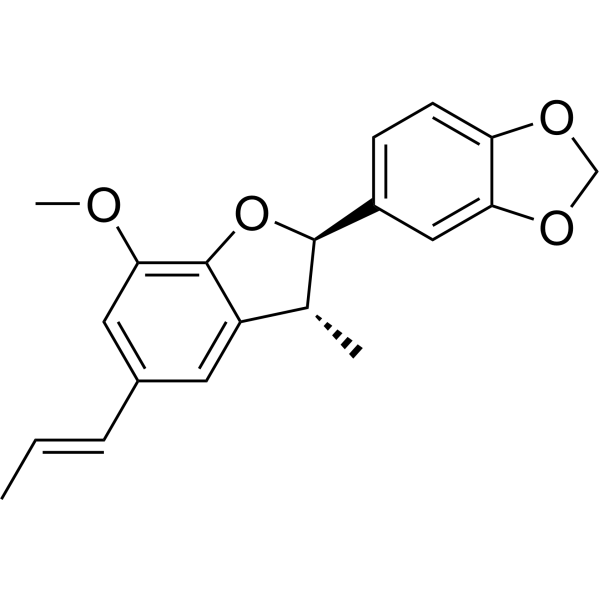
    Licarin B
    1 Publications Verification

    (-)-Licarin B

    PPAR GLUT Metabolic Disease
    Licarin B, a nitric oxide production inhibitor extracted from the component of the seeds of Myristica fragrans, improves insulin sensitivity via PPARγ and activation of GLUT4 in the IRS-1/PI3K/AKT pathway .
    Licarin B
  • HY-N11058

    Lipoxygenase NO Synthase Inflammation/Immunology
    Damnacanthol is a natural product that can be isolated from Damnacanthus major . Damnacanthol has anti-15-lipoxygenase activity and can inhibit nitric oxide production in LPS-activated macrophages RAW 264.7 cells .
    Damnacanthol
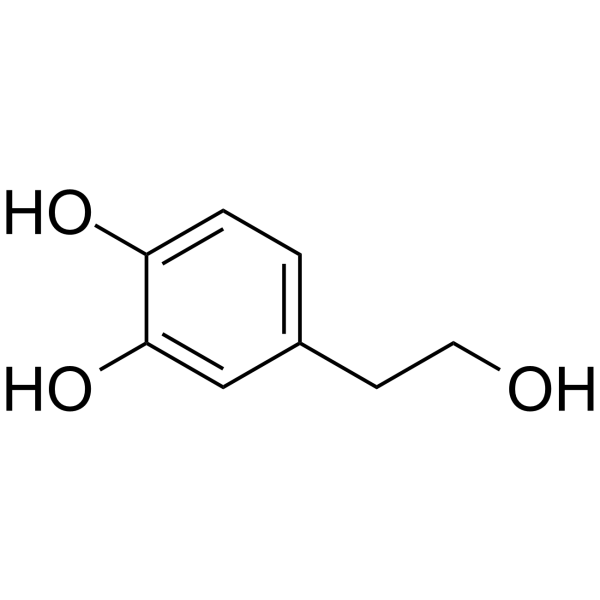
  • HY-W013435

    Fluorescent Dye Others
    1,2-Diaminoanthraquinone is a sensitivity, specificity and nontoxic nitric oxide (NO) fluorescent probe. 1,2-Diaminoanthraquinone can be used to detect NO productions in live cell and animals with a maximum of absorption at about 540 nm and a detection limit of 5 μM for NO .
    1,2-Diaminoanthraquinone
  • HY-114977

    DNA/RNA Synthesis Apoptosis Reactive Oxygen Species (ROS) Inflammation/Immunology Cancer
    Avenanthramide A is an orally active phytoalexin that targets the RNA helicase DDX3 with a KD of 8.8 μM. Avenanthramide A induces mitochondrial swelling and increased ROS production, and triggers apoptosis in CRC cells. Avenanthramide A inhibits smooth muscle cell proliferation and enhances nitric oxide production. Avenanthramide A can be used in research on colorectal cancer and atherosclerosis .
    Avenanthramide A
  • HY-N7976

    NO Synthase Inflammation/Immunology
    Quercetin 3-O-neohesperidoside is a flavonol diglycoside with NO production inhibitory activity and anti-inflammatory activity. Quercetin 3-O-neohesperidoside targets activated macrophages to block NO production, with an IC50 of 55 μM. Quercetin 3-O-neohesperidoside can be used in the research of inflammatory diseases .
    Quercetin 3-O-neohesperidoside
  • HY-34748

    Ethylideneacetone; (3Z)-pent-3-en-2-one

    Biochemical Assay Reagents Endogenous Metabolite Inflammation/Immunology
    3-Penten-2-one (Ethylideneacetone) inhibits nitric oxide production and inducible nitric oxide synthase expression via heme oxygenase-1 induction in RAW264.7 macrophages activated with Lipopolysaccharides (HY-D1056) (LPS) .
    3-Penten-2-one
  • HY-127029A

    NO Synthase Lipoxygenase Neurological Disease Inflammation/Immunology Cancer
    Umbelliprenin, a prenylated coumarin, is an antioxidant with anticancer, anti-inflammatory and immunomodulatory effects. Umbelliprenin inhibits lipoxygenase managing the inflammation pathways. In inflammatory macrophages, Umbelliprenin suppresses nitric oxide production as well as inducible nitric oxide synthase (NO synthase) .
    Umbelliprenin
  • HY-N12317

    NO Synthase Others
    Multiflorin B (compound 5) is a kind of kaempferol glycoside. Multiflorin B can be isolated from the root of the fern Neocheiropteris palmatopedata. Multiflorin B inhibits nitric oxide production at a concentration of 20 μg/ml with an inhibition of 52% .
    Multiflorin B
  • HY-N3393

    β-catenin Inflammation/Immunology
    Lethedioside A is a Enhancer of split 1 (Hes1) inhibitor with an IC50 of 9.5 μM. Lethedioside A inhibits Hes1 dimer formation. Lethedioside A exhibits weak inhibition of TCF4/β-catenin complex formation. Lethedioside A inhibits nitric oxide production by activated immune cells .
    Lethedioside A
  • HY-101757

    NCX-1015

    Interleukin Related Inflammation/Immunology
    NO-prednisolone is a nitric oxide (NO)-releasing derivative of Prednisolone. NO-prednisolone potently stimulates IL-10 production in vivo.
    NO-prednisolone
  • HY-N3426

    NO Synthase Akt AMPK Metabolic Disease
    Kazinol B, a prenylated flavan with a dimethyl pyrane ring, is an inhibitor of nitric oxide (NO) production. Kazinol B improves insulin sensitivity by enhancing glucose uptake via the insulin-Akt signaling pathway and AMPK activation. Kazinol B has the potential for diabetes mellitus research .
    Kazinol B
  • HY-W074890R

    N-palmitoyl glycine (Standard)

    Reference Standards Calcium Channel NO Synthase Neurological Disease Inflammation/Immunology
    Palmitoylglycine (Standard) is the analytical standard of Palmitoylglycine. This product is intended for research and analytical applications. Palmitoylglycine (N-palmitoyl glycine), an endogenous lipid that acts as a modulator of calcium influx and nitric oxide () production in sensory neurons. Palmitoylglycine is linked to an increased risk of Background Brugada syndrome (BrS) and interacts with BrS-associated proteins, demonstrating moderate binding affinities for DCC, CR1, CTSB, NAAA, DEFB1, EPHA1, IGF1/IGFBP3/ALS, and LTA[1][2][3].
    Palmitoylglycine (Standard)
  • HY-129876

    D-NG-nitroarginine methyl ester hydrochloride; H-D-Arg(NO2)-OMe hydrochloride

    NO Synthase Neurological Disease
    D-NAME (D-NG-nitroarginine methyl ester) hydrochloride is a potent nitric oxide synthase (NOS) inhibitor. D-NAME hydrochloride inhibits the activity of NOS, reducing the production of nitric oxide .
    D-NAME hydrochloride
  • HY-116885

    NO Synthase Inflammation/Immunology
    Thunalbene is a stilbene derivative isolated from Thunia alba. Thunalbene has a weak inhibitory effect on nitric oxide production and is not cytotoxic .
    Thunalbene
  • HY-N10214

    NO Synthase Inflammation/Immunology
    (-)-10,11-Dihydroxyfarnesol is a compound isolated from an endolichenic fungus Cryptomarasmius aucubae. (–)-10,11-Dihydroxyfarnesol significantly inhibits nitric oxide (NO) production .
    (-)-10,11-Dihydroxyfarnesol
  • HY-15509

    CNI-1493 free base; CPSI-2364

    Interleukin Related TNF Receptor p38 MAPK Inflammation/Immunology Cancer
    Semapimod, an inhibitor of proinflammatory cytokine production, can inhibit TNF-α, IL-1β, and IL-6. Semapimod inhibits TLR4 signaling (IC50≈0.3 μM). Semapimod inhibits p38 MAPK and nitric oxide production in macrophages. Semapimod has potential in a variety of inflammatory and autoimmune disorders .
    Semapimod
  • HY-N12139

    NO Synthase Cancer
    Nitric oxide production-IN-1(Compound 1) is a inhibitor of NO Production which isolated from Tupistra chinensis. Nitric oxide production-IN-1(Compound 1) inhibits NO production in rat abdomen macrophages induced by lipopolysaccharide
    Nitric oxide production-IN-1
  • HY-P10159

    Bacterial Infection
    Diplacol ia a natural compound from from Mimulus clevelandi and shows potent inhibitory activities against lipopolysaccharide (LPS)-induced nitric oxide production .
    DJK-5
  • HY-N1317

    Others Neurological Disease
    Salirepin is a phenolic glycoside from fruits of Idesia polycarpa, inhibits LPS-induced nitric oxide production .
    Salirepin
  • HY-N8132

    Reactive Oxygen Species (ROS) Inflammation/Immunology
    2,4,6-Trichlorol-3-methyl-5-methoxy-phenol 1-O-β-d-glucopyranosyl-(1 → 6)-β-d-glucopyranoside is a chlorophenyl glycoside found in the bulbs of Lilium brownie var. viridulum. 2,4,6-Trichlorol-3-methyl-5-methoxy-phenol 1-O-β-d-glucopyranosyl-(1 → 6)-β-d-glucopyranoside exhibits weak inhibition of NO production in LPS-stimulated RAW 264.7 cells .
    2,4,6-Trichlorol-3-methyl-5-methoxy-phenol 1-O-β-d-glucopyranosyl-(1 → 6)-β-d-glucopyranoside
  • HY-N2838

    NO Synthase Inflammation/Immunology
    Alismol is a natural sesquiterpene. Alismol shows promising inhibitory effects on INF-γ-induced nitric oxide production in murine macrophage RAW264.7 cells .
    Alismol
  • HY-N3473

    NO Synthase Neurological Disease
    Isomaculosidine is an alkaloid that can be isolated from D. dasycarpus. Isomaculosidine can inhibit nitric oxide (NO) production in lipopolysaccharide (LPS)-stimulated BV2 microglial cells .
    Isomaculosidine
  • HY-N3602A

    Rengyolone

    TNF Receptor NF-κB NO Synthase Inflammation/Immunology
    rel-Cleroindicin F (Rengyolone) is a cyclohexyl acetyl compound that can be isolated from the fruit of forsythia and has anti-inflammatory activity. It strongly inhibits the production of nitric oxide (NO) and tumor necrosis factor-alpha (TNF-α). rel-Cleroindicin F does this by downregulating the activity of NF-κB and NF-κB kinases in RAW 264.7 cells stimulated by LPS (HY-D1056), thus inhibiting the expression of inducible nitric oxide synthase (NO Synthase) and nitric oxide production .
    rel-Cleroindicin F
  • HY-146309

    NO Synthase Inflammation/Immunology
    iNOS-IN-2 (Compound 53) is a potent down-regulator of inducible nitric oxide synthase (iNOS) protein. iNOS-IN-2 effectively inhibits the NO production (IC50=6.4 μM). iNOS-IN-2 has a potential therapeutic effect on chronic inflammation .
    iNOS-IN-2
  • HY-N10023

    NO Synthase Inflammation/Immunology
    Physalin O is a physalin that can be isolated from Physalis angulata. Physalin O shows cytotoxicity to Hep G2 and MCF-7 cancer cells with IC50 values of 31.1 and 11.4 µM, respectively. Physalin O inhibits the production of nitric oxide (NO) and shows anti-inflammatory activities .
    Physalin O
  • HY-N11657

    Sanggenone A

    NF-κB Keap1-Nrf2 Inflammation/Immunology
    Sanggenon A (Sanggenone A) exerts anti-inflammatory effects by regulating NF-κB and HO-1/Nrf2 signaling pathways in BV2 and RAW264.7 cells. Sanggenon A markedly inhibits the Lipopolysaccharide (LPS; HY-D1056)-induced production of nitric oxide .
    Sanggenon A
  • HY-N8812

    NO Synthase Inflammation/Immunology
    19-[(β-D-Glucopyranosyl)oxy]-19-oxo-ent-labda-8(17),13-dien-16,15-olide, the metabolite of Neoandrographolide, inhibits nitric oxide (NO) production in lipopolysaccharide-activated macrophages .
    19-[(β-D-Glucopyranosyl)oxy]-19-oxo-ent-labda-8(17),13-dien-16,15-olide
  • HY-N11085

    NO Synthase IKK Inflammation/Immunology
    Isophysalin A is a physalin with alpha and beta unsaturated ketone components. Isophysalin A binds to GSH and targets multiple cysteine residues on IKKβ. Isophysalin A also inhibits inducible NO synthase (iNOS) and nitric oxide (NO) production, showing anti-inflammatory activity .
    Isophysalin A
  • HY-N9814

    NO Synthase Inflammation/Immunology
    Shanciol B, isolated from the ethyl acetate extract of the air-dried whole plant of Pholidota imbricate Hook, inhibits nitric oxide (NO) production and 1,1-diphenyl-2-picrylhydrazil (DPPH) radical scavenging activity . Shanciol B is a microsomal prostaglandin E synthase-1 (mPGES-1) inhibitor with anti-inflammatory activity .
    Shanciol B
  • HY-N10218

    Others Inflammation/Immunology
    Sterpurol D is a compound of the sterpurane sesquiterpenoid. Sterpurol D significantly inhibits nitric oxide (NO) production .
    Sterpurol D
  • HY-164361

    NO Synthase Inflammation/Immunology
    α-Gracinoic acid is a Chalcone (HY-121054) derivative with anti-inflammatory activity. α-Gracinoic acid inhibits nitric oxide production catalyzed by inducible nitric oxide synthase (iNOS) in lipopolysaccharide (LPS)-treated RAW 264.7 cells .
    2′-Hydroxy-2,3-dimethoxychalcone
  • HY-N10217

    NO Synthase Inflammation/Immunology
    Paneolilludinic acid is a compound isolated from an endolichenic fungus Cryptomarasmius aucubae. Paneolilludinic acid significantly inhibits nitric oxide (NO) production .
    Paneolilludinic acid
  • HY-N9092

    (E)-geranylferulic acid

    NO Synthase Infection Inflammation/Immunology
    Geranyl ferulate ((E)-geranylferulic acid), isolated from Zingiber officinale, exhibits inhibitory effect on the production of nitric oxide (NO) .
    Geranyl ferulate
  • HY-117601

    FXR NO Synthase Inflammation/Immunology
    11-Deoxyalisol B, a triterpene, shows the potent inhibitory activity on Lipopolysaccharide (LPS)-induced nitric oxide (NO) production .
    11-Deoxyalisol B
  • HY-N8759

    Others Inflammation/Immunology
    Vogeloside is an iridoid that can be isolated from the roots of Triosteum pinnatifidum. Vogeloside inhibits nitric oxide production in LPS-activated macrophages .
    Vogeloside
  • HY-W003969R

    Ascensil (Standard); 2-Amino-4-methylpyridine (Standard)

    Reference Standards NO Synthase Others
    Aminopicoline (Standard) is the analytical standard of Aminopicoline. Aminopicoline (Ascensil) is a potent and non-selective inhibitor of nitric oxide synthase (NOS) isoenzymes (iNOS, nNOS, eNOS). Aminopicoline competes with arginine at the substrate-binding site of nitric oxide synthase, reduces cellular nitric oxide production, inhibits the elevation of plasma nitrate, increases mean arterial pressure at high doses, and also serves as a basis for radiolabeled ligands to localize nitric oxide synthase binding sites. Aminopicoline can be used in the research of diseases associated with septic shock, joint inflammation, intestinal inflammation, and CNS inflammation 。
    Aminopicoline (Standard)
  • HY-156398

    NO Synthase β-catenin NF-κB Inflammation/Immunology
    Anti-inflammatory agent 60(compound 21) inhibitsnitric oxide production, with anIC50value of 12.95 μM.Anti-inflammatory agent 60reducesiNOS,phosphorylated p65, andβ-cateninexpression in a concentration-dependent manner .
    Anti-inflammatory agent 60
  • HY-N9896

    NO Synthase Inflammation/Immunology
    Anhydronotoptol is a potent nitric oxide inhibitory coumarin. Anhydronotoptol inhibits NO production in RAW 264.7 cells induced by LPS with an IC50 value of 36.6 μM .
    Anhydronotoptol
  • HY-N9675

    NO Synthase Inflammation/Immunology
    (+)-Hannokinol can be isolated from AMOMUM TSAO-KO (ginger family) fruit. (+)-Hannokinol inhibits lipopolysaccharide-induced nitric oxide production in BV2 microglia .
    (+)-Hannokinol
  • HY-117786

    PKC Neurological Disease
    Go 7874 is a protein kinase C (PKC) inhibitor. Go 7874 mediated neuroprotection against LPS/IFNg-induced neuronal cell death in an immune-mediated neurotoxicity model, not through PKC activity. In contrast, the neuroprotective mechanism of Go 7874 involves inhibition of inducible nitric oxide synthase (iNOS) gene expression, followed by reduced nitric oxide (NO) production .
    Go 7874
  • HY-N12478

    NO Synthase Inflammation/Immunology
    Ainsliadimer A is a sesquiterpene lactone dimer with an unusual carbon skeleton. Ainsliadimer A can be obtained from from Ainsliaea macrocephala. Ainsliadimer A inhibits the production of nitric oxide in cells stimulated by LPS .
    Ainsliadimer A

Inquiry Online

Your information is safe with us. * Required Fields.

Salutation


Country or Region *

Applicant Name *


Organization Name *

Department *


Email Address *


Product Name *

Cat. No.


Requested quantity *

Phone Number *


Remarks

Inquiry Online

Inquiry Information

Product Name:
Cat. No.:
Quantity:
MCE Japan Authorized Agent:

