
1. Search Result
Search Result
Results for "

nucleic

" in MedChemExpress (MCE) Product Catalog:

866

Inhibitors & Agonists

11

Screening Libraries

150

Fluorescent Dye

62

Biochemical Assay Reagents

45

Peptides

19

MCE Kits

1

Inhibitory Antibodies

75

Natural
Products

1

Recombinant Proteins

65

Isotope-Labeled Compounds

52

Click Chemistry

337

Oligonucleotides

1

GMP Molecules

Cat. No. Product Name Target Research Areas Chemical Structure
  • HY-112754A
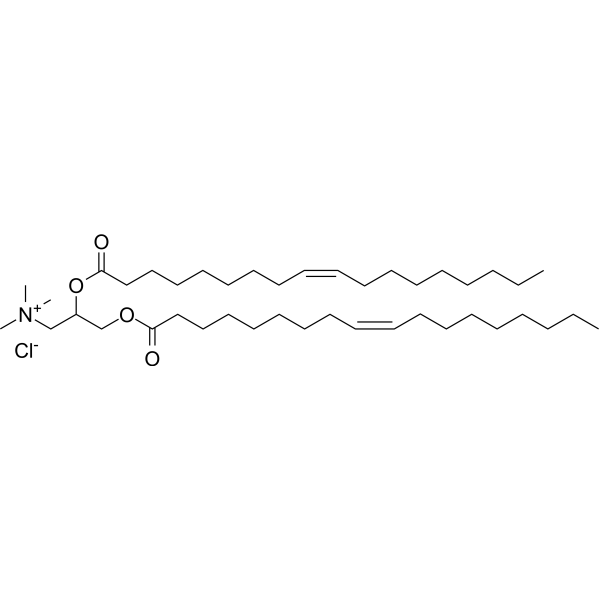
    DOTAP chloride
    10+ Cited Publications

    1,2-Dioleoyl-3-trimethylammonium-propane chloride

    Liposome Cancer
    DOTAP chloride is a useful and effective cationic lipid for transient and stable transfection DNA (plasmids, bacmids) and modified nucleic acids (antisense oligonucleotides) with out the use of helper lipid .
    DOTAP chloride
  • HY-D0184
    2'-Deoxycytidine
    5+ Cited Publications

    Deoxycytidine; Cytosine deoxyriboside; Deoxyribose cytidine

    Endogenous Metabolite Cancer
    2'-Deoxycytidine, a deoxyribonucleoside, can inhibit biological effects of Bromodeoxyuridine (Brdu). 2'-Deoxycytidine is essential for the synthesis of nucleic acids, that can be used for the research of cancer .
    2'-Deoxycytidine
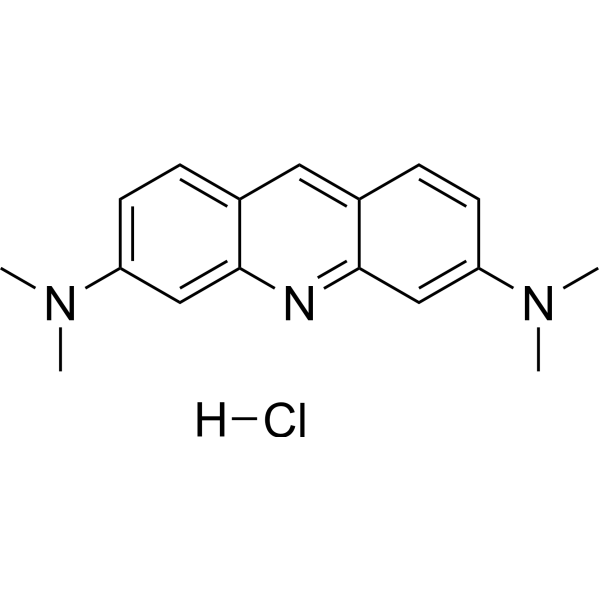
  • HY-101879
    Acridine Orange hydrochloride
    35+ Cited Publications

    DNA Stain Parasite Fluorescent Dye Others
    Acridine Orange hydrochloride is a cell-penetrable nucleic acid-selective fluorescent dye. Acridine Orange hydrochloride produces orange fluorescence when it binds to ssDNA or RNA, and green fluorescence when it binds to dsDNA (Ex: 488 nM; Em: green fluorescence at 530 nm, orange fluorescence at 640 nm) .
    Acridine Orange hydrochloride
  • HY-Y1055
    Guanine
    3 Publications Verification

    DNA/RNA Synthesis Endogenous Metabolite Infection Neurological Disease Cancer
    Guanine is one of the fundamental components of nucleic acids (DNA and RNA). Guanine is a purine derivative, consisting of a fused pyrimidine-imidazole ring system with conjugated double bonds. Guanine has the potential to serve as a large-capacity N pool. Guanine has cytotoxic, antinociceptive and neuroprotective effects .
    Guanine
  • HY-W010832
    Uridine-5'-diphosphate disodium salt
    2 Publications Verification

    P2Y Receptor DNA/RNA Synthesis Endogenous Metabolite Metabolic Disease Inflammation/Immunology
    Uridine-5'-diphosphate disodium salt is a potent, selective P2Y6 receptor native agonist (EC50=300 nM; pEC50=6.52 for human P2Y6 receptor). Uridine-5'-diphosphate disodium salt, an endogenous metabolite, catalyzes the glucuronidation of a wide array of substrates and is used in nucleic acid (RNA) biosynthesis .
    Uridine-5'-diphosphate disodium salt
  • HY-108477
    TMPyP4 tosylate
    5+ Cited Publications

    TMP 1363

    G-quadruplex Telomerase Cholinesterase (ChE) SARS-CoV Cancer
    TMPyP4 tosylate (TMP 1363) is a quadruplex-specific ligand. TMPyP4 tosylate inhibits the interaction between G-quadruplexes and IGF-1. TMPyP4 tosylate is a telomerase inhibitor and inhibits cancer cells proliferation. TMPyP4 tosylate is also a stabilizer of nucleic acid secondary structure and an acetylcholinesterase inhibitor. Besides, TMPyP4 tosylate has antiviral activity against SARS-CoV-2 .
    TMPyP4 tosylate
  • HY-D0150
    Thiazole Orange
    1 Publications Verification

    Fluorescent Dye Others
    Thiazole Orange is an asymmetric anthocyanin dye that can be coupled with oligonucleotides (ONs) to prepare fluorescent hybridization probes. Thiazole Orange has been widely used in biomolecular detection and staining of DNA/ RNA in gels and can be used for reticulocyte analysis. Thiazole orange generates a significant fluorescence enhancement and high quantum yield when it binds with nucleic acids, especially RNA. Thiazole orange can permeate living cell membranes. Thiazole orange can use UV light for detection, but can also be detected with blue light. The excitation and emission of Thiazole orange are λex = 510 nm (488 nm and 470 nm also show strong excitation) and λem = 527 nm, respectively .
    Thiazole Orange
  • HY-D0835A

    Hydroxyapatite (<50 nm)

    Biochemical Assay Reagents Cardiovascular Disease Inflammation/Immunology
    Hydroxylapatite (Hydroxyapatite) (<50 nm) is a natural form of calcium phosphate and is the main mineral component of bones and teeth. Hydroxylapatite (<50 nm) can stimulate the expression and secretion of collagen in primary human dermal fibroblasts. Hydroxylapatite (<50 nm) has good biocompatibility, bioactivity, and bone conductivity, making it suitable for targeted drug or nucleic acid delivery. Hydroxylapatite (<50 nm) can be used in research on osteoarthritis, gout, and atherosclerosis .
    Hydroxylapatite (<50 nm)
  • HY-B1099
    Hycanthone
    2 Publications Verification

    DNA/RNA Synthesis Topoisomerase Parasite Infection
    Hycanthone is a thioxanthenone DNA intercalator and inhibits RNA synthesis as well as the DNA topoisomerases I and II. Hycanthone inhibits nucleic acid biosynthesis and inhibits apurinic endonuclease-1 (APE1) by direct protein binding with a KD of 10 nM. Hycanthone is a bioactive metabolite of Lucanthone (HY-B2098) and has anti-schistosomal agent .
    Hycanthone
  • HY-D1247

    Biochemical Assay Reagents Others
    Hydroxynaphthol Blue is an azo dye and serves as a metal indicator. Hydroxynaphthol Blue binds to specific metal ions to form stable complexes with distinct color and fluorescence properties. Hydroxynaphthol Blue is used for the visual monitoring of isothermal nucleic acid amplification results. A visible color difference appears between positive and negative nucleic acid amplification reactions, allowing result discrimination by the naked eye without opening the reaction tube .
    Hydroxynaphthol Blue
  • HY-D0996

    DNA Stain Others
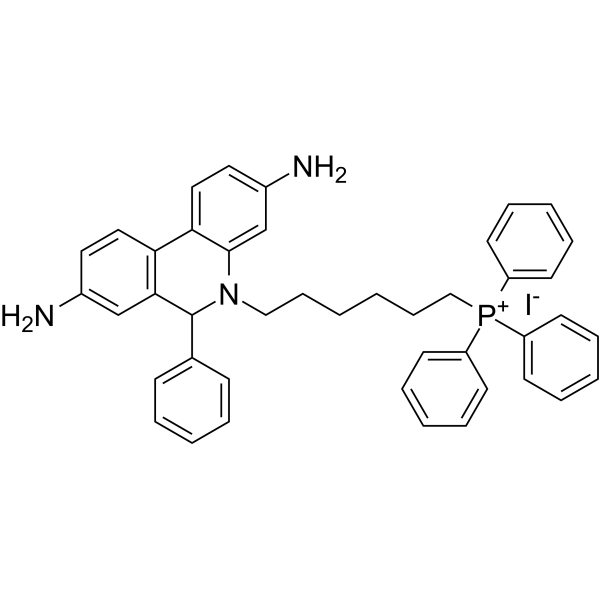
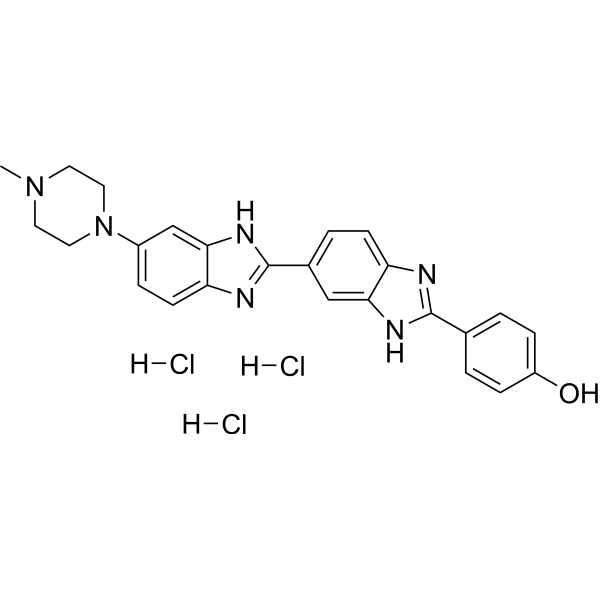
    Lds-751 is a nucleic acid stain that mainly detects DNA. Lds-751 is a nucleic acid stain that mainly detects DNA. Lds-751 has a high affinity for DNA and fluorescence is enhanced after binding, but the maximum emission wavelength is 670nm. Lds-751 and Thiazole orange can be used for the differentiation of red blood cells, platelets, reticulocytes, and nucleated cells and can be stimulated at 488nm. Studies have shown that LDS-751 binds almost exclusively to mitochondria when incubated with nucleated living cells. After nucleated Acridine Orange (HY-101879) staining and LDS-751 treatment of cells, confocal microscopy revealed almost no co-location of the cells. Staining with Rhodamine 123 (HY-D0816), a dye known to bind polarized mitochondria, was almost identical to the pattern observed with LDS-751 .
    LDS-751
  • HY-46759

    Liposome Infection
    Genevant CL1 is an ionizable lipid (pKa = 6.3) suitable for the preparation of lipid nanoparticles (LNPs) for delivering nucleic acid payloads and intramuscular vaccines. Genevant CL1 is a component of lipid nanoparticle delivery systems for mRNA vaccines .
    Genevant CL1
  • HY-P0311

    Bacterial Infection
    LAH4, an alpha-helix of the designed amphipathic peptide antibiotic, exhibits potent antimicrobial, nucleic acid transfection and cell penetration activities. LAH4 possesses high plasmid DNA delivery capacities. LAH4 has a strong affinity for anionic lipids found in the outer membrane of bacterial membranes .
    LAH4
  • HY-17564
    2'-Deoxycytidine hydrochloride
    5+ Cited Publications

    2'-Deoxycytidine monohydrochloride; Deoxycytidine hydrochloride; NSC 83251

    Endogenous Metabolite Nucleoside Antimetabolite/Analog Cancer
    2'-Deoxycytidine hydrochloride is an orally effective nucleic acid biosynthesis enzyme inhibitor. 2'-Deoxycytidine hydrochloride competes with nucleic acid biosynthesis enzymes and nucleoside transporters, thereby reducing the toxicity of cytarabine. 2'-Deoxycytidine (hydrochloride) can be used in the research of L1210 lymphoblastic leukemia .
    2'-Deoxycytidine hydrochloride
  • HY-D1098
    SYBR Green II
    3 Publications Verification

    Fluorescent Dye Others
    SYBR Green II is a fluorescent nucleic acid dye that mainly binds single-stranded nucleotides. SYBR Green II is sensitive to oligonucleotides or larger nucleic acid polymers in a variety of cells and gels. SYBR Green II can be used to study cell structure, membrane integrity or function, and cell cycle distribution. Wavelength 484/515 nm .
    SYBR Green II
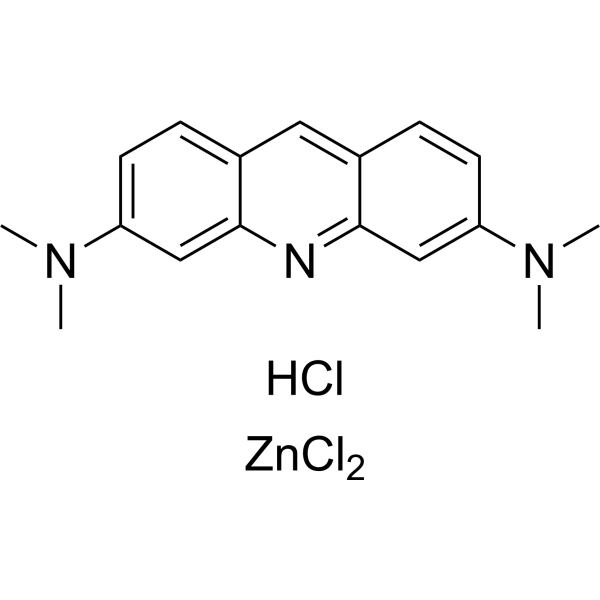
  • HY-D0942
    Acridine Orange zinc chloride salt
    Maximum Cited Publications
    38 Publications Verification

    Euchrysine 3RX

    Parasite Fluorescent Dye DNA Stain Others
    Acridine Orange (Euchrysine 3RX) zinc chloride salt is a cell-penetrable nucleic acid-selective fluorescent dye. Acridine Orange zinc chloride salt produces orange fluorescence when it binds to ssDNA or RNA, and green fluorescence when it binds to dsDNA (Ex: 488 nM; Em: green fluorescence at 530 nm, orange fluorescence at 640 nm) .
    Acridine Orange zinc chloride salt
  • HY-W010820
    Uridine 5'-diphosphate sodium salt
    2 Publications Verification

    P2Y Receptor DNA/RNA Synthesis Endogenous Metabolite Metabolic Disease Inflammation/Immunology
    Uridine 5'-diphosphate sodium salt is a potent, selective P2Y6 receptor native agonist (EC50=300 nM; pEC50=6.52) and a potent P2Y14 antagonist (pEC50=7.28). Uridine 5'-diphosphate sodium salt, an endogenous metabolite, catalyzes the glucuronidation of a wide array of substrates and is used in nucleic acid (RNA) biosynthesis .
    Uridine 5'-diphosphate sodium salt
  • HY-143702

    NBD-DOTAP

    Fluorescent Dye Liposome Inflammation/Immunology Cancer
    Fluorescent DOTAP (NBD-DOTAP) is a cationic lipid which can be used for nucleic acid and protein delivery. Fluorescent DOTAP is labeled with a fluorophore NBD (maximum excitation/emission wavelength ∼463/536 nm). Fluorescent DOTAP can be used for gene delivery systems, drug delivery, as well as cell imaging and nanocarrier tracking. Fluorescent DOTAP is an ideal candidate for both biological and pharmaceutical formulation (e.g. co-delivery of vaccines) research .
    Fluorescent DOTAP
  • HY-137265

    Flavivirus Infection
    Aminomethyltrioxsalen hydrochloride is a psoralen derivative and nucleic acid intercalator. Aminomethyltrioxsalen hydrochloride can penetrate intact cells and react with nucleic acid secondary structures in vivo without disrupting the tissue structure of natural nucleoproteins. Aminomethyltrioxsalen hydrochloride inactivates viruses by crosslinking nucleic acid pyrimidine residues after exposure to UV-A radiation. Aminomethyltrioxsalen hydrochloride can be used in research related to dengue virus infection .
    Aminomethyltrioxsalen hydrochloride
  • HY-Y0030A

    3-HPA

    Biochemical Assay Reagents Drug Intermediate Infection
    3-Hydroxypicolinic acid, matrix substance for MALDI-MS is a matrix. 3-Hydroxypicolinic acid, matrix substance for MALDI-MS coordinates with metal ions such as copper to form complexes with cytotoxic and antimycobacterial activity. 3-Hydroxypicolinic acid, matrix substance for MALDI-MS is used for the analysis of oligodeoxynucleotides in matrix-assisted laser desorption ionization time-of-flight mass spectrometry (MALDI-TOF MS). 3-Hydroxypicolinic acid, matrix substance for MALDI-MS is useful for nucleic acid analysis and anti-tuberculosis compound development .
    3-Hydroxypicolinic acid, matrix substance for MALDI-MS
  • HY-145225

    Liposome Others
    DLin-K-C3-DMA, a cationic lipid, can be used in the synthesis of nucleic acid-lipid particle to delivery of nucleic acid .
    DLin-K-C3-DMA
  • HY-D0841
    Guanidine thiocyanate
    3 Publications Verification

    Endogenous Metabolite Infection Cancer
    Guanidine thiocyanate is a strong protein denaturant and potent inhibitor of nucleases. Guanidinium thiocyanate is a nucleic acid protector in the extraction of DNA and RNA from cells. Guanidine thiocyanate is a common component of buffers used for nucleic acid extraction .
    Guanidine thiocyanate
  • HY-106991A

    S-303 dihydrochloride

    HIV Bacterial CHIKV Infection
    Amustaline (S-303) dihydrochloride, a nucleic acid-targeted alkylator, is an efficient pathogen inactivation agent for blood components containing red blood cells. Amustaline dihydrochloride has three components: an acridine anchor (an intercalator that targets nucleic acids non-covalently), an effector (a bis-alkylator group that reacts with nucleophiles), and a linker (a small flexible carbon chain containing a labile ester bond that hydrolyzes at neutral pH to yield non-reactive breakdown products) .
    Amustaline dihydrochloride
  • HY-DY1038

    Fluorescent Dye Others
    Acridine Orange hydrochloride (solution) is a cell-penetrable nucleic acid-selective fluorescent dye. Acridine Orange hydrochloride produces orange fluorescence when it binds to ssDNA or RNA, and green fluorescence when it binds to dsDNA (Ex: 488 nM; Em: green fluorescence at 530 nm, orange fluorescence at 640 nm) .
    Solvent and Concentration: Sterile water: 10 mg/mL
    The 1 mL volume is defined as the base specification. All larger sizes correspond to incremental volumes of this base.
    Acridine Orange hydrochloride (solution)
  • HY-46317

    Phosphoramidites DNA/RNA Synthesis Metabolic Disease
    DMT-5Me-dC(Bz)-CE Phosphoramidite is a chemical structural unit that can be used in solid-phase DNA synthesis. DMT-5Me-dC(Bz)-CE Phosphoramidite can introduce the 5-methylcytidine base into the DNA chain to enhance its stability and binding affinity. DMT-5Me-dC(Bz)-CE Phosphoramidite can be used to construct modified oligonucleotides, especially for constructing locked nucleic acids (LNA) .
    DMT-5Me-dC(Bz)-CE Phosphoramidite
  • HY-142997

    Liposome Cancer
    DOSPA is a cationic lipid. DOSPA can form lipid nanoparticles with DOPE (HY-112005) to serve as a carrier for nucleic acid transfection. DOSPA is applicable in research related to drug delivery .
    DOSPA
  • HY-110407

    LNA-A

    Nucleoside Antimetabolite/Analog DNA/RNA Synthesis Metabolic Disease
    2'-O,4'-C-Methyleneadenosine (LNA-A) is a locked nucleic acid (LNA) and is also an adenosine analog .
    2'-O,4'-C-Methyleneadenosine
  • HY-D0941
    5-Carboxytetramethylrhodamine
    1 Publications Verification

    Fluorescent Dye Others
    5-Carboxytetramethylrhodamine can be used as a fluorescent probe of nucleic acids and proteins. 5-Carboxytetramethylrhodamine displays excitation maxima of 558 nm and an emission maximum of 586 nm .
    5-Carboxytetramethylrhodamine
  • HY-154804

    Liposome Others
    DLin-M-C4-DMA (Compound MC4) is a cationic lipid. DLin-M-C4-DMA can be used for delivery of nucleic acids .
    DLin-M-C4-DMA
  • HY-149037A

    N4-Spermine cholesteryl carbamate pentahydrochloride

    Liposome Others
    GL67 (N4-Spermine cholesteryl carbamate) (pentahydrochloride) is a cationic lipid. GL67 can be used for nucleic acid agents and vaccines delivery, and gene transfection .
    GL67 pentahydrochloride
  • HY-P0311A

    Bacterial Infection
    LAH4 TFA, an alpha-helix of the designed amphipathic peptide antibiotic, exhibits potent antimicrobial, nucleic acid transfection and cell penetration activities. LAH4 TFA possesses high plasmid DNA delivery capacities. LAH4 TFA has a strong affinity for anionic lipids found in the outer membrane of bacterial membranes .
    LAH4 TFA
  • HY-W010417

    Reactive Oxygen Species (ROS) Others
    4-Thiouracil is a thionucleobase with cytostatic properties. 4-Thiouracil can be used as biological photoprobes to detect RNA structures and nucleic acid-nucleic acid contacts. 4-Thiouracil can also act as a strong ultraviolet A (UVA) photosensitizer, providing a source of the reactive oxygen species of O2. 4-Thiouracil is promising for research of photocross linking, photodamage, as well as photodynamic therapy .
    4-Thiouracil
  • HY-P3150

    Ser/Thr Protease Others
    Recombinant Proteinase K is a serine protease that cleaves the carboxy-terminated peptide bonds of aliphatic and aromatic amino acids. Recombinant Proteinase K can be used to digest proteins and remove contamination from nucleic acid preparations .
    Recombinant Proteinase K
  • HY-126327A

    Histone Methyltransferase Cancer
    UNC4976 TFA is a positive allosteric modulator (PAM) peptidomimetic of CBX7 chromodomain binding to nucleic acids. UNC4976 TFA simultaneously antagonizes H3K27me3-specific recruitment of CBX7 to target genes while increasing non-specific binding to DNA and RNA .
    UNC4976 TFA
  • HY-Y1055R

    Reference Standards DNA/RNA Synthesis Endogenous Metabolite Neurological Disease Cancer
    Guanine (Standard) is the analytical standard of Guanine (HY-Y1055). This product is intended for research and analytical applications. Guanine is one of the fundamental components of nucleic acids (DNA and RNA). Guanine is a purine derivative, consisting of a fused pyrimidine-imidazole ring system with conjugated double bonds. Guanine has the potential to serve as a large-capacity N pool. Guanine has cytotoxic, antinociceptive and neuroprotective effects .
    Guanine (Standard)
  • HY-D1098A

    Fluorescent Dye Others
    SYBR Green II (Ionic form) is a fluorescent nucleic acid dye that mainly binds single-stranded nucleotides. SYBR Green II is sensitive to oligonucleotides or larger nucleic acid polymers in a variety of cells and gels. SYBR Green II can be used to study cell structure, membrane integrity or function, and cell cycle distribution. Wavelength 484/515 nm .
    SYBR Green II (Ionic form)
  • HY-111807

    Nucleoside Antimetabolite/Analog DNA/RNA Synthesis Metabolic Disease
    Locked nucleic acid 1 is a derivative of LNA-type nucleoside.
    Locked nucleic acid 1
  • HY-134178A

    5-Fluorouridine-5'-triphosphate trisodium

    Nucleoside Antimetabolite/Analog Metabolic Disease
    5-F-UTP (5-Fluorouridine-5'-triphosphate) trisodium is a monomeric raw material that can be used for nucleic acid synthesis.
    5-F-UTP trisodium
  • HY-171631

    DNA/RNA Synthesis Others
    5'-O-DMTr-Nap-dU-3'-CE Phosphoramidite is a phosphoramidite monomer used in nucleic acid synthesis, such as oligonucleotides.
    5'-O-DMTr-Nap-dU-3'-CE Phosphoramidite
  • HY-130803

    Nucleoside Antimetabolite/Analog Cancer
    5-Methyl-5,6-dihydrouridine is a minor constituent in the chromosomal RNA of the rat ascites tumor. 5-Methyl-5,6-dihydrouridine can be used for nucleic acid modification .
    5-Methyl-5,6-dihydrouridine
  • HY-149037

    N4-Spermine cholesteryl carbamate

    Liposome Others
    GL67 (N4-Spermine cholesteryl carbamate) is a cationic lipid. GL67 can be used for nucleic acid agents and vaccines delivery, and gene transfection .
    GL67
  • HY-132146A

    DNA/RNA Synthesis Others
    5-Propargylamino-ddCTP (trisodium) solution (25mM), a nucleoside molecule that can be used to synthesis of cyanine dye-nucleotide conjugate which is used in nucleic acid labeling or sequence analysis .
    5-Propargylamino-ddCTP trisodium solution (25mM)
  • HY-D1079

    DNA Stain Others
    EDANS sodium is a potent fluorogenic substrates. EDANS sodium is a donor for FRET-based nucleic acid probes and protease substrates. EDANS sodium is often paired with DABCYL or DABSYL. The optimal absorbance and emission wavelengths of EDANS sodium are λabs = 336 nm and λem = 490 nm respectively .
    EDANS sodium
  • HY-P2878A

    PDE, Rattlesnake venom

    Phosphodiesterase (PDE) Metabolic Disease
    Phosphodiesterase l, Rattlesnake venom (PDE, Rattlesnake venom) is a non-selective phosphodiester bond hydrolase targeting phosphodiester bonds in oligonucleotides, catalyzing their hydrolysis into mononucleotides. Phosphodiesterase l, Rattlesnake venom cleaves phosphodiester linkages in DNA fragments digested by DNase I. Phosphodiesterase l, Rattlesnake venom is promising for research of nucleic acid structure and metabolism .
    Phosphodiesterase l, Rattlesnake venom
  • HY-126327

    Histone Methyltransferase Cancer
    UNC4976 is a positive allosteric modulator (PAM) peptidomimetic of CBX7 chromodomain binding to nucleic acids. UNC4976 simultaneously antagonizes H3K27me3-specific recruitment of CBX7 to target genes while increasing non-specific binding to DNA and RNA .
    UNC4976
  • HY-177594

    Others Others
    3-Methyl-CTP is a chemical entity relevant to the field of nucleic acid research, particularly associated with alternative nucleic acid molecules and their applications .
    3-Methyl-CTP
  • HY-W540122

    Biochemical Assay Reagents Others
    Fmoc-PNA-C(Bhoc)-OH is a peptide nucleic acid monomers, and can be used in the synthesis of peptide nucleic acid compounds .
    Fmoc-PNA-C(Bhoc)-OH
  • HY-147320

    DNA/RNA Synthesis Phosphoramidites Others
    3'-DMTr-dG(dmf) is a guanosine derivative used in the synthesis of nucleic acids .
    3'-DMTr-dG(dmf)
  • HY-W1119951

    Drug Intermediate DNA/RNA Synthesis Others
    β-D-Galaltosamine hydrochloride is an important intermediate that can be used in the synthesis of nucleic acids and other substances.
    β-D-Galaltosamine hydrochloride
  • HY-161164

    DNA Stain Others
    Tricyclic cytosine tC is a fluorescent base analogue that can be used as a fluorescent probe in nucleic acid-containing systems. The excitation wavelength is 385 nm and the emission wavelength is 505 nm .
    Tricyclic cytosine tC

Inquiry Online

Your information is safe with us. * Required Fields.

Salutation


Country or Region *

Applicant Name *


Organization Name *

Department *


Email Address *


Product Name *

Cat. No.


Requested quantity *

Phone Number *


Remarks

Inquiry Online

Inquiry Information

Product Name:
Cat. No.:
Quantity:
MCE Japan Authorized Agent:

