

From 11:00 pm to 12:00 pm EST ( 8:00 pm to 9:00 pm PST ) on January 6th, the website will be under maintenance. We are sorry for the inconvenience. Please arrange your schedule properly.
Tanezumab (RN-624) is a humanized anti-NGF mAb with high affinity and specificity. Tanezumab blocks NGF binding to its receptors, p75 and TrkA, in the peripheral nervous system. Tanezumab can be used in studies of acute and chronic pain such as osteoarthritis, knee and neuralgia, as well as post-herpetic neuralgia .
Ro 08-2750 is a non-peptide and reversible nerve growth factor (NGF) inhibitor which binds to NGF, and with an IC50 of ~ 1 μM. Ro 08-2750 inhibits NGF binding to p75NTR selectively over TRKA . Ro 08-2750 is a selective MSI RNA-binding activity inhibitor, with an IC50 of 2.7 μM .
Bedinvetmab (ZTS-00508841) is a canine monoclonal antibody (mAb) targeting nerve growth factor (NGF). Bedinvetmab inhibits NGF interaction with tropomyosin receptor kinase A (trkA) and p75 neurotrophin receptor (p75NTR) receptors. Bedinvetmab can be used for the research of osteoarthritis pain in dogs .
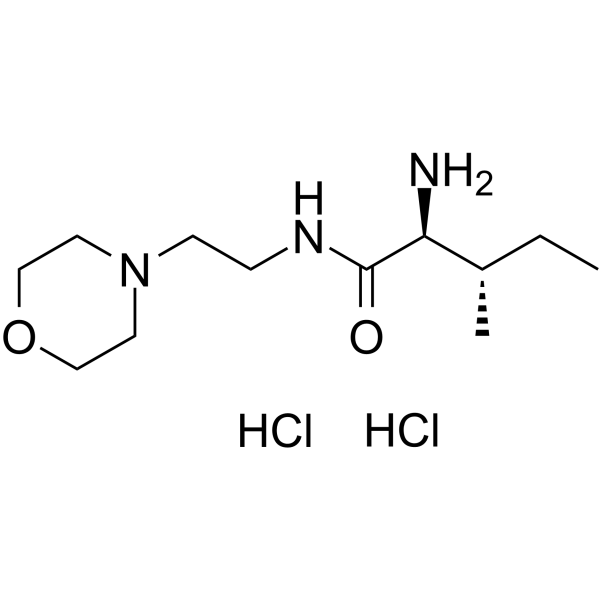
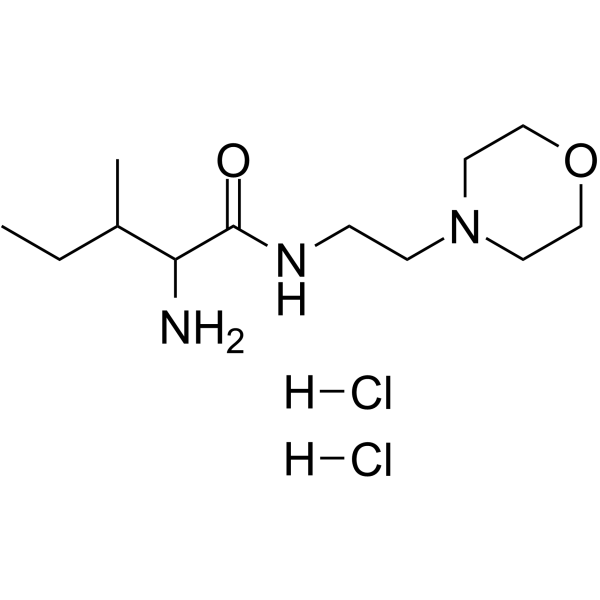
LM11A-31 dihydrochloride, a non-peptide p75NTR (neurotrophin receptor p75) modulator, is an orally active and potent proNGF (nerve growth factor) antagonist. LM11A-31 dihydrochloride is an amino acid derivative with high blood-brain barrier permeability and blocks p75-mediated cell death. LM11A-31 dihydrochloride reverses cholinergic neurite dystrophy in Alzheimer's disease mouse models with mid- to late-stage disease progression .
LM11A-31, a non-peptide p75NTR (neurotrophin receptor p75) modulator, is an orally active and potent proNGF (nerve growth factor) antagonist. LM11A-31 is an amino acid derivative with high blood-brain barrier permeability and blocks p75-mediated cell death. LM11A-31 reverses cholinergic neurite dystrophy in Alzheimer's disease mouse models with mid- to late-stage disease progression .
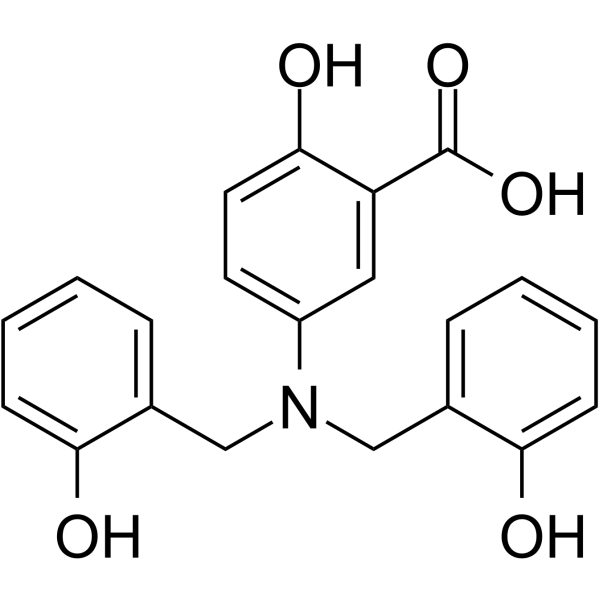
THX-B is a potent and non-peptidic p75NTR (neurotrophin receptor p75) antagonist. THX-B can be used in the research of diabetic kidney disease, neurodegenerative and inflammatory disorders .
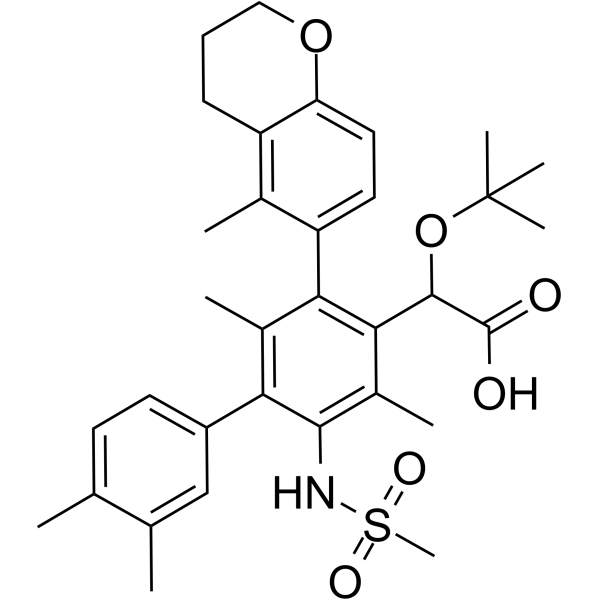
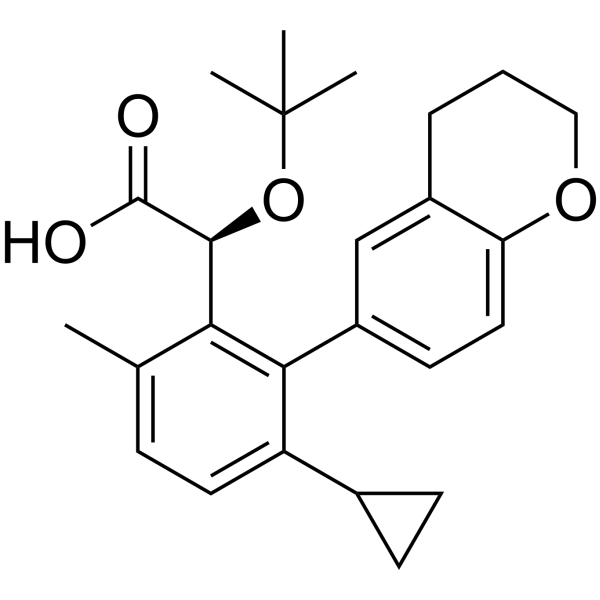
Pirmitegravir is a potent and first-in-class inhibitor of allosteric integrase (ALLINI) that targets LEDGF/p75 binding site. Pirmitegravir displays picomolar IC50 in human PBMCs with a >24,000 therapeutic index against HIV-1. Pirmitegravir harbors outstanding anti-virus and safety properties .
PD 90780 is a non peptide antagonist of nerve growth factor (NGF). PD 90780 interacts with NGF, prevents NGF binds with p75NTR. PD 90780 inhibits NGF-p75NTR interaction with IC50s of 23.1 and 1.8 μM in PC12 cells and PC12 nnr5 cells, respectively .
NSC49652 is a reversible, orally active p75 neurotrophin receptor (p75NTR, also known as NGFR, TNFRSF16, and CD271) agonist. NSC49652 targets the transmembrane domain of p75NTR. NSC49652 induces apoptosis and affects the viability of melanoma cells .
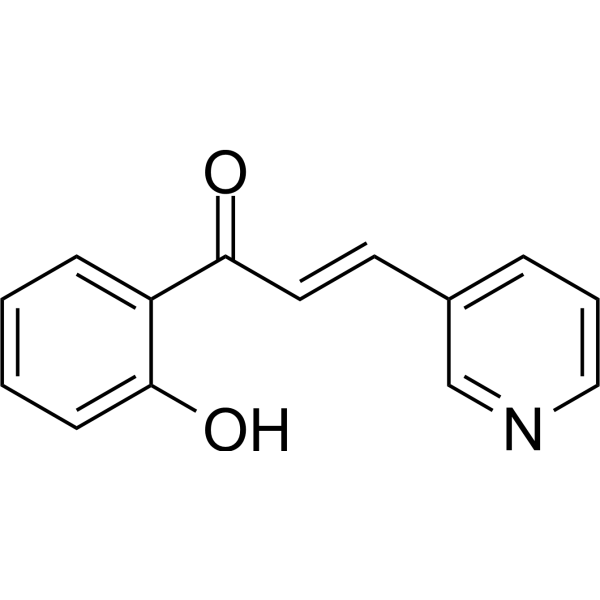
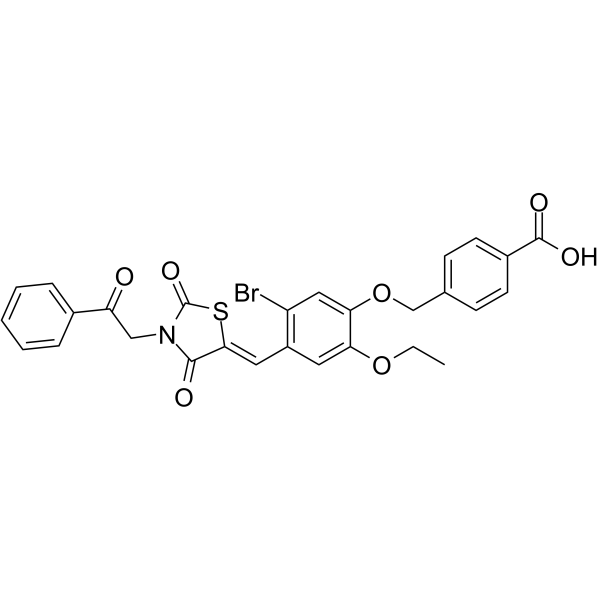
Lavendustin B is an inhibitor of HIV-1 integrase interaction with LEDGF/p75 with an IC50 of 94.07 μM. Lavendustin B is an ATP-competitive GLUT1 inhibitor with a Ki of 15 μM. Lavendustin B is also a weak inhibitor of tyrosine kinases .
Tyrphostin AG 879 (AG 879) is a tyrosine kinase inhibitor that inhibits TrKA phosphorylation (IC50 of 10 μM), but not TrKB and TrKC. Tyrphostin AG 879 is also a selective ErbB2 tyrosine kinase inhibitor with an IC50 of 1 μM, and has at least 500-fold higher selectivity to ErbB2 than EGFR. Tyrphostin AG 879 has anticancer activity .
(Rac)-LM11A-31 dihydrochloride is an isomer of LM11A-31 dihydrochloride. LM11A-31 dihydrochloride, a non-peptide p75NTR (neurotrophin receptor p75) modulator, is an orally active and potent proNGF (nerve growth factor) antagonist .
Anti-Mouse IL-12 p75 Antibody (R2-9A5) is a rat-derived IgG2b κ type antibody inhibitor, targeting to mouse IL-12 p75. Anti-Mouse IL-12 p75 Antibody (R2-9A5) can neutralize IL-12. Anti-Mouse IL-12 p75 Antibody (R2-9A5) can be used for the researches of infection and cancer, such as E. coli infection and MCA205 sarcoma .
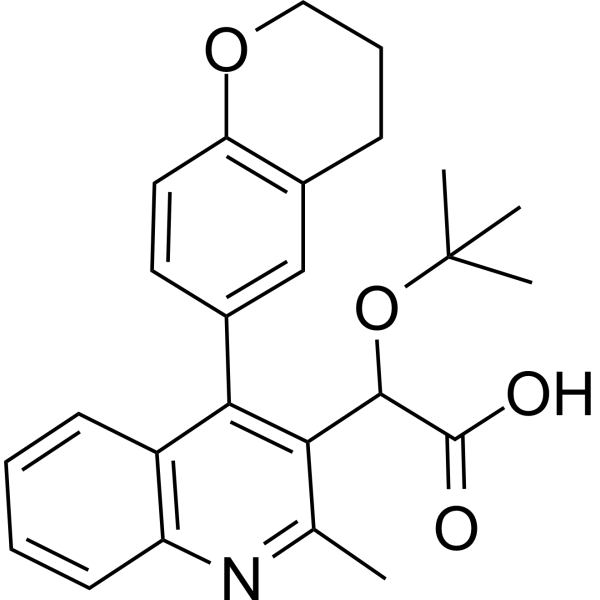
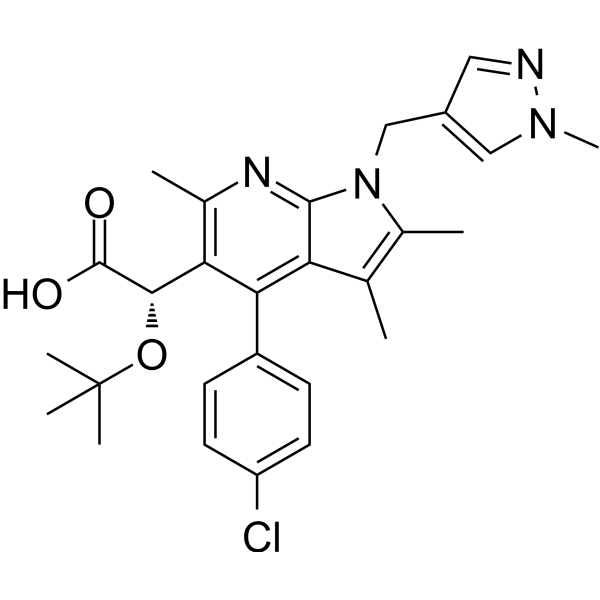
Integrase-LEDGF/p75 allosteric inhibitor 1 (Compound 31h) is an orally active integrase-LEDGF/p75(IN-LEDGF/p75) allosteric inhibitor. Integrase-LEDGF/p75 allosteric inhibitor 1 inhibits HIV-1 DNA integration and shows antiviral activity with an EC50 of 3.9 nM against HIV-1 recombinant molecular clone NL432 .
BDM-2 is an IN-LEDGF allosteric inhibitor (INLAI) of HIV-1integrase (IN refers to integrase) (IC50=47 nM) with potent anti-Retroviral (ARV) activity. BDM-2 shows IN multimerization activation effect with an AC50 value of 20 nM. BDM-2 blocks the interaction between the catalytic core domain of IN (IN-CCD) and the Integrase binding domain of LEDGF/p75 (IBD), with an IC50 value of 0.15 μM. BDM-2 exhibits highly selective and favorable cytotoxicity .
ALE-0540, a nonpeptidic small molecule, is a nerve growth factor receptor antagonist. ALE-0540 inhibits the binding of NGF to tyrosine kinase (Trk) A or both p75 and TrkA with IC50 values of 5.88 μM and 3.72 μM, respectively. ALE-0540 can be used to examine mechanisms leading to the development of agents for the study of pain .
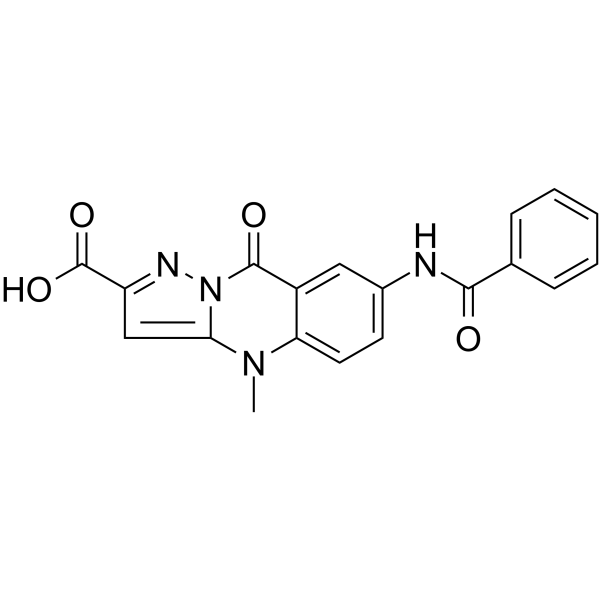
D77 is anti-HIV-1 inhibitor targeting the interaction between integrase and cellular LEDGF/p75. D77 inhibits HIV-1(IIIB) replication by EC50 value of 23.8 μg/ml in MT-4 cell (5.03 μg/ml for C8166 cells).
BNN27 is the agonist for TrkA receptor and p75NTR receptor, that exhibits neurotrophic and anti-apoptotic effects. BNN27 increases the levels of glutamate, GABA, and glutamine in the rat hippocampus and prefrontal cortex, improves glutamate turnover. BNN27 exhibits neuroprotective efficacy in mouse amyotrophic lateral sclerosis (ALS) model, exhibits anti-inflammatory efficacy in experimental autoimmune encephalomyelitis (EAE) model, exhibits retinal protective efficacy in rat diabete models. BNN27 is blood-brain barrier penetrable .
CUX1 Human Pre-designed siRNA Set A contains three designed siRNAs for CUX1 gene (Human), as well as a negative control, a positive control, and a FAM-labeled negative control.
(Rac)-LM11A-31 is a racemate of LM11A-31. LM11A-31 is a non-peptide modulator of p75NTR (neurotrophin receptor p75) and is an orally effective proNGF antagonist .
NTR 368 is a peptide derived from p75 neurotrophin receptor (p75NTR) corresponding to residues 368-381 of the human receptor. NTR 368 has helix forming propensity in the presence of micellar lipid. NTR 368 is a potent inducer of neural apoptosis .
NTR 368 TFA is a peptide derived from p75 neurotrophin receptor (p75NTR) corresponding to residues 368-381 of the human receptor. NTR 368 TFA has helix forming propensity in the presence of micellar lipid. NTR 368 TFA is a potent inducer of neural apoptosis .
MEDI-1912 is a human monoclonal antibody (mAb) targeting NGF/bNGF. MEDI-1912 inhibits signaling through TrkA and p75 receptors. MEDI-1912 can be used in chronic pain research .
GS-9822 is a potent antivira agent with nanomolar activity against wild-type HIV-1 viruses. GS-9822 potently inhibits the LEDGF/p75-integrase interaction with an IC50 of 0.07 μM. GS-9822 has high in vitro metabolic stability and favorable oral pharmacokinetic profiles with low systemic clearance in rats, dogs, and monkeys .
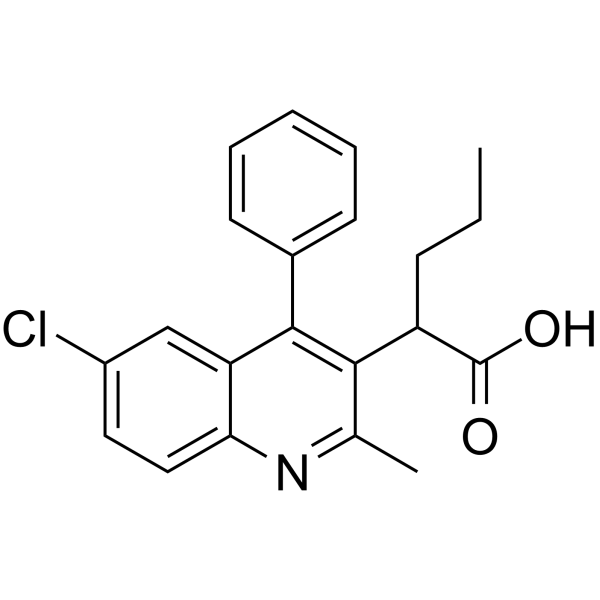
LEDGIN6 (Standard) is the analytical standard of LEDGIN6 (HY-10522). This product is intended for research and analytical applications. LEDGIN6 (CX05168) is a quinoline-based protein-protein interaction inhibitor of LEDGF/p75 and HIV integrase .
HCLS1 Human Pre-designed siRNA Set A contains three designed siRNAs for HCLS1 gene (Human), as well as a negative control, a positive control, and a FAM-labeled negative control.
KHSRP Human Pre-designed siRNA Set A contains three designed siRNAs for KHSRP gene (Human), as well as a negative control, a positive control, and a FAM-labeled negative control.
D719 is an HIV-1 integrase inhibitor. D719 binds to the hydrophobic pocket of HIV-1 integrase CCD dimer, disrupts interaction with LEDGF/P75, and prevents integrase nuclear translocation. D719 reduces HIV-1 p24 antigen production in acute infection of human T cells. D719 can be used for the research of HIV infection .
PSIP1 Human Pre-designed siRNA Set A contains three designed siRNAs for PSIP1 gene (Human), as well as a negative control, a positive control, and a FAM-labeled negative control.
Kuwanon L is an HIV-1 integrase (HIV-1 integrase) inhibitor, with IC50 values of 42 μM and 34 μM for LEDGF-dependent and LEDGF-independent integrase, respectively. Kuwanon L blocks the interaction between HIV-1 integrase and LEDGF/p75, with an IC50 of 22 μM. Kuwanon L inhibits HIV-1 replication in immune cells. Kuwanon L is applicable to research related to HIV-1 infection .
TCF3 Human Pre-designed siRNA Set A contains three designed siRNAs for TCF3 gene (Human), as well as a negative control, a positive control, and a FAM-labeled negative control.
TNFRSF1B Human Pre-designed siRNA Set A contains three designed siRNAs for TNFRSF1B gene (Human), as well as a negative control, a positive control, and a FAM-labeled negative control.
SIGLEC7 Human Pre-designed siRNA Set A contains three designed siRNAs for SIGLEC7 gene (Human), as well as a negative control, a positive control, and a FAM-labeled negative control.
Tnfrsf1b Mouse Pre-designed siRNA Set A contains three designed siRNAs for Tnfrsf1b gene (Mouse), as well as a negative control, a positive control, and a FAM-labeled negative control.
Ngfr Mouse Pre-designed siRNA Set A contains three designed siRNAs for Ngfr gene (Mouse), as well as a negative control, a positive control, and a FAM-labeled negative control.
Ngfr Rat Pre-designed siRNA Set A contains three designed siRNAs for Ngfr gene (Rat), as well as a negative control, a positive control, and a FAM-labeled negative control.
Ro 08-2750 (Standard) is the analytical standard of Ro 08-2750 (HY-108466). This product is intended for research and analytical applications. Ro 08-2750 is a non-peptide and reversible nerve growth factor (NGF) inhibitor which binds to NGF, and with an IC50 of ~ 1 μM. Ro 08-2750 inhibits NGF binding to p75NTR selectively over TRKA . Ro 08-2750 is a selective MSI RNA-binding activity inhibitor, with an IC50 of 2.7 μM .
NTR 368 is a peptide derived from p75 neurotrophin receptor (p75NTR) corresponding to residues 368-381 of the human receptor. NTR 368 has helix forming propensity in the presence of micellar lipid. NTR 368 is a potent inducer of neural apoptosis .
NTR 368 TFA is a peptide derived from p75 neurotrophin receptor (p75NTR) corresponding to residues 368-381 of the human receptor. NTR 368 TFA has helix forming propensity in the presence of micellar lipid. NTR 368 TFA is a potent inducer of neural apoptosis .
Tanezumab (RN-624) is a humanized anti-NGF mAb with high affinity and specificity. Tanezumab blocks NGF binding to its receptors, p75 and TrkA, in the peripheral nervous system. Tanezumab can be used in studies of acute and chronic pain such as osteoarthritis, knee and neuralgia, as well as post-herpetic neuralgia .
Bedinvetmab (ZTS-00508841) is a canine monoclonal antibody (mAb) targeting nerve growth factor (NGF). Bedinvetmab inhibits NGF interaction with tropomyosin receptor kinase A (trkA) and p75 neurotrophin receptor (p75NTR) receptors. Bedinvetmab can be used for the research of osteoarthritis pain in dogs .
Anti-Mouse IL-12 p75 Antibody (R2-9A5) is a rat-derived IgG2b κ type antibody inhibitor, targeting to mouse IL-12 p75. Anti-Mouse IL-12 p75 Antibody (R2-9A5) can neutralize IL-12. Anti-Mouse IL-12 p75 Antibody (R2-9A5) can be used for the researches of infection and cancer, such as E. coli infection and MCA205 sarcoma .
MEDI-1912 is a human monoclonal antibody (mAb) targeting NGF/bNGF. MEDI-1912 inhibits signaling through TrkA and p75 receptors. MEDI-1912 can be used in chronic pain research .
Kuwanon L is an HIV-1 integrase (HIV-1 integrase) inhibitor, with IC50 values of 42 μM and 34 μM for LEDGF-dependent and LEDGF-independent integrase, respectively. Kuwanon L blocks the interaction between HIV-1 integrase and LEDGF/p75, with an IC50 of 22 μM. Kuwanon L inhibits HIV-1 replication in immune cells. Kuwanon L is applicable to research related to HIV-1 infection .
HCLS1, a substrate of antigen receptor-coupled tyrosine kinase, is pivotal in lymphoid cell antigen receptor signaling, influencing clonal expansion and deletion. Beyond signaling, it may regulate gene expression. HCLS1 forms associations with LCK, LYN, and ANKRD54, exhibiting intricate involvement in signaling networks. Interactions with FES/FPS and FGR add to its functional complexity, emphasizing its role in diverse cellular processes. HCLS1 Protein, Human (HEK293, His) is the recombinant human-derived HCLS1 protein, expressed by HEK293 , with C-6*His labeled tag.
Nerve Growth Factor Receptor (NGFR) also known as CD271, p75NTR, TNFRSF16, is a transmembrane low-affinity receptor for the neurotrophin family. NGFR has no intrinsic tyrosine kinase activity. NGFR can act as a tumour suppressor, negatively regulating cell growth and proliferation. NGF-NGFR cascade activates NF-κB, leading to inhibition of apoptosis, increases survival of schwannoma, and breast cancer cells. NGFR Protein, Human (HEK293) is a recombinant protein consisting of 222 amino acids (K29-N250) and is produced in HEK293 cells.
The TNFRII protein is a receptor with high affinity for TNFSF2/TNF-α and low affinity for TNFSF1/lymphotoxin-α, and plays a key role in mediating the metabolic effects of TNF-α. The TRAF1/TRAF2 complex recruits BIRC2 and BIRC3 to TNFRSF1B/TNFR2 to regulate the apoptotic pathway. TNF RII/TNFRSF1B Protein, Human (Biotinylated, HEK293, His-Avi) is the recombinant human-derived TNF RII/TNFRSF1B protein, expressed by HEK293 , with C-Avi, C-His labeled tag.
Nerve Growth Factor Receptor (NGFR) also known as CD271, p75NTR, TNFRSF16, is a transmembrane low-affinity receptor for the neurotrophin family. NGFR has no intrinsic tyrosine kinase activity. NGFR can act as a tumour suppressor, negatively regulating cell growth and proliferation. NGF-NGFR cascade activates NF-κB, leading to inhibition of apoptosis, increases survival of schwannoma, and breast cancer cells. NGFR Protein, Human (HEK293, Fc) is a recombinant protein with a C-Terminal Fc label, It consists of 250 amino acids (M1-N250) and is produced in HEK293 cells. NGFR Protein, Rabbit (HEK293, His) is a recombinant protein with a C-Terminal His label, It consists of 242 amino acids (M1-D242) and is produced in HEK293 cells.
Nerve Growth Factor Receptor (NGFR) also known as CD271, p75NTR, TNFRSF16, is a transmembrane low-affinity receptor for the neurotrophin family. NGFR has no intrinsic tyrosine kinase activity. NGFR can act as a tumour suppressor, negatively regulating cell growth and proliferation. NGF-NGFR cascade activates NF-κB, leading to inhibition of apoptosis, increases survival of schwannoma, and breast cancer cells. NGFR Protein, Mouse (HEK293, Fc) is a recombinant protein with a C-Terminal Fc label, It consists of 243 amino acids and is produced in HEK293 cells.
Nerve Growth Factor Receptor (NGFR) also known as CD271, p75NTR, TNFRSF16, is a transmembrane low-affinity receptor for the neurotrophin family. NGFR has no intrinsic tyrosine kinase activity. NGFR can act as a tumour suppressor, negatively regulating cell growth and proliferation. NGF-NGFR cascade activates NF-κB, leading to inhibition of apoptosis, increases survival of schwannoma, and breast cancer cells. NGFR Protein, Mouse (HEK293, His) is a recombinant protein with a C-Terminal His label, It consists of 243 amino acids (M1-N243) and is produced in HEK293 cells.
Nerve Growth Factor Receptor (NGFR) also known as CD271, p75NTR, TNFRSF16, is a transmembrane low-affinity receptor for the neurotrophin family. NGFR has no intrinsic tyrosine kinase activity. NGFR can act as a tumour suppressor, negatively regulating cell growth and proliferation. NGF-NGFR cascade activates NF-κB, leading to inhibition of apoptosis, increases survival of schwannoma, and breast cancer cells. NGFR Protein, Human (HEK293, Fc) is a recombinant protein with a C-Terminal Fc label, It consists of 250 amino acids (M1-N250) and is produced in HEK293 cells.
Nerve Growth Factor Receptor (NGFR) also known as CD271, p75NTR, TNFRSF16, is a transmembrane low-affinity receptor for the neurotrophin family. NGFR has no intrinsic tyrosine kinase activity. NGFR can act as a tumour suppressor, negatively regulating cell growth and proliferation. NGF-NGFR cascade activates NF-κB, leading to inhibition of apoptosis, increases survival of schwannoma, and breast cancer cells. NGFR Protein, Rabbit (HEK293, hFc) is a recombinant protein with a C-Terminal Fc label, It consists of 242 amino acids (M1-D242) and is produced in HEK293 cells.
The NGFR protein is a low-affinity receptor that binds nerve growth factor (NGF), brain-derived neurotrophic factor (BDNF), neurotrophin-3 (NTF3), and neurotrophin-4 (NTF4). NGFR cooperates with SORCS2 to form a high-affinity heterodimeric receptor for NGF, BDNF, and NTF3 precursor forms, but has lower affinity for mature NGF and BDNF. NGFR Protein, Human (Biotinylated, HEK293, His-Avi) is the recombinant human-derived NGFR protein, expressed by HEK293 , with N-Avi, N-6*His labeled tag.
LEDGF p52 protein is involved in essential functions, such as DNA-binding and chromatin binding activity. It positively regulates transcription and plays a role in mRNA 5'-splice site recognition. The protein is located in heterochromatin, the nuclear periphery, and the nucleoplasm. It is ubiquitously expressed in various tissues, including the brain (RPKM 41.2), ovary (RPKM 33.4), and 24 other tissues. LEDGF p52 Protein, Human is the recombinant human-derived LEDGF p52 protein, expressed by E. coli , with tag free.
IL-2R beta/CD122 Protein, Cynomolgus (HEK293, hFc) is the recombinant cynomolgus-derived IL-2R beta/CD122 protein, expressed by HEK293, with C-hFc tag.
IL-2R beta (CD122), a type Ⅰ cytokine receptor expressed on T lymphocytes, is a receptor for IL-2 (Kd: 1 nM approximately). IL-2R beta mediates T cell immune responses, such as stimulating T cell proliferation and activating lymphokine-activated killer cells. IL-2R beta/CD122 Protein, Cynomolgus (HEK293, His) is a recombinant cynomolgus IL-2R beta (A27-D239) with a C-Terminal His tag, which is produced in HEK 293.
IL-2R beta (CD122), a type Ⅰ cytokine receptor expressed on T lymphocytes, is a receptor for IL-2 (Kd: 1 nM approximately). IL-2R beta mediates T cell immune responses, such as stimulating T cell proliferation and activating lymphokine-activated killer cells. IL-2R beta/CD122 Protein, Human (HEK293, His-Avi) is a recombinant human extracellular region of IL-2R beta (A27-D239) with a C-Terminal His-Avi tag, which is produced in HEK293 cells.
TNFRII (TNFRSF1B) protein has a high ability to bind with tumor necrosis factor-alpha (TNF-α). TNFRII has pro-apoptotic function. TNFRII recruits TRAF2, induces gene expression and intensively crosstalks with TNF-R1. TNFRII selectively enhances the induction of apoptosis by the death receptor TNFRI. TNFRII Protein, Human (HEK293, hFc) is expressed by HEK293 and has a transmembrane region (L23-D257) with hFc tag at the C-terminus.
TNFRII (TNFRSF1B) protein has a high ability to bind with tumor necrosis factor-alpha (TNF-α). TNFRII has pro-apoptotic function. TNFRII recruits TRAF2, induces gene expression and intensively crosstalks with TNF-R1. TNFRII selectively enhances the induction of apoptosis by the death receptor TNFRI. TNF RII/TNFRSF1B Protein, Human (HEK293, His) is expressed by HEK293 with His tag at the C-terminus.
TNFRII (TNFRSF1B) protein has a high ability to bind with tumor necrosis factor-alpha (TNF-α). TNFRII has pro-apoptotic function. TNFRII recruits TRAF2, induces gene expression and intensively crosstalks with TNF-R1. TNFRII selectively enhances the induction of apoptosis by the death receptor TNFRI. TNF RII/TNFRSF1B Protein, Mouse (HEK293, Fc) is expressed by HEK293 and has a transmembrane region with Fc tag at the C-terminus.
TNFRII (TNFRSF1B) protein has a high ability to bind with tumor necrosis factor-alpha (TNF-α). TNFRII has pro-apoptotic function. TNFRII recruits TRAF2, induces gene expression and intensively crosstalks with TNF-R1. TNFRII selectively enhances the induction of apoptosis by the death receptor TNFRI. TNFRII Protein, Human (174a.a, HEK293, His) is expressed by HEK293 and has a transmembrane region (K288-S461) with 6*His tag at the C-terminus.
TNFRII (TNFRSF1B) protein has a high ability to bind with tumor necrosis factor-alpha (TNF-α). TNFRII has pro-apoptotic function. TNFRII recruits TRAF2, induces gene expression and intensively crosstalks with TNF-R1. TNFRII selectively enhances the induction of apoptosis by the death receptor TNFRI. TNF RII/TNFRSF1B Protein, Cynomolgus/Rhesus Macaque (HEK293, His) is expressed by HEK293 with 6*His tag at the C-terminus.
TNFRII (TNFRSF1B) protein has a high ability to bind with tumor necrosis factor-alpha (TNF-α). TNFRII has pro-apoptotic function. TNFRII recruits TRAF2, induces gene expression and intensively crosstalks with TNF-R1. TNFRII selectively enhances the induction of apoptosis by the death receptor TNFRI. TNF RII/TNFRSF1B Protein, Cynomolgus/Rhesus Macaque (HEK293, Fc) is expressed by HEK293 and has a transmembrane region (M1-D257) with hFc tag at the C-terminus.
TNFRII (TNFRSF1B) protein has a high ability to bind with tumor necrosis factor-alpha (TNF-α). TNFRII has pro-apoptotic function. TNFRII recruits TRAF2, induces gene expression and intensively crosstalks with TNF-R1. TNFRII selectively enhances the induction of apoptosis by the death receptor TNFRI. TNF RII/TNFRSF1B Protein, Human (183a.a, HEK293, mFc) is expressed by HEK293 and has a transmembrane region (P24-T206) with mFc tag at the C-terminus.
The TNFRII protein is a receptor with high affinity for TNFSF2/TNF-α and low affinity for TNFSF1/lymphotoxin-α, and plays a key role in mediating the metabolic effects of TNF-α. The TRAF1/TRAF2 complex recruits BIRC2 and BIRC3 to TNFRSF1B/TNFR2 to regulate the apoptotic pathway. TNFRII Protein, Human (183a.a) is the recombinant human-derived TNFRII protein, expressed by E. coli , with tag free.
TNFRII (TNFRSF1B) protein has a high ability to bind with tumor necrosis factor-alpha (TNF-α). TNFRII has pro-apoptotic function. TNFRII recruits TRAF2, induces gene expression and intensively crosstalks with TNF-R1. TNFRII selectively enhances the induction of apoptosis by the death receptor TNFRI. TNF RII/TNFRSF1B Protein, Human (HEK293, mFc) is expressed by HEK293 and has a transmembrane region (M1-D257) with mFc tag at the C-terminus.
The TNFRII protein is a receptor with high affinity for TNFSF2/TNF-α and low affinity for TNFSF1/lymphotoxin-α, and plays a key role in mediating the metabolic effects of TNF-α. The TRAF1/TRAF2 complex recruits BIRC2 and BIRC3 to TNFRSF1B/TNFR2 to regulate the apoptotic pathway. TNF RII/TNFRSF1B Protein, Human (Biotinylated, HEK293, His) is the recombinant human-derived TNF RII/TNFRSF1B protein, expressed by HEK293 , with C-His labeled tag.
CUX1 Human Pre-designed siRNA Set A contains three designed siRNAs for CUX1 gene (Human), as well as a negative control, a positive control, and a FAM-labeled negative control.
HCLS1 Human Pre-designed siRNA Set A contains three designed siRNAs for HCLS1 gene (Human), as well as a negative control, a positive control, and a FAM-labeled negative control.
KHSRP Human Pre-designed siRNA Set A contains three designed siRNAs for KHSRP gene (Human), as well as a negative control, a positive control, and a FAM-labeled negative control.
PSIP1 Human Pre-designed siRNA Set A contains three designed siRNAs for PSIP1 gene (Human), as well as a negative control, a positive control, and a FAM-labeled negative control.
TCF3 Human Pre-designed siRNA Set A contains three designed siRNAs for TCF3 gene (Human), as well as a negative control, a positive control, and a FAM-labeled negative control.
TNFRSF1B Human Pre-designed siRNA Set A contains three designed siRNAs for TNFRSF1B gene (Human), as well as a negative control, a positive control, and a FAM-labeled negative control.
SIGLEC7 Human Pre-designed siRNA Set A contains three designed siRNAs for SIGLEC7 gene (Human), as well as a negative control, a positive control, and a FAM-labeled negative control.
Tnfrsf1b Mouse Pre-designed siRNA Set A contains three designed siRNAs for Tnfrsf1b gene (Mouse), as well as a negative control, a positive control, and a FAM-labeled negative control.
Ngfr Mouse Pre-designed siRNA Set A contains three designed siRNAs for Ngfr gene (Mouse), as well as a negative control, a positive control, and a FAM-labeled negative control.
Ngfr Rat Pre-designed siRNA Set A contains three designed siRNAs for Ngfr gene (Rat), as well as a negative control, a positive control, and a FAM-labeled negative control.
Inquiry Online
Your information is safe with us. * Required Fields.
Western blot analysis of extracts from THP-1(lane 2(20μg), Jurkat (lane 3(20μg) and NIH3T3(lane 4(20μg) using FOXO1A (HY-P80132) Rabbit mAb. Proteins were transferred
to a PVDF membrane and blocked with 5% non-fat milk in TBST for 2 hour at room temperature. The primary antibody (1/1000) and Loading control antibody (Beta Actin, HY-P80438, 1/10000) was
used in 5% non-fat milk in TBST at 4°C overnight. Goat Anti-Mouse/Rabbit IgG-HRP Secondary Antibody (1/10000) was used for 1 hour at room temperature.
Western blot analysis of extracts from THP-1(lane 2(20μg), Jurkat (lane 3(20μg) and NIH3T3(lane 4(20μg) using FOXO1A (HY-P80132) Rabbit mAb. Proteins were transferred
to a PVDF membrane and blocked with 5% non-fat milk in TBST for 2 hour at room temperature. The primary antibody (1/1000) and Loading control antibody (Beta Actin, HY-P80438, 1/10000) was
used in 5% non-fat milk in TBST at 4°C overnight. Goat Anti-Mouse/Rabbit IgG-HRP Secondary Antibody (1/10000) was used for 1 hour at room temperature.
Western blot analysis of extracts from THP-1(lane 2(20μg), Jurkat (lane 3(20μg) and NIH3T3(lane 4(20μg) using FOXO1A (HY-P80132) Rabbit mAb. Proteins were transferred
to a PVDF membrane and blocked with 5% non-fat milk in TBST for 2 hour at room temperature. The primary antibody (1/1000) and Loading control antibody (Beta Actin, HY-P80438, 1/10000) was
used in 5% non-fat milk in TBST at 4°C overnight. Goat Anti-Mouse/Rabbit IgG-HRP Secondary Antibody (1/10000) was used for 1 hour at room temperature.
Western blot analysis of extracts from THP-1(lane 2(20μg), Jurkat (lane 3(20μg) and NIH3T3(lane 4(20μg) using FOXO1A (HY-P80132) Rabbit mAb. Proteins were transferred
to a PVDF membrane and blocked with 5% non-fat milk in TBST for 2 hour at room temperature. The primary antibody (1/1000) and Loading control antibody (Beta Actin, HY-P80438, 1/10000) was
MedchemExpress Validation 03
Western blot analysis of extracts from THP-1(lane 2(20μg), Jurkat (lane 3(20μg) and NIH3T3(lane 4(20μg) using FOXO1A (HY-P80132) Rabbit mAb. Proteins were transferred
MedchemExpress Validation 04
Western blot analysis of extracts from THP-1(lane 2(20μg), Jurkat (lane 3(20μg) and NIH3T3(lane 4(20μg) using FOXO1A (HY-P80132) Rabbit mAb. Proteins were transferred
to a PVDF membrane and blocked with 5% non-fat milk in TBST for 2 hour at room temperature. The primary antibody (1/1000) and Loading control antibody (Beta Actin, HY-P80438, 1/10000) was
used in 5% non-fat milk in TBST at 4°C overnight. Goat Anti-Mouse/Rabbit IgG-HRP Secondary Antibody (1/10000) was used for 1 hour at room temperature.
MedchemExpress Validation
Western blot analysis of extracts from THP-1(lane 2(20μg), Jurkat (lane 3(20μg) and NIH3T3(lane 4(20μg) using FOXO1A (HY-P80132) Rabbit mAb. Proteins were transferred
to a PVDF membrane and blocked with 5% non-fat milk in TBST for 2 hour at room temperature. The primary antibody (1/1000) and Loading control antibody (Beta Actin, HY-P80438, 1/10000) was
used in 5% non-fat milk in TBST at 4°C overnight. Goat Anti-Mouse/Rabbit IgG-HRP Secondary Antibody (1/10000) was used for 1 hour at room temperature.
Western blot analysis of extracts from THP-1(lane 2(20μg), Jurkat (lane 3(20μg) and NIH3T3(lane 4(20μg) using FOXO1A (HY-P80132) Rabbit mAb. Proteins were transferred
to a PVDF membrane and blocked with 5% non-fat milk in TBST for 2 hour at room temperature. The primary antibody (1/1000) and Loading control antibody (Beta Actin, HY-P80438, 1/10000) was
used in 5% non-fat milk in TBST at 4°C overnight. Goat Anti-Mouse/Rabbit IgG-HRP Secondary Antibody (1/10000) was used for 1 hour at room temperature.
MedchemExpress Validation
Western blot analysis of extracts from THP-1(lane 2(20μg), Jurkat (lane 3(20μg) and NIH3T3(lane 4(20μg) using FOXO1A (HY-P80132) Rabbit mAb. Proteins were transferred
to a PVDF membrane and blocked with 5% non-fat milk in TBST for 2 hour at room temperature. The primary antibody (1/1000) and Loading control antibody (Beta Actin, HY-P80438, 1/10000) was
used in 5% non-fat milk in TBST at 4°C overnight. Goat Anti-Mouse/Rabbit IgG-HRP Secondary Antibody (1/10000) was used for 1 hour at room temperature.
MedchemExpress Validation
Western blot analysis of extracts from THP-1(lane 2(20μg), Jurkat (lane 3(20μg) and NIH3T3(lane 4(20μg) using FOXO1A (HY-P80132) Rabbit mAb. Proteins were transferred
to a PVDF membrane and blocked with 5% non-fat milk in TBST for 2 hour at room temperature. The primary antibody (1/1000) and Loading control antibody (Beta Actin, HY-P80438, 1/10000) was
used in 5% non-fat milk in TBST at 4°C overnight. Goat Anti-Mouse/Rabbit IgG-HRP Secondary Antibody (1/10000) was used for 1 hour at room temperature.
MedchemExpress Validation
Western blot analysis of extracts from THP-1(lane 2(20μg), Jurkat (lane 3(20μg) and NIH3T3(lane 4(20μg) using FOXO1A (HY-P80132) Rabbit mAb. Proteins were transferred
to a PVDF membrane and blocked with 5% non-fat milk in TBST for 2 hour at room temperature. The primary antibody (1/1000) and Loading control antibody (Beta Actin, HY-P80438, 1/10000) was
used in 5% non-fat milk in TBST at 4°C overnight. Goat Anti-Mouse/Rabbit IgG-HRP Secondary Antibody (1/10000) was used for 1 hour at room temperature.
MedchemExpress Validation
Western blot analysis of extracts from THP-1(lane 2(20μg), Jurkat (lane 3(20μg) and NIH3T3(lane 4(20μg) using FOXO1A (HY-P80132) Rabbit mAb. Proteins were transferred
to a PVDF membrane and blocked with 5% non-fat milk in TBST for 2 hour at room temperature. The primary antibody (1/1000) and Loading control antibody (Beta Actin, HY-P80438, 1/10000) was
used in 5% non-fat milk in TBST at 4°C overnight. Goat Anti-Mouse/Rabbit IgG-HRP Secondary Antibody (1/10000) was used for 1 hour at room temperature.
MedchemExpress Validation
Western blot analysis of extracts from THP-1(lane 2(20μg), Jurkat (lane 3(20μg) and NIH3T3(lane 4(20μg) using FOXO1A (HY-P80132) Rabbit mAb. Proteins were transferred
to a PVDF membrane and blocked with 5% non-fat milk in TBST for 2 hour at room temperature. The primary antibody (1/1000) and Loading control antibody (Beta Actin, HY-P80438, 1/10000) was
used in 5% non-fat milk in TBST at 4°C overnight. Goat Anti-Mouse/Rabbit IgG-HRP Secondary Antibody (1/10000) was used for 1 hour at room temperature.
MedchemExpress Validation
Western blot analysis of extracts from THP-1(lane 2(20μg), Jurkat (lane 3(20μg) and NIH3T3(lane 4(20μg) using FOXO1A (HY-P80132) Rabbit mAb. Proteins were transferred
to a PVDF membrane and blocked with 5% non-fat milk in TBST for 2 hour at room temperature. The primary antibody (1/1000) and Loading control antibody (Beta Actin, HY-P80438, 1/10000) was
used in 5% non-fat milk in TBST at 4°C overnight. Goat Anti-Mouse/Rabbit IgG-HRP Secondary Antibody (1/10000) was used for 1 hour at room temperature.
MedChemExpress values your privacy and your trust is important to us. We use cookies to enhance your website experience. Some cookies are necessary to run the website.
Privacy and Cookie Policy

