



1. Search Result
Search Result
Results for "

region

" in MedChemExpress (MCE) Product Catalog:

318

Inhibitors & Agonists

1

Screening Libraries

27

Fluorescent Dye

12

Biochemical Assay Reagents

71

Peptides

1

MCE Kits

60

Inhibitory Antibodies

14

Natural
Products

95

Recombinant Proteins

9

Isotope-Labeled Compounds

36

Antibodies

1

Click Chemistry

15

Oligonucleotides

Targets Recommended:
Cat. No. Product Name Target Research Areas Chemical Structure
  • HY-120318
    Zeaxanthin
    2 Publications Verification

    Endogenous Metabolite Inflammation/Immunology Cancer
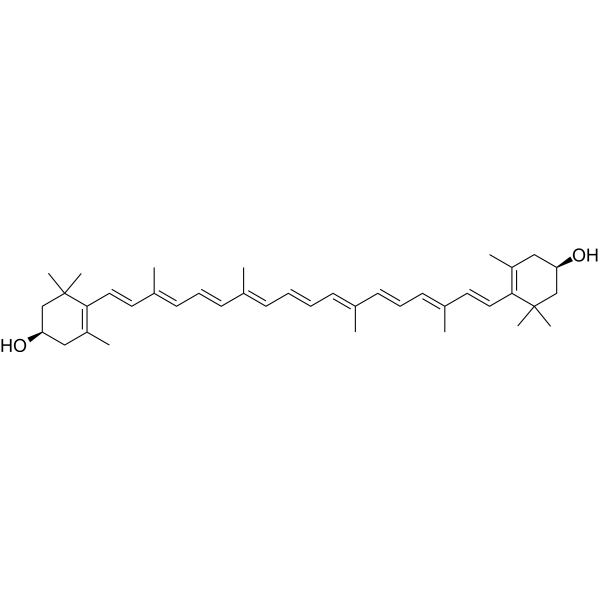
    Zeaxanthin, a diet-obtained carotenoid, presents in the macula region of the eye. Zeaxanthin shows antioxidant effects .
    Zeaxanthin
  • HY-P990110
    Lecanemab (Mouse IGG2a)
    1 Publications Verification

    Mab158

    Amyloid-β Neurological Disease
    Lecanemab (Mouse IGG2a) (Mab158) is a monoclonal antibody that targets soluble β-amyloid and has the potential to reduce cognitive decline. The variable region of Lecanemab (Mouse IGG2a) is consistent with that of Lecanemab, while the constant region is of Mouse IGG2a sequence. Lecanemab (Mouse IGG2a) almost abolishes accumulation in astrocytes and rescues neurons from Aβ-induced cell death. Lecanemab (Mouse IGG2a) holds promise for research in the field of Alzheimer's disease .
    Lecanemab (Mouse IGG2a)
  • HY-133852
    FD-1080
    1 Publications Verification

    Fluorescent Dye MOFs Others
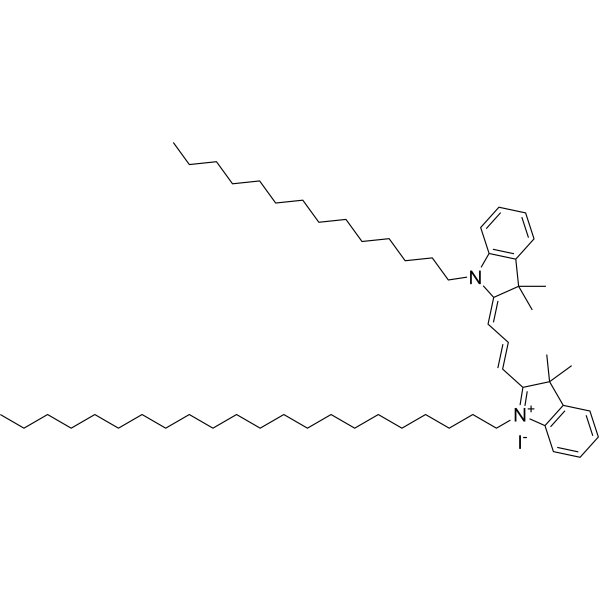
    FD-1080 is a fluorophore with both excitation and emission in the NIR-II region (Ex=1064 nm, Em=1080 nm). FD-1080 can be used for in vivo imaging .
    FD-1080
  • HY-P9954

    CD3 Cancer
    Catumaxomab, a trifunctional IgG2 antibody, is composed of mouse and rat heavy and light chains and binds to human EpCAM and human CD 3 receptors. The Fc region of Catumaxomab region has binding affinity for FcγR1 (CD 64), FcγRIIA (CD 32a), and FcγRIII (CD 16). Catumaxomab can be used for anti-tumor research, especially epithelial cancers .
    Catumaxomab
  • HY-P1846
    Jagged-1 (188-204)
    Maximum Cited Publications
    16 Publications Verification

    Notch Cancer
    Jagged-1 (188-204) is a fragment of the Jagged-1 (JAG-1) protein with Notch agonist activity. JAG-1 is a Notch ligand highly expressed in cultured and primary multiple myeloma (MM) cells. JAG-1 induces maturation of monocyte-derived human dendritic cells .
    Jagged-1 (188-204)
  • HY-133852A
    FD-1080 free acid
    1 Publications Verification

    Fluorescent Dye Others
    FD-1080 free acid is a fluorophore with both excitation and emission in the NIR-II region (Ex=1064 nm, Em=1080 nm). FD-1080 free acid can be used for in vivo imaging .
    FD-1080 free acid
  • HY-173432

    ACSL Family Ferroptosis Neurological Disease Cancer
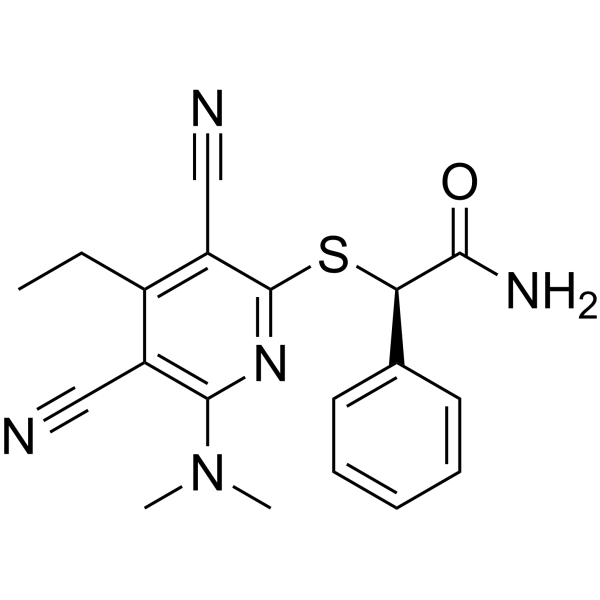
    LIBX-A401 is a selective long-chain acyl-CoA synthetase 4 (ACSL4) inhibitor with a human IC50 values of 0.38 μM and a Kd of 0.72 μM. LIBX-A401 binds to ACSL4 in an ATP-dependent manner, stabilizes the C-terminal domain, alters the fatty acid gate region, and interacts with residues A329 and Q302 within the fatty acid binding site. LIBX-A401 exhibits anti-ferroptosis properties in cells. LIBX-A401 can be used for the researches of cancer and parkinson's disease .
    LIBX-A401
  • HY-NP006
    Protein A
    1 Publications Verification

    SPA

    Endogenous Metabolite Apoptosis Inflammation/Immunology
    Protein A (SPA) is an immunoglobulin (Ig)-binding protein that exists on the bacterial surface and can be freely secreted into the extracellular environment. Protein A blocks opsonophagocytosis and induces B cell apoptosis in vitro by binding to the Fc region of antibodies and the Fab region of B cell receptors. Protein A can form toxic immune complexes with IgG, thereby inducing leukocyte necrosis. Protein A contributes to the virulence expression of Staphylococcus aureus. Protein A triggers allergic reactions in IgG-pretreated mouse models. Protein A can be used in studies related to immune system diseases .
    Protein A
  • HY-P99471

    UCB 0107

    Tau Protein Neurological Disease
    Bepranemab is a humanized IgG4 monoclonal antibody that binds to the central region of tau protein. Bepranemab inhibits the seeding, aggregation of pathological tau protein and the spread of tau pathology to distal brain regions. Bepranemab is applicable to research related to Alzheimer's disease .
    Bepranemab
  • HY-P1846A
    Jagged-1 (188-204) TFA
    Maximum Cited Publications
    16 Publications Verification

    Notch Cancer
    Jagged-1 (188-204) TFA is a fragment of the Jagged-1 (JAG-1) protein with Notch agonist activity. JAG-1 is a Notch ligand highly expressed in cultured and primary multiple myeloma (MM) cells. JAG-1 induces maturation of monocyte-derived human dendritic cells .
    Jagged-1 (188-204) TFA
  • HY-34487

    Resorcinol dimethyl ether

    Environmental Pollutants Drug Intermediate Others
    1,3-Dimethoxybenzene (Resorcinol dimethyl ether) is a volatile compound with a sweet medicinal odour carrying hazelnut, resinous, and woody notes. 1,3-Dimethoxybenzene is identified as a new volatile component of Douro region grape musts and port wines .
    1,3-Dimethoxybenzene
  • HY-P3522

    Integrin Cardiovascular Disease
    REDV is the minimal active sequence within the CS5 site of the alternatively spliced type III connecting segment (IIICS) region of fibronectin. REDV can mediate adhesion to the IIICS region of plasma fibronectin by binding the integrin alpha 4 beta 1(α4β1). REDV can be used for the research of cell adhesion. REDV is used to study the effects of gene vectors containing REDV on cells .
    REDV
  • HY-P4808

    Amyloid-β Autophagy Neurological Disease
    PHF6 (VQIVYK) is a self-assembly sequence capable of initiating the full-length tau protein aggregation and is mapped to the third microtubule-binding repeat region of the tau protein .
    PHF6
  • HY-P990109

    Amyloid-β Neurological Disease
    Aducanumab (Mouse IGG2a) is a monoclonal antibody that selectively targets aggregated amyloid-beta (Aβ). The variable region of Aducanumab (Mouse IGG2a) is consistent with that of Aducanumab (HY-P9967), while the constant region is of Mouse IGG2a sequence. Aducanumab (Mouse IGG2a) has strong selectivity for Aβ fibrils with EC50s of >1 μM and 0.2 nM for monomeric Aβ1-40 and fibrillar Aβ1-42, respectively. Aducanumab (Mouse IGG2a) can be used for Alzheimer's disease (AD) research .
    Aducanumab (Mouse IGG2a)
  • HY-P4279

    Angiotensin-converting Enzyme (ACE) Cholinesterase (ChE) Cardiovascular Disease
    Ovalbumin (154-159) is a protein fragment consisting of residues 154-159 of chicken ovalbumin. Ovalbumin (154-159) is also a poorly conserved sequence (Thr-Asn-Gly-Ile-Ile-Arg) in the α-subunit of the Torpedo acetylcholine receptor, located within the α150-164 epitope region, and exhibits significant angiotensin-converting enzyme (ACE) inhibitory activity .
    Ovalbumin (154-159)
  • HY-P99750

    CT-P23

    Influenza Virus Infection
    Navivumab (CT-P23) is a monoclonal antibody targeting the hemagglutinin (HA) of influenza A virus. Navivumab binds to the HA2 stem fusion domain and the low-variability HA2 region of influenza viruses. Navivumab neutralizes influenza A viruses of subtypes H1, H2, H5, and H9. Navivumab is applicable to research related to influenza and influenza A .
    Navivumab
  • HY-NP002E

    Biochemical Assay Reagents Others
    Porcine Serum Albumin is a serum albumin protein that contains a flexible C-terminal region. Porcine Serum Albumin can serve both as a pork allergen and as a biomarker for detecting pork .
    Porcine Serum Albumin
  • HY-P99258

    OMP 52M51; Anti-Human NOTCH1 Recombinant Antibody

    Notch Cancer
    Brontictuzumab (OMP 52M51) is a monoclonal antibody (MAb) that inhibits Notch1 signal. Brontictuzumab selectively binds the negative regulatory region of the Notch1. Brontictuzumab inhibits tumor cell proliferation. Brontictuzumab can be used in the research of leukemia and lymphoma .
    Brontictuzumab
  • HY-D1474

    Wnt Cancer
    WNT7A-IN-1 sodium (1365-0109), a WNT7A inhibitor, disrupts the protein-protein interaction between WNT7A and its receptor FZD5, resulting in the upregulation of MHC-I expression. WNT7A-IN-1 sodium significantly increases the expression of MHC-I and p-p65,while concurrently reducing the expression of active β-catenin . WNT7A-IN-1 sodium (compound F) is also a photographic sensitizer in the green spectral region .
    WNT7A-IN-1 sodium
  • HY-147817

    Reactive Oxygen Species (ROS) Inflammation/Immunology Cancer
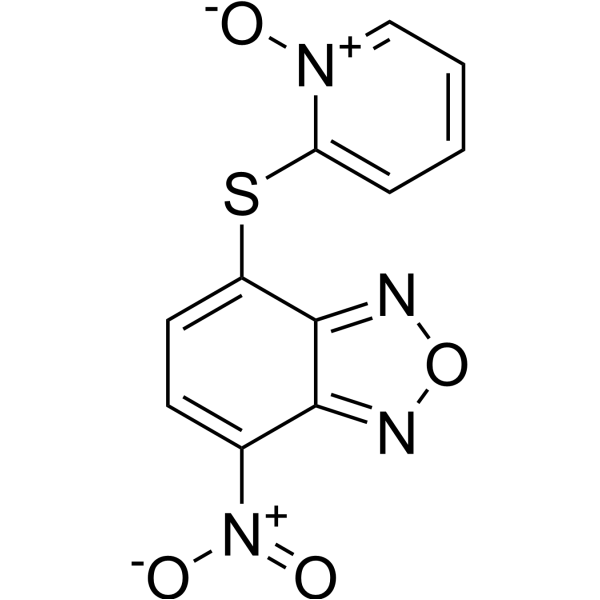
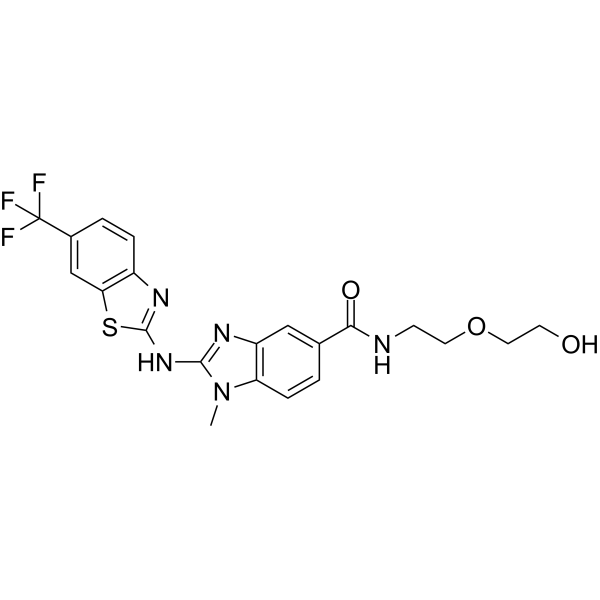
    Heme Oxygenase-2-IN-1 (Compound 9) is a potent, selective heme oxygenase-2 (HO-2) inhibitor with IC50 values of 0.9 μM and 14.9 μM against HO-2 and HO-1, respectively .
    Heme Oxygenase-2-IN-1
  • HY-P0272

    HIV Infection
    Peptide T is an octapeptide from the V2 region of HIV-1 gp120. Peptide T is a ligand for the CD4 receptor and prevents binding of HIV to the CD4 receptor.
    Peptide T
  • HY-145638A

    RO7445482 sodium

    HBV Infection
    Xalnesiran (RO7445482) sodium is a small interfering RNA molecule that targets a conserved region of the
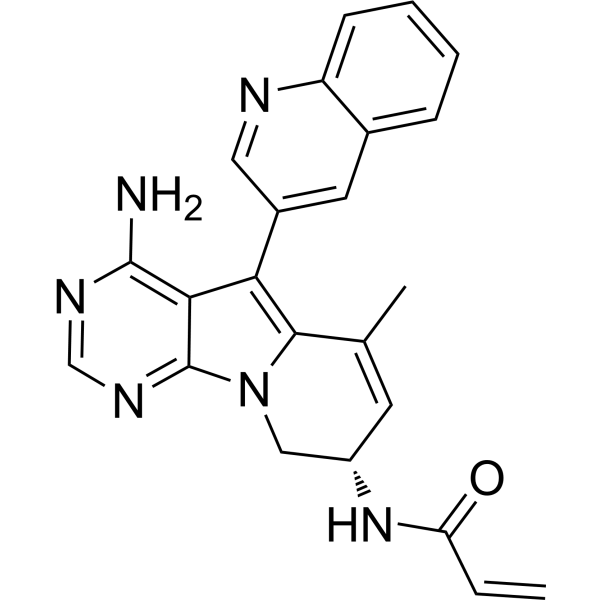
    hepatitis B virus (HBV) genome . Xalnesiran sodium can be used for the research of chronic hepatitis B infection .
    Xalnesiran sodium
  • HY-108605

    Pim Cancer
    PIM1-IN-2 is a potent and ATP competitive Pim-1 inhibitor with a Ki of 91 nM. PIM1-IN-2 targets the ATP-binding kinase hinge region not by forming classical hydrogen bonds .
    PIM1-IN-2
  • HY-170411

    Wnt Cancer
    WNT7A-IN-1 (1365-0109), a WNT7A inhibitor, disrupts the protein-protein interaction between WNT7A and its receptor FZD5, resulting in the upregulation of MHC-I expression. WNT7A-IN-1 significantly increases the expression of MHC-I and p-p65,while concurrently reducing the expression of active β-catenin. WNT7A-IN-1 (compound F) is also a photographic sensitizer in the green spectral region .
    WNT7A-IN-1
  • HY-110374
    NVS-CECR2-1
    1 Publications Verification

    Epigenetic Reader Domain Apoptosis Cancer
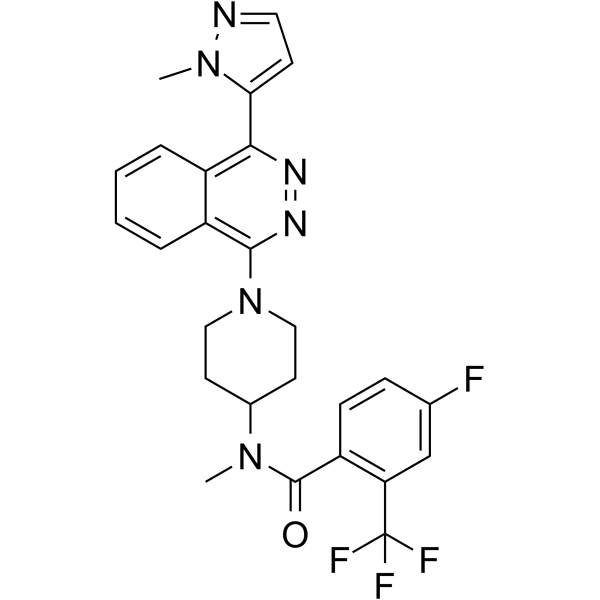
    NVS-CECR2-1, a non-BET family Bromodomain (BRD) inhibitor, is a potent and selective cat eye syndrome chromosome region, candidate 2 (CECR2) inhibitor. NVS-CECR2-1 binds to CECR2 BRD with high affinity (IC50=47 nM; KD=80 nM). NVS-CECR2-1 exhibits cytotoxic activity and induces apoptosis against various cancer cells by targeting CECR2 as well as via CECR2-independent mechanism . NVS-CECR2-1 is a chemical probe.
    NVS-CECR2-1
  • HY-P991059

    Influenza Virus Infection
    VIS-410 is an antibody inhibitor targeting the stem region of hemagglutinin (HA). VIS-410 inhibits influenza virus replication by blocking HA-mediated membrane fusion. VIS-410 exhibits broad-spectrum neutralization against influenza A viruses with group 1 and group 2 hemagglutinins, including subtypes such as H1N1, H3N2, H5N1, and H7N9 (H5N1 IC50 = 1.5 μg/mL). VIS-410 is applicable to research related to influenza A virus infection .
    VIS-410
  • HY-117996

    CRM1 Apoptosis Cancer
    KPT-251 is an orally active chromosome region maintenance 1 protein (CRM1) inhibitor. KPT-251 induces cancer cell apoptosis and shows antileukemic activity .
    KPT-251
  • HY-N10472

    STAT Cancer
    STAT3-IN-14 (Compound 1) is a STAT3 inhibitor and has STAT3 phosphorylation inhibitory activity. STAT3-IN-14 (Compound 1) can directly bind to the hinge region of STAT3 .
    STAT3-IN-14
  • HY-106312A

    LY122772

    Enterovirus Infection
    Enviroxime (LY122772) is an antiviral compound that inhibits the replication of rhinoviruses and enteroviruses. Enviroxime blocks the replication of plus-strand viral RNA by targeting the viral 3A coding region. Enviroxime can be a useful tool for investigating the natural function of the 3A protein .
    Enviroxime
  • HY-P2508

    Mucin Cancer
    MUC1, mucin core is the region of the MUC1 mucin core. MUC1 is a type I transmembrane glycoprotein, and is overexpressed and aberrantly glycosylated in carcinoma cells. MUC1, mucin core protein binds to domain 1 of ICAM-1 .
    MUC1, mucin core
  • HY-E70884

    EndoS2 D184M

    Glycosidase Others
    Endoglycosidase S2 (D184M mutant) (EndoS2 D184M) is a mutant endoglycosidase. Endoglycosidase S2 (D184M mutant) promotes the transfer of glyco-oxazoline donors with defined glycoforms to the Fc region of IgG antibodies .
    Endoglycosidase S2 (D184M mutant)
  • HY-P0305

    Prion protein (106-126)

    Prion Protein Infection
    PrP (106-126) is a peptide corresponding to the prion protein (PrP) amyloidogenic region, and its biochemical properties resemble the infectious form of prion protein.
    PrP (106-126)
  • HY-139351

    GA4+7

    Environmental Pollutants Endogenous Metabolite Others
    Gibberellins A4/A7 induces stimulation of tracheid production in the terminal shoot of intact plants is mediated through an increase in the IAA level in the cambial region .
    Gibberellins A4/A7
  • HY-P4808A

    Amyloid-β Autophagy Neurological Disease
    PHF6 (VQIVYK) TFA is a self-assembly sequence capable of initiating the full-length tau protein aggregation. PHF6 TFA is mapped to the third microtubule-binding repeat region of the tau protein .
    PHF6 TFA
  • HY-120088
    PF-06446846
    5+ Cited Publications

    PCSK9 Cardiovascular Disease
    PF-06446846 is an orally active proprotein convertase subtilisin/kexin type 9 (PCSK9) inhibitor. PF-06446846 directly and selectively inhibits translation of PCSK9 by stalling the 80S ribosome in the proximity of codon region .
    PF-06446846
  • HY-P990707

    TTI-622; PF-07901801

    CD47 Inflammation/Immunology
    Maplirpacept (TTI-622; PF-07901801) is a fusion protein consisting of the CD47-binding domain of human SIRPα linked to the Fc region of human IgG4. Maplirpacept enhances phagocytosis by blocking CD47 .
    Maplirpacept
  • HY-P990040

    LVGN-6051

    TNF Receptor Cancer
    Exlinkibart (LVGN-6051) targets TNFRSF9 and is an IgG1κ antibody humanized through complementarity-determining region (CDR) grafting technology.
    Exlinkibart
  • HY-170933

    SGK Cancer
    SGK1-IN-6 (compound 12f) is a potent SGK1 inhibitor with an IC50 of 0.39 μM. SGK1-IN-6 suppresses tumor growth in the PC3 xenograft model in BALB/c nude mice without inducing any observable toxicity .
    SGK1-IN-6
  • HY-NP002H

    Biochemical Assay Reagents Others
    Porcine Serum Albumin (globulin free) is a serum albumin protein containing a flexible C-terminal region. Porcine Serum Albumin (globulin free) induces the production of anti-PSA IgG antibodies in rats and triggers severe immune responses upon secondary administration .
    Porcine Serum Albumin (globulin free)
  • HY-D2195

    Fluorescent Dye Others
    AgAuSe-PEG-NH2 (1000 nm) is a fluorescent quantum dot that emits fluorescence in the near-infrared II region, with an emission peak reaching 1000 nm that can be used in bioimaging.
    AgAuSe-PEG-NH2 (1000 nm)
  • HY-D2198

    Fluorescent Dye Others
    AgAuSe-PEG-NH2 (1120 nm) is a fluorescent quantum dot that emits fluorescence in the near-infrared II region, with an emission peak reaching 1120 nm that can be used in bioimaging .
    AgAuSe-PEG-NH2 (1120 nm)
  • HY-E70365

    Biochemical Assay Reagents Inflammation/Immunology
    IdeS protease is an IgG-specific endopeptidase, which is highly specific for the lower hinge region of IgG. IdeS protease represses innate immune responses to promote streptococcal survival in an inflammatory environment .
    IdeS protease
  • HY-113761

    Filovirus Infection
    ASN03576800 could be a potent inhibitor for Ebola virus matrix protein VP40 in process of viral assembly and budding process. ASN03576800 occupies the RNA binding region of VP40 .
    ASN03576800
  • HY-145638

    RO7445482

    HBV Infection
    Xalnesiran (RO7445482) is a small interfering RNA molecule that targets a conserved region of the
    hepatitis B virus (HBV) genome. Xalnesiran can be used for the research of chronic hepatitis B infection .
    Xalnesiran
  • HY-144308

    Mps1 Others
    RMS-07 is a covalent Monopolar Spindle Kinase 1 (MPS1/TTK) inhibitor, with an apparent IC50 of 13.1 nM. RMS-07 targets a poorly conserved cysteine in the kinase's hinge region .
    RMS-07
  • HY-P3892

    PKC Inflammation/Immunology
    Protein Kinase C (19-35) Peptide is the PKC pseudosubstrate inhibitor/region. Protein Kinase C (19-35) Peptide possibly blocks the substrate-binding site in its kinase domain, makes the cytoplasmic form of PKC inactive .
    Protein Kinase C (19-35) Peptide
  • HY-D1065

    Fluorescent Dye Inflammation/Immunology
    NIR-H2O2 is a cell-permeable near-infrared (NIR) fluorescent turn-on sensor. NIR-H2O2 has both absorption and emission in the NIR region. NIR-H2O2 responds to H2O2 with a large turn-on NIR fluorescence signal upon excitation in the NIR region. NIR-H2O2 is capable of imaging endogenously produced H2O2 in living cells and mice .
    NIR-H2O2
  • HY-P11131

    Human lactoferrin (28-34)

    Bacterial Infection
    hLF (28-34) (Human lactoferrin (28-34)) is a loop region of human lactoferrin (hLF) that is essential for the high-affinity binding of LPS. hLF (28-34) is a key site responsible for its high-affinity binding to E. coli 055B5 lipopolysaccharide. hLF (28-34) can be used for antibacterial research .
    hLF (28-34)
  • HY-P5310

    Biochemical Assay Reagents Others
    IgA1 Peptide HP is an IgA1 hinge region peptide .
    IgA1 Peptide HP
  • HY-177632B

    IFNAR Cancer
    Frenlosirsen scrambled control is a scrambled control antisense oligonucleotide of Frenlosirsen (HY-177632) with a scrambled sequence in the target binding region.
    Frenlosirsen scrambled control

Inquiry Online

Your information is safe with us. * Required Fields.

Salutation


Country or Region *

Applicant Name *


Organization Name *

Department *


Email Address *


Product Name *

Cat. No.


Requested quantity *

Phone Number *


Remarks

Inquiry Online

Inquiry Information

Product Name:
Cat. No.:
Quantity:
MCE Japan Authorized Agent:

