1064 Results for "

selective agent

" in MedChemExpress (MCE) Product Catalog:
Products (1064)

1064 Results for "selective agent" in MCE Product Catalog:

295
295 Publications Verification
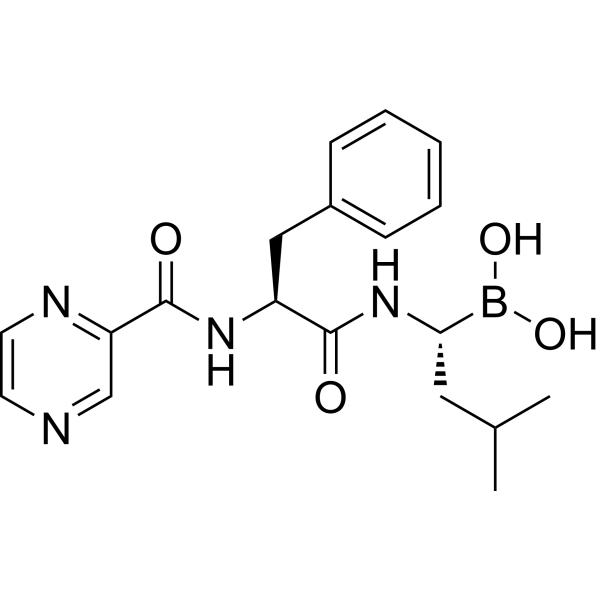
Cat. No.: HY-10227
CAS No.: 179324-69-7
Purity:  99.91%
Synonyms: PS-341; LDP-341; NSC 681239
Bortezomib (PS-341) is a reversible and selective proteasome inhibitor, and potently inhibits 20S proteasome (Ki=0.6 nM) by targeting a threonine residue. Bortezomib disrupts the cell cycle, induces apoptosis, and inhibits NF-κB. Bortezomib is the first proteasome inhibitor anticancer agent. Bortezomib can be used for the study of multiple myeloma (MM) . Bortezomib effectively inhibits TREM2 expression in tumor-associated macrophages (TAMs) .
loading...
    loading...
202
202 Cited Publications
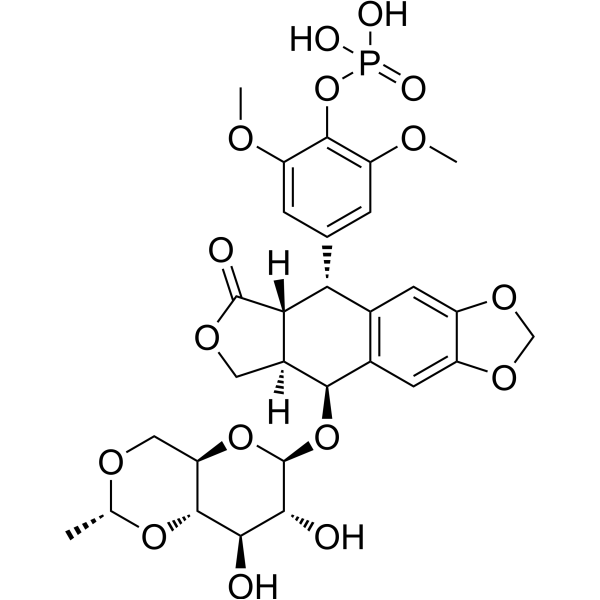
Cat. No.: HY-13630
CAS No.: 117091-64-2
Purity:  99.28%
Synonyms: BMY-40481
Etoposide phosphate (BMY-40481) is a potent anti-cancer chemotherapy agent and a selective topoisomerase II inhibitor to prevent re-ligation of DNA strands. Etoposide phosphate is the phosphate ester proagent of etoposide and is considered as active equivalent to Etoposide. Etoposide phosphate induces cell cycle arrest, apoptosis, and autophagy.
loading...
    loading...
95
95 Cited Publications
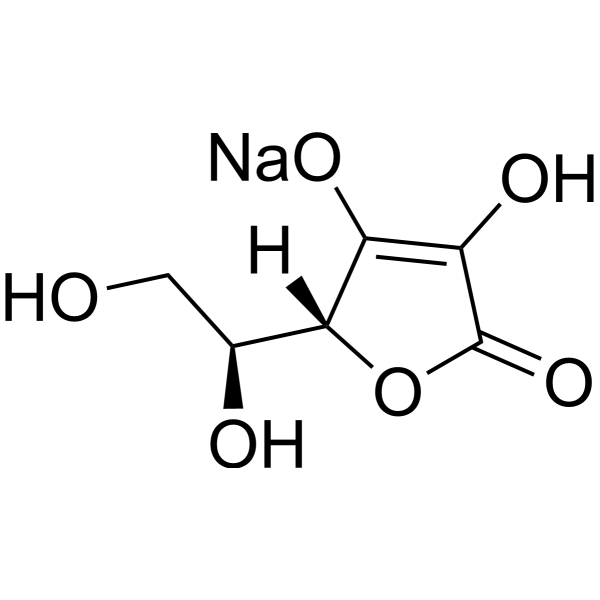
Cat. No.: HY-B0166A
CAS No.: 134-03-2
Synonyms: Sodium ascorbate; Sodium L-ascorbate; Vitamin C sodium salt
L-Ascorbic acid sodium salt (Sodium ascorbate), an electron donor, is an endogenous antioxidant agent. L-Ascorbic acid sodium salt selectively inhibits Cav3.2 channels with an IC50 of 6.5 μM. L-Ascorbic acid sodium salt is also a collagen deposition enhancer and an elastogenesis inhibitor .
loading...
    loading...
95
95 Cited Publications
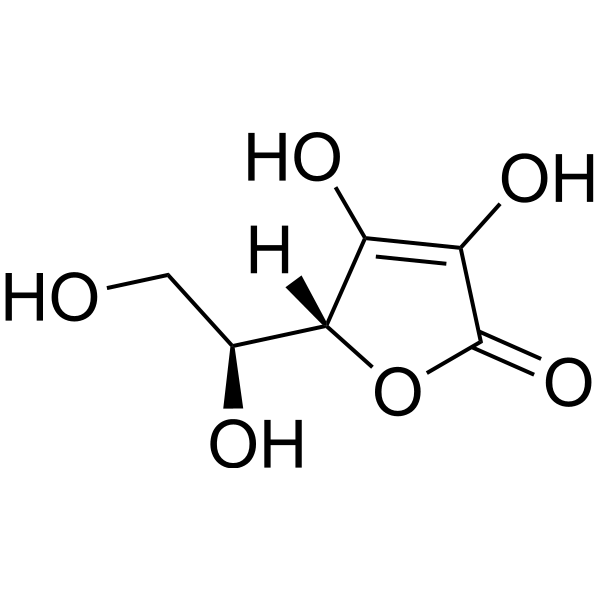
Cat. No.: HY-B0166
CAS No.: 50-81-7
Synonyms: L-Ascorbate; Vitamin C
L-Ascorbic acid (L-Ascorbate), an electron donor, is an endogenous antioxidant agent. L-Ascorbic acid inhibits selectively Cav3.2 channels with an IC50 of 6.5 μM. L-Ascorbic acid is also a collagen deposition enhancer and an elastogenesis inhibitor . L-Ascorbic acid exhibits anti-cancer effects through the generation of reactive oxygen species (ROS) and selective damage to cancer cells .
loading...
    loading...
88
88 Cited Publications
Cat. No.: HY-B0166C
CAS No.: 5743-28-2
Synonyms: L-Ascorbate calcium dihydrate; Vitamin C calcium dihydrate
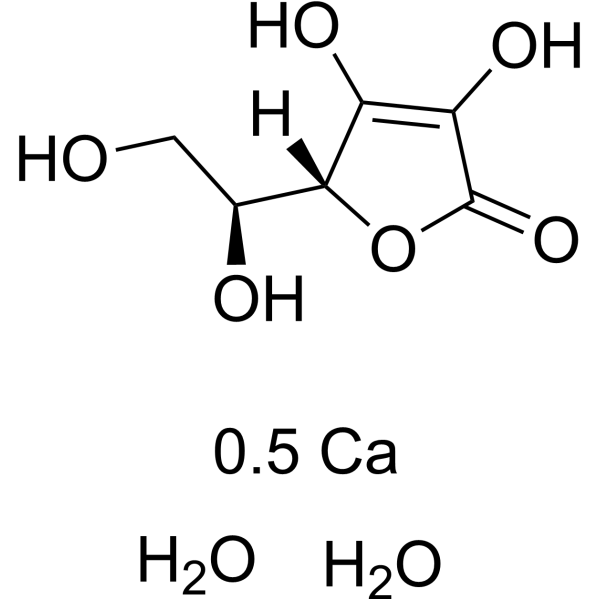
L-Ascorbic acid calcium dihydrate (L-Ascorbate calcium dihydrate), an electron donor, is an endogenous antioxidant agent. L-Ascorbic acid calcium dihydrate inhibits selectively Cav3.2 channels with an IC50 of 6.5 μM. L-Ascorbic acid calcium dihydrate is also a collagen deposition enhancer and an elastogenesis inhibitor . L-Ascorbic acid calcium dihydrate exhibits anti-cancer effects through the generation of reactive oxygen species (ROS) and selective damage to cancer cells .
loading...
    loading...
83
83 Cited Publications
Cat. No.: HY-66005
CAS No.: 103-90-2
Synonyms: Paracetamol; 4-Acetamidophenol; 4'-Hydroxyacetanilide
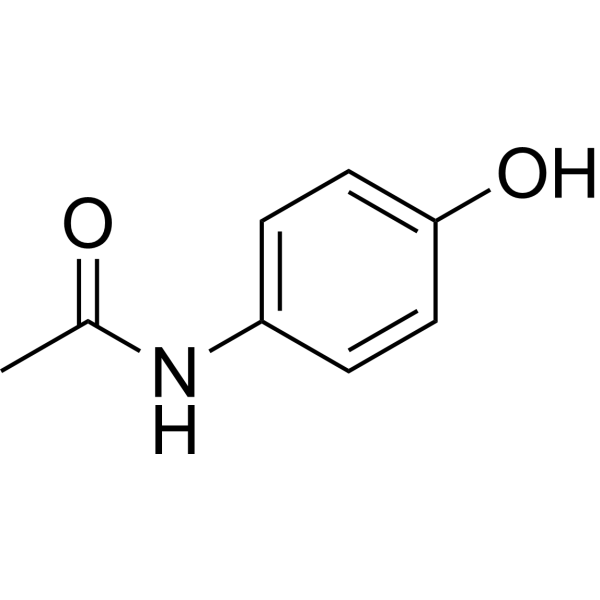
Acetaminophen (Paracetamol) is a selective cyclooxygenase-2 (COX-2) inhibitor with an IC50 of 25.8 μM; is a widely used antipyretic and analgesic agent. . Acetaminophen is a potent hepatic N-acetyltransferase 2 (NAT2) inhibitor . Acetaminophen induces ferroptosis and leads to acute liver injury in mice model .
loading...
    loading...
77
77 Cited Publications
Cat. No.: HY-17561
CAS No.: 108321-42-2
Synonyms: Geneticin sulfate; Antibiotic G-418 sulfate
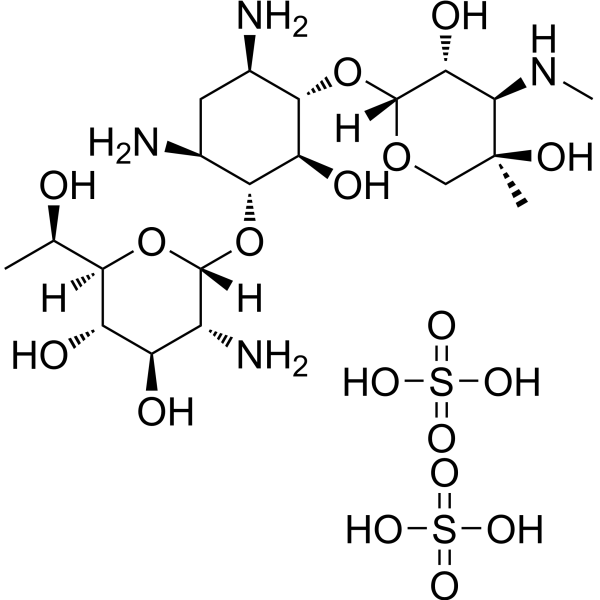
G-418 disulfate (Geneticin sulfate), is an aminoglycoside antibiotic, inhibits protein synthesis in eukaryotes and prokaryotes. G-418 disulfate is commonly used as a selective agent for eukaryotic cells .
loading...
    loading...
55
55 Cited Publications
Cat. No.: HY-100543
CAS No.: 72795-26-7
Purity:  99.60%
Synonyms: ICI-118551
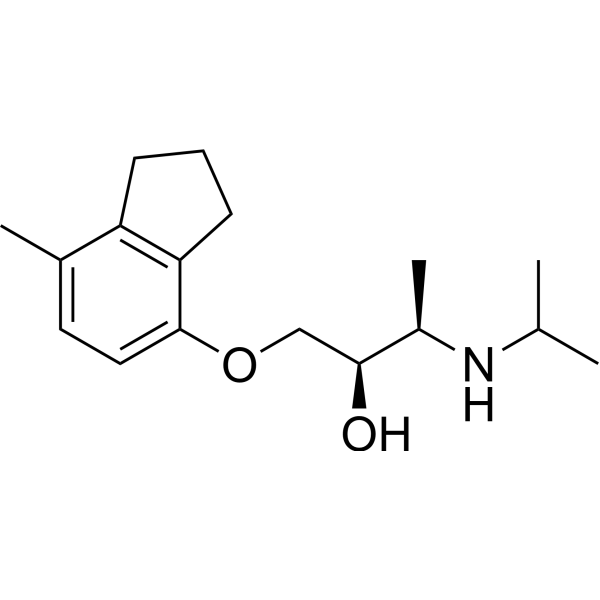
Zenidolol (ICI-118551) is a selective β2-adrenergic receptor antagonist with Ki values of Zenidolol for β2, β1 and β3 adrenergic receptors of 0.7, 49.5 and 611 nM, respectively. Zenidolol exerts antitumor effects via inducing apoptosis, inhibiting tumor sphere formation, and downregulating the HIF pathway by blocking β2-AR on tumor cells. Zenidolol exhibits a unique pulmonary vessel-specific vasodilatory effect in mouse models. Zenidolol can be used as an intraocular pressure-lowering agent in ophthalmic disease research .
loading...
    loading...
30
30 Cited Publications
Cat. No.: HY-10007
CAS No.: 284035-33-2
Purity:  99.94%
Synonyms: SB-262470A
Target:  

CaSR

Research Areas:  

Metabolic Disease

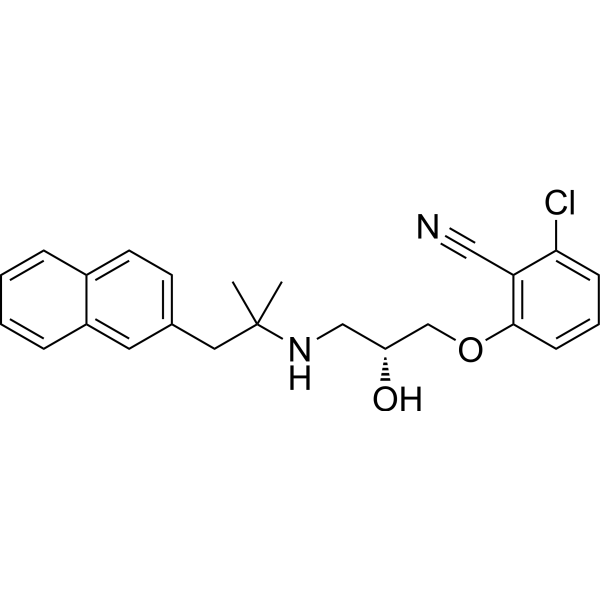
NPS-2143 (SB-262470A), an orally active calcilytic agent, is a selective and potent calcium ion-sensing receptor (CaSR) antagonist. NPS-2143 (SB-262470A) blocks increases in cytoplasmic Ca 2+ concentrations (IC50=43 nM) elicited by activating the Ca 2+ receptor in HEK 293 cells expressing the human Ca 2+ receptor .
loading...
    loading...
30
30 Cited Publications
Cat. No.: HY-10171
CAS No.: 324523-20-8
Purity:  99.98%
Synonyms: SB-262470A hydrochloride
Target:  

CaSR

Research Areas:  

Metabolic Disease

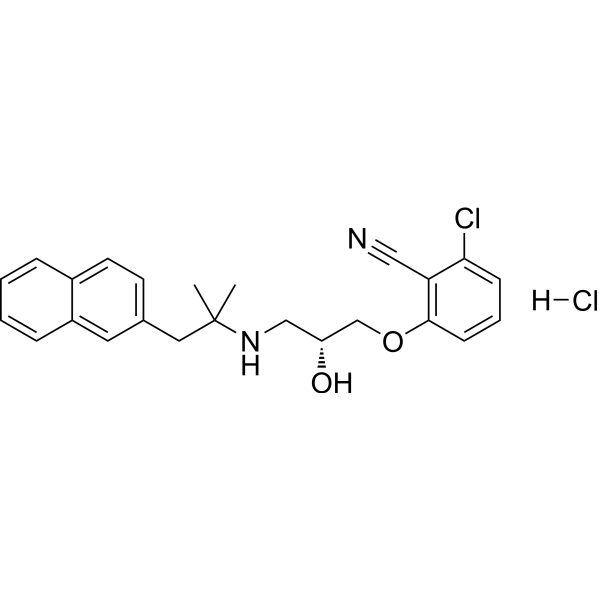
NPS-2143 hydrochloride (SB-262470A hydrochloride), an orally active calcilytic agent, is a selective and potent calcium ion-sensing receptor (CaSR) antagonist. NPS-2143 hydrochloride (SB-262470A hydrochloride) blocks increases in cytoplasmic Ca 2+ concentrations (IC50=43 nM) elicited by activating the Ca 2+ receptor in HEK 293 cells expressing the human Ca 2+ receptor .
loading...
    loading...
26
26 Cited Publications
Cat. No.: HY-W011500
CAS No.: 51805-45-9
Synonyms: Tris(2-​carboxyethyl)​phosphine hydrochloride
Target:  

Drug Derivative

Research Areas:  

Others

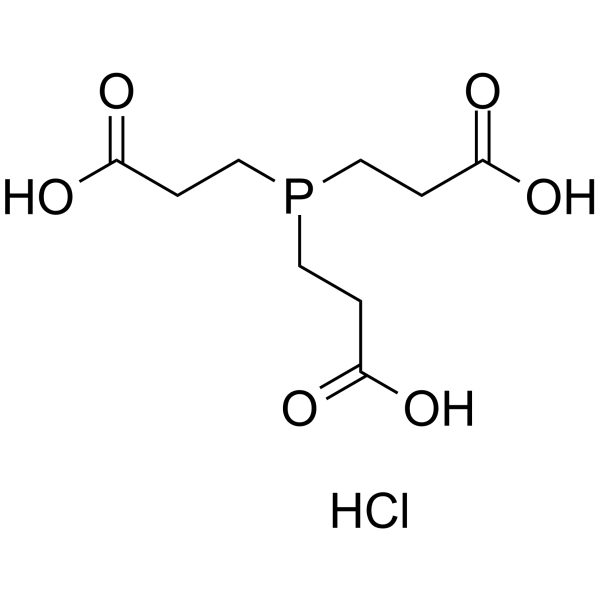
TCEP hydrochloride (Tris(2-carboxyethyl)phosphine hydrochloride) is a non-thiol reducing agent that is more stable and produces a faster S-S reductive reaction than other chemical reductants. TCEP hydrochloride is a trialkylphosphine, selectively reduces protein disuldes without altering the properties or interacting with thiol-directed agents in the reaction mixture. TCEP hydrochloride is also a commonly used reducing agent in the DNA/AuNP chemistry .
loading...
    loading...
25
25 Cited Publications
Cat. No.: HY-78131C
CAS No.: 31121-93-4
Synonyms: (±)-Ibuprofen sodium
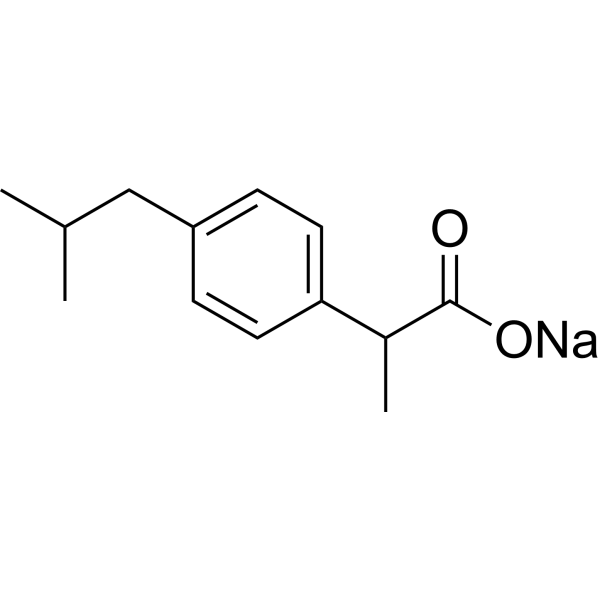
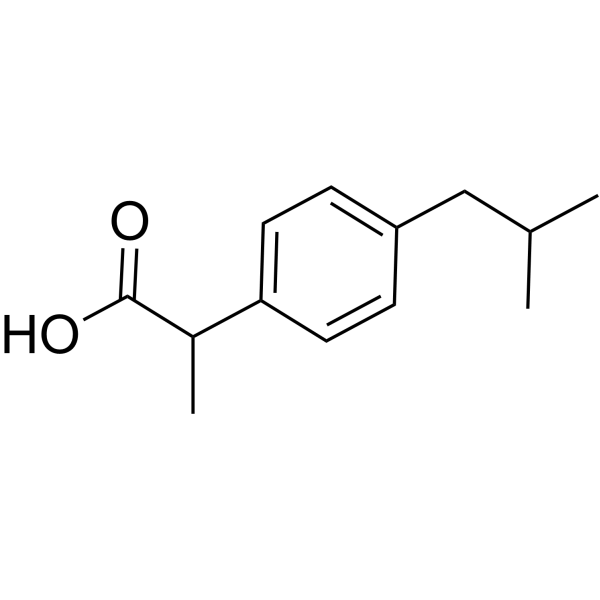
Ibuprofen ((±)-Ibuprofen) sodium is an orally active, selective COX-1 inhibitor with an IC50 value of 13 μM. Ibuprofen sodium inhibits cell proliferation, angiogenesis, and induces cell apoptosis. Ibuprofen sodium is a nonsteroidal anti-inflammatory agent and a nitric oxide (NO) donor. Ibuprofen sodium can be used in the research of pain, swelling, inflammation, infection, immunology, cancers .
loading...
    loading...
25
25 Cited Publications
Cat. No.: HY-78131
CAS No.: 15687-27-1
Synonyms: (±)-Ibuprofen
Ibuprofen ((±)-Ibuprofen) is a potent, orally active, selective COX-1 inhibitor with an IC50 value of 13 μM. Ibuprofen inhibits cell proliferation, angiogenesis, and induces cell apoptosis. Ibuprofen is a nonsteroidal anti-inflammatory agent and a nitric oxide (NO) donor. Ibuprofen ((±)-Ibuprofen) can be used in the research of pain, swelling, inflammation, infection, immunology, cancers .
loading...
    loading...
25
25 Cited Publications
Cat. No.: HY-100586
CAS No.: 57469-77-9
Purity:  99.91%
Synonyms: (±)-Ibuprofen L-lysine
Target:  

COX Apoptosis Parasite

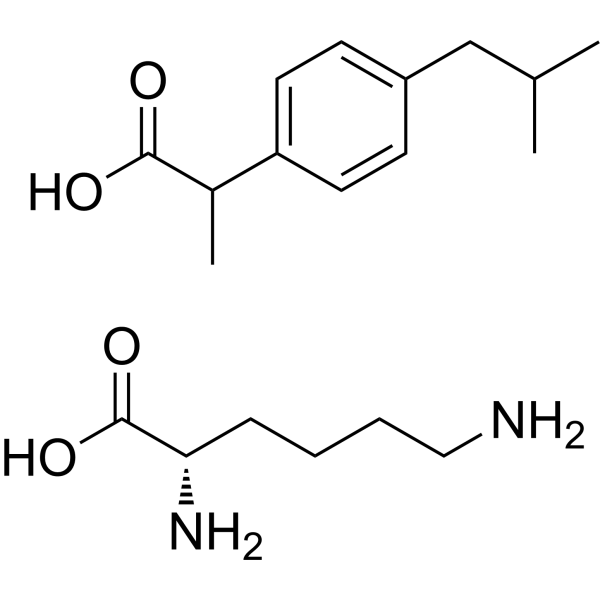
Ibuprofen ((±)-Ibuprofen) L-lysine is a potent orally active, selective COX-1 inhibitor with an IC50 value of 13 μM. Ibuprofen L-lysine inhibits cell proliferation, angiogenesis, and induces cell apoptosis. Ibuprofen L-lysine is a nonsteroidal anti-inflammatory agent and a nitric oxide (NO) donor. Ibuprofen L-lysine can be used in the research of pain, swelling, inflammation, infection, immunology, cancers .
loading...
    loading...
25
25 Cited Publications
Cat. No.: HY-B1247
CAS No.: 553-12-8
Synonyms: PPIX
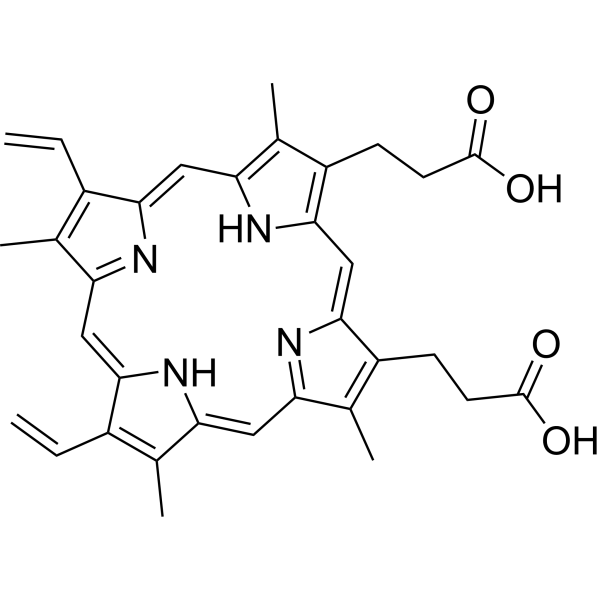
Protoporphyrin IX is a final intermediate in the heme biosynthetic pathway, which acts as a radiation sensitizer enhancing ROS generation even in a hypoxic state and inducing DNA damage. Protoporphyrin IX also acts as a photo sensitizer undergoing photobleaching that occurs through direct degradation by light irradiation. Protoporphyrin IX is formed and accumulated following 5-aminolevulinic acid (5-ALA) (HY-W000450) administration in the tumor cells of rats. Protoporphyrin IX causes selective improvement of basal cell carcinoma when activated red fluorescence of a peak wavelength at 405 nm. Protoporphyrin IX is promising for research of sonodynamic and photodynamic agents for a wide range of cancers, such as bladder cancer and nodular basal cell carcinoma .
loading...
    loading...
25
25 Cited Publications
Cat. No.: HY-B1247A
CAS No.: 50865-01-5
Synonyms: PPIX disodium
Target:  

Endogenous Metabolite

Research Areas:  

Cancer

Protoporphyrin IX disodium is a final intermediate in the heme biosynthetic pathway, which acts as a radiation sensitizer enhancing ROS generation even in a hypoxic state and inducing DNA damage. Protoporphyrin IX disodium also acts as a photo sensitizer undergoing photobleaching that occurs through direct degradation by light irradiation. Protoporphyrin IX disodium is formed and accumulated following 5-aminolevulinic acid (5-ALA) (HY-W000450) administration in the tumor cells of rats. Protoporphyrin IX disodium causes selective improvement of basal cell carcinoma when activated red fluorescence of a peak wavelength at 405 nm. Protoporphyrin IX disodium is promising for research of sonodynamic and photodynamic agents for a wide range of cancers, such as bladder cancer and nodular basal cell carcinoma .
loading...
    loading...
23
23 Cited Publications
Cat. No.: HY-129905
CAS No.: 6491-83-4
Purity:  98.92%
Synonyms: LLOMe hydrochloride; Leu-Leu methyl ester hydrochloride; H-Leu-Leu-OMe hydrochloride
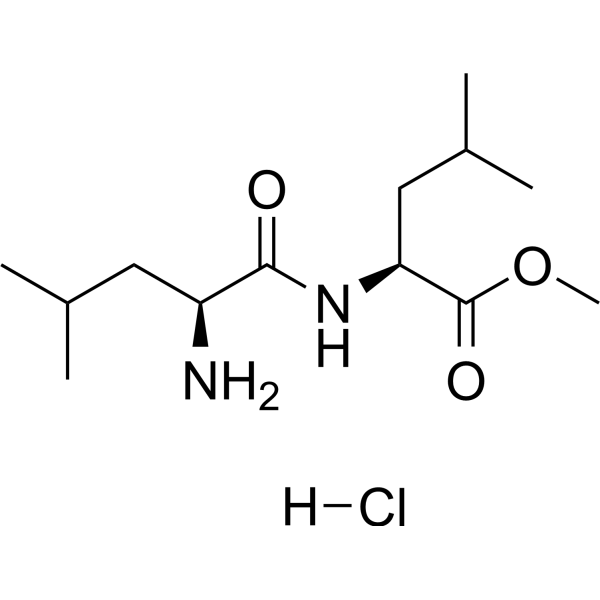
L-Leucyl-L-Leucine methyl ester (LLOMe; Leu-Leu methyl ester; H-Leu-Leu-OMe) hydrochloride is a lysosomal disrupting agent and apoptosis inducer that, through receptor-mediated endocytosis and lysosomal dipeptidyl peptidase I conversion, induces caspase activation, lysosomal membrane permeabilization, and DNA fragmentation, and requires cathepsin C to exert membrane-lytic activity, thereby selectively killing natural killer cells. L-Leucyl-L-Leucine methyl ester hydrochloride can be used for research related to lysosomal function and apoptosis .
loading...
    loading...
23
23 Cited Publications
Cat. No.: HY-129905A
CAS No.: 16689-14-8
Purity:  99.69%
Synonyms: LLOMe hydrobromide; Leu-Leu methyl ester hydrobromide; H-Leu-Leu-OMe hydrobromide
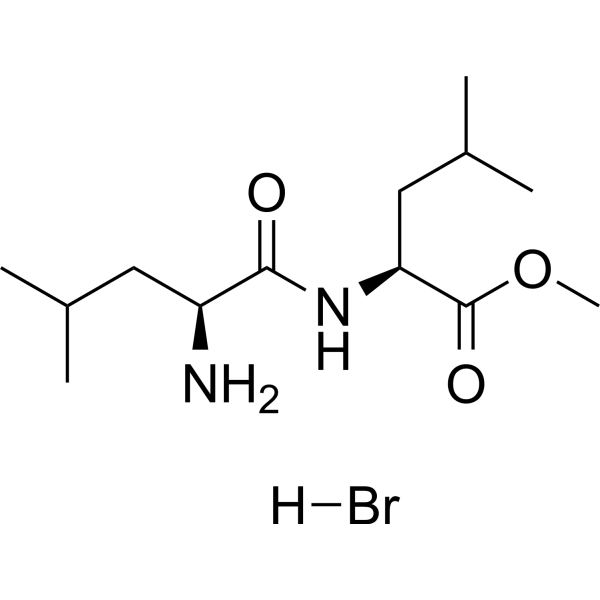
L-Leucyl-L-Leucine methyl ester (LLOMe; Leu-Leu methyl ester; H-Leu-Leu-OMe) hydrobromide is a lysosomal disrupting agent and apoptosis inducer that, through receptor-mediated endocytosis and lysosomal dipeptidyl peptidase I conversion, induces caspase activation, lysosomal membrane permeabilization, and DNA fragmentation, and requires cathepsin C to exert membrane-lytic activity, thereby selectively killing natural killer cells. L-Leucyl-L-Leucine methyl ester hydrobromide can be used for research related to lysosomal function and apoptosis .
loading...
    loading...
22
22 Cited Publications
Cat. No.: HY-16438
CAS No.: 925206-65-1
Synonyms: Nibrozetone
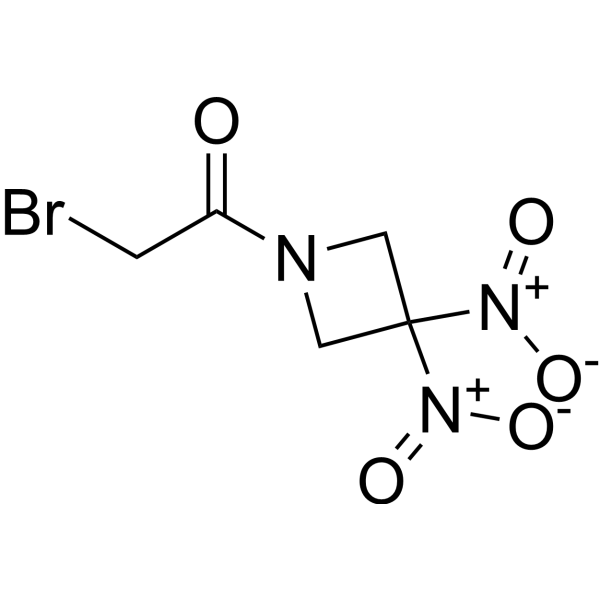
RRx-001, a hypoxia-selective epigenetic agent and studied as a radio- and chem-sensitizer, triggers apoptosis and overcomes agent resistance in myeloma. RRx-001 exhibits potent anti-tumor activity with minimal toxicity . RRx-001 is a dual small molecule checkpoint inhibitor by downregulating CD47 and SIRP-α . RRx-001 is a potent inhibitor of G6PD and shows potent antimalarial activity .
loading...
    loading...
21
21 Cited Publications
Cat. No.: HY-13913
CAS No.: 123653-11-2
Purity:  99.71%
Target:  

COX

Research Areas:  

Inflammation/Immunology Cancer

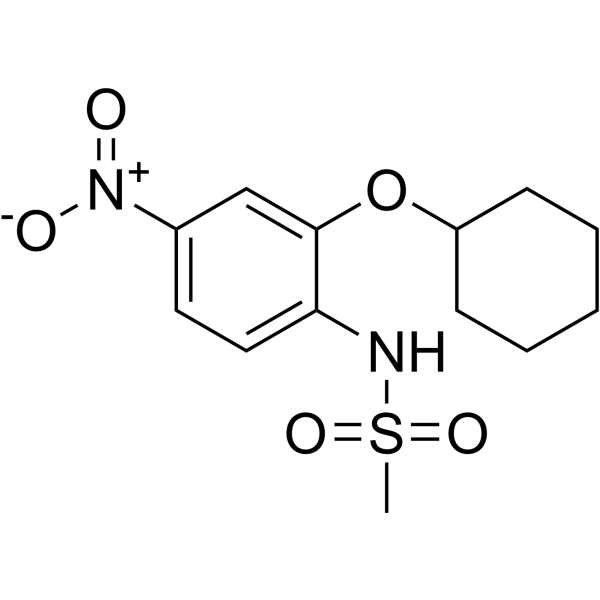
NS-398 is a non-steroidal an-inflammatory agent with analgesic and antipyretic effects, and selectively inhibits prostaglandin G/H synthase 2/cyclooxygenase 2 (COX-2) activity, with an IC50 of 3.8 μM, and has no effect on COX-1 at 100 μM.
loading...
    loading...

