351 Results for "

technology

" in MedChemExpress (MCE) Product Catalog:
Products (351)

351 Results for "technology" in MCE Product Catalog:

12
12 Publications Verification
Cat. No.: HY-K0302

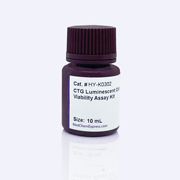
MCE Cell-ATP Viability Detection Kit is used for detecting the number and viability of living cells in culture based on high-sensitivity bioluminescence detection technology of the ATP present.Product specifications: Large sizes are based on 100 mL increments.

loading...
    loading...
8
8 Cited Publications
Cat. No.: HY-Y0623
CAS No.: 6066-82-6
Synonyms: HOSu; 1-Hydroxy-2,5-pyrrolidinedione
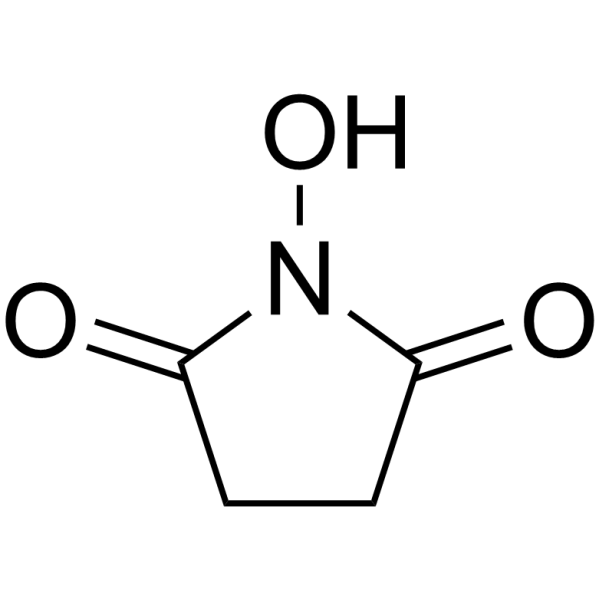
N-Hydroxysuccinimide (HOSu; 1-Hydroxy-2,5-pyrrolidinedione) is a covalent crosslinker commonly used in bioconjugation technology with a primary amine group. N-Hydroxysuccinimide reacts with amino groups (-NH2) to form a stable amide bond, which can modify amino-containing biomolecules. N-Hydroxysuccinimide can be used, for example, for protein labeling with fluorescent dyes and enzymes, surface activation of chromatography supports, microbeads, nanoparticles and microarray slides, and chemical synthesis of peptides. N-Hydroxysuccinimide has a wide range of applications in biomaterial synthesis (such as collagen, chitosan crosslinking), drug delivery systems (such as hydrogel preparation) and tissue engineering .
loading...
    loading...
7
7 Cited Publications
Cat. No.: HY-K0322

MCE Cell Ferrous Iron (Fe2+) Assay Kit (Fluorometric) utilizes fluorescence detection technology to analyze the levels of ferrous ions (Fe2+) in cells.

loading...
    loading...
5
5 Cited Publications
Cat. No.: HY-D1191
CAS No.: 2225748-05-8
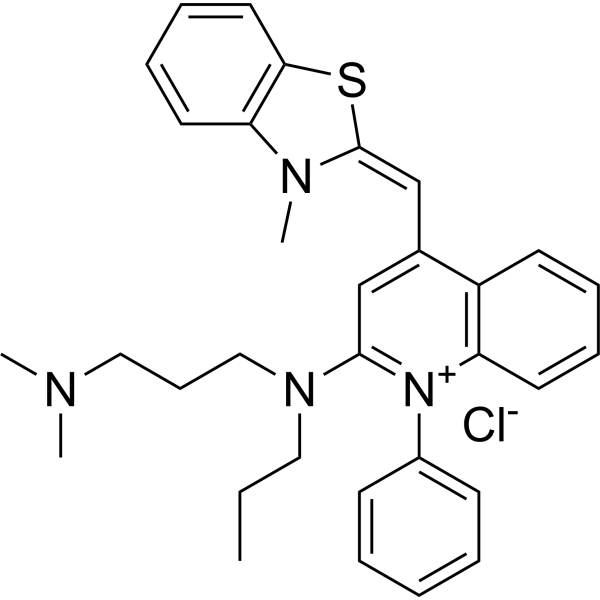
SYBR Green I chloride is a highly sensitive fluorescent nucleic acid dye that binds specifically to the minor groove of double-stranded DNA or intercalates between base pairs. SYBR Green I chloride exhibits weak fluorescence in the unbound state but emits bright fluorescence upon binding, and it preferentially binds to large-fragment DNA and DNA with high G+C content. SYBR Green I chloride is suitable for real-time PCR technology; its fluorescence intensity correlates with the amount and size of amplification products, enabling accurate quantification of gene expression and discrimination of amplicons via melting curve analysis without additional post-processing. SYBR Green I chloride is widely used in preclinical in vitro nucleic acid detection .
loading...
    loading...
4
4 Cited Publications
Cat. No.: HY-123844
CAS No.: 1883863-52-2
Purity:  99.94%
Research Areas:  

Cancer

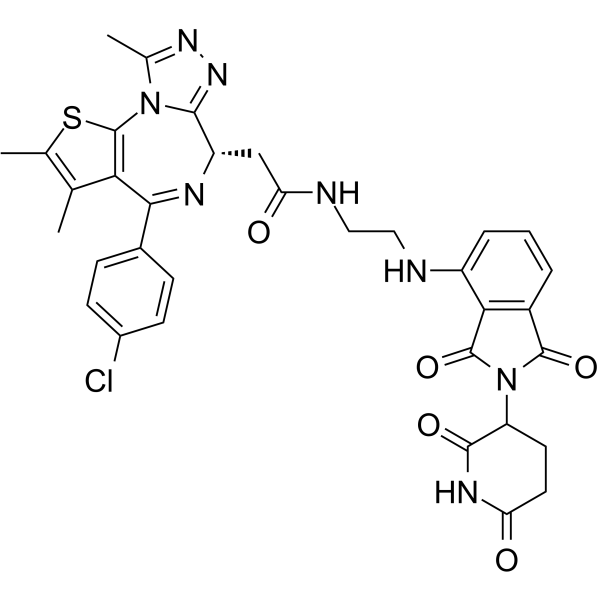
dBET57 is an effective and selective BRD4BD1 degrader based on PROTAC technology, with the ability to induce cell apoptosis and anti-tumor activity. dBET57 mediates the recruitment of the E3 ubiquitin ligase CRL4 Cereblon, showing a DC50/5h value of 500 nM for BRD4BD1 .
loading...
    loading...
2
2 Cited Publications
Cat. No.: HY-103604
CAS No.: 2064292-52-8
Purity:  98.06%
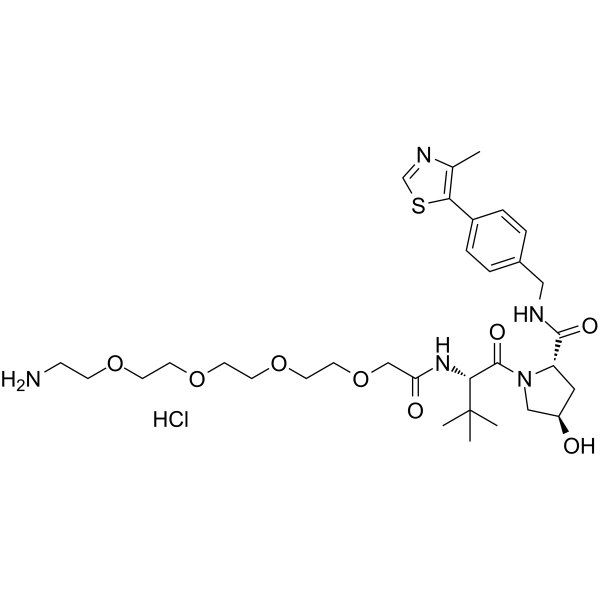
Synonyms: VH032-PEG4-NH2 hydrochloride; VHL Ligand-Linker Conjugates 4 hydrochloride; E3 ligase Ligand-Linker Conjugates 7
Research Areas:  

Cancer

(S,R,S)-AHPC-PEG4-NH2 hydrochloride is a synthesized E3 ligase ligand-linker conjugate that incorporates the (S,R,S)-AHPC based VHL ligand and 4-unit PEG linker used in PROTAC technology.
loading...
    loading...
2
2 Cited Publications
Cat. No.: HY-103604A
CAS No.: 2010159-57-4
Purity:  95.62%
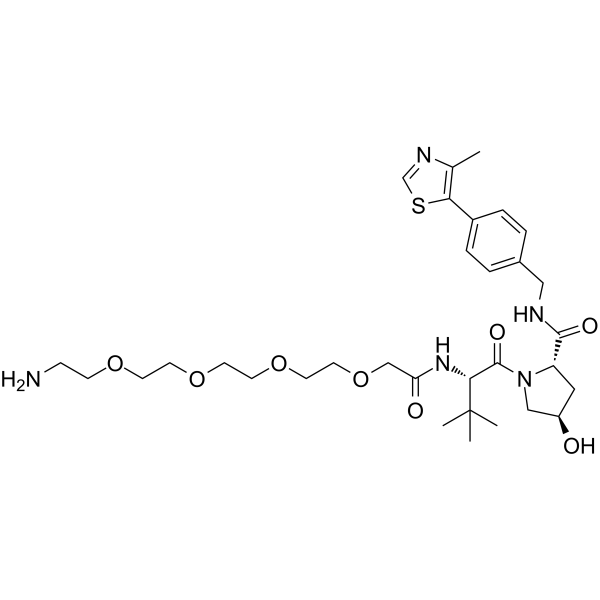
Synonyms: VH032-PEG4-NH2; VHL Ligand-Linker Conjugates 4 ; E3 ligase Ligand-Linker Conjugates 7 Free Base
Research Areas:  

Cancer

(S,R,S)-AHPC-PEG4-NH2 is a synthesized E3 ligase ligand-linker conjugate that incorporates the (S,R,S)-AHPC based VHL ligand and 4-unit PEG linker used in PROTAC technology.
loading...
    loading...
2
2 Cited Publications
Cat. No.: HY-K1095

MCE Live & Dead Bacterial Viability and Counting Kit is based on dual-fluorescence staining technology, which can effectively differentiate live bacteria from dead bacteria and enable quantitative detection using flow cytometry. It can also be used for quantitative analysis of various bacterial mixtures.

loading...
    loading...
2
2 Cited Publications
Cat. No.: HY-130604
CAS No.: 2365172-42-3
Purity:  99.61%
Research Areas:  

Inflammation/Immunology Cancer

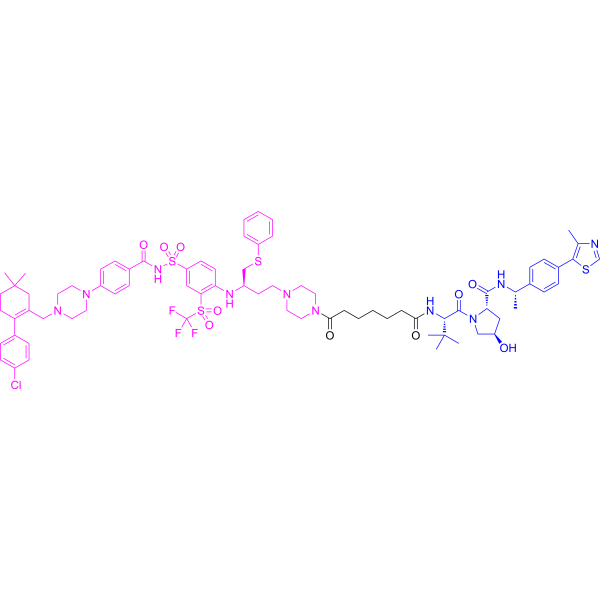
DT2216 is a potent and selective BCL-XL (Bcl-2 family member) degrader based on PROTAC technology. DT2216 causes effective degradation of BCL-XL protein by recruiting Von Hippel-Lindau (VHL) E3 ubiquitin ligase. DT2216 inhibits various BCL-XL-dependent leukemia and cancer cells but considerably less toxic to platelets .
loading...
    loading...
2
2 Cited Publications
Cat. No.: HY-103601
CAS No.: 1797406-81-5
Purity:  99.93%
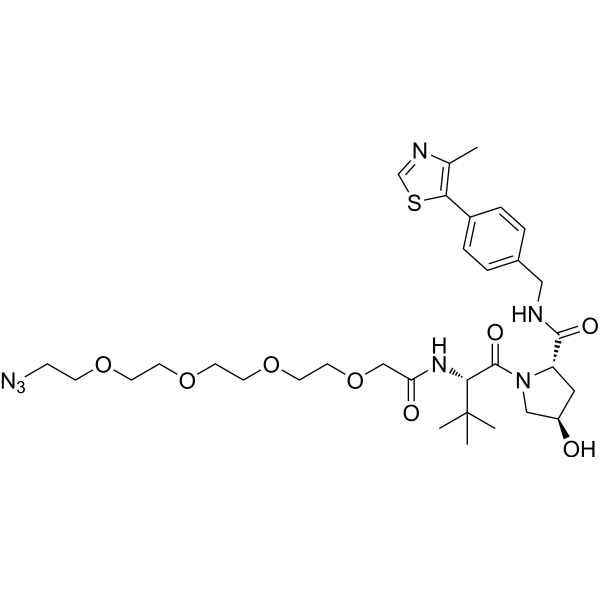
Synonyms: VH032-PEG4-N3; VHL Ligand-Linker Conjugates 5; E3 ligase Ligand-Linker Conjugates 4
Research Areas:  

Others

(S,R,S)-AHPC-PEG4-N3 is a synthesized E3 ligase ligand-linker conjugate that incorporates the (S,R,S)-AHPC based VHL ligand and 4-unit PEG linker used in PROTAC technology. (S,R,S)-AHPC-PEG4-N3 is a click chemistry reagent, it contains an Azide group and can undergo copper-catalyzed azide-alkyne cycloaddition reaction (CuAAc) with molecules containing Alkyne groups. It can also undergo strain-promoted alkyne-azide cycloaddition (SPAAC) reactions with molecules containing DBCO or BCN groups.
loading...
    loading...
1
1 Cited Publications
Cat. No.: HY-KE8004

Reverse Transcriptase is a reverse transcriptase that clones and expresses the deletion mutant RNase H- of M-MuLV through genetic recombination technology.

loading...
    loading...
1
1 Cited Publications
Cat. No.: HY-K0551

MCE Mycoplasma Detection Kit (Luminescence) utilizes chemiluminescence technology to detect the activity of specific enzymes in the sample, determining the presence of mycoplasma contamination.

loading...
    loading...
1
1 Cited Publications
Cat. No.: HY-K2023

MCE In vivo OptiLNP RNA Transfection Reagent (Local Effect) is a ready-to-use transfection reagent based on LNP technology. It is designed for the efficient transfection of mRNA and short-chain RNA in experimental animals. The RNA functions locally.

loading...
    loading...
1
1 Cited Publications
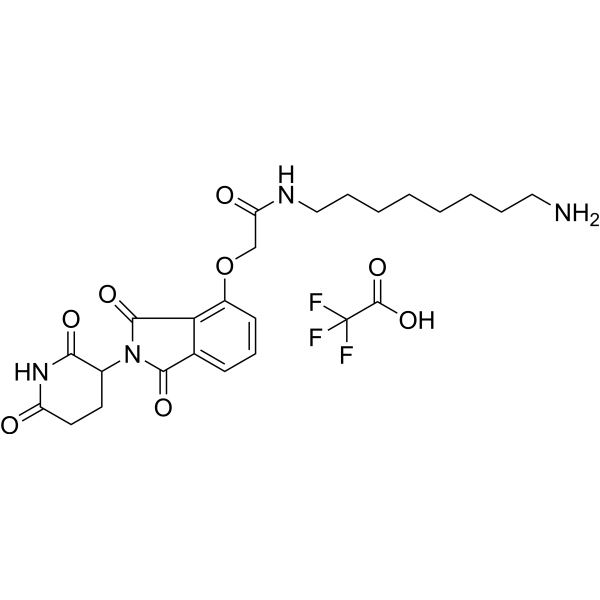
Cat. No.: HY-103614
CAS No.: 1950635-16-1
Purity:  99.43%
Synonyms: Cereblon Ligand -Linker Conjugates 2 TFA; E3 Ligase Ligand-Linker Conjugates 20 TFA
Thalidomide-O-amido-C8-NH2 TFA (Cereblon Ligand -Linker Conjugates 2 TFA) is a synthesized E3 ligase ligand-linker conjugate that incorporates the Thalidomide based cereblon ligand and a linker used in PROTAC technology.
loading...
    loading...
1
1 Cited Publications
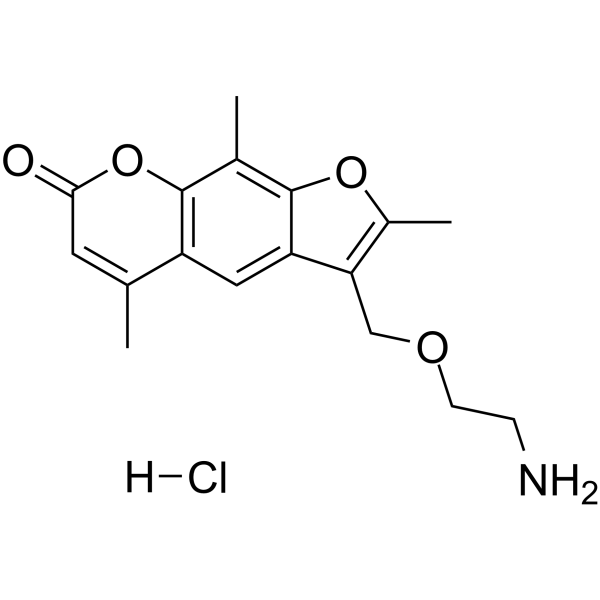
Cat. No.: HY-107004A
CAS No.: 161262-45-9
Purity:  99.86%
Synonyms: S-59
Research Areas:  

Inflammation/Immunology

Amotosalen hydrochloride (S-59) is a light-activated, DNA-, RNA-crosslinking psoralen compound, which is used to neutralise pathogens. Light-activated Amotosalen binds and permanently crosslinks DNA, preventing replication and thus stopping proliferation of donor T cells. Amotosalen can be used for the study of blood system pathogen reduction technology and graft-versus-host disease (GVHD) .
loading...
    loading...
1
1 Cited Publications
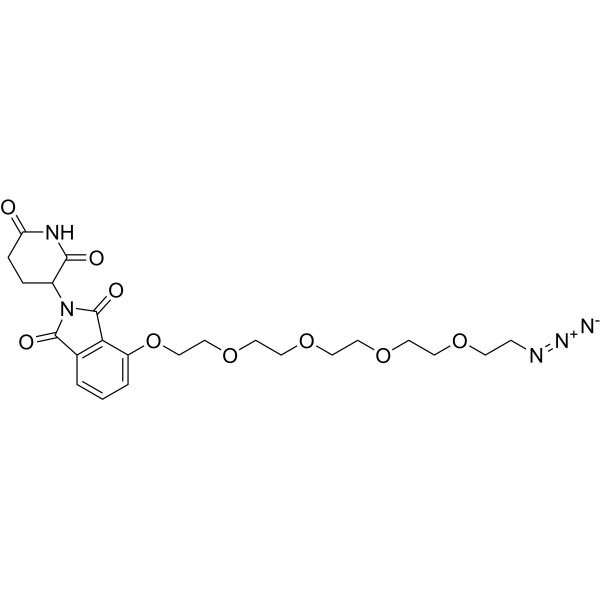
Cat. No.: HY-140844
CAS No.: 2380318-57-8
Purity:  98.02%
Thalidomide-O-PEG4-azide is a synthesized E3 ligase ligand-linker conjugate that incorporates the Thalidomide based cereblon ligand and a linker used in PROTAC technology. Thalidomide-O-PEG4-azide is a click chemistry reagent, it contains an Azide group and can undergo copper-catalyzed azide-alkyne cycloaddition reaction (CuAAc) with molecules containing Alkyne groups. It can also undergo strain-promoted alkyne-azide cycloaddition (SPAAC) reactions with molecules containing DBCO or BCN groups.
loading...
    loading...
1
1 Cited Publications
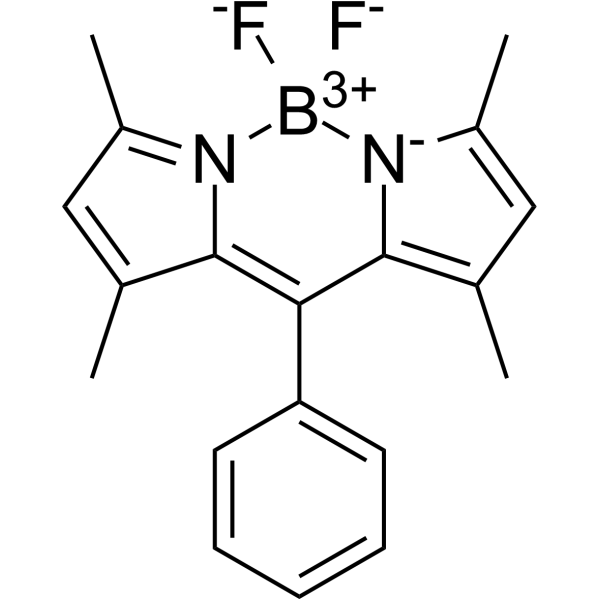
Cat. No.: HY-W089353
CAS No.: 194235-40-0
8-Phenyl-BODIPY 505/515 is a molecular rotor based on the BODIPY scaffold, specifically used as a microviscosity probe. The working principle of 8-Phenyl-BODIPY 505/515 is based on the restriction of molecular motion by viscosity: in a high-viscosity environment, the rotational freedom of its chemical bonds is inhibited, which leads to a significant extension of fluorescence lifetime. This property makes 8-Phenyl-BODIPY 505/515 an effective tool for monitoring changes in the viscosity of intracellular microenvironments via fluorescence lifetime imaging (FLIM) technology .
loading...
    loading...
1
1 Cited Publications
Cat. No.: HY-133535
CAS No.: 2093120-32-0
Synonyms: PA-JF646-NHS
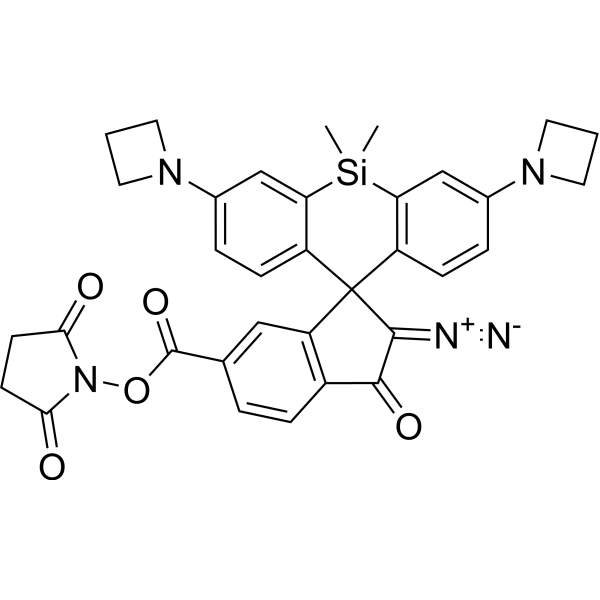
PA Janelia Fluor 646, SE (PA-JF646-NHS) is a photo-activatable fluorescent dye. PA Janelia Fluor 646, SE is a far-red light-excited, 405 nm-activated NHS ester-based dye. Janelia Fluor fluorescent dyes can be chemically conjugated to the specific HaloTag substrate (a chloroalkane ligand) to form a fluorescent ligand, rather than binding directly to the HaloTag protein itself. PA Janelia Fluor 646, SE can achieve extremely low background and single-molecule-level ultra-high-resolution imaging through photo-controlled switching, making it a powerful tool for live cell super-resolution microscopy technology (Ex/Em = 646/664 nm).
loading...
    loading...
Cat. No.: HY-P10633
CAS No.: 1628913-44-9
Research Areas:  

Others

SmBiT Tag is an 11-amino-acid short peptide with extremely low natural affinity for LgBiT, with a Kd value of approximately 190 μM. It serves as a core component of the NanoLuc Binary Technology (NanoBiT) system. NanoBiT is a bioluminescent reporter system based on protein fragment complementation technology, which is used to monitor dynamic protein-protein interactions in live cells and in vitro .
loading...
    loading...
Cat. No.: HY-137531
CAS No.: 2139348-60-8
Purity:  99.76%
Research Areas:  

Cancer

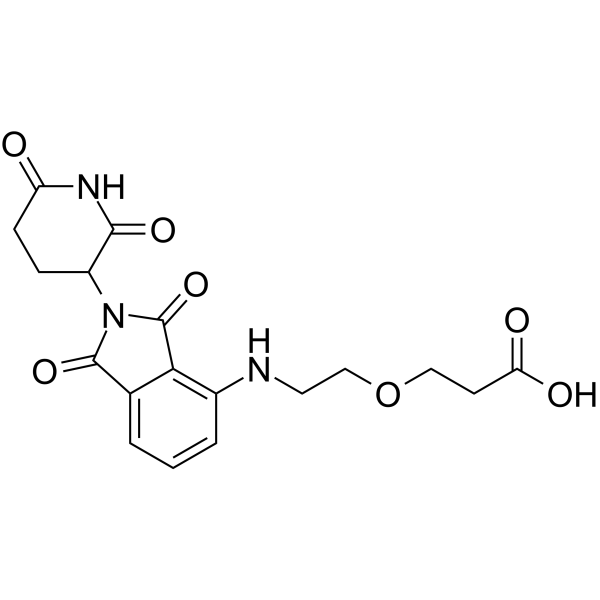
Pomalidomide-PEG1-C2-COOH is a synthesized E3 ligase ligand-linker conjugate that incorporates the Pomalidomide based cereblon ligand and 1-unit PEG linker used in PROTAC technology .
loading...
    loading...

