
1. Search Result
Search Result
Results for "

underlying

" in MedChemExpress (MCE) Product Catalog:

21

Inhibitors & Agonists

8

Screening Libraries

1

Peptides

1

Natural
Products

2

Isotope-Labeled Compounds

Cat. No. Product Name Target Research Areas Chemical Structure
  • HY-127105
    Iptacopan
    Maximum Cited Publications
    13 Publications Verification

    LNP023

    Complement System Metabolic Disease Inflammation/Immunology
    Iptacopan (LNP023) is an effective and orally-active highly selective factor B inhibitor with an IC50 value of 10 nM and KD of 7.9 nM. Iptacopan exerts a proximal effect in the complement cascade reaction, preventing the destruction (hemolysis) of red blood cells in PNH and the damage of renal cells in IgAN and C3G. Iptacopan can be used for the study of complement-mediated diseases, particularly paroxysmal nocturnal hemoglobinuria (PNH), primary immunoglobulin A nephropathy (IgAN), and complement 3 glomerulopathy (C3G) .
    Iptacopan
  • HY-B0061
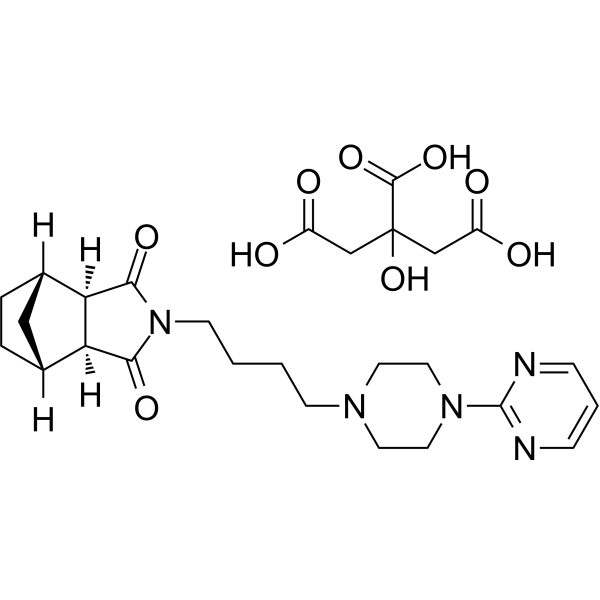
    Tandospirone citrate
    3 Publications Verification

    SM-3997 citrate

    5-HT Receptor Neurological Disease Metabolic Disease
    Tandospirone (SM-3997) citrate is a potent and selective 5-HT1A receptor partial agonist, with a Ki of 27 nM. Tandospirone citrate has anxiolytic and antidepressant activities. Tandospirone citrate can be used for the research of the central nervous system disorders and the underlying mechanisms .
    Tandospirone citrate
  • HY-14558
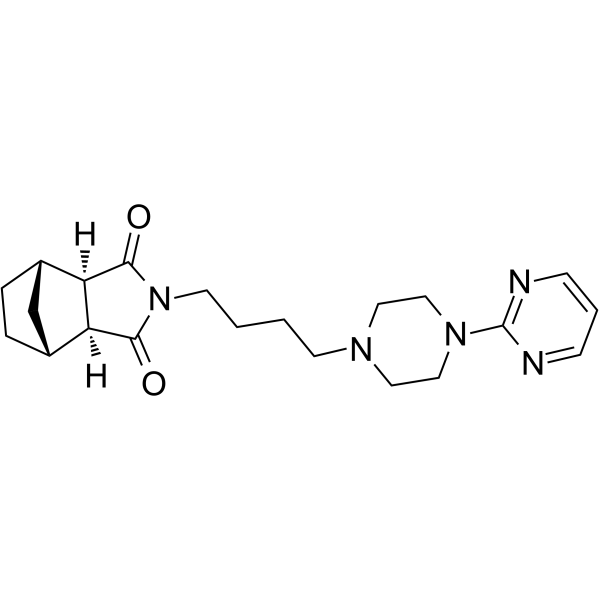
    Tandospirone
    3 Publications Verification

    SM-3997

    5-HT Receptor Neurological Disease
    Tandospirone (SM-3997) is a potent and selective 5-HT1A receptor partial agonist, with a Ki of 27 nM. Tandospirone has anxiolytic and antidepressant activities. Tandospirone can be used for the research of the central nervous system disorders and the underlying mechanisms .
    Tandospirone
  • HY-18101A
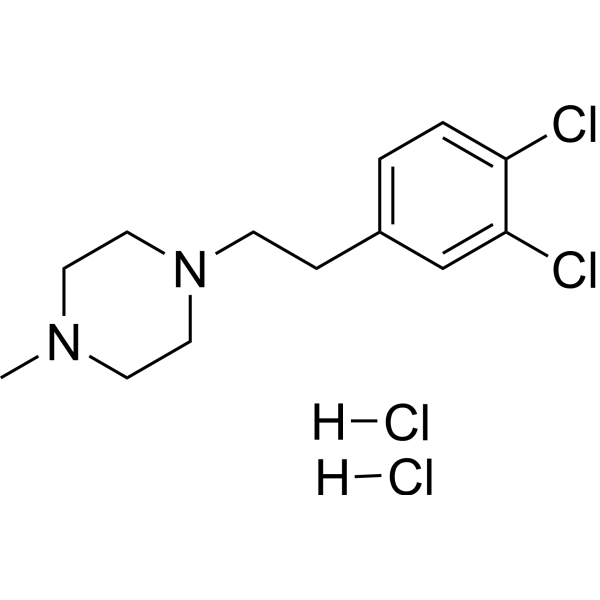
    BD-1063 dihydrochloride
    3 Publications Verification

    Sigma Receptor TRP Channel Neurological Disease
    BD-1063 dihydrochloride is a selective σ-1 receptor antagonist with inhibitory activity against TRPC5 and TRPM3. BD-1063 dihydrochloride exerts anti-hyperalgesic and anti-allodynic effects by inhibiting sustained calcium influx mediated by TRPC5 and TRPM3, and reverses the effects of Carrageenan (HY-125474). BD-1063 dihydrochloride also significantly reduces excessive ethanol self-administration behavior. BD-1063 dihydrochloride is widely used in studies on the mechanisms underlying neuropathic pain, inflammatory hyperalgesia, and alcohol abuse and dependence .
    BD-1063 dihydrochloride
  • HY-159098

    Molecular Glues PROTACs Histone Acetyltransferase Cardiovascular Disease
    dWIZ-1 is an orally active molecular glue and chemical probe targeting the WIZ transcription factor, which based on an IMiD backbone, binding to human WIZ with an affinity of 3.5 μM. dWIZ-1 recruits WIZ to the cereblon-DDB1 complex via its ZF7 domain, thereby triggering proteasome-dependent degradation of WIZ. dWIZ-1 significantly induces fetal hemoglobin expression in erythroblasts while reducing the level of inhibitory H3K9 dimethylation at WIZ binding sites such as the β-globin locus. Meanwhile, dWIZ-1 does not affect the proliferation and differentiation of erythroblasts, and no cytotoxicity is observed in in vitro cells or cynomolgus monkey models. dWIZ-1 serves as a critical tool molecule for investigating the mechanism and underlying pathways of sickle cell disease .
    dWIZ-1
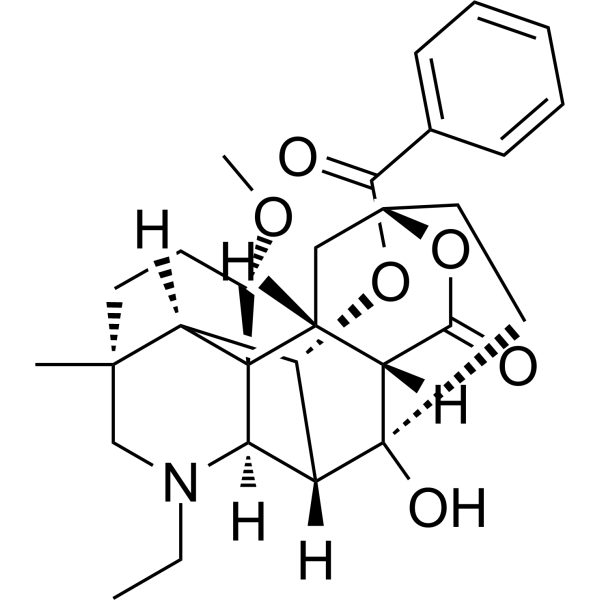
  • HY-N9404

    Sodium Channel Neurological Disease
    6-Benzoylheteratisine is an Aconitum alkaloid with potential neuroprotective activity. 6-Benzoylheteratisine can antagonize tetrodotoxin, inhibit the increase of [Na +]i, [Ca 2+]i and glutamate release, and block sodium channels. 6-Benzoylheteratisine has an inhibitory effect on the neuronal activity underlying epileptiform burst discharge .
    6-Benzoylheteratisine
  • HY-18740A

    HL 725

    Phosphodiesterase (PDE) Neurological Disease Metabolic Disease Cancer
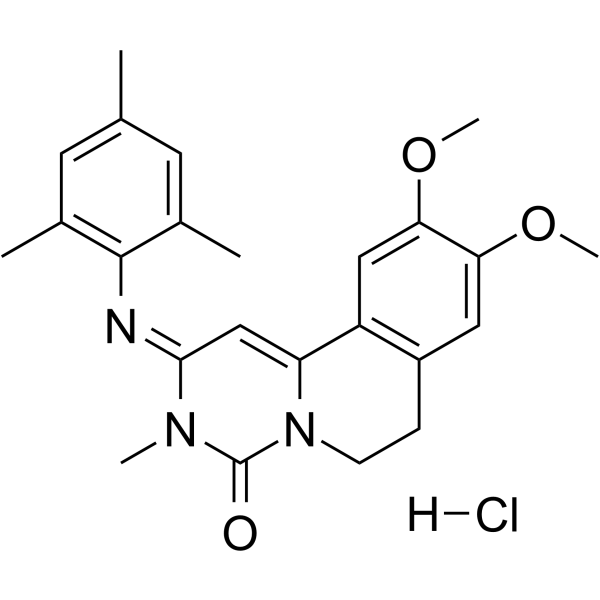
    Trequinsin hydrochloride (HL 725) is a PDE inhibitor, CatSper channel activator, and sperm potassium channel modulator. Trequinsin hydrochloride targets PDE3 with an IC50 of <1 nM. Trequinsin hydrochloride enhances currents and elevates intracellular calcium and cGMP levels via direct activation of the CatSper channel, while inhibiting the outward current conductance of sperm potassium channels. Without inducing premature acrosome reaction, Trequinsin hydrochloride significantly enhances sperm hyperactivated motility, forward motility, and the ability to penetrate viscous media. Trequinsin hydrochloride exerts age-specific positive inotropic and positive lusitropic effects on rabbit ventricular papillary muscles. Trequinsin hydrochloride has been used in studies on the mechanisms underlying male infertility (e.g., asthenozoospermia) .
    Trequinsin hydrochloride
  • HY-148542

    SD-142

    Endogenous Metabolite Cardiovascular Disease Cancer
    EpoY (SD-142) acts as an irreversible inhibitor of the brain's primary tubulin tyrosine carboxypeptidase (TCP), a complex formed by vasohibin-1 (VASH1) and the small vasohibin binding protein (SVBP). By inhibiting TCP with an IC50 value of approximately 500 nM, EpoY effectively decreases levels of detyrosinated alpha-tubulin, which is crucial for microtubule dynamics and neuronal differentiation. This inhibition leads to significant differentiation defects and has been linked to underlying issues associated with cancer and cardiomyopathies.
    EpoY
  • HY-129980

    PKC Neurological Disease
    NPC-15437 dihydrochloride is a selective, penetrable and reversible protein kinase C (PKC) inhibitor, with an IC50 of 19 μM. NPC-15437 dihydrochloride interferes with mechanisms underlying memory consolidation .
    NPC-15437 dihydrochloride
  • HY-101480

    5-HT Receptor Neurological Disease
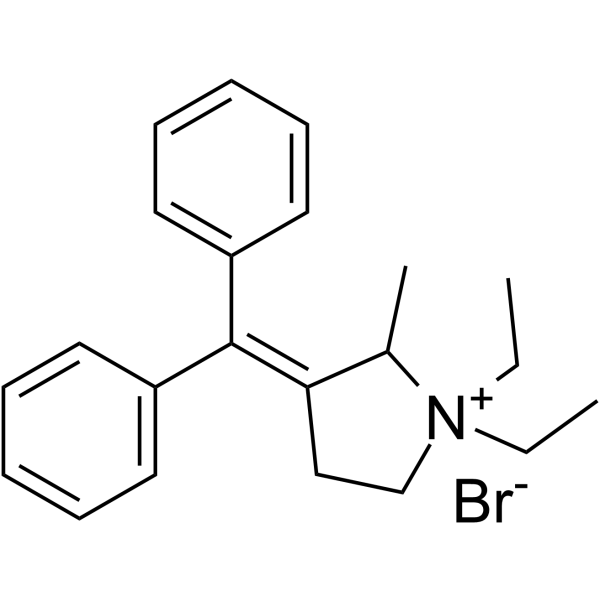
    Xylamidine is a peripheral 5-HT receptor antagonist used to investigate possible peripheral appetite suppressant effects of 5-hydroxytryptophan (5-HTP) and fenfluramine. In a 1-hour food intake test, xylamidine attenuated the decrease in food intake induced by 5-HT and 5-HTP, but had no effect on fenfluramine, suggesting that the appetite suppressant effect of 5-HTP is mediated in part through peripheral 5-HT receptors. Microstructural analysis revealed that 5-HTP and fenfluramine induced a decrease in food intake rate and a reduction in feeding batch size. Xylamidine reversed the effects of 5-HTP on food intake rate and induced a slight increase in feeding batch size itself, thus, the peripheral effect of 5-HTP appears to be to slow food intake rate. No effect of xylamidine on fenfluramine-induced changes in feeding was observed. The results suggest that the appetite suppressant effects of 5-HTP and fenfluramine are differentiated based on the peripheral effects of 5-HTP. The peripheral effects of 5-HTP are distinct from the previously reported 5-HT-induced decreases in feeding batch size and duration. Possible mechanisms underlying the differences in peripheral effects of 5-HT and 5-HTP are discussed.
    Xylamidine
  • HY-110053

    SM-3997 hydrochloride

    5-HT Receptor Neurological Disease
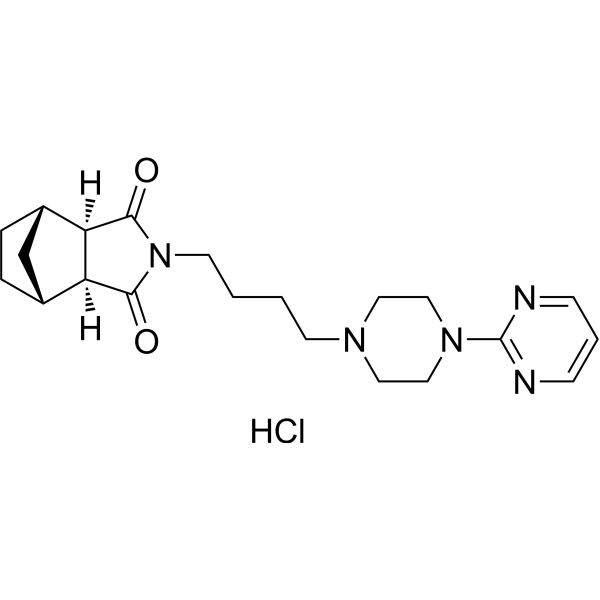
    Tandospirone (SM-3997) hydrochloride is a potent and selective 5-HT1A receptor partial agonist, with a Ki of 27 nM. Tandospirone hydrochloride has anxiolytic and antidepressant activities. Tandospirone hydrochloride can be used for the research of the central nervous system disorders and the underlying mechanisms .
    Tandospirone hydrochloride
  • HY-177313

    NVP-AAG 561

    CFTR Neurological Disease
    AAG561 is a corticotropin-releasing factor receptor 1 (CRF1) antagonist. AAG561 can be used for the study of the underlying emotion dysregulation of a mental disease or disorder .
    AAG561
  • HY-P4863

    CGRP Receptor Neurological Disease Metabolic Disease
    Biotinyl-Amylin (human) is a biotin-labeled derivative of Amylin, amide, human (HY-P1070). Biotinyl-Amylin (human) acts as a competitive agonist for the Calcitonin Receptor (CTR) and for the Amylin receptors (AMY1, AMY2, and AMY3) formed by the association of CTR with RAMP1/2/3. By mimicking endogenous human amylin, Biotinyl-Amylin (human) binds to and activates CTR and AMY receptors, thereby initiating downstream signaling pathways involving cAMP, CREB, and ERK1/2, while retaining high-affinity receptor binding and activation capabilities. Biotinyl-Amylin (human) is primarily utilized in studies investigating the metabolic regulatory mechanisms underlying obesity and diabetes; it is also applicable to pharmacological research, receptor localization studies, and ligand-binding assays related to Amylin receptors in the context of Alzheimer's disease .
    Biotinyl-Amylin (human)
  • HY-14558R

    SM-3997 (Standard)

    Reference Standards 5-HT Receptor Neurological Disease
    Tandospirone (Standard) is the analytical standard of Tandospirone. This product is intended for research and analytical applications. Tandospirone (SM-3997) is a potent and selective 5-HT1A receptor partial agonist, with a Ki of 27 nM. Tandospirone has anxiolytic and antidepressant activities. Tandospirone can be used for the research of the central nervous system disorders and the underlying mechanisms .
    Tandospirone (Standard)
  • HY-14558S

    SM-3997-d8

    Isotope-Labeled Compounds 5-HT Receptor Neurological Disease
    Tandospirone-d8 (SM-3997-d8) is deuterium labeled Tandospirone. Tandospirone (SM-3997) is a potent and selective 5-HT1A receptor partial agonist, with a Ki of 27 nM. Tandospirone has anxiolytic and antidepressant activities. Tandospirone can be used for the research of the central nervous system disorders and the underlying mechanisms .
    Tandospirone-d8
  • HY-139281

    N-C12-Deoxysphingosine

    Drug Derivative Others
    C12 1-Deoxyceramide (m18:1/12:0), a synthetic sphingolipid containing a 12-carbon chain, is widely employed in scientific investigations focusing on the intricate mechanisms underlying sphingolipid-mediated cellular signaling pathways.
    C12 1-Deoxyceramide (m18:1/12:0)
  • HY-18101

    Sigma Receptor TRP Channel Neurological Disease
    BD-1063 is a selective σ-1 receptor antagonist with inhibitory activity against TRPC5 and TRPM3. BD-1063 exerts anti-hyperalgesic and anti-allodynic effects by inhibiting sustained calcium influx mediated by TRPC5 and TRPM3, and reverses the effects of Carrageenan (HY-125474). BD-1063 also significantly reduces excessive ethanol self-administration behavior. BD-1063 is widely used in studies on the mechanisms underlying neuropathic pain, inflammatory hyperalgesia, and alcohol abuse and dependence .
    BD-1063
  • HY-18740

    HL 725 free base

    Phosphodiesterase (PDE) Endocrinology
    Trequinsin (HL 725 free base) is a PDE inhibitor, CatSper channel activator, and sperm potassium channel modulator. Trequinsin targets PDE3 with an IC50 of <1 nM. Trequinsin enhances currents and elevates intracellular calcium and cGMP levels via direct activation of the CatSper channel, while inhibiting the outward current conductance of sperm potassium channels. Without inducing premature acrosome reaction, Trequinsin significantly enhances sperm hyperactivated motility, forward motility, and the ability to penetrate viscous media. Trequinsin exerts age-specific positive inotropic and positive lusitropic effects on rabbit ventricular papillary muscles. Trequinsin has been used in studies on the mechanisms underlying male infertility (e.g., asthenozoospermia) .
    Trequinsin
  • HY-18101S

    Isotope-Labeled Compounds Sigma Receptor TRP Channel Neurological Disease
    BD-1063-d8 dihydrochloride is the deuterium labeled BD1063 dihydrochloride (HY-18101A) . BD-1063 dihydrochloride is a selective σ-1 receptor antagonist with inhibitory activity against TRPC5 and TRPM3. BD-1063 dihydrochloride exerts anti-hyperalgesic and anti-allodynic effects by inhibiting sustained calcium influx mediated by TRPC5 and TRPM3, and reverses the effects of Carrageenan (HY-125474). BD-1063 dihydrochloride also significantly reduces excessive ethanol self-administration behavior. BD-1063 dihydrochloride is widely used in studies on the mechanisms underlying neuropathic pain, inflammatory hyperalgesia, and alcohol abuse and dependence .
    BD-1063-d8 dihydrochloride
  • HY-181619

    MAP3K Neurological Disease Metabolic Disease Cancer
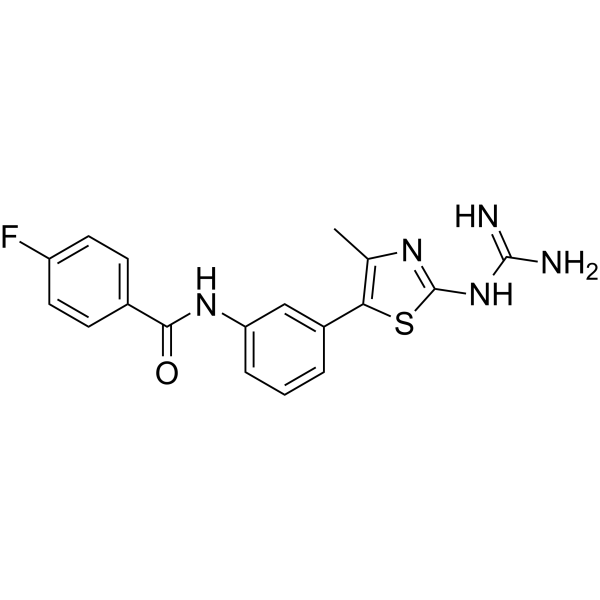
    TAO Kinase-IN-3 is a potent pan-TAOK (Thousand-And-One Kinase) inhibitor that specifically binds to and inhibits the kinase activities of TAOK1, TAOK2 and TAOK3 with Kd values of <0.17 nM, 0.34 nM, and 0.17 nM, respectively. TAO Kinase-IN-3 can be used to study Alzheimer's disease, primary tauopathies and related syndromes. In addition, TAO Kinase-IN-3 is also widely used in research on the mechanisms of cancer cachexia and the muscle atrophy it induces .
    TAO Kinase-IN-3
  • HY-127105B

    LNP023 TFA

    Complement System Metabolic Disease Inflammation/Immunology
    Iptacopan (LNP023) TFA is an effective and orally-active highly selective factor B inhibitor with an IC50 value of 10 nM and KD of 7.9 nM. Iptacopan TFA exerts a proximal effect in the complement cascade reaction, preventing the destruction (hemolysis) of red blood cells in PNH and the damage of renal cells in IgAN and C3G. Iptacopan TFA can be used for the study of complement-mediated diseases, particularly paroxysmal nocturnal hemoglobinuria (PNH), primary immunoglobulin A nephropathy (IgAN), and complement 3 glomerulopathy (C3G) .
    Iptacopan TFA

Inquiry Online

Your information is safe with us. * Required Fields.

Salutation


Country or Region *

Applicant Name *


Organization Name *

Department *


Email Address *


Product Name *

Cat. No.


Requested quantity *

Phone Number *


Remarks

Inquiry Online

Inquiry Information

Product Name:
Cat. No.:
Quantity:
MCE Japan Authorized Agent:

