



VUF11207 fumarate
Based on 3 publication(s) in Google Scholar
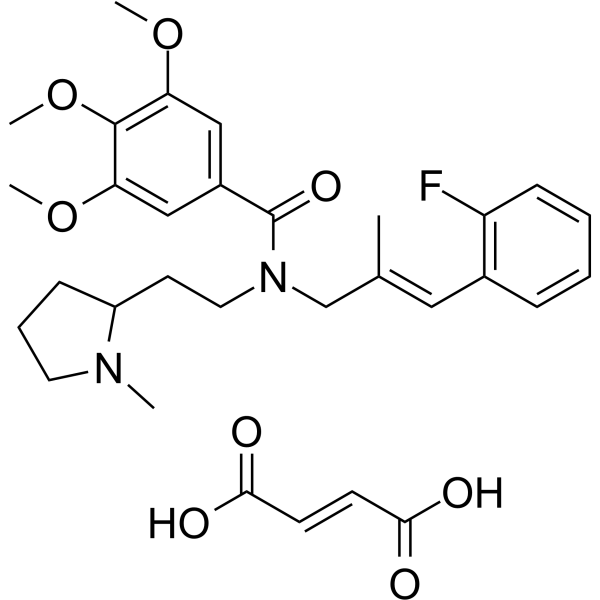
VUF11207 fumarate is a potent, selective, and orally active CXCR7/ACKR3 agonist (pKi = 8.1). VUF11207 fumarate specifically activates CXCR7/ACKR3, recruits β-arrestin, and induces receptor internalization, while downregulating the pro-inflammatory, pro-osteoclastogenic, and tumor immunosuppressive signaling mediated by the CXCL12-CXCR4 axis. VUF11207 fumarate can be used for research on glioblastoma, hypertension, and venous thrombosis.
For research use only. We do not sell to patients.
- Purity : 99.94%
- CAS No.: 1785665-61-3
- Formula: C31H39FN2O8
- Molecular Weight:586.65
-
Storage:
4°C, sealed storage, away from moisture
* In solvent : -80°C, 6 months; -20°C, 1 month (sealed storage, away from moisture)

To place orders, for customer services and technical support, please contact: MedChemExpress USA
Tel: 609-228-6898 E-mail: [email protected] [email protected]


-
 Biological Activity
-
Chemical Information
-
Solvent & Solubility
- Protocols
- Purity & Documentation
- References
-
 Help & FAQs


-
HY-101458A
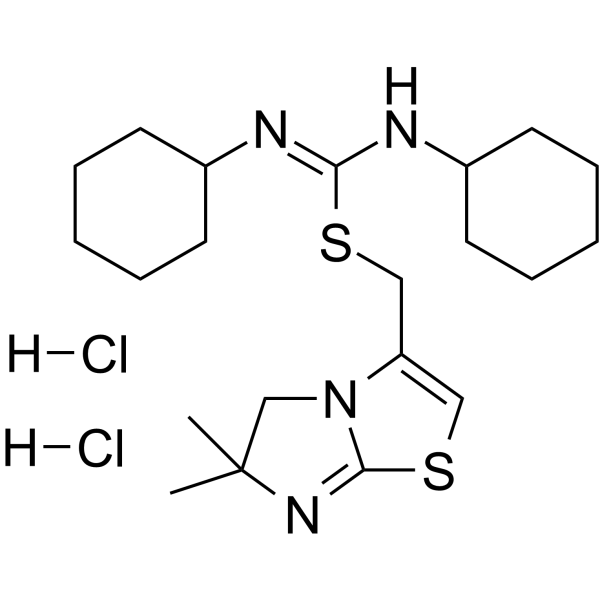
IT1t dihydrochlorideCXCR4 Antagonist -
HY-139643
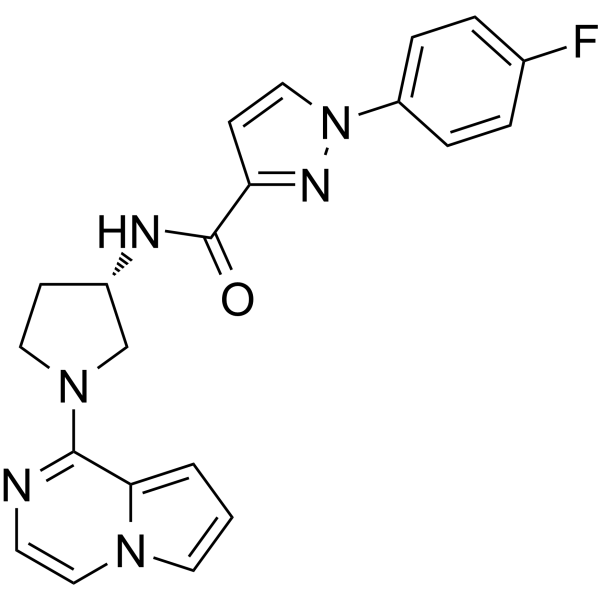
CXCR7 antagonist-1CXCR7 Antagonist -
HY-10046
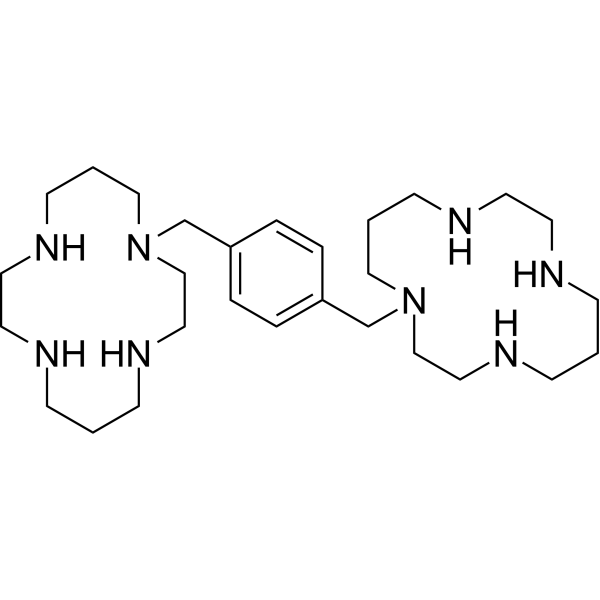
PlerixaforCXCR4 Antagonist -
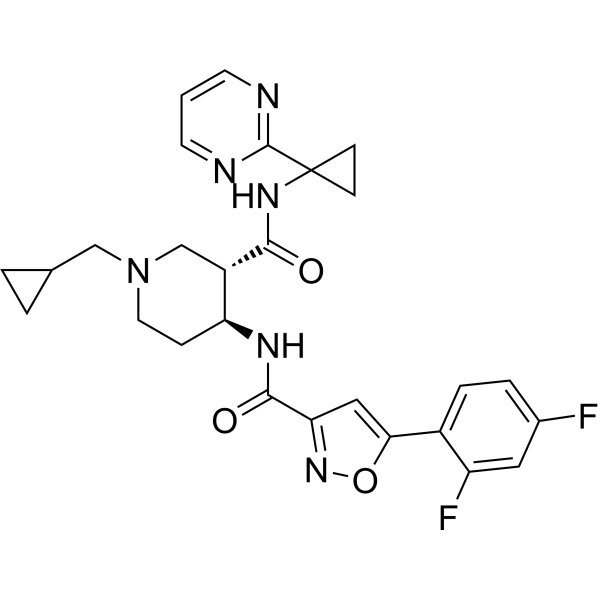
HY-142617
ACT-1004-1239CXCR Antagonist -
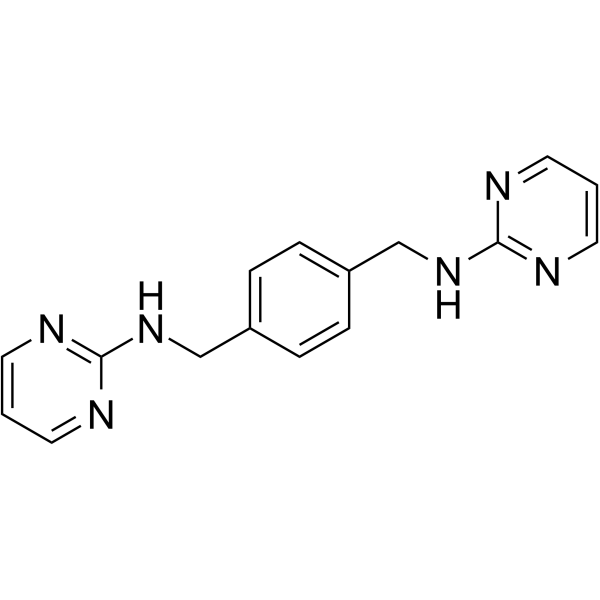
HY-13696
MSX-122CXCR4 Antagonist -
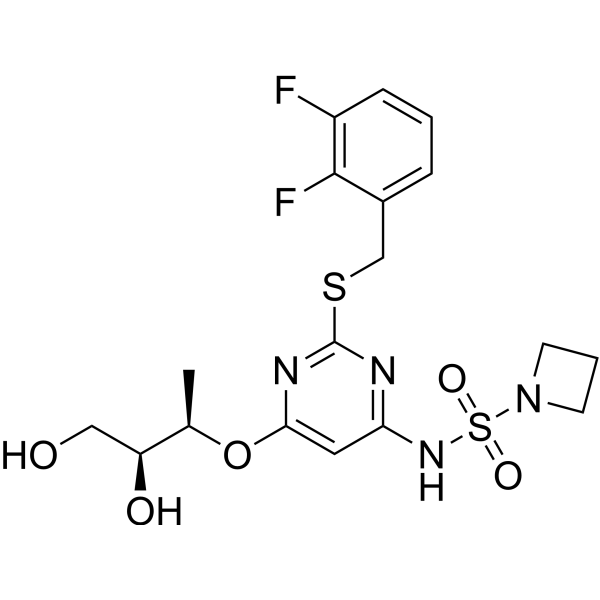
HY-19855
AZD-5069CXCR2 Antagonist -
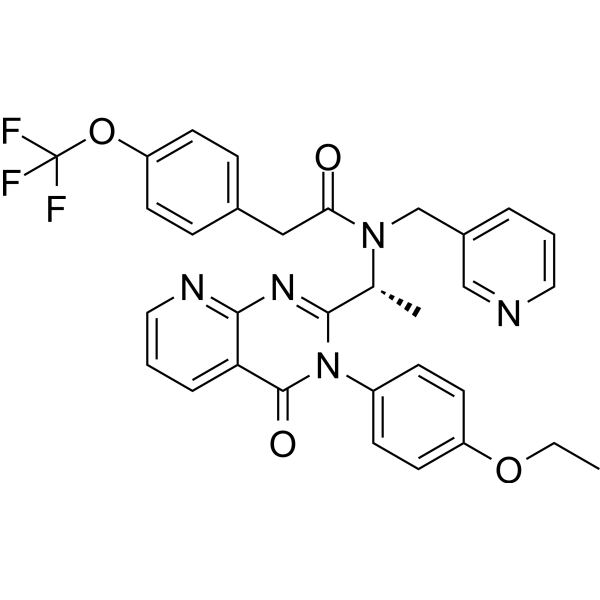
HY-15319
AMG 487CXCR3 Antagonist -
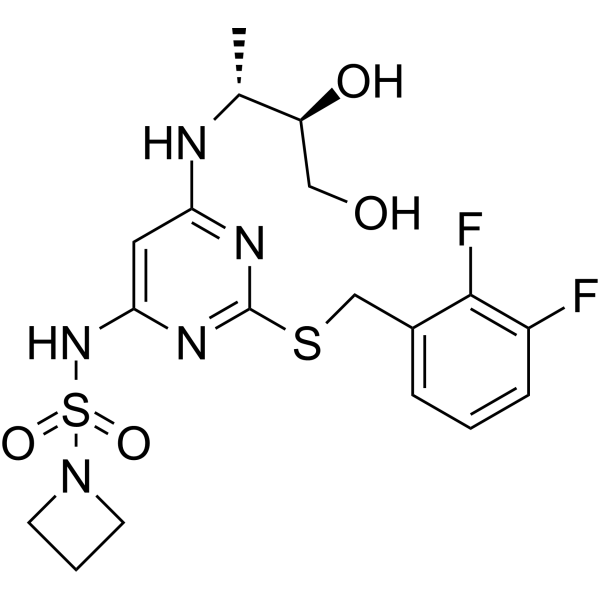
HY-15462
SRT3109CXCR2 Antagonist -
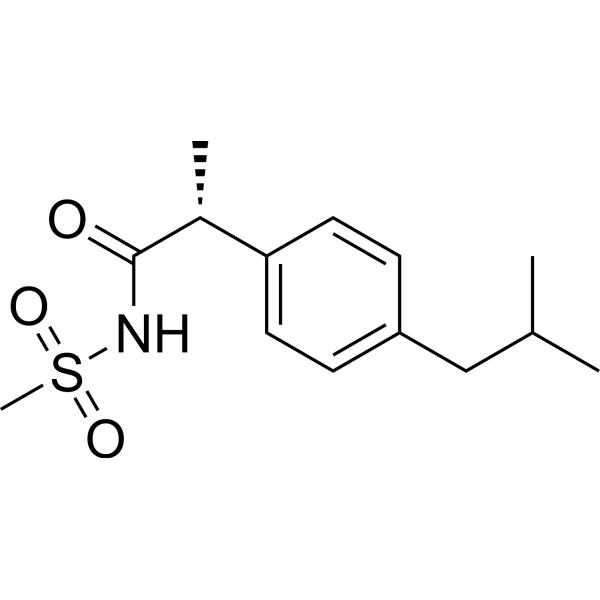
HY-15251
ReparixinCXCR1/2 Inhibitor -
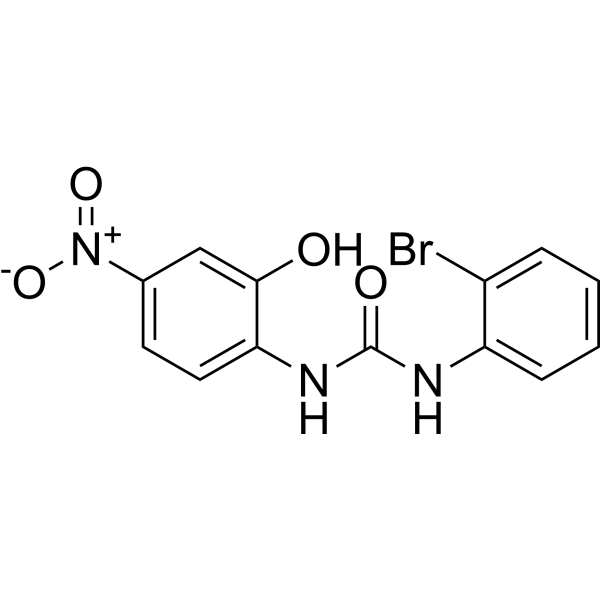
HY-16711
SB225002CXCR2 Antagonist -
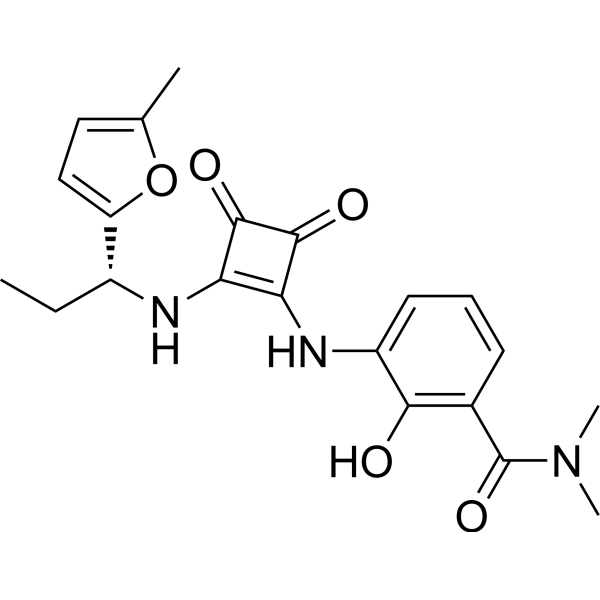
HY-10198
NavarixinCXCR1/2 Antagonist -
HY-15252
Reparixin L-lysine saltCXCR Inhibitor
Publications Citing Use of MedChemExpress (MCE) VUF11207 fumarate
MoreAll Arrestin Isoforms
More

Biological Activity
Description
IC50 & Target
[1]|
CXCR7 8.1 (pKi) |
In Vitro
VUF11207 fumarate reduces CXCL12 mRNA expression in human U87MG and Pt#3 cells and mouse GL261 glioblastoma cells[2].
VUF11207 fumarate (500 nM) partially reverses CXCL12-induced ERK phosphorylation in glioblastoma cells, while it does not affect ERK phosphorylation by itself[2].
VUF11207 fumarate (500 nM; 48 h) eliminates the promoting effect of GAMs on tumor cell growth in the co-culture system of glioblastoma cells and GAMs, and restores the cytotoxic killing activity of CD8+ T cells[2].
VUF11207 fumarate (100 ng/mL; 5 days) inhibits RANKL (HY-P73388) and TNF-α (HY-P7090)-induced osteoclastogenesis in mouse bone marrow-derived osteoclast precursor cells in the presence of CXCL12[1].
VUF11207 fumarate (100 ng/mL; 15-30 min) reduced CXCL12-enhanced Erk phosphorylation in mouse bone marrow-derived osteoclast precursors treated with RANKL or TNF-α[1].
VUF11207 fumarate (0.5 μg/mL) promotes AngII (HY-13948)-induced expression of pro-inflammatory and pro-fibrotic factors in rat aortic adventitial fibroblasts (AFs) and exacerbates cell proliferation and migration[3].
VUF11207 fumarate competitively displaces the fluorescent ligand in HEK293G cells overexpressing NLuc-ACKR3, specifically binding to the ACKR3 receptor[4].
MedChemExpress (MCE) has not independently confirmed the accuracy of these methods. They are for reference only. Further protocols information, click here.
-
Cell Line:Mouse bone marrow-derived osteoclast precursors
-
Concentration:100 ng/mL
-
Incubation Time:5 days
-
Result:Decreased the number of TRAP-positive multinucleated osteoclasts and attenuated CXCL12-enhanced p-ERK levels without altering p38 or JNK.
In Vivo
VUF11207 fumarate (5 mg/kg/d; i.g.; once daily; 14 days) significantly enhanced AngII-induced adventitial thickening and fibrosis in an AngII-induced hypertensive mouse model[3].
VUF11207 fumarate (100 µg/day; s.c.; once daily; 5 days) significantly inhibited LPS (HY-D1056)-induced osteoclastogenesis and bone resorption in a mouse model, and reduced LPS-induced RANKL and TNF-α mRNA expression[1].
MedChemExpress (MCE) has not independently confirmed the accuracy of these methods. They are for reference only.
-
Animal Model:C57BL/6J (male, 8-10 weeks old, 20-25 g, LPS-induced osteoclastogenesis and bone resorption model)[1]
-
Dosage:100 µg/day
-
Administration:s.c.; once daily; 5 days
-
Result:Significantly reduced osteoclastogenesis compared with LPS alone.
Significantly lowered the number of TRAP-positive osteoclasts.
Significantly decreased TRAP and Cathepsin K mRNA expression levels.
Significantly reduced bone resorption area.
Significantly lowered RANKL and TNF-α mRNA levels.
-
Animal Model:C57BL/6NCrlBltw (female, 8-12 weeks old)[2]
-
Dosage:10 mg/kg
-
Administration:i.p.; twice weekly; from post-implantation day 7
-
Result:Prolonged survival with median survival of 28 days for the VUF11207-anti-PD-L1 combination, compared to 18 days for VUF monotherapy, 20 days for anti-PD-L1 monotherapy, and 19 days for control.
Reduced tumor size on post-implantation day 20.
Decreased CXCL12 and PD-L1 expression, particularly PD-L1 in glioblastoma-associated macrophages (GAMs).
Attenuated phosphorylated ERK expression.
Increased proportion of CD8+ T cells in tumor tissues.
Achieved long-term survival in 4 of 9 mice when combined with anti-PD-L1 and control antibody, whereas all mice succumbed within 27 days when combined with anti-PD-L1 and anti-CD8β antibody.
-
Animal Model:C57/B6 wild-type (WT) (male, ten weeks old, AngII-induced hypertension)[3]
-
Dosage:5 mg/kg/d
-
Administration:i.g.; once daily; 14 days
-
Result:Strikingly aggravated aortic adventitial thickness, fibrosis, and collagen deposition in AngII-induced hypertensive mice.


Chemical Information
-
CAS No. 1785665-61-3
-
Appearance Solid
-
Molecular Weight 586.65
-
Formula C31H39FN2O8
-
Color Light yellow to yellow
-
SMILES
C/C(CN(C(C1=CC(OC)=C(C(OC)=C1)OC)=O)CCC2N(CCC2)C)=C\C3=C(C=CC=C3)F.OC(/C=C/C(O)=O)=O
-
Shipping
Room temperature in continental US; may vary elsewhere.
-
Storage
4°C, sealed storage, away from moisture
* In solvent : -80°C, 6 months; -20°C, 1 month (sealed storage, away from moisture)


Publications (3)
-
Journal Impact Factor
-
Most Recent
-
Immunity
Spatiotemporal dynamics of CXCL10 encode contextual immune information revealed by the genetically encoded fluorescent sensor. [Abstract]2025 Sep 9;58(9):2320-2335.e9. PMID: 40818452 -
Cell Death Dis
CXCR7 activation evokes the anti-PD-L1 antibody against glioblastoma by remodeling CXCL12-mediated immunity. [Abstract]2024 Jun 19;15(6):434. PMID: 38898023 -
Cell Mol Life Sci
Crosstalk between purinergic receptor P2Y11 and chemokine receptor CXCR7 is regulated by CXCR4 in human macrophages. [Abstract]2024 Mar 13;81(1):132. PMID: 38472446


Solvent & Solubility
In Vitro:
DMSO : 100 mg/mL (170.46 mM; Need ultrasonic; Hygroscopic DMSO has a significant impact on the solubility of product, please use newly opened DMSO)
Please refer to the solubility information to select the appropriate solvent. Once prepared, please aliquot and store the solution to prevent product inactivation from repeated freeze-thaw cycles.
Storage method and period of stock solution: -80°C, 6 months; -20°C, 1 month (sealed storage, away from moisture). When stored at -80°C, please use it within 6 months. When stored at -20°C, please use it within 1 month.
Please refer to the solubility information to select the appropriate solvent. Once prepared, please aliquot and store the solution to prevent product inactivation from repeated freeze-thaw cycles.
Storage method and period of stock solution: -80°C, 6 months; -20°C, 1 month (sealed storage, away from moisture). When stored at -80°C, please use it within 6 months. When stored at -20°C, please use it within 1 month.
Concentration (start) × Volume (start) = Concentration (final) × Volume (final)
In Vivo:
Select the appropriate dissolution method based on your experimental animal and administration route.
- For the following dissolution methods, please ensure to first prepare a clear stock solution using an In Vitro approach and then sequentially add co-solvents:
- To ensure reliable experimental results, the clarified stock solution can be appropriately stored based on storage conditions. As for the working solution for In Vivo experiments, it is recommended to prepare freshly and use it on the same day.
- The percentages shown for the solvents indicate their volumetric ratio in the final prepared solution. If precipitation or phase separation occurs during preparation, heat and/or sonication can be used to aid dissolution.
Add each solvent one by one: 10% DMSO 40% PEG300 5% Tween-80 45% Saline
Solubility: ≥ 2.08 mg/mL (3.55 mM); Clear solution
This protocol yields a clear solution of ≥ 2.08 mg/mL (saturation unknown).
Taking 1 mL working solution as an example, add 100 μL DMSO stock solution (20.8 mg/mL) to 400 μL PEG300, and mix evenly; then add 50 μL Tween-80 and mix evenly; then add 450 μL Saline to adjust the volume to 1 mL.
Preparation of Saline: Dissolve 0.9 g sodium chloride in ddH₂O and dilute to 100 mL to obtain a clear Saline solution.
Add each solvent one by one: 10% DMSO 90% (20% SBE-β-CD in Saline)
Solubility: ≥ 2.08 mg/mL (3.55 mM); Clear solution
This protocol yields a clear solution of ≥ 2.08 mg/mL (saturation unknown).
Taking 1 mL working solution as an example, add 100 μL DMSO stock solution (20.8 mg/mL) to 900 μL 20% SBE-β-CD in Saline, and mix evenly.
Preparation of 20% SBE-β-CD in Saline (4°C, storage for one week): 2 g SBE-β-CD powder is dissolved in 10 mL Saline, completely dissolve until clear.
In Vivo Dissolution Calculator
Please enter the basic information of animal experiments:
-
-
-
-
Recommended: Prepare an additional quantity of animals to account for potential losses during experiments.
Please enter your animal formula composition:
-
%DMSO +
Recommended: Keep the proportion of DMSO in working solution below 2% if your animal is weak.
-
%+
-
+%Tween-80 + +
-
%Saline +
The co-solvents required include: DMSO, . All of co-solvents are available by MedChemExpress (MCE). , Tween 80. All of co-solvents are available by MedChemExpress (MCE).
Working solution concentration: 0.22 mg/mL
Method for preparing stock solution: mg drug dissolved in μL DMSO. Stock solution concentration: mg/mL. * In solvent : -80°C, 6 months; -20°C, 1 month (sealed storage, away from moisture)
1. Take μL DMSO stock solution;
2. Add μL .
μL , mix evenly;
3. Then add μL Tween 80, mix evenly;
4. Then add μL
Please ensure that the stock solution in the first step is dissolved to a clear state, and add co-solvents in sequence. You can use ultrasonic heating (ultrasonic cleaner, recommended frequency 20-40 kHz), vortexing, etc. to assist dissolution.

Protocols
-
Research Protocol for Cardiovascular Diseases
Cardiovascular disease can be modeled as maladaptive cardiac remodeling, where ischemic injury or pressure overload activates inflammatory signaling, fibroblast activation, extracellular-matrix deposition, cardiomyocyte hypertrophy, vascular remodeling, and progressive ventricular dysfunction. The TGF-β/SMAD axis is a central profibrotic pathway after myocardial injury and pressure overload, while innate immune and cytokine pathways regulate leukocyte recruitment, scar formation, and adverse remodeling. Key unresolved questions include which inflammatory signals are reparative versus harmful, when fibrosis is protective versus maladaptive, and whether pathway inhibition improves function without weakening necessary infarct healing or compensatory remodeling.
-
Research Protocol for Inflammation-related Diseases
The NLRP3 inflammasome is a cytosolic innate immune signaling platform that integrates priming signals and danger-signal activation to promote caspase-1 activation, maturation of IL-1β and IL-18, and gasdermin D-mediated pyroptotic cell death. The core experimental logic is to determine whether inflammatory disease phenotypes are driven by increased NLRP3 expression, ASC-containing inflammasome assembly, caspase-1 cleavage, GSDMD cleavage, and extracellular release of IL-1β/IL-18 rather than by nonspecific cell injury alone. The pathway is strongly linked to inflammation-related disease phenotypes because monosodium urate crystals activate NALP3/NLRP3 inflammasome signaling in gout-like crystal inflammation, cholesterol crystals activate NLRP3 inflammasomes in atherogenesis models, and DSS-induced intestinal inflammation has been reported to involve NLRP3 inflammasome activity. However, experimental colitis studies also show context-dependent protective effects of NLRP3 inflammasome co


Purity & Documentation
-
Data Sheet (305 KB)
-
SDS (394 KB)
- English - EN (394 KB)
- Français - FR (394 KB)
- Deutsch - DE (394 KB)
- Norwegian - NO (394 KB)
- Español - ES (394 KB)
- Swedish - SV (394 KB)
- Italian - IT (394 KB)
- Korean - KR (394 KB)
- Portuguese - PT (394 KB)
-
Handling Instructions (2659 KB)
References
[1]. Nugraha AP, et al. C‑X‑C receptor 7 agonist acts as a C‑X‑C motif chemokine ligand 12 inhibitor to ameliorate osteoclastogenesis and bone resorption. Molecular medicine reports. 2022 Mar;25(3):78. [Content Brief]
[2]. Liu CC, et al. CXCR7 activation evokes the anti-PD-L1 antibody against glioblastoma by remodeling CXCL12-mediated immunity. Cell death & disease. 2024 Jun 19;15(6):434. [Content Brief]
[5]. Aslan JE. A platelet lipid switch that slows clotting. Blood. 2026 Sep 10;148(11):1379-80.


Complete Stock Solution Preparation Table
Please refer to the solubility information to select the appropriate solvent. Once prepared, please aliquot and store the solution to prevent product inactivation from repeated freeze-thaw cycles.
Storage method and period of stock solution: -80°C, 6 months; -20°C, 1 month (sealed storage, away from moisture). When stored at -80°C, please use it within 6 months. When stored at -20°C, please use it within 1 month.
| Optional Solvent | Concentration Solvent Mass | 1 mg | 5 mg | 10 mg | 25 mg |
|---|---|---|---|---|---|
| DMSO | 1 mM | 1.7046 mL | 8.5230 mL | 17.0459 mL | 42.6148 mL |
| 5 mM | 0.3409 mL | 1.7046 mL | 3.4092 mL | 8.5230 mL | |
| 10 mM | 0.1705 mL | 0.8523 mL | 1.7046 mL | 4.2615 mL | |
| 15 mM | 0.1136 mL | 0.5682 mL | 1.1364 mL | 2.8410 mL | |
| 20 mM | 0.0852 mL | 0.4261 mL | 0.8523 mL | 2.1307 mL | |
| 25 mM | 0.0682 mL | 0.3409 mL | 0.6818 mL | 1.7046 mL | |
| 30 mM | 0.0568 mL | 0.2841 mL | 0.5682 mL | 1.4205 mL | |
| 40 mM | 0.0426 mL | 0.2131 mL | 0.4261 mL | 1.0654 mL | |
| 50 mM | 0.0341 mL | 0.1705 mL | 0.3409 mL | 0.8523 mL | |
| 60 mM | 0.0284 mL | 0.1420 mL | 0.2841 mL | 0.7102 mL | |
| 80 mM | 0.0213 mL | 0.1065 mL | 0.2131 mL | 0.5327 mL | |
| 100 mM | 0.0170 mL | 0.0852 mL | 0.1705 mL | 0.4261 mL |


VUF11207 fumarate Related Classifications
HY-110318 Related Classifications
 Powered by Bioz