



Cancer Immunotherapy
Cancer immunotherapy (CIT) is a type of biological therapy, aiming to improve anti-tumor immune responses with fewer off-target effects than chemotherapy. Several types of immunotherapy include: oncolytic virus therapies, cancer vaccines, cytokine therapies, adoptive cell transfer (ACT), and immune checkpoint inhibitors (ICIs). In particular, ICIs and ACT have obtained immense clinical response, but their efficacy varies from person to person. Immune cells can be harnessed to eliminate tumor cells, such as T cells, B cells, NK cells, and myeloid cells. T cells have potent tumor-killing capability, therefore, a plethora of cancer immunotherapy research have focused on inducing T-cell-mediated anti-tumor responses. CTLA-4 and PD-1 are found on the cell surface of T cells as co-inhibitory receptors. The breakthrough in cancer immunotherapy results from the identification and subsequent targeting of checkpoint mechanisms in T cells with monoclonal antibodies against CTLA-4 and programmed death-ligand 1/programmed death-1 (PD-L1/PD-1).
Several types of cancers (e.g., melanoma, mismatch repair-deficient cancers, bladder cancer, and non-small cell lung cancer) have achieved significant clinical responses in T-cell checkpoint blockade therapies. However, single-mode immunotherapy faces challenges such as low immune response, low tumor infiltration, and complex immunosuppressive tumor microenvironment. Recently, combined therapies based on tumor immunity have received extensive attention in the research of enhancing tumor cells immunogenicity and inhibiting their growth. For example, anti CTLA-4 and PD-1, immune checkpoint blockade (ICB) combined with chemotherapy, anti-angiogenic drugs and kinase inhibitors.
-
Ketoprofen (lysinate) (Standard)
 0 ImagesCat. No.: HY-B0227ARCAS No.: 57469-78-0Synonyms: RP-19583 (lysinate) (Standard)
Ketoprofen (lysinate) (Standard) is the analytical standard of Ketoprofen (lysinate). This product is intended for research and analytical applications. Ketoprofen (RP-19583) lysinate is a non-steroidal anti-inflammatory agent. Ketoprofen lysinate can inhibit the activity of cyclooxygenase with IC50 values of 2 nM (COX-1) and 26 nM (COX-2). which is potential in the research of inflammation, immunology, and metabolic disease such as obesity.
-
BDE 47 (Standard)
 0 ImagesCat. No.: HY-W762011RCAS No.: 5436-43-1
BDE 47 (Standard) is the analytical standard of BDE 47. This product is intended for research and analytical applications. BDE 47 targets mitochondria, inhibits mitochondrial oxidative phosphorylation (OXPHOS), decreases mitochondrial membrane potential (MMP) and induces apoptosis in embryonic cell. BDE 47 induces the generation of ROS, and activates the JNK signaling pathway. BDE 47 exhibits embryonic developmental toxicity in zebrafish.
-
CK3 peptide
 0 ImagesCat. No.: HY-P10788CAS No.: 1801552-75-9
CK3 peptide is an NRP-1 targeting peptide with the amino acid sequence CLKADKAKC. The CK3 peptide specifically binds to NRP-1 to target breast cancer cells. Single-photon emission computed tomography (SPECT) and near-infrared fluorescence (NIRF) imaging show significant accumulation of CK3 peptide in xenograft tumors in nude mice. CK3 peptide can be used for molecular imaging studies of breast cancer.
-
Anti-Epiregulin Antibody
 0 ImagesCat. No.: HY-P991986
Anti-Epiregulin Antibody is an anti-Epiregulin antibody. Recommend Isotype Controls: Human IgG1 kappa, Isotype Control (HY-P99001).
-
Ginsenoside Rd (Standard)
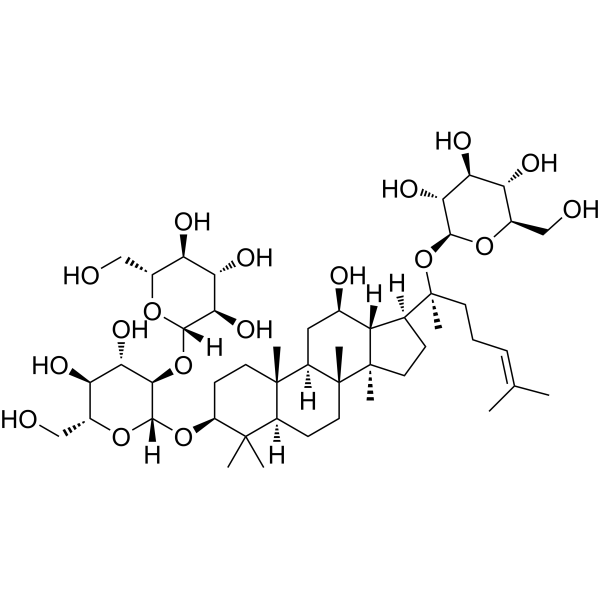 0 ImagesSynonyms: Gypenoside VIII (Standard)
Ginsenoside Rd (Standard) is the analytical standard of Ginsenoside Rd. This product is intended for research and analytical applications. Ginsenoside Rd inhibits TNFα-induced NF-κB transcriptional activity with an IC50 of 12.05±0.82 μM in HepG2 cells. Ginsenoside Rd inhibits expression of COX-2 and iNOS mRNA. Ginsenoside Rd also inhibits Ca2+ influx. Ginsenoside Rd inhibits CYP2D6, CYP1A2, CYP3A4, and CYP2C9, with IC50s of 58.0±4.5 μM, 78.4±5.3 μM, 81.7±2.6 μM, and 85.1±9.1 μM, respectively.
-
8-Acetonyldihydronitidine
 0 ImagesCat. No.: HY-N21597CAS No.: 80330-39-8
8‑Acetonyldihydronitidine is a naturally occurring benzophenanthridine alkaloid with antibacterial, antifungal, and anti-proliferative activities against colorectal cancer cells. 8‑Acetonyldihydronitidine inhibits Staphylococcus aureus and exerts a potent antifungal effect against Cladosporium cladosporioides. 8‑Acetonyldihydronitidine activates the p53 signaling pathway, upregulates the expression of target genes including p21, BAX, and FAS, downregulates cyclin A and cyclin B, and induces cell cycle arrest and apoptosis, thereby suppressing the proliferation of colorectal cancer cells. 8‑Acetonyldihydronitidine is used in research related to colorectal cancer, fungal infections, and bacterial infections.
-
Triptoquinone H
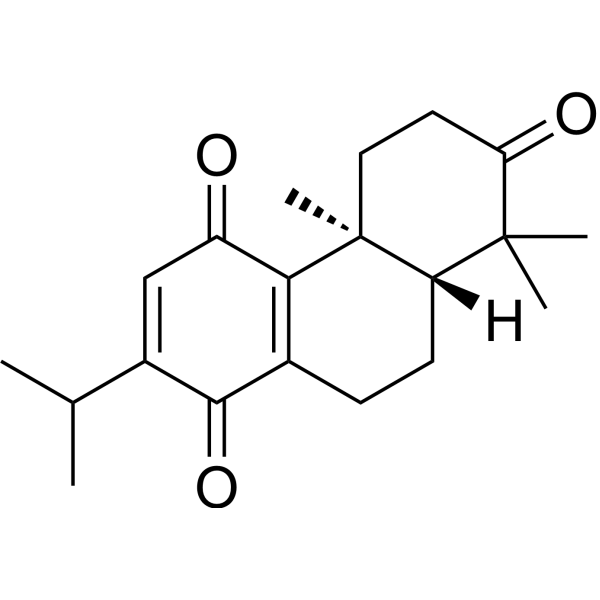 0 ImagesCat. No.: HY-156089CAS No.: 268541-23-7
Triptoquinone H is a class of natural product isolated from traditional Chinese medicine Tripterygium hypoglaucu. Triptoquinone H has strong cytotoxic, immunomodulatory and anti-inflammatory activities. Triptoquinone H can be used for cancer or inflammatory diseases research.
-
Gly-PEG3-amine
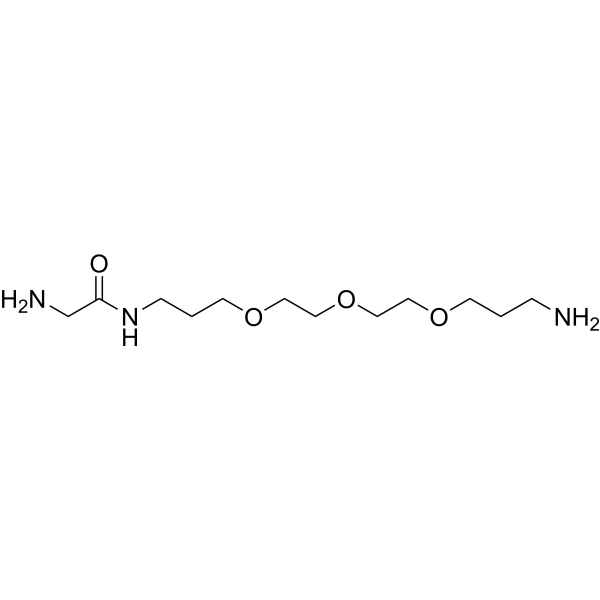 0 ImagesCat. No.: HY-140244CAS No.: 2110448-97-8
Gly-PEG3-amine is a cleavable 3 unit PEG ADC linker used in the synthesis of antibody-drug conjugates (ADCs).
-
Tubulin-IN-61
 0 ImagesCat. No.: HY-179160
Tubulin-IN-61 is a tubulin polymerization inhibitor with an IC50 of ≤7.63 μM. Tubulin-IN-61 induces early apoptosis and triggers significant G2/M phase arrest. Tubulin-IN-61 elevates intracellular ROS levels. Tubulin-IN-61 shows high activity against MCF-7 cells with an IC50 of 5.61 μM. Tubulin-IN-61 can be used for the research of breast cancer.
-
(1R)-IDH889
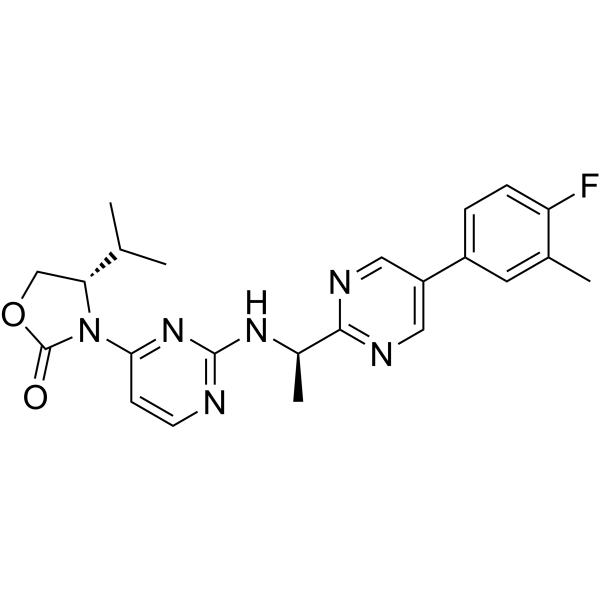 0 Images
(1R)-IDH889 is the isomer of IDH889 (HY-112289), and can be used as an experimental control. IDH889 is an orally available, brain penetrant, allosteric and mutant specific inhibitor of isocitrate dehydrogenase 1 (IDH1). IDH889 has potent selectivity for IDH1 R132* mutations, with IC50s of 0.02 μM, 0.072 μM and 1.38 μM for IDH1R132H, IDH1R132C and IDH1wt, respectively. IDH889 shows potent cellular inhibition of R-2-hydroxyglutarate (2-HG) production with an IC50 of 0.014 μM.
-
RK-682 hemicalcium
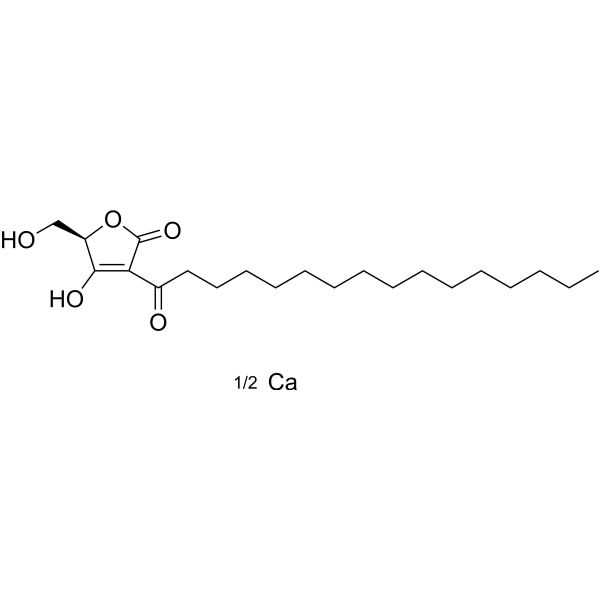 0 ImagesCat. No.: HY-135564CAS No.: 332131-32-5
RK-682 hemicalcium is the hemicalcium salt form of RK-682 (HY-135564A). RK-682 hemicalcium is the inhibitor for protein tyrosine phosphatase (PTPase), heparanase, phospholipase A2 and HIV-1 protease. RK-682 hemicalcium inhibits the dephosphorylation of CD45 (IC50 is 54 μM) and VHR (IC50 is 2.0 μM), and thereby inhibits the ERK signaling pathway. RK-682 hemicalcium inhibits the cell viability of cancer cell MGH-U3, T24 and UROtsa with IC50s of 78.2, 43.2 and 145 nM, respectively, arrests the cell cycle at G1/S phase, inhibits the cell migration and autophagy in MGH-U3 and T24[2].
-
PROTAC PARP1 degrader-5
 0 ImagesCat. No.: HY-181967
PROTAC PARP1 degrader-5 is a PARP1 PROTAC degrader with a DC50 of 0.12 μM. PROTAC PARP1 degrader-5 hijacks the ubiquitin-proteasome system via catalytic ternary complex formation to drive sustained PARP1 degradation. PROTAC PARP1 degrader-5 induces DNA damage, drives marginal cytosolic double-stranded DNA accumulation in tumor cells, and up-regulates PD-L1 surface expression in tumor cells. PROTAC PARP1 degrader-5 shows tumor growth inhibition activity in murine melanoma models when encapsulated in lipid nanoparticles. PROTAC PARP1 degrader-5 can be used for the research of cancer, such as melanoma.
-
PROTAC BRD4 Degrader-31
 0 ImagesCat. No.: HY-174210
PROTAC BRD4 Degrader-3 is a potent BRD4 PROTAC degrader with DC50 values of 164 nM and 80 nM at 4 h and 24 h, respectively. PROTAC BRD4 Degrader-3 induces the ubiquitination and subsequent proteasomal degradation of BRD4 by recruiting the ubiquitin E3 ligase KLHDC2. PROTAC BRD4 Degrader-3 can be used in breast cancer research.
-
TPP-C8-CO-DSG bromide
 0 ImagesCat. No.: HY-184737
TPP-C8-CO-DSG bromide is a derivative of Diosgenin (HY-N0177) and an anticancer agent. TPP-C8-CO-DSG bromide downregulates Bcl-2 expression and upregulates Bax expression. TPP-C8-CO-DSG bromide promotes the cleavage of Caspase 9, Caspase 3 and PARP-1. TPP-C8-CO-DSG bromide depolarizes mitochondrial membrane potential, reduces intracellular ATP production, and induces intracellular ROS accumulation. TPP-C8-CO-DSG bromide promotes Apoptosis. TPP-C8-CO-DSG bromide exhibits anticancer activity against prostate cancer, breast cancer, lung adenocarcinoma, cervical cancer and colorectal cancer. TPP-C8-CO-DSG bromide can be used in the research of cervical cancer.
-
MM-02-08
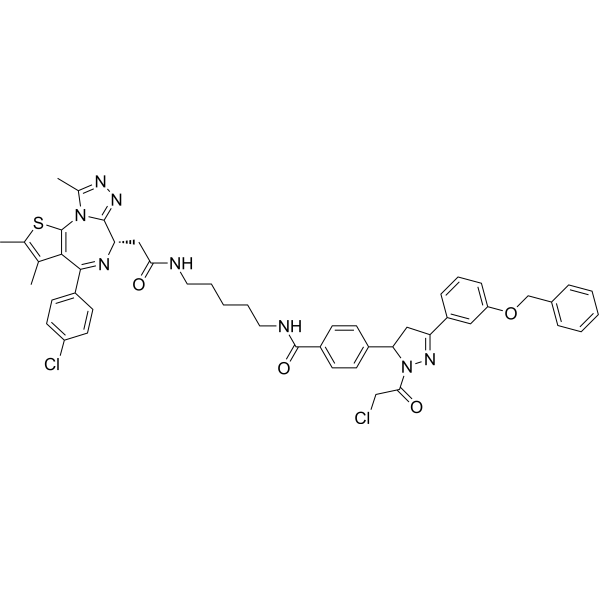 0 ImagesCat. No.: HY-161167
MM-02-08 is a BRD4 PROTAC degrader with a DC50 of approximately 10 nM. MM-02-08 mediates mono-ubiquitination and poly-ubiquitination modifications of target proteins without impairing cell viability. MM-02-08 is applicable to related research on triple-negative breast cancer, prostate cancer, and other diseases.
-
Gardiquimod hydrochloride
 0 ImagesCat. No.: HY-103697BCAS No.: 2956183-81-4
Gardiquimod (hydrochloride) is an imidazoline TLR7/8 agonist. Gardiquimod (hydrochloride) inhibits HIV-1 infection of macrophages and activates peripheral blood mononuclear cells (PBMCs). Gardiquimod (hydrochloride) specifically activates TLR7 at concentrations below 10 μM.
-
3,4-Dicaffeoylquinic acid (Standard)
 0 ImagesCat. No.: HY-N0057RCAS No.: 14534-61-3Synonyms: 3,4-Di-O-caffeoylquinic acid (Standard); Isochlorogenic acid B (Standard)
3,4-Dicaffeoylquinic acid (Standard) is the analytical standard of 3,4-Dicaffeoylquinic acid. This product is intended for research and analytical applications. 3,4-Dicaffeoylquinic acid (3,4-Di-O-caffeoylquinic acid), naturally isolated from Laggera alata, has antioxidative, DNA protective, neuroprotective and hepatoprotective properties. 3,4-Dicaffeoylquinic acid exerts apoptosis-mediated cytotoxicity and α-glucosidase inhibitory effects. 3,4-Dicaffeoylquinic acid possesses a unique mechanism of anti-influenza viral activity, that is, enhancing viral clearance by increasing TRAIL.
-
Sarkomycin
 0 Images
Sarkomycin is a glutathione-targeting cytotoxic agent and antibacterial agent. Sarkomycin forms an addition product with glutathione, thereby reducing intracellular glutathione levels. Sarkomycin can induce cytoplasmic vacuolation, mitochondrial damage, cytoplasmic deformation, metaphase arrest, chromosomal abnormalities, nuclear degeneration, and nuclear fragmentation; it also modulates amino acid metabolism. Sarkomycin also inhibits anaerobic fermentation in affected cells in mice and inhibits cell growth in tissue culture, leading to the disappearance of mitotic cells, cell degeneration, and cell detachment from the glass surface. Sarkomycin can be used in research related to Yoshida ascites tumor, Ehrlich ascites tumor, Ehrlich carcinoma, and Yoshida rat sarcoma.
-
HRG038
 0 ImagesCat. No.: HY-176070
HRG038 is a covalent CUL4DCAF16-base PROTAC-liked BRD4 degrader. HRG038 induces proteasome- and Cullin E3 ligase-dependent degradation, covalently targets cysteine residue C173 on DCAF16 to mediate BRD4 degradation, and induces reduction in BRD3 levels. HRG038 shows selective loss of the short BRD4 isoform over the long isoform in non-cancer cells, degrades both BRD4 isoforms in breast cancer cells, and does not impair cell viability in non-cancer cells. HRG038 can be used for the research of breast cancer.
-
Diazo Biotin-PEG3-DBCO
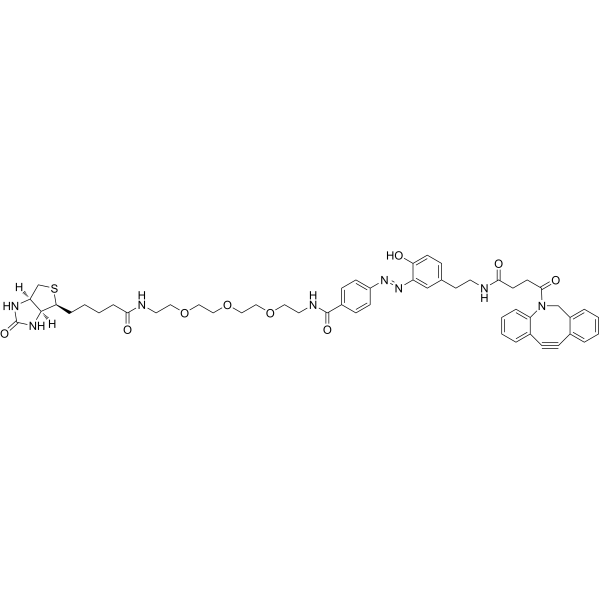 0 ImagesCat. No.: HY-140930
Diazo Biotin-PEG3-DBCO is a cleavable 3 unit PEG ADC linker used in the synthesis of antibody-drug conjugates (ADCs). Diazo Biotin-PEG3-DBCO is a click chemistry reagent, it contains a DBCO group that can undergo strain-promoted alkyne-azide cycloaddition (SPAAC) with molecules containing Azide groups.



