



Cancer Targeted Therapy
Cancer targeted therapy is the foundation of precision medicine; it uses drugs or other substances to target specific genes and proteins that control cancer cells’ growth, division and spreading. Compared to traditional chemotherapy drugs, targeted-drugs can specifically act on cancer cells with high efficacy without damaging normal cells. Drugs used in cancer targeted therapy mainly includes small molecules and macromolecules (e.g., monoclonal antibodies), which can target cancer cells and constituents in the tumor microenvironment to activate the immune system. Anti-angiogenesis drugs, such as those targeting vascular endothelial growth factor (VEGF), epidermal growth factor receptor (EGFR), transforming growth factor (TGF)-α, TGF-β, Tumor necrosis factor (TNF)-α, and platelet-derived endothelial growth factor (PDGFR) inhibit the proliferation and metastasis of cancer cells. In recent years, the proportion of antibody drugs in cancer treatment has gradually become prominent. Antibody-drug conjugates (ADCs) are a new type of targeted drugs that are composed of monoclonal antibody, cytotoxic drug and linker. ADCs can deliver drugs to tumor cells and minimize the toxicity to normal tissues. Proteolysis-targeting chimera (PROTAC) is a useful technology for targeted protein degradation. PROTAC exploits the ubiquitin-proteasome system and forms a ternary complex with a hijacked E3 ubiquitin ligase and target protein, leading to polyubiquitination and degradation of the target protein.
Targeted therapy is a useful strategy in treatment of cancer either alone or in combination with standard chemotherapy. At present, targeted therapy has proved significant clinical success in the treatment of many types of cancer, including breast cancer, colorectal cancer, leukemia, ovarian cancer and lung cancer.
-
1,2-Di-O-acetyl-3,5-di-O-benzyl-D-xylofuranose
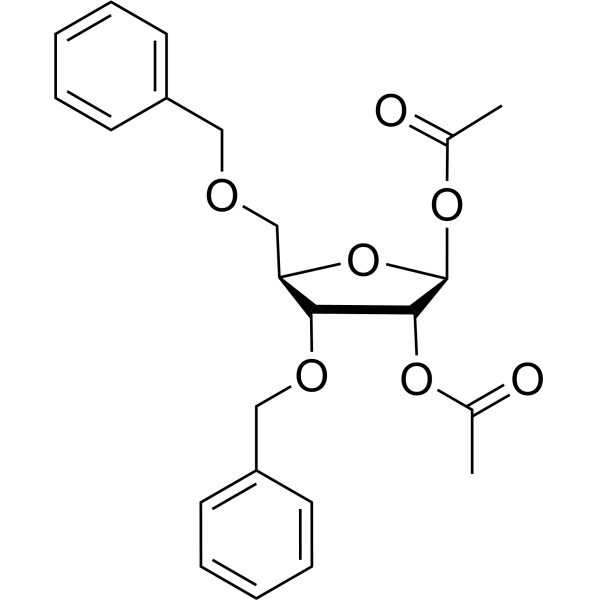 0 ImagesCat. No.: HY-154667CAS No.: 146986-45-0
1,2-Di-O-acetyl-3,5-di-O-benzyl-D-xylofuranose is a purine nucleoside analog. Purine nucleoside analogs have broad antitumor activity targeting indolent lymphoid malignancies. Anticancer mechanisms in this process rely on inhibition of DNA synthesis, induction of apoptosis, etc.
-
Propargyl-PEG3-methyl ester
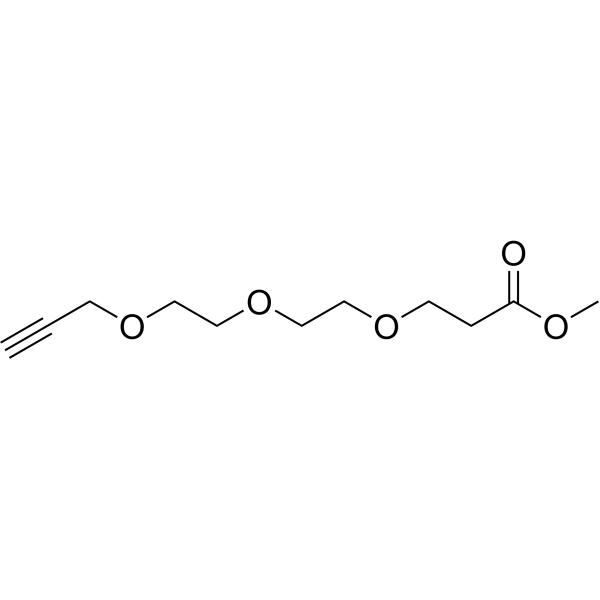 0 ImagesCat. No.: HY-140876CAS No.: 2086689-09-8

-
NH2-NODAGA
 0 ImagesCat. No.: HY-164575CAS No.: 1630114-57-6
NH2-NODAGA is an amino-modified NODAGA-type bifunctional chelator, specifically designed for amidation coupling with targeting ligands via squaric acid (SA), followed by coordination with radionuclides (e.g., 68Ga, 177Lu). NH2-NODAGA can be coupled with diethyl squarate to form a PSMA inhibitor conjugate, which is used in prostate cancer research.
-
Topoisomerase IIα-IN-10
 0 ImagesCat. No.: HY-170557
Topoisomerase IIα-IN-10 (Compound 13r) is an inhibitor of Topoisomerase IIα. It binds to the active site of DNA when complexed with Topoisomerase IIα, and this binding is stabilized through interactions with DNA base pairs and amino acid residues. Topoisomerase IIα-IN-10 can induce Apoptosis by intercalating DNA and inhibiting Topoisomerase IIα, thereby disrupting the mitochondrial membrane potential and inhibiting the growth of HCT116 cell lines, with an IC50 of 4.37 μM against HCT116 cells. Topoisomerase IIα-IN-10 can be used for research in the field of cancer treatment.
-
P-gp-IN-30
 0 ImagesCat. No.: HY-175206CAS No.: 2761881-65-4
P-gp-IN-30 (Compound 13) is a P-glycoprotein (P-gp) inhibitor by targeting YB-1. P-gp-IN-30 significantly enhances sensitivity to Paclitaxel by reducing total YB-1 and nucleus YB-1 protein expression, inhibiting the expression and function of downstream P-gp, further suppressing the efflux rate of Paclitaxel. P-gp-IN-30 potently inhibits tumor growth in A549/Taxol xenografts mice model with combination of Paclitaxel (HY-B0015). P-gp-IN-30 can be used for non-small cell lung cancer (NSCLC) research.
-
hsa-miR-4314 inhibitor
 0 ImagesCat. No.: HY-RI00995
hsa-miR-4314 inhibitors are chemically-modified oligonucleotides that hybridize with mature miRNAs. The miRNA inhibitors have full-length nucleotide 2'-methoxy modification. The miRNA inhibitors strongly compete with mature miRNAs to prevent the complementary pairing of miRNAs and their target genes, thereby inhibiting miRNAs from functioning.
-
hsa-miR-526a-3p antagomir
 0 ImagesCat. No.: HY-RI01615A
hsa-miR-526a-3p antagomirs are chemically-modified oligonucleotides that hybridize with mature miRNAs. The miRNA antagomirs have 2 phosphorothioates at the 5' end, 4 phosphorothioates at the 3' end, 1 cholesterol group at the 3' end, and full-length nucleotide 2'-methoxy modification. The miRNA antagomirs strongly compete with mature miRNAs to prevent the complementary pairing of miRNAs and their target genes, thereby inhibiting miRNAs from functioning. Stability of miRNA antagomirs appears to be significantly higher than miRNA inhibitors, they exhibits enhanced cellular uptake, stability and regulatory activity in vivo.
-
Nitrovin
 0 ImagesCat. No.: HY-W504391CAS No.: 804-36-4Synonyms: Difurazon
Nitrovin (Difurazon) is an orally active inhibitor of thioredoxin reductase 1 (TrxR1) with both antibacterial and anticancer activities. Nitrovin induces ROS generation and endoplasmic reticulum stress by targeting and inhibiting TrxR1, which in turn induces cytoplasmic vacuolation, activates MAPK, and inhibits Alix. Nitrovin induces paraptosis-like non-apoptotic cell death, thereby exerting significant cytotoxicity against cancer cells. Nitrovin is used for research on glioblastoma, liver cancer, and bacterial infections.
-
CDK2-IN-11
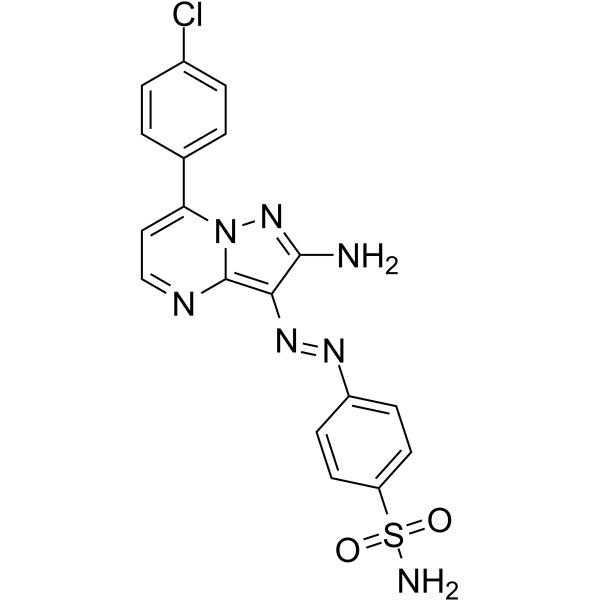 0 ImagesCat. No.: HY-150572CAS No.: 2410402-82-1
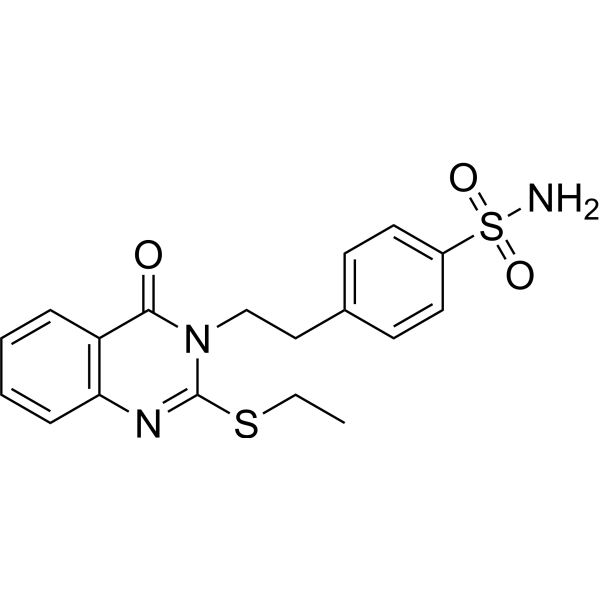
CDK2-IN-11 (compound 9d) is a potent CDK2 inhibitor with an IC50 of 6.4 μM, and KI values of 23.4 nM, 56.3 nM and 44.3 nM for hCA II, hCA IX and hCA XII, respectively. CDK2-IN-11 can be used for researching anticancer.
-
PARP1/BRD4-IN-1
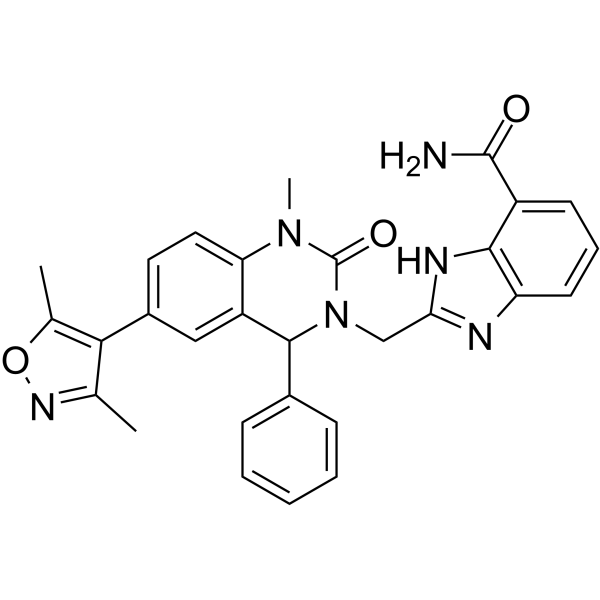 0 ImagesCat. No.: HY-144338CAS No.: 2758117-74-5
-
hsa-miR-8052 inhibitor
 0 ImagesCat. No.: HY-RI02444
hsa-miR-8052 inhibitors are chemically-modified oligonucleotides that hybridize with mature miRNAs. The miRNA inhibitors have full-length nucleotide 2'-methoxy modification. The miRNA inhibitors strongly compete with mature miRNAs to prevent the complementary pairing of miRNAs and their target genes, thereby inhibiting miRNAs from functioning.
-
mmu-miR-3473b inhibitor
 0 ImagesCat. No.: HY-RI03066
mmu-miR-3473b inhibitors are chemically-modified oligonucleotides that hybridize with mature miRNAs. The miRNA inhibitors have full-length nucleotide 2'-methoxy modification. The miRNA inhibitors strongly compete with mature miRNAs to prevent the complementary pairing of miRNAs and their target genes, thereby inhibiting miRNAs from functioning.
-
mmu-miR-6980-5p inhibitor
 0 ImagesCat. No.: HY-RI03691
mmu-miR-6980-5p inhibitors are chemically-modified oligonucleotides that hybridize with mature miRNAs. The miRNA inhibitors have full-length nucleotide 2'-methoxy modification. The miRNA inhibitors strongly compete with mature miRNAs to prevent the complementary pairing of miRNAs and their target genes, thereby inhibiting miRNAs from functioning.
-
rno-miR-222-5p inhibitor
 0 ImagesCat. No.: HY-RI04312
rno-miR-222-5p inhibitors are chemically-modified oligonucleotides that hybridize with mature miRNAs. The miRNA inhibitors have full-length nucleotide 2'-methoxy modification. The miRNA inhibitors strongly compete with mature miRNAs to prevent the complementary pairing of miRNAs and their target genes, thereby inhibiting miRNAs from functioning.

-
eALM1192
 0 ImagesCat. No.: HY-189486CAS No.: 3134761-90-0
eALM1192 is a selective mTOR kinase inhibitor (IC50 = 2.3 nM) that also inhibits DNA-PK (IC50 = 84 nM), PI3Kα, and PKN3, with 37-fold selectivity for mTOR over DNA-PK. eALM1192 exhibits antiproliferative activity against cancer cell lines and colorectal cancer cell lines. eALM1192 can be used for colorectal cancer research.
-
Procainamide-d4
 0 ImagesCat. No.: HY-A0084ASSynonyms: Procaine amide-d4; SP 100-d4
Procainamide-d4 (Procaine amide-d4) is the deuterium labeled Procainamide (HY-A0084A). Procainamide (Procaine amide) is a specific and potent inhibitor of DNA methyltransferase 1 (DNMT1), which reactivates the expression of tumor suppressor factors by demethylating tumor suppressor genes. Procainamide induces vacuolization in various cell types and reduces cell proliferation and migration. Procainamide relaxes airway smooth muscle by activating potassium channels. Procainamide can be used in cancer and arrhythmia research.
-
Biotin-AKT2 Recombinant Human Active Protein Kinase
 0 ImagesCat. No.: HY-E70791
AKT is the oncogenic protein kinase that regulates essential cellular functions such as migration, proliferation, differentiation, apoptosis, and metabolism. Mammalian cells are characterized by the expression of three different Akt isoforms, Akt1, Akt2, and Akt3. Biotin-AKT2 Recombinant Human Active Protein Kinase is obtained by expressing AKT2 proteins and is biotinylated.



