Cancer Targeted Therapy
Cancer targeted therapy is the foundation of precision medicine; it uses drugs or other substances to target specific genes and proteins that control cancer cells’ growth, division and spreading. Compared to traditional chemotherapy drugs, targeted-drugs can specifically act on cancer cells with high efficacy without damaging normal cells. Drugs used in cancer targeted therapy mainly includes small molecules and macromolecules (e.g., monoclonal antibodies), which can target cancer cells and constituents in the tumor microenvironment to activate the immune system. Anti-angiogenesis drugs, such as those targeting vascular endothelial growth factor (VEGF), epidermal growth factor receptor (EGFR), transforming growth factor (TGF)-α, TGF-β, Tumor necrosis factor (TNF)-α, and platelet-derived endothelial growth factor (PDGFR) inhibit the proliferation and metastasis of cancer cells. In recent years, the proportion of antibody drugs in cancer treatment has gradually become prominent. Antibody-drug conjugates (ADCs) are a new type of targeted drugs that are composed of monoclonal antibody, cytotoxic drug and linker. ADCs can deliver drugs to tumor cells and minimize the toxicity to normal tissues. Proteolysis-targeting chimera (PROTAC) is a useful technology for targeted protein degradation. PROTAC exploits the ubiquitin-proteasome system and forms a ternary complex with a hijacked E3 ubiquitin ligase and target protein, leading to polyubiquitination and degradation of the target protein.
Targeted therapy is a useful strategy in treatment of cancer either alone or in combination with standard chemotherapy. At present, targeted therapy has proved significant clinical success in the treatment of many types of cancer, including breast cancer, colorectal cancer, leukemia, ovarian cancer and lung cancer.
-
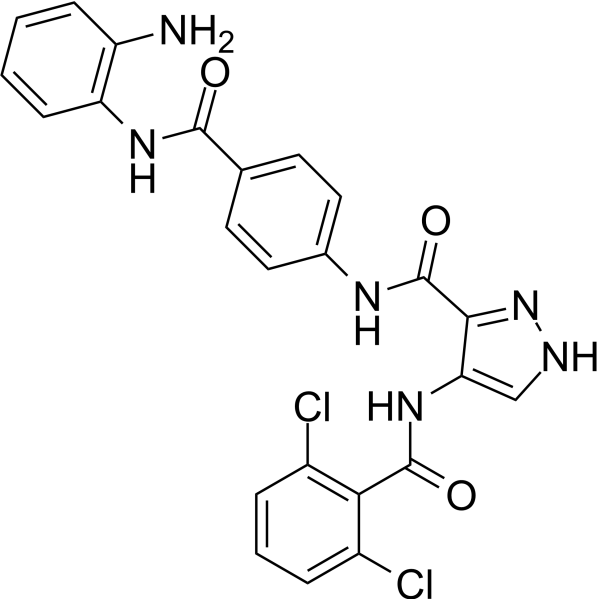
CDK/HDAC-IN-3
 0 Images
CDK/HDAC-IN-3 is an orally active HDACs/CDKs dual inhibitor. CDK/HDAC-IN-3 has potent and selective inhibition of CDK9, CDK12, CDK13, HDAC1, HDAC2 and HDAC3 with IC50 values of 98.32 nM, 98.85 nM, 100 nM, 62.12 nM, 93.28nM and 82.87 nM. CDK/HDAC-IN-3 can be used for the acute myeloid leukemia (AML) .
-
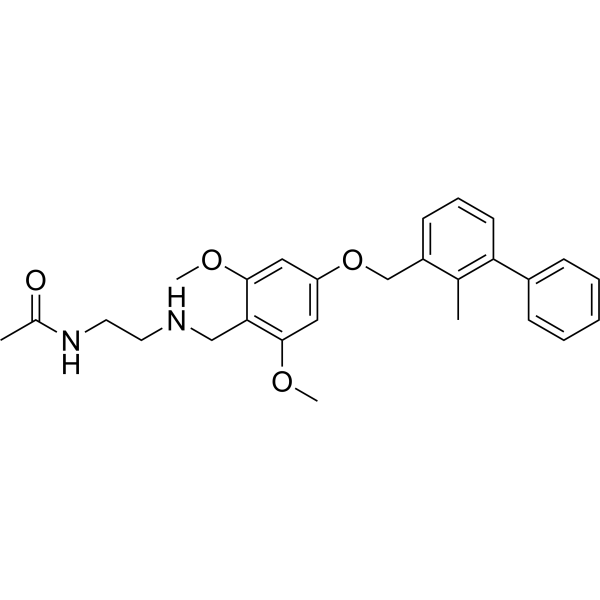
BMS-37
 0 Images
BMS-37 is a PD-1/PD-L1 immune checkpoint inhibitor with an IC50 towards the PD-L1/PD-1 complex in the range of 18 to 200 nM. BMS-37 shows unspecific toxicity against modified Jurkat T cells with an EC50 between 3 and 6 µM. BMS-37 can be used for the study of the PD-L1-induced exhaustion of T-cells or as PD-L1 ligand to synthesize PROTAC molecules.
-
8-Methyl-2’-deoxyadenosine
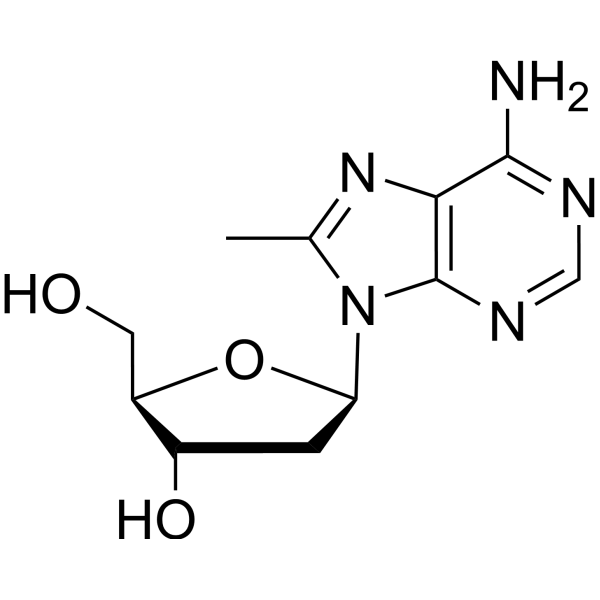 0 ImagesCat. No.: HY-154241CAS No.: 85562-60-3
8-Methyl-2’-deoxyadenosine is a purine nucleoside analog. Purine nucleoside analogs have broad antitumor activity targeting indolent lymphoid malignancies. Anticancer mechanisms in this process rely on inhibition of DNA synthesis, induction of apoptosis, etc.
-
hsa-miR-135b-5p inhibitor
 0 ImagesCat. No.: HY-RI00261
hsa-miR-135b-5p inhibitors are chemically-modified oligonucleotides that hybridize with mature miRNAs. The miRNA inhibitors have full-length nucleotide 2'-methoxy modification. The miRNA inhibitors strongly compete with mature miRNAs to prevent the complementary pairing of miRNAs and their target genes, thereby inhibiting miRNAs from functioning.
-
Amino-PEG5-CH2COOH
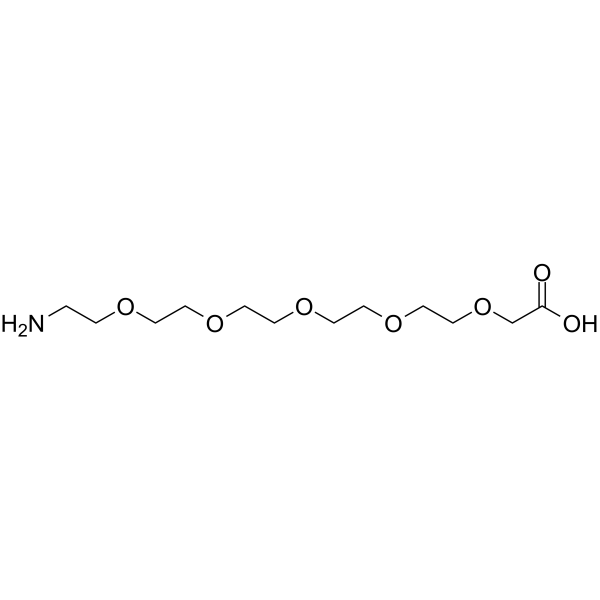 0 ImagesCat. No.: HY-130577CAS No.: 141282-35-1
-
hsa-miR-210-3p inhibitor
 0 ImagesCat. No.: HY-RI00429
hsa-miR-210-3p inhibitors are chemically-modified oligonucleotides that hybridize with mature miRNAs. The miRNA inhibitors have full-length nucleotide 2'-methoxy modification. The miRNA inhibitors strongly compete with mature miRNAs to prevent the complementary pairing of miRNAs and their target genes, thereby inhibiting miRNAs from functioning.
-
DNP-PEG4-DBCO
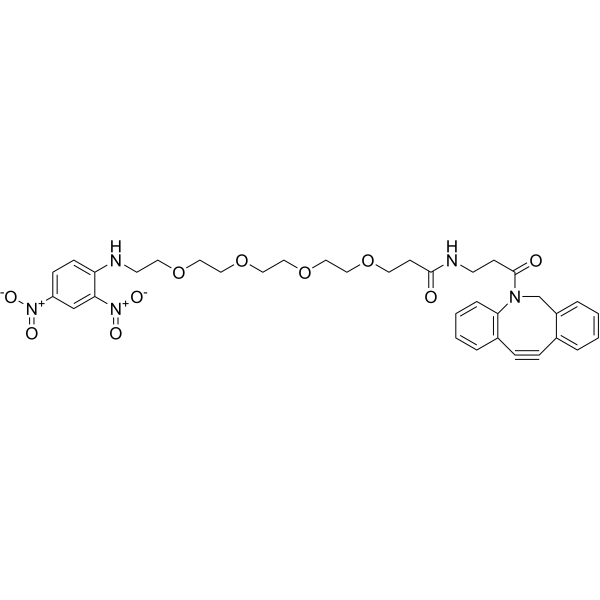 0 ImagesCat. No.: HY-140619CAS No.: 2149585-17-9
-
Carboxyamidotriazole Orotate
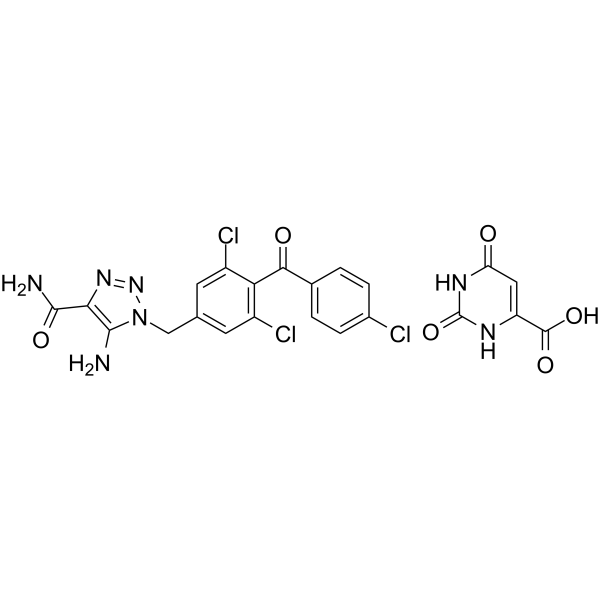 0 ImagesSynonyms: L-651582 Orotate; CAI Orotate
Carboxyamidotriazole Orotate (L-651582 Orotate) is the orotate salt form of Carboxyamidotriazole (CAI), an orally bioavailable signal transduction inhibitor. Carboxyamidotriazole Orotate is a cytostatic inhibitor of nonvoltage-operated calcium channels and calcium channel-mediated signaling pathways. Carboxyamidotriazole Orotate shows anti-tumor, anti-inflammatory and antiangiogenic effects.
-
DS12881479
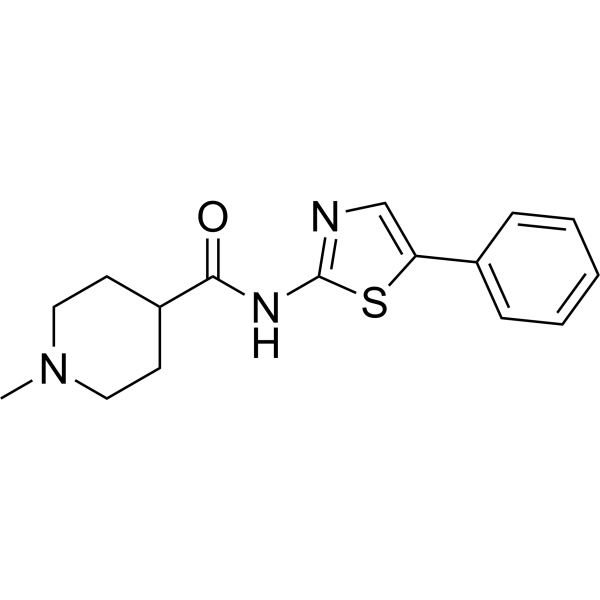 0 Images
DS12881479 is a selective non-ATP-competitive MNK1 inhibitor with an IC50 value of 387 nM. DS12881479 stabilizes MNK1 in its autoinhibited DFD-out conformation, blocks eIF4E phosphorylation, suppresses tumor cell proliferation and induces weak apoptosis. DS12881479 also inhibits FLT3 and DYRK1a kinase activity at high concentrations. DS12881479 can be used for the research of cancer, such as leukemia.
-
Anti-Mouse CD103 Antibody (M290)
 0 ImagesCat. No.: HY-P990295Purity: 98.93%
Anti-Mouse CD103 Antibody (M290) is a rat-derived IgG2a κ type antibody inhibitor, targeting to mouse CD103. Anti-Mouse CD103 Antibody (M290) can neutralize CD103. Anti-Mouse CD103 Antibody (M290) can be used for the researches of cancer, inflammation, immunology and metabolic disease, such as B16.gp33 tumor, colitis and diabetes.
-
DNMT2-IN-2
 0 ImagesCat. No.: HY-175594Purity: 99.13%
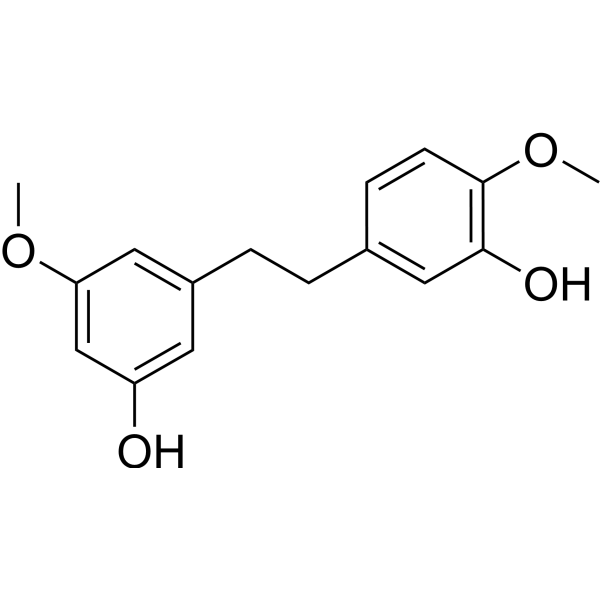
DNMT2-IN-2 is a selective DNA methyltransferase 2 (DNMT2) inhibitor with a KD value of 3.04 μM. DNMT2-IN-2 targets to a cryptic allosteric binding site of DNMT2. DNMT2-IN-2 reduces m5C levels in MOLM-13 tRNA and synergizes with Doxorubicin (HY-15142A) to impair cell viability. DNMT2-IN-2 can be used for cancer research, such as cervical cancer and leukemia.

-
Z4P
 0 Images
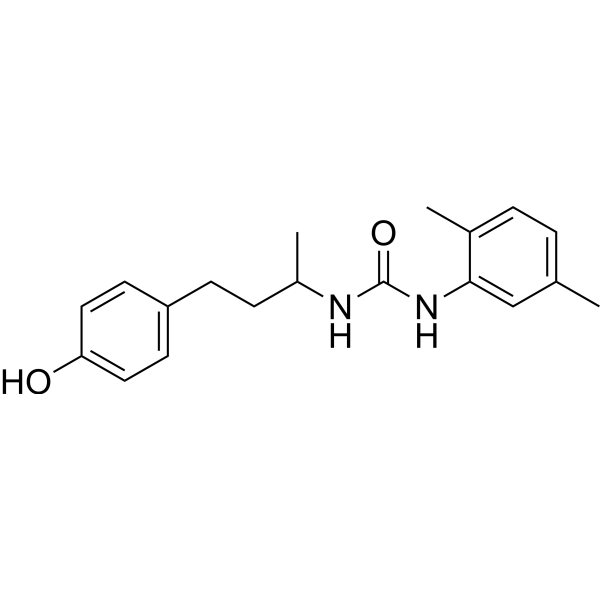
Z4P is a BBB-penetrable IRE1 inhibitor with an IC50 of 1.13 μM. Z4P in combination with Temozolomide (HY-17364) inhibits the growth and recurrence of glioblastoma and has anti-tumor activity.
-
PROTAC K-Ras Degrader-2
 0 ImagesCat. No.: HY-164365CAS No.: 3043670-74-9
PROTAC K-Ras degrader-2 (compound 48) is a KRAS G12V PROTAC degrader with an IC50 of 20-200 nM for KRAS G12V/RAF1. PROTAC K-Ras degrader-2 degrades SW620 KRAS G12V with a DC50 of 1-10 nM. PROTAC K-Ras degrader-2 inhibits cell growth of SW620 3D cell with an IC50 of ≤10 nM. PROTAC K-Ras degrader-2 can be used for the study of colorectal cancer (CRC).
-
Thymidine-15N2
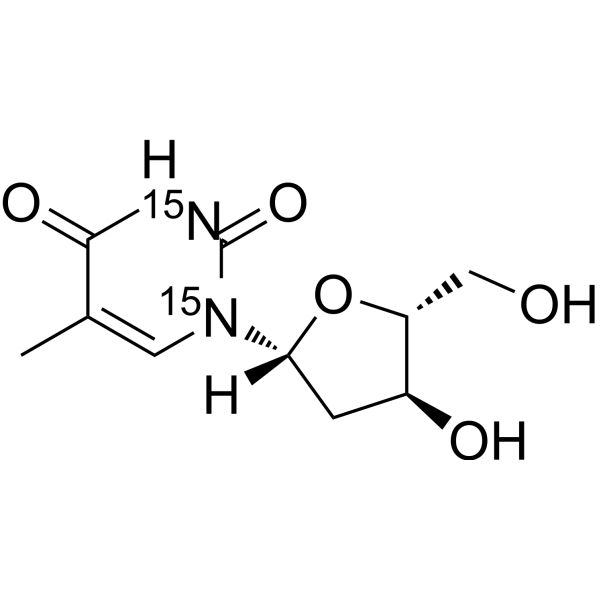 0 ImagesCat. No.: HY-N1150S9Purity: 99.0%Synonyms: DThyd-15N2; NSC-15N2
-
Nrf2 activator-10
 0 Images
Nrf2 activator-10 (Compound AI-1) is a PI3K-dependent inducer for antioxidant response element (ARE) (EC50 is 2.7 μM) and an activator for Nrf2. Nrf2 activator-10 modifies Keap1, blocks Cul3-Keap1 ubiquitin ligase complex, activates the transcription of Nrf2. Nrf2 activator-10 protects cells from H2O2-induced apoptosis.