Infection
-
Infection Related Products (18904)
Related Products (18904)

-
Antibodies (22)
-
Ophiobolin C
 0 ImagesCat. No.: HY-123902CAS No.: 19022-51-6Synonyms: Zizanin A
Ophiobolin C inhibits CCR5 binding to the envelop protein gp120 and CD4, which is responsible for mediating the entry of HIV-1 into cells. Ophiobolin C is also cytotoxic to chronic lymphocytic leukemia cells.
-
Nemadectin (90%)
 0 ImagesCat. No.: HY-112542ACAS No.: 102130-84-7Synonyms: CL-287088 (90%); LL-F28249 α (90%)
Nemadectin (90%) (CL-287088 (90%)), an orally active broad-spectrum endectocide and macrolide antibiotic. Nemadectin shows anthelmintic activity against T. canis, A. caninum and U. stenocephala.

-
Lactobionic acid (Standard)
 0 Images
Lactobionic acid (Standard) is an analytical standard for lactobionic acid. This product is intended for use in research and analytical applications. Lactobionic acid is a bionic acid that can be naturally found in the Caspian Sea yogurt and chemically constituted of a gluconic acid bonded to a galactose. Lactobionic acid has antioxidant, antimicrobial, chelating, stabilizer, acidulant, and moisturizing properties. Lactobionic acid can be obtained by electrolytic methods, microbial fermentation or biocatalytic approaches. Lactobionic acid can be used in foodstuffs, to produce new functional products and against food-borne pathogens. Lactobionic acid inhibits DNA repair and protein synthesis, induction of oxidative stress and inhibition of metabolic pathways against MRSA.
-
(Rac)-Golgicide A
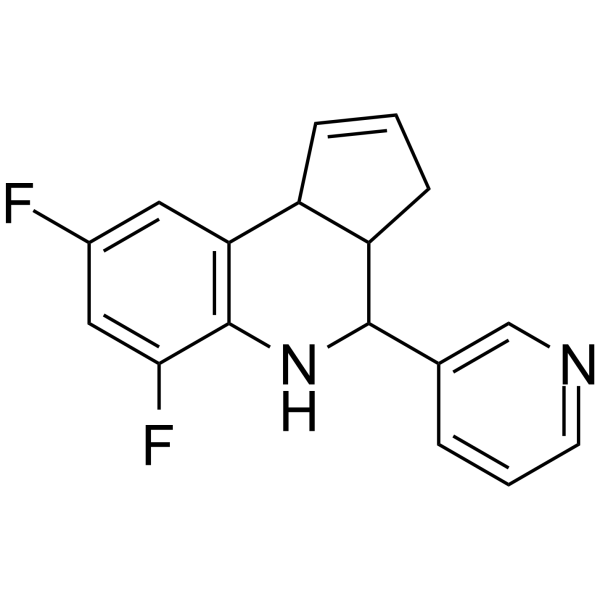 0 ImagesCat. No.: HY-100540ACAS No.: 1005036-73-6Synonyms: (Rac)-GCA
(Rac)-Golgicide A ((Rac)-GCA) is a racemate of Golgicide A. Golgicide A (GCA) is a potent, highly specific, and reversible inhibitor of the cis-Golgi ADP-ribosylation factor guanine nucleotide exchange factors (ArfGEF) GBF1.Golgicide A drastically reduced replication of coxsackievirus B3 (CVB3) and other human enterovirus species.
-
Cinnamomum zeylanicum extract
 0 ImagesCat. No.: HY-N18705CAS No.: 84649-98-9
Cinnamomum zeylanicum extract is derived from the bark, leaves, and other parts of the Cinnamomum zeylanicum tree. It is rich in bioactive compounds such as cinnamaldehyde, eugenol, and linalool. Cinnamomum zeylanicum extract is widely used due to its anti-inflammatory, antibacterial, and antioxidant properties.
-
Antitrypanosomal agent 15
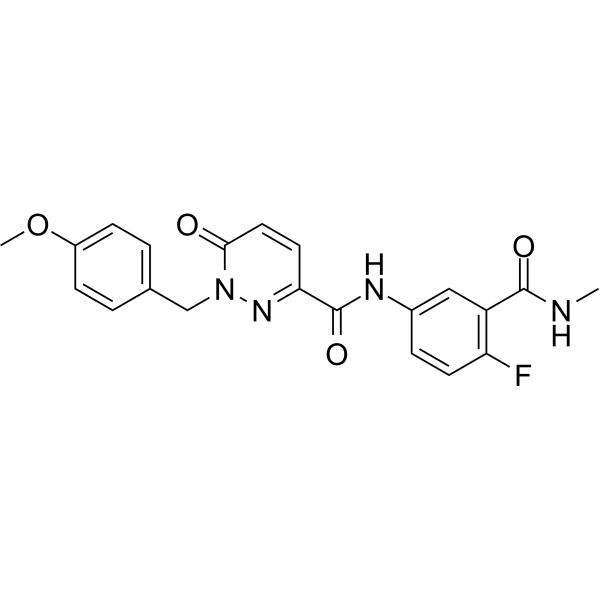 0 ImagesCat. No.: HY-155103CAS No.: 2961381-94-0
Antitrypanosomal agent 15 (compound 26) is an orally active, brain-penetrant, selective inhibitor against Trypanosoma cruzi proteasome, with an pIC50 of 7.4 and <4 for T. cruzi and human proteasome, respectively. Antitrypanosomal agent 15 has favorable ADME properties and can be used for Chagas disease study.
-
Acridine-9-carboxaldehyde
 0 ImagesSynonyms: Acridine-9-carbaldehyde
Acridine-9-carboxaldehyde (Acridine-9-carbaldehyde) is a bioactive compound with potential antibacterial and antitumor activities. Acridine-9-carboxaldehyde is widely used as a building block in compound development to synthesize various bioactive derivatives. Acridine-9-carboxaldehyde exhibits significant cytotoxicity against certain cancer cells, making it an important candidate in cancer inhibition research.
-
Sulfamethylphenazole
 0 Images
Sulfamethylphenazole (Sulfapyrazole; Vesulong) is a long-acting sulfonamide antibacterial agent. Sulfamethylphenazole maintains effective chemotherapeutic blood concentrations through the slow release of free sulfonamide from a protein-binding reservoir and can be used in combination with antibiotics such as Terramycin for bovine hemorrhagic septicemia. Sulfamethylphenazole exhibits moderate antimycobacterial activity against Mycobacterium tuberculosis H37Rv (MIC = 15.38 μg/mL) and inhibitory activity against CYP 2C9. Sulfamethylphenazole can be used in studies related to tuberculosis and hemorrhagic septicemia.
-
SARS-CoV-2-IN-22
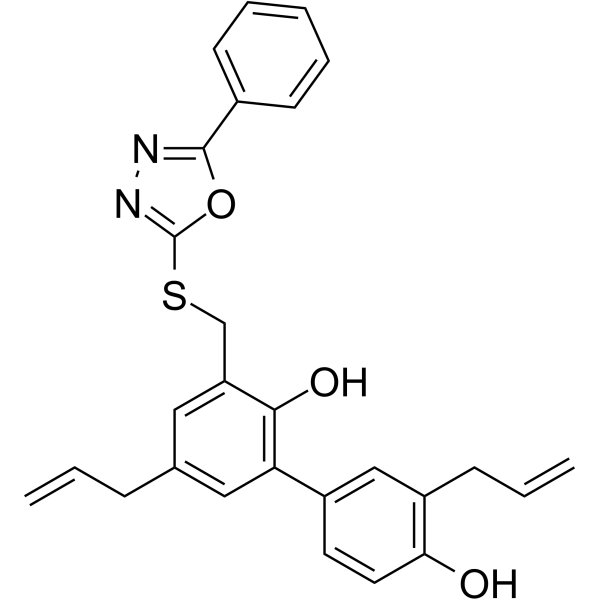 0 ImagesCat. No.: HY-146157CAS No.: 2710278-53-6
SARS-CoV-2-IN-22 is a SARS-CoV-2 pseudovirus entry inhibitor with an IC50 value of 16.96 µM.
-
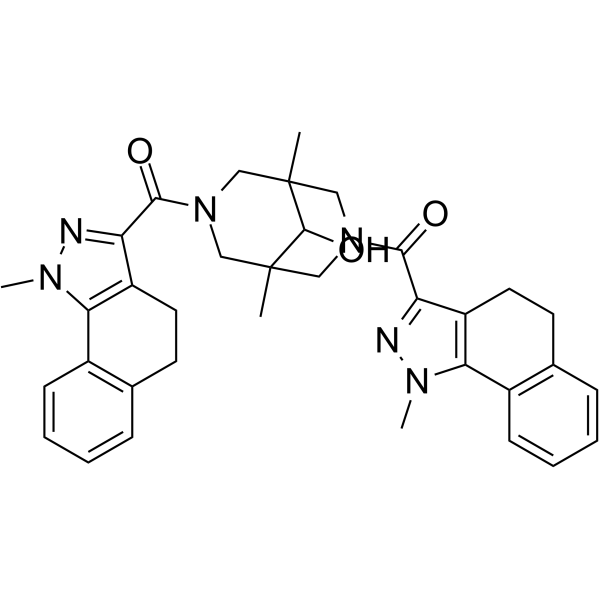
Antiproliferative agent-17
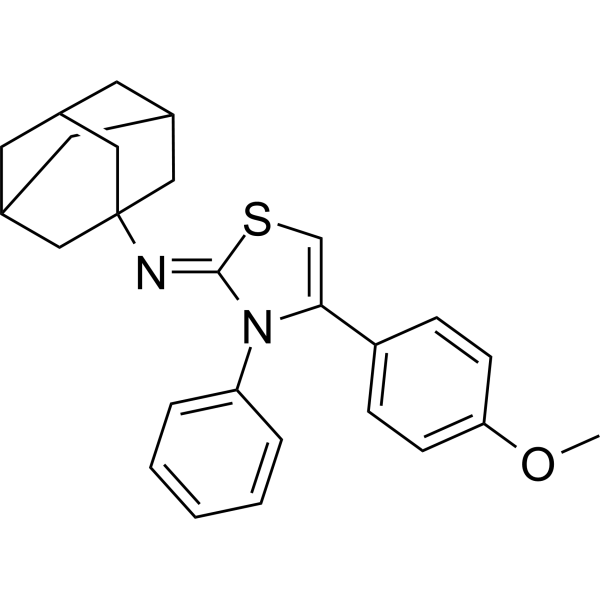 0 ImagesCat. No.: HY-152090CAS No.: 2882206-08-6
Antiproliferative agent-17 is an antiproliferative agent. Antiproliferative agent-17 inhibits Gram-positive bacteria and has anticancer activity.
-
Furagin-13C3
 0 ImagesCat. No.: HY-W748430Synonyms: Furazidine-13C3; Furazidin-13C3
Furagin-13C3 (Furazidine-13C3) is the 13C-labeled Furagin (HY-77036). Furagin (Furazidine), an analogue of Nitrofurantoin (HY-A0090), is an antibiotic with antibacterial activity against ESKAPE pathogens with MIC values of 0-32 μg/mL. Furagin inhibits human Carbonic anhydrases . Furagin is promising for research of cancer and urinary tract infections (UTIs).
-
BP-198
 0 ImagesCat. No.: HY-176440
BP-198 is a inhibitor and a SNIPER-class degrader targeting to SARS-CoV-2 main protease (Mpro) , with antiviral activity. BP-198 recruits the IAP ubiquitin ligase complex to degrade target proteins via the ubiquitin-proteasome system. BP-198 also degrades protease mutants resistant to Nirmatrelvir (HY-138687). BP-198 can be used in studies related to COVID-19.
-
Petroselinic acid (Standard)
 0 ImagesCat. No.: HY-113362RCAS No.: 593-39-5
Petroselinic acid (Standard) is the analytical standard of Petroselinic acid. This product is intended for research and analytical applications. Petroselinic acid, a positional isomer of oleic acid, is isolated from the vegetable oil of Coriandrum sativum fruits. Petroselinic acid is used as substrate for sophorolipid fermentation. Petroselinic acid inhibits the biofilm formation in microorganisms, exhibits antibacterial and antifungal activities. Petroselinic acid is orally active[4.
-
Epanorin
 0 ImagesCat. No.: HY-N16418CAS No.: 18463-10-0
Epanorin is a secondary metabolite of the Acarospora lichenic species Epanorin can inhibit cancer cells proliferation, ROS production and induce G0/G1 phase arrest. Epanorin shows antibacterial activity. Epanorin can be used for the researches of cancer and infection, such as breast cancer and S. pneumonia infection.
-
Cefonicid
 0 ImagesCat. No.: HY-B1300ACAS No.: 61270-58-4
Cefonicid is a long-acting cephalosporin antibiotic. Cefonicid also acts as a noncompetitive class I β-lactamase inhibitor with a Ki value of 0.8 μM. Cefonicid exhibits broad-spectrum antimicrobial activity and is effective against a variety of Gram-positive and Gram-negative bacteria. Cefonicid can be used for research on infections.
-
L-Lysine-13C dihydrochloride
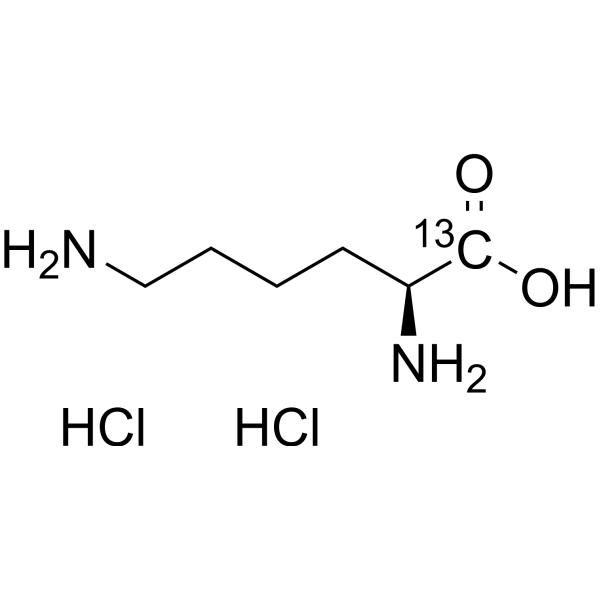 0 Images
L-Lysine-13C (dihydrochloride) is the 13C-labeled L-Lysine dihydrochloride. L-lysine dihydrochloride is an essential amino acid for humans with various benefits including treating herpes, increasing calcium absorption, reducing diabetes-related illnesses and improving gut health.
-
Tylosin tartrate (Standard)
 0 ImagesCat. No.: HY-B0519RCAS No.: 74610-55-2
Tylosin (tartrate) (Standard) is the analytical standard of Tylosin (tartrate). This product is intended for research and analytical applications. Tylosin tartrate is a macrolide antibiotic found naturally as a fermentation product of Streptomyces fradiae. Tylosin tartrate exerts potent antimicrobial activity against Gram-positive bacteria. Tylosin tartrate is widely used as a feed additive for promoting animal growth. Tylosin tartrate is used for veterinary purposes against bacterial dysentery and respiratory diseases in poultry, pigs and cattle.
-
Dihydropteroate synthase-IN-1
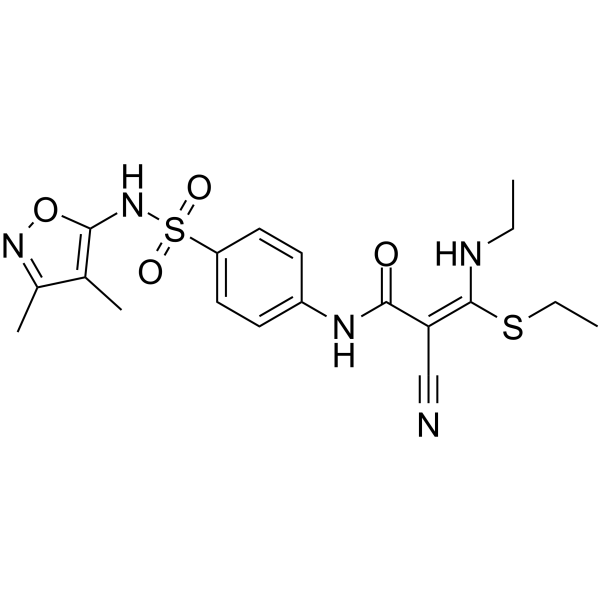 0 ImagesCat. No.: HY-147721CAS No.: 2418026-70-5
Dihydropteroate synthase-IN-1 (compound 5g) is a potent dihydropteroate synthase (DHPS) inhibitor. Dihydropteroate synthase-IN-1 shows antimicrobial activities and antifungal activity. Dihydropteroate synthase-IN-1 inhibits cytochromes P450. Dihydropteroate synthase-IN-1 can bu used as diagnostic radio imaging material.