Inflammation/Immunology
-
Inflammation/Immunology Related Products (20639)
Related Products (20639)

-
Antibodies (115)
-
Related Compound Screening Libraries (4)
-
Sebrinoflast
 0 ImagesCat. No.: HY-177128CAS No.: 2919854-67-2
Sebrinoflast (Compound 5) is a NLRP3 inhibitor with an IC50 ≤1 μM for hNLRP3. Sebrinoflast can be used for inflammatory and cardiovascular diseases including NASH and atherosclerosis and neurological diseases like Alzheimer's disease research.
-
SET7-IN-DC21
 0 ImagesCat. No.: HY-133567CAS No.: 2567886-53-5
SET7-IN-DC21 is a selective, potent SET7 inhibitor (IC50 = 15.93 μM; KD = 18.00 μM). SET7-IN-DC21 has good selectivity for several other epigenetic targets, such as SUV39H1, G9a, NSD1, DOT1L and MOF. SET7-IN-DC21 can be used for the researches of cancer, infection, inflammation, metabolic and cardiovascular disease, such as breast cancer.
-
TNF-α-IN-10
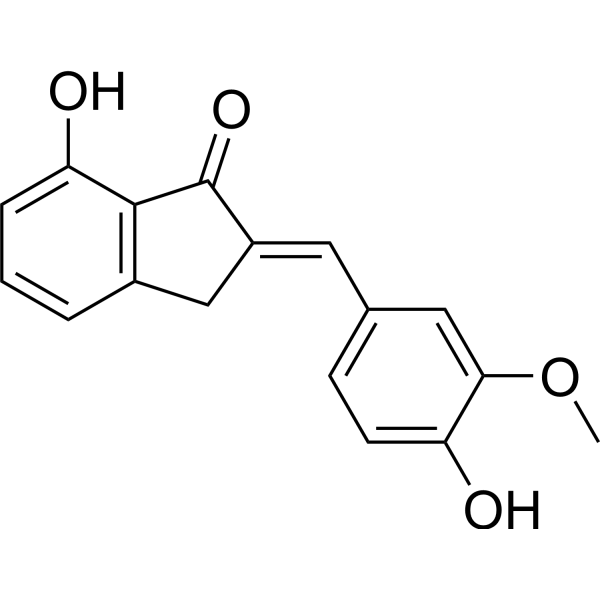 0 ImagesCat. No.: HY-153330CAS No.: 2247720-56-3
TNF-α-IN-10 (compound 8a) is a IL-6 and TNF-α inhibitor. TNF-α-IN-10 shows anti-inflammatory activity.
-
PF-10040
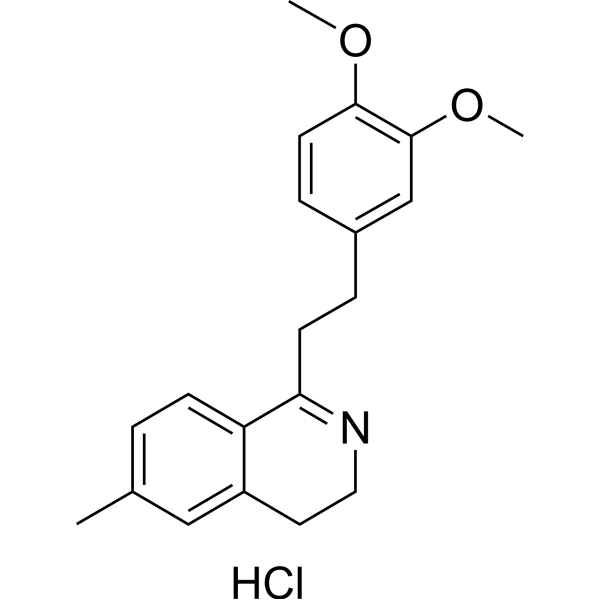 0 ImagesCat. No.: HY-105507CAS No.: 132928-46-2
PF-10040 is a quinoline derivative that can inhibit PAF-induced airway hyperresponsiveness. PF-10040 also shows protective effect in experimental NSAID-gastritis.
-
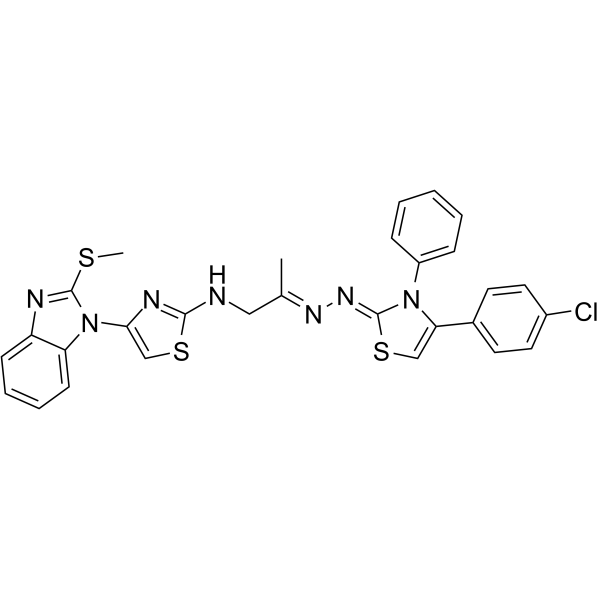
Beclomethasone-d5
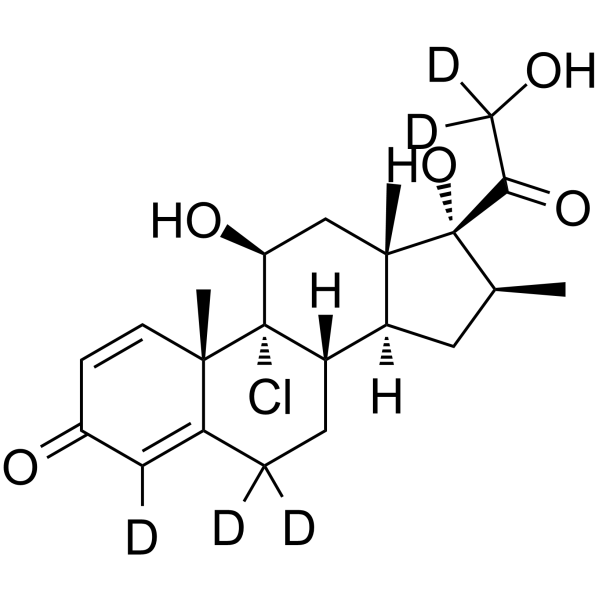 0 ImagesCat. No.: HY-B1540SCAS No.: 1263143-48-1
Beclomethasone-d5 is the deuterium labeled Beclometasone. Beclometasone (Beclomethasone) is a prototype glucocorticoid receptor agonist.
-
Cafestol palmitate
 0 ImagesCat. No.: HY-138164CAS No.: 81760-46-5
Cafestol palmitate is an orally active diterpene ester. Cafestol palmitate can be isolated from raw coffee beans. Cafestol palmitate enhances the activity of Glutathione S-transferase. Cafestol palmitate downregulates the expression of Akt and VEGFR2. Cafestol palmitate can be used in the research of inflammatory diseases and cardiovascular diseases.
-
STAT3-IN-34
 0 ImagesCat. No.: HY-169007
STAT3-IN-34 (Compound 15E) is an inhibitor for STAT3, and inhibits the nuclear translocation and transcriptional regulator activity of STAT3. STAT3-IN-34 inhibits the proliferation of cell HaCaT with IC50 of 0.008 μM. STAT3-IN-34 inhibits IL-17A expression and ameliorates Imiquimod (HY-B0180)-induced psoriasis in mice.
-
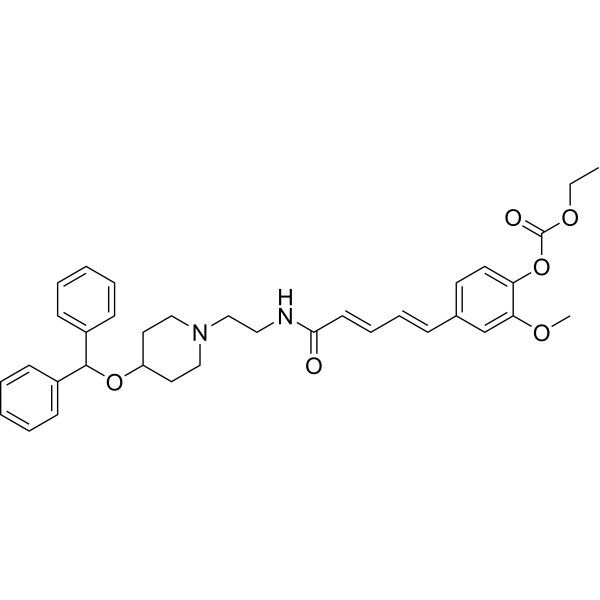
Linetastine
 0 ImagesCat. No.: HY-123103CAS No.: 159776-68-8
Linetastine is an orally active and potent 5-Lipoxygenase inhibitor. Linetastine shows antihistamine activity. Linetastine inhibits leukotriene production and antagonizes the effect of histamine. Linetastine inhibits the release of leukotrienes B4 and C4 from calcium ionophore-stimulated human leukocytes.
-
LYP-IN-5
 0 ImagesCat. No.: HY-182299CAS No.: 459853-10-2
LYP-IN-5 is a lymphoid tyrosine phosphatase (LYP) inhibitor with an IC50 value of 20.6 μM. LYP-IN-5 enhances the phosphorylation of ZAP70 and ERK1/2 following TCR stimulation, and promotes T cell activation. LYP-IN-5 can be used in the research of autoimmune diseases.
-
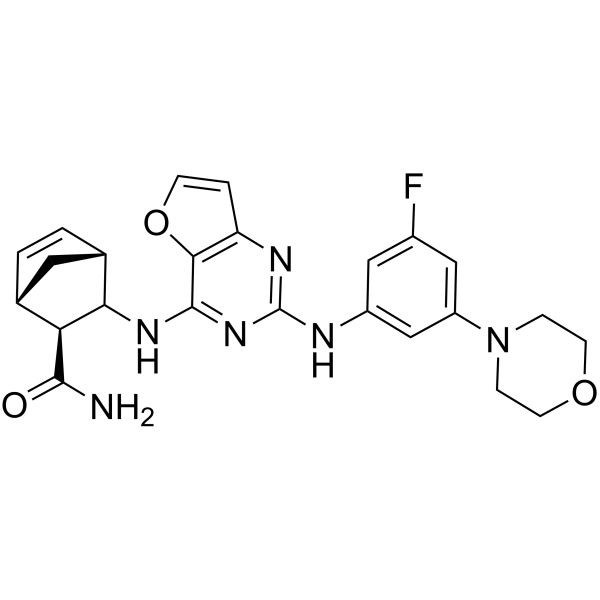
IRAK4-IN-18
 0 ImagesCat. No.: HY-150732CAS No.: 3032075-26-3
-
Muscone (Standard)
 0 Images
Muscone (Standard) is the analytical standard of Muscone. This product is intended for research and analytical applications. Muscone is the main active monomer of traditional Chinese medicine musk. Muscone inhibits NF-κB and NLRP3 inflammasome activation. Muscone remarkably decreases the levels of inflammatory cytokines (IL-1β, TNF-α and IL-6), and ultimately improves cardiac function and survival rate.
-
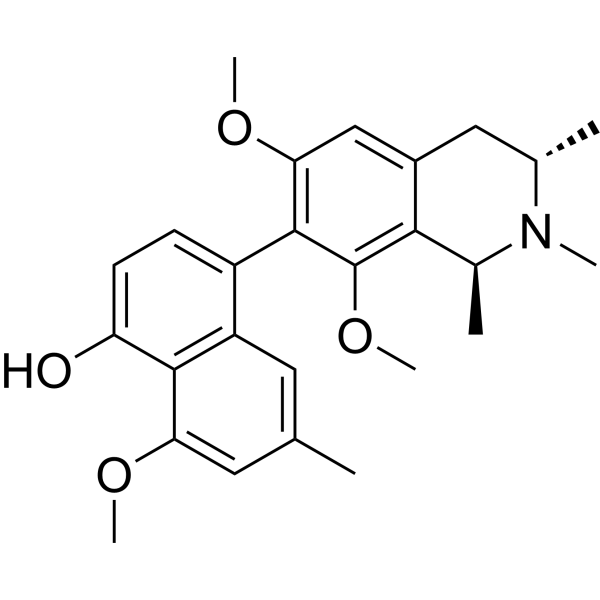
BRD4 ligand 17
 0 ImagesCat. No.: HY-116356CAS No.: 1629730-92-2
-
Isostearic acid (Standard)
 0 ImagesCat. No.: HY-W127433RCAS No.: 2724-58-5
Isostearic acid (Standard) is the analytical standard of Isostearic acid. This product is intended for research and analytical applications. Isostearic acid is a unique fatty acid. Isostearic acid promotes IL-1 release and Apoptosis. Isostearic acid has potent inflammatory properties. Isostearic acid can be used in pharmaceutical, personal care, and cosmetic applications[1][2].
-
Ebastine-d5
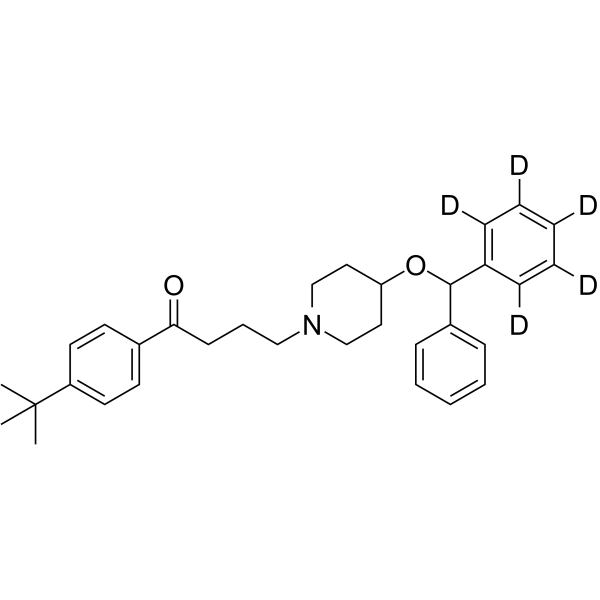 0 ImagesCat. No.: HY-B0674SCAS No.: 1216953-13-7
-
2-Methyldecalin
 0 ImagesCat. No.: HY-W668469CAS No.: 2958-76-1
2-Methyldecalin is an active ingredient that can be extracted from Crambe cordifolia. 2-Methyldecalin has antioxidant activity, antibacterial activity, and high biological safety. 2-Methyldecalin can be used for research on inflammatory conditions.
-
CXCR4 antagonist 7
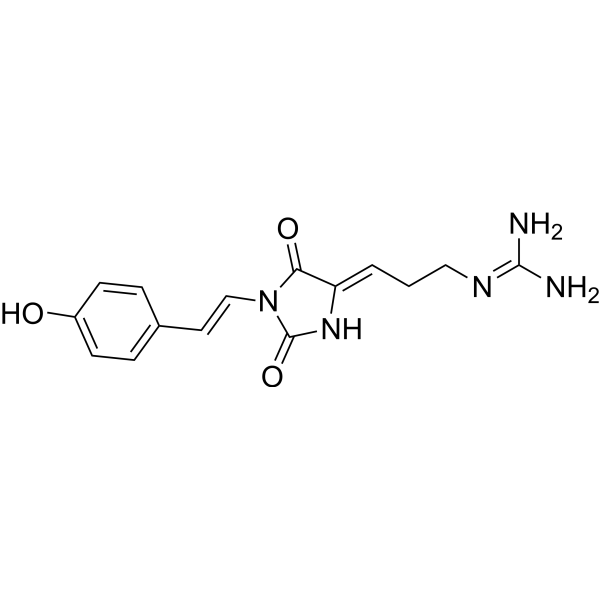 0 ImagesCat. No.: HY-147808CAS No.: 1185451-72-2
CXCR4 antagonist 7 (Compound PARA-B) is a CXCR4 antagonist with the IC50 of 9.3 nM. CXCR4 antagonist 7 can be used for the research of HIV infection, inflammatory diseases, cancer, and WHIM syndrome.
-
Cyclo(Gly-Pro)
 0 ImagesCat. No.: HY-P11431CAS No.: 97011-16-0
Cyclo(Gly-Pro) is a cyclic dipeptide. Cyclo(Gly-Pro) can be derived from the Nterminus of the IGF-1. Cyclo(Gly-Pro) attenuates nociceptive behaviour and inflammatory response in mice.
-
Anti-CD68 Antibody (KP1)
 0 ImagesCat. No.: HY-P991840