



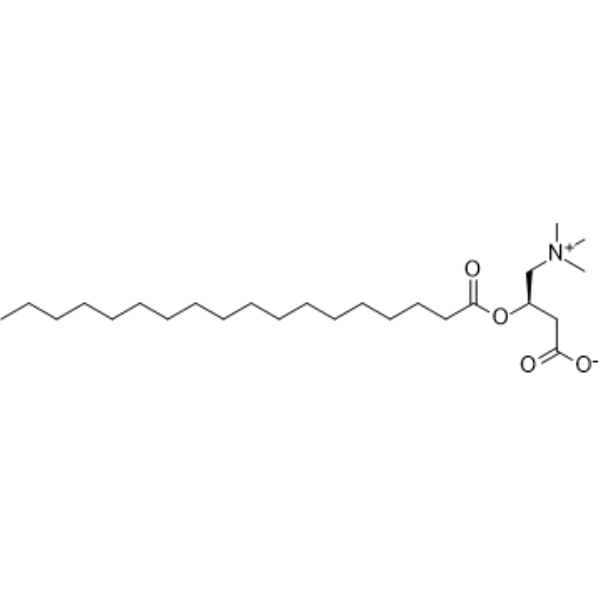
Stearoylcarnitine
Based on 1 publication(s) in Google Scholar
Stearoylcarnitine, a fatty ester lipid molecule, is an endogenous metabolite. Stearoylcarnitine can be used as PKC inhibitor. Stearoylcarnitine accumulates in β cells, leading to arrest of insulin synthesis and energy deficiency in type 2 diabetes mouse. Stearoylcarnitine inhibits lecithin cholesterol acyltransferase (LCAT) in rat and rabbits plasma. Stearoylcarnitine acts as a metabolomics biomarker for Parkinson’s disease. Stearoylcarnitine is a less potent inhibitor of GlyT2.
For research use only. We do not sell to patients.
- Purity : 99.91%
- CAS No.: 25597-09-5
- Formula: C25H49NO4
- Molecular Weight:427.66
-
Storage:Powder -20°C, 3 years , 4°C, 2 years ; In solvent -80°C, 2 years , -20°C, 1 year

To place orders, for customer services and technical support, please contact: MedChemExpress USA
Tel: 609-228-6898 E-mail: [email protected] [email protected]


-
 Biological Activity
-
Chemical Information
-
Solvent & Solubility
- Protocols
- Purity & Documentation
- References
-
 Help & FAQs


-
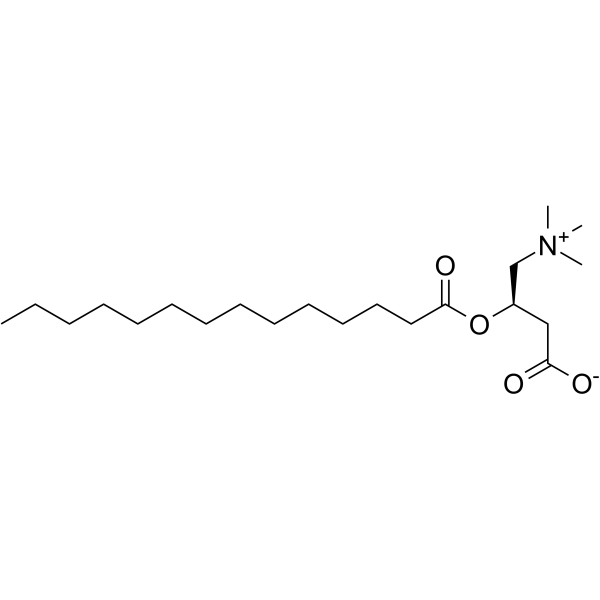
HY-113201
TetradecanoylcarnitineParkinson's Disease Biomarker -
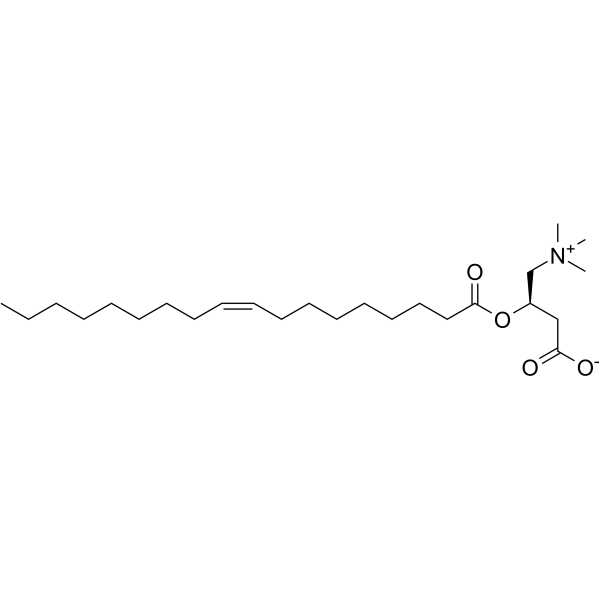
HY-113261
OleoylcarnitineHCC Biomarker -
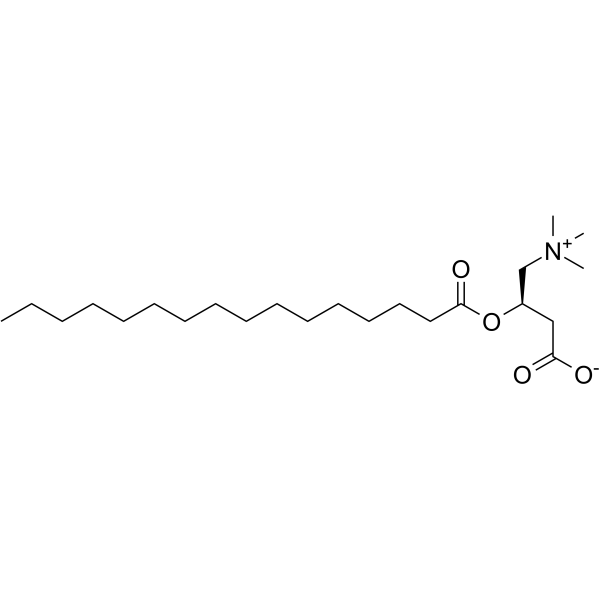
HY-113147
L-PalmitoylcarnitineKir6.2 Inhibitor -
HY-Y0320
Dimethyl sulfoxide, meets analytical specification of Ch.P.Aprotic Solvent -
HY-113168
ButyrylcarnitineEndogenous Metabolite -
HY-113266
ValerylcarnitineEndogenous Metabolite -
HY-P0201
Substance PNeurotransmitter -
HY-D0938
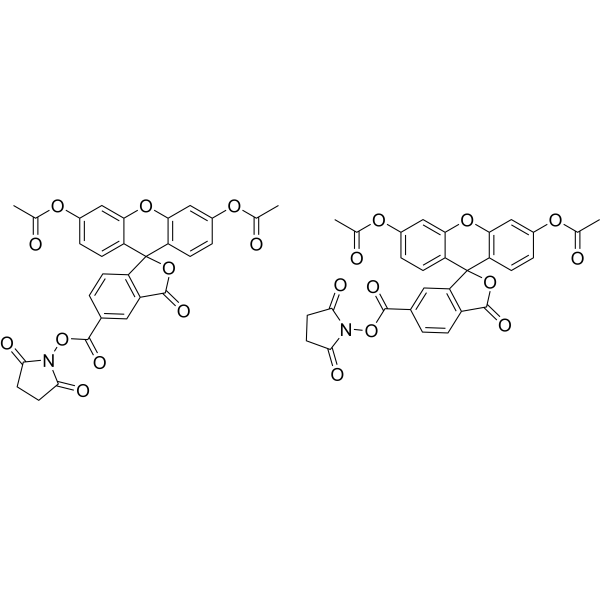
CFDA-SECell Proliferation Fluorescent Probe -
HY-113294
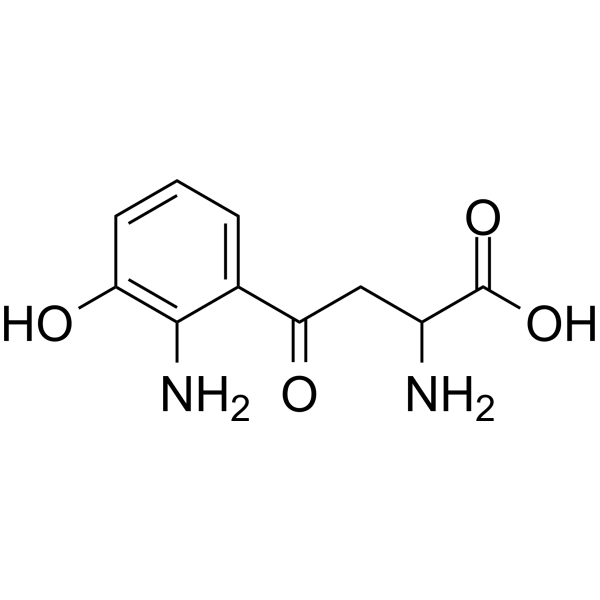
3-HydroxykynurenineEndogenous Neurotoxin -

HY-113498
SphingomyelinEndogenous Metabolite -

HY-14608R
L-Glutamic acid (Standard)Glutamate Receptors Agonist -
HY-113147A
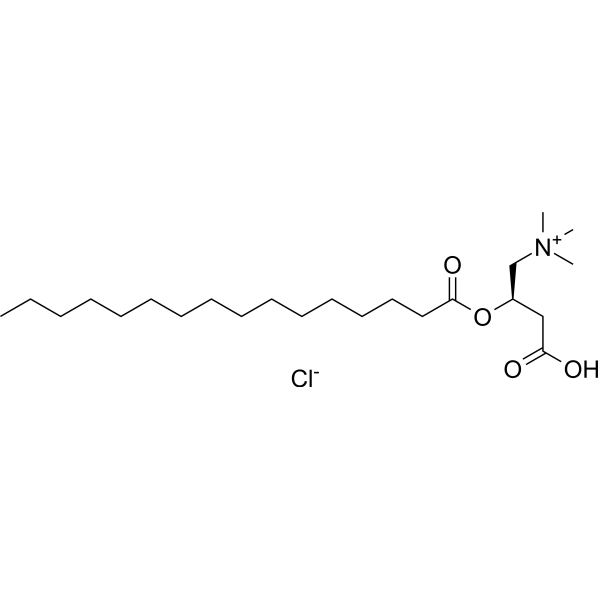
L-Palmitoylcarnitine chlorideKir6.2 Inhibitor
Publications Citing Use of MedChemExpress (MCE) Stearoylcarnitine
MoreAll Endogenous Metabolite Isoforms
More

Biological Activity
Description
IC50 & Target
|
Human Endogenous Metabolite |
In Vitro
Stearoylcarnitine (100 μM, 2 h) impairs mitochondrial energy metabolism in MIN6 cells[1].
Stearoylcarnitine accumulates in β cells, leading to arrest of insulin synthesis and energy deficiency via excessive β-oxidation and depletion of tricarboxylic acid (TCA) cycle and oxidative phosphorylation metabolites in type 2 diabetes (T2D) mouse pancreatic tissues[1].
Stearoylcarnitine (1 μM, 25 min) significantly abolishes the stimulatory effect of triterpene derivative on 45Ca2+ influx in pancreatic islets of male Wistar rats[5].
MedChemExpress (MCE) has not independently confirmed the accuracy of these methods. They are for reference only. Further protocols information, click here.
In Vivo
Stearoylcarnitine (500 μM, 0-40 min) shows inhibitory towards lecithin cholesterol acyltransferase (LCAT) in rat and rabbits plasma, but not in human plasma[3].
Stearoylcarnitine is characterized as one of potential biomarkers involved in the pathogenesis of Parkinson’s disease (PD) [4].
MedChemExpress (MCE) has not independently confirmed the accuracy of these methods. They are for reference only.


Chemical Information
-
CAS No. 25597-09-5
-
Appearance Solid
-
Molecular Weight 427.66
-
Formula C25H49NO4
-
Color White to off-white
-
SMILES
CCCCCCCCCCCCCCCCCC(O[C@H](CC([O-])=O)C[N+](C)(C)C)=O
-
Structure Classification
-
Initial Source
-
Shipping
Room temperature in continental US; may vary elsewhere.
-
Storage
Powder -20°C 3 years 4°C 2 years In solvent -80°C 2 years -20°C 1 year


Publications (1)
-
Journal Impact Factor
-
Most Recent


Solvent & Solubility
In Vitro:
DMSO : 0.95 mg/mL (2.22 mM; ultrasonic and warming and adjust pH to 6 with 0.1 N NaOH and heat to 60°C; Hygroscopic DMSO has a significant impact on the solubility of product, please use newly opened DMSO)
H2O : < 0.1 mg/mL (insoluble)
Please refer to the solubility information to select the appropriate solvent. Once prepared, please aliquot and store the solution to prevent product inactivation from repeated freeze-thaw cycles.
Storage method and period of stock solution: -80°C, 2 years; -20°C, 1 year. When stored at -80°C, please use it within 2 years. When stored at -20°C, please use it within 1 year.
Please refer to the solubility information to select the appropriate solvent. Once prepared, please aliquot and store the solution to prevent product inactivation from repeated freeze-thaw cycles.
Storage method and period of stock solution: -80°C, 2 years; -20°C, 1 year. When stored at -80°C, please use it within 2 years. When stored at -20°C, please use it within 1 year.
Concentration (start) × Volume (start) = Concentration (final) × Volume (final)

Protocols
-
Research Protocol for Endocrine Diseases
Endocrine diseases often arise from disrupted hormone production, hormone signaling, or target-tissue responsiveness; for diabetes-focused endocrine disease models, insulin signaling regulates glucose uptake, hepatic glucose output, lipid metabolism, and β-cell compensation. Type 2 diabetes develops through interacting defects in insulin resistance, β-cell dysfunction, adipose inflammation, hepatic glucose overproduction, altered incretin signaling, and ectopic lipid metabolism. A major unresolved question is whether endocrine dysfunction is driven primarily by target-tissue insulin resistance, intrinsic β-cell failure, immune/inflammatory stress, or combined multi-organ failure that differs by disease stage.
-
Research Protocol for Omics Data Analysis Pipelines
Omics data analysis pipelines convert raw high-throughput measurements from genomics, transcriptomics, epigenomics, proteomics, metabolomics, or single-cell assays into quality-controlled, statistically tested, biologically interpretable results. A reproducible omics pipeline requires predefined experimental metadata, raw-data quality control, modality-specific preprocessing, normalization, statistical modeling, multiple-testing correction, biological annotation, and independent validation. RNA-seq pipelines commonly include read QC, alignment or pseudoalignment, quantification, normalization, and differential-expression testing, while single-cell pipelines additionally require cell-level QC, normalization, dimensionality reduction, clustering, cell annotation, and sample-aware differential testing. Multi-omics integration can connect molecular layers such as transcriptome, proteome, metabolome, and epigenome, but unresolved problems include batch effects, missing values, unequal featu
-
Research Protocol for Metabolic Diseases
AMP-activated protein kinase, AMPK, is a conserved cellular energy sensor that responds to reduced cellular energy status and coordinates metabolism by increasing ATP-generating catabolic pathways while suppressing ATP-consuming anabolic processes. In metabolic disease research, the AMPK pathway is experimentally relevant because it regulates hepatic lipid synthesis, fatty acid oxidation, glucose production, skeletal-muscle glucose disposal, mTORC1-linked biosynthesis, autophagy, mitochondrial homeostasis, and whole-body energy balance. The central pathway logic is that energy stress, metformin, exercise-like stimulation, or direct AMPK activators increase AMPKα Thr172 phosphorylation and downstream substrate phosphorylation, including ACC and RAPTOR. Phosphorylation of ACC suppresses lipogenesis and supports fatty acid oxidation, whereas phosphorylation of RAPTOR suppresses mTORC1 signaling and links cellular energy status to growth and protein synthesis control. The pathway is linked


Purity & Documentation
-
Data Sheet (270 KB)
-
SDS (251 KB)
- English - EN (251 KB)
- Français - FR (251 KB)
- Deutsch - DE (251 KB)
- Norwegian - NO (251 KB)
- Español - ES (251 KB)
- Swedish - SV (251 KB)
- Italian - IT (251 KB)
- Korean - KR (251 KB)
- Portuguese - PT (251 KB)
-
Handling Instructions (2659 KB)
References
[1]. Aichler M, et al. N-acyl Taurines and Acylcarnitines Cause an Imbalance in Insulin Synthesis and Secretion Provoking β Cell Dysfunction in Type 2 Diabetes. Cell Metab. 2017 Jun 6;25(6):1334-1347.e4. [Content Brief]
[2]. Dave AM, et al. Neonatal Hypoxic-Ischemic Brain Injury Alters Brain Acylcarnitine Levels in a Mouse Model. Metabolites. 2022 May 22;12(5):467. [Content Brief]
[3]. Bell FP. Carnitine esters: novel inhibitors of plasma lecithin: cholesterol acyltransferase in experimental animals but not in man (Homo sapiens). Int J Biochem. 1983;15(2):133-6. [Content Brief]
[4]. Li XZ, et al. Cerebral metabonomics study on Parkinson's disease mice treated with extract of Acanthopanax senticosus harms. Phytomedicine. 2013 Oct 15;20(13):1219-29. [Content Brief]
[5]. da Luz G, et al. Triterpene derivative: A potential signaling pathway for the fern-9(11)-ene-2α,3β-diol on insulin secretion in pancreatic islet. Life Sci. 2016 Jun 1;154:58-65. [Content Brief]


Complete Stock Solution Preparation Table
Please refer to the solubility information to select the appropriate solvent. Once prepared, please aliquot and store the solution to prevent product inactivation from repeated freeze-thaw cycles.
Storage method and period of stock solution: -80°C, 2 years; -20°C, 1 year. When stored at -80°C, please use it within 2 years. When stored at -20°C, please use it within 1 year.
| Optional Solvent | Concentration Solvent Mass | 1 mg | 5 mg | 10 mg | 25 mg |
|---|---|---|---|---|---|
| DMSO | 1 mM | 2.3383 mL | 11.6915 mL | 23.3831 mL | 58.4577 mL |


Stearoylcarnitine Related Classifications
HY-113202 Related Classifications
 Powered by Bioz