



AChE Inhibitor
-
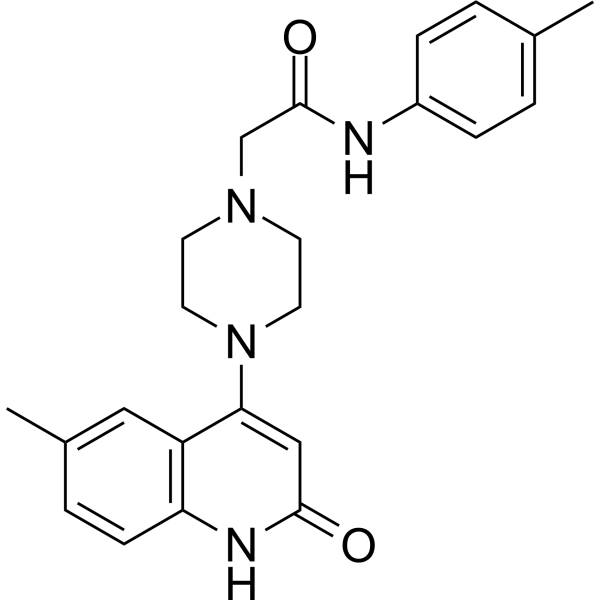
AChE-IN-47
 0 ImagesCat. No.: HY-157296CAS No.: 3033056-55-9
AChE-IN-47 (compound g17) is a AChE inhibitor with the IC50 of 0.24 μM. AChE-IN-47 inhibits amyloid β peptides self-aggregation. AChE-IN-47 displays neuroprotective effects and effectively suppresses the intracellular accumulation of reactive oxygen species.
-
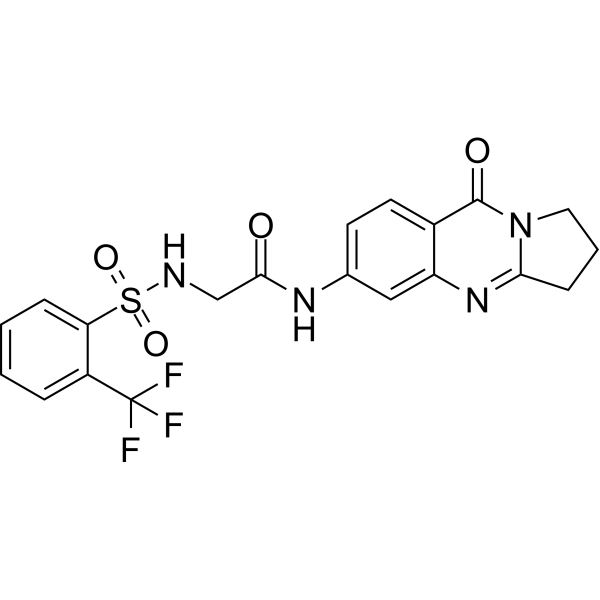
AChE-IN-11
 0 ImagesCat. No.: HY-115973
AChE-IN-11 (compound 5C) is a triple inhibitor targeting AChE/MAO-B/BACE1 (IC50=7.9 μM, 9.9 μM, 8.3 μM, respectively) and a selective metal ion chelators. AChE-IN-11 exhibits mixed AChE inhibitory effects, binding to both CAS and PAS of AChE. AChE-IN-11 also exhibits good antioxidant activity (ORAC=2.5 eq) and potential neuroprotective effects in Alzheimer's disease.
-
AChE-IN-90
 0 ImagesCat. No.: HY-174462
AChE-IN-90 (Compound 5b) is an orally active, brain-penetrant and potent acetylcholinesterase (AChE) inhibitor with an IC50 value of 0.023 μM against human AChE and lower selectivity for butyrylcholinesterase (BuChE) (IC50 1.8 μM). AChE-IN-90 increases acetylcholine levels in the synaptic cleft. AChE-IN-90 is promising for research of neurodegenerative diseases such as Alzheimer's disease.
-
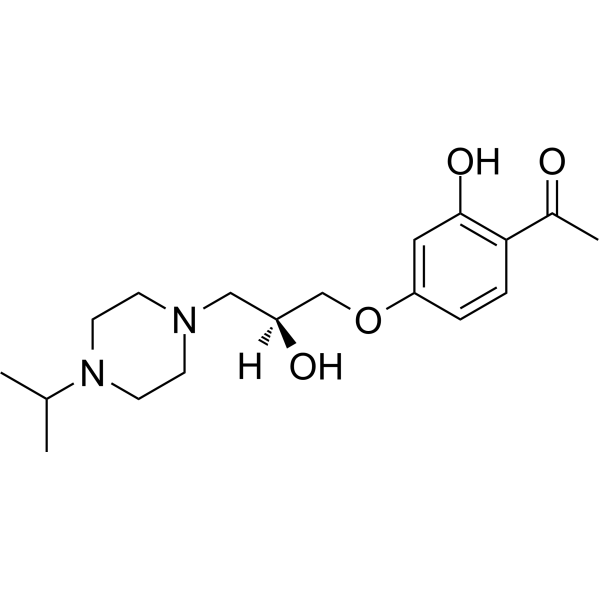
(±)Phenserine
 0 ImagesCat. No.: HY-103374BCAS No.: 159652-53-6Synonyms: (±)-Eseroline phenylcarbamate
(±)Phenserine ((±)-Eseroline phenylcarbamate) is the racemic form of Phenserine (HY-103374). Phenserine is a derivative of Physostigmine (HY-N6608) and is an effective, non-competitive, long-acting and selective AChE inhibitor. Phenserine can reduce the formation of β-amyloid precursor protein (APP) and β-amyloid peptide (Aβ). Phenserine can improve cognitive ability and slow down the progression of Alzheimer's disease.
-
AChE-IN-101
 0 ImagesCat. No.: HY-180225
AChE-IN-101 (Compound 7a) is an AChE inhibitor (IC50s = 0.21 μM (EeAChE); 13 nM (HsAChE)). AChE-IN-101 ameliorates Scopolamine (HY-N0296)-induced cognitive impairment. AChE-IN-101 can be used in the research of Alzheimer's disease.
-
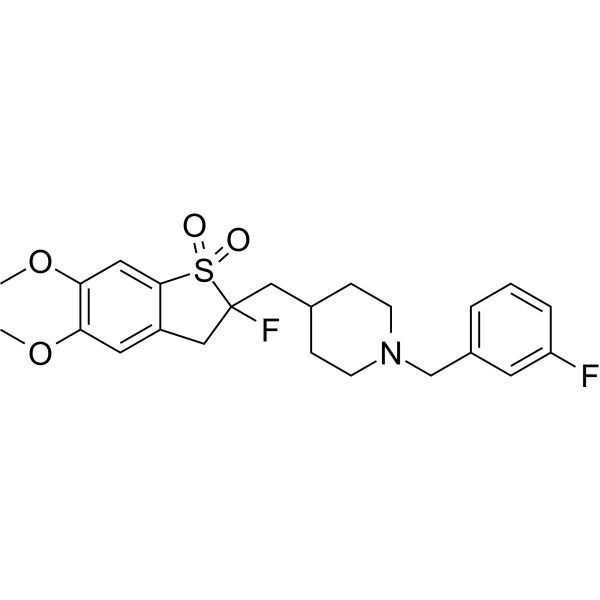
AChE-IN-10
 0 ImagesCat. No.: HY-144775CAS No.: 2770832-90-9
AChE-IN-10 (Compound 24r) is a potent inhibitor of AChE (IC50 = 2.4 nM). AChE-IN-10 potently inhibits AChE, reduces tau phosphorylation at S396 residue, provides neuroprotection by rescuing neuronal morphology and increasing cell viability. AChE-IN-10 is also found to reduce amyloid aggregation in the presence of AChE.
-
AChE/BChE-IN-34
 0 ImagesCat. No.: HY-181167
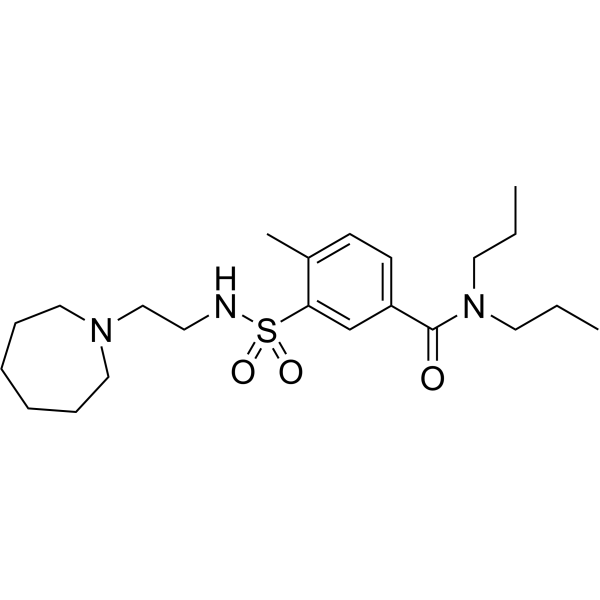
AChE/BChE-IN-34 is an acetylcholinesterase (AChE) and butyrylcholinesterase (BChE) inhibitor with IC50s of 5.97 μM and 4.57 μM, respectively. AChE/BChE-IN-34 functions as an antioxidant, oxidative stress inhibitor, reduces MDA levels, and elevates SOD and catalase in hippocampal tissue. AChE/BChE-IN-34 acts as a cognitive function enhancer, improves learning and memory in a Scopolamine (HY-N0296)-induced animal model. AChE/BChE-IN-34 is non-toxic in neuroblastoma cells across a specified concentration range. AChE/BChE-IN-34 can be used for the research of Alzheimer's disease.

-
MAO-B-IN-48
 0 ImagesCat. No.: HY-175523
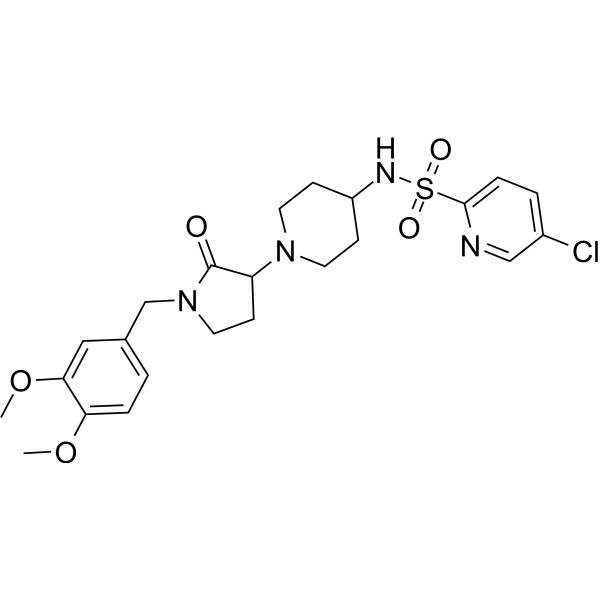
MAO-B-IN-48 is a selective MAO-B inhibitor (IC50 = 0.09 μM, Ki = 0.02 μM). MAO-B-IN-48 exhibits inhibitory activity against hBChE (IC50 = 1.10 μM, Ki = 0.43 μM) and AChE (IC50 = 0.56 μM, Ki = 0.14 μM). MAO-B-IN-48 suppresses self-induced aggregation of toxic β-amyloid peptides and exerts antioxidant activity, including DPPH radical scavenging, CUPRAC copper ion reduction, and superoxide anion scavenging. MAO-B-IN-48 can be used for the study of Alzheimer's disease (AD).
-
hAChE/hBACE-1-IN-2
 0 ImagesCat. No.: HY-149288
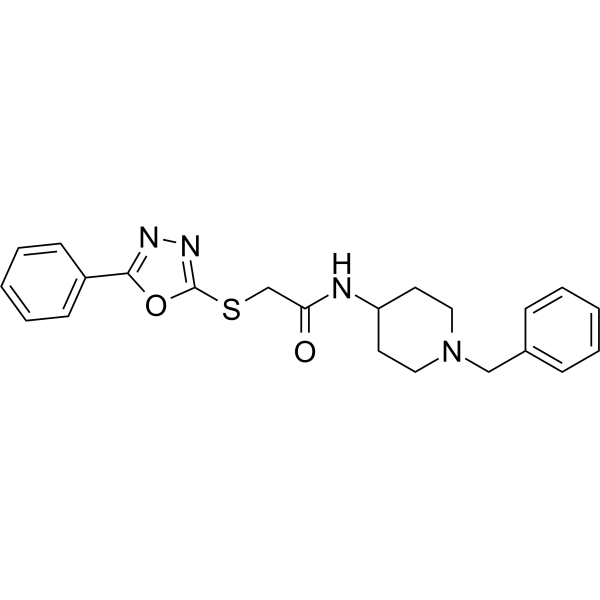
hAChE/hBACE-1-IN-2 is a potent, orally active, blood-brain barrier transboundary triple inhibitor of hAChE, hBChE, and HACE-1 with IC50s of 0.113 μM, 1.48 μM and 0.38 μM, respectively. hAChE/hBACE-1-IN-2 has antioxidant activity. hAChE/hBACE-1-IN-2 also inhibits Aβ11-42 aggregation. hAChE/hBACE-1-IN-2 can be used to study Alzheimer's disease.
-
AChE/BChE-IN-36
 0 ImagesCat. No.: HY-182290
AChE/BChE-IN-36 is a dual acetylcholinesterase (AChE) and butyrylcholinesterase (BChE) inhibitor with blood-brain barrier permeability. AChE/BChE-IN-36 mediates blood-brain barrier transport through specific interactions with choline transporters. AChE/BChE-IN-36 can be used for the research of Alzheimer's disease.
-
MF 268
 0 ImagesCat. No.: HY-105461CAS No.: 154619-51-9
MF 268 is an orally active, blood-brain barrier-permeable acetylcholinesterase (AChE) inhibitor with an IC50 of 9 nM in rats. MF 268 binds to both the catalytic site and the regulatory anionic site of acetylcholinesterase, and increases the extracellular levels of acetylcholine, norepinephrine, dopamine and serotonin in the rat cortex via a dose-dependent pathway. MF 268 exhibits anti-amnesic effects in rats. MF 268 can be used in research related to Alzheimer's disease.
-
Amprolium
 0 Images
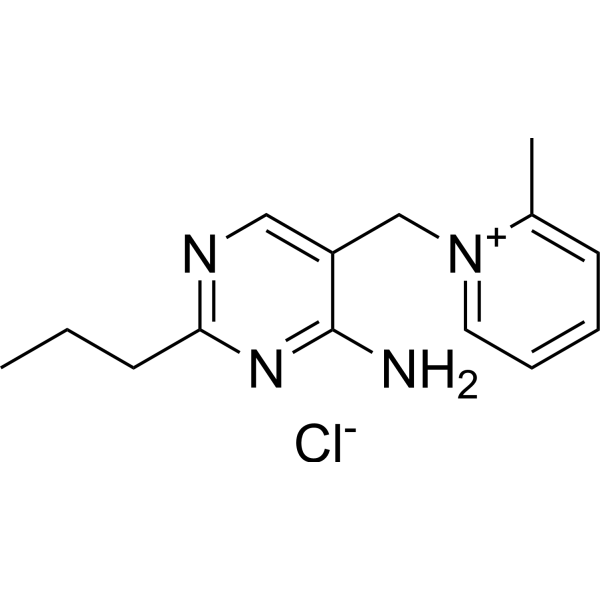
Amprolium is a thiamine transporter inhibitor and antiparasitic agent with oral activity and blood-brain barrier penetration. Amprolium blocks thiamine transport at the blood-brain barrier and intestine, and competitively inhibits thiamine pyrophosphokinase, inducing thiamine pyrophosphate deficiency and impairing carbohydrate synthesis. Amprolium induces oxidative stress, alters antioxidant enzyme activity, and inhibits acetylcholinesterase (AchE) activity. Amprolium disrupts reproductive organs and gametogenesis, and causes histopathological and ultrastructural damage to multiple organs. Amprolium induces thiamine deficiency, reduces body weight gain in mice, and causes psychomotor behavioral changes and nephropathy. Amprolium exhibits molluscicidal activity against the terrestrial snail Eobania vermiculata, and reduces the shedding of Eimeria meleagrimitis oocysts in feces and litter. Amprolium can be used for research on thiamine deficiency and coccidiosis.
-
Dyclonine hydrochloride (Standard)
 0 ImagesSynonyms: Dyclocaine hydrochloride (Standard)
Dyclonine hydrochloride (Standard) (Dyclocaine hydrochloride (Standard)) is the analytical standard of Dyclonine hydrochloride (HY-B0364A). This product is intended for research and analytical applications. Dyclonine hydrochloride (Dyclocaine hydrochloride) is an orally active, blood-brain barrier-permeable piperidine phenylacetone small molecule commonly used as a local anesthetic. Dyclonine hydrochloride acts as a highly selective allosteric antagonist of TRPV3; it also reversibly inhibits G9a, ALDH2 and ALDH3A1, non-competitively blocks AChE. Dyclonine hydrochloride activates the Nrf2/ARE pathway, relieves the epigenetic silencing of FXN, blocks Aβ42 aggregation, and promotes remyelination and reparative polarization of microglia. Dyclonine hydrochloride alleviates pruritus via TRPV3 inhibition; it is used in studies of neurodegenerative disease models based on its AChE inhibitory, antioxidant and remyelinating effects; it sensitizes drug-resistant tumors through ALDH inhibition, and combined use with protease inhibitors induces more tumor cell apoptosis; it inhibits Candida albicans in vitro. Dyclonine hydrochloride can be used for research on multiple diseases including neurodegenerative diseases, cancer and pruritic dermatitis.
-
Suberogorgin
 0 ImagesCat. No.: HY-187600CAS No.: 110043-85-1
Suberogorgin is a selective and reversible Acetylcholinesterase inhibitor. It is found in the Gorgoniae suberogorgia species from the South China Sea. Suberogorgin improves memory capacity in mice and reverses memory retention impairment induced by Cycloheximide (HY-12320) or Scopolamine (HY-N0296). It reduces urine output in rats and anesthetized cats. Suberogorgin increases respiratory rate, tidal volume, and minute ventilation in anesthetized cats, and exerts no significant effect on in vivo blood pressure in anesthetized cats. Suberogorgin is used in research related to memory disorders.
-
Dehydroevodiamine hydrochloride (Standard)
 0 ImagesCat. No.: HY-N6029RCAS No.: 111664-82-5
Dehydroevodiamine hydrochloride Standard is the analytical standard of Dehydroevodiamine hydrochloride (HY-N6029). This product is intended for research and analytical applications. Dehydroevodiamine hydrochloride is a blood-brain barrier-permeable, orally effective AChE and BACE1 inhibitor (IC50 = 40.96 μM). Dehydroevodiamine hydrochloride is isolated and extracted from Evodia rutaecarpa. Dehydroevodiamine hydrochloride attenuates neurotoxicity through multiple targets by inhibiting BACE1 to block Aβ production, inhibiting AChE activity, scavenging ROS, and suppressing calcium influx. Dehydroevodiamine hydrochloride can be used for research on Alzheimer's disease, cerebral ischemia, vascular dementia, and other cognitive disorder-related diseases.
-
Vescalagin
 0 ImagesCat. No.: HY-N19401CAS No.: 36001-47-5
Vescalagin is a hexahydroxyphenol. Vescalagin is isolable from Camu-camu (Myrciaria dubia) and immature wax apple fruits. Vescalagin exhibits inhibitory activity against a variety of enzymes, with a Ki value of 5.87 nM against AChE, 3.89 nM against BChE, 11.75 nM against hCA I, 16.23 nM against hCA II, and 16.08 nM against α-glucosidase. Vescalagin inhibits hCA I, hCA II and α-glucosidase in a non-competitive manner. Vescalagin downregulates JNK/p38 MAPK to protect pancreatic β-cells and improve insulin secretion in methylglyoxal-treated rats. Vescalagin reduces hyperglycemia and hypertriglyceridemia in rats fed a high-fructose diet. Vescalagin possesses anti-inflammatory and antioxidant properties.



