



BChE
Butyrylcholinesterase (BChE, EC 3.1.1.8) is a cholinesterase family enzyme that hydrolyzes a broad range of choline esters and other ester-containing substrates, contributing to cholinergic regulation as well as xenobiotic detoxification processes[1][2]. BChE is widely distributed in human tissues and plasma, where it participates in cholinergic transmission, ester metabolism, and the neutralization of toxic compounds including organophosphates and carbamates[1]. Mechanistically, BChE functions as a hydrolytic enzyme that can buffer acetylcholine metabolism when acetylcholinesterase (AChE) activity is reduced, thereby influencing cholinergic homeostasis[2]. In disease contexts, increasing evidence links BChE to neurodegenerative disorders, particularly Alzheimer’s disease (AD), where BChE activity and expression become more prominent during disease progression and are associated with late-stage cholinergic dysfunction[3][4]. Experimental studies therefore consider BChE an important therapeutic target and biomarker candidate for AD-related research[3][4]. Compared with the closely related isoform AChE, which primarily terminates synaptic acetylcholine signaling, BChE exhibits broader substrate specificity, distinct tissue distribution, and a stronger role in drug metabolism, detoxification, and non-neuronal physiological processes[1][2]. For experimental applications, selective BChE inhibitors are widely used to investigate cholinergic mechanisms and have been developed as pharmacological tools for evaluating therapeutic strategies in neurodegenerative disease models, with high selectivity over AChE considered a key design objective[3][4].
References:
- [1]. Hajimohammadi S, et al. New views on physiological functions and regulation of butyrylcholinesterase and potential therapeutic interventions. Front Mol Biosci. 2025 Jun 19;12:1625318. [Content Brief]
- [2]. Jovičić SM. Enzyme ChE, et al. Enzyme ChE, cholinergic therapy and molecular docking: Significant considerations and future perspectives. Int J Immunopathol Pharmacol. 2024 Jan-Dec;38:3946320241289013. [Content Brief]
- [3]. Brus B, et al. Discovery, biological evaluation, and crystal structure of a novel nanomolar selective butyrylcholinesterase inhibitor. J Med Chem. 2014 Oct 9;57(19):8167-79. [Content Brief]
- [4]. Zhou Y, et al. Discovery of Selective Butyrylcholinesterase (BChE) Inhibitors through a Combination of Computational Studies and Biological Evaluations. Molecules. 2019 Nov 20;24(23):4217. [Content Brief]
All Product Categories
-
BChE Related Products (229)
Related Products (229)

-
Neuroprotective agent 15
 0 ImagesCat. No.: HY-178943CAS No.: 2476614-40-9Neuroprotective agent 15 (Compound 3e) is a neuroprotective agent. Neuroprotective agent 15 is a selective butyrylcholinesterase (BChE) inhibitor, with IC50 values of 2.6 and 114.3 μM for BChE and AChE respectively. Neuroprotective agent 15 has cannabinoid CB2 receptor (CB2 receptor) agonistic activity. Neuroprotective agent 15 can reduce cell death, LDH release and Caspase-3/7 activity, and inhibit apoptosis. Neuroprotective agent 15 can reduce the formation of superoxide free radicals, maintain cell morphology, and significantly lower oxidative stress levels. Neuroprotective agent 15 can be used in the research of neurodegenerative diseases, such as Alzheimer's disease and Parkinson's disease.
-
MAO-B-IN-56
 0 ImagesCat. No.: HY-182786MAO-B-IN-56 is a multi-target-directed ligand with AChE, BChE, MAO-B, and BACE1 inhibitory activity, with IC50 values of 0.35 μM, 3.22 μM, 0.14 μM, and 3.85 μM respectively, and shows selectivity for AChE over BChE and MAO-B over MAO-A.MAO-B-IN-56 reduces amyloid-beta production, reduces paw edema, improves spatial memory, and enhances Alzheimer's disease hallmarks and associated histopathological alterations.MAO-B-IN-56 can be used for the research of alzheimer's disease.
-
AChE/BuChE-IN-5
 0 ImagesCat. No.: HY-163537AChE/BuChE-IN-5 (compound 5a) is a dual target inhibitor. AChE/BuChE-IN-5 has excellent nanomolar inhibitory activity on acetylcholinesterase (AChE) (IC50=46.9 nM) and butyryl cholinesterase (BuChE) (IC50=3.5 nM). AChE/BuChE-IN-5 can be used for Alzheimer's Disease research.
-
Multitarget AD-IN-4
 0 ImagesCat. No.: HY-180891Multitarget AD-IN-4 (compound IIIj) is a multitarget-directed ligand (MTDL), with the ability to simultaneously inhibit ChE enzymes (EeAChE IC50 = 0.157 μM, eqBuChE IC50 = 0.147 μM, hAChE IC50 = 1.551 μM, hBuChE IC50 = 2.152 μM), exhibit antioxidant activity, provide neuroprotection, and inhibit calcium channels (Ca2+ channel blockade: IC50 = 30.59 μM). Multitarget AD-IN-4 reverses Scopolamine (HY-N0296)-induced amnesia in a mouse model. Multitarget AD-IN-4 can be used for Alzheimer’s disease (AD) research.
-
AChE/BChE-IN-29
 0 ImagesCat. No.: HY-175658AChE/BChE-IN-29 is an AChE/BChE inhibitor. AChE/BChE-IN-29 exhibits balanced dual cholinesterase inhibitory activity with IC50 values of 2.1 μM for Electrophorus electricus AChE (eeAChE) and 6.3 μM for equine serum butyrylcholinesterase (eqBChE). AChE/BChE-IN-29 effectively inhibits amyloid-β (Aβ42) aggregation and tau protein aggregation in E. coli cell models. AChE/BChE-IN-29 can be used for the study of Alzheimer’s disease (AD).
-
AChE/BChE/MAO-B-IN-3
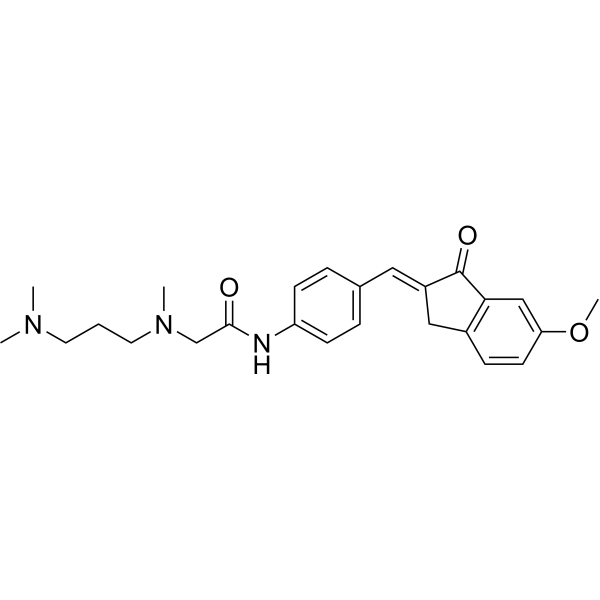 0 ImagesCat. No.: HY-152113AChE/BChE/MAO-B-IN-3, an indan-1-one derivative, is a potent MAO-B inhibitor with an IC50 of 0.0359 μM for human MAO-B. AChE/BChE/MAO-B-IN-3 is a potent AChE and BChE enzyme inhibitor, with IC50s of 0.0473 μM and 0.0782 μM for human AChE and BChE enzyme, respectively. AChE/BChE/MAO-B-IN-3 shows significant antioxidant activity and has the potential for Alzheimer's disease (AD) research.
-
hBChE-IN-2
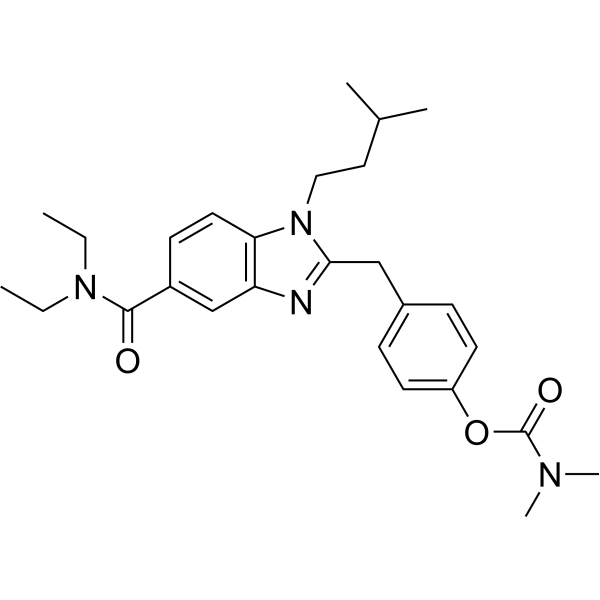 0 ImageshBChE-IN-2 (compound 15d) is a butyrylcholinesterase (BChE) inhibitor (IC50 of 0.62 μM) and a cannabinoid receptor 2 (CB2R) agonist. hBChE-IN-2 has neuroprotection activities.
-
BChE/p38-α MAPK-IN-1
 0 ImagesCat. No.: HY-175655CAS No.: 3077831-11-6BChE/p38-α MAPK-IN-1 is a selective dual inhibitor of hBChE (IC50 = 772 nM) and p38α MAPK (IC50 = 191 nM). BChE/p38-α MAPK-IN-1 reduces the production of pro-inflammatory cytokines (IL-1β, IL-6, IL-8, TNF-α) in cells. BChE/p38-α MAPK-IN-1 improves Scopolamine (HY-N0296)-induced cognitive impairment, as well as alleviates LPS (HY-D1056)-induced spatial learning impairment and exerts anti-neuroinflammatory effects in mice. BChE/p38-α MAPK-IN-1 can be used for the study of Alzheimer’s disease (AD) by targeting both cholinergic deficit and neuroinflammation.
-
Z164597606
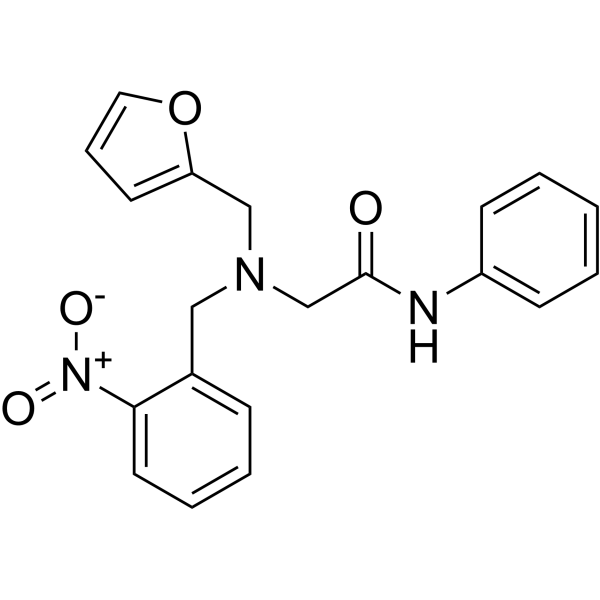 0 ImagesCat. No.: HY-151405CAS No.: 1050587-57-9
-
AChE-IN-109
 0 ImagesCat. No.: HY-181851AChE-IN-109 is a potent mixed-type cholinesterase inhibitor with significantly stronger inhibitory activity against AChE than BChE. AChE-IN-109 has IC50 values of 0.55 μM and 12.45 μM against AChE and BChE, respectively. AChE-IN-109 inhibits cholinesterases through a mixed-type mechanism, binds to both the catalytic active site (CAS) and peripheral anionic site (PAS) of AChE. AChE-IN-109 can be used for the study of Alzheimer’s disease (AD).
-
SBN-284
 0 ImagesCat. No.: HY-159482SBN-284 (compound 3x) is a dual inhibitor of blood-brain permeable Cholinesterases and the NLRP3 inflammasome and is effective against EeAChE, hAChE and eqBChE, the IC50 values of are 0.37, 0.31, 0.29 μM respectively, and the EC50 of NLRP3 inflamm is 1 μM. SBN-284 can be used in Alzheimer's disease research.
-
MAO-IN-6
 0 ImagesCat. No.: HY-172461MAO-IN-6 (Compound 3f) is a BBB permeable and reversible MAO-B inhibitor with an IC50 of 0.09 μM. MAO-IN-6 also exhibits certain inhibitory activities against AChE and BChE, with IC50 values of 4.48 μM and 17.03 μM, respectively. MAO-IN-6 has low cytotoxicity and can be used in the research of Alzheimer's disease.
-
BuChE-IN-23
 0 ImagesCat. No.: HY-183352CAS No.: 3067571-93-8BuChE-IN-23 is an orally active, blood-brain barrier permeable butyrylcholinesterase (eqBuChE) inhibitor with an IC50 of 15.59 μM and a Ki of 29.33 μM. BuChE-IN-23 exhibits an IC50 of 38.65 μM against hBuChE and shows selectivity for butyrylcholinesterase over acetylcholinesterase. BuChE-IN-23 inhibits LPS (HY-D1056)-induced nitric oxide production, attenuates hippocampal glial cell activation and neuroinflammation, suppresses the TLR4/p38 MAPK signaling pathway, and regulates the IL-1β/C3-mediated microglia-astrocyte inflammatory axis. BuChE-IN-23 can be used for the research of Alzheimer's disease.
-
BChE-IN-52
 0 ImagesCat. No.: HY-184704BChE-IN-52 is a selective butyrylcholinesterase (BChE) inhibitor with an IC50 of 0.25 μM against horse serum-derived BChE. BChE-IN-52 exhibits weak antioxidant activity, shows no mutagenicity, and displays photochemical instability under UV irradiation. BChE-IN-52 can be used in the research of Alzheimer's disease.
-
BChE/MAO-A-IN-1
 0 ImagesCat. No.: HY-179126BChE/MAO-A-IN-1 (compound 7j) is a BChE/MAO-A inhibitor. BChE/MAO-A-IN-1 exhibits inhibitory activity against BChE (IC50 = 0.03 nM) and MAO-A (IC50 = 0.32 nM), while also having inhibitory effects on MAO-B. BChE/MAO-A-IN-1 has good anti glycation, antioxidant activity, and low cytotoxicity. BChE/MAO-A-IN-1 can be used in the research of diabetes and Alzheimer's disease.
-
Blestrin D
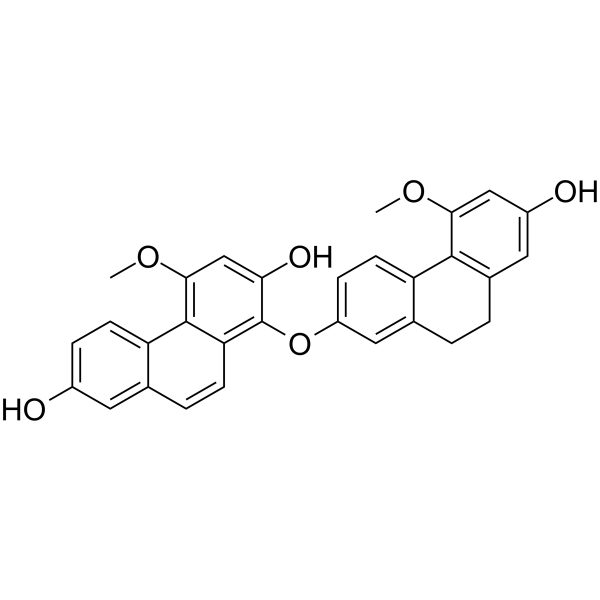 0 ImagesCat. No.: HY-N10490CAS No.: 145701-19-5Blestrin D is a potent butyrylcholinesterase (BChE) mixed-type inhibitor with an IC50 value of 8.1 μM. Blestrin D can be isolated from Bletilla striata. Blestrin D can be used for the research of Alzheimer's disease (AD).
-
(+)-(R)-Ribalinine
 0 ImagesCat. No.: HY-N21822CAS No.: 62928-56-7Synonyms: Folifine
-
BChE-IN-46
 0 ImagesCat. No.: HY-179363BChE-IN-46 is a selective and brain-penetrant BChE inhibitor (eqBChE IC50 = 7.44 × 10⁻⁵ μM, SI > 270,000; hBChE, IC50 = 1.48 × 10⁻³ μM). BChE-IN-46 has COX-2 inhibitory activity (IC50 = 0.11 μM). BChE-IN-46 exhibits neuroprotective effects, enhances acetylcholine levels, and alleviates cognitive deficits, anxiety, and learning/memory impairments. BChE-IN-46 can be used for the development of anti-Alzheimer's disease drugs.
-
BChE/MAO-B-IN-2
 0 ImagesCat. No.: HY-175524BChE/MAO-B-IN-2 is a dual inhibitor of BChE (IC50 = 0.05 μM, Ki = 0.01 μM) and MAO-B (IC50 = 0.45 μM, Ki = 0.08 μM) with good blood-brain barrier permeability. BChE/MAO-B-IN-2 exhibits antioxidant activity, including DPPH radical scavenging, CUPRAC copper ion reduction, and superoxide anion scavenging. BChE/MAO-B-IN-2 can be used for the study of Alzheimer's disease (AD).
-
AChE/BChE-IN-16
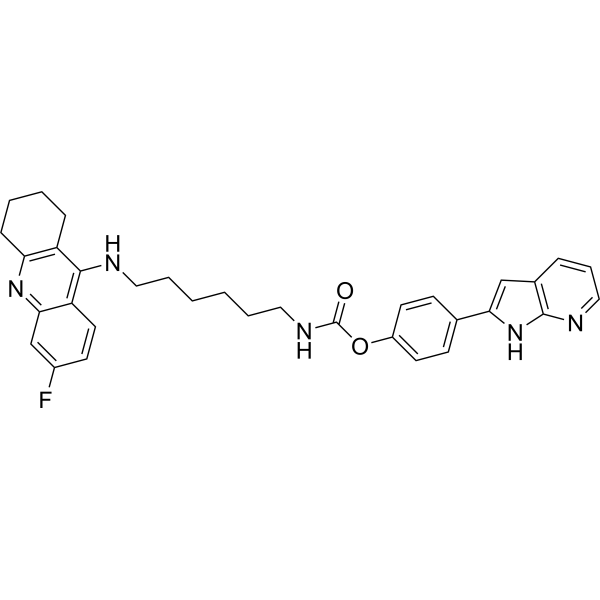 0 ImagesCat. No.: HY-157437CAS No.: 3038810-09-9AChE/BChE-IN-16 (compound C7) is a potent cholinesterase (ChE) inhibitor with IC50s of 30 nM and 48 nM for human acetylcholinesterase (hAChE) and human butyrylcholinesterase (hBChE), respectively. AChE/BChE-IN-16 exhibits a remarkable capacity to safeguard PC12 cells against H2O2-induced apoptosis and effectively suppresses the production of reactive oxygen species (ROS).



