



Microtubule/Tubulin
Microtubules are a component of the cytoskeleton, found throughout the cytoplasm. These tubular polymers of tubulin can grow as long as 50 micrometres, with an average length of 25 µm, and are highly dynamic. The outer diameter of a microtubule is about 24 nm while the inner diameter is about 12 nm. Microtubules are found in eukaryotic cells and are formed by the polymerization of a dimer of two globular proteins, alpha and beta tubulin. Tubulin is one of several members of a small family of globular proteins. The tubulin superfamily includes five distinct families, the alpha-, beta-, gamma-, delta-, and epsilon-tubulins and a sixth family which is present only in kinetoplastid protozoa. The most common members of the tubulin family are α-tubulin and β-tubulin, the proteins that make up microtubules. Microtubules are very important in a number of cellular processes. They are involved in maintaining the structure of the cell.
All Product Categories
-
Microtubule/Tubulin Inhibitors
(811)
View all products
-
Microtubule/Tubulin Agonists
(2)
View all products
-
Microtubule/Tubulin Activators
(19)
View all products
-
Microtubule/Tubulin Modulators
(19)
View all products
-
Microtubule/Tubulin Inducers
(5)
View all products
-
Microtubule/Tubulin Degraders
(3)
View all products
-
Microtubule/Tubulin Controls
(19)
View all products
-
Microtubule/Tubulin Ligands
(5)
View all products
-
Microtubule/Tubulin Related Products (996)
Related Products (996)

-
Antibodies (69)
-
(Rac)-Deox B 7,4
 0 ImagesCat. No.: HY-119361CAS No.: 674786-37-9Synonyms: (Rac)-Deoxysappanone B 7,4' dimethyl ether(Rac)-Deox B 7,4, a homoisoflavanoid compound, inhibits microtubule polymerization via binding near the colchicine site and promote reversible G2 arrest. (Rac)-Deox B 7,4 possesses nanomolar anti-leukemic activity.
-
Tubulin polymerization-IN-26
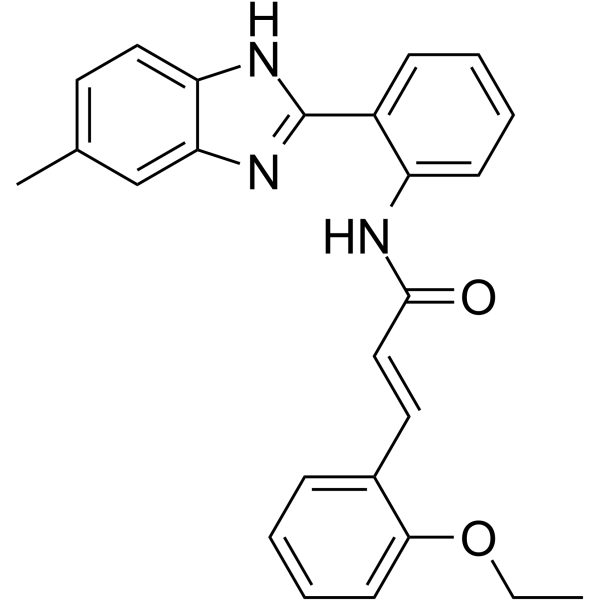 0 ImagesCat. No.: HY-149020CAS No.: 2490291-68-2Tubulin polymerization-IN-26 (compound 12h) can inhibit the polymerization of microtubulin by binding to the colchicine binding site of microtubulin with an IC50 value of 4.64 μM. Tubulin polymerization-IN-26 can induce apoptosis and inhibit cell metastasis or migration, and can be used as a potential compound for lung cancer research.
-
OXS007417
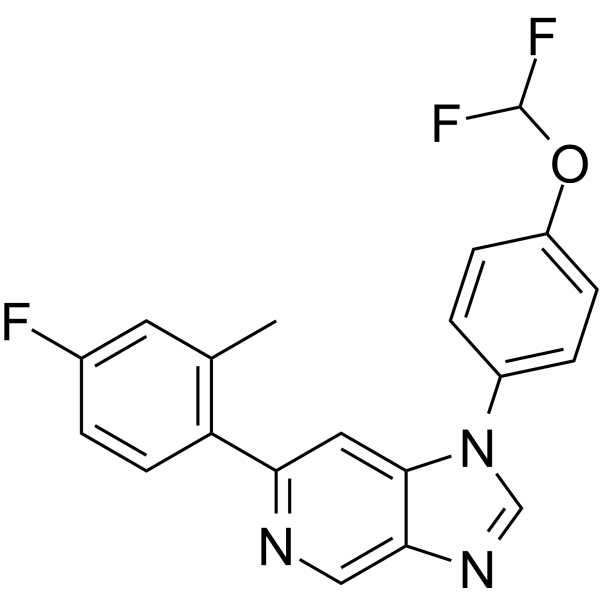 0 ImagesCat. No.: HY-139877CAS No.: 2761147-94-6OXS007417 induces differentiation of acute myeloid leukemia cells (EC50 = 48 nM) in vitro and shows antitumor effects in vivo.
-
Anti-STOP1 Antibody
 0 ImagesCat. No.: HY-P990513The Anti-STOP1 Antibody is a human antibody expressed in CHO cells that targets STOP1. The Anti-STOP1 Antibody contains a huIgG1 heavy chain and a huκ light chain, with a predicted molecular weight (MW) of 150 kDa. The isotype control for the Anti-STOP1 Antibody can refer to Human IgG1 kappa, Isotype Control (HY-P99001).
-
Tubulin polymerization-IN-15
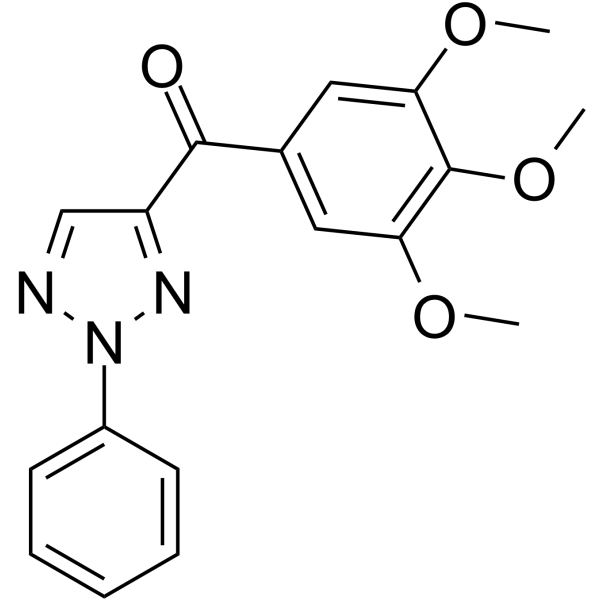 0 ImagesCat. No.: HY-146310CAS No.: 2055517-66-1Tubulin polymerization-IN-15 (compound 4) is a potent inhibitor of tubulin polymerization. Tubulin polymerization-IN-15 has the potential for the research of cancer diseases.

-
Epothilone B (Standard)
 0 ImagesSynonyms: EPO 906 (Standard); Patupilone (Standard)Epothilone B (Standard) is the analytical standard of Epothilone B. This product is intended for research and analytical applications. Epothilone B is a microtubule stabilizer with a Ki of 0.71μM. It acts by binding to the αβ-tubulin heterodimer subunit which causes decreasing of αβ-tubulin dissociation.
-
Colchiceine (Standard)
 0 ImagesCat. No.: HY-127166RCAS No.: 477-27-0Synonyms: O10-Demethylcolchicine (Standard)Colchiceine (Standard) is the analytical standard of Colchiceine. This product is intended for research and analytical applications. Colchiceine is one of several metabolites of the anti-gout medication Colchicine (HY-16569). Colchicine is a tubulin inhibitor and a microtubule disrupting agent, and may protect rats from developing liver injury and fibrosis.
-
Antitubulin agent 1
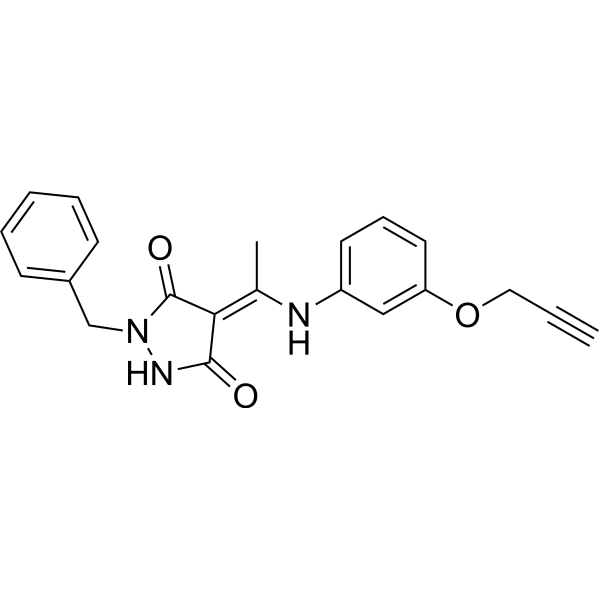 0 ImagesCat. No.: HY-151953Antitubulin agents-1 is an antitubulin agent that induces disruption of the microtubules (Microtubule/Tubulin) and increases α-tubulin acetylation. Antitubulin agents-1 has anticancer effects. Antitubulin agent 1 is a click chemistry reagent, it contains an Alkyne group and can undergo copper-catalyzed azide-alkyne cycloaddition (CuAAc) with molecules containing Azide groups.
-
Tubulin polymerization-IN-93
 0 ImagesCat. No.: HY-184760CAS No.: 3022872-60-9Tubulin polymerization-IN-93 is a β-tubulin polymerization inhibitor. Tubulin polymerization-IN-93 disrupts the microtubule network structure. Tubulin polymerization-IN-93 activates the spindle assembly checkpoint and promotes Mitotic catastrophe. Tubulin polymerization-IN-93 activates the mitochondrial Apoptotic pathway. Tubulin polymerization-IN-93 exhibits anticancer activity against acute myeloid leukemia.
-
Sertaconazole nitrate (Standard)
 0 ImagesSynonyms: FI7056 (Standard)Sertaconazole (nitrate) (Standard) is the analytical standard of Sertaconazole (nitrate). This product is intended for research and analytical applications. Sertaconazole nitrate (FI7056) is a broad-spectrum topical antifungal agent, exhibits anti-inflammatory activity via activation of a p38-COX-2-PGE2 pathway. Sertaconazole nitrate is also a microtubule inhibitor, shows antiproliferative effect, induces apoptosis and autophagy, and can also inhibit the migration of cells.
-
Anticancer agent 211
 0 ImagesCat. No.: HY-122185CAS No.: 314022-97-4Anticancer agent 211 (AK301) can inhibit tubulin polymerization. Anticancer agent 211 can block the division of human colon cancer cells. Anticancer agent 211 can increase the sensitivity of human colon cancer cells to apoptotic ligands and promote cell apoptosis.
-
ER degrader 7
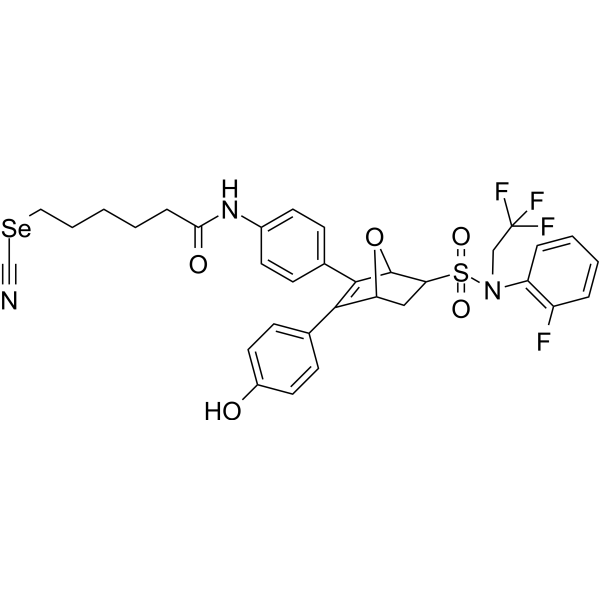 0 ImagesCat. No.: HY-155197CAS No.: 2922929-63-1ER degrader 7 is an estrogen receptor α (ERα) degrader and a tubulin (tubulin) inhibitor. ER degrader 7 inhibits the cell viability of various cancer cell lines. ER degrader 7 disrupts the microtubule network in breast cancer cells, induces G2/M phase cell cycle arrest, and exhibits concentration-dependent accumulation in Tamoxifen-resistant LCC2 cells. ER degrader 7 suppresses tumor growth in vivo without causing body weight loss. ER degrader 7 can be applied in studies related to breast cancer.
-
PPL agonist-1
 0 ImagesCat. No.: HY-159917CAS No.: 3040997-52-9PPL agonist-1 is a highly selective Periplakin (PPL) agonist that increases cAMP levels by regulating PPL, thereby enhancing MITF expression and promoting melanin synthesis. Furthermore, PPL agonist-1 facilitates melanin production by regulating tryptophan metabolism. Compared to Ruxolitinib (HY-50856), PPL agonist-1 demonstrates superior efficacy. PPL agonist-1 holds potential for research into vitiligo treatment.
-
HDAC1 Degrader-1
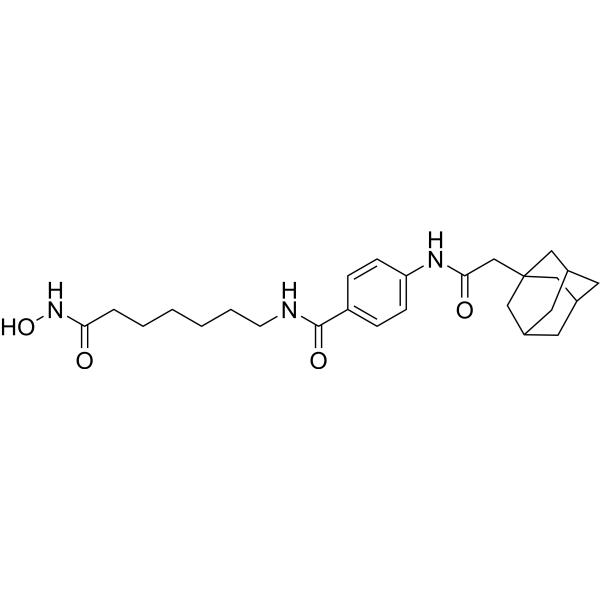 0 ImagesCat. No.: HY-157216HDAC1 Degrader-1 is a HDAC1 degrader with an IC50 of 192.3 nM. HDAC1 Degrader-1 induces degradation of HDAC1 in multiple myeloma cells via the proteasome system and enhances apoptosis of multiple myeloma cells. HDAC1 Degrader-1 can be used for research on multiple myeloma.
-
HDAC-IN-94
 0 ImagesCat. No.: HY-179019HDAC-IN-94 is a potent, selective HDAC6 inhibitor (IC50 = 4.5 nM). HDAC-IN-94 shows >1000-fold selectivity over HDAC8 and shows minimal activity against other isoforms (HDAC1-3/10). HDAC-IN-94 induces α-tubulin hyperacetylation, apoptosis, and G2/M cell cycle arrest, exhibiting potent anti-tumor efficacy with low cytotoxicity. HDAC-IN-94 can be used for neuroblastoma and glioblastoma research.
-
PI3K/Akt/mTOR-IN-4
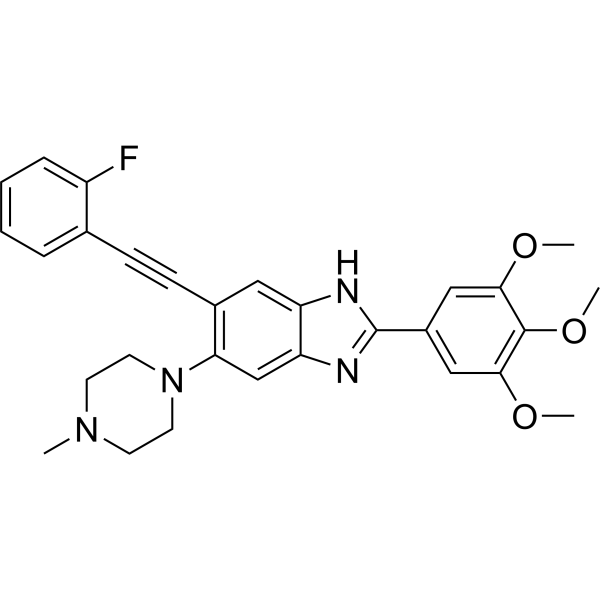 0 ImagesCat. No.: HY-163511PI3K/Akt/mTOR-IN-4 (compound 4r) is a potent PI3K/Akt/mTOR and tubulin polymerization inhibitor. PI3K/Akt/mTOR-IN-4 induce apoptosis and cell cycle arrest at G2/M phase. PI3K/Akt/mTOR-IN-4 decreases the expression of p-PI3K, p-Akt, and p-mTOR, β-tubulin.
-
7-Benzoyloxindole
 0 ImagesCat. No.: HY-W013437CAS No.: 51135-38-77-Benzoyloxindole (Compound 4a) is a tubulin destabilizer. 7-Benzoyloxindole disrupts the structure of microtubulin, thereby inhibiting the growth of tumor cells. 7-Benzoyloxindole can be used in the research of gastric cancer and lung cancer.
-
Les-6666
 0 ImagesCat. No.: HY-184708Les-6666 is a β-tubulin inhibitor. Les-6666 exerts antiproliferative, pro-apoptotic, cell cycle arrest and migration-inhibitory effects, and suppresses DNA synthesis. Les-6666 can be used in the research of pancreatic cancer.
-
Anti-CCL2 (Carlumab)-VcMMAE
 0 ImagesCat. No.: HY-171683Anti-CCL2 (Carlumab)-VcMMAE is an antibody-drug conjugate (ADC) consisting of the humanized anti-CCL2 (chemokine ligand 2) antibody Carlumab (HY-P99188) conjugated with valine-citrulline (vc) and the tubulin inhibitor MMAE (HY-15162). The ADC toxic molecule and linker part are McMMAE (HY-15575). Anti-CCL2 (Carlumab)-VcMMAE induces apoptosis and can be used in cancer research.




