



Microtubule/Tubulin
Microtubules are a component of the cytoskeleton, found throughout the cytoplasm. These tubular polymers of tubulin can grow as long as 50 micrometres, with an average length of 25 µm, and are highly dynamic. The outer diameter of a microtubule is about 24 nm while the inner diameter is about 12 nm. Microtubules are found in eukaryotic cells and are formed by the polymerization of a dimer of two globular proteins, alpha and beta tubulin. Tubulin is one of several members of a small family of globular proteins. The tubulin superfamily includes five distinct families, the alpha-, beta-, gamma-, delta-, and epsilon-tubulins and a sixth family which is present only in kinetoplastid protozoa. The most common members of the tubulin family are α-tubulin and β-tubulin, the proteins that make up microtubules. Microtubules are very important in a number of cellular processes. They are involved in maintaining the structure of the cell.
All Product Categories
-
Microtubule/Tubulin Inhibitors
(812)
View all products
-
Microtubule/Tubulin Agonists
(2)
View all products
-
Microtubule/Tubulin Antagonist
(1)
View all products
-
Microtubule/Tubulin Activators
(21)
View all products
-
Microtubule/Tubulin Modulators
(20)
View all products
-
Microtubule/Tubulin Inducers
(5)
View all products
-
Microtubule/Tubulin Degraders
(3)
View all products
-
Microtubule/Tubulin Controls
(19)
View all products
-
Microtubule/Tubulin Ligands
(5)
View all products
-
Microtubule/Tubulin Related Products (1003)
Related Products (1003)

-
Antibodies (69)
-
Les-6666
 0 ImagesCat. No.: HY-184708Les-6666 is a β-tubulin inhibitor. Les-6666 exerts antiproliferative, pro-apoptotic, cell cycle arrest and migration-inhibitory effects, and suppresses DNA synthesis. Les-6666 can be used in the research of pancreatic cancer.
-
Anti-CCL2 (Carlumab)-VcMMAE
 0 ImagesCat. No.: HY-171683Anti-CCL2 (Carlumab)-VcMMAE is an antibody-drug conjugate (ADC) consisting of the humanized anti-CCL2 (chemokine ligand 2) antibody Carlumab (HY-P99188) conjugated with valine-citrulline (vc) and the tubulin inhibitor MMAE (HY-15162). The ADC toxic molecule and linker part are McMMAE (HY-15575). Anti-CCL2 (Carlumab)-VcMMAE induces apoptosis and can be used in cancer research.
-
SPA107
 0 ImagesCat. No.: HY-164923CAS No.: 179939-69-6Synonyms: Hemiasterlin methyl esterSPA107 (Hemiasterlin methyl ester) is a Hemiasterlin (HY-117371) analog. SPA107 inhibits the polymerization of tubulin, exhibits antimitotic activity (IC50 of 0.5 nM) and cytotoxicity in p53 mutated MCF-7 cell with IC50 of 0.5 nM.
-
Tasidotin
 0 ImagesCat. No.: HY-106021CAS No.: 192658-64-3Synonyms: ILX651 free baseTasidotin (ILX651 free base) is a tubulin inhibitor and competitive Prolyl Endopeptidase (PREP) inhibitor, with an IC50 of 10 μM against bovine tubulin. Tasidotin exhibits high cerebrospinal fluid penetration in non-human primates. Tasidotin antagonizes microtubule assembly and induces an extended assembly lag phase, thereby inhibiting mitosis and cell proliferation, and exerts cytotoxic and oncolytic effects on cancer cells. Tasidotin is metabolized into polypeptides and proline inside cells, and its in vivo metabolism is mediated by prolyl endopeptidase. Tasidotin can be applied in research related to Burkitt's lymphoma, breast cancer, leukemia, melanoma, central nervous system malignancies and various solid tumors.
-
PBOX-15
 0 ImagesCat. No.: HY-124624CAS No.: 354759-10-7PBOX-15 is a microtubule targeting agent. PBOX-15 induces apoptosis by promoting tubulin depolymerization in tumor cells.
-
HD-800
 0 ImagesCat. No.: HY-180347CAS No.: 1204408-27-4HD-800 is a tubulin inhibitor with an IC50 of 4.3 nM and an EC50 for depolymerization of 24 nM. HD-800 can be used to generate a radioactive tracer [11C]HD-800, and [11C]HD-800 can penetrate the blood-brain barrier and be used for positron emission tomography (PET) in various neurological diseases.
-
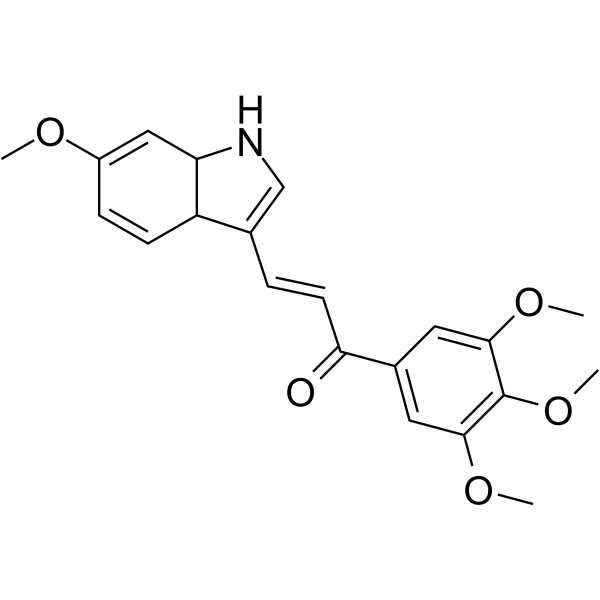
Tubulin/MMP-IN-3
 0 ImagesCat. No.: HY-172088Tubulin/MMP-IN-3 (Compound 15j) is the dual inhibitor for tubulin polymerization and MMP, and inhibits MMP-2 and MMP-9 with IC50 of 21.13 μM and 19.24 μM. Tubulin/MMP-IN-3 inhibits NF-κB signaling pathway, causes mitochondrial dysfunction and the apoptosis through a mitochondrial-dependent pathway. Tubulin/MMP-IN-3 exhibits antiproliferative activity in a variety of cancer cells, arrests the cell cycle at G2/M phase, and exhibits antitumor efficacy in mouse models.
-
isoCA-4
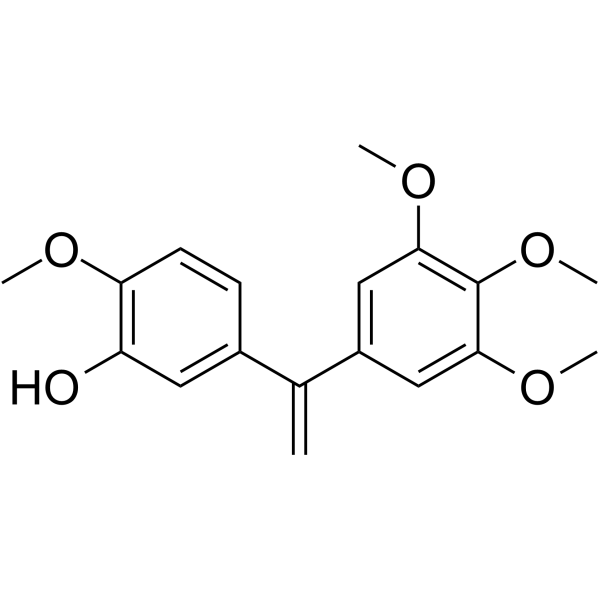 0 ImagesCat. No.: HY-146506CAS No.: 1067880-31-2isoCA-4, a Combretastatin A4 derivative, is a tubulin polymerization inhibitor. isoCA-4 has anti-proliferative activities.
-
αβ-Tubulin-IN-1
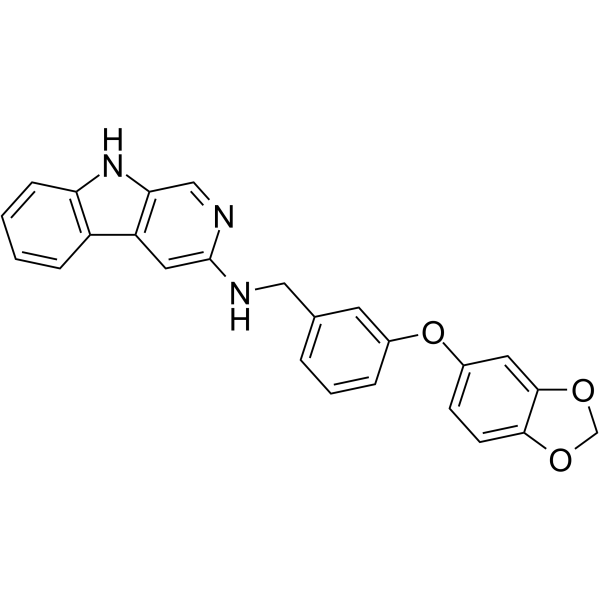 0 ImagesCat. No.: HY-144132CAS No.: 2478584-74-4αβ-Tubulin-IN-1 is a potent and orally active αβ-Tubulin inhibitor. αβ-Tubulin-IN-1 induces cell cycle arrest at G2/M and efficient apoptosis. αβ-Tubulin-IN-1 inhibits tumor cell migration and Metastasis. αβ-Tubulin-IN-1 shows significant antitumor efficacy in a dose dependent manner.
-
Aha1/Hsp90-IN-1
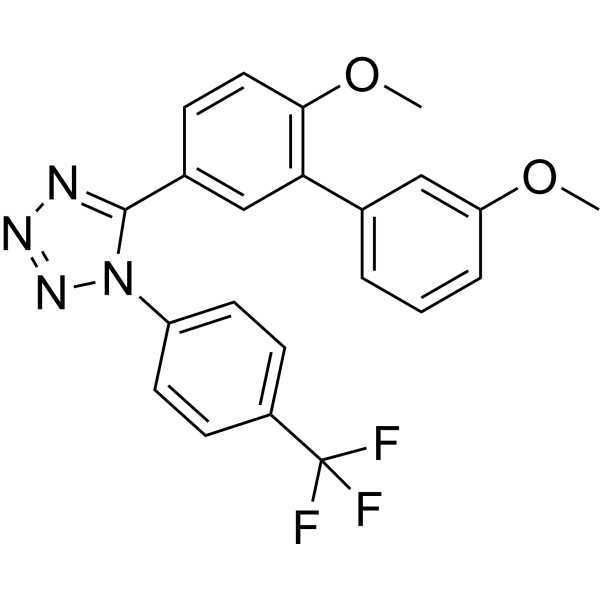 0 ImagesCat. No.: HY-151337CAS No.: 2768265-58-1Aha1/Hsp90-IN-1 (Compound 17) is an Aha1/Hsp90 complex inhibitor. Aha1/Hsp90-IN-1 disrupts Aha1/Hsp90 interactions with an IC50 of 3.32 μM. Aha1/Hsp90-IN-1 inhibits tau aggregation.

-
Vinrosidine
 0 ImagesCat. No.: HY-126778CAS No.: 15228-71-4Synonyms: LeurosidineVinrosidine (Leurosidine) is a mitotic spindle microtubule inhibitor with antitumor activity. Vinrosidine regulates tubulin dynamics at microtubule plus ends, disrupts mitotic spindle function, and blocks cell cycle progression at metaphase. Vinrosidine exhibits antitumor activity in multiple in vivo xenograft models. Vinrosidine can be used in cancer-related research.
-
Violanone
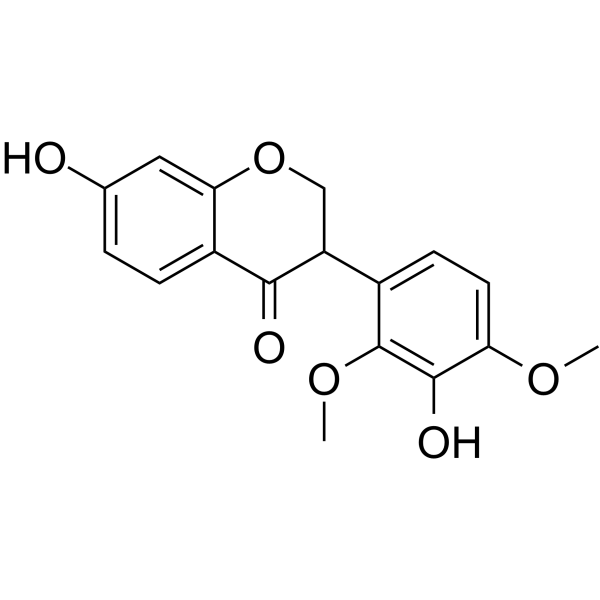 0 ImagesCat. No.: HY-N9842CAS No.: 52250-38-1Violanone, an isoflavanone compound, can inhibit tubulin polymerization. Violanone also exhibits larvicidal activity against A. aegypti.
-
D011-2120
 0 ImagesCat. No.: HY-123266CAS No.: 620931-39-7D011-2120 functions as an antiviral agent by inhibiting microtubule polymerization, disrupting the Golgi complex, and preventing viral trafficking to the plasma membrane during the virus egress process.
-
Vincristine-d6 sulfate
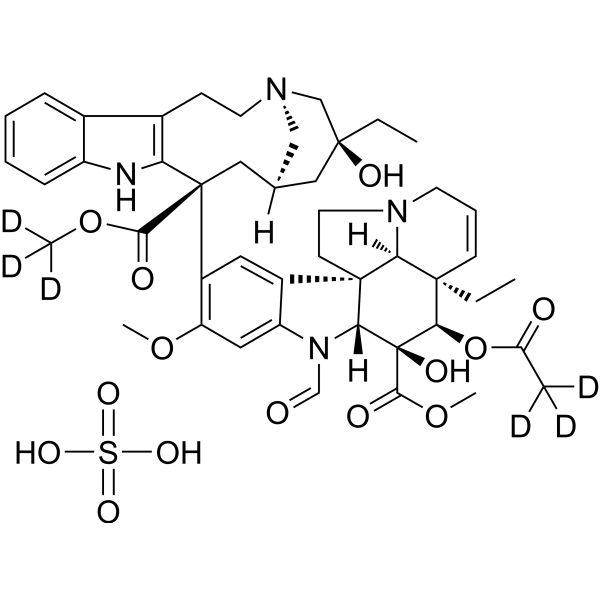 0 ImagesCat. No.: HY-N0488S2Synonyms: Leurocristine-d6 sulfate; NSC-67574-d6 sulfate; 22-Oxovincaleukoblastine-d6 sulfateVincristine-d6 (sulfate) is the deuterium labeled Vincristine sulfate. Vincristine sulfate (Leurocristine; NSC-67574; 22-Oxovincaleukoblastine) is a microtubule inhibitor that disrupts microtubule polymerization by binding to β-tubulin (with a Ki of 85 nM in bovine), arrests the cell cycle and induces apoptosis. Vincristine sulfate inhibits cell replication, tumor blood flow and the proliferation of various cancer cells, while triggering effects such as oxidative stress, inflammation, calcium overload, epithelial-mesenchymal transition and peripheral neuropathic pain. Vincristine sulfate upregulates the expression of various transporters and nuclear receptors, and enriches gastric cancer stem-like cells. Vincristine sulfate is used in research related to various tumors including acute lymphoblastic leukemia, lymphoma, melanoma, gastric cancer, solid tumors and sarcomas.
-
EX05
 0 ImagesCat. No.: HY-162667CAS No.: 2892307-20-7EX05 is a potent KIF18A inhibitor with an IC50 value of 8.2 nM. EX05 has the potential for the research of cancer.
-
Tubulin polymerization-IN-27
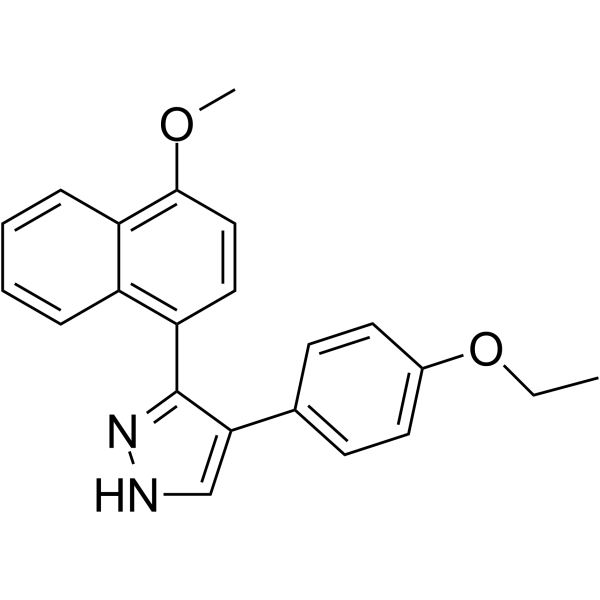 0 ImagesCat. No.: HY-147848CAS No.: 2462030-32-4Tubulin polymerization-IN-27 (compound 5j) is a tubulin polymerization inhibitor. Tubulin polymerization-IN-27 can arrest cell cycle at G2/M phase and induce apoptosis.
-
2'-Deoxy-PTX
 0 ImagesCat. No.: HY-185269CAS No.: 156413-68-22'-Deoxy-PTX is a Paclitaxel (HY-B0015) derivative and microtubule assembly inducer. 2'-Deoxy-PTX binds to GMPcPP-stabilized microtubules, with a Kaapp of 0.50 × 10⁶ M-1. 2′-Deoxy-PTX induces Tubulin to assemble into normal microtubules. 2'-Deoxy-PTX can be used for the research of prostate cancer.
-
Acodazole hydrochloride
 0 ImagesCat. No.: HY-106399ACAS No.: 55435-65-9Acodazole hydrochloride is an anticancer agent that exerts its anticancer activity by inhibiting microtubule polymerization.




