



NOD-like Receptor (NLR)
Nucleotide oligomerization domain (NOD)-like receptors (NLRs) are critical cytoplasmic pattern-recognition receptors (PRRs) that play an important role in the host innate immune response and immunity homeostasis. There are 23 NLR family members in humans and at least 34 NLR genes in mice. NLRs are expressed in many cell types including immune cells and epithelial cells, although certain NLR family members are expressed primarily in phagocytes including macrophages and neutrophils. The NLR family are most commonly classified according to their N-terminal domain, falling into one of four subfamilies; NLRA, NLRB, NLRC and NLRP.
The NLRs recognize various ligands from microbial pathogens (peptidoglycan, flagellin, viral RNA, fungal hyphae, etc.), host cells (ATPs, cholesterol crystals, uric acid, etc.), and environmental sources (alum, asbestos, silica, alloy particles, UV radiation, skin irritants, etc.). Most NLRs act as PRRs, recognizing the above ligands and activate inflammatory responses. However, some NLRs may not act as PRRs but instead respond to cytokines such as interferons. The activated NLRs show various functions that can be divided into four broad categories: inflammasome formation, signaling transduction, transcription activation, and autophagy.
NOD-like Receptor (NLR) Isoform Specific Products
All Product Categories
-
NOD-like Receptor (NLR) Inhibitors
(365)
View all products
-
NOD-like Receptor (NLR) Agonists
(25)
View all products
-
NOD-like Receptor (NLR) Antagonists
(8)
View all products
-
NOD-like Receptor (NLR) Activators
(48)
View all products
-
NOD-like Receptor (NLR) Modulators
(10)
View all products
-
NOD-like Receptor (NLR) Inducer
(1)
View all products
-
NOD-like Receptor (NLR) Degrader
(1)
View all products
-
NOD-like Receptor (NLR) Ligand
(1)
View all products
-
NOD-like Receptor Proteins
(1)
View all products
-
NLRP3 Proteins
(1)
View all products
-
NOD-like Receptor (NLR) Related Products (475)
Related Products (475)

-
Recombinant Proteins (1)
-
Antibodies (2)
-
NOD-like Receptor (NLR) Isoform Comparison
-
VEN-02XX
 0 ImagesCat. No.: HY-172941Purity: 99.66%VEN-02XX is an orally active and brain-permeable NLRP3 inhibitor. VEN-02XX inhibits the release of IL-1β and IL-18 (IC50 0.3 and 0.28 μM, respectively). VEN-02XX restores memory and cognition, inhibits microgliosis, and reduces neuroinflammation and tau pathology in the 5XFAD/Rubicon KO mouse model. VEN-02XX may be used in the study of Alzheimer's disease (AD).
-
Stavudine (Standard)
 0 ImagesStavudine (Standard) is the analytical standard of Stavudine. This product is intended for research and analytical applications. Stavudine (d4T) is an orally active nucleoside reverse transcriptase inhibitor (NRTI). Stavudine has activity against HIV-1 and HIV-2. Stavudine also inhibits the replication of mitochondrial DNA (mtDNA). Stavudine reduces NLRP3 inflammasome activation and modulates Amyloid-β autophagy. Stavudine induces apoptosis.
-
Colchicine-d6
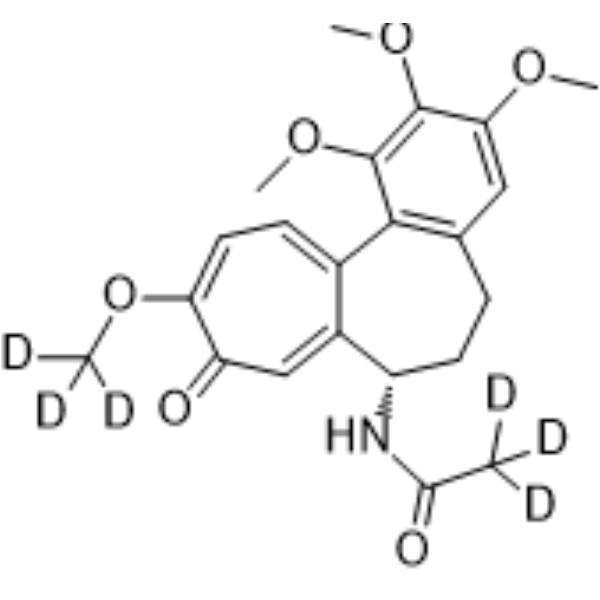 0 ImagesColchicine-d6 is the deuterium labeled Colchicine. Colchicine is a tubulin inhibitor and a microtubule disrupting agent. Colchicine inhibits microtubule polymerization with an IC50 of 3 nM. Colchicine is also a competitive antagonist of the α3 glycine receptors (GlyRs).
-
Colchicine-d3
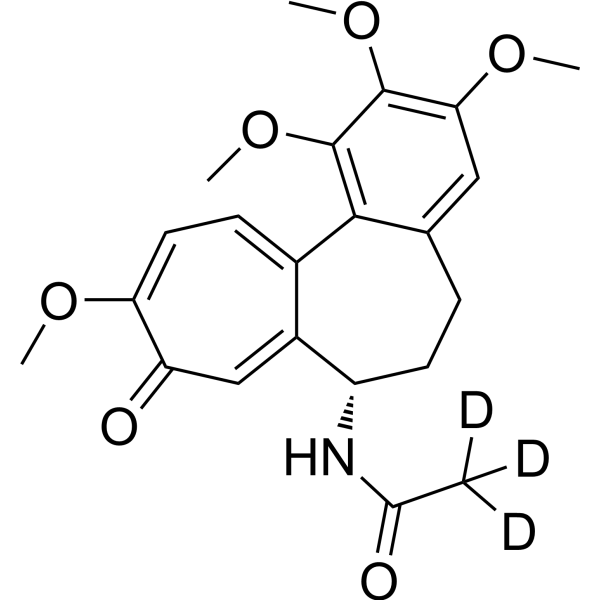 0 ImagesCat. No.: HY-16569S1CAS No.: 1217625-62-1Colchicine-d3 is the deuterium labeled Colchicine. Colchicine is a tubulin inhibitor and a microtubule disrupting agent. Colchicine inhibits microtubule polymerization with an IC50 of 3 nM. Colchicine is also a competitive antagonist of the α3 glycine receptors (GlyRs).
-
Anemoside A3-methyl 6-aminohexanoate
 0 ImagesAnemoside A3-methyl 6-aminohexanoate is an orally effective pyruvate carboxylase (PC) inhibitor with a Kd value of 10.1 μM against human PC. Anemoside A3-methyl 6-aminohexanoate exerts its function through the PC/NF-κB/NLRP3 inflammasome axis. Anemoside A3-methyl 6-aminohexanoate significantly alleviates symptoms of DSS (HY-116282C)-induced colitis in mice. Anemoside A3-methyl 6-aminohexanoate can be used in colitis-related research.
-
Necrosulfonamide-d4
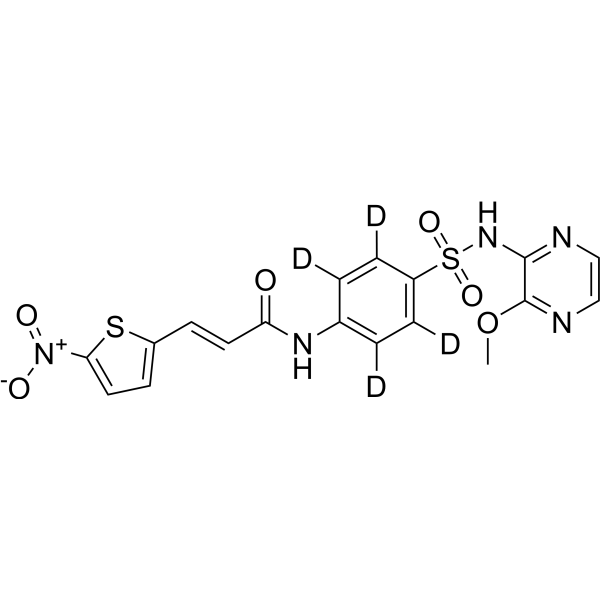 0 ImagesNecrosulfonamide-d4 is the deuterium labeled Necrosulfonamide (HY-100573). Necrosulfonamide is a MLKL and Gasdermin D (GSDMD) inhibitor, capable of separately inhibiting necroptosis and pyroptosis of cells. Necrosulfonamide does not affect the activation of upstream signals, but specifically inhibits the downstream executor oligomerization step. Necrosulfonamide reduces the expression of the key kinases NLRP3 and caspase-1 involved in necroptosis and pyroptosis, activate the Nrf2 pathway and the downstream antioxidant enzymes, and also downregulates a variety of inflammatory factors. Necrosulfonamide plays significant roles in various diseases such as neurodegenerative diseases (such as Parkinson’s disease), tissue damage and ischemia-reperfusion injury, inflammatory bowel disease, osteoarthritis and fracture repair, and hair loss by regulating two important programmed necrosis pathways.
-
5-(3',4'-Dihydroxyphenyl)-γ-valerolactone
 0 Images5-(3',4'-Dihydroxyphenyl)-γ-valerolactone is an intestinal microbiota metabolite of (-)-Epicatechin (HY-N0001). 5-(3',4'-Dihydroxyphenyl)-γ-valerolactone downregulates TNF-α-stimulated phosphorylation of IKK and IκBα, inhibits the transcriptional activation of NF-κB, and suppresses the expression of adhesion molecules and chemokines. 5-(3',4'-Dihydroxyphenyl)-γ-valerolactone promotes autophagy, alleviates oxidative stress, maintains osteoblast differentiation, induces G1 phase arrest, inhibits adipogenesis, and scavenges ABTS free radicals. 5-(3',4'-Dihydroxyphenyl)-γ-valerolactone inhibits the adhesion of uropathogenic Escherichia coli to bladder epithelial cells; when used in combination with Curcumin (HY-N0005), it downregulates the NLRP3 and NOX2/Nrf2 signaling pathways, thereby reducing microglial activation. 5-(3',4'-Dihydroxyphenyl)-γ-valerolactone can be used in research related to diabetes, atherosclerosis, osteoporosis, obesity, neurodegenerative diseases involving microglial activation, and urinary tract infections.
-
Kanglexin
 0 ImagesKanglexin is an orally active and novel anthraquinone compound. Kanglexin inhibits NLRP3 inflammatory body activation and cell pyroptosis, and has a cardioprotective effect. Kanglexin promotes angiogenesis through FGFR1/ERK signaling pathway and accelerates diabetic wound healing. In addition, Kanglexin has the effect of lipid-lowering and inhibiting the dedifferentiation of vascular smooth muscle cells, and can be used in the study of hyperlipidemia, fatty liver and atherosclerosis.
-
BAL-1516
 0 ImagesCat. No.: HY-175278BAL-1516 is an orally active NLRP3 inhibitor with human NLRP3 Kd of 14.2 nM, mouse NLRP3 Kd of 200 nM, and blood-brain barrier penetration.BAL-1516 binds to a surface groove of the NLRP3 nucleotide-binding domain, contacts FISNA and WHD subdomains, forms three hydrogen bonds to the peripheral β-strand of the triple-ATPase, and does not alter NLRP3 ATP-hydrolysis activity.BAL-1516 shows specificity for NLRP3 over other NOD-like receptors, directly binds mouse NLRP3, and inhibits inflammasome formation in monocytes and microglia.
-
NLRP3-IN-2
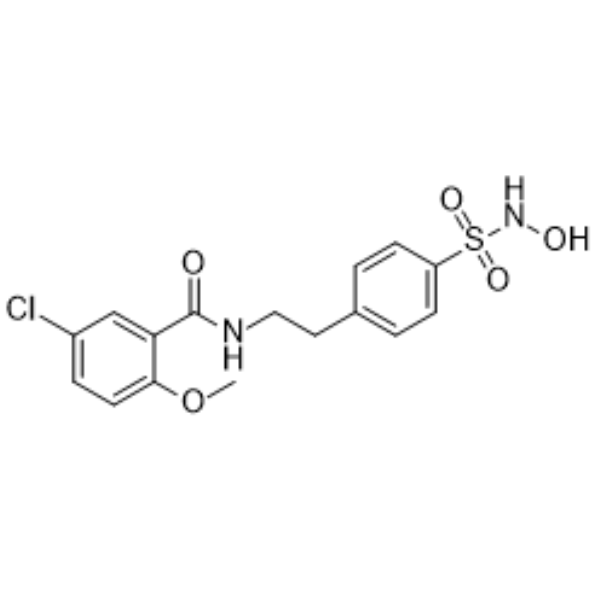
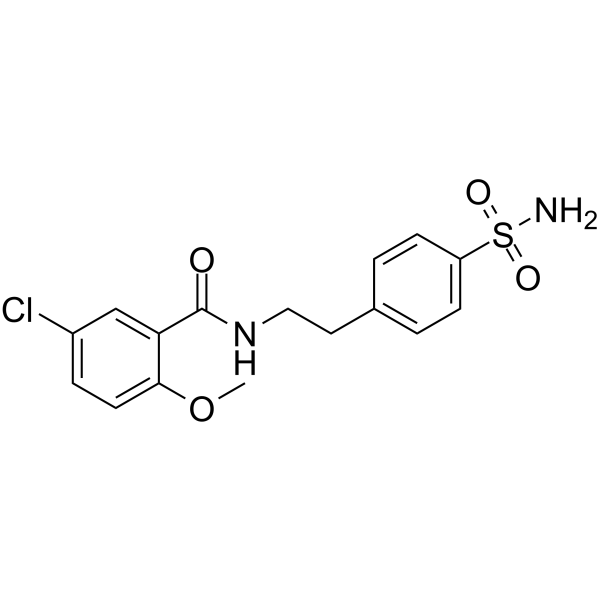 0 ImagesNLRP3-IN-2, an intermediate substrate in the synthesis of glyburide, inhibits the formation of the NLRP3 inflammasome in cardiomyocytes and limits the infarct size following myocardial ischemia/reperfusion in the mouse, without affecting glucose metabolism.
-
NLRP3-IN-79
 0 ImagesNLRP3-IN-79 is an orally active NLRP3 inhibitor. NLRP3-IN-79 inhibits NLRP3 inflammasome with an IC50 of 10.69 nM. NLRP3-IN-79 blocks NLRP3 inflammasome assembly by directly binding to NLRP3 and disrupting the NEK7-NLRP3 interaction. NLRP3-IN-79 can be used for the study of NLRP3-driven diseases model, including systemic inflammation, peritonitis, and colitis.
-
(S)-NDT-19795
 0 ImagesCat. No.: HY-158024A(S)-NDT-19795 is a potent NLRP3 inflammasome inhibitor. (S)-NDT-19795 blocks NLRP3 activation by inhibiting NLRP3 ATPase activity, thereby reducing the levels of pro-inflammatory cytokines IL-1β and IL-18. (S)-NDT-19795 can be used in the study of neurodegenerative diseases, cardiovascular diseases, metabolic diseases, and autoimmune diseases.
-
Antcin A
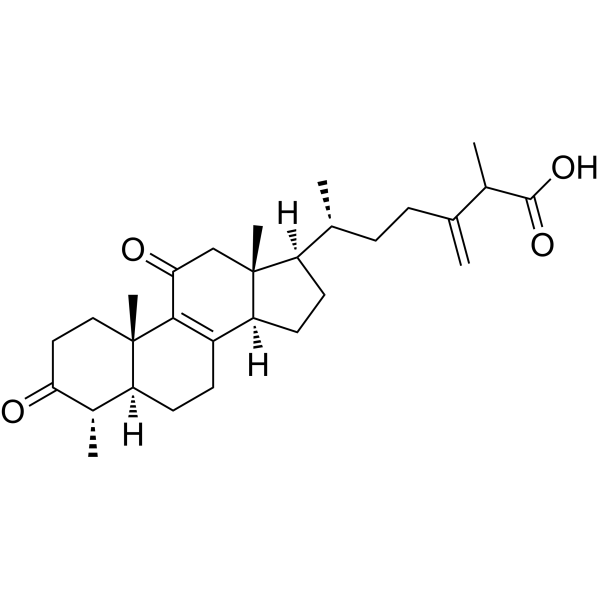 0 ImagesAntcin A is an orally active modulator of p53 and glucocorticoid receptor (GR), with an IC50 of 8.55 μM against human GR. Through transcriptional activation of p53, Antcin A induces miR-200c and inhibits ZEB1, regulates epithelial-mesenchymal transition markers, and suppresses cancer cell migration/invasion. Antcin A activates GR, inhibits Na+/K+-ATPase and NLRP3 inflammasome assembly, pyroptosis (pyroptosis) and pro-inflammatory cytokine release, reduces hepatic lipid deposition, improves liver function, and reverses metabolic changes induced by the SARS-CoV-2 spike protein. Antcin A can be used in research related to breast cancer, head and neck cancer, non-alcoholic fatty liver disease, and coronavirus disease 2019 (COVID-19).
-
JC-171
 0 ImagesJC-171 is a selective NLRP3 inflammasome inhibitor, with an IC50 of 8.45 μM for inhibiting LPS/ATP-induced interleukin-1β (IL-1β) release from J774A.1 macrophages.
-
JT001
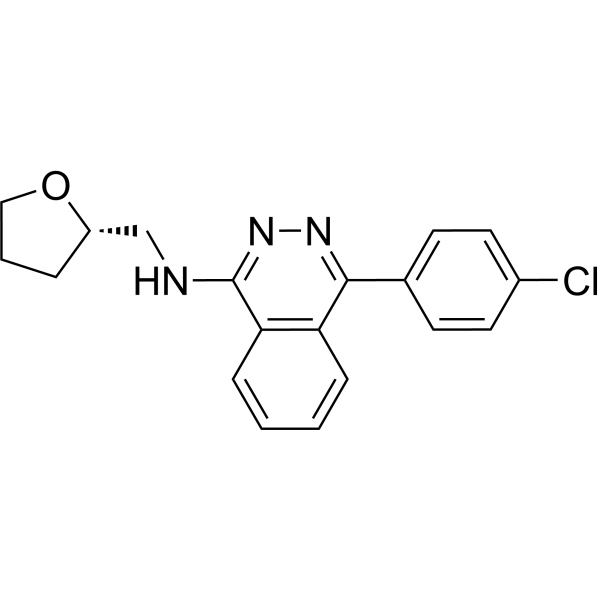
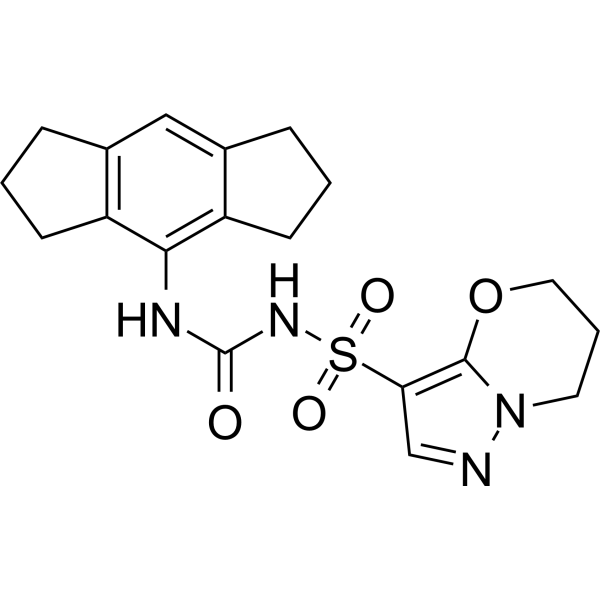 0 ImagesCat. No.: HY-156034CAS No.: 2238819-65-1Synonyms: NLRP3-IN-19JT001 (NLRP3-IN-19) is a potent, specific and orally active inhibitor of NLRP3. JT001 can inhibit NLRP3 inflammasome assembly, resulting in the inhibition of cytokine release and the prevention of pyroptosis. JT001 can be used for the research of nonalcoholic steatohepatitis and liver fibrosis.
-
Fc 11a-2
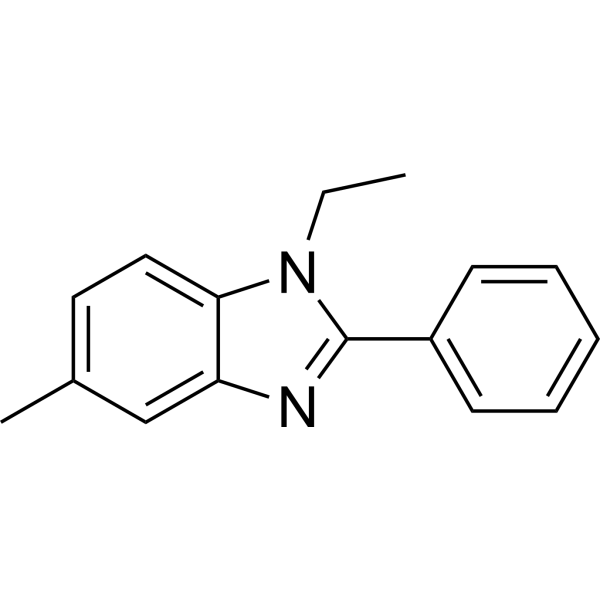 0 ImagesFc 11a-2, a benzimidazole compound, is an orally active and potent NLRP3 inflammasome inhibitor. Fc 11a-2 restrains the formation of NLRP3 inflammasome by inhibiting activation of caspase-1 and thus the activation of IL-1b/IL-18. Fc 11a-2 prevents the development of Dextran sulfate sodium (DSS; HY-116282C)-induced murine experimental colitis.
-
PROTAC HDAC6 degrader 7
 0 ImagesCat. No.: HY-179421PROTAC HDAC6 degrader 7 is an orally active, highly efficient, and selective PROTAC degrader targeting histone deacetylase 6 (HDAC6) (IC50 = 118 nM). PROTAC HDAC6 degrader 7 can eliminate both the catalytic and zinc-finger ubiquitin-binding domain. PROTAC HDAC6 degrader 7 inhibits NLRP3 inflammasome assembly and activation, as well as blocks NF-κB signaling, thereby reducing the transcription and release of key inflammatory factors. PROTAC HDAC6 degrader 7 can reduce the mRNA levels of NLRP3, pro-IL-1β, TNF-α, and IL-6. PROTAC HDAC6 degrader 7 can be used for the study of inflammatory bowel disease (IBD).
-
Desmosterol (Standard)
 0 ImagesDesmosterol (Standard) is the analytical standard of Desmosterol. This product is intended for research and analytical applications. Desmosterol is a cholesterol-like molecule. In the Bloch pathway of cholesterol biosynthesis, Desmosterol is a direct precursor of cholesterol. As an endogenous metabolite, Desmosterol is used to study cholesterol metabolism [1]. Desmosterol is an LXR activator and SREBP inhibitor, which can suppress macrophage inflammasome activation and prevent vascular inflammation and atherosclerosis. A reduction in Desmosterol promotes the production of mitochondrial reactive oxygen species (ROS) in macrophages and pyrin domain-dependent inflammasome activation of NLRP3. Desmosterol holds potential for research in inflammation, metabolism, and cardiovascular diseases [1][2][3].




