



PERK
Protein kinase R-like endoplasmic reticulum kinase; PKR-like endoplasmic reticulum kinase
Protein kinase R (PKR)-like endoplasmic reticulum kinase (PERK) is one of four known kinases that respond to cellular stress by deactivating the eukaryotic initiation factor 2 α (eIF2α) or other signal transduction cascades. PERK is highly expressed in pancreatic beta-cells and is essential in the beta-cell's development, differentiation and function.
PERK is a type I ER membrane protein containing a stress-sensing domain facing the ER lumen, a transmembrane segment, and a cytosolic kinase domain. Increase in unfolded proteins in the ER causes release of ER chaperones from the stress-sensing domain of PERK, which results in its activation via oligomerization and autophosphorylation at multiple serine, threonine, and tyrosine residues. Upon activation, PERK phosphorylates eIF2α at serine 51, rendering it an inhibitor of the ribosome translation initiation complex, consequently reducing overall protein synthesis. The reduction in translation reduces the ER burden, providing time for the cell to process or degrade the accumulated unfolded proteins to restore ER homeostasis. Although global protein synthesis is decreased, there is specific increased translation of certain mRNAs, such as ATF4, which modulate cellular survival pathways and enhance UPR function. Interfering with PERK function in cancer cells may limit their ability to thrive under hypoxia or nutrient deprived conditions and lead to apoptosis or tumor growth inhibition.
All Product Categories
-
PERK Related Products (211)
Related Products (211)

-
Antibodies (2)
-
SB-T-101141
 0 ImagesCat. No.: HY-106159CAS No.: 186348-05-0SB-T-101141 is a novel taxane. SB-T-101141 effectively induces a noncanonical ferroptosis to overcome Paclitaxel (HY-B0015) resistance of breast cancer. SB-T-101141 facilitates the production of iron and ferrous ions and ROS. SB-T-101141 stably binds to KHSRP to inhibit the iron-dependent expression of CISD1 related to iron homeostasis. SB-T-101141 synergistically enhances the iron-dependent activation of JNK and PERK pathways via KHSRP. SB-T-101141 suppresses breast tumor growth in MCF-7(PR)/MDA-MB-231(PR) or KHSRP knock-down MCF-7 xenograft mice model.
-
Cytisine-platinum(IV) prodrug-1
 0 ImagesCat. No.: HY-182360Cytisine-Platinum(IV) Prodrug-1 is a Pt(IV) prodrug incorporating the natural compound Cytisine (HY-N0175) with antiproliferative activity against tumor cells. Cytisine-Platinum(IV) Prodrug-1 promotes calcium transfer across the IP3R1-GRP75-VDAC1 axis to drive mitochondrial calcium overload. Cytisine-Platinum(IV) Prodrug-1 initiates unfolded protein response via PERK, eIF2α, ATF4, and CHOP to modulate Bcl-2 and Bax, triggering apoptosis. Cytisine-Platinum(IV) Prodrug-1 induces mitochondrial dysfunction, ROS production, reduced ATP synthesis, DNA damage, and S-phase cell cycle arrest. Cytisine-Platinum(IV) Prodrug-1 activates the cGAS-STING pathway, reduces PD-L1 expression, drives immunogenic cell death. Cytisine-Platinum(IV) Prodrug-1 exhibits high physiological stability, efficient cellular accumulation, and enhanced platinum-DNA binding, and inhibits tumor growth in mouse models with reduced systemic toxicity. Cytisine-Platinum(IV) Prodrug-1 can be used for the research of lung cancer.
-
Anticancer agent 319
 0 ImagesCat. No.: HY-183316Anticancer agent 319 is an anticancer agent. Anticancer agent 319 inhibits the proliferation of liver cancer cells. Anticancer agent 319 inhibits AKT phosphorylation and blocks the PI3K/AKT signaling axis; meanwhile, it inhibits ERK1/2 phosphorylation and blocks the MAPK/ERK signaling axis. Anticancer agent 319 induces G2/M phase cell cycle arrest, triggers apoptosis, and reduces mitochondrial membrane potential in liver cancer cells. Anticancer agent 319 can be used for the research of hepatocellular carcinoma.
-
Ki11502
 0 ImagesKi11502 is a multi-targeted receptor tyrosine kinase (RTK) inhibitor that selectively inhibits the activity of PDGF β/α receptors with IC50 values less than 10 nM. Ki11502 selectively inhibits PDGF β receptor phosphorylation, proliferation, and proteoglycan synthesis in human vascular smooth muscle cells. Ki11502 can induce Apoptosis) and exhibits profound antiproliferative effects on select subsets of leukemia, including those with Imatinib (HY-15463) resistant mutations. Ki11502 is highly suitable for studying the role of PDGF in vascular diseases, particularly the role of proteoglycans in atherosclerosis.
-
CK37
 0 ImagesCat. No.: HY-101145CAS No.: 1001478-90-5CK37 is a competitive choline kinase-α inhibitor. CK37 inhibits purified recombinant human choline kinase-α activity. CK37 suppresses MAPK and PI3K/AKT signaling, disrupts actin cytoskeletal organization. CK37 diminishs activating phosphorylations of ERK. CK37 exhibits anticancer activity against cervical cancer, melanoma, Lewis lung carcinoma, lung adenocarcinoma, breast cancer, and leukemia.
-
Ibt-DOX
 0 ImagesCat. No.: HY-181546Ibt-DOX is a BTK inhibitor with an IC50 of 2.89 nM. Ibt-DOX is also a targeted covalent activated chemotherapeutic agent composed of the targeting ligand Ibrutinib (HY-10997), Doxorubicin (DOX) (HY-15142A), α-MAA (HY-W017180), and a linker (HY-Y0892). Ibt-DOX specifically binds to BTK and releases DOX, synergistically achieving BTK inhibition and chemotherapeutic killing, significantly enhancing toxicity against B-cell lymphoma cells and greatly reducing the toxic side effects of DOX on BTK-negative cells. Ibt-DOX can be used in lymphoma-related research.
-
Nur77 modulator 4
 0 ImagesCat. No.: HY-170849Nur77 modulator 4 (Compound 15h) is a Nur77 inducer with a KD of 0.477 μM. Nur77 modulator 4 significantly induces Nur77 expression and apoptosis, showing excellent growth inhibition in HepG2 and MCF-7 cells, with an IC50 of less than 5 μM. Nur77 modulator 4 activates Nur77-mediated ER stress through the PERK-ATF4 and IRE1 signaling pathways, thereby inducing cell apoptosis. Nur77 modulator 4 can be used in cancer research applications .
-
RD-pepcan-11
 0 ImagesCat. No.: HY-P11831RD-pepcan-11 is a CB1 receptor agonist. RD-pepcan-11 increases the relative phosphorylation level of ERK1/2. RD-pepcan-11 mediates analgesic effects through interaction with CB1 receptors in a carrageenan-induced mouse inflammatory pain model. RD-pepcan-11 can be used in studies related to inflammatory pain.
-
LWY713
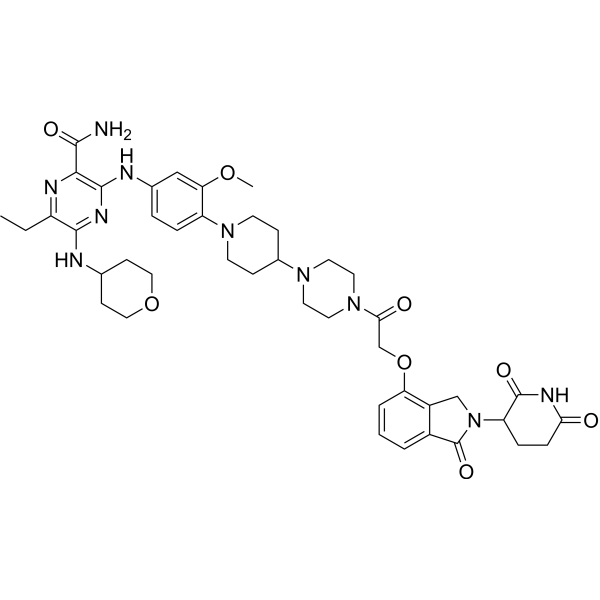 0 ImagesCat. No.: HY-157213LWY713 is a FLT3 PROTAC degrader with a DC50 of 0.64 nM. LWY713 selectively induces FLT3 degradation in a cereblon- and proteasome-dependent manner. LWY713 induces G0/G1 cell cycle arrest and triggers apoptosis. LWY713 upregulates PARP and cleaved caspase 3, and inhibits the phosphorylation of FLT3, STAT5, AKT and Erk. LWY713 exhibits antitumor activity in xenograft mouse models. LWY713 can be used for the research of acute myeloid leukemia.
-
Derrone
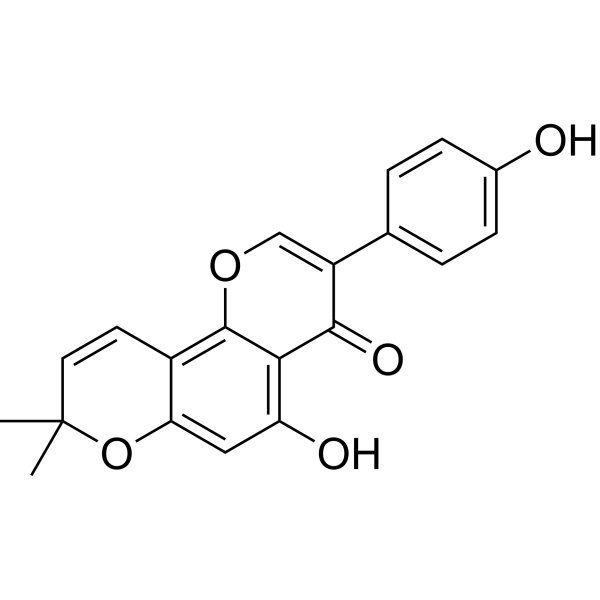 0 ImagesCat. No.: HY-N3737CAS No.: 76166-59-1Derrone, a prenylated isoflavones, is an Aurora kinase inhibitor, with IC50 values of 6 and 22.3 μM against Aurora B and Aurora A, respectively. Derrone shows anti-tumor activity.
-
KRAS-IN-56
 0 ImagesCat. No.: HY-182411CAS No.: 2375482-34-9KRAS-IN-56 (Compound 18) is a KRAS inhibitor with an EC50 of 33 μM. KRAS-IN-56 inhibits the interaction between GTP-KRAS and SOS1. KRAS-IN-56 induces a decrease in p-ERK levels. KRAS-IN-56 can be used in research related to lung cancer.
-
MEK/PI3K-IN-2
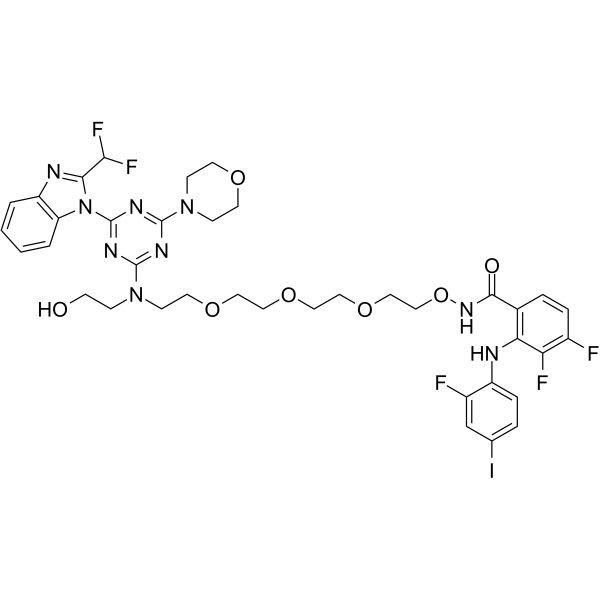 0 ImagesCat. No.: HY-144693CAS No.: 2281803-33-4
-
ER proteostasis regulator-1
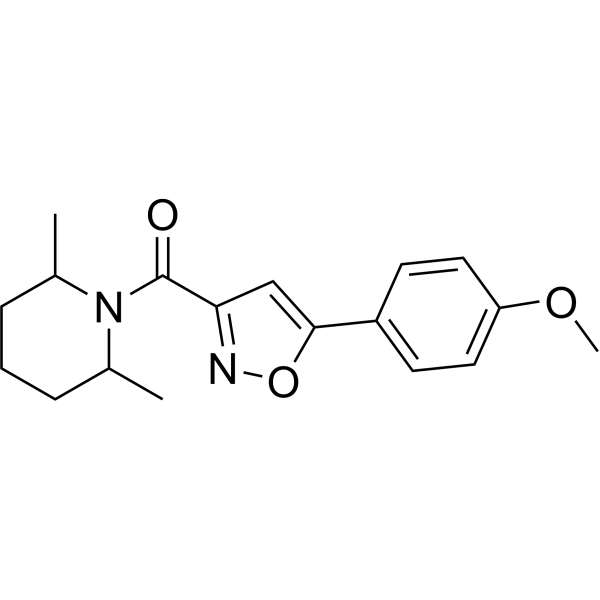 0 ImagesER proteostasis regulator-1 (compound 481) is a potent ER proteostasis regulator. ER proteostasis regulator-1 has the potential for the research of Alzheimer's disease and diabetes.
-
Takeda-6D
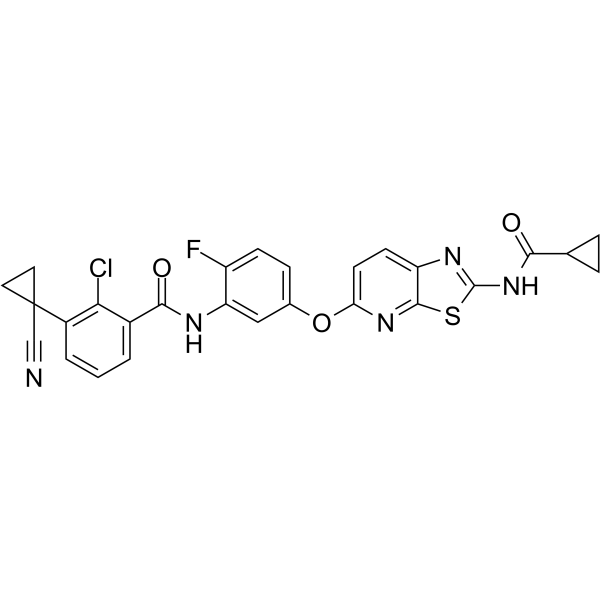 0 ImagesTakeda-6D (compound 6d) is an orally active and potent BRAF/VEGFR2 inhibitor, with IC50 values of 7.0 and 2.2 nM, respectively. Takeda-6D shows antiangiogenesis by suppressing the VEGFR2 pathway in 293/KDR and VEGF-stimulated HUVEC cells.Takeda-6D shows significant suppression of ERK1/2 phosphorylation. Takeda-6D shows antitumor activity.
-
SOS1-IN-22
 0 ImagesCat. No.: HY-175560CAS No.: 3092445-74-1SOS1-IN-22 is a son of sevenless homolog 1 (SOS1) inhibitor. SOS1-IN-22 can inhibit KRAS-G12C/SOS1 complex formation with an IC50 value of 40.28 nM. SOS1-IN-22 can reduce phosphorylation ERK levels. SOS1-IN-22 can be used for the research of cancer, such as pancreatic carcinoma and appendiceal carcinoma.
-
EGFR-IN-175
 0 ImagesCat. No.: HY-178009EGFR-IN-175 is an orally active and selective EGFRL858R/T790M/C797S inhibitor with an IC50 of 18.94 nM. EGFR-IN-175 can induce cell apoptosis and cause G1 phase arrest. EGFR-IN-175 can downregulate p-EGFR, p-AKT, and p-ERK expression. EGFR-IN-175 can be used for the research of cancer, such as lung cancer.
-
Vernodalin
 0 ImagesCat. No.: HY-N19029CAS No.: 21871-10-3Vernodalin is an orally active, cytotoxic sesquiterpene lactone with a Kd value of 9.55 μM for p38 MAPK. Vernodalin downregulates the expression of phosphorylated ERK, JNK, AKT, PI3K, mTOR, p38MAPK, FAK, MMP-2, MMP-9, and uPA, while upregulates the expression of TIMP-1 and TIMP-2. Vernodalin increases ROS production, upregulates the expression of Bax and caspase 3, downregulates the expression of Bcl-2, and induces apoptosis (apoptosis), oxidative stress response and cell cycle arrest. Vernodalin inhibits the proliferation, adhesion and metastasis of cancer cells. Vernodalin enhances the activity of VEGF-B, AMPK and eNOS signaling pathways. Vernodalin alleviates myocardial injury and restores hemodynamic parameters. Vernodalin inhibits the growth of Trypanosoma brucei rhodesiense. Vernodalin can be used in research related to various cancers including gastric cancer, colorectal cancer and lung cancer, as well as African human trypanosomiasis and myocardial infarction.
-
MEK/PI3K-IN-1
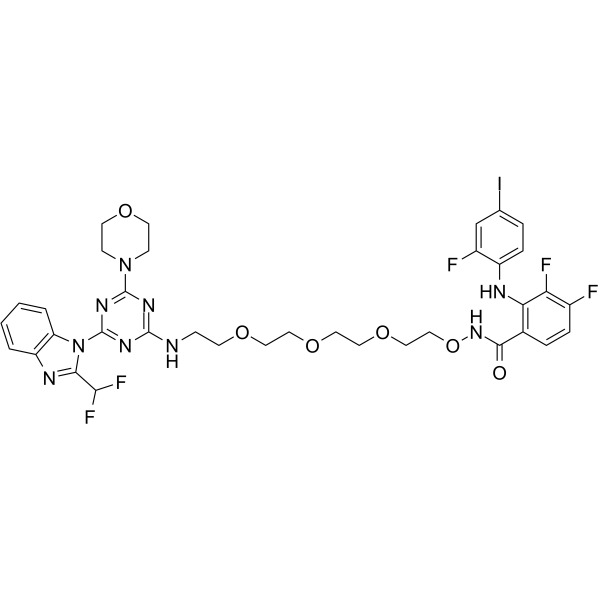 0 ImagesCat. No.: HY-144692CAS No.: 2281803-28-7
-
GAT100
 0 ImagesCat. No.: HY-120093CAS No.: 1663564-42-8GAT100 is a negative allosteric modulator and covalent allosteric probe for cannabinoid receptor type 1 (CB1R). GAT100 acts as a positive allosteric modulator for orthosteric agonist CP55,940 binding to regulate the CB1R signaling pathway. GAT100 reduces the potency and efficacy of orthosteric CB1R agonists in terms of β-arrestin 1 recruitment, phosphorylation of PLCβ3 and ERK1/2, cAMP accumulation, and CB1R internalization. GAT100 is applicable to the research of psychobehavioral and somatic diseases.
-
Bavachalcone (Standard)
 0 ImagesCat. No.: HY-N0231RCAS No.: 28448-85-3Synonyms: Broussochalcone B (Standard)Bavachalcone (Standard) is the analytical standard of Bavachalcone. This product is intended for research and analytical applications. Bavachalcone is a potent inducer of apoptosis. Bavachalcone exerts anticancer activity by promoting autophagy and apoptosis in HepG2 cells. Bavachalcone acts as an anti-neuroinflammatory and antidepressant through the NF-κB pathway. Bavachalcone inhibits osteoclasts by interfering with ERK and Akt signaling pathways and the expression of c-Fos and NFATc1. Bavachalcone exhibits a significant inhibitory effect on baculovirus-expressed BACE-1 in vitro.




