



PI3K
Phosphoinositide 3-kinase
PI3K (Phosphoinositide 3-kinase), via phosphorylation of the inositol lipid phosphatidylinositol 4,5-bisphosphate (PI(4,5)P2), forms the second messenger molecule phosphatidylinositol (3,4,5)-trisphosphate (PI(3,4,5)P3) which recruits and activates pleckstrin homology domain containing proteins, leading to downstream signalling events crucial for proliferation, survival and migration. Class I PI3K enzymes consist of four distinct catalytic isoforms, PI3Kα, PI3Kβ, PI3Kδ and PI3Kγ.
There are three major classes of PI3K enzymes, being class IA widely associated to cancer. Class IA PI3K are heterodimeric lipid kinases composed of a catalytic subunit (p110α, p110β, or p110δ; encoded by PIK3CA, PIK3CB, and PIK3CD genes, respectively) and a regulatory subunit (p85).
The PI3K pathway plays an important role in many biological processes, including cell cycle progression, cell growth, survival, actin rearrangement and migration, and intracellular vesicular transport.
PI3K Isoform Specific Products
-
PI3Kα
(235)
View all products
-
PI3Kβ
(161)
View all products
-
PI3Kγ
(181)
View all products
-
PI3Kδ
(201)
View all products
-
PI3KC2α
(8)
View all products
-
PI3KC2β
(12)
View all products
-
PI3KC2γ
(4)
View all products
-
Vps34
(24)
View all products
-
PI3K
(661)
View all products
-
PI3KC3
(1)
View all products
-
p120γ
(1)
View all products
All Product Categories
-
PI3K Inhibitors
(859)
View all products
-
PI3K Agonists
(9)
View all products
-
PI3K Antagonist
(1)
View all products
-
PI3K Activators
(129)
View all products
-
PI3K Modulators
(23)
View all products
-
PI3K Inducers
(3)
View all products
-
PI3K Degraders
(7)
View all products
-
PI3K Controls
(4)
View all products
-
PI3K Substrate
(1)
View all products
-
PI3K Ligands
(9)
View all products
-
PI3K Related Products (1108)
Related Products (1108)

-
Antibodies (16)
-
PI3K Signaling Pathway
-
PI3K Isoform Comparison
-
Anticancer agent 164
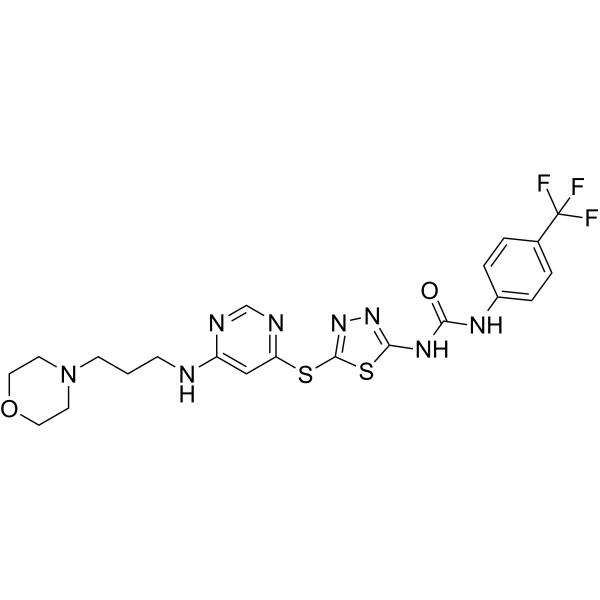 0 ImagesCat. No.: HY-128634CAS No.: 2235393-30-1CML-IN-1 (compound 7) is a potent anticancer agent. CML-IN-1 displays very good induced-apoptosis effect for human chronic myeloid leukemia (CML) cell line K562. CML-IN-1 exerts its effect via a significantly reduced protein phosphorylation of PI3K/Akt signal pathway. CML-IN-1 (compound 4) also inhibits cell proliferation by suppressing the MEK/ERK signaling pathway in colorectal cancer.
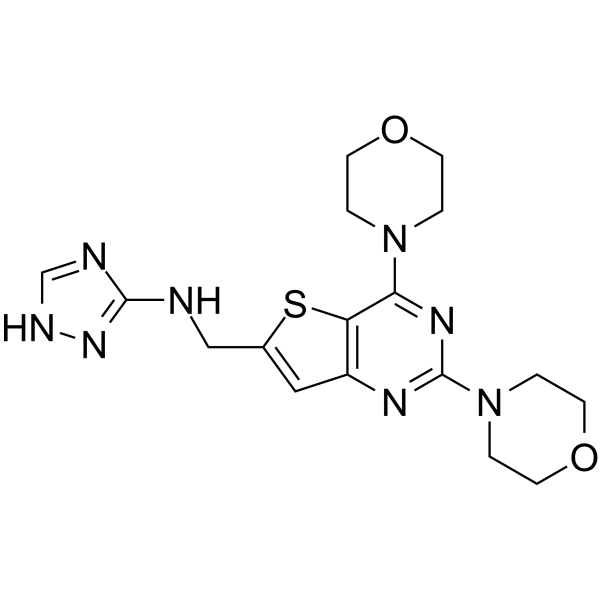
-
PI3K-IN-35
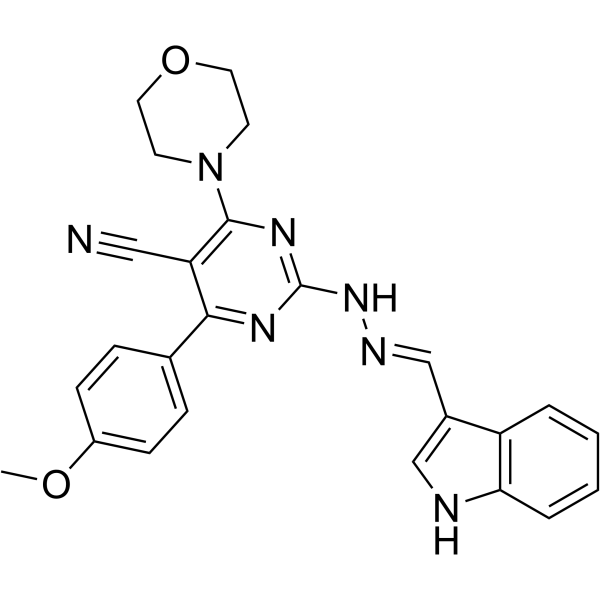 0 ImagesCat. No.: HY-147900CAS No.: 2458163-99-8

-
IMM-H012
 0 ImagesCat. No.: HY-181581CAS No.: 2231399-03-2IMM-H012 is a specific PI3K inhibitor with an IC50 of 0.80 nM against PI3Kα. IMM-H012 combined with [177Lu]Lu-P4 shows synergistic antitumor effects against stomach cancer and lung cancer.
-
PI3K-IN-50
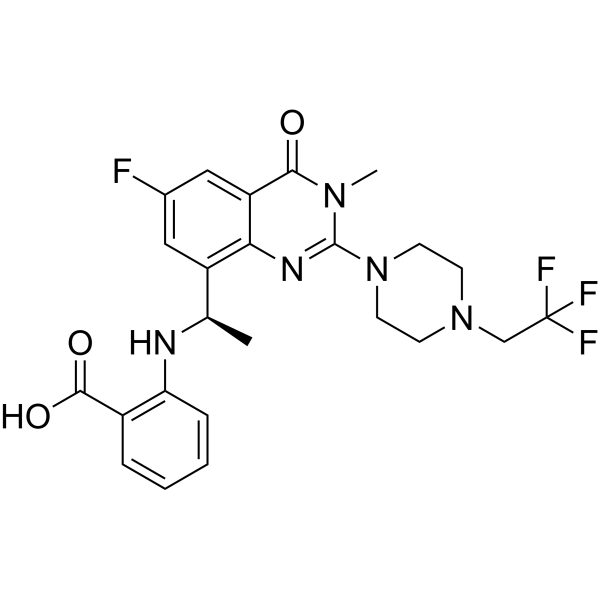 0 ImagesCat. No.: HY-160283CAS No.: 3023536-43-5PI3K-IN-50 is a phosphotidylinositol-3-kinase (PI3K) inhibitor extracted from patent WO2023239710A1, example 35.

-
HM5023507
 0 ImagesCat. No.: HY-177277CAS No.: 1549766-06-4HM5023507 is an orally active and selective PI3Kδ/γ inhibitor with IC50s of 4 and 5 μM for PI3Kδ and PI3Kγ over PI3Kβ and PI3Kα. HM5023507 attenuates the PI3Kδ/γ signaling in human basophils. HM5023507 also attenuates the activation and function of human B and T cells and cytokine and IgG production during cocultures, and Th17 differentiation of CD4 T cells. HM5023507 inhibited semiestablished collagen-induced arthritic inflammation in the rat models. HM5023507 can be used for inflammatory diseases like rheumatoid arthritis research.
-
SHP2-IN-35
 0 ImagesCat. No.: HY-170877SHP2-IN-35 (Compound 3f) is the inhibitor for SHP2. SHP2-IN-35 exhibits antiproliferative activity in cancer cells RKO, SW480 and CT26 with IC50 of 5.72 μM, 3.71 μM and 1.42 μM, respectively. SHP2-IN-35 inhibits the PI3K-Akt signaling pathway, regulates the cell cycle associated gene expressions, and induces mitochondrial-related autophagy. SHP2-IN-35 inhibits the expression of certain cytokines and chemokines in the tumor microenvironment (TME), thereby regulating the tumor progression.
-
PI3Kα-IN-11
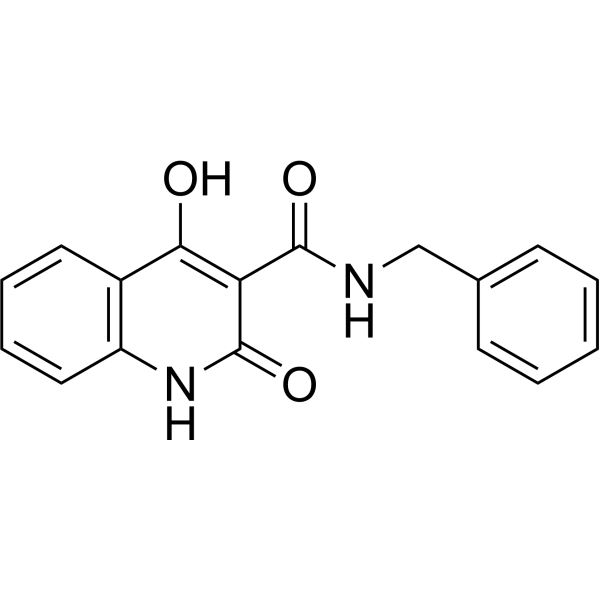 0 ImagesCat. No.: HY-153915CAS No.: 300803-79-6PI3Kα-IN-11 is a potent PI3Kα inhibitor with anticancer activity.
-
PI3Kγ inhibitor 7
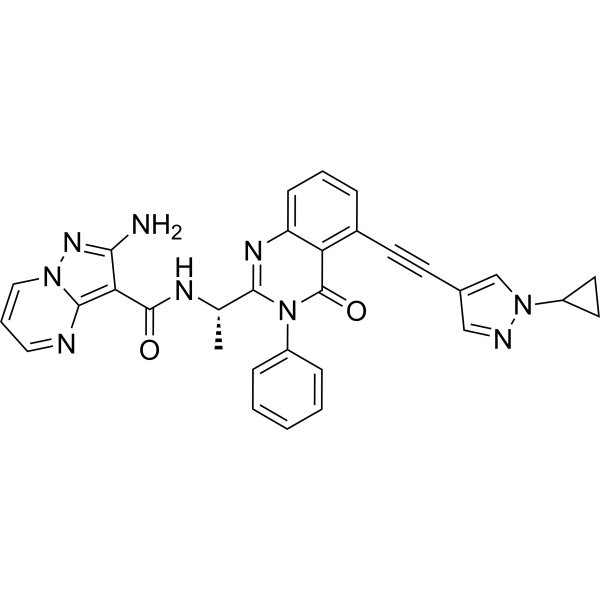 0 ImagesCat. No.: HY-153703CAS No.: 2575863-25-9PI3Kγ inhibitor 7 (compound 2) is a potent and orally active PI3Kγ inhibitor with IC50 values of 4768, 878.1, 3.42, 355.2 nM for PI3Kα, PI3Kβ, PI3Kγ, PI3Kδ, respectively. PI3Kγ inhibitor 7 shows antitumor activity. PI3Kγ inhibitor 7 is a click chemistry reagent, it contains an Alkyne group and can undergo copper-catalyzed azide-alkyne cycloaddition (CuAAc) with molecules containing Azide groups.
-
17β-Hydroxywortmannin
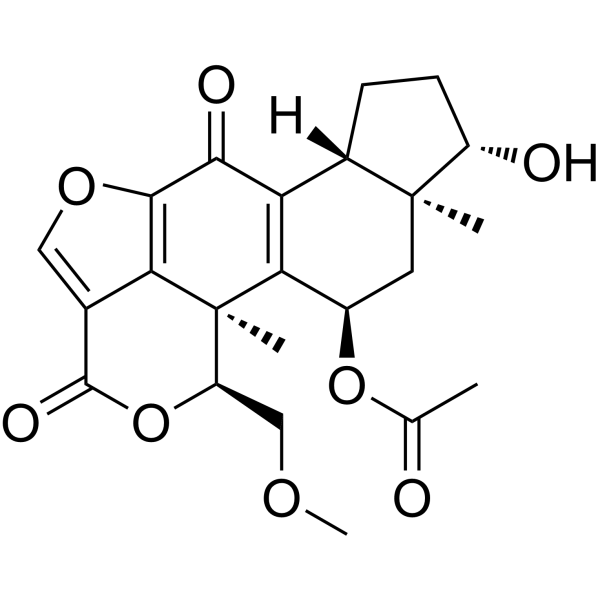 0 ImagesCat. No.: HY-126083CAS No.: 58053-83-1Synonyms: Wortmannin-17β-ol17β-Hydroxywortmannin (Wortmannin-17β-ol) is an orally active inhibitor for phosphatidylinositol-3-kinase (PI-3-kinase) with an IC50 of 0.5 nM, suppresses the osteoclast resorption with an IC50 of 10 nM. 17β-Hydroxywortmannin exhibits antitumor activity.
-
Sophocarpine (Standard)
 0 ImagesSophocarpine (Standard) is the analytical standard of Sophocarpine (HY-N0103). This product is intended for research and analytical applications. Sophocarpine is a PTEN activator and an inhibitor of PI3K/Akt, MEK/ERK, and NF-κB signaling pathways. Sophocarpine upregulates PTEN expression and inhibits PI3K/Akt phosphorylation, arrests tumor cell cycle and induces apoptosis. Sophocarpine inhibits MEK/ERK phosphorylation and VEGF secretion, reducing tumor cell migration. Sophocarpine can also inhibit NF-κB activation and p38 and JNK phosphorylation, reduce the expression of inflammatory factors such as iNOS and COX-2, and activate the Nrf2/HO-1 pathway to reduce oxidative stress. Sophocarpine has anti-tumor, anti-inflammatory, antioxidant and anti-apoptotic effects, and can be used in the research of cancers such as glioblastoma and colorectal cancer, inflammation-related diseases, and Doxorubicin (HY-15142A)-induced cardiac damage.
-
EpskA21
 0 ImagesCat. No.: HY-161858EpskA21 is an inhibitor for PI3K/AKT signaling pathway, and inhibits the proliferation of cancer cells MCF-7, A549, MIA-PaCa-2, Panc-1 and HepG2, with IC50 of 1.3-7.24 μM. EpskA21 inhibits the cell migration, arrests the cell cycle at G2/M (MCF-7) and S (MIA-PaCa-2) phase, and induces apoptosis in MCF-7 and MIA-PaCa-2. EpskA21 causes the mitochondrial dysfunction.
-
D-Allose (Standard)
 0 ImagesCat. No.: HY-128741RCAS No.: 2595-97-3D-Allose (Standard) is the analytical standard of D-Allose (HY-128741). This product is intended for research and analytical applications. D-Allose exhibits antitumor activity against various cancer cells. D-Allose scavenges reactive oxygen species (ROS) and reduces oxidative stress damage. D-Allose exhibits anti-inflammatory and neuroprotective through inhibition of TLR4/PI3K/AKT signaling pathway. D-Allose exhibits antihypertensive, cryoprotective, and anti-osteoporotic activities.
-
Brevianamide F (Standard)
 0 ImagesCat. No.: HY-100385RCAS No.: 38136-70-8Synonyms: Cyclo(L-Pro-L-Trp) (Standard)Rebaudioside C (Standard) is the analytical standard of Rebaudioside C. This product is intended for research and analytical applications. Rebaudioside C (Dulcoside B) is a natural sweetener that can be used in controlled diets for diabetic patients.
-
WNY1613
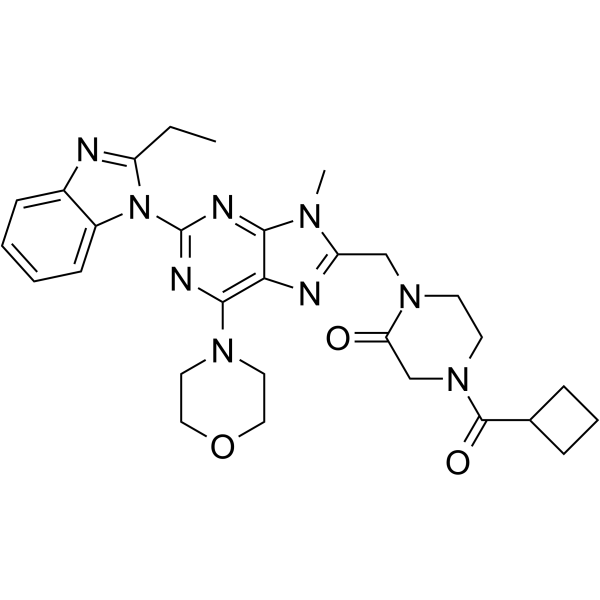 0 ImagesCat. No.: HY-147792CAS No.: 2650546-39-5WNY1613 is a potent and selective PI3Kδ inhibitor with piperazinone-containing purine scaffold. WNY1613 induces cancer cell apoptosis and inhibits the phosphorylation of PI3K downstream components in NHL cell lines. WNY1613 exhibits anti-NHL activity in vitro and in vivo.
-
Vernodalin
 0 ImagesCat. No.: HY-N19029CAS No.: 21871-10-3Vernodalin is an orally active, cytotoxic sesquiterpene lactone with a Kd value of 9.55 μM for p38 MAPK. Vernodalin downregulates the expression of phosphorylated ERK, JNK, AKT, PI3K, mTOR, p38MAPK, FAK, MMP-2, MMP-9, and uPA, while upregulates the expression of TIMP-1 and TIMP-2. Vernodalin increases ROS production, upregulates the expression of Bax and caspase 3, downregulates the expression of Bcl-2, and induces apoptosis (apoptosis), oxidative stress response and cell cycle arrest. Vernodalin inhibits the proliferation, adhesion and metastasis of cancer cells. Vernodalin enhances the activity of VEGF-B, AMPK and eNOS signaling pathways. Vernodalin alleviates myocardial injury and restores hemodynamic parameters. Vernodalin inhibits the growth of Trypanosoma brucei rhodesiense. Vernodalin can be used in research related to various cancers including gastric cancer, colorectal cancer and lung cancer, as well as African human trypanosomiasis and myocardial infarction.
-
MEK/PI3K-IN-1
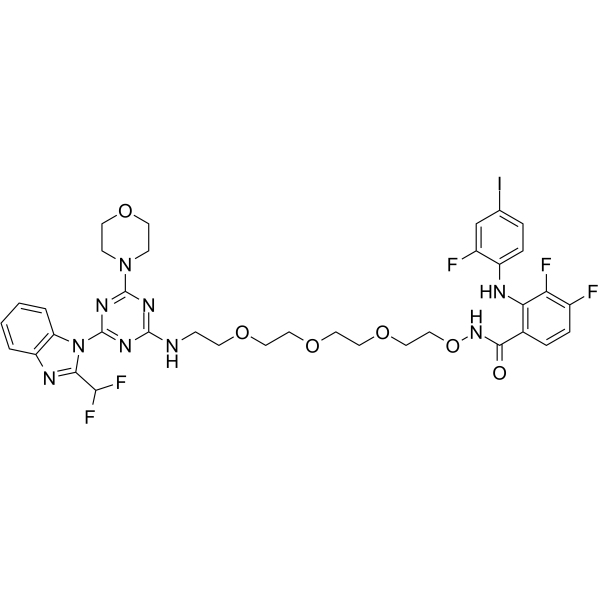 0 ImagesCat. No.: HY-144692CAS No.: 2281803-28-7
-
HYS-072
 0 ImagesCat. No.: HY-172175HYS-072 is an orally active derivative of chrysin (HY-14589) with antitumor activity. HYS-072 induces apoptosis and autophagy by inhibiting the PI3K/AKT/mTOR signaling pathway and suppresses tumor growth in vivo in xenograft models by modulating autophagy-related pathways. HYS-072 can be used in the research of triple-negative breast cancer.




