



PROTACs
PROTAC (PROteolysis-TArgeting Chimera) is a heterobifunctional nanomolecule containing two different ligands, ligand for ubiquitin E3 and ligand for target protein. The two parts are connected by linker to form a "three-unit" polymer, target protein ligand-linker-E3 ligase ligand. Building blocks of PROTAC molecules include PROTAC Linker, Ligand for Target Protein for PROTAC, Ligand for E3 Ligase, E3 Ligase Ligand-Linker Conjugate, Target Protein Ligand-Linker Conjugate, etc.
PROTACs Isoform Specific Products
-
PROTACs Related Products (1394)
Related Products (1394)

-
Antibodies (1)
-
PROTACs Isoform Comparison
-
PROTAC BRD4 Degrader-16
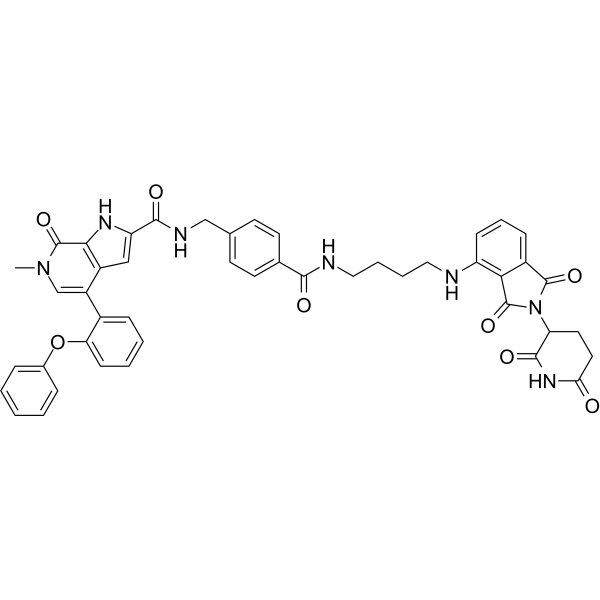 0 ImagesCat. No.: HY-143327CAS No.: 2585561-36-8PROTAC BRD4 Degrader-16 is a BRD4 PROTAC degrader. PROTAC BRD4 Degrader-16 induces sustained degradation of both long and short isoforms of BRD4 in cancer cells, causes cell cycle arrest, and exhibits only extremely low apoptosis effects. PROTAC BRD4 Degrader-16 can be used in studies related to acute myeloid leukemia.
-
PROTAC ER Degrader-12
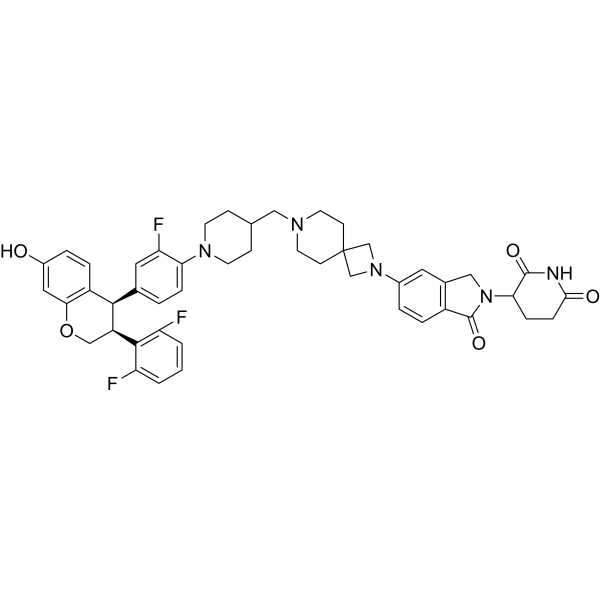 0 ImagesCat. No.: HY-160264PROTAC ER Degrader-12 (Compound 70) is an estrogen receptor PROTAC degrader (DC50: <10 nM), and inhibits MCF-7 proliferation (DC50: <10 nM). PROTAC ER Degrader-12 has anticancer effect.


-
PROTAC HDAC8 Degrader-2
 0 ImagesCat. No.: HY-168175PROTAC HDAC8 Degrader-2 is a HDAC6/8 PROTAC degrader, with IC50 values of 0.042 μM and 0.147 μM against human HDAC8 and HDAC6, respectively, and exhibits selectivity over other class I HDAC isozymes. PROTAC HDAC8 Degrader-2 induces apoptosis (apoptosis) in leukemia cells, shows no obvious cytotoxicity to normal cells, and has favorable chemical stability. PROTAC HDAC8 Degrader-2 can be used in research related to acute myeloid leukemia.
-
MS108
 0 ImagesCat. No.: HY-183555MS108 is a selective VHL-based eleven-nineteen leukemia protein (ENL) PROTAC degrader with DC50 of 0.6 nM. MS108 recruits VHL E3 ligase to induce ENL degradation in a VHL- and ubiquitin-proteasome system (UPS)-dependent manner. MS108 degrades the ENL paralog AF9, which shares a highly conserved YEATS domain with ENL. MS108 suppresses proliferation of cancer cells.
-
PROTAC AR Degrader-7
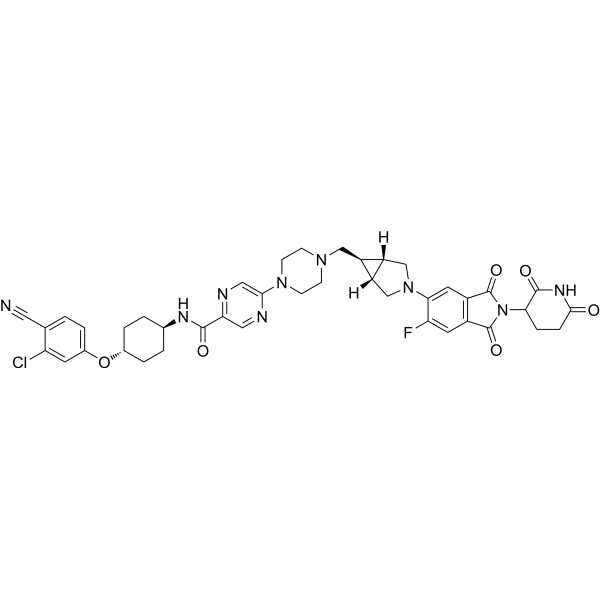 0 ImagesCat. No.: HY-160221CAS No.: 2505495-83-8PROTAC AR Degrader-7 (compound 99) is a PROTAC targeting androgen receptor with an IC50 value of 3 nM.
-
PROTAC EGFR degrader 19
 0 ImagesCat. No.: HY-189360CAS No.: 3017179-52-8PROTAC EGFR degrader 19 is a potent EGFR PROTAC degrader. PROTAC EGFR degrader 19 bridges EGFR and VHL E3 ligase, thereby promoting ubiquitination and degradation of EGFR, which in turn blocks oncogenic signaling pathways. PROTAC EGFR degrader 19 can be used for research on non-small cell lung cancer.
-
PROTAC BRD4 Degrader-23
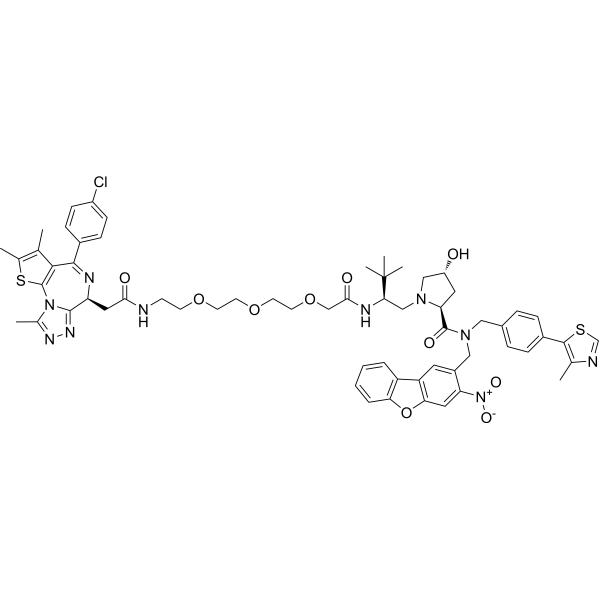 0 ImagesCat. No.: HY-161093PROTAC BRD4 Degrader-23 is a visible light-regulated BRD4 PROTAC degrader, with DC50 values of 6871 nM and < 30 nM in the dark and under light exposure, respectively; its IC50 values are 1172 nM and 140 nM under the corresponding conditions. PROTAC BRD4 Degrader-23 shows inhibited activity in dark environments, and recovers BRD4 degradation ability upon irradiation with 405 nm visible light. PROTAC BRD4 Degrader-23 inhibits tumor cell proliferation in a visible light-dependent manner. PROTAC BRD4 Degrader-23 can be used in studies of BRD4-dependent B-cell lymphoma.
-
PROTAC EGFR degrader 10
 0 ImagesCat. No.: HY-161632CAS No.: 3034244-56-6PROTAC EGFR degrader 10 (Compound B56) is a PROTAC degrader for epidermal growth factor receptor (EGFR), with DC50 <100 nM. PROTAC EGFR degrader 10 binds CRBN-DDB1 with a Ki of 37 nM. PROTAC EGFR degrader 10 degrades EGFR, focal adhesion kinase (FAK), and RSK1, inhibits the proliferation of BaF3 wild type and EGFR mutants, with IC50 <150 nM.
-
PROTAC SARS-CoV-2 RdRp Degrader-1
 0 ImagesCat. No.: HY-179283PROTAC SARS-CoV-2 RdRp Degrader-1 (PROTAC 10) is a SARS-CoV-2 RdRp PROTAC degrader, with a DC50 of 1.97 μM (in infected cells). PROTAC SARS-CoV-2 RdRp Degrader-1 promotes the ubiquitination and degradation of SARS-CoV-2 RdRp. PROTAC SARS-CoV-2 RdRp Degrader-1 can be used in the research of SARS-CoV-2 infection.
-
BCPyr
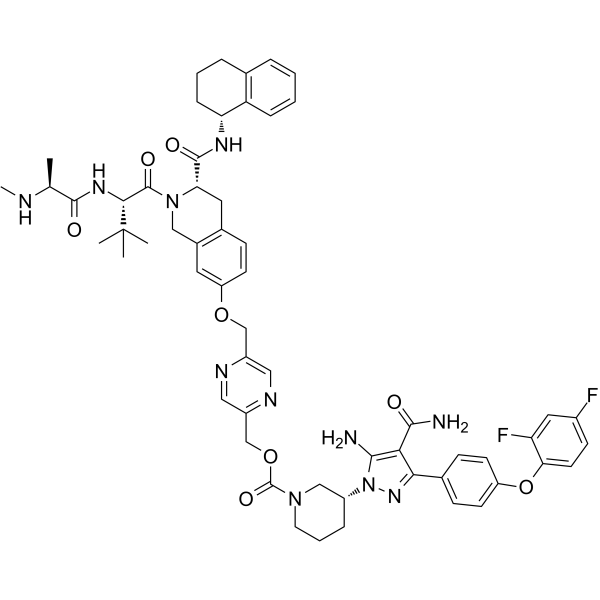 0 ImagesCat. No.: HY-142621CAS No.: 2669844-82-8BCPyr is a PROTAC degrader targeting cIAP1 and BTK, with a Kd of 262 nM for human cIAP1, and Kd values of 262 nM and 692 nM for human BTK. BCPyr binds to the Bir3 domain of cIAP1, recruits BTK to cIAP1, and mediates the ubiquitination and degradation of BTK. BCPyr acts as a degrader, ternary complex stabilizer, cooperative binder, and higher-order assembly inducer. BCPyr can be used in studies related to leukemia and lymphoma.
-
PROTAC BRD4 Degrader-28
 0 ImagesCat. No.: HY-170808PROTAC BRD4 Degrader-28 is a PROTAC degrader targeting BRD4, with a DC50 of 5.4 nM for BRD4 in HEK293 cells. PROTAC BRD4 Degrader-28 binds to the CRBN E3 ubiquitin ligase, forms a ternary complex with BRD4, and thereby mediates the ubiquitination and proteasomal degradation of BRD4. PROTAC BRD4 Degrader-28 can be used in cancer research.
-
SA-VA
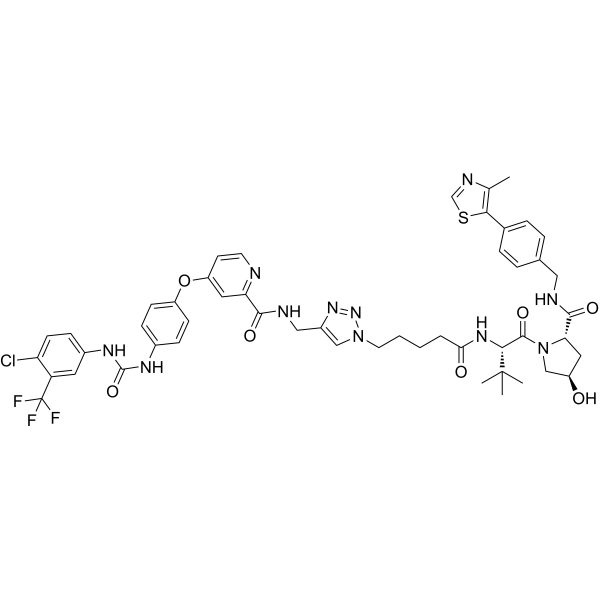 0 ImagesCat. No.: HY-155685CAS No.: 3058085-77-8SA-VA is a heterobifunctional PROTAC molecule generated in situ via click chemistry, and acts as a degrader for VEGFR-2 and EphB4. SA-VA is self-assembled from the alkynyl precursor SA and the azide precursor VA through a copper ion-mediated intracellular click chemistry reaction, recruits the E3 ubiquitin ligase VHL to mediate the ubiquitination of target proteins, and triggers degradation via the proteasome pathway. SA-VA induces cell cycle arrest and apoptosis in U87 glioma cells. SA-VA can be used in cancer-related research.
-
UNC8209
 0 ImagesCat. No.: HY-183098UNC8209 is a selective PROTAC-based TANK-binding kinase 1 (TBK1) degrader. UNC8209 recruits cereblon (CRBN) to mediate ubiquitin-proteasome pathway-dependent TBK1 degradation and reduces AAK1, GAK, and AURKA abundance. UNC8209 suppresses tumor cell proliferation, impairs in vivo tumor growth, inhibits colony and clonogenic growth and enhances tumor cell sensitivity to TNFα or IFN-γ. UNC8209 modulates cell cycle and induces mild apoptosis. UNC8209 can be used for the research of clear cell renal cell carcinoma, non-small cell lung cancer, pancreatic ductal adenocarcinoma.
-
PROTAC BRD4 Degrader-27
 0 ImagesCat. No.: HY-162875CAS No.: 2407163-44-2PROTAC BRD4 Degrader-27 is a selective cereblon-mediated BRD4 PROTAC degrader. PROTAC BRD4 Degrader-27 exhibits anticancer activity, induces G1 phase arrest, and inhibits DNA synthesis and colony formation. PROTAC BRD4 Degrader-27 suppresses HCC1806 tumor growth in xenograft mouse models. PROTAC BRD4 Degrader-27 can be used in breast cancer-related research.

-
GMB-805
 0 ImagesCat. No.: HY-180968CAS No.: 2489876-41-5
-
PROTAC SOS1 degrader-6
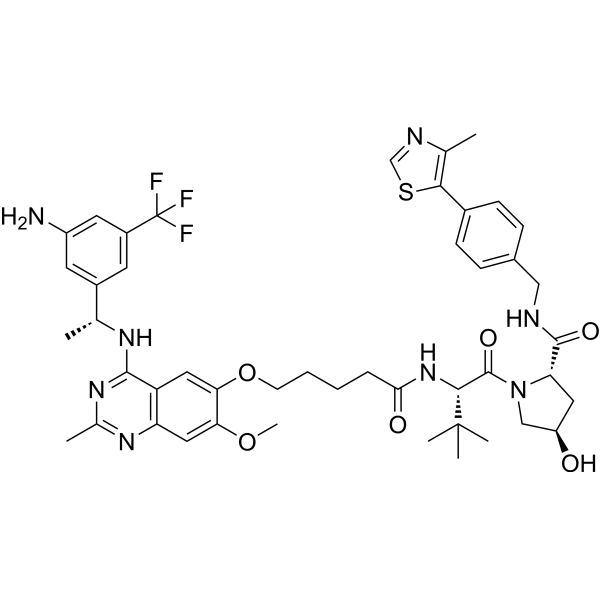 0 ImagesCat. No.: HY-162281CAS No.: 3032282-51-9PROTAC SOS1 degrader-6 is a selective SOS1 PROTAC degrader with a DC50 of 43-130 nM. PROTAC SOS1 degrader-6 induces ubiquitination and degradation of SOS1 via the ubiquitin-proteasome system by recruiting the E3 ligase VHL. PROTAC SOS1 degrader-6 reduces the levels of phosphorylated MEK and ERK. PROTAC SOS1 degrader-6 exerts antiproliferative effects in KRAS-driven cancer cells. PROTAC SOS1 degrader-6 can be used in research related to KRASG12C-mutant cancers and chronic myeloid leukemia.
-
SK4454
 0 ImagesCat. No.: HY-179640SK4454 is a selective AURKA PROTAC degrader degrading AURKA with IC50 = 8 nM. MYCN levels in MYCN-amplified neuroblastoma cells and limited by MDR1-mediated efflux. SK4454 efficiently reduced AURKA levels in vivo. SK4454 can be used for neuroblastoma research.




