



SIRT1
SIRT1 is a NAD\\+-dependent deacetylase that functions as a central regulator of cellular metabolism, stress responses, genomic stability, and aging through deacetylation of histones and multiple transcriptional regulators[1][2]. Mechanistically, SIRT1 integrates nutrient and energy signals with transcriptional programs that control mitochondrial biogenesis, fatty acid oxidation, glucose metabolism, autophagy, and cellular adaptation to metabolic stress[1][3]. Through coordinated interactions with metabolic signaling networks, SIRT1 contributes to maintenance of metabolic health across liver, skeletal muscle, adipose tissue, heart, and other organs[1]. In disease-related contexts, altered SIRT1 activity has been associated with aging, chronic inflammatory conditions, obesity, metabolic dysfunction, cardiovascular disorders, neurodegenerative diseases, and cancer-related processes, making it a widely used experimental target in translational research[2][4][5]. Compared with related sirtuin isoforms, SIRT1 is the most extensively characterized mammalian sirtuin and primarily mediates transcriptional regulation through deacetylation of nuclear histone and non-histone substrates, whereas other family members display distinct cellular localization and substrate preferences[1][2][4]. For experimental applications, SIRT1 activity can be modulated by small-molecule activators and inhibitors, and naturally occurring polyphenols such as resveratrol have been reported to activate SIRT1 in multiple model systems, providing useful tools for mechanistic studies of metabolism, inflammation, oxidative stress, and aging biology[3][4].
References:
- [1]. Dijk W, et al. Regulation of lipoprotein lipase by Angptl4. Trends Endocrinol Metab. 2014 Mar;25(3):146-55. [Content Brief]
- [2]. Zhao L, et al. Sirtuins and their Biological Relevance in Aging and Age-Related Diseases. Aging Dis. 2020 Jul 23;11(4):927-945. [Content Brief]
- [3]. Chung S, et al. Regulation of SIRT1 in cellular functions: role of polyphenols. Arch Biochem Biophys. 2010 Sep 1;501(1):79-90. [Content Brief]
- [4]. Carafa V, et al. Sirtuins and disease: the road ahead. Front Pharmacol. 2012 Jan 31;3:4. [Content Brief]
- [5]. Herskovits AZ, et al. Sirtuin deacetylases in neurodegenerative diseases of aging. Cell Res. 2013 Jun;23(6):746-58. [Content Brief]
-
SIRT1 Related Products (99)
Related Products (99)

-
Antibodies (1)
-
SIRT2-IN-14
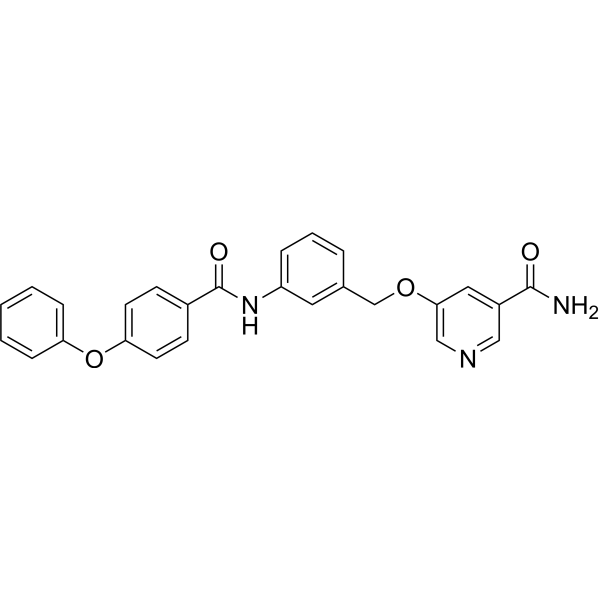 0 ImagesCat. No.: HY-160617CAS No.: 1884571-59-8SIRT2-IN-14 (Compound 78) is a selectve inhibitor for SIRT2 with an IC50 of 0.196 μM.
-
SIRT1 activator 4
 0 ImagesCat. No.: HY-183044CAS No.: 1049800-47-6SIRT1 activator 4 is an orally active, NAD+-independent SIRT1 activator. SIRT1 activator 4 is also an analog of (E)-2'-desmethyl Sulindac (HY-B0008), with weak or negligible inhibitory activity against COX-1 and no inhibitory activity against COX-2. SIRT1 activator 4 can be used for the research of metabolic diseases.
-
Altissimacoumarin F
 0 ImagesCat. No.: HY-N18386CAS No.: 1384897-64-6Altissimacoumarin F (Compound 4) is a terpenylated coumarin. Altissimacoumarin F can be isolated from the stem bark of Ailanthus altissima. Altissimacoumarin F enhances SIRT1 activity, decreases p53 transcriptional activity. Altissimacoumarin F can be used for the research of age-related disorders.
-
Sirtuin modulator 5
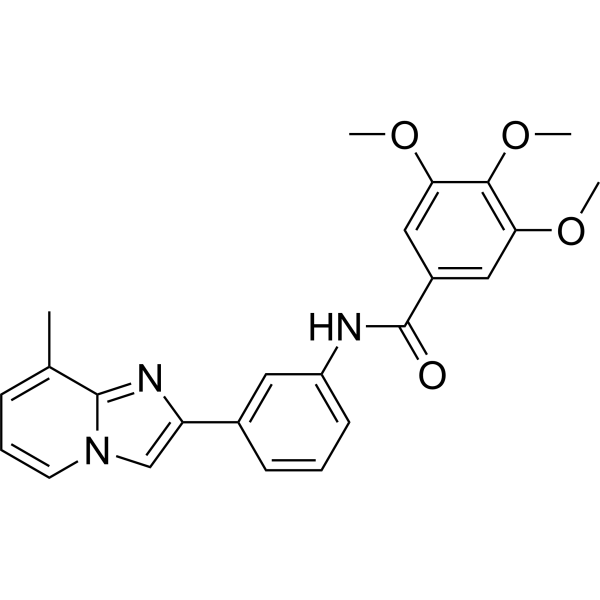 0 ImagesCat. No.: HY-148322CAS No.: 694469-31-3Sirtuin modulator 5 is a sirtuin modulating agent. Sirtuin modulator 5 can activate SIRT1 with a DC50 value of <50 μM. Sirtuin modulator 5 can be used for increasing the lifespan of a cell and used for the research of variety of diseases including, for example, diseases or disorders related to aging or stress, diabetes, obesity, neurodegenerative diseases, cardiovascular disease, blood clotting disorders, inflammation, cancer, and/or flushing as well as diseases or disorders that would benfit from increased mitochondrial activity.
-
SIRT1-IN-7
 0 ImagesCat. No.: HY-184372CAS No.: 720672-18-4
-
Butrin
 0 ImagesButrin is a compound found in Butea monosperma flowers. Butrin reduces expression of SIRT1, AURKB, cyclin D1, pAKT, GSK-3β, β-catenin, and TGF-3β expression, enhances apoptosis and ROS production in cancer cells. Butrin downregulates Wnt and NF-κB signaling, mitigates oxidative stress, reduces proinflammatory cytokine (TNF-α, IL-6 and IL-8) production and suppresses neuroinflammation. Butrin inhibits IKK enzyme activity. Butrin can be used for the researches of colorectal cancer, Alzheimer’s disease, and rheumatoid arthritis.
-
SIRT6-IN-4
 0 ImagesCat. No.: HY-170402CAS No.: 3075160-74-3SIRT6-IN-4 (Compound 10d) is a selective inhibitor for SIRT6 with an IC50 of 5.68 μM. SIRT6-IN-4 inhibits the proliferation of MCF-7 with an IC50 of 8.30 μM. SIRT6-IN-4 arrests the cell cycle at G2/M phase, inhibits thecell migration and invasion of MCF-7, and induces apoptosis. SIRT6-IN-4 exhibits antitumor efficacy in mouse models.
-
PRMT/HKMT-IN-1
 0 ImagesCat. No.: HY-114510CAS No.: 1020399-52-3PRMT/HKMT-IN-1 is an epigenetic multi-target protein arginine methyltransferases (PRMTs) and histone lysine methyltransferases (HKMTs) inhibitor. PRMT/HKMT-IN-1 inhibits Aspergillus nidulans RmtA with an IC50 of 29 μM. PRMT/HKMT-IN-1 inhibits human PRMT1, p300/CBP HAT, CARM1, SET7, SIRT1 and SIRT2. PRMT/HKMT-IN-1 inhibits methylation of histone H3K4, H4R3, and H3R17 residues. CBP/p300-IN-23 induces apoptosis, arrests cell cycle in S phase, and triggers granulocytic differentiation in leukemia cells. PRMT/HKMT-IN-1 can be used for the research of leukemia.
-
BF-175
 0 ImagesCat. No.: HY-138443ACAS No.: 1333375-02-2BF-175 is a selective SIRT1 agonist. BF175 increases SIRT1-mediated activation of PGC1-α, induces Apoptosis, induces Autophagy and inhibits SREBP activity. BF-175 protects against high glucose-mediated mitochondrial injury. BF-175 attenuates diabetic kidney disease progression. BF175 inhibits endometrial carcinoma.
-
Cudraflavone B
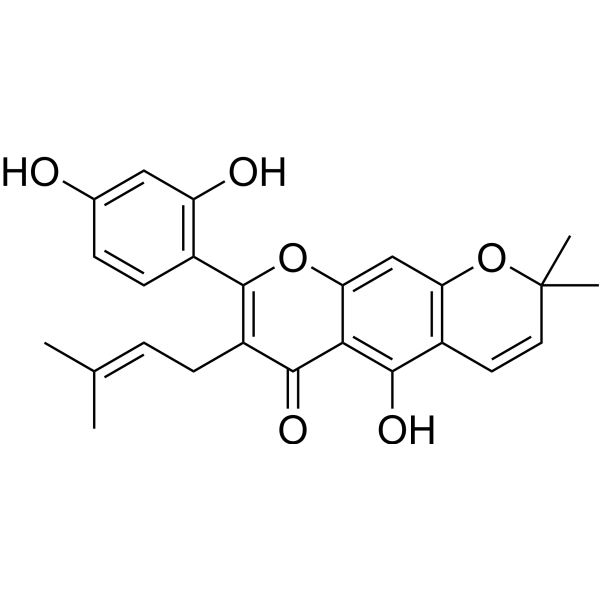 0 ImagesCat. No.: HY-N10009CAS No.: 19275-49-1Cudraflavone B is a prenylated flavonoid with anti-inflammatory and anti-tumor properties. Cudraflavone B is also a dual inhibitor of COX-1 and COX-2. Cudraflavone B blocks the translocation of nuclear factor κB (NF-κB) from the cytoplasm to the nucleus in macrophages. Thus, Cudraflavone B inhibits tumor necrosis factor α (TNFα) gene expression and secretion. Cudraflavone B also triggers the mitochondrial apoptotic pathway, activates NF-κB, the MAPK p38, and ERK, and induced the expression of SIRT1. Thus Cudraflavone B inhibits the growth of human oral squamous cell carcinoma cells.
-
ZINC08792229
 0 ImagesCat. No.: HY-123241CAS No.: 904514-73-4
-
3β,6α,12β-Dammar-E-20(22)-ene-3,6,12,25-tetraol
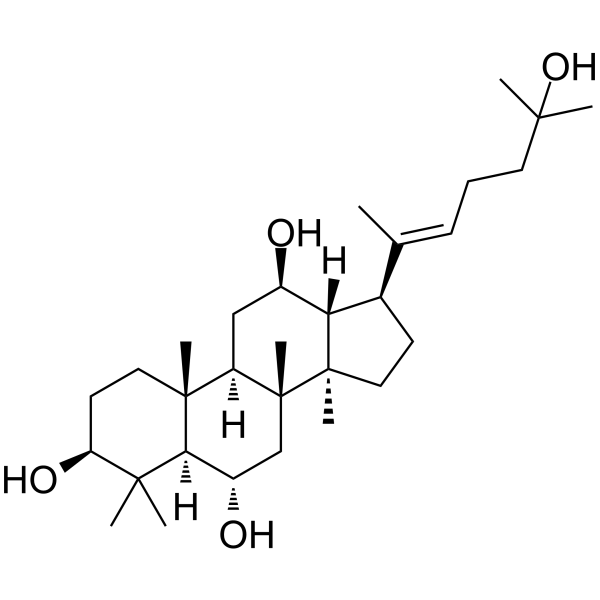 0 ImagesCat. No.: HY-N9398CAS No.: 97744-95-1
-
SIRT-IN-6
 0 ImagesCat. No.: HY-W109401CAS No.: 1431411-18-5SIRT-IN-6 (Compound 14) is a pan-inhibitor of SIRT1/2/3 with IC50 values of >50 μM. SIRT-IN-6 is promising for research of metabolic, inflammatory, oncologic and neurodegenerative disorders.
-
Acanthoic acid
 0 ImagesCat. No.: HY-116136CAS No.: 119290-87-8Synonyms: NP1302Acanthoic acid (NP1302) is an orally active pimarane-type diterpenoid. Acanthoic acid is isolated from the root bark of Araliaceae family plant Eleutherococcus senticosus (Siberian ginseng). Acanthoic acid activates LXR and FXR. Acanthoic acid activates the AMPK-LKB1, SIRT1, and p38 MAPK signaling pathways and increases the phosphorylation level of ACC. Acanthoic acid downregulates the expression of SREBP-1, CYP2E1, HIF-1α, and PPARγ, and upregulates the expression of PPARα. Acanthoic acid induces Apoptosis by activating Caspase-3, promoting PARP cleavage, and downregulating Bcl-xL. Acanthoic acid exhibits antioxidant, anti-fibrotic, and hepatoprotective effects. It reduces lipid accumulation and lipogenesis. Acanthoic acid is used in studies on non-alcoholic fatty liver disease, alcoholic liver disease, acute promyelocytic leukemia, and Acetaminophen-induced hepatotoxicity.
-
2-(2-Thienyl)benzofuran
 0 ImagesCat. No.: HY-187137CAS No.: 65246-50-62-(2-Thienyl) benzofuran is a SIRT1 inhibitor with an inhibition rate of up to 63.6%. 2-(2-Thienyl) benzofuran inhibits the proliferation of breast cancer cells, and its antiproliferative activity is comparable to that of Suramin (HY-B0879). 2-(2-Thienyl) benzofuran can be used in breast cancer-related research.
-
Arecaidine-propargyl ester
 0 ImagesCat. No.: HY-183853CAS No.: 35516-99-5Arecaidine-propargyl ester is a selective M2 muscarinic receptor agonist with blood-brain barrier permeability, with a pKi of 5.91 for hm1, 7.06 for hm2, 6.07 for hm3, 6.01 for hm4, and 6.03 for hm5. Arecaidine-propargyl ester stimulates central and peripheral muscarinic receptors. Arecaidine-propargyl ester increases intracellular ROS, induces DNA damage and Apoptosis, and upregulates the expression of MnSOD and SIRT1. Arecaidine-propargyl ester reduces sympathetic nerve outflow, induces dose-dependent hypotension, and triggers negative chronotropic effects at high peripheral doses. Arecaidine-propargyl ester can be used in research related to Alzheimer's disease and glioblastoma.
-
Sweroside (Standard)
 0 ImagesSweroside (Standard) is the analytical standard of Sweroside (HY-N0806). This product is intended for research and analytical applications. Sweroside is an iridoid glycoside that targets multiple targets, including the Keap1/Nrf2 axis, NLRP3 inflammasome, SIRT1, NF-κB, AMPK/mTOR pathway, and caspase family. Sweroside promotes Nrf2 nuclear translocation by competitively binding to Keap1. Sweroside also inhibits oxidative stress and NLRP3-mediated pyroptosis by activating Nrf2, inhibits NF-κB inflammatory pathway by activating SIRT1, and promotes autophagy and induces caspase-dependent apoptosis via the AMPK/mTOR pathway. Sweroside has antioxidant, anti-inflammatory, anti-apoptotic, and lipid metabolism regulating activities, and can be used in the research of myocardial ischemia-reperfusion injury, leukemia, acute lung injury, non-alcoholic fatty liver disease, and other fields.
-
Sudachitin
 0 ImagesSudachitin is an orally active compound that potently inhibits mouse PDE1C and human PDE4B, with IC50 values of 5.0 μM and 15.0 μM, respectively. Sudachitin upregulates Sirt1 and PGC‑1α expression in skeletal muscle to regulate energy metabolism and promote mitochondrial biogenesis. Sudachitin improves lipid metabolism, glucose tolerance, insulin sensitivity, energy expenditure, and fatty acid β‑oxidation. Sudachitin activates p38MAPK signaling, induces HSP27 phosphorylation and caspase‑dependent apoptosis, and blocks EGF‑driven keratinocyte migration and proliferation. Sudachitin suppresses LPS‑induced TNF‑α, NO, and iNOS expression in macrophages and shows potent anti‑inflammatory activity. Sudachitin can be used for the research of metabolic syndrome, type 2 diabetes, and psoriasis..
-
2"-O-Galloylhyperin (Standard)
 0 ImagesCat. No.: HY-N0526RCAS No.: 53209-27-12"-O-Galloylhyperin (Standard) is the analytical standard of 2"-O-Galloylhyperin (HY-N0526). This product is intended for research and analytical applications. 2''-O-Galloylhyperin is an active natural compound with anti‑inflammatory, antioxidant, anti‑adipogenic, antifibrotic, and cytostatic activities. 2''-O-Galloylhyperin upregulates SIRT1/Nrf2 signaling, inhibits NF-κB and MAPK (ERK1/2, p38, JNK) phosphorylation, suppresses TSHR activation, reduces ROS accumulation, and enhances SOD and GSH-Px activities. 2''-O-Galloylhyperin protects against LPS-induced tissue injury, enhances survival, and inhibits adipogenesis and fibrosis. 2"-O-Galloylhyperin can be used for the research of sepsis, acute lung injury, and thyroid eye disease.




