



AP-1
Activator Protein 1
Activator Protein 1 (AP-1) is not a single protein, but a collective term referring to dimeric transcription factors composed of Jun (c-Jun, JunB, JunD), Fos (c-Fos, FosB, Fra-1, Fra-2) ATF (activating transcription factor, ATF-2, ATF-3/LRF1, ATF-4, ATF-5, ATF-6B, ATF-7, BATF, BATF-2, BATF-3, JDP2) or MAF (c-MAF, MafA, MafB, MafF, MafG, MafK and Nrl) subunits that bind to a common DNA site, the AP-1-binding site. AP-1 is involved in a plethora of cellular and physiological functions. It is acknowledged as a master integrator of a myriad of extracellular signals allowing cells to adapt to changes in their environment. AP-1 has also been implicated in various severe diseases. These include transplant rejection, fibrosis, organ injury and a variety of inflammatory pathologies such as rheumatoid arthritis, asthma and psoriasis. In addition, cancer is undoubtedly the most documented pathology involving AP-1 where its activity is often dysregulated and contributes to cell transformation, tumor progression, aggressiveness and resistance to treatments.
AP-1 Isoform Specific Products
All Product Categories
-
AP-1 Related Products (87)
Related Products (87)

-
Antibodies (7)
-
AP-1 Isoform Comparison
-
Berberine sulfate (Standard)
 0 ImagesSynonyms: Natural Yellow 18 sulfate (Standard)Berberine (sulfate) (Standard) is the analytical standard of Berberine (sulfate). This product is intended for research and analytical applications. Berberine sulfate is an alkaloid isolated from the Chinese herbal medicine Huanglian, as an antibiotic. Berberine sulfate induces reactive oxygen species (ROS) generation and inhibits DNA topoisomerase. Berberine sulfate has antineoplastic properties. The sulfate form improves bioavailability[1][2].
-
Glucocorticoid receptor modulator 1
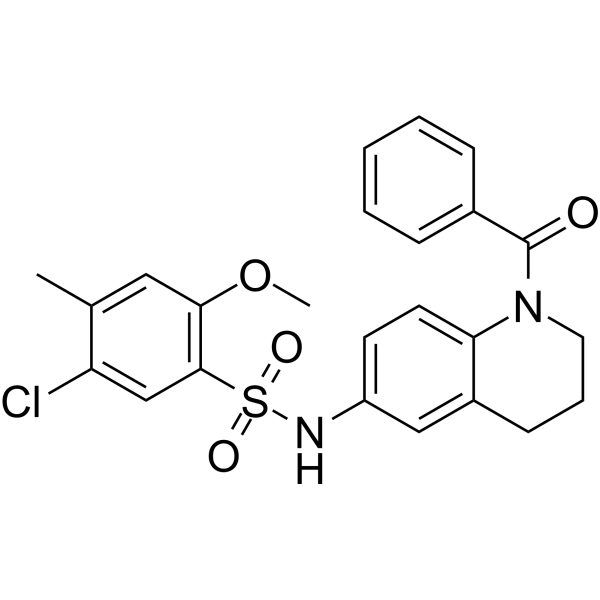 0 ImagesGlucocorticoid receptor modulator 1 is a highly potent and orally active non-steroidal selective glucocorticoid receptor modulator with an IC50 value of 9 nM and 130 nM for NF-κB and AP-1, respectively. Glucocorticoid receptor modulator 1 can effectively reduce the expression of inflammatory factors IL-6, IL-1β, TNF-α, also can relieve dermatitis in mice.
-
c-Fos-IN-1
 0 ImagesCat. No.: HY-168895CAS No.: 3125025-31-9c-Fos-IN-1 (Compound P16) is a c-Jun inhibitor, and decreases mRNA levels and protein levels of c-Fos. c-Fos-IN-1 also inhibits the phosphorylation activity of ERK and the transcriptional activity of AP-1. c-Fos-IN-1 shows anticancer activity by inhibiting ERK/c-Fos/Jun pathway. c-Fos-IN-1 inhibits the proliferation and migration of gastric cancer cells (IC50: 2.31 μM for MGC-803 cell). c-Fos-IN-1 arrests cell cycle at G2/M phase and induces cancer cell apoptosis. c-Fos-IN-1 inhibits gastric cancer tumor growth.
-
1-Methyl-6-oxo-1,6-dihydropyridine-3-carboxylic acid
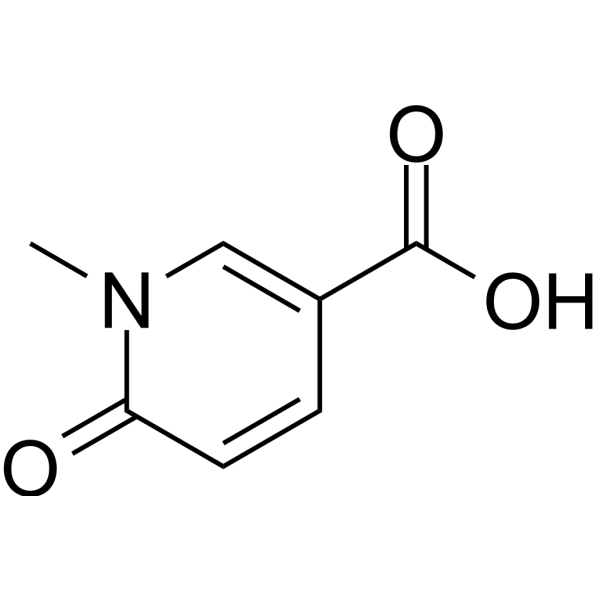 0 Images1-Methyl-6-oxo-1,6-dihydropyridine-3-carboxylic acid is an AP-1 inhibitor which can be found in Cordyceps bassiana. 1-Methyl-6-oxo-1,6-dihydropyridine-3-carboxylic acid downregulates the expression of COX-2. 1-Methyl-6-oxo-1,6-dihydropyridine-3-carboxylic acid can be used for the study of atopic dermatitis.
-
Desipramine hydrochloride (Standard)
 0 ImagesDesipramine hydrochloride (Standard) is the analytical standard of Desipramine hydrochloride (HY-B1272). This product is intended for research and analytical applications. Desipramine hydrochloride is a first-generation tricyclic antidepressant. Desipramine hydrochloride selectively binds to norepinephrine transporter and blocks neuronal norepinephrine reuptake. Desipramine hydrochloride activates MAPK signaling via ERK1/2, JNK, and p38, represses NF-κB and AP-1 activity, and induces apoptosis via ROS elevation, mitochondrial membrane potential reduction, and intracellular calcium increase. Desipramine hydrochloride also shows anyi-inflammatory activity, inhibiting TNF-α production. Desipramine hydrochloride can be used for the research of hepatocellular cancer, inflammation, and neurological diseases.
-
DL-Syringaresinol
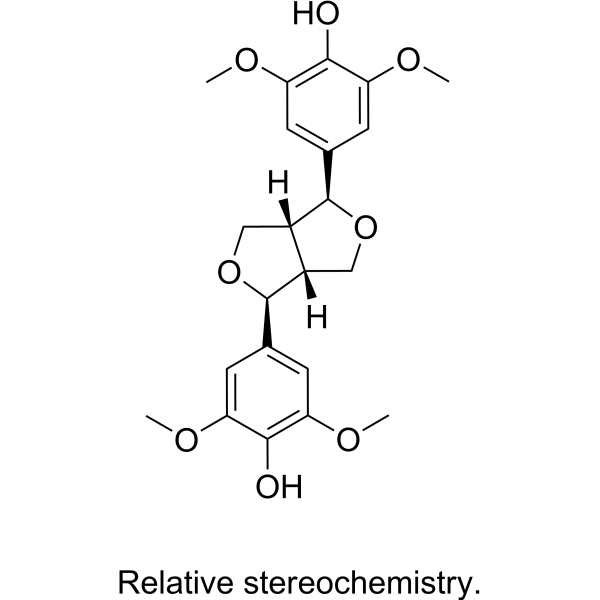 0 ImagesDL-Syringaresinol ((±)-Syringaresinol), a lignin, inhibits UVA-induced upregulation of MMP-1 by suppressing MAPK/AP-1 signaling in human HaCaT keratinocytes and dermal fibroblasts (HDFs). DL-Syringaresinol has antiphotoaging properties against UVA-induced skin aging. DL-Syringaresinol exhibits weak antimycobacterial activity against Mycobacterium tuberculosis H37Rv.
-
Atranorin (Standard)
 0 ImagesAtranorin (Standard) is the analytical standard of Atranorin (HY-N2907). This product is intended for research and analytical applications. Atranorin is a secondary metabolite of lichens and AKT inhibitor. Atranorin possesses multiple activities such as antibacterial, anti-inflammatory, antioxidant, anti-glycation, analgesic, and anti-tumor effects. Atranorin has IC50 values for scavenging DPPH and ABTS free radicals of 117 μM and less than 10 μM, respectively. Additionally, Atranorin also exhibits effects in promoting wound healing. Atranorin can be used in the research of various diseases, including myelodysplastic syndromes, tumors, and inflammatory conditions.
-
Desipramine-d3
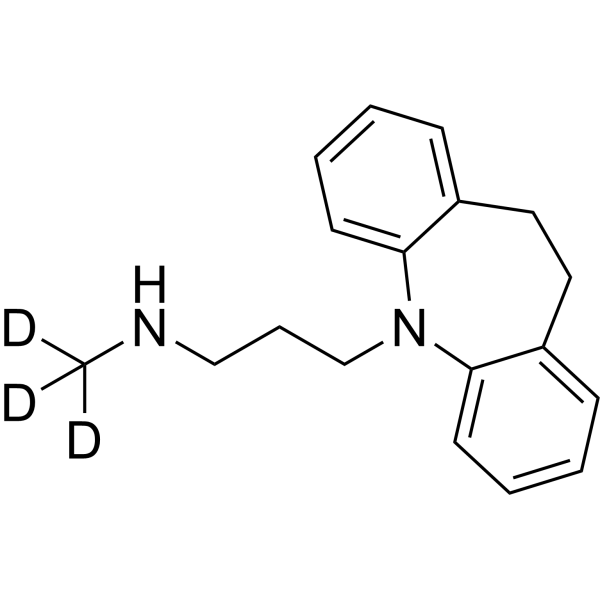 0 ImagesCat. No.: HY-B1272AS1CAS No.: 65100-49-4Desipramine-d3 is the deuterium labeled Desipramine (HY-B1272A). Desipramine is a first-generation tricyclic antidepressant. Desipramine selectively binds to norepinephrine transporter and blocks neuronal norepinephrine reuptake. Desipramine activates MAPK signaling via ERK1/2, JNK, and p38, represses NF-κB and AP-1 activity, and induces apoptosis via ROS elevation, mitochondrial membrane potential reduction, and intracellular calcium increase. Desipramine also shows anyi-inflammatory activity, inhibiting TNF-α production. Desipramine can be used for the research of hepatocellular cancer, inflammation, and neurological diseases.
-
Amorphigenin
 0 ImagesAmorphigenin is a trothotenone compound. Amorphigenin inhibits osteoclast differentiation by suppressing the expression of c-Fos and NFATc1 in activated T cells. Amorphigenin degrades melanosome proteins by activating the AMPK-dependent autophagy pathway, but not in dependence of the mTOR pathway. Amorphigenin significantly protects bone mass and reduces bone erosion in a mouse model of inflammatory bone loss. Amorphigenin can be used to study inflammatory bone diseases, postmenopausal osteoporosis, and skin pigmentation disorders.
-
MJ33
 0 ImagesCat. No.: HY-136271CAS No.: 137300-78-8MJ-33 is a competitive phospholipase A₂ (PLA₂) inhibitor with an IC50 of 0.3 μM. MJ-33 inhibits the activation of NOX2 by blocking the PLA₂ activity of Prdx6, thereby reducing the production of ROS. MJ-33 effectively inhibits the activity of acidic PLA₂ (pH 4.0), reduces the degradation of pulmonary surfactant phosphatidylcholine (PC), but has no effect on alkaline PLA₂ (pH 8.5). MJ-33 significantly alleviates lung oxidative damage induced by ischemia-reperfusion (I/R). MJ-33 significantly inhibits the invasive, migratory and adhesive abilities of prostate cancer cells by suppressing the MAPK, AKT, NF-κB and AP-1 signaling pathways. MJ-33 can be used to study ROS-related diseases and prostate cancer.
-
JPC0661
 0 ImagesCat. No.: HY-W471288CAS No.: 30479-81-3Synonyms: JFD 00458JPC0661 is a direct and allosteric ΔFOSB inhibitor. JPC0661 inhibits the binding of ΔFOSB/JUND and ΔFOsB to DNA with IC50 values in the micromolar range (9-52 uM), directly inhibits ΔFOSB-mediated transcription with IC50 of 0.82 μM in vitro. JPC0661 significantly reduces ΔFOSB occupancy at genomic AP1 sites in vivo. JPC0661 binds to a novel groove outside the DNA-binding cleft of ΔFOSB and disrupt the formation of the ΔFOSB/JUND-DNA complex. JPC0661 can be used for Alzheimer's disease research.
-
Angiogenesis inhibitor 7
 0 ImagesCat. No.: HY-170916CAS No.: 922029-50-3Angiogenesis inhibitor 7 (compound BT2) ia a potent inhibitor of angiogenesis. Angiogenesis inhibitor 7 inhibits ERK phosphorylation, FosB/ΔFosB and VCAM-1 expression.
-
Broussin
 0 ImagesCat. No.: HY-N17909CAS No.: 76045-50-6Synonyms: (S)-7-hydroxy-4'-methoxyflavaneBroussin ((S)-7-hydroxy-4'-methoxyflavane) is a flavane compound present in the branches and twigs of Broussonetia papyrifera. Broussin shows no significant antioxidant activity.
-
Erinacerin B
 0 ImagesCat. No.: HY-N21647CAS No.: 870193-55-8Erinacerin B is an isoindolinone skeleton compound. Erinacerin B is present in the mycelia and fruiting bodies of Hericium erinaceus. Erinacerin B inhibits NF-κB (p65 subunit) and AP-1 (c-Jun subunit). Erinacerin B inhibits LPS-induced nitric oxide and Prostaglandin E2 (HY-101952) production. Erinacerin B attenuates neuroinflammation. Erinacerin B is used in research on neurodegenerative and inflammatory diseases.
-
YL0441
 0 ImagesCat. No.: HY-182050Purity: 98.94%YL0441 is an inhibitor of ΔFOSB/JUND heterodimers and ΔFOSB homomultimers, with IC50 values of 13.7 μM and 12.3 μM, respectively. YL0441 blocks the binding of ΔFOSB to DNA. YL0441 reduces ΔFOSB bound to genomic DNA in the hippocampal tissues of APP mice. YL0441 is applicable to the research of Alzheimer's disease.
-
Antcin K
 0 ImagesCat. No.: HY-N9980CAS No.: 741268-13-3Antcin K is a selective inhibitor targeting the PI3K/Akt, NF-κB, MEK1/2-ERK, p38 and AP-1 pathways. Antcin K upregulates IL-10 expression, thereby inhibiting the production of pro-inflammatory factors, blocking monocyte adhesion, reducing tissue damage, and promoting myogenesis. Antcin K has significant anti-inflammatory, anti-damage and tissue protective activities. Antcin K is mainly used in the research of inflammation-related diseases such as periodontitis, rheumatoid arthritis, and skeletal muscle injury.

-
1-Methyl-6-oxo-1,6-dihydropyridine-3-carboxylic acid (Standard)
 0 Images1-Methyl-6-oxo-1,6-dihydropyridine-3-carboxylic acid (Standard) is the analytical standard of 1-Methyl-6-oxo-1,6-dihydropyridine-3-carboxylic acid (HY-N4226). This product is intended for research and analytical applications. 1-Methyl-6-oxo-1,6-dihydropyridine-3-carboxylic acid is an AP-1 inhibitor which can be found in Cordyceps bassiana. 1-Methyl-6-oxo-1,6-dihydropyridine-3-carboxylic acid downregulates the expression of COX-2. 1-Methyl-6-oxo-1,6-dihydropyridine-3-carboxylic acid can be used for the study of atopic dermatitis.
-
T-5224-d8
 0 ImagesCat. No.: HY-12270ST-5224-d8 is the deuterium labeled T-5224 (HY-12270). T-5224 is a transcription factor c-Fos/activator protein (AP)-1 inhibitor with anti-inflammatory effects, which specifically inhibits the DNA binding activity of c-Fos/c-Jun without affecting other transcription factors. T-5224 inhibits the IL-1β-induced up-regulation of Mmp-3, Mmp-13 and Adamts-5 transcription.
-
Dihydro-N-caffeoyltyramine
 0 ImagesCat. No.: HY-169751CAS No.: 501939-19-1Dihydro-N-caffeoyltyramine is a new phenolic amide that can be isolated from the root bark of wolfberry and has strong antioxidant activity and antifungal effects. Dihydro-N-caffeoyltyramine downregulates the expression of cyclooxygenase-2 by inhibiting the activity of C/EBP and AP-1 transcription factors.




