



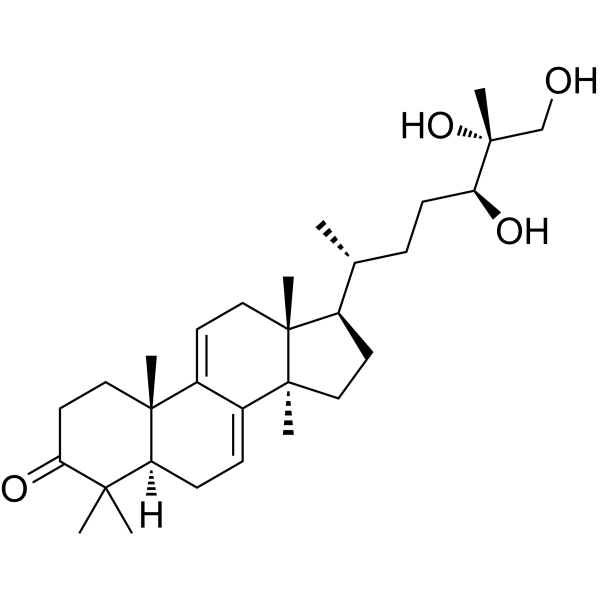
Ganodermanontriol

Based on 1 Customer Validation
Ganodermanontriol, a sterol isolated from Ganoderma lucidum, induces anti-inflammatory activity in tert-butyl hydroperoxide (t-BHP)-damaged hepatic cells through the expression of HO-1. Ganodermanontriol exhibits hepatoprotective activity.
For research use only. We do not sell to patients.
- Purity : 97.42%
- CAS No.: 106518-63-2
- Formula: C30H48O4
- Molecular Weight:472.70
-
Storage:
4°C, sealed storage, away from moisture and light
* In solvent : -80°C, 6 months; -20°C, 1 month (sealed storage, away from moisture and light)

To place orders, for customer services and technical support, please contact: MedChemExpress USA
Tel: 609-228-6898 E-mail: [email protected] [email protected]


-
 Biological Activity
-
Chemical Information
-
Solvent & Solubility
- Protocols
- Purity & Documentation
- References
-
 Help & FAQs


-
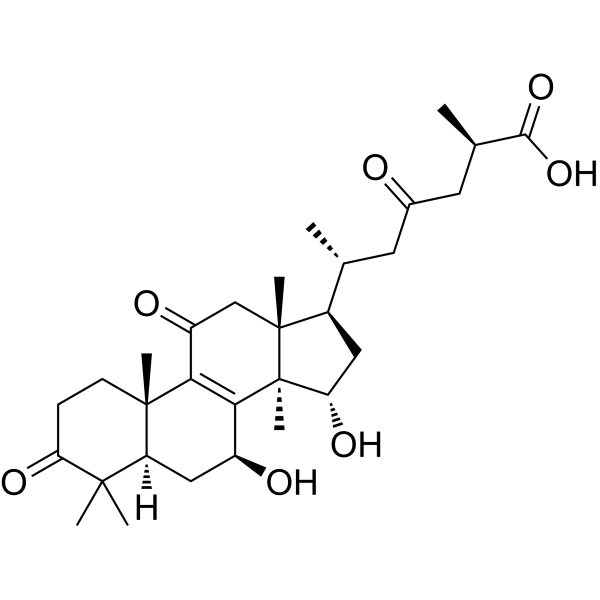
HY-N1447
Ganoderic acid AAutophagy Inducer -
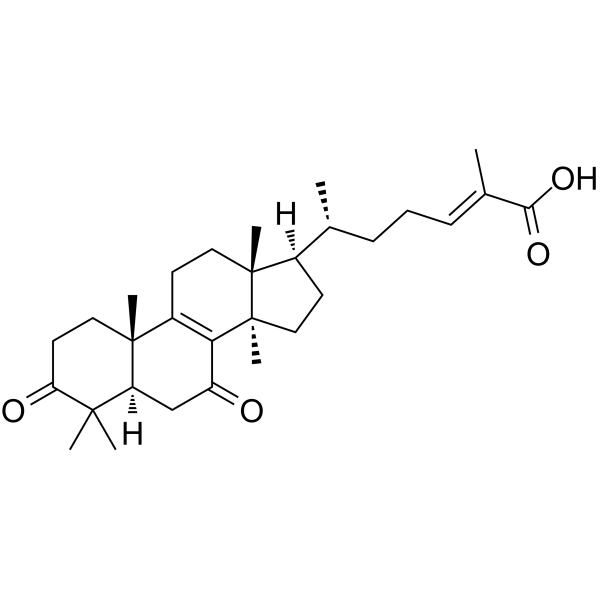
HY-120140
Ganoderic acid DMCancer and Osteoclastogenesis Inhibitor -
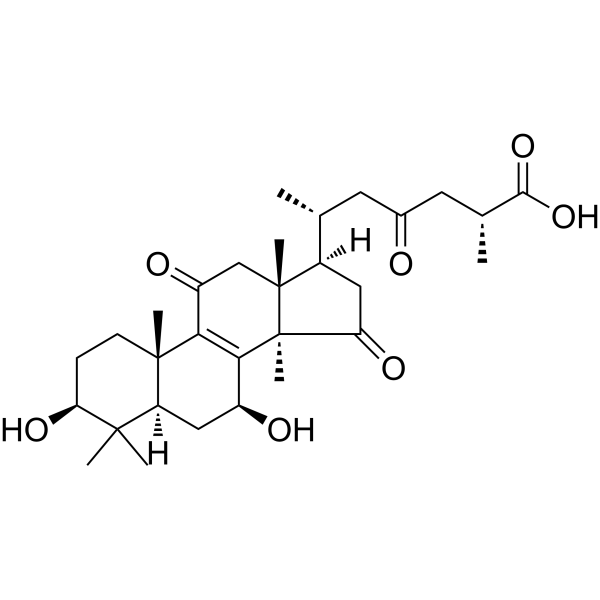
HY-N2006
Ganoderic acid BHIV Protease Inhibitor -
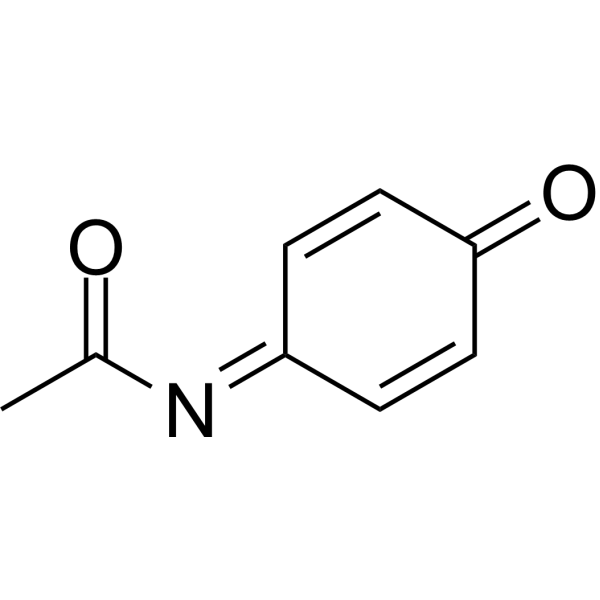
HY-W017464
NAPQIAcetaminophen Metabolite -

HY-N1506R
Ganodermanontriol (Standard)Anti-Inflammatory Agent -
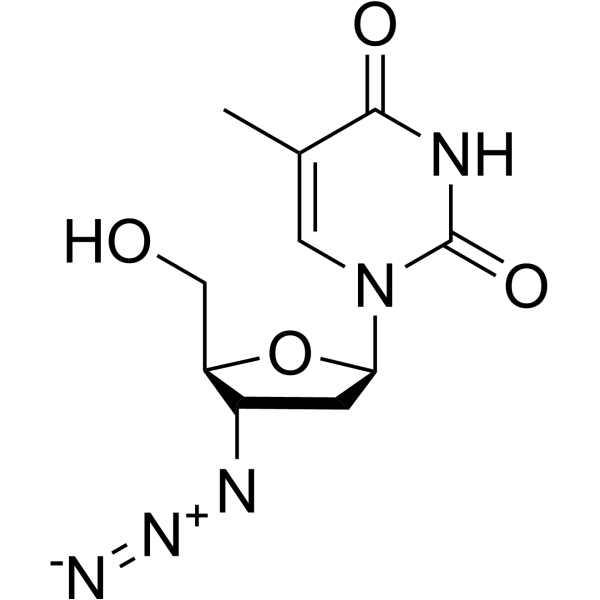
HY-17413
ZidovudineNucleoside Reverse Transcriptase Inhibitor -
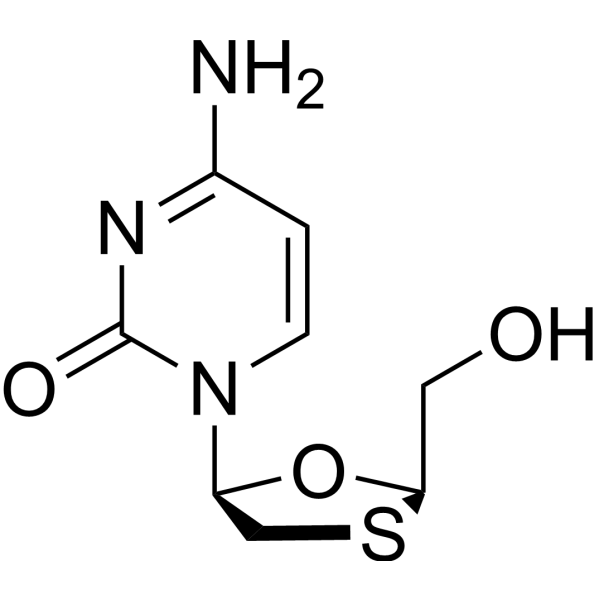
HY-B0250
LamivudineReverse Transcriptase Inhibitor -
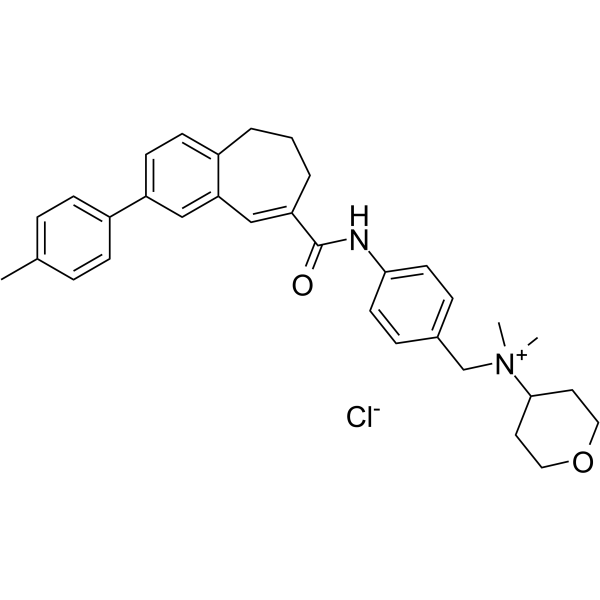
HY-13406
TAK-779CCR5 Antagonist -
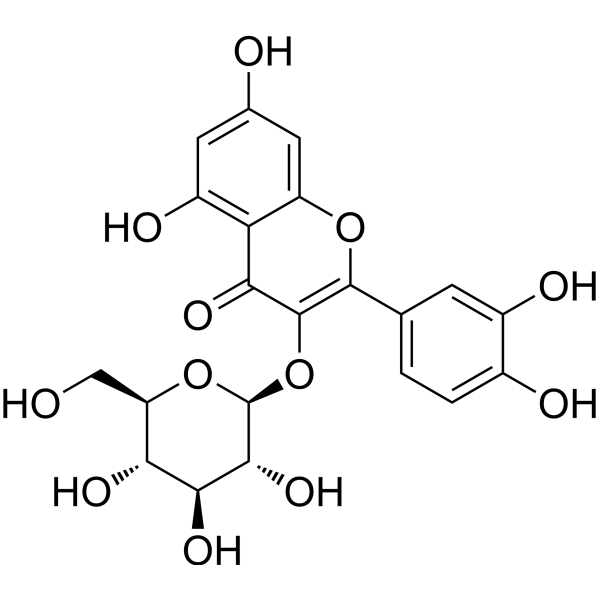
HY-N1445
IsoquercitrinNO Synthase Inhibitor -
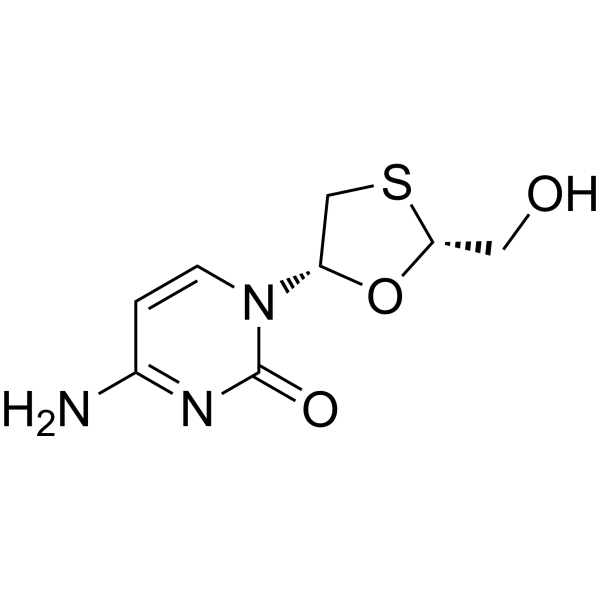
HY-B0250R
Lamivudine (Standard)Reverse Transcriptase Inhibitor -

HY-17413R
Zidovudine (Standard)Standard of Zidovudine -
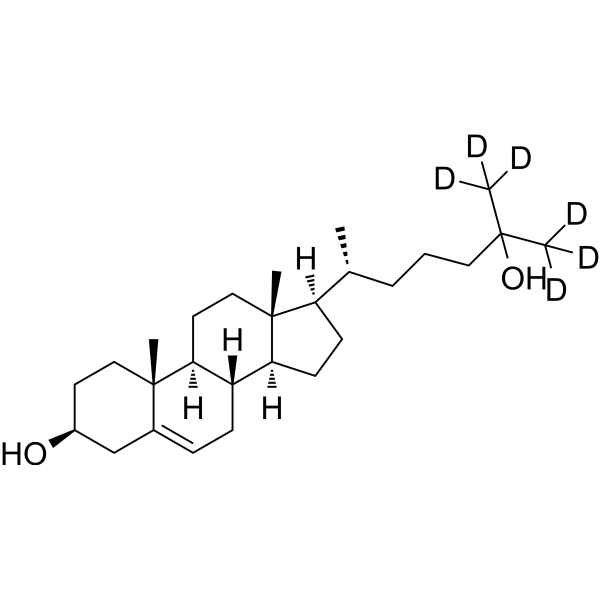
HY-113134S
25-Hydroxycholesterol-d6Stable Isotope


Biological Activity
Description
Cellular Effect
|
Cell Line

|
Type | Value | Description | References |
|---|---|---|---|---|
| BV-2 | IC50 |
23.62 μM
Compound: 9
|
Antiinflammatory activity in mouse BV2 cells assessed as inhibition of LPS-induced NO production incubated for 24 hrs measured after 15 mins by Griess assay
Antiinflammatory activity in mouse BV2 cells assessed as inhibition of LPS-induced NO production incubated for 24 hrs measured after 15 mins by Griess assay
|
[PMID: 27335254] |
| HEK293 | EC50 |
2.5 μM
Compound: 13
|
Agonist activity at full length mouse FXR/RXRalpha expressed in human HEK293 cells assessed as induction of transcriptional activity after 18 hrs by dual luciferase reporter gene assay
Agonist activity at full length mouse FXR/RXRalpha expressed in human HEK293 cells assessed as induction of transcriptional activity after 18 hrs by dual luciferase reporter gene assay
|
[PMID: 22014750] |
| HeLa | IC50 |
11 μM
Compound: 13
|
Cytotoxicity against human HeLa cells
Cytotoxicity against human HeLa cells
|
[PMID: 23092389] |
| K562 | IC50 |
80.9 μM
Compound: 26
|
Cytotoxicity against human K562 cells by MTT method
Cytotoxicity against human K562 cells by MTT method
|
[PMID: 26287401] |
| Lewis lung carcinoma cell line | ED50 |
2.3 μg/mL
Compound: 13
|
Cytotoxicity against mouse LLC cells
Cytotoxicity against mouse LLC cells
|
[PMID: 23092389] |
| MCF7 | IC50 |
5.8 μM
Compound: 1, Ganodermanontriol
|
Antiproliferative activity against human MCF7 cells after 72 hrs by MTT assay
Antiproliferative activity against human MCF7 cells after 72 hrs by MTT assay
|
[PMID: 22044278] |
| MDA-MB-231 | IC50 |
9.7 μM
Compound: 1, Ganodermanontriol
|
Antiproliferative activity against human MDA-MB-231 cells after 72 hrs by MTT assay
Antiproliferative activity against human MDA-MB-231 cells after 72 hrs by MTT assay
|
[PMID: 22044278] |
| PC-3 | IC50 |
105.8 μM
Compound: 26
|
Cytotoxicity against human PC3 cells by MTT method
Cytotoxicity against human PC3 cells by MTT method
|
[PMID: 26287401] |
| Vero | IC50 |
>106 μM
Compound: 9
|
Cytotoxicity against African green monkey Vero cells assessed as cell growth inhibition by GFP fluorescence based assay
Cytotoxicity against African green monkey Vero cells assessed as cell growth inhibition by GFP fluorescence based assay
|
[PMID: 37816683] |
In Vitro


Chemical Information
-
CAS No. 106518-63-2
-
Appearance Solid
-
Molecular Weight 472.70
-
Formula C30H48O4
-
Color White to off-white
-
SMILES
CC1(C)C(CC[C@]2(C)C3=CC[C@]4(C)[C@@H]([C@H](C)CC[C@H](O)[C@](C)(O)CO)CC[C@](C)4C3=CC[C@@]12[H])=O
-
Structure Classification
-
Shipping
Room temperature in continental US; may vary elsewhere.
-
Storage
4°C, sealed storage, away from moisture and light
* In solvent : -80°C, 6 months; -20°C, 1 month (sealed storage, away from moisture and light)


Solvent & Solubility
In Vitro:
DMSO : 100 mg/mL (211.55 mM; Need ultrasonic; Hygroscopic DMSO has a significant impact on the solubility of product, please use newly opened DMSO)
Please refer to the solubility information to select the appropriate solvent. Once prepared, please aliquot and store the solution to prevent product inactivation from repeated freeze-thaw cycles.
Storage method and period of stock solution: -80°C, 6 months; -20°C, 1 month (sealed storage, away from moisture and light). When stored at -80°C, please use it within 6 months. When stored at -20°C, please use it within 1 month.
Please refer to the solubility information to select the appropriate solvent. Once prepared, please aliquot and store the solution to prevent product inactivation from repeated freeze-thaw cycles.
Storage method and period of stock solution: -80°C, 6 months; -20°C, 1 month (sealed storage, away from moisture and light). When stored at -80°C, please use it within 6 months. When stored at -20°C, please use it within 1 month.
Concentration (start) × Volume (start) = Concentration (final) × Volume (final)
In Vivo:
Select the appropriate dissolution method based on your experimental animal and administration route.
- For the following dissolution methods, please ensure to first prepare a clear stock solution using an In Vitro approach and then sequentially add co-solvents:
- To ensure reliable experimental results, the clarified stock solution can be appropriately stored based on storage conditions. As for the working solution for In Vivo experiments, it is recommended to prepare freshly and use it on the same day.
- The percentages shown for the solvents indicate their volumetric ratio in the final prepared solution. If precipitation or phase separation occurs during preparation, heat and/or sonication can be used to aid dissolution.
Add each solvent one by one: 10% DMSO 90% (20% SBE-β-CD in Saline)
Solubility: ≥ 2.5 mg/mL (5.29 mM); Clear solution
This protocol yields a clear solution of ≥ 2.5 mg/mL (saturation unknown).
Taking 1 mL working solution as an example, add 100 μL DMSO stock solution (25.0 mg/mL) to 900 μL 20% SBE-β-CD in Saline, and mix evenly.
Preparation of 20% SBE-β-CD in Saline (4°C, storage for one week): 2 g SBE-β-CD powder is dissolved in 10 mL Saline, completely dissolve until clear.
In Vivo Dissolution Calculator
Please enter the basic information of animal experiments:
-
-
-
-
Recommended: Prepare an additional quantity of animals to account for potential losses during experiments.
Please enter your animal formula composition:
-
%DMSO +
Recommended: Keep the proportion of DMSO in working solution below 2% if your animal is weak.
-
%+
-
+%Tween-80 + +
-
%Saline +
The co-solvents required include: DMSO, . All of co-solvents are available by MedChemExpress (MCE). , Tween 80. All of co-solvents are available by MedChemExpress (MCE).
Working solution concentration: 0.22 mg/mL
Method for preparing stock solution: mg drug dissolved in μL DMSO. Stock solution concentration: mg/mL. * In solvent : -80°C, 6 months; -20°C, 1 month (sealed storage, away from moisture and light)
1. Take μL DMSO stock solution;
2. Add μL .
μL , mix evenly;
3. Then add μL Tween 80, mix evenly;
4. Then add μL
Please ensure that the stock solution in the first step is dissolved to a clear state, and add co-solvents in sequence. You can use ultrasonic heating (ultrasonic cleaner, recommended frequency 20-40 kHz), vortexing, etc. to assist dissolution.


Purity & Documentation
-
Data Sheet (275 KB)
-
SDS (393 KB)
- English - EN (393 KB)
- Français - FR (393 KB)
- Deutsch - DE (393 KB)
- Norwegian - NO (393 KB)
- Español - ES (393 KB)
- Swedish - SV (393 KB)
- Italian - IT (393 KB)
- Korean - KR (393 KB)
- Portuguese - PT (393 KB)
-
Handling Instructions (2659 KB)
References
[1]. Ha do T, et al. In vitro and in vivo hepatoprotective effect of ganodermanontriol against t-BHP-induced oxidative stress. Ethnopharmacol. 2013 Dec 12;150(3):875-85. [Content Brief]
[2]. Kennedy EM, et al. Semisynthesis and biological evaluation of ganodermanontriol and its stereoisomeric triols. J Nat Prod. 2011 Nov 28;74(11):2332-7. [Content Brief]
[3]. Jedinak A, Thyagarajan-Sahu A, Jiang J, Sliva D. Ganodermanontriol, a lanostanoid triterpene from Ganoderma lucidum, suppresses growth of colon cancer cells through ß-catenin signaling. Int J Oncol. 2011;38(3):761-767. [Content Brief]
[4]. Park CH, et al. The Anti-Melanogenic Effects of Ganodermanontriol from the Medicinal Mushroom Ganoderma lucidum through the Regulation of the CREB and MAPK Signaling Pathways in B16F10 Cells. Molecules. 2024 Aug 22;29(16):3976. [Content Brief]


Complete Stock Solution Preparation Table
Please refer to the solubility information to select the appropriate solvent. Once prepared, please aliquot and store the solution to prevent product inactivation from repeated freeze-thaw cycles.
Storage method and period of stock solution: -80°C, 6 months; -20°C, 1 month (sealed storage, away from moisture and light). When stored at -80°C, please use it within 6 months. When stored at -20°C, please use it within 1 month.
| Optional Solvent | Concentration Solvent Mass | 1 mg | 5 mg | 10 mg | 25 mg |
|---|---|---|---|---|---|
| DMSO | 1 mM | 2.1155 mL | 10.5775 mL | 21.1551 mL | 52.8877 mL |
| 5 mM | 0.4231 mL | 2.1155 mL | 4.2310 mL | 10.5775 mL | |
| 10 mM | 0.2116 mL | 1.0578 mL | 2.1155 mL | 5.2888 mL | |
| 15 mM | 0.1410 mL | 0.7052 mL | 1.4103 mL | 3.5258 mL | |
| 20 mM | 0.1058 mL | 0.5289 mL | 1.0578 mL | 2.6444 mL | |
| 25 mM | 0.0846 mL | 0.4231 mL | 0.8462 mL | 2.1155 mL | |
| 30 mM | 0.0705 mL | 0.3526 mL | 0.7052 mL | 1.7629 mL | |
| 40 mM | 0.0529 mL | 0.2644 mL | 0.5289 mL | 1.3222 mL | |
| 50 mM | 0.0423 mL | 0.2116 mL | 0.4231 mL | 1.0578 mL | |
| 60 mM | 0.0353 mL | 0.1763 mL | 0.3526 mL | 0.8815 mL | |
| 80 mM | 0.0264 mL | 0.1322 mL | 0.2644 mL | 0.6611 mL | |
| 100 mM | 0.0212 mL | 0.1058 mL | 0.2116 mL | 0.5289 mL |


Ganodermanontriol Related Classifications
HY-N1506 Related Classifications
 Powered by Bioz