



Oxindole
Based on 3 publication(s) in Google Scholar
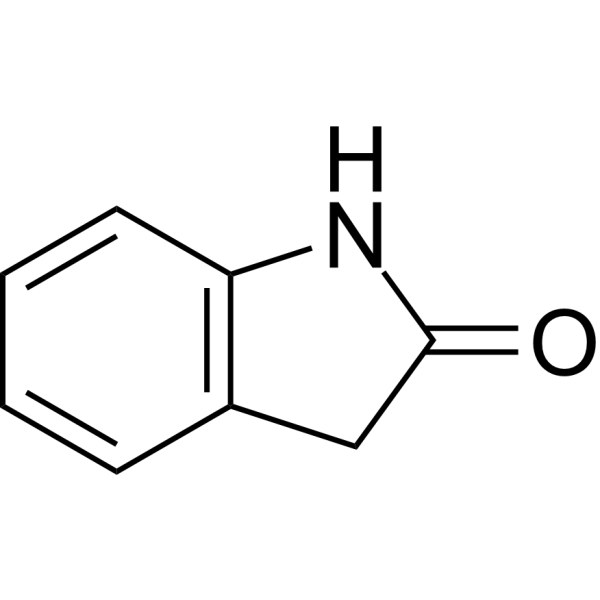
Oxindole (Indolin-2-one) is an aromatic heterocyclic building block. 2-indolinone derivatives have become lead compounds in the research of kinase inhibitors.
Nos produits utilisent uniquement pour la recherche. Nous ne vendons pas aux patients.
- Pureté : 99.59%
- CAS No.: 59-48-3
- Formule: C8H7NO
- Masse moléculaire:133.15
-
Stockage:Powder -20°C, 3 years , 4°C, 2 years ; In solvent -80°C, 2 years , -20°C, 1 year

To place orders, for customer services and technical support, please contact: MedChemExpress USA
Tel: 609-228-6898 E-mail: [email protected] [email protected]


-
 Activité biologique
-
Chemical Information
-
Solvant et solubilité
- Pureté et documentation
- Références
-
 Help & FAQs


-
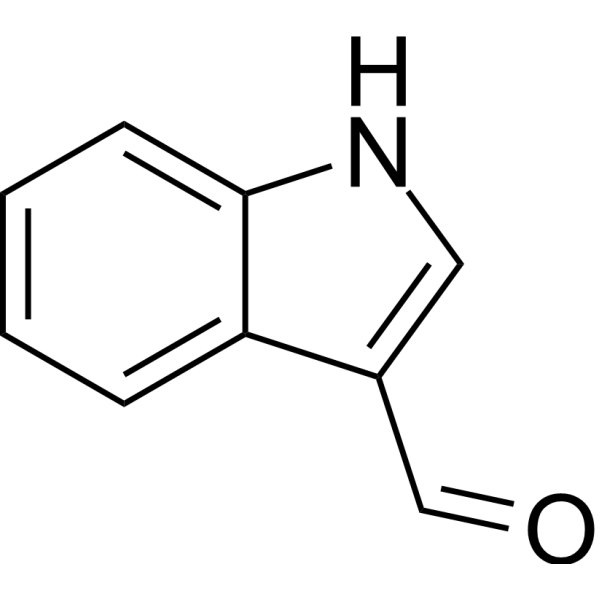
HY-W007376
Indole-3-carboxaldehydeEndogenous Metabolite -
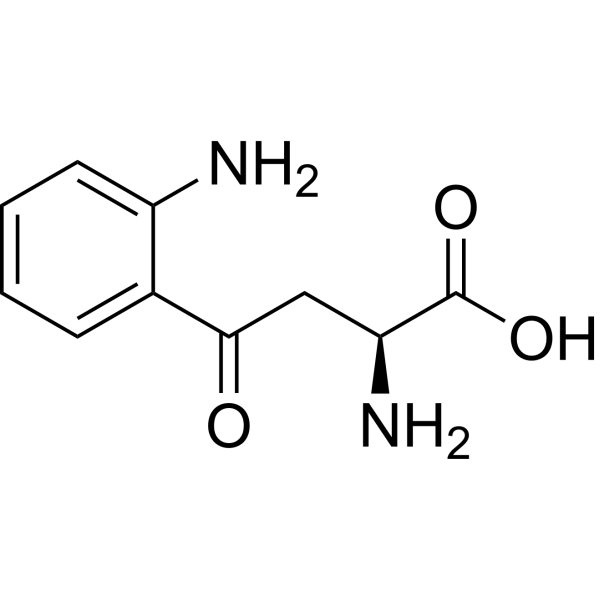
HY-104026
L-KynurenineAryl Hydrocarbon Receptor Agonist -
HY-W014666
Xanthurenic acid -

HY-Y0061R
Oxindole (Standard) -
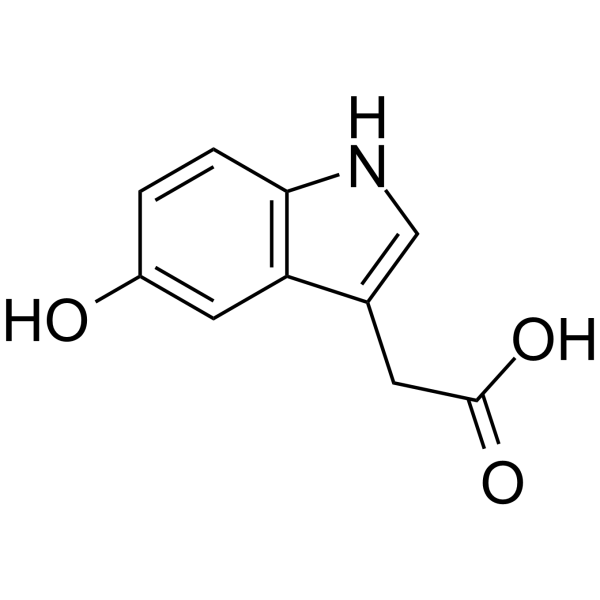
HY-W008253
5-Hydroxyindole-3-acetic acid -
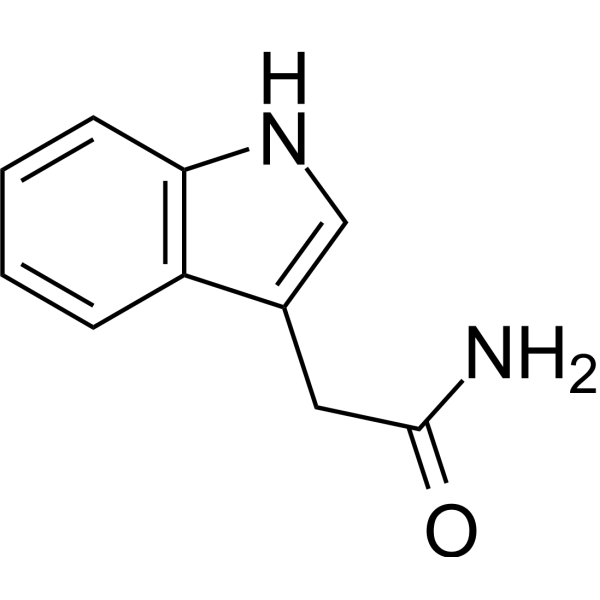
HY-W016784
Indole-3-acetamideEndogenous Metabolite -
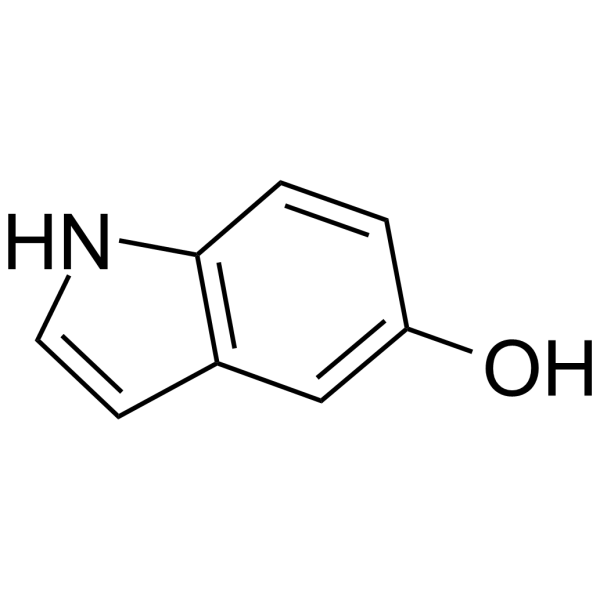
HY-W001160
5-HydroxyindoleTryptophan Metabolite -
HY-W008253R
5-Hydroxyindole-3-acetic acid (Standard) -
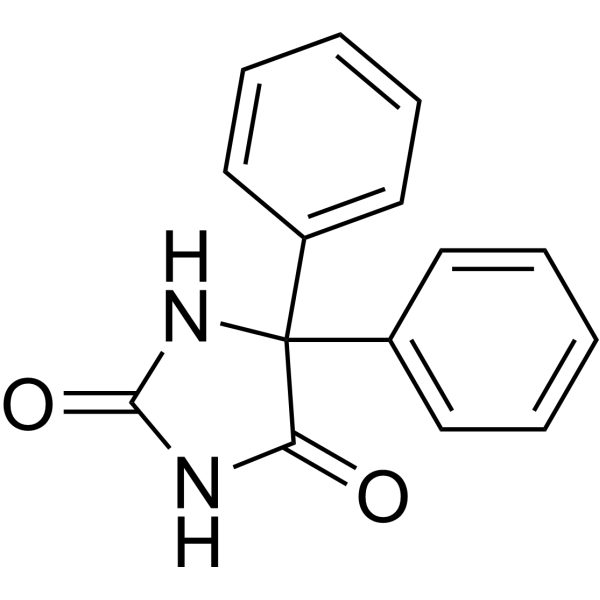
HY-B0448
PhenytoinVirus Protease Inhibitor -

HY-Y0370
6-ChlorooxindoleChymase Inhibitor -

HY-W016784R
Indole-3-acetamide (Standard)Endogenous Metabolite -

HY-B0448R
Phenytoin (Standard)Virus Protease Inhibitor
Publications Citing Use of MedChemExpress (MCE) Oxindole
MoreVoir tous les produits spécifiques à Isoform Endogenous Metabolite
More

Activité biologique
Description
IC50 & Target
|
Human Endogenous Metabolite |
In Vitro
Oxindole (Indolin-2-one) is a bicyclic structure consisting of a benzene ring fused to 2-pyrrolidone. Substituted indolinones can be referred as ‘privileged structures’ owing to their excellent binding affinity for many receptors and to the number of approved drugs containing this scaffold[1]. Oxindole has been found in tissues and fluids of mammals as well as natural products produced by a range of plants, bacteria and invertebrates. 2-indolinone derivatives possess diverse range of pharmacological activities including anti-cancer, anti-HIV, anti-diabetic, antibacterial, antioxidant, kinase inhibitory, AChE inhibitory, anti-leishmanial, b3 adrenergic receptor agonistic, phosphatase inhibitory, analgesic, spermicidal, vasopressin antagonists, progesterone antagonists, neuroprotection, NMDA blocker and sleep inducing activities[2].
MedChemExpress (MCE) has not independently confirmed the accuracy of these methods. They are for reference only. .


Chemical Information
-
CAS No. 59-48-3
-
Appearance Solid
-
Masse moléculaire 133.15
-
Formule C8H7NO
-
Color Off-white to light yellow
-
SMILES
O=C1NC2=C(C=CC=C2)C1
-
Synonyms
2-Indolinone
-
Structure Classification
-
Livraison
Room temperature in continental US; may vary elsewhere.
-
Stockage
Powder -20°C 3 years 4°C 2 years In solvent -80°C 2 years -20°C 1 year


Publications (3)
-
Journal Impact Factor
-
Most Recent
-
Int J Mol Sci
Cinnamic Acid, Perillic Acid, and Tryptophan Metabolites Differentially Regulate Ion Transport and Serotonin Metabolism and Signaling in the Mouse Ileum In Vitro. [Abstract]2024 Jun 18;25(12):6694. PMID: 38928404 -
Amino Acids
Tryptophan regulates bile and nitrogen metabolism in two pig gut lactobacilli species in vitro based on metabolomics study. [Abstract]2022 Oct;54(10):1421-1435. PMID: 35838843 -
Vet Microbiol
The Chinese medicine monomer Schisandrin C inhibits PRRSV infection by regulating the OGT-PI3K/AKT/mTOR signaling pathway. [Abstract]2026 May:316:110992. PMID: 41865607


Solvant et solubilité
In Vitro:
DMSO : 50 mg/mL (375.52 mM; ultrasonic and warming and heat to 80°C; Hygroscopic DMSO has a significant impact on the solubility of product, please use newly opened DMSO)
Please refer to the solubility information to select the appropriate solvent. Once prepared, please aliquot and store the solution to prevent product inactivation from repeated freeze-thaw cycles.
Storage method and period of stock solution: -80°C, 2 years; -20°C, 1 year. When stored at -80°C, please use it within 2 years. When stored at -20°C, please use it within 1 year.
Please refer to the solubility information to select the appropriate solvent. Once prepared, please aliquot and store the solution to prevent product inactivation from repeated freeze-thaw cycles.
Storage method and period of stock solution: -80°C, 2 years; -20°C, 1 year. When stored at -80°C, please use it within 2 years. When stored at -20°C, please use it within 1 year.
Concentration (start) × Volume (start) = Concentration (final) × Volume (final)
In Vivo:
Select the appropriate dissolution method based on your experimental animal and administration route.
- For the following dissolution methods, please ensure to first prepare a clear stock solution using an In Vitro approach and then sequentially add co-solvents:
- To ensure reliable experimental results, the clarified stock solution can be appropriately stored based on storage conditions. As for the working solution for In Vivo experiments, it is recommended to prepare freshly and use it on the same day.
- The percentages shown for the solvents indicate their volumetric ratio in the final prepared solution. If precipitation or phase separation occurs during preparation, heat and/or sonication can be used to aid dissolution.
Add each solvent one by one: 10% DMSO 40% PEG300 5% Tween-80 45% Saline
Solubility: ≥ 2.5 mg/mL (18.78 mM); Clear solution
This protocol yields a clear solution of ≥ 2.5 mg/mL (saturation unknown).
Taking 1 mL working solution as an example, add 100 μL DMSO stock solution (25.0 mg/mL) to 400 μL PEG300, and mix evenly; then add 50 μL Tween-80 and mix evenly; then add 450 μL Saline to adjust the volume to 1 mL.
Preparation of Saline: Dissolve 0.9 g sodium chloride in ddH₂O and dilute to 100 mL to obtain a clear Saline solution.
Add each solvent one by one: 10% DMSO 90% (20% SBE-β-CD in Saline)
Solubility: ≥ 2.5 mg/mL (18.78 mM); Clear solution
This protocol yields a clear solution of ≥ 2.5 mg/mL (saturation unknown).
Taking 1 mL working solution as an example, add 100 μL DMSO stock solution (25.0 mg/mL) to 900 μL 20% SBE-β-CD in Saline, and mix evenly.
Preparation of 20% SBE-β-CD in Saline (4°C, storage for one week): 2 g SBE-β-CD powder is dissolved in 10 mL Saline, completely dissolve until clear.
In Vivo Dissolution Calculator
Please enter the basic information of animal experiments:
-
-
-
-
Recommended: Prepare an additional quantity of animals to account for potential losses during experiments.
Please enter your animal formula composition:
-
%DMSO +
Recommended: Keep the proportion of DMSO in working solution below 2% if your animal is weak.
-
%+
-
+%Tween-80 + +
-
%Saline +
The co-solvents required include: DMSO, . All of co-solvents are available by MedChemExpress (MCE). , Tween 80. All of co-solvents are available by MedChemExpress (MCE).
Working solution concentration: 0.22 mg/mL
Method for preparing stock solution: mg drug dissolved in μL DMSO. Stock solution concentration: mg/mL.
1. Take μL DMSO stock solution;
2. Add μL .
μL , mix evenly;
3. Then add μL Tween 80, mix evenly;
4. Then add μL
Please ensure that the stock solution in the first step is dissolved to a clear state, and add co-solvents in sequence. You can use ultrasonic heating (ultrasonic cleaner, recommended frequency 20-40 kHz), vortexing, etc. to assist dissolution.


Pureté et documentation
-
Fiche technique (285 KB)
-
SDS (396 KB)
- English - EN (396 KB)
- Français - FR (396 KB)
- Deutsch - DE (396 KB)
- Norwegian - NO (396 KB)
- Español - ES (396 KB)
- Swedish - SV (396 KB)
- Italian - IT (396 KB)
- Korean - KR (396 KB)
- Portuguese - PT (396 KB)
-
Instruction de manipulation (2659 KB)
Références
[1]. Leoni A, et al. 2-Indolinone a versatile scaffold for treatment of cancer: a patent review (2008-2014). Expert Opin Ther Pat. 2016;26(2):149-73. [Content Brief]
[2]. Kaur M, et al. Oxindole: A chemical prism carrying plethora of therapeutic benefits. Eur J Med Chem. 2016 Nov 10;123:858-894. [Content Brief]


Complete Stock Solution Preparation Table
Please refer to the solubility information to select the appropriate solvent. Once prepared, please aliquot and store the solution to prevent product inactivation from repeated freeze-thaw cycles.
Storage method and period of stock solution: -80°C, 2 years; -20°C, 1 year. When stored at -80°C, please use it within 2 years. When stored at -20°C, please use it within 1 year.
| Optional Solvent | Concentration Solvent Mass | 1 mg | 5 mg | 10 mg | 25 mg |
|---|---|---|---|---|---|
| DMSO | 1 mM | 7.5103 mL | 37.5516 mL | 75.1033 mL | 187.7582 mL |
| 5 mM | 1.5021 mL | 7.5103 mL | 15.0207 mL | 37.5516 mL | |
| 10 mM | 0.7510 mL | 3.7552 mL | 7.5103 mL | 18.7758 mL | |
| 15 mM | 0.5007 mL | 2.5034 mL | 5.0069 mL | 12.5172 mL | |
| 20 mM | 0.3755 mL | 1.8776 mL | 3.7552 mL | 9.3879 mL | |
| 25 mM | 0.3004 mL | 1.5021 mL | 3.0041 mL | 7.5103 mL | |
| 30 mM | 0.2503 mL | 1.2517 mL | 2.5034 mL | 6.2586 mL | |
| 40 mM | 0.1878 mL | 0.9388 mL | 1.8776 mL | 4.6940 mL | |
| 50 mM | 0.1502 mL | 0.7510 mL | 1.5021 mL | 3.7552 mL | |
| 60 mM | 0.1252 mL | 0.6259 mL | 1.2517 mL | 3.1293 mL | |
| 80 mM | 0.0939 mL | 0.4694 mL | 0.9388 mL | 2.3470 mL | |
| 100 mM | 0.0751 mL | 0.3755 mL | 0.7510 mL | 1.8776 mL |


Oxindole Related Classifications
HY-Y0061 Related Classifications
 Powered by Bioz