



Arrestin Activator
- 1
- 2
-
SDF-1α (human) TFA
 0 ImagesArt. -Nr.: HY-P4911AReinheit: 98.89%
SDF-1α (human) TFA is an endogenous CXC chemokine and the primary natural ligand of CXCR4. SDF-1α (human) TFA activates Gαi, MAP kinase, β-arrestin, and JAK/STAT signaling pathways, promoting chemotaxis of CXCR4-positive cells. SDF-1α (human) TFA induces receptor internalization and promotes cancer cell migration and invasion. SDF-1α (human) TFA promotes dental pulp cell migration and is required for osteogenesis, angiogenesis, and neurogenesis of dental pulp cells. SDF-1α (human) TFA is used in research on CXCR4-mediated diseases, such as cancer and cardiovascular diseases.
-
Abaloparatide
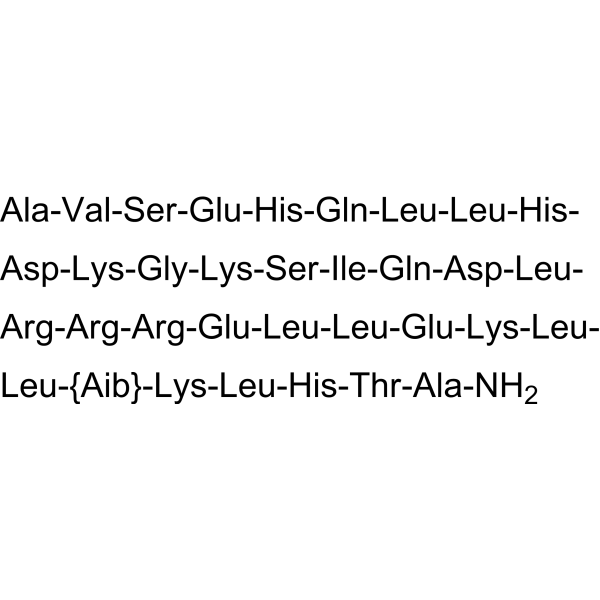 0 ImagesSynonyms: BA 058; BIM 44058
Abaloparatide (BA 058) is a parathyroid hormone receptor 1 (PTHR1) analog. Abaloparatide also is a selective PTHR1 activator. Abaloparatide enhances Gs/cAMP signaling and β-arrestin recruitment. Abaloparatide enhances bone formation and cortical structure in mice. Abaloparatide has the potential for the research of osteoporosis.
-
Abaloparatide TFA
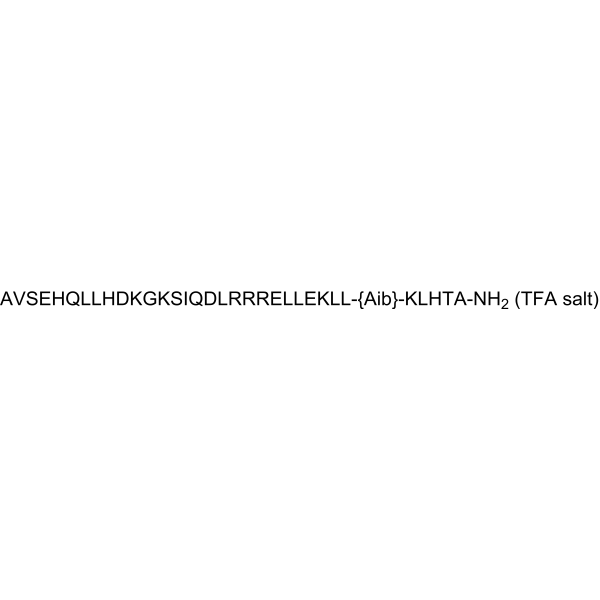 0 ImagesArt. -Nr.: HY-108742AReinheit: 98.80%Synonyms: BA 058 TFA; BIM 44058 TFA
Abaloparatide TFA (BA 058 TFA) is a parathyroid hormone receptor 1 (PTHR1) analogue. Abaloparatide TFA also is a selective PTHR1 activator. Abaloparatide TFA enhances Gs/cAMP signaling and β-arrestin recruitment. Abaloparatide TFA enhances bone formation and cortical structure in mice. Abaloparatide TFA has the potential for the research of osteoporosis.
-
SBI-810 hydrochloride
 0 Images
SBI-810 hydrochloride is a blood-brain barrier-permeable NTSR1 modulator. SBI-810 hydrochloride promotes the recruitment of β-arrestin-2 to NTSR1 and antagonizes NTSR1-mediated Gq activation. SBI-810 hydrochloride inhibits excitatory synaptic transmission, NMDA receptor and extracellular signal-regulated kinase (ERK) signaling in spinal nociceptive neurons, reduces surface expression of Nav1.7 and action potential firing in primary sensory neurons, and attenuates C-fiber responses. SBI-810 hydrochloride effectively alleviates acute and chronic pain in various rodent models through peripheral and central modulation. SBI-810 hydrochloride is applicable to research related to multiple pain disorders.
-
Elabela(19-32)
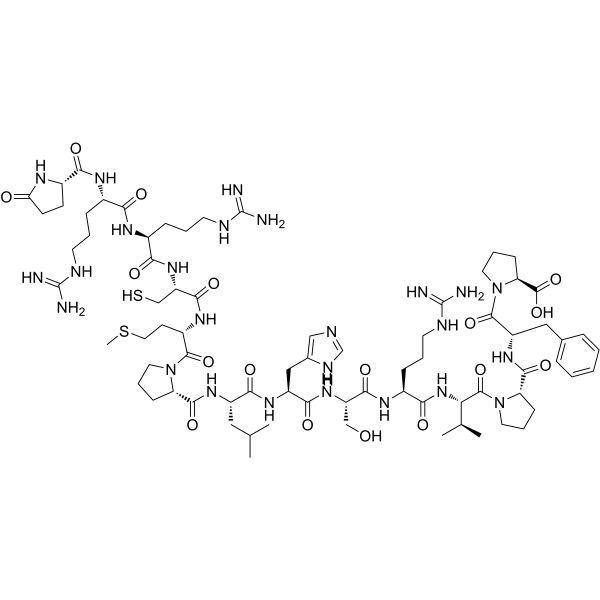 0 Images
Elabela(19-32) is an active fragment of ELABELA (ELA) that binds to apelin receptor (APJ). Elabela(19-32) activates the Gαi1 and β-arrestin-2 signaling pathways with EC50s of 8.6 nM and 166 nM. Elabela(19-32) induces receptor internalization and reduces arterial pressure, exerts positive inotropic effects on the heart.
-
IHCH-7113
 0 Images
IHCH-7113 is a 5-HT2AR agonist with EC50 values of 58.9 nM (Gq bioluminescence resonance energy transfer assay) and 44.7 nM (β-arrestin 2 bioluminescence resonance energy transfer assay). IHCH-7113 activates both Gαq-mediated signaling pathways and β-arrestin 2 recruitment pathways. IHCH-7113 is applicable for research related to depression.
-
Elabela(19-32) TFA
 0 ImagesArt. -Nr.: HY-P2106AReinheit: 99.93%
Elabela(19-32) TFA is an active fragment of ELABELA (ELA) that binds to apelin receptor (APJ). Elabela(19-32) TFA activates the Gαi1 and β-arrestin-2 signaling pathways with EC50s of 8.6 nM and 166 nM. Elabela(19-32) TFA induces receptor internalization and reduces arterial pressure, exerts positive inotropic effects on the heart.

-
SBI-810
 0 Images
SBI-810 is a blood-brain barrier-permeable NTSR1 modulator. SBI-810 promotes the recruitment of β-arrestin-2 to NTSR1 and antagonizes NTSR1-mediated Gq activation. SBI-810 inhibits excitatory synaptic transmission, NMDA receptor and extracellular signal-regulated kinase (ERK) signaling in spinal nociceptive neurons, reduces surface expression of Nav1.7 and action potential firing in primary sensory neurons, and attenuates C-fiber responses. SBI-810 effectively alleviates acute and chronic pain in various rodent models through peripheral and central modulation. SBI-810 is applicable to research related to multiple pain disorders.
-
ELA-21 (human)
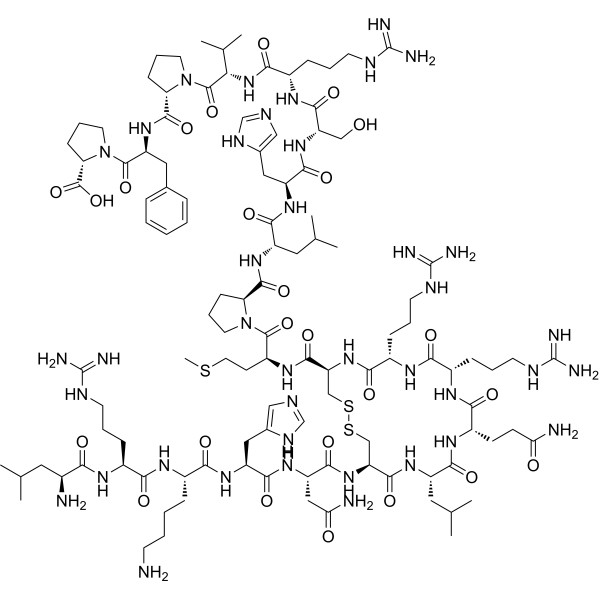 0 Images
ELA-21 (human) is an apelin receptor agonist with a pKi of 8.52. ELA-21 (human) completely inhibits Forskolin-induced cAMP production and stimulates β-arrestin recruitment with subnanomolar potencies. ELA-21 (human) is an agonist in G-protein-dependent and -independent pathways.
-
MLS6585
 0 ImagesArt. -Nr.: HY-123828CAS. Nr.: 389080-71-1
MLS6585 is a selective D1 dopamine receptor (D1R) positive allosteric modulator that enhances Dopamine (HY-B0451)-stimulated G protein/β-arrestin signaling and affinity without intrinsic D1R agonist activity. MLS6585 is inactive at D2R, D3R, D4R, and β2-adrenergic receptors. MLS6585 partially restores signaling of loss-of-function DRD1 variants and enhances responses to multiple agonists.
-
NCGC00135472
 0 ImagesArt. -Nr.: HY-125020CAS. Nr.: 862811-76-5
NCGC00135472 is a potent agonist of resolvin D1 receptor (DRV1), with the EC50 of 0.37 nM and 0.05 μM for β-arrestin and cAMP activities, respectively.
-
Tyr-c[D-Lys-p-F-Phe-Phe-Asp]-D-Pro-NH2
![Tyr-c[D-Lys-p-F-Phe-Phe-Asp]-D-Pro-NH2](https://file.medchemexpress.com/product_pic/hy-p11895.gif "Click to View Tyr-c[D-Lys-p-F-Phe-Phe-Asp]-D-Pro-NH2 Product Detail") 0 ImagesArt. -Nr.: HY-P11895CAS. Nr.: 3081054-21-6
0 ImagesArt. -Nr.: HY-P11895CAS. Nr.: 3081054-21-6Tyr-c [D-Lys-p-F-Phe-Phe-Asp]-D-Pro-NH2 is a multi-opioid receptor (Opioid Receptor) modulator, acting as a MOR/KOR agonist and a DOR antagonist. Tyr-c [D-Lys-p-F-Phe-Phe-Asp]-D-Pro-NH2 activates the G protein-mediated cAMP inhibitory pathway and β-arrestin2 recruitment pathway downstream of MOR, with an EC50 of 159 nM for β-arrestin2 recruitment, an EC50 of 1.1 nM for MOR-mediated calcium mobilization, and an EC50 of 397 nM for KOR. Tyr-c [D-Lys-p-F-Phe-Phe-Asp]-D-Pro-NH2 exhibits potent analgesic activity in vivo. It can be used in studies related to opioid receptor function and analgesia.
-
MRS542
 0 ImagesArt. -Nr.: HY-153157CAS. Nr.: 163152-31-6
MRS542 is a nucleoside A3 AR antagonist with a pKi of 8.74. MRS542 also acts as a partial agonist (pEC50 = 7.76) in promoting β-arrestin translocation. MRS542 can be converted into an agonist by LUF6000 (HY-13236). MRS542 can be used for cardiovascular disease research.
-
ISAM-CG557
 0 ImagesArt. -Nr.: HY-175666
ISAM-CG557 is a selective CB2R agonist, with a Ki of 54.6 nM. ISAM-CG557 reduces intracellular ROS levels and caspase activity. ISAM-CG557 exhibits significant MAPK bias and moderate G-protein bias, with CB2R EC50s of 0.60 nM (cAMP), 60.9 nM (β-arrestin) and 0.03 nM (MAPK). ISAM-CG557 exerts potent anti-inflammatory effects by reducing pro-inflammatory cytokines and increasing anti-inflammatory cytokines in cells. ISAM-CG557 can be used for the study of neuroinflammatory and neurodegenerative disorders.
-
AT1R-agonist-1
 0 ImagesArt. -Nr.: HY-P11847CAS. Nr.: 3124030-35-6
AT1R-agonist-1 is an angiotensin II type 1 receptor (AT1R) agonist with a Ki value of 1.4 nM. AT1R-agonist-1 exhibits low Gαq activity, retains β-arrestin recruitment function, and accesses the deep allosteric pocket inside AT1R via its flexible side chain. AT1R-agonist-1 possesses positive inotropic effects (enhancing cardiac contractile function) and causes almost no increase in blood pressure. AT1R-agonist-1 can be used for research on conditions such as refractory cardiogenic shock.
-
SDF-1α (human)
 0 ImagesArt. -Nr.: HY-P4911CAS. Nr.: 1268129-65-2
SDF-1α (human) is an endogenous CXC chemokine and the primary natural ligand of CXCR4. SDF-1α (human) activates Gαi, MAP kinase, β-arrestin, and JAK/STAT signaling pathways, promoting chemotaxis of CXCR4-positive cells. SDF-1α (human) induces receptor internalization and promotes cancer cell migration and invasion. SDF-1α (human) promotes dental pulp cell migration and is required for osteogenesis, angiogenesis, and neurogenesis of dental pulp cells. SDF-1α (human) is used in research on CXCR4-mediated diseases, such as cancer and cardiovascular diseases.
-
3-Ethoxy-5,6-dibromosalicylaldehyde
 0 Images
3-Ethoxy-5,6-dibromosalicylaldehyde is an IRE1/ERN1 inhibitor, with an IC50 of 0.12 μM, a Ki of 71-88 nM, and a Kd of 100 nM against the ribonuclease activity of hIRE1α, as well as an IC50 of 4.8 μM against yeast Ire1. It shows selectivity toward IRE1 ribonuclease. 3-Ethoxy-5,6-dibromosalicylaldehyde blocks the IRE1/ERN1-mediated unfolded protein response (UPR) signaling pathway, including XBP-1 mRNA splicing, induction of XBP1 target genes, and activation of MAPK8/9/10, but does not alter the phosphorylation level of IRE1α or the PERK/ATF6 pathway. 3-Ethoxy-5,6-dibromosalicylaldehyde inhibits chikungunya virus replication, induces growth arrest, apoptosis and clonogenic inhibition in pancreatic cancer cells, reduces FB1 (Fumonisin B1) (HY-N6719)-induced autophagy and cell death, regulates PGG-induced senescence and apoptosis, and alleviates Sorafenib (HY-10201)-induced vacuolization and damage in hepatic stellate cells. 3-Ethoxy-5,6-dibromosalicylaldehyde can be used in research related to chikungunya virus infection, pancreatic cancer, FB1-induced nephrotoxicity, liver cancer, breast cancer, lung cancer and liver fibrosis.
-
ML138
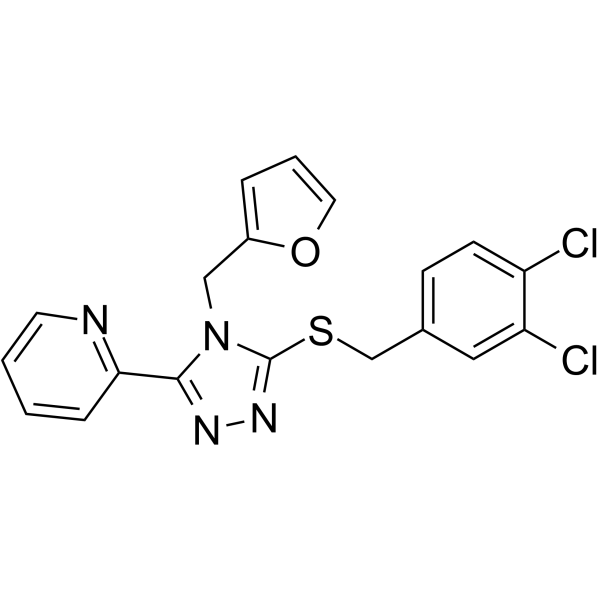 0 ImagesArt. -Nr.: HY-121800CAS. Nr.: 1355243-24-1
ML138 is a blood-brain barrier-permeable κ-opioid receptor (KOR) agonist, with an EC50 value of 0.87 μM and a human Ki value of 2.4 nM for human receptors; it exhibits high selectivity for KOR over μ, δ and other receptors. ML138 activates β-arrestin (beta-arrestin)-mediated signaling pathways, stimulates G protein coupling, and activates the downstream extracellular regulated protein kinase 1/2 (ERK1/2) mitogen-activated protein kinase (MAP kinase) signaling pathway. ML138 is applicable to research related to addictive behaviors.
-
Xelaglifam
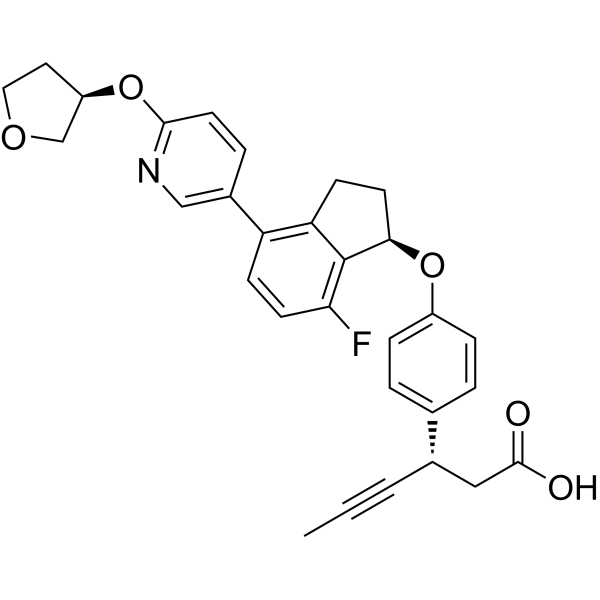 0 ImagesArt. -Nr.: HY-147420CAS. Nr.: 2230597-99-4Synonyms: IDG-16177
Xelaglifam is an orally active GPR40/FFAR1 agonist and PPARγ coactivator recruitment inhibitor (IC50 74.7 µM). Xelaglifam activates Gq/IP3/Ca2+ and β-arrestin, stimulates glucose-dependent insulin secretion from pancreatic β cells, improves glucose tolerance, reduces fasting hyperglycemia, protects pancreatic β cells, inhibits DP1, BSEP (IC50 14.3 µM), MRP2 (39.9 µM) and MRP4 (4.4 µM), activates FXR, regulates bile acid homeostasis, and modulates mitochondrial function, membrane potential and cellular ATP. Xelaglifam can be used for research on type 2 diabetes.
- 1
- 2



