



Urea
Based on 7 publication(s) in Google Scholar
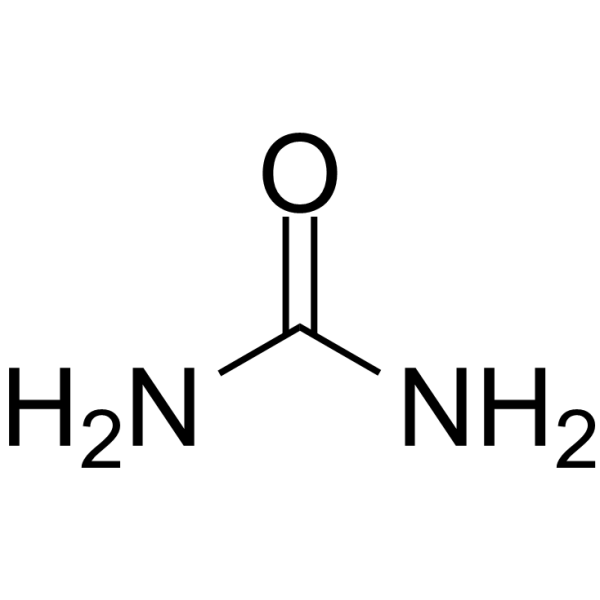
Urea is a powerful protein denaturant via both direct and indirect mechanisms. A potent emollient and keratolytic agent. Used as a diuretic agent. Blood urea nitrogen (BUN) has been utilized to evaluate renal function. Widely used in fertilizers as a source of nitrogen and is an important raw material for the chemical industry.
Nur für Forschungszwecke. Wir verkaufen nicht an Patienten.
- Reinheit : 99.84%
- CAS. Nr.: 57-13-6
- Formel: CH4N2O
- Molecular Weight:60.06
-
Speicherung:
Store at room temperature 3 years.
In solvent -80°C, 2 years , -20°C, 1 year

To place orders, for customer services and technical support, please contact: MedChemExpress USA
Tel: 609-228-6898 E-mail: [email protected] [email protected]


-
 Biologische Aktivität
-
Chemical Information
-
Lösungsmittel & Löslichkeit
- Reinheit & Dokumentation
- Verweise
-
 Help & FAQs


-
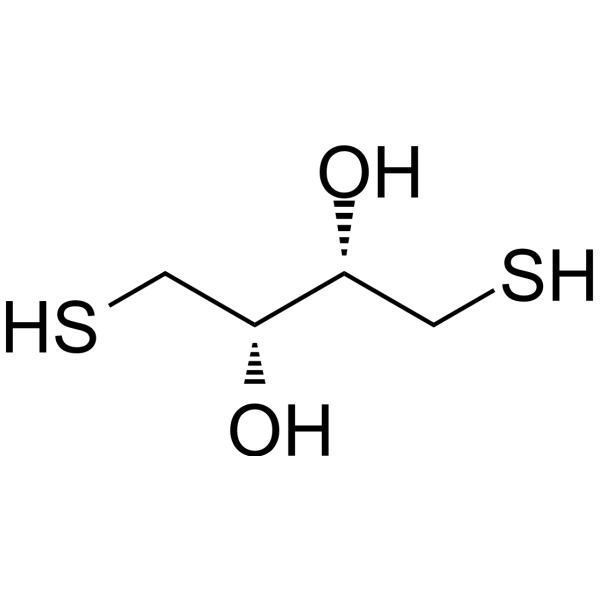
HY-15917
DL-DithiothreitolReducing Agent -

HY-Y0271R
Urea (Standard)Endogenous Metabolite -
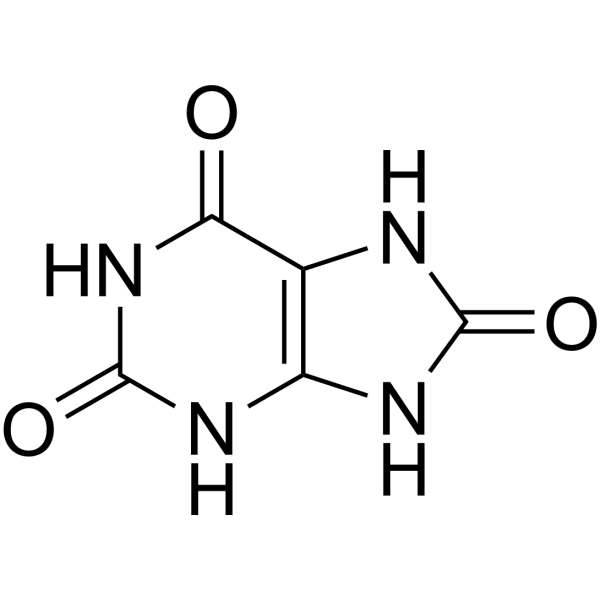
HY-B2130
Uric acidOxygen Radical Scavenger -
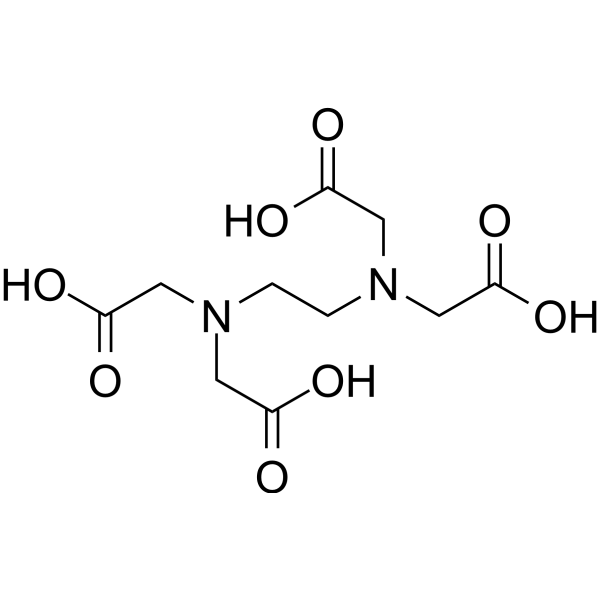
HY-Y0682
Ethylenediaminetetraacetic acidMetal Chelator -
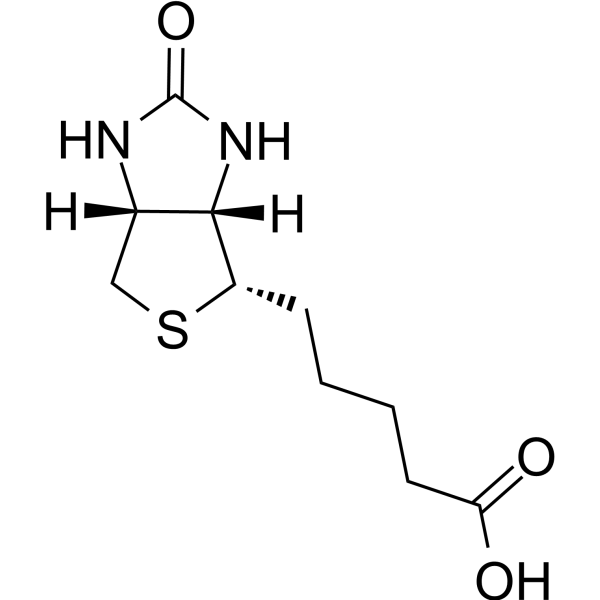
HY-B0511
BiotinVitamin B7 -
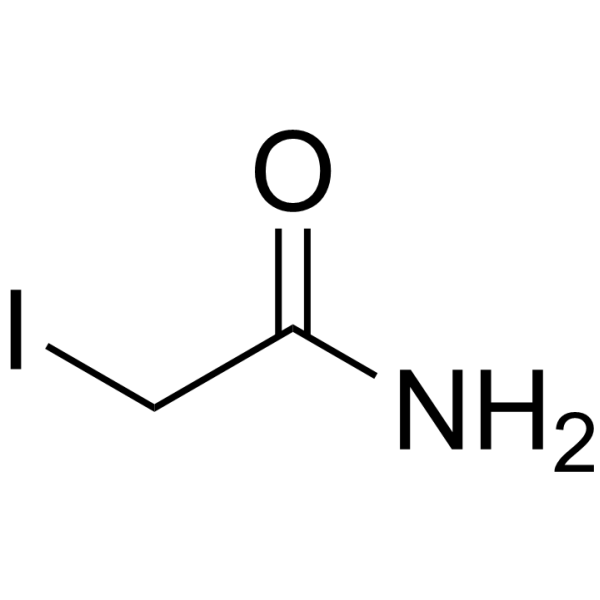
HY-34477
2-IodoacetamideAlkylating Agent -
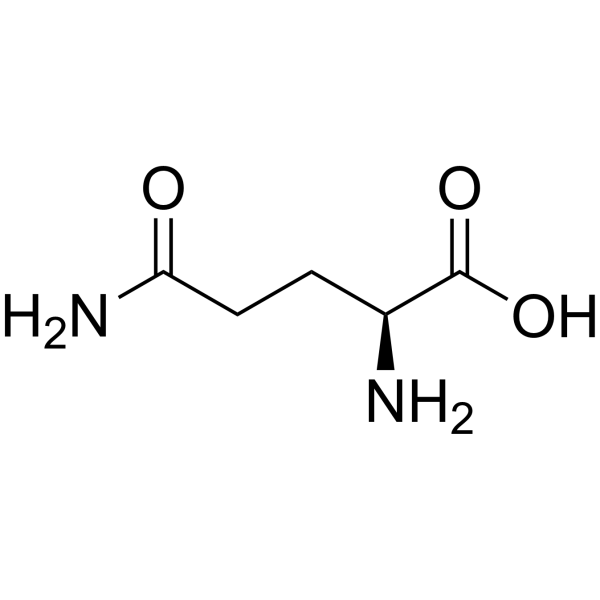
HY-N0390
L-GlutamineEndogenous Metabolite -
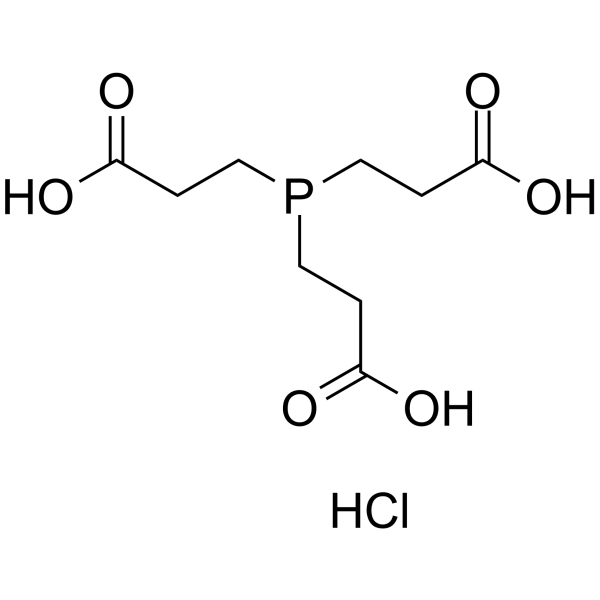
HY-W011500
TCEP hydrochlorideNon-Thiol Reducing Agent -
HY-N0378
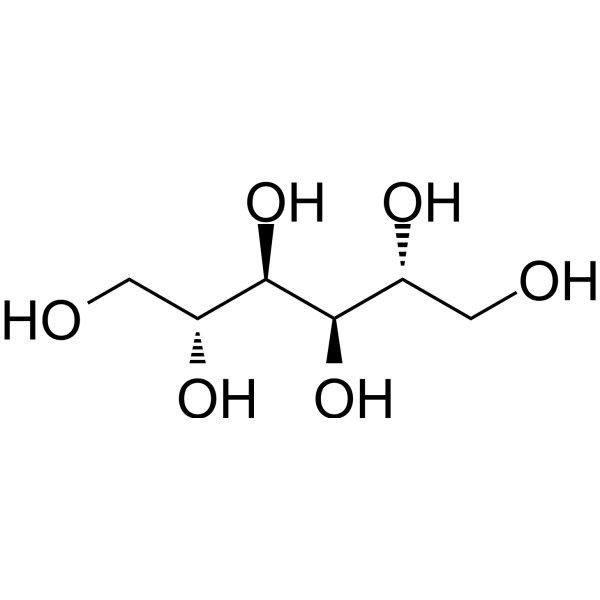
D-MannitolResistant Sugar/Osmotic Diuretics -

HY-W093399
Ammonium bicarbonate,AR,99%Biochemical Assay Reagent -
HY-B0150
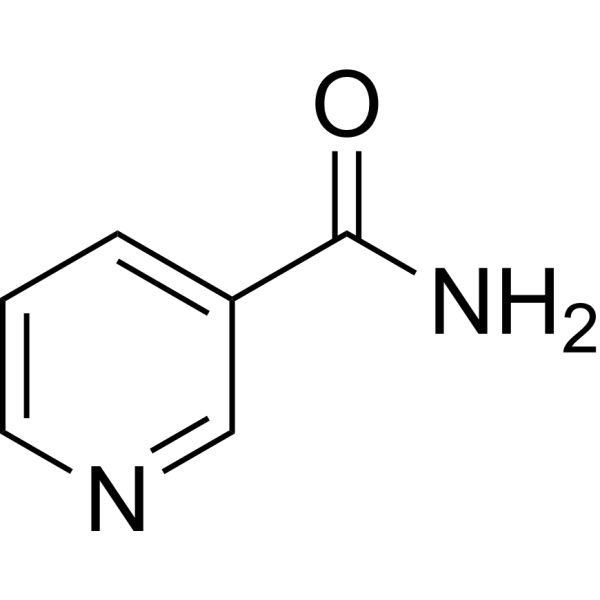
NicotinamideSIRT Inhibitor -
HY-B2176
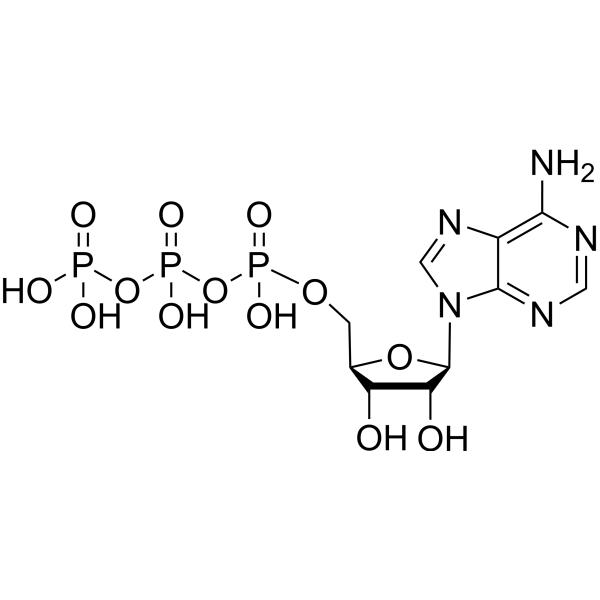
ATPEndogenous Metabolite
Publications Citing Use of MedChemExpress (MCE) Urea
More- Signal Transduct Target Ther. 2025 May 28;10(1):167. [Abstract]
- Nature. 2025 Jul;643(8070):192-200. [Abstract]
- Autophagy. 2023 Jun;19(6):1745-1763. [Abstract]
- Commun Chem. 2025 Dec 9. [Abstract]
- Clin Chim Acta. 2026 Aug 5:593:121259.
- Microb Pathog. 2025 Jul:204:107472. [Abstract]
- Biomed Pharmacother. 2024 Oct:179:117329. [Abstract]
Alle Endogenous Metabolite Isoform-spezifische Produkte anzeigen
More

Biologische Aktivität
Beschreibung
IC50 & Target
|
Microbial Metabolite |
Human Endogenous Metabolite |
In Vitro
Urea (550-1000 mosmol/kg, 24 h) inhibits the proliferation of murine inner medullary collecting duct cell mIMCD3, arrests cell cycle at G2/M phase, induces apoptosis in mIMCD3[4].
Urea (5-300 mM, 1 h) increases protein carbonylation, causes oxidative stress and DNA damage (especially 8-oxoguanine damage) in mIMCD3 cells[5].
Urea (0-100 mM, 18 h) post-transcriptionally reversibly inhibits LPS (HY-D1056)-induced NO synthesis in RAW264.7, causes macrophage dysfunction and affects the host's immune defense mechanism[6].
Urea (200 mM, 5 min) increases phosphorylation of MEK1 and MEK2, causes the activation of ERK in mIMCD3 cells[7].
MedChemExpress (MCE) has not independently confirmed the accuracy of these methods. They are for reference only.
In Vivo
MedChemExpress (MCE) has not independently confirmed the accuracy of these methods. They are for reference only.
-
Animal Model:Wistar rats[8]
-
Dosage:30 g/kg
-
Administration:continuous iv infusion, 2-14 days
-
Result:Increased kidney weight, renal protein content and glomerular hyperfiltration in rats.
Clinical Trial
| NCT Number | Sponsor | Condition | Start Date |
Phase

|
|---|---|---|---|---|
| NCT01329991 | Plexxikon| | 2011-05 | PHASE1 |


Chemical Information
-
CAS. Nr. 57-13-6
-
Appearance Solid
-
Molecular Weight 60.06
-
Formel CH4N2O
-
Color White to off-white
-
SMILES
NC(N)=O
-
Synonyms
Carbonyl diamide
-
Structure Classification
-
Initial Source
-
Versand
Room temperature in continental US; may vary elsewhere.
-
Speicherung
Store at room temperature 3 years
In solvent -80°C 2 years -20°C 1 year


Publications (7)
-
Journal Impact Factor
-
Most Recent
-
Signal Transduct Target Ther
Arginase 1 drives mitochondrial cristae remodeling and PANoptosis in ischemia/hypoxia-induced vascular dysfunction. [Abstract]2025 May 28;10(1):167. PMID: 40425583 -
Nature
2025 Jul;643(8070):192-200. PMID: 39695227 -
Autophagy
The Valsa mali effector Vm1G-1794 protects the aggregated MdEF-Tu from autophagic degradation to promote infection in apple. [Abstract]2023 Jun;19(6):1745-1763. PMID: 36449354 -
Commun Chem
Stepped collisional energy improves protein acylation identification by eliminating positional bias of cyclic immonium ions. [Abstract]2025 Dec 9. PMID: 41366033 -
-
Microb Pathog
Covalent sortase A inhibitor, α, β-unsaturated aldehydes, prevents Staphylococcus aureus infection. [Abstract]2025 Jul:204:107472. PMID: 40122408 -
Biomed Pharmacother
Pharmacokinetic profiling of ZCL-278, a cdc42 inhibitor, and its effectiveness against chronic kidney disease. [Abstract]2024 Oct:179:117329. PMID: 39180793


Lösungsmittel & Löslichkeit
In Vitro:
H2O : 100 mg/mL (1665.00 mM; Need ultrasonic)
DMSO : 100 mg/mL (1665.00 mM; Need ultrasonic; Hygroscopic DMSO has a significant impact on the solubility of product, please use newly opened DMSO)
Please refer to the solubility information to select the appropriate solvent. Once prepared, please aliquot and store the solution to prevent product inactivation from repeated freeze-thaw cycles.
Storage method and period of stock solution: -80°C, 2 years; -20°C, 1 year. When stored at -80°C, please use it within 2 years. When stored at -20°C, please use it within 1 year.
* Note: If you choose water as the stock solution, please dilute it to the working solution, then filter and sterilize it with a 0.22 μm filter before use.
Please refer to the solubility information to select the appropriate solvent. Once prepared, please aliquot and store the solution to prevent product inactivation from repeated freeze-thaw cycles.
Storage method and period of stock solution: -80°C, 2 years; -20°C, 1 year. When stored at -80°C, please use it within 2 years. When stored at -20°C, please use it within 1 year.
* Note: If you choose water as the stock solution, please dilute it to the working solution, then filter and sterilize it with a 0.22 μm filter before use.
Konzentration (Stammlösung) × Volumen (Stammlösung) = Konzentration (Ziellösung) × Volumen (Ziellösung)
In Vivo:
Select the appropriate dissolution method based on your experimental animal and administration route.
- For the following dissolution methods, please ensure to first prepare a clear stock solution using an In Vitro approach and then sequentially add co-solvents:
- To ensure reliable experimental results, the clarified stock solution can be appropriately stored based on storage conditions. As for the working solution for In Vivo experiments, it is recommended to prepare freshly and use it on the same day.
- The percentages shown for the solvents indicate their volumetric ratio in the final prepared solution. If precipitation or phase separation occurs during preparation, heat and/or sonication can be used to aid dissolution.
Add each solvent one by one: 10% DMSO 40% PEG300 5% Tween-80 45% Saline
Solubility: ≥ 2.5 mg/mL (41.63 mM); Clear solution
This protocol yields a clear solution of ≥ 2.5 mg/mL (saturation unknown).
Taking 1 mL working solution as an example, add 100 μL DMSO stock solution (25.0 mg/mL) to 400 μL PEG300, and mix evenly; then add 50 μL Tween-80 and mix evenly; then add 450 μL Saline to adjust the volume to 1 mL.
Preparation of Saline: Dissolve 0.9 g sodium chloride in ddH₂O and dilute to 100 mL to obtain a clear Saline solution.
Add each solvent one by one: 10% DMSO 90% (20% SBE-β-CD in Saline)
Solubility: ≥ 2.5 mg/mL (41.63 mM); Clear solution
This protocol yields a clear solution of ≥ 2.5 mg/mL (saturation unknown).
Taking 1 mL working solution as an example, add 100 μL DMSO stock solution (25.0 mg/mL) to 900 μL 20% SBE-β-CD in Saline, and mix evenly.
Preparation of 20% SBE-β-CD in Saline (4°C, storage for one week): 2 g SBE-β-CD powder is dissolved in 10 mL Saline, completely dissolve until clear.
For the following dissolution methods, please prepare the working solution directly:
It is recommended to prepare fresh solutions and use them promptly within a short period of time.
The percentages shown for the solvents indicate their volumetric ratio in the final prepared solution. If precipitation or phase separation occurs during preparation, heat and/or sonication can be used to aid dissolution.
Add each solvent one by one: PBS
Solubility: 100 mg/mL (1665.00 mM); Clear solution; Need ultrasonic
In Vivo Dissolution Calculator
Please enter the basic information of animal experiments:
-
-
-
-
Recommended: Prepare an additional quantity of animals to account for potential losses during experiments.
Working solution concentration: 0.22 mg/mL
This product has good water solubility, please refer to the measured solubility data in water/PBS/Saline for details.


Reinheit & Dokumentation
-
Data Sheet (276 KB)
-
SDS (394 KB)
- English - EN (394 KB)
- Français - FR (394 KB)
- Deutsch - DE (394 KB)
- Norwegian - NO (394 KB)
- Español - ES (394 KB)
- Swedish - SV (394 KB)
- Italian - IT (394 KB)
- Korean - KR (394 KB)
- Portuguese - PT (394 KB)
-
Handling Instructions (2659 KB)
Verweise
[1]. Bennion BJ, et al. The molecular basis for the chemical denaturation of proteins by urea. Proc Natl Acad Sci U S A. 2003 Apr 29;100(9):5142-7. [Content Brief]
[2]. Pan M, et al. Urea: a comprehensive review of the clinical literature. Dermatol Online J. 2013 Nov 15;19(11):20392. [Content Brief]
[3]. Wang H, et al. Urea. Subcell Biochem. 2014;73:7-29. [Content Brief]
[4]. Michea L, et al., Cell cycle delay and apoptosis are induced by high salt and urea in renal medullary cells. Am J Physiol Renal Physiol. 2000 Feb;278(2):F209-18. [Content Brief]
[5]. Zhang Z, et al. High urea and NaCl carbonylate proteins in renal cells in culture and in vivo, and high urea causes 8-oxoguanine lesions in their DNA. Proc Natl Acad Sci U S A. 2004 Jun 22;101(25):9491-6. [Content Brief]
[6]. Prabhakar SS, et al., Urea inhibits inducible nitric oxide synthase in macrophage cell line. Am J Physiol. 1997 Dec;273(6):C1882-8. [Content Brief]
[7]. Yang XY, et al., ERK activation by urea in the renal inner medullary mIMCD3 cell line. Am J Physiol. 1999 Aug;277(2):F176-85. [Content Brief]
[8]. Ogino Y, et al., Effects of chronic, urea-induced osmotic diuresis on kidney weight and function in rats. Diabetologia. 1994 Mar;37(3):225-31. [Content Brief]


Complete Stock Solution Preparation Table
Please refer to the solubility information to select the appropriate solvent. Once prepared, please aliquot and store the solution to prevent product inactivation from repeated freeze-thaw cycles.
Storage method and period of stock solution: -80°C, 2 years; -20°C, 1 year. When stored at -80°C, please use it within 2 years. When stored at -20°C, please use it within 1 year.
| Optional Solvent | Concentration Solvent Mass | 1 mg | 5 mg | 10 mg | 25 mg |
|---|---|---|---|---|---|
| H2O / DMSO | 1 mM | 16.6500 mL | 83.2501 mL | 166.5002 mL | 416.2504 mL |
| 5 mM | 3.3300 mL | 16.6500 mL | 33.3000 mL | 83.2501 mL | |
| 10 mM | 1.6650 mL | 8.3250 mL | 16.6500 mL | 41.6250 mL | |
| 15 mM | 1.1100 mL | 5.5500 mL | 11.1000 mL | 27.7500 mL | |
| 20 mM | 0.8325 mL | 4.1625 mL | 8.3250 mL | 20.8125 mL | |
| 25 mM | 0.6660 mL | 3.3300 mL | 6.6600 mL | 16.6500 mL | |
| 30 mM | 0.5550 mL | 2.7750 mL | 5.5500 mL | 13.8750 mL | |
| 40 mM | 0.4163 mL | 2.0813 mL | 4.1625 mL | 10.4063 mL | |
| 50 mM | 0.3330 mL | 1.6650 mL | 3.3300 mL | 8.3250 mL | |
| 60 mM | 0.2775 mL | 1.3875 mL | 2.7750 mL | 6.9375 mL | |
| 80 mM | 0.2081 mL | 1.0406 mL | 2.0813 mL | 5.2031 mL | |
| 100 mM | 0.1665 mL | 0.8325 mL | 1.6650 mL | 4.1625 mL |
* Note: If you choose water as the stock solution, please dilute it to the working solution, then filter and sterilize it with a 0.22 μm filter before use.


Urea Related Classifications
HY-Y0271 Related Classifications
 Powered by Bioz