



D-erythro-Sphingosine hydrochloride
Based on 6 publication(s) in Google Scholar
D-erythro-Sphingosine (Erythrosphingosine) hydrochloride is a specific TRPM3 activator. D-erythro-Sphingosine also induces retinoblastoma protein dephosphorylation.
For research use only. We do not sell to patients.
- Purity : 99.95%
- CAS No.: 2673-72-5
- Formula: C18H38ClNO2
- Molecular Weight:335.95
-
Storage:Powder -20°C, 3 years , 4°C, 2 years ; In solvent -80°C, 6 months , -20°C, 1 month

To place orders, for customer services and technical support, please contact: MedChemExpress USA
Tel: 609-228-6898 E-mail: [email protected] [email protected]


-
 Biological Activity
-
Chemical Information
-
Solvent & Solubility
- Purity & Documentation
- References
-
 Help & FAQs


Publications Citing Use of MedChemExpress (MCE) D-erythro-Sphingosine hydrochloride
More Customer Validation & Images

-
WB
-
RT-PCR
-
Bio/Physico-chemical Assay
-
WB
-
IF


Biological Activity
Description
|
TRPM3 |
Retinoblastoma protein |
In Vitro
Extracellular application of D-erythro-Sphingosine (20 μM) induces an increase in [Ca2+]i in TRPM3-transfected HEK293 cells within 20 to 30 s after start of application, whereas nontransfected control cells (NT) shows only very small responses[1].
D-erythro-Sphingosine (10 μM) induces currents through TRPM3[1].
Induction of retinoblastoma protein dephosphorylation by D-erythro-Sphingosine (500 nM; 24 h) precede inhibition of growth and a specific arrest in the G0/G1 phase of the cell cycle[2].
MedChemExpress (MCE) has not independently confirmed the accuracy of these methods. They are for reference only. .


Chemical Information
-
CAS No. 2673-72-5
-
Appearance Solid
-
Molecular Weight 335.95
-
Formula C18H38ClNO2
-
Color White to off-white
-
SMILES
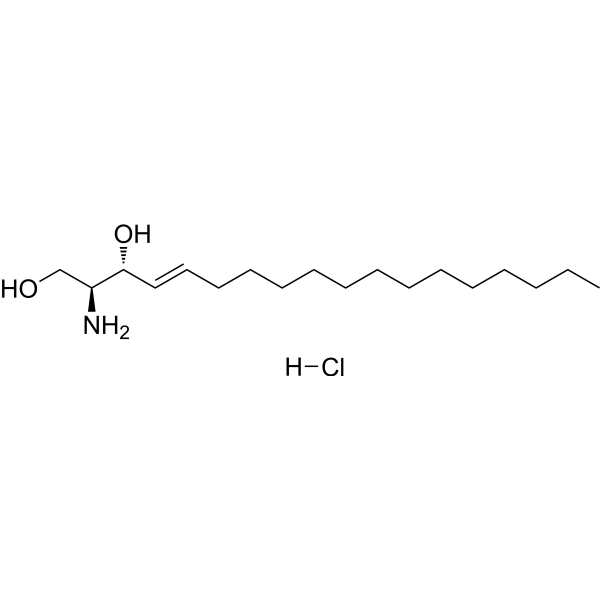
CCCCCCCCCCCCC/C=C/[C@@H](O)[C@@H](N)CO.[H]Cl
-
Synonyms
Erythrosphingosine hydrochloride; erythro-C18-Sphingosine hydrochloride; trans-4-Sphingenine hydrochloride
-
Initial Source
-
Shipping
Room temperature in continental US; may vary elsewhere.
-
Storage
Powder -20°C 3 years 4°C 2 years In solvent -80°C 6 months -20°C 1 month


Publications (6)
-
Journal Impact Factor
-
Most Recent
-
Nat Commun
2024 Sep 19;15(1):8221. PMID: 39300135
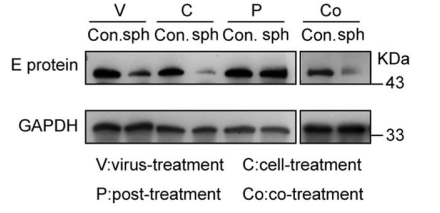
D-erythro-Sphingosine hydrochloride purchased from MedChemExpress. Usage Cited in: Nat Commun. 2024 Sep 19;15(1):8221. [Abstract]
D-erythro-Sphingosine (10 μM, 30 min). Effects of sph addition in different ways in ZIKV-infected cells. The protein levels were quantified using western blot at 48 h post infection. Con.: DMSO treatment.
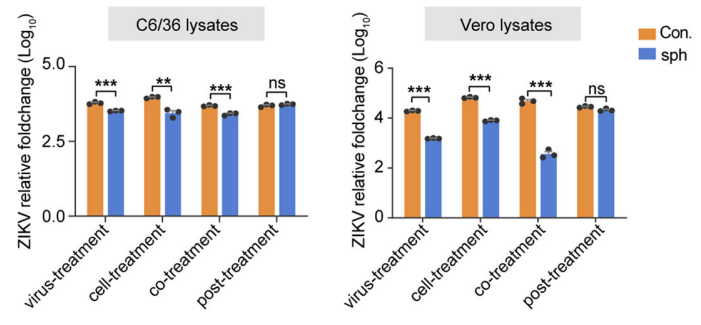
D-erythro-Sphingosine hydrochloride purchased from MedChemExpress. Usage Cited in: Nat Commun. 2024 Sep 19;15(1):8221. [Abstract]
D-erythro-Sphingosine (10 μM, 30 min). Effects of sph addition in different ways in ZIKV-infected cells. ZIKV mRNA levels were examined using qPCR (b; n = 3 biologically independent cell samples; two-sided multiple unpaired t-test) at 48 h post infection. Con.: DMSO treatment.
-
Adv Sci (Weinh)
2026 Jul;13(39):e20095. PMID: 41972457 -
Pharmacol Res
Lysosome-triggered nanotherapy packages osteoclast apoptotic bodies with pro-anabolic lipids to couple anti-resorption and bone formation. [Abstract]2026 Apr 30:108225. PMID: 42069319 -
Mol Med
Acid ceramidase targeting pyruvate kinase affected trypsinogen activation in acute pancreatitis. [Abstract]2022 Sep 6;28(1):106. PMID: 36068514
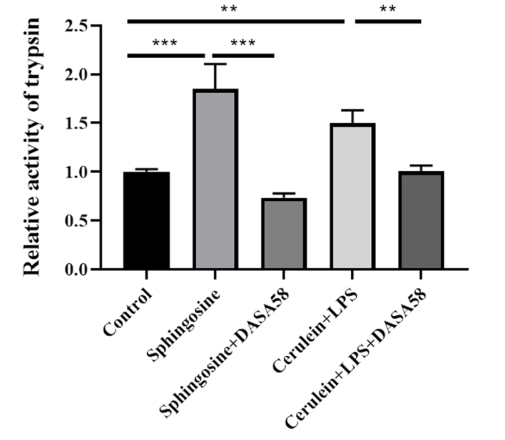
D-erythro-Sphingosine hydrochloride purchased from MedChemExpress. Usage Cited in: Mol Med. 2022 Sep 6;28(1):106. [Abstract]
Primary cells were treated with solvent, 5 μM of sphingosine, 10 μM of DASA58 plus sphingosine, and 200 nM of cerulein plus 10 ng/mL of LPS and DASA58 with LPS and sphingosine for 6 h. Cells were lysed for trypsin assay.
D-erythro-Sphingosine hydrochloride purchased from MedChemExpress. Usage Cited in: Mol Med. 2022 Sep 6;28(1):106. [Abstract]
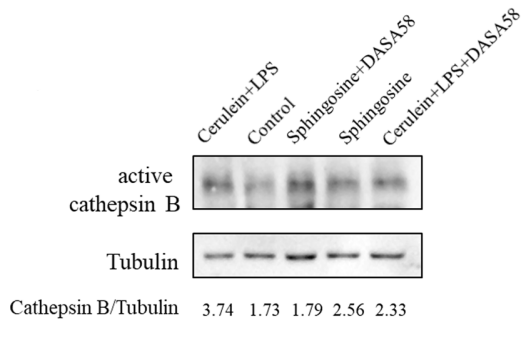
Primary cells were treated with solvent, 5 μM of sphingosine, 10 μM of DASA58 plus sphingosine, and 200 nM of cerulein plus 10 ng/mL of LPS and DASA58 with LPS and sphingosine for 6 h. Cells were lysed for cathepsin B assay by WB.
D-erythro-Sphingosine hydrochloride purchased from MedChemExpress. Usage Cited in: Mol Med. 2022 Sep 6;28(1):106. [Abstract]
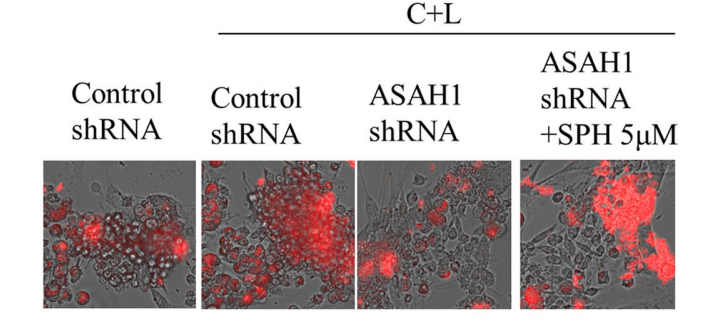
Acid ceramidase (ASAH1) regulated the activity of trypsin and cathepsin B through sphingosine (SPH). Lentivirus particles containing nontargeting shRNA/Control vector or shRNA targeting ASAH1/ASAH1 expressing plasmid were added to primary pancreatic acinar cells. Additionally, the cells were treated as indicated. Cathepsin B activity was detected by a spectrophotometer.
-
J Agric Food Chem
Chronic Exposure to Environmentally Relevant Concentrations of Microcystin-Leucine Arginine Causes Lung Barrier Damage through PP2A Activity Inhibition and Claudin1 Ubiquitination. [Abstract]2022 Sep 7;70(35):10907-10918. PMID: 36026589 -
Mol Neurobiol
Microcystin-LR Exposure Damages Neurons by Inducing α-Syn Aggregation via MAPK4/GATA2/SNCA and PP2A/GRKs Pathways. [Abstract]2025 May;62(5):6195-6211. PMID: 39738876


Solvent & Solubility
In Vitro:
DMSO : 100 mg/mL (297.66 mM; Need ultrasonic; Hygroscopic DMSO has a significant impact on the solubility of product, please use newly opened DMSO)
Ethanol : 50 mg/mL (148.83 mM; Need ultrasonic)
Please refer to the solubility information to select the appropriate solvent. Once prepared, please aliquot and store the solution to prevent product inactivation from repeated freeze-thaw cycles.
Storage method and period of stock solution: -80°C, 6 months; -20°C, 1 month. When stored at -80°C, please use it within 6 months. When stored at -20°C, please use it within 1 month.
Please refer to the solubility information to select the appropriate solvent. Once prepared, please aliquot and store the solution to prevent product inactivation from repeated freeze-thaw cycles.
Storage method and period of stock solution: -80°C, 6 months; -20°C, 1 month. When stored at -80°C, please use it within 6 months. When stored at -20°C, please use it within 1 month.
Concentration (start) × Volume (start) = Concentration (final) × Volume (final)
In Vivo:
Select the appropriate dissolution method based on your experimental animal and administration route.
- For the following dissolution methods, please ensure to first prepare a clear stock solution using an In Vitro approach and then sequentially add co-solvents:
- To ensure reliable experimental results, the clarified stock solution can be appropriately stored based on storage conditions. As for the working solution for In Vivo experiments, it is recommended to prepare freshly and use it on the same day.
- The percentages shown for the solvents indicate their volumetric ratio in the final prepared solution. If precipitation or phase separation occurs during preparation, heat and/or sonication can be used to aid dissolution.
Add each solvent one by one: 10% DMSO 40% PEG300 5% Tween-80 45% Saline
Solubility: ≥ 2.5 mg/mL (7.44 mM); Clear solution
This protocol yields a clear solution of ≥ 2.5 mg/mL (saturation unknown).
Taking 1 mL working solution as an example, add 100 μL DMSO stock solution (25.0 mg/mL) to 400 μL PEG300, and mix evenly; then add 50 μL Tween-80 and mix evenly; then add 450 μL Saline to adjust the volume to 1 mL.
Preparation of Saline: Dissolve 0.9 g sodium chloride in ddH₂O and dilute to 100 mL to obtain a clear Saline solution.
Add each solvent one by one: 10% DMSO 90% (20% SBE-β-CD in Saline)
Solubility: ≥ 2.5 mg/mL (7.44 mM); Clear solution
This protocol yields a clear solution of ≥ 2.5 mg/mL (saturation unknown).
Taking 1 mL working solution as an example, add 100 μL DMSO stock solution (25.0 mg/mL) to 900 μL 20% SBE-β-CD in Saline, and mix evenly.
Preparation of 20% SBE-β-CD in Saline (4°C, storage for one week): 2 g SBE-β-CD powder is dissolved in 10 mL Saline, completely dissolve until clear.
In Vivo Dissolution Calculator
Please enter the basic information of animal experiments:
-
-
-
-
Recommended: Prepare an additional quantity of animals to account for potential losses during experiments.
Please enter your animal formula composition:
-
%DMSO +
Recommended: Keep the proportion of DMSO in working solution below 2% if your animal is weak.
-
%+
-
+%Tween-80 + +
-
%Saline +
The co-solvents required include: DMSO, . All of co-solvents are available by MedChemExpress (MCE). , Tween 80. All of co-solvents are available by MedChemExpress (MCE).
Working solution concentration: 0.22 mg/mL
Method for preparing stock solution: mg drug dissolved in μL DMSO. Stock solution concentration: mg/mL.
1. Take μL DMSO stock solution;
2. Add μL .
μL , mix evenly;
3. Then add μL Tween 80, mix evenly;
4. Then add μL
Please ensure that the stock solution in the first step is dissolved to a clear state, and add co-solvents in sequence. You can use ultrasonic heating (ultrasonic cleaner, recommended frequency 20-40 kHz), vortexing, etc. to assist dissolution.


Purity & Documentation
-
Data Sheet (269 KB)
-
SDS (394 KB)
- English - EN (394 KB)
- Français - FR (394 KB)
- Deutsch - DE (394 KB)
- Norwegian - NO (394 KB)
- Español - ES (394 KB)
- Swedish - SV (394 KB)
- Italian - IT (394 KB)
- Korean - KR (394 KB)
- Portuguese - PT (394 KB)
-
Handling Instructions (2659 KB)
References
[1]. Grimm C, et al. Activation of the melastatin-related cation channel TRPM3 by D-erythro-sphingosine [corrected]. Mol Pharmacol. 2005 Mar;67(3):798-805. [Content Brief]
[2]. Chao R, et al. Retinoblastoma protein dephosphorylation induced by D-erythro-sphingosine. J Biol Chem. 1992 Nov 25;267(33):23459-62. [Content Brief]


Complete Stock Solution Preparation Table
Please refer to the solubility information to select the appropriate solvent. Once prepared, please aliquot and store the solution to prevent product inactivation from repeated freeze-thaw cycles.
Storage method and period of stock solution: -80°C, 6 months; -20°C, 1 month. When stored at -80°C, please use it within 6 months. When stored at -20°C, please use it within 1 month.
| Optional Solvent | Concentration Solvent Mass | 1 mg | 5 mg | 10 mg | 25 mg |
|---|---|---|---|---|---|
| Ethanol / DMSO | 1 mM | 2.9766 mL | 14.8832 mL | 29.7663 mL | 74.4158 mL |
| 5 mM | 0.5953 mL | 2.9766 mL | 5.9533 mL | 14.8832 mL | |
| 10 mM | 0.2977 mL | 1.4883 mL | 2.9766 mL | 7.4416 mL | |
| 15 mM | 0.1984 mL | 0.9922 mL | 1.9844 mL | 4.9611 mL | |
| 20 mM | 0.1488 mL | 0.7442 mL | 1.4883 mL | 3.7208 mL | |
| 25 mM | 0.1191 mL | 0.5953 mL | 1.1907 mL | 2.9766 mL | |
| 30 mM | 0.0992 mL | 0.4961 mL | 0.9922 mL | 2.4805 mL | |
| 40 mM | 0.0744 mL | 0.3721 mL | 0.7442 mL | 1.8604 mL | |
| 50 mM | 0.0595 mL | 0.2977 mL | 0.5953 mL | 1.4883 mL | |
| 60 mM | 0.0496 mL | 0.2481 mL | 0.4961 mL | 1.2403 mL | |
| 80 mM | 0.0372 mL | 0.1860 mL | 0.3721 mL | 0.9302 mL | |
| 100 mM | 0.0298 mL | 0.1488 mL | 0.2977 mL | 0.7442 mL |


D-erythro-Sphingosine hydrochloride Related Classifications
HY-W089922 Related Classifications
 Powered by Bioz