



Farnesyl pyrophosphate ammonium
Based on 1 publication(s) in Google Scholar
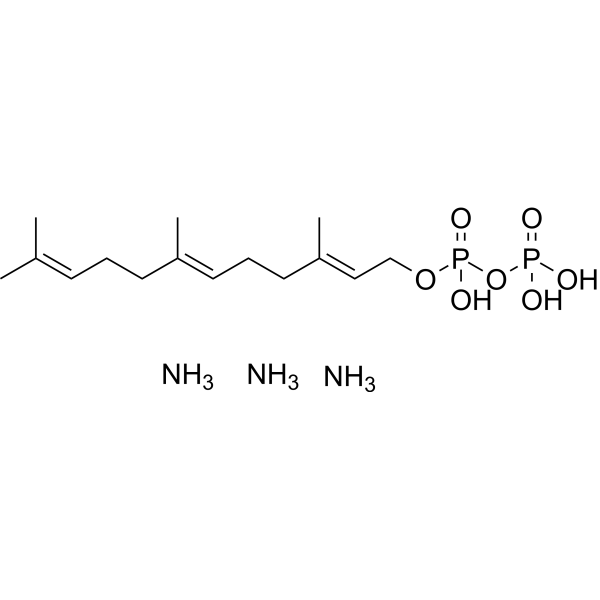
Farnesyl pyrophosphate (Farnesyl diphosphate) ammonium is a metabolic intermediate in the mevalonate (MVA) pathway. It is a TRP channel (TRPM2) agonist that triggers Ca2+ influx and cell death. Farnesyl pyrophosphate ammonium is a key branch substrate for cholesterol synthesis, ubiquinone synthesis, protein farnesylation, and geranylgeranyl pyrophosphate (GGPP) synthesis. Farnesyl pyrophosphate ammonium is used in research on cerebral ischemia, neurodegenerative diseases, pancreatic cancer, inflammation, and autoimmune diseases.
For research use only. We do not sell to patients.
- Purity : 95.39%
- CAS No.: 116057-57-9
- Formula: C15H37N3O7P2
- Molecular Weight:433.42
-
Storage:
-20°C, sealed storage, away from moisture and light
* In solvent : -80°C, 6 months; -20°C, 1 month (sealed storage, away from moisture and light)

To place orders, for customer services and technical support, please contact: MedChemExpress USA
Tel: 609-228-6898 E-mail: [email protected] [email protected]


-
 Biological Activity
-
Chemical Information
-
Solvent & Solubility
- Protocols
- Purity & Documentation
- References
-
 Help & FAQs


Publications Citing Use of MedChemExpress (MCE) Farnesyl pyrophosphate ammonium
MoreAll Endogenous Metabolite Isoforms
MoreAll Calcium Channel Isoforms
More

Biological Activity
Description
In Vitro
Farnesyl pyrophosphate ammonium (0-120 μg/mL, 0-60 min) induces cell death in P815 cell, A20 cells, Jurkat T cells, spleen cells, thymocytes and neure[1].
Farnesyl pyrophosphate ammonium (0-60 μM, 0-60 min) activates TRPM2 opening for Ca2+ influx in P815 cells[1].
Farnesyl pyrophosphate ammonium (10 μM, 14-26 h) significantly reverses the cytotoxicity, ROS elevation and AKT phosphorylation caused by Simvastatin (HY-17502) in CT26 cells[2].
Farnesyl pyrophosphate ammonium (10 μM, 48 h) significantly reverses the inhibitory effect of Simvastatin on the production of cytokines in mouse intestinal intraepithelial lymphocytes (IELs)[3].
MedChemExpress (MCE) has not independently confirmed the accuracy of these methods. They are for reference only. Further protocols information, click here.
-
Cell Line:CT26 cells
-
Concentration:10 μM
-
Incubation Time:Pretreat for 2 h and with Simvastatin for 24 h
-
Result:Had no effect on cell viability alone, but restored the decreased cell viability caused by simvastatin.
-
Cell Line:CT26 cells
-
Concentration:10 μM
-
Incubation Time:Pretreat for 2 h and with Simvastatin for 12 h
-
Result:Completely inhibited the Akt phosphorylation induced by simvastatin.
Had no effect on the Akt phosphorylation level when treated alone.
-
Cell Line:IELs
-
Concentration:10 μM
-
Incubation Time:Pretreat for 15 min and with Simvastatin for 48 h
-
Result:Restored the inhibition rates of IFN-γ, TNF-a and IL-2.
In Vivo
MedChemExpress (MCE) has not independently confirmed the accuracy of these methods. They are for reference only.
-
Animal Model:Middle cerebral artery occlusion (MCAO) model established in adult C57BL/6J mice (male, 10 to 12 weeks old, weight: 22 to 26 g)[1]
-
Dosage:30 mg/mL, 3 μL
-
Administration:Injected into the left striatum, single dose
-
Result:Induced acute neuron death.
Induced TRPM2-mediated cell death axis.


Chemical Information
-
CAS No. 116057-57-9
-
Appearance Solid
-
Molecular Weight 433.42
-
Formula C15H37N3O7P2
-
Color White to off-white
-
SMILES
O=P(O)(O)OP(OC/C=C(C)/CC/C=C(C)/CC/C=C(C)/C)(O)=O.N.N.N
-
Synonyms
Farnesyl diphosphate ammonium
-
Structure Classification
-
Initial Source
-
Shipping
Room temperature in continental US; may vary elsewhere.
-
Storage
-20°C, sealed storage, away from moisture and light
* In solvent : -80°C, 6 months; -20°C, 1 month (sealed storage, away from moisture and light)


Publications (1)
-
Journal Impact Factor
-
Most Recent
-
Dev Cell
2026 Apr 29:S1534-5807(26)00150-4. PMID: 42061405


Solvent & Solubility
In Vitro:
H2O : 100 mg/mL (230.72 mM; Need ultrasonic)
Please refer to the solubility information to select the appropriate solvent. Once prepared, please aliquot and store the solution to prevent product inactivation from repeated freeze-thaw cycles.
Storage method and period of stock solution: -80°C, 6 months; -20°C, 1 month (sealed storage, away from moisture and light). When stored at -80°C, please use it within 6 months. When stored at -20°C, please use it within 1 month.
* Note: If you choose water as the stock solution, please dilute it to the working solution, then filter and sterilize it with a 0.22 μm filter before use.
Please refer to the solubility information to select the appropriate solvent. Once prepared, please aliquot and store the solution to prevent product inactivation from repeated freeze-thaw cycles.
Storage method and period of stock solution: -80°C, 6 months; -20°C, 1 month (sealed storage, away from moisture and light). When stored at -80°C, please use it within 6 months. When stored at -20°C, please use it within 1 month.
* Note: If you choose water as the stock solution, please dilute it to the working solution, then filter and sterilize it with a 0.22 μm filter before use.
Concentration (start) × Volume (start) = Concentration (final) × Volume (final)

Protocols
-
Cell Cytotoxicity Assay
Cytotoxicity assays are usually based on the assessment of cell membrane damage, which can also be indirectly detected by measuring cell viability. Detection methods include MTT assay, CKK-8 assay, LDH assay and ATP assay, etc.
-
Mammalian live/dead viability and cytotoxicity staining
Live/dead viability and cytotoxicity staining assays are based on the simultaneous detection of intracellular esterase activity in metabolically active (viable) cells and membrane integrity loss in non-viable cells. In commonly used dual-staining approaches, membrane-permeant fluorogenic substrates are converted by intracellular esterases into fluorescent products in live cells, while impermeant DNA-binding dyes selectively enter cells with compromised plasma membranes and label nucleic acids in dead or dying cells, enabling discrimination between viable and non-viable populations by fluorescence microscopy or flow cytometry.
-
Apoptosis Solutions
Apoptosis is a regulated, generally non-lytic cell-death pathway that removes unwanted, damaged, infected, or abnormal cells through coordinated morphological changes, caspase activation, DNA fragmentation, and membrane remodeling. The intrinsic apoptosis pathway is controlled mainly by mitochondrial outer membrane permeabilization, BCL-2 family proteins, cytochrome c release, apoptosome formation, caspase-9 activation, and downstream executioner caspase-3/7 activation. The extrinsic apoptosis pathway is initiated by death receptors such as Fas, TNFR, and TRAIL receptors, which recruit adaptor proteins and activate caspase-8 before engaging executioner caspases or mitochondrial amplification through BID cleavage. Apoptosis is linked to many phenotypes, including cancer cell killing, tissue homeostasis, immune regulation, neurodegeneration, infection response, and treatment-induced cytotoxicity; unresolved questions include how apoptosis interacts with necroptosis, pyroptosis, ferroptos
-
Ca2+ Staining Technique
Ca2+ staining is an experimental technique that utilizes specific fluorescent probes (such as Fluo-4 AM, Fura-2, etc.) to qualitatively or quantitatively detect dynamic changes in intracellular Ca2+ concentrations; this is achieved by monitoring the changes in fluorescent signals generated when these probes bind to free intracellular calcium ions. The underlying principle relies primarily on the presence of chelating groups within the probe's molecular structure that possess high affinity for calcium ions.
-
Research Protocol for Inflammation-related Diseases
The NLRP3 inflammasome is a cytosolic innate immune signaling platform that integrates priming signals and danger-signal activation to promote caspase-1 activation, maturation of IL-1β and IL-18, and gasdermin D-mediated pyroptotic cell death. The core experimental logic is to determine whether inflammatory disease phenotypes are driven by increased NLRP3 expression, ASC-containing inflammasome assembly, caspase-1 cleavage, GSDMD cleavage, and extracellular release of IL-1β/IL-18 rather than by nonspecific cell injury alone. The pathway is strongly linked to inflammation-related disease phenotypes because monosodium urate crystals activate NALP3/NLRP3 inflammasome signaling in gout-like crystal inflammation, cholesterol crystals activate NLRP3 inflammasomes in atherogenesis models, and DSS-induced intestinal inflammation has been reported to involve NLRP3 inflammasome activity. However, experimental colitis studies also show context-dependent protective effects of NLRP3 inflammasome co


Purity & Documentation
-
Data Sheet (274 KB)
-
SDS (393 KB)
- English - EN (393 KB)
- Français - FR (393 KB)
- Deutsch - DE (393 KB)
- Norwegian - NO (393 KB)
- Español - ES (393 KB)
- Swedish - SV (393 KB)
- Italian - IT (393 KB)
- Korean - KR (393 KB)
- Portuguese - PT (393 KB)
-
Handling Instructions (2659 KB)
References
[1]. Jing Chen, et al. Farnesyl pyrophosphate is a new danger signal inducing acute cell death. PLoS Biol. 2021 Apr 26;19(4):e3001134. [Content Brief]
[2]. Qi XF, et al. Involvement of oxidative stress in simvastatin-induced apoptosis of murine CT26 colon carcinoma cells. Toxicol Lett. 2010 Dec 15;199(3):277-87. [Content Brief]
[3]. Zhang J, et al. Statins directly suppress cytokine production in murine intraepithelial lymphocytes. Cytokine. 2013 Feb;61(2):540-5. [Content Brief]


Complete Stock Solution Preparation Table
Please refer to the solubility information to select the appropriate solvent. Once prepared, please aliquot and store the solution to prevent product inactivation from repeated freeze-thaw cycles.
Storage method and period of stock solution: -80°C, 6 months; -20°C, 1 month (sealed storage, away from moisture and light). When stored at -80°C, please use it within 6 months. When stored at -20°C, please use it within 1 month.
| Optional Solvent | Concentration Solvent Mass | 1 mg | 5 mg | 10 mg | 25 mg |
|---|---|---|---|---|---|
| H2O | 1 mM | 2.3072 mL | 11.5362 mL | 23.0723 mL | 57.6808 mL |
| 5 mM | 0.4614 mL | 2.3072 mL | 4.6145 mL | 11.5362 mL | |
| 10 mM | 0.2307 mL | 1.1536 mL | 2.3072 mL | 5.7681 mL | |
| 15 mM | 0.1538 mL | 0.7691 mL | 1.5382 mL | 3.8454 mL | |
| 20 mM | 0.1154 mL | 0.5768 mL | 1.1536 mL | 2.8840 mL | |
| 25 mM | 0.0923 mL | 0.4614 mL | 0.9229 mL | 2.3072 mL | |
| 30 mM | 0.0769 mL | 0.3845 mL | 0.7691 mL | 1.9227 mL | |
| 40 mM | 0.0577 mL | 0.2884 mL | 0.5768 mL | 1.4420 mL | |
| 50 mM | 0.0461 mL | 0.2307 mL | 0.4614 mL | 1.1536 mL | |
| 60 mM | 0.0385 mL | 0.1923 mL | 0.3845 mL | 0.9613 mL | |
| 80 mM | 0.0288 mL | 0.1442 mL | 0.2884 mL | 0.7210 mL | |
| 100 mM | 0.0231 mL | 0.1154 mL | 0.2307 mL | 0.5768 mL |
* Note: If you choose water as the stock solution, please dilute it to the working solution, then filter and sterilize it with a 0.22 μm filter before use.


Farnesyl pyrophosphate ammonium Related Classifications
HY-113037C Related Classifications
 Powered by Bioz