



RBC8
Based on 1 publication(s) in Google Scholar
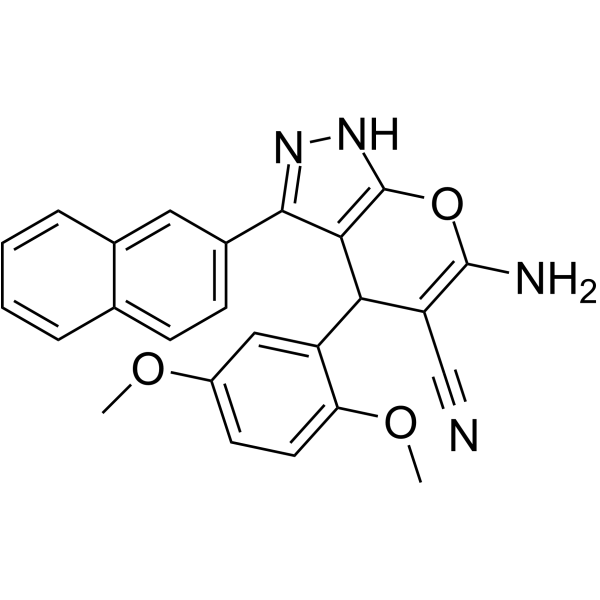
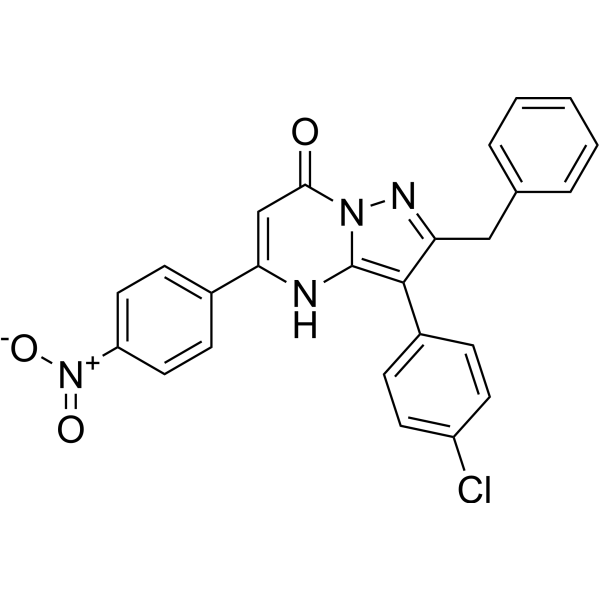
RBC8 is a selective and allosteric RALA and RALB inhibitor. RBC8 stabilizes the inactive GDP-bound state of Ral, preventing its activation. RBC8 promotes the phosphorylation of proteins related to the MAPK/JNK pathway. RBC8 has the activity of inhibiting tumor cell proliferation, migration and invasion. RBC8 is used in the study of various cancers such as lung cancer, gastric cancer, and multiple myeloma.
Nos produits utilisent uniquement pour la recherche. Nous ne vendons pas aux patients.
- Pureté : 98.0%
- CAS No.: 361185-42-4
- Formule: C25H20N4O3
- Masse moléculaire:424.45
-
Stockage:Powder -20°C, 3 years , 4°C, 2 years ; In solvent -80°C, 2 years , -20°C, 1 year

To place orders, for customer services and technical support, please contact: MedChemExpress USA
Tel: 609-228-6898 E-mail: [email protected] [email protected]


-
 Activité biologique
-
Chemical Information
-
Solvant et solubilité
- Protocole
- Pureté et documentation
- Références
-
 Help & FAQs


-
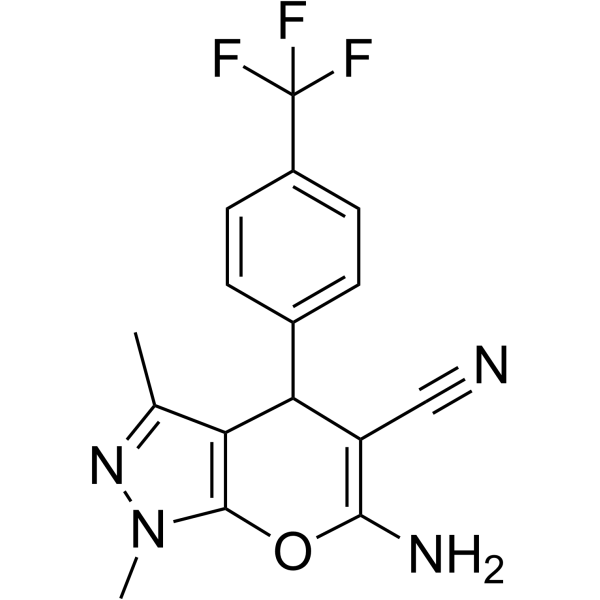
HY-12875
BQU57Ral Inhibitior -
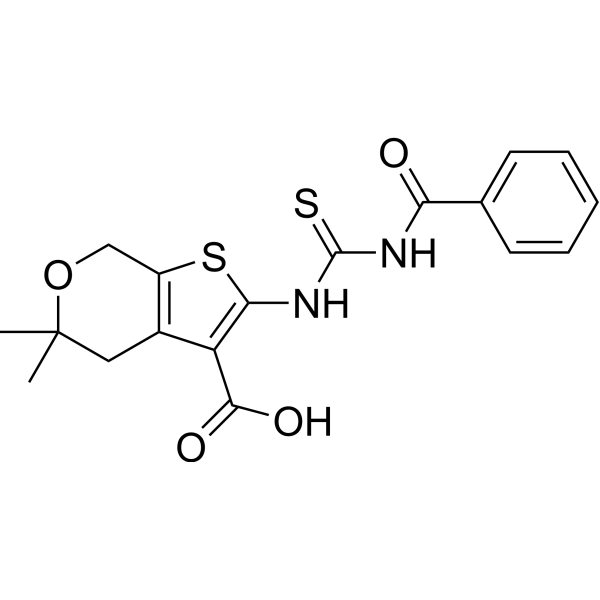
HY-13452
CID-1067700GTPase Inhibitor -
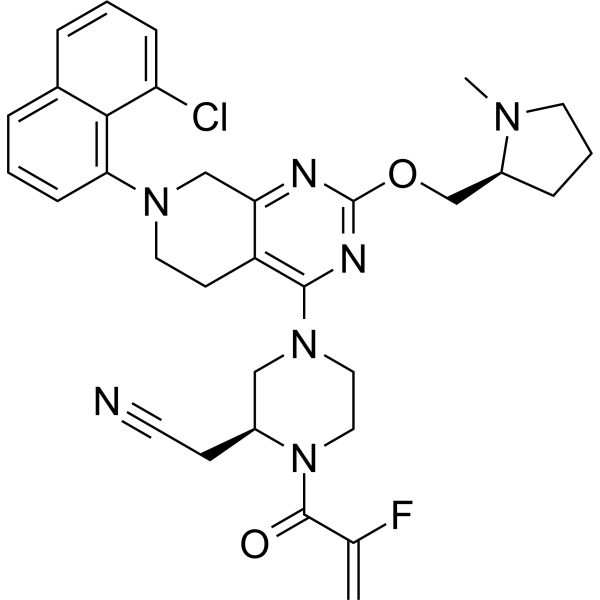
HY-130149
AdagrasibKRAS G12C Inhibitor -
HY-19800
ML-098Ras Activator -
HY-13963
ZCL278Cdc42 Inhibitor -
HY-114277
SotorasibKRAS G12C Inhibitor -
HY-16659
EHT 1864Rac Family Inhibitor -
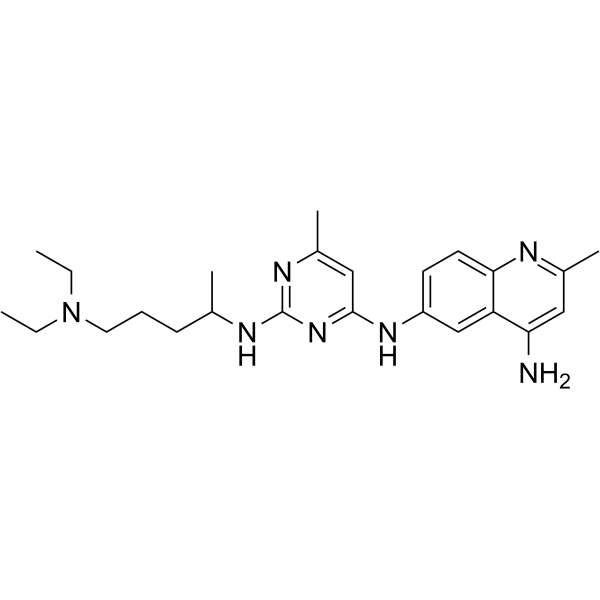
HY-15723
NSC 23766Ras Inhibitor -
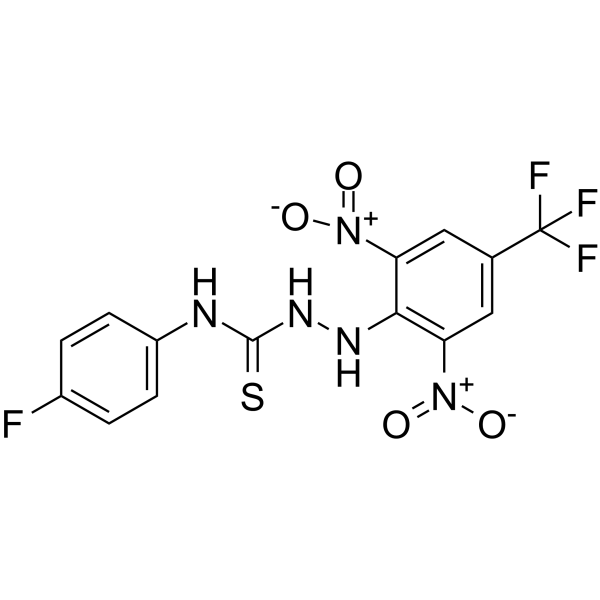
HY-15717
Kobe2602Ras-Raf Interaction Inhibitor -
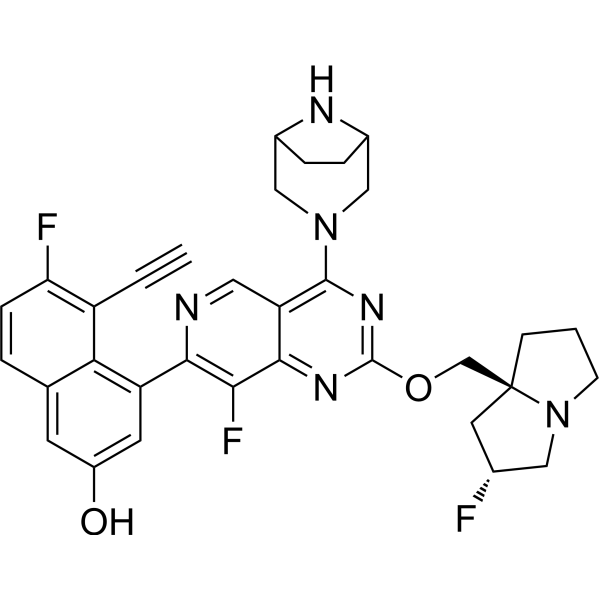
HY-134813
MRTX1133KRAS G12D Inhibitor -
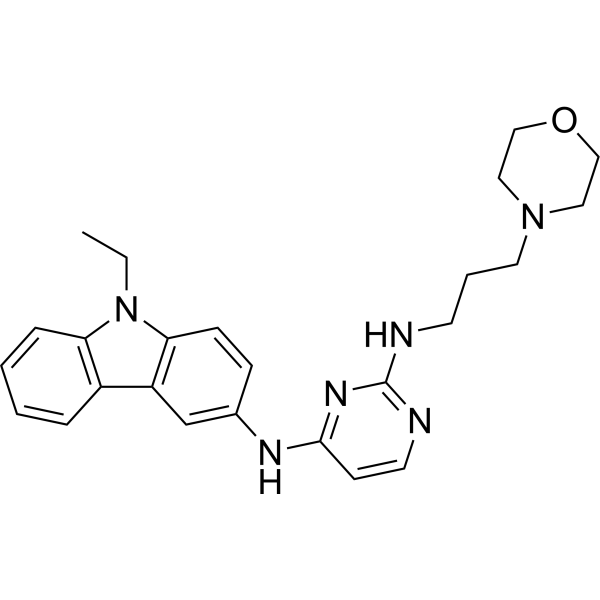
HY-12810
EHop-016Rac1/Rac3 Inhibitor -
HY-112473
GrassofermataARF6 Inhibitor
Publications Citing Use of MedChemExpress (MCE) RBC8
More

Activité biologique
Description
In Vitro
RBC8 (10-20 μM; 3-72 h) can reduce the survival rate of myeloma cells AMO-1 and INA-6 and the level of RAL-GTP in sensitive INA-6 cells[1]. RBC8 (20 μM; 3 days of treatment) inhibits the colony formation of lung cancer cells H2122 and H358 in soft agar with IC50 of 3.5 μM and 3.4 μM, respectively[2]. RBC8 (20-40 μM) significantly inhibits the growth, migration and invasion of gastric cancer cell lines SGC-7901 and MGC-803[3].
MedChemExpress (MCE) has not independently confirmed the accuracy of these methods. They are for reference only.
In Vivo
MedChemExpress (MCE) has not independently confirmed the accuracy of these methods. They are for reference only.
-
Animal Model:Female athymic nude mice (Ncr nu/nu; 5 - 6 weeks old, weight not specified) inoculated with H2122 or H358 human lung cancer cells[2].
-
Dosage:50 mg/kg (dissolved in DMSO)
-
Administration:Intraperitoneal injection, daily except weekends, for 21 days
-
Result:Inhibited the growth of xenograft tumors in nude mice inoculated with H2122 cells, and the effect was similar to that of dual knockdown of RalA and RalB.
Inhibited the growth of xenograft tumors in nude mice inoculated with H358 cells.
- Western Blot
- BrdU Incorporation Assay
- Cell migration
- Somatic Cell Culture
- CFSE Dye Dilution Proliferation Assay
- Dye-dilution cell tracking and proliferation staining
- CCK-8/WST-8 Cell Proliferation Assay
- Protocol for Cell Cycle
- Cell Counting-Based Growth Curve Assay
- Colony Formation (Clonogenic) Assay
- Cell Viability Determination by MTT Colorimetric Assay
- Kinase activity and phosphorylation assays
- EdU Incorporation Assay (Click Chemistry-Based DNA Synthesis Measurement)
- Ki-67 Immunostaining Proliferation Assay
- PCNA Immunodetection Proliferation Assay
- Protocol for Cell Counting and Cell Density Analysis
- Cell invasion
- Protocol for Kinase activity and phosphorylation assays
- MTT Cell Proliferation Assay


Chemical Information
-
CAS No. 361185-42-4
-
Appearance Solid
-
Masse moléculaire 424.45
-
Formule C25H20N4O3
-
Color White to off-white
-
SMILES
N#CC(C1C2=CC(OC)=CC=C2OC)=C(N)OC3=C1C(C4=CC=C5C=CC=CC5=C4)=NN3
-
Livraison
Room temperature in continental US; may vary elsewhere.
-
Stockage
Powder -20°C 3 years 4°C 2 years In solvent -80°C 2 years -20°C 1 year


Publications (1)
-
Journal Impact Factor
-
Most Recent
-
Cell Death Differ
A neutrophil-intrinsic CKLF1-PKM2 axis drives glycolytic flux for de novo DAG synthesis and pro-inflammatory ROS production. [Abstract]2026 May 12. PMID: 42120940


Solvant et solubilité
In Vitro:
DMSO : ≥ 40 mg/mL (94.24 mM; Hygroscopic DMSO has a significant impact on the solubility of product, please use newly opened DMSO)
* "≥" means soluble, but saturation unknown.
Please refer to the solubility information to select the appropriate solvent. Once prepared, please aliquot and store the solution to prevent product inactivation from repeated freeze-thaw cycles.
Storage method and period of stock solution: -80°C, 2 years; -20°C, 1 year. When stored at -80°C, please use it within 2 years. When stored at -20°C, please use it within 1 year.
Please refer to the solubility information to select the appropriate solvent. Once prepared, please aliquot and store the solution to prevent product inactivation from repeated freeze-thaw cycles.
Storage method and period of stock solution: -80°C, 2 years; -20°C, 1 year. When stored at -80°C, please use it within 2 years. When stored at -20°C, please use it within 1 year.
Concentration (start) × Volume (start) = Concentration (final) × Volume (final)
In Vivo:
Select the appropriate dissolution method based on your experimental animal and administration route.
- For the following dissolution methods, please ensure to first prepare a clear stock solution using an In Vitro approach and then sequentially add co-solvents:
- To ensure reliable experimental results, the clarified stock solution can be appropriately stored based on storage conditions. As for the working solution for In Vivo experiments, it is recommended to prepare freshly and use it on the same day.
- The percentages shown for the solvents indicate their volumetric ratio in the final prepared solution. If precipitation or phase separation occurs during preparation, heat and/or sonication can be used to aid dissolution.
Add each solvent one by one: 10% DMSO 40% PEG300 5% Tween-80 45% Saline
Solubility: ≥ 2.5 mg/mL (5.89 mM); Clear solution
This protocol yields a clear solution of ≥ 2.5 mg/mL (saturation unknown).
Taking 1 mL working solution as an example, add 100 μL DMSO stock solution (25.0 mg/mL) to 400 μL PEG300, and mix evenly; then add 50 μL Tween-80 and mix evenly; then add 450 μL Saline to adjust the volume to 1 mL.
Preparation of Saline: Dissolve 0.9 g sodium chloride in ddH₂O and dilute to 100 mL to obtain a clear Saline solution.
Add each solvent one by one: 10% DMSO 90% (20% SBE-β-CD in Saline)
Solubility: 2.5 mg/mL (5.89 mM); Suspended solution; Need ultrasonic
This protocol yields a suspended solution of 2.5 mg/mL. Suspended solution can be used for oral and intraperitoneal injection.
Taking 1 mL working solution as an example, add 100 μL DMSO stock solution (25.0 mg/mL) to 900 μL 20% SBE-β-CD in Saline, and mix evenly.
Preparation of 20% SBE-β-CD in Saline (4°C, storage for one week): 2 g SBE-β-CD powder is dissolved in 10 mL Saline, completely dissolve until clear.
In Vivo Dissolution Calculator
Please enter the basic information of animal experiments:
-
-
-
-
Recommended: Prepare an additional quantity of animals to account for potential losses during experiments.
Please enter your animal formula composition:
-
%DMSO +
Recommended: Keep the proportion of DMSO in working solution below 2% if your animal is weak.
-
%+
-
+%Tween-80 + +
-
%Saline +
The co-solvents required include: DMSO, . All of co-solvents are available by MedChemExpress (MCE). , Tween 80. All of co-solvents are available by MedChemExpress (MCE).
Working solution concentration: 0.22 mg/mL
Method for preparing stock solution: mg drug dissolved in μL DMSO. Stock solution concentration: mg/mL.
1. Take μL DMSO stock solution;
2. Add μL .
μL , mix evenly;
3. Then add μL Tween 80, mix evenly;
4. Then add μL
Please ensure that the stock solution in the first step is dissolved to a clear state, and add co-solvents in sequence. You can use ultrasonic heating (ultrasonic cleaner, recommended frequency 20-40 kHz), vortexing, etc. to assist dissolution.


Pureté et documentation
-
Fiche technique (281 KB)
-
SDS (392 KB)
- English - EN (392 KB)
- Français - FR (392 KB)
- Deutsch - DE (392 KB)
- Norwegian - NO (392 KB)
- Español - ES (392 KB)
- Swedish - SV (392 KB)
- Italian - IT (392 KB)
- Korean - KR (392 KB)
- Portuguese - PT (392 KB)
-
Instruction de manipulation (2659 KB)
Références
[1]. Seibold M, et al. RAL GTPases mediate multiple myeloma cell survival and are activated independently of oncogenic RAS. Haematologica. 2020 Sep 1;105(9):2316-2326. [Content Brief]
[2]. Yan C, et al. Discovery and characterization of small molecules that target the GTPase Ral. Nature. 2014 Nov 20;515(7527):443-7. [Content Brief]
[3]. Wang P, et al. RCC2 Interacts with Small GTPase RalA and Regulates Cell Proliferation and Motility in Gastric Cancer. Onco Targets Ther. 2020 Apr 14;13:3093-3103. [Content Brief]


Complete Stock Solution Preparation Table
Please refer to the solubility information to select the appropriate solvent. Once prepared, please aliquot and store the solution to prevent product inactivation from repeated freeze-thaw cycles.
Storage method and period of stock solution: -80°C, 2 years; -20°C, 1 year. When stored at -80°C, please use it within 2 years. When stored at -20°C, please use it within 1 year.
| Optional Solvent | Concentration Solvent Mass | 1 mg | 5 mg | 10 mg | 25 mg |
|---|---|---|---|---|---|
| DMSO | 1 mM | 2.3560 mL | 11.7800 mL | 23.5599 mL | 58.8998 mL |
| 5 mM | 0.4712 mL | 2.3560 mL | 4.7120 mL | 11.7800 mL | |
| 10 mM | 0.2356 mL | 1.1780 mL | 2.3560 mL | 5.8900 mL | |
| 15 mM | 0.1571 mL | 0.7853 mL | 1.5707 mL | 3.9267 mL | |
| 20 mM | 0.1178 mL | 0.5890 mL | 1.1780 mL | 2.9450 mL | |
| 25 mM | 0.0942 mL | 0.4712 mL | 0.9424 mL | 2.3560 mL | |
| 30 mM | 0.0785 mL | 0.3927 mL | 0.7853 mL | 1.9633 mL | |
| 40 mM | 0.0589 mL | 0.2945 mL | 0.5890 mL | 1.4725 mL | |
| 50 mM | 0.0471 mL | 0.2356 mL | 0.4712 mL | 1.1780 mL | |
| 60 mM | 0.0393 mL | 0.1963 mL | 0.3927 mL | 0.9817 mL | |
| 80 mM | 0.0294 mL | 0.1472 mL | 0.2945 mL | 0.7362 mL |


RBC8 Related Classifications
HY-12873 Related Classifications
 Powered by Bioz